
Swapping a 350 Small Block cam is the single most transformative bolt-on you can do to an old Gen 1 Chevy. The lobe profile dictates everything — idle character, powerband location, and how your engine breathes above 4,000 RPM — making the choice between a torque-focused RV grind and a rowdy street-strip lobe the defining decision of your build.
I’m Min — the co-founder and writer behind Gadgets Feed. After countless hours analyzing lobe separation angles, valve lift curves, and customer dyno results across Gen 1 small blocks, I’ve narrowed down which grinds actually deliver on their promises without killing street manners.
Whether you’re resurrecting a C10, waking up a Camaro, or building a 383 stroker, this guide to the 350 small block cam breaks down the real specs that separate a weekend warrior from a parts-bin regret.
How To Choose The Best 350 Small Block Cam
Picking a cam isn’t about picking a brand — it’s about matching the lobe profile to your engine’s compression, head flow, intended RPM range, and converter stall speed. A mismatch here can leave your build gutless below 3,000 RPM or pinging from excessive overlap.
Duration at 0.050 and the Powerband
Duration at 0.050 inch lift is the most reliable predictor of where your engine makes peak power. A mild 204/214 grind peaks around 4,500 RPM and excels with low compression and stock converters. A 234/244 grind moves the band to 3,000–6,500 RPM and demands at least 9.5:1 compression plus a 2,500+ stall converter. Don’t guess — match duration to your combo’s breathing ceiling.
Lobe Separation Angle and Vacuum
LSA describes the centerline distance between intake and exhaust lobes. A tight 108° LSA increases overlap for a choppy idle and top-end rush but drops manifold vacuum below 10 inHg, killing power brakes. A wide 114° LSA smooths the idle, restores vacuum, and broadens the torque curve — ideal for trucks and heavy cars. Street-driven builds should rarely go tighter than 110° unless you’re willing to run an electric vacuum pump.
Quick Comparison
On smaller screens, swipe sideways to see the full table.
| Model | Category | Best For | Key Spec | Amazon |
|---|---|---|---|---|
| Texas Speed Chopacabra | Full Kit | LS Truck / 4.8–6.2L | 214/222 .550/.550 108 LSA | Amazon |
| COMP Cams Mutha’ Thumpr | Cam + Lifter | Street/Strip Chop | 235/249 .489/.476 107 LSA | Amazon |
| Edelbrock Performer RPM | Cam + Lifter | Mid-Range Street Torque | 234/244 .488/.510 114 LSA | Amazon |
| JEGS 200107 | Cam + Lifters | 3,000–6,500 RPM Builds | 234/244 .488/.510 114 LSA | Amazon |
| Edelbrock 2102 Performer-Plus | Cam + Lifters | Idle-to-5,500 RPM Street | 204/214 .420/.442 112 LSA | Amazon |
| COMP Cams 850-16 Lifters | Lifter Set | OE Roller Retrofit | Hydraulic Roller, OE Style | Amazon |
| Engine Pro MC1730 | Cam Only | Towing / Highway Cruising | 420/443 Lift 204/214 Dur | Amazon |
| Melling 22301 | Cam Only | Budget Stock Replacement | Hydraulic Flat Tappet | Amazon |
| Speedmaster Top End Kit | Full Combo | Complete Top-End Rebuild | Solid Flat Cam + Heads | Amazon |
In‑Depth Reviews
1. Texas Speed TSP Chopacabra Cam Kit

The TSP Chopacabra is a purpose-built LS truck cam that delivers an aggressive chop without requiring an aftermarket stall converter. With 214/222 duration at 0.050 and a tight 108 LSA, it produces a mean idle while maintaining factory torque converter compatibility — a rare balance in the LS swap world. The kit includes .560-lift beehive springs, Viton valve seals, and OE replacement pushrods, removing all guesswork from sourcing valvetrain components separately.
Dyno results from Texas Speed show a verified 65+ horsepower gain at the crank on a 5.3L with cathedral port heads, and real-world owners report fuel economy improvements from 14 mpg to 17–19 mpg after proper tuning. The operating range spans 1,200 to 6,500 RPM, making it suitable for daily drivers that see weekend strip use. Power delivery is linear with a strong mid-range punch that transforms the driving experience of a heavy Tahoe or Silverado.
Installation is straightforward for anyone familiar with LS cam swaps, though the listing correctly notes that 4.8, 5.3, 5.7, and 6.0 engines with cathedral port heads are the intended audience. The 6.2L DOD delete swap into a 5.3L Tahoe produced 390 rear-wheel horsepower in 4×4 trim while retaining full towing capability. This is a complete package that delivers on its sound and power promises from the first crank.
Why it’s great
- Factory converter friendly with aggressive idle
- Complete kit eliminates parts sourcing errors
- Proven 65+ HP gain with proper tuning
Good to know
- Requires LS-specific timing gear and lifters for 07–13 swaps
- Tuning is mandatory for best drivability and power
2. COMP Cams CL12-601-4 Mutha’ Thumpr

The Mutha’ Thumpr is engineered for the builder who prioritizes a hard-hitting exhaust note above subtlety. With 235/249 duration at 0.050 and a tight 107 LSA, this grind creates maximum overlap for that signature cackle and lope that defines classic muscle car character. The kit ships with a camshaft, hydraulic flat tappet lifters, assembly lubricant, and instructions — everything needed for a Gen 1 SBC swap in one box.
Operating range sits from 2,200 to 6,100 RPM, requiring at least 9:1 compression, a 2,500+ stall torque converter, headers, and a performance intake manifold to realize its full potential. Owners report noticeable power increases and snappier throttle response compared to milder grinds like the Edelbrock Performer RPM. One user documented a failed RPM cam and swapped to the Mutha’ Thumpr, finding immediate gains in both sound and seat-of-the-pants acceleration.
Fitment covers the entire Gen 1 small block family — 262 through 400 — but explicitly excludes 1985-and-newer factory roller blocks, LT1/LT4 engines, and any stroker with over 3.75 inches of stroke unless a small-base-circle cam is used. The 107 LSA drops manifold vacuum significantly, so plan for an electric vacuum pump or manual brakes if running a heavy car. This is a street-strip cam for the builder who wants the full auditory experience.
Why it’s great
- Aggressive lobe profile delivers unmistakable chop
- Complete kit with lifters and lube included
- Proven upgrade over lesser street cams
Good to know
- Requires 2500+ stall and 9:1+ compression
- Not compatible with stroker builds over 3.75″ stroke
3. Edelbrock 7102 Performer RPM Cam and Lifter Kit

The Edelbrock Performer RPM grind is a time-tested choice for street performance builds that want strong mid-range torque without sacrificing throttle response. With 234/244 duration at 0.050 and a relatively wide 114 LSA, this cam produces a broad powerband from idle to 6,500 RPM. The lift numbers of 0.488 inch intake and 0.510 inch exhaust work well with stock 1.5:1 rocker arms and most aftermarket aluminum heads.
This grind pairs ideally with Edelbrock’s Performer RPM intake manifold and a 750 CFM carburetor for street-driven applications. The wide 114 LSA helps maintain manifold vacuum, making power brake operation usable without auxiliary pumps. Owners report excellent results in 350 and 383 builds, with one user noting a “huge improvement” over the stock cam in a 1970 C10, citing strong pull from idle and clean secondary opening.
However, quality control issues have been documented. Multiple users report lobe failures and lifter damage despite following the mandated break-in procedure, with some suspecting a batch of defective grinds. The lifters in this kit use push-clip retainers rather than snap rings, which some builders consider less robust. For the price point, the risk of a wiped lobe makes careful break-in with high-zinc break-in oil absolutely critical.
Why it’s great
- Broad torque curve suits heavy street cars and trucks
- Wide LSA maintains vacuum for power brakes
- Well-documented pairing with Performer RPM intake
Good to know
- Reported batch defects causing lobe wear
- Lifter retainers are push-clip type, not snap rings
4. JEGS 200107 Hydraulic Flat Tappet Cam & Lifters
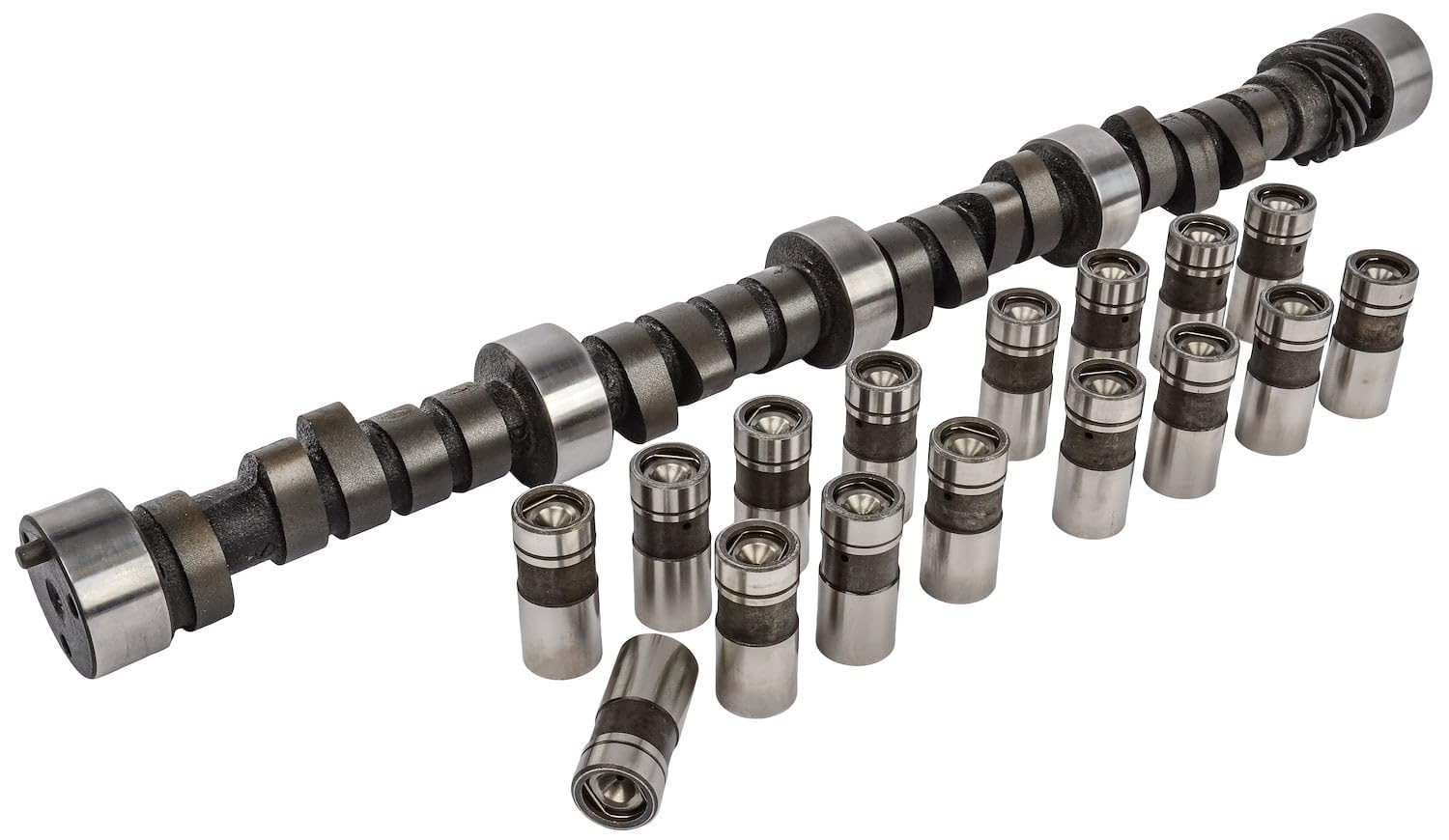
The JEGS 200107 is a value-oriented hydraulic flat tappet combo designed for 262 to 400 cubic inch Gen 1 small blocks from 1957 through 1985. With identical duration and lift specs to many premium grinds — 234/244 at 0.050, 0.488/0.510 valve lift, 114 LSA — this cam delivers a 3,000 to 6,500 RPM powerband at a significantly lower entry point. The kit includes both the camshaft and a full set of lifters, removing the need for separate purchases on a budget build.
Power bands are predictable and linear, with advertised duration of 292/302 and a 114 LSA that keeps idle quality reasonable for a street-driven car. Owners praise the idle sound and fitment, with one user calling it “perfect” for a 400 small block after a proper break-in with high-zinc oil. The 114 LSA helps maintain enough vacuum for power brakes, making this a viable option for C10s, Novas, and street rods that see regular driving duty.
Fade date from the manufacturer shows April 2012, but the product remains current and widely available. The main caveat is the flat tappet design itself — break-in requires the mandated 2,500 RPM for 20-30 minutes with break-in oil, and any shortcuts risk immediate lobe failure. JEGS does not include a cam card with the kit, which frustrates some builders who need the exact lobe profile for timing verification.
Why it’s great
- Specs match premium grinds at a budget-friendly price
- Includes lifters for a complete valvetrain swap
- Wide 114 LSA keeps vacuum usable for street driving
Good to know
- No cam card included for timing verification
- Flat tappet break-in is critical and non-negotiable
5. Edelbrock 2102 Performer-Plus Camshaft and Lifter Kit

The Edelbrock 2102 Performer-Plus is the entry-level upgrade for stock 350 builds that need a broader torque curve without changing converters or gears. With mild 204/214 duration at 0.050 and a 112 LSA, this cam produces smooth idle quality while delivering noticeable mid-range pull. Valve lift of 0.420 inch intake and 0.442 inch exhaust works with stock valve springs and retains factory rocker geometry, making it one of the easiest cam swaps in the small block world.
Owners consistently report a “huge improvement over stock” in applications like 1970 C10 pickups and late-70s Camaros, with one user noting the engine “runs better, pulls strong from idle, secondaries open well.” The powerband is optimized for idle to 5,500 RPM, which pairs naturally with stock torque converters, 3.08–3.42 rear gears, and factory intake manifolds. This is not a cam that produces a lope or a chop — it delivers a slightly more aggressive idle tone and a solid seat-of-the-pants gain.
Break-in concerns have emerged with this kit, with one user reporting a rounded lobe after proper procedure despite using zinc-rich oil. Another user experienced a cam failure that destroyed the lifters after the exhaust was installed, though they acknowledged Edelbrock acknowledged a batch issue. For street-driven engines with stock-ish compression and a desire for simple, trouble-free gains, this cam remains the most forgiving option on the list — provided you use quality break-in oil and follow the RPM regimen.
Why it’s great
- Drop-in upgrade works with stock springs and converter
- Strong low-to-mid torque for trucks and daily drivers
- Smooth idle with no drivability compromises
Good to know
- Not a high-rpm or lope-producing grind
- Occasional quality variability in cam batches
6. COMP Cams 850-16 OE-Style Hydraulic Roller Lifter Set
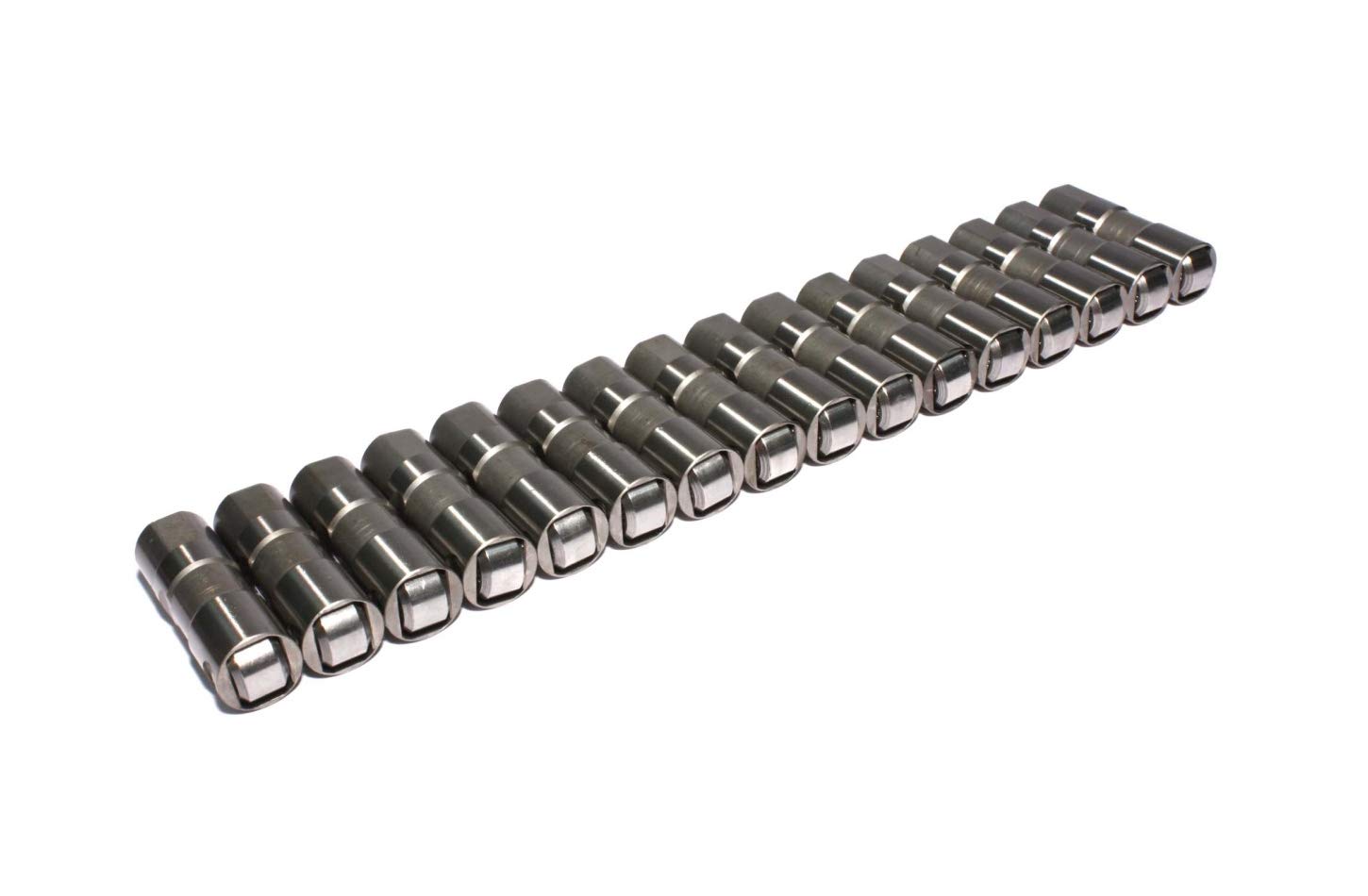
The COMP Cams 850-16 OE-Style hydraulic roller lifters are the correct drop-in replacement for 1987-and-newer factory roller small blocks, and they also serve as retro-fit lifters for earlier Gen 1 blocks machined for a roller cam. The roller design reduces friction compared to flat tappet lifters, allowing more aggressive lobe profiles without the risk of wiped lobes that plagues many budget flat tappet grinds. These lifters accept the higher ramp speeds and spring pressures that produce real horsepower gains.
Customers report these lifters eliminate the notorious LT1 lifter tick and the “LT1 chirp” that plagues factory valvetrains. The drop-in nature means no machining is required for factory roller blocks, and the hydraulic design maintains quiet operation without requiring the frequent adjustment of solid lifters. One user noted they “outperform the OE lifters” after swapping them into a Gen 2 LT1 engine, solving a persistent noise issue.
The catch is that some buyers have received units that appear used — oil-darkened, pre-pumped, and missing the blue netting that protects new lifters. While disassembly and inspection revealed no damage in those cases, the inconsistency is frustrating at this price tier. For builders converting a flat tappet block to roller, these lifters require a cam with a roller-compatible lobe profile and proper pushrod length — not an off-the-shelf flat tappet grind.
Why it’s great
- Drop-in fit for factory roller blocks and retro-fits
- Quieter operation than flat tappet designs
- Accepts aggressive roller lobe profiles
Good to know
- Some units arrive appearing pre-used
- Requires roller-compatible cam and pushrod length check
7. Engine Pro MC1730 HP RV Camshaft

The Engine Pro MC1730 is an RV-style camshaft built for low-end torque and smooth idle, ideal for trucks, vans, and heavy cars used for towing or highway cruising. With 420/443 valve lift and 204/214 duration at 0.050, this grind prioritizes cylinder pressure at low RPM over top-end horsepower, producing strong pull from idle to roughly 4,500 RPM. The universal fit covers SBC engines from 1957 to 1995, and the Melling-sourced manufacturing ensures solid core quality.
The RV grind delivers the “chuglugga” sound that classic muscle car owners associate with a mild cam, and one Corvette owner running a 1991 L98 reported a clear horsepower gain from 1,500 to 6,500 RPM with no other modifications. The wide powerband makes it compatible with factory torque converters and stock rear gears, removing the need for converter swaps or gear changes that a more aggressive street cam would demand. For a 1977 Camaro build, one user confirmed this cam “wakes it up” without introducing drivability headaches.
The absence of a cam card is a recurring complaint, with users deducting points for the missing documentation that would help them verify lobe centerline and timing events during installation. As a cam-only purchase, buyers need to source lifters, pushrods, and break-in oil separately. The Melling quality is apparent, but at this price point, the lack of supporting documentation feels like an unnecessary corner cut.
Why it’s great
- Strong low-RPM torque for towing and highway use
- Melling manufacturing ensures reliable core quality
- Works with stock converter and gears
Good to know
- Cam-only purchase — lifters and pushrods sold separately
- No cam card included for spec verification
8. Melling 22301 Hydraulic Camshaft Lifter

The Melling 22301 is a no-frills hydraulic flat tappet camshaft designed for stock-or-budget rebuilds where cost is the primary constraint. As a cam-only product, it targets the minimalist who already has lifters, pushrods, and a timing set on hand. Melling is a well-known OEM supplier, and this cam benefits from their U.S. manufacturing with a 1-year warranty backing the core quality. Fitment is universal across Gen 1 small blocks, but the lack of published lobe specifications means the buyer is trusting the Melling part number to deliver a stock-ish replacement profile.
Customer feedback is overwhelmingly positive for the price, with one 1991 Corvette owner reporting the cam “works perfect, sounds great, gat that chugluga tran sound” with no other modifications required. Another owner building a 1977 Camaro stated it would “wake my 77 camaro up.” The general consensus is that this cam delivers the classic small block idle and a perceptible horsepower gain without introducing tuning difficulties, making it an attractive option for first-time cam swappers on a strict budget.
The main limitation is the lack of published duration and lobe separation numbers, which prevents builders from matching this cam to their specific compression ratio, head flow, or converter stall. It is a black-box part — you install it and hope the profile matches your build goals. For someone replacing a worn factory cam in a bone-stock 350, that gamble usually pays off. For a performance-oriented builder with aftermarket heads and a specific RPM target in mind, skipping it in favor of a ground-print cam with documented specs is the smarter move.
Why it’s great
- Melling U.S. quality at an entry-level price
- Smooth stock-replacement character with mild power gain
- 1-year warranty for peace of mind
Good to know
- No published lobe spec data for build planning
- Cam only — no lifters, pushrods, or cam card
9. Speedmaster Top End Combo Kit

The Speedmaster Top End Combo Kit is a comprehensive solution for builders who want to replace everything above the short block in one purchase. The kit includes assembled cylinder heads, a solid flat tappet camshaft, matched lifters, hardened pushrods, valve springs, retainers, and a full gasket set — all engineered to work together as a system. The cam profile and head flow numbers are selected to complement each other, eliminating the guesswork of mixing components from different manufacturers that can create piston-to-valve clearance or spring-rate mismatches.
Fitment covers the entire Gen 1 small block family from 265 to 400 cubic inches, including 350 and 383 stroke combinations on standard-deck short blocks. The advertised power gain of 50–100 horsepower over a stock combination is realistic when paired with a proper intake, carburetor, and exhaust system. Owners praise this as “by far the best setup for the price,” noting that the matched components remove the most common headaches of a top-end rebuild — verifying spring installed height, pushrod length, and valve-to-piston clearance.
The kit does not include an intake manifold, carburetor, distributor, exhaust headers, or harmonic balancer, so the builder still needs to source those items separately. Tuning is mandatory to realize the full power potential, and Speedmaster recommends verifying piston-to-valve clearance on any non-stock short block. At over 90 pounds, this is a serious piece of hardware that requires a full engine stand and proper assembly techniques — not an afternoon driveway job.
Why it’s great
- Complete matched system removes component compatibility guesswork
- 50–100 HP gain over stock combinations
- Includes heads, cam, valvetrain, and gaskets
Good to know
- Heavy kit — shipped weight exceeds 90 pounds
- Still requires intake, carb, distributor, and tuning
FAQ
Can I use stock valve springs with a 204/214 duration cam?
What happens if I put a 234/244 cam behind a stock torque converter?
Do I need a vacuum pump with a 107 LSA cam?
Final Thoughts: The Verdict
For most users, the 350 small block cam winner is the Texas Speed TSP Chopacabra because it delivers a proven 65+ HP gain, a nasty chop, and factory converter compatibility in one complete kit. If you want an aggressive Gen 1 small block cam with maximum auditory presence, grab the COMP Cams Mutha’ Thumpr. And for a complete top-end system that removes all component matching headaches, nothing beats the Speedmaster Top End Combo Kit.