
Acrylic is a notoriously difficult surface to bond. Its low surface energy and susceptibility to chemical fogging mean that standard super glues and epoxies often leave a cloudy mess or simply fail to hold. The right solution isn’t a glue that sticks to the surface, but a chemical weld that fuses two pieces into one solid piece of material.
I’m Min — the co-founder and writer behind Gadgets Feed. I’ve spent hundreds of hours analyzing chemical formulations, tensile strength data, and real-world application techniques across dozens of acrylic bonding products to separate the truly effective from the merely marketed.
This guide focuses exclusively on products that can create a molecular bond with acrylic, either through solvent welding or high-performance structural adhesives. If you need a transparent, permanent, and gap-filling bond that looks professional, you need the right adhesive for acrylic.
How To Choose The Best Adhesive For Acrylic
Choosing the right adhesive for acrylic comes down to understanding the material’s chemistry. Acrylic is a thermoplastic, meaning the best bond is often a solvent weld that partially melts the surface and fuses the pieces together. Here are the three critical factors to consider before you buy.
Solvent Weld vs. Cyanoacrylate vs. Structural Adhesive
Solvent-weld cements (like methylene chloride or dichloromethane-based formulas) chemically dissolve the acrylic, allowing the polymer chains to intertwine. This creates a bond as strong as the original material and is invisible on clear acrylic. Cyanoacrylate (super glue) works on some acrylics but risks fogging and lacks the deep molecular penetration of a solvent weld. Structural adhesives, like two-part methyl methacrylates (MMA), are ideal for bonding acrylic to dissimilar materials like metal or oily plastics, but they are thicker and will leave a visible bond line.
Viscosity: The Thin-to-Thick Decision
Water-thin cements (like Weld-On 3) flow into tight seams via capillary action, making them perfect for perfectly fitted joints where you want zero gap. However, they run easily and can mar the acrylic surface if used carelessly. Medium-bodied or thick formulas (like Weld-On 16 or Craftics #33) are better for vertical surfaces, gap-filling, and porous joints where the adhesive needs to stay put without dripping. For 3D printed parts with slight surface irregularities, a thicker solvent weld is often more forgiving.
Fogging and Clarity Are Not the Same
The biggest beginner mistake is assuming “dries clear” means the bond won’t whiten or fog the acrylic. Solvent cements can cause “shock frosting” if applied too heavily, especially in high humidity. Look for formulas specifically designed to resist fogging on transparent acrylic. For invisible repairs on clear acrylic display cases or aquariums, always choose a product that explicitly states “will not fog acrylic.”
Quick Comparison
On smaller screens, swipe sideways to see the full table.
| Model | Category | Best For | Key Spec | Amazon |
|---|---|---|---|---|
| 3M Scotch-Weld DP810NS | Structural | Bonding acrylic to metals & oily surfaces | 10 min work life, 20 min handling strength | Amazon |
| 3M 467MP Transfer Tape | Transfer Film | Laminating & nameplate attachment | 2.3 mil thickness, 6 in x 5 yds roll | Amazon |
| WELD-ON 16 | Solvent Weld | Medium-bodied gap-filling on vertical surfaces | 5-6 min working time, Low-VOC | Amazon |
| LITKO Craftics #33 | Solvent Weld | Hobby kits, laser-cut acrylic, fish tanks | Medium-body, dries clear, no fogging | Amazon |
| Berkland Acrylic Cement | Solvent Weld | Flow welding tight seams & display cases | Water-thin, applicator bottle with needle | Amazon |
| LEENEXUS Super Glue | Cyanoacrylate | Multi-material repair (not primary acrylic weld) | 15-45 sec set, medium viscosity gel | Amazon |
| KINLINK Plexiglass Sheets | Raw Material | Material for projects needing adhesive (not adhesive) | 3mm black cast acrylic, 12×16 inch | Amazon |
In‑Depth Reviews
1. 3M Scotch-Weld Low Odor Acrylic Adhesive DP810NS
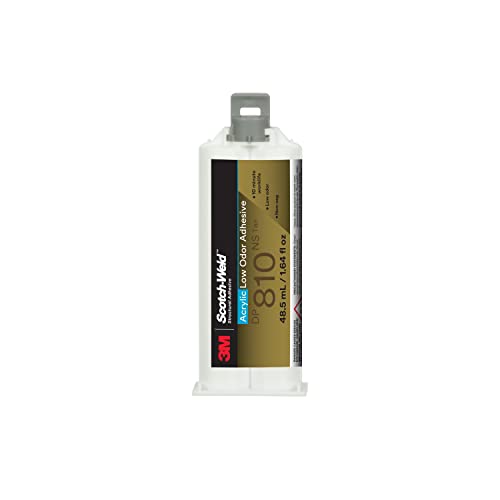
The 3M Scotch-Weld DP810NS is the premium, heavy-duty solution for bonding acrylic when a solvent weld isn’t practical—particularly when you need to join acrylic to oily metals, composites, or other plastics. Unlike solvent cements that chemically dissolve the surface, this two-part methyl methacrylate (MMA) forms a tough, impact-resistant structural bond that is non-sagging and cures at room temperature. Its 10-minute work life and 20-minute handling strength make it fast enough for production work but forgiving enough for precise positioning.
This is the adhesive of choice in demanding environments like golf club building, where high swing speeds and oily shaft surfaces require a bond that won’t fail. The DP810NS formulation is “non-sag,” meaning it stays exactly where you put it without running down vertical surfaces. This makes it ideal for bonding acrylic brackets, automotive repairs, and structural plastic assemblies where a visible glue line is acceptable. It delivers high shear and peel strength with minimal surface prep, even on oily or lightly contaminated substrates.
The primary trade-off is the dedicated dispensing gun required for the duo-pak cartridge and the higher cost per ounce compared to solvent cements. If you are bonding acrylic to acrylic in a visible seam, a solvent weld (like Weld-On or Craftics) will be more invisible. However, for any application involving metal, high-impact requirements, or low-odor workplace needs, the 3M DP810NS is the undisputed professional’s choice.
Why it’s great
- Bonds acrylic to oily metals with almost no prep
- Non-sag formula stays put on vertical surfaces
- Low odor and non-flammable for indoor use
Good to know
- Requires 3M mixing nozzle and dispenser gun
- More expensive per application than solvent cements
2. 3M 467MP Adhesive Transfer Tape
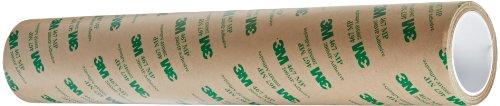
The 3M 467MP is not a liquid or a glue; it is a high-performance acrylic adhesive transfer tape designed for bonding graphic nameplates, membrane switches, and metal rating plates to acrylic surfaces. With a thickness of only 2.3 mils, it creates an incredibly thin, uniform bond line that resists edge lifting and solvent intrusion. This makes it a favorite among sign makers and laser engravers who need a clean, professional lamination without the mess of liquid adhesives.
This tape uses 3M’s 200MP High Performance Acrylic Adhesive, which provides excellent adhesion to high surface energy plastics and textured metals. It excels in applications where a liquid glue would bleed or create an uneven layer, such as inlay work for layered signs or bonding thin veneers. Users consistently report that it cuts cleanly without gumming up blades and that the bond strengthens significantly over 24 to 48 hours, reaching a near-permanent hold.
The key limitation is that this is a film, not a gap-filler. It requires clean, flat, and well-mated surfaces to work effectively. It cannot fill gaps or bond irregular joints the way a solvent cement or structural adhesive can. For crafters who need a consistent, mess-free bond on flat acrylic parts, the 467MP is a brilliant tool. For joining two pieces of acrylic edge-to-edge, you need a liquid solvent cement instead.
Why it’s great
- Ultra-thin bond line, invisible under clear acrylic
- Excellent resistance to moisture, heat, and solvents
- Cuts cleanly for precise custom shapes
Good to know
- Not a gap-filler; surfaces must be flat and flush
- Can be challenging to position without wrinkling
3. WELD-ON 16 Acrylic Plastic Cement

WELD-ON 16 is the gold standard for medium-bodied solvent welding of acrylic. Unlike watery formulas that run everywhere, this cement has a syrupy viscosity that stays where you put it, making it the go-to choice for vertical seams, gap-filling, and any joint where you need a bit of working time. It chemically fuses cast acrylic, Plexiglass, Lucite, and polycarbonate into a single monolithic piece, and the bond line is clear and nearly invisible when properly applied.
One of the standout features of WELD-ON 16 is its 5 to 6 minute working time, which gives you enough room to align parts before the solvent begins to set. This is crucial for large display cases, aquariums, or multi-part fabrications where precision matters. The low-VOC formulation is a meaningful improvement over older solvent cements, reducing the harsh fumes without sacrificing bonding performance. It also bonds to styrene, ABS, and butyrate, making it a versatile addition to any workshop.
The main drawback is that the included applicator tip can be less precise than a needle applicator. Also, because it is solvent-based, it can mar or “shock frost” acrylic if used too liberally or in high humidity conditions. For hobbyists assembling laser-cut kits or 3D printed PLA parts, a slightly thinner formula like the Berkland cement might be easier to control. But for serious fabrication, WELD-ON 16 is a top-tier performer.
Why it’s great
- Medium body stays on vertical surfaces without dripping
- Strong, clear bond that is nearly invisible
- Longer working time for complex assemblies
Good to know
- Strong fumes require good ventilation
- Can cause fogging if applied too heavily
4. LITKO Craftics #33 Thick Acrylic Cement
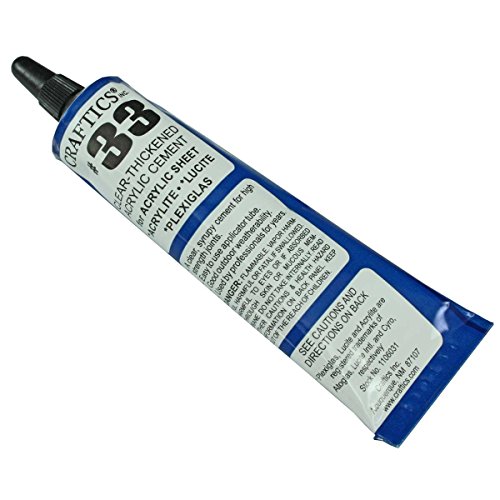
The LITKO Craftics #33 is the #1 recommendation for anyone assembling laser-cut acrylic hobby kits. Whether you’re building dice towers, display stands, tokens, or model components, this medium-bodied solvent cement is formulated specifically to not fog or cloud transparent acrylic. It fills small gaps while still providing the molecular-weld strength that makes solvent cements superior to any type of glue.
Users consistently report that this product produces “invisible” bonds on clear acrylic fish tank lids and model bases. The thickened formula allows for a slight delay before setting, giving you time to position parts perfectly. It also bonds to polycarbonate, rigid PVC, and styrene, making it useful for a wider range of hobby plastics. The tube dispenser is small but efficient—a little goes a long way on small parts, and the product has a shelf life of up to 24 months if stored properly.
The only complaint from experienced users is that the cement is somewhat runny despite being labeled “thick”—it requires careful application to avoid drips. Once applied, the bond is instantaneous and there is no going back to adjust the joint. If you need a formula that is truly gel-like for vertical seams, the WELD-ON 16 is a better choice. For small, precise hobby work on clear acrylic where fogging must be avoided, the Craftics #33 is the clear winner.
Why it’s great
- Specifically designed not to fog clear acrylic
- Dries completely clear and invisible
- Great for small, laser-cut hobby parts
Good to know
- Can be runny; needs careful application
- No working time once surfaces touch
5. Berkland Acrylic Bonding Cement
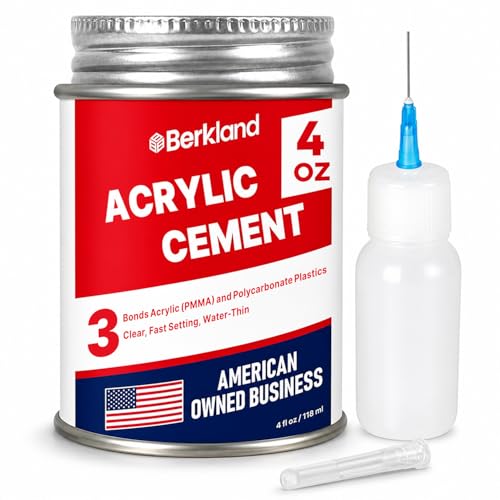
The Berkland Acrylic Bonding Cement is a water-thin solvent weld that leverages capillary action to flow into even the tightest joints between acrylic or Plexiglass sheets. If you’ve ever struggled to apply glue to a perfectly fitted seam without making a mess, this is the solution. The included applicator bottle with a fine needle tip allows you to run a bead along the joint line and watch the cement pull itself into the gap through capillary force, creating a clean, strong bond with zero squeeze-out on the surface.
This cement is functionally equivalent to the industry standard Weld-On #3. It sets in minutes, creating an initial bond strong enough to handle, with full cure reaching 24 hours. It excels on display cases, signs, and box joints where the acrylic edges are flush. Many users report excellent results on 3D printed PLA parts, where the thin formula seeps into layer lines for a bond that is stronger than the surrounding plastic. The low odor is a pleasant surprise for a solvent-based product.
The trade-off with any water-thin cement is the lack of gap-filling ability and the risk of “shock frosting” if over-applied. The included needle tip is functional but some users prefer a narrower gauge for ultra-precise work. This is not the right tool for porous or rough edges—you need a medium-bodied cement for that. For clean, precision edge-welding on well-fitted acrylic parts, the Berkland cement delivers professional-grade results at a budget-friendly cost.
Why it’s great
- Capillary action creates clean, invisible joints
- Precision needle applicator for controlled flow
- Low odor for a solvent weld
Good to know
- Will not fill gaps; joints must be flush
- Can mar the surface if too much is applied
6. LEENEXUS Super Glue for Plastic
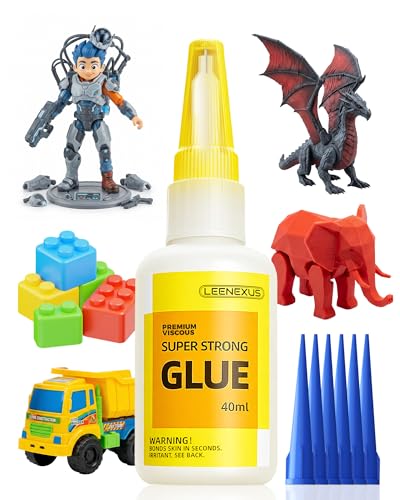
The LEENEXUS Super Glue is a high-viscosity gel cyanoacrylate that bridges the gap between a general-purpose super glue and a plastic-specific adhesive. While it is not a solvent weld and will not chemically fuse acrylic, it offers a strong, impact-resistant bond on clear plastics without the mess of watery adhesives. The “Micro-Anchor Technology” is designed to grip into microscopic pores, making it effective for bonding acrylic to ceramics, metal, or leather—materials that solvent cements cannot handle.
This product shines as a multi-material fixer for household repairs, model kits, and 3D printed parts. The medium gel consistency gives you control on vertical surfaces, and the included 6 precision tips and cleaning needle ensure the bottle stays usable over time. Users report excellent results on PLA and ABS, with a set time of 15 to 45 seconds that gives enough time for alignment. The bond dries crystal clear, and the 40ml bottle offers outstanding value compared to tiny tubes of branded super glue.
The core limitation is that this is still a surface glue, not a chemical weld. On pure acrylic-to-acrylic joints, a solvent cement will be stronger and more invisible. Additionally, cyanoacrylate can cause whitening (blooming) on clear acrylic if applied too thickly or in high humidity. For quick repairs and mixed-material projects, this is an excellent versatile tool. For a permanent, invisible weld on clear acrylic, stick with a dedicated solvent cement.
Why it’s great
- Gel formula won’t run or drip on vertical surfaces
- Excellent for bonding acrylic to metal, leather, or ceramic
- Anti-clog cap and included cleaning needle
Good to know
- Not a chemical weld; weaker than solvent cement on acrylic
- May cause fogging on clear acrylic in humid conditions
7. KINLINK 12×16 Plexiglass Sheets
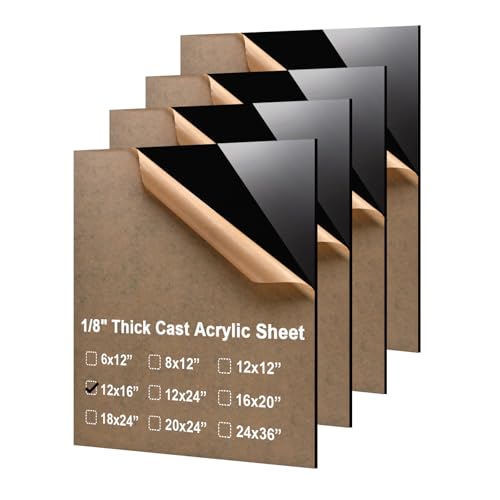
Please note: This product is raw acrylic sheeting, not an adhesive. It is included in this guide because selecting the correct material is the first step to a successful bonding project. The KINLINK 3mm black cast acrylic sheets are a high-quality substrate for laser cutting, engraving, sign making, and DIY fabrication. Cast acrylic is chemically different from extruded acrylic—it cuts more cleanly on a laser and produces a smoother flame-polished edge, which is critical for creating strong solvent-welded joints.
These sheets come in a 4-pack of 12×16 inch panels with protective paper on both sides. Users consistently praise the scratch-free surface and the clean cuts achievable with fine-tooth saw blades or CO2 lasers. The black color is a true opaque 0% light transmittance, making it ideal for laser-engraved signs and wedding decorations where the black background contrasts perfectly with the engraved white lettering. For hobbyists who need to work with acrylic, these sheets are a reliable and affordable supply.
If you are looking for an adhesive, skip this product and scroll back up to the WELD-ON 16 or Craftics #33. If you already have your cement and need high-quality acrylic to bond, the KINLINK sheets are a solid choice. Be aware that the material is slightly flexible at 3mm thickness and that laser cutting produces strong fumes requiring good ventilation. This is a four-star material for laser work, not an adhesive itself.
Why it’s great
- High-quality cast acrylic for clean laser and saw cuts
- Opaque black with no light bleed-through
- Protective film on both sides prevents scratches
Good to know
- This is raw material, not an adhesive
- 3mm can flex under load; not for load-bearing structures
FAQ
What is the difference between solvent cement and super glue for acrylic?
Can I use Weld-On 16 on clear acrylic without fogging it?
Will these adhesives work on 3D printed PLA and PETG?
What is the best adhesive for bonding acrylic to metal?
How long does acrylic cement take to fully cure?
Final Thoughts: The Verdict
For most users, the adhesive for acrylic winner is the WELD-ON 16 because it offers the best balance of working time, bond strength, and clarity for the widest range of acrylic projects. If you need a low-odor, high-impact bond for acrylic-to-metal applications, grab the 3M Scotch-Weld DP810NS. And for hobbyists working on small clear acrylic kits where fogging is unacceptable, nothing beats the LITKO Craftics #33.