
An at-home speaker system is the difference between music playing in your room and *feeling* the music in your room. The right speaker transforms a kitchen, living room, or home office into a personal sonic sanctuary — delivering clarity, depth, and presence that tinny laptop speakers and phone docks simply cannot achieve.
I’m Min — the co-founder and writer behind Gadgets Feed. I’ve spent countless hours analyzing frequency response graphs, driver configurations, amplifier topologies, and real user feedback across dozens of home speaker systems to separate true high-fidelity performers from overhyped gimmicks.
Whether you value audio purity or smart-home integration, choosing the best at home speaker means understanding how your room size, music tastes, and connectivity needs align with the speaker’s technical foundation.
How To Choose The Best At Home Speaker
Selecting an at home speaker requires balancing acoustic performance, connectivity versatility, and physical fit within your space. The wrong pick leaves you with either underpowered sound that strains at moderate volumes or a speaker that overwhelms a small room with boomy bass. Focus on three core pillars to find your match.
Driver Configuration and Cabinet Design
The driver array — woofer size, tweeter type, and number of drivers — determines how the speaker reproduces low, mid, and high frequencies. A larger woofer (5.25 inches or bigger) delivers deeper bass without relying on a separate subwoofer. Silk dome tweeters produce smoother highs than metal dome alternatives, making them better for long listening sessions. Cabinet construction matters: MDF and internally braced enclosures reduce unwanted resonance and cabinet coloration that cheap plastic housings introduce.
Amplification: Active vs. Passive
Active speakers contain a built-in amplifier matched to the drivers, eliminating guesswork and external boxes. They simplify setup and generally arrive with pre-optimized crossovers and EQ curves. Passive speakers require a separate amplifier or AV receiver, giving you upgrade flexibility but adding cost and complexity. For most home listeners, active speakers provide the quickest path to high-quality sound without troubleshooting impedance matching or amplifier clipping.
Connectivity and Ecosystem Fit
Evaluate how the speaker integrates into your existing media environment. Wi-Fi streaming (AirPlay 2, Google Cast, Spotify Connect) offers lossless multi-room audio because the music is streamed directly over your network rather than compressed over Bluetooth. Bluetooth 5.x with aptX or LDAC supports high-quality wireless transmission when Wi-Fi is unavailable. Physical inputs — RCA, 3.5mm aux, and HDMI eARC — ensure compatibility with turntables, CD players, and televisions without adapter dongles.
Quick Comparison
On smaller screens, swipe sideways to see the full table.
| Model | Category | Best For | Key Spec | Amazon |
|---|---|---|---|---|
| Sony SS-CS5M2 | Passive Bookshelf | Critical listening with dedicated amp | 53 Hz – 50 kHz frequency response | Amazon |
| Sonos Era 100 SL | Wireless Smart | Multi-room seamless music streaming | Dual angled tweeters + midwoofer | Amazon |
| WiiM Sound Lite | Smart Wi-Fi | Hi-res streaming + room correction | 24-bit/192 kHz + Wi-Fi 6E | Amazon |
| Marshall Stanmore III | Aesthetic Bluetooth | Design-forward room with big sound | Wider soundstage + Bluetooth 5.2 | Amazon |
| Bose Lifestyle Ultra | Premium Smart | TrueSpatial surround + Alexa+ | 7.27H x 4.77W inches compact | Amazon |
| Polk Audio ES20 | Passive Bookshelf | Home theater surround pair | 6.5″ woofer + Power Port bass | Amazon |
| Sonos Arc Ultra | Soundbar | Immersive Dolby Atmos TV sound | 9.1.4 channels + Sound Motion | Amazon |
| Edifier R1280T | Active Bookshelf | Affordable desktop stereo sound | 42W RMS + 13mm silk tweeter | Amazon |
| Panasonic SC-PM270 | Compact Micro System | CD + radio + Bluetooth in one | 20W RMS + 10cm woofer | Amazon |
In‑Depth Reviews
1. Sony CS Speakers, SS-CS5M2

The Sony SS-CS5M2 brings a genuine 3-way, 3-driver design to the compact bookshelf format — a feature rarely seen at this price tier. A 5.12-inch woofer handles lows, a dedicated high-precision tweeter covers mids and presence, and a wide-dispersion super tweeter extends the frequency range up to 50 kHz for hi-res audio compliance. The bass reflex enclosure keeps low frequencies clean without port chuffing, which means you can push them near their limits without audible distortion creeping in.
These passive speakers reward careful partnering with a quality amplifier or AV receiver. The soundstage opens up significantly with proper placement — pull them at least six inches from the rear wall and toe them in slightly toward the listening position. Mids come across as exceptionally clear for jazz vocals and acoustic guitar, while the super tweeter adds air and shimmer to cymbals and string harmonics without sounding harsh or fatiguing.
The main trade-off is bass extension below 60 Hz; a subwoofer fills in the lower octaves for movie explosions or electronic bass lines. At this price point, the SS-CS5M2 offers sophisticated imaging that far exceeds what single-driver smart speakers can do. Pair them with a mid-range Sony AV receiver and you have a true hi-fi foundation that grows with your system over time.
Why it’s great
- 3-way driver architecture with dedicated super tweeter for extended highs
- Wide soundstage with excellent off-axis performance
- Hi-Res Audio certified with 53 Hz to 50 kHz range
Good to know
- Requires external amplifier or AV receiver — not self-powered
- Bass drops off noticeably below 60 Hz without a subwoofer
- Rear-ported design needs clearance from the wall
2. Sonos Era 100 SL
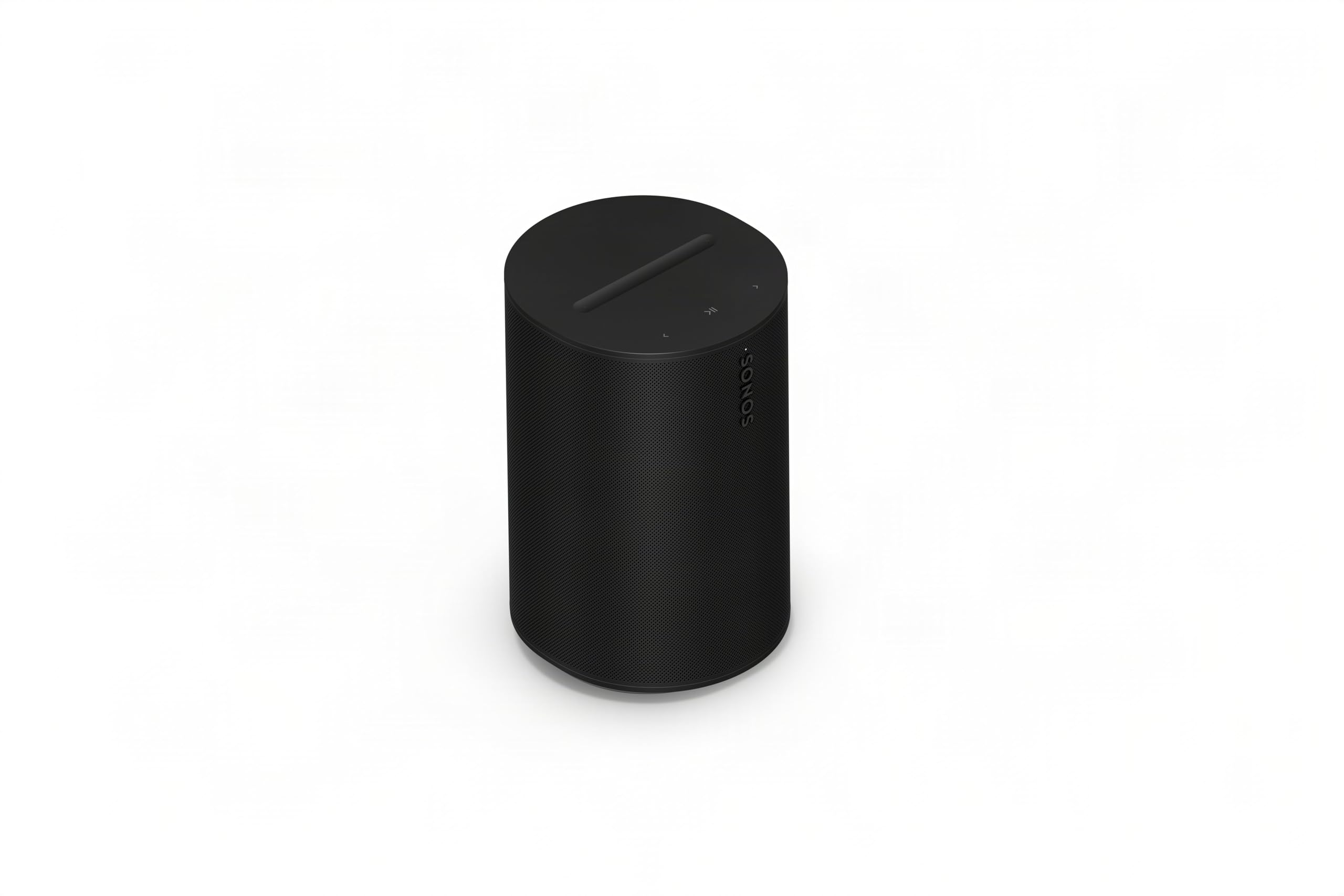
The Sonos Era 100 SL strips the microphone array from the standard Era 100 but retains the same dual-angled tweeter and midwoofer acoustic architecture. Those angled tweeters create genuine stereo separation from a single cabinet, projecting left and right information across a wider listening window than typical mono smart speakers. The midwoofer delivers bass that feels punchy and controlled rather than boomy, which is impressive given the compact 7.22-inch height.
Setup takes minutes through the Sonos app, and the speaker immediately joins your home network for Wi-Fi streaming. Trueplay tuning measures the room’s reflections and adjusts the EQ to compensate for hard surfaces or soft furnishings, which dramatically improves clarity in acoustically imperfect spaces. It supports AirPlay 2, Spotify Connect, and Sonos’s own multi-room protocol, making it trivial to group with other Sonos speakers throughout your home.
The line-in adapter (sold separately) allows connection to a turntable or other analog source, though most users will never need it. The lack of a microphone means no voice assistant control, but that trade-off also eliminates listening privacy concerns. For listeners who want effortless, high-resolution wireless audio that fills a medium-sized room with detailed stereo imaging, the Era 100 SL delivers a polished experience that remains simple to expand later.
Why it’s great
- Dual angled tweeters produce true stereo separation from a single speaker
- Trueplay room calibration optimizes sound for any space
- Seamless multi-room grouping with other Sonos devices
Good to know
- No built-in microphone for voice assistant control
- Line-in adapter required for analog sources and sold separately
- Requires stable Wi-Fi network for full functionality
3. WiiM Sound Lite Smart Speaker
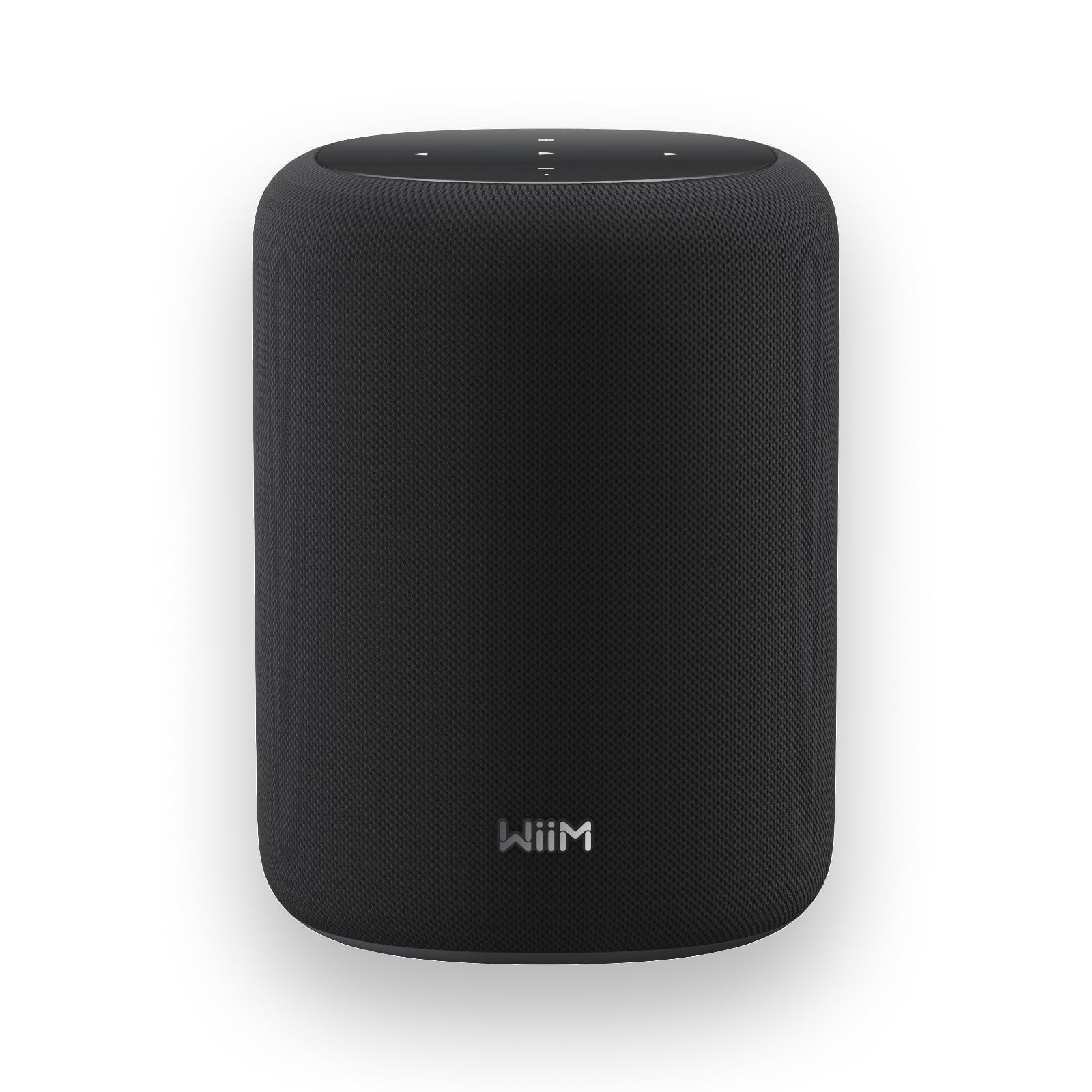
The WiiM Sound Lite arrives as a dark horse in the smart speaker category, prioritizing audio resolution over flashy features. It supports 24-bit/192 kHz hi-res streaming through Wi-Fi 6E and Bluetooth 5.3, ensuring your lossless tracks from Tidal or Qobuz reach the drivers without downsampling. Internally, a 100W peak amplifier drives a 4-inch paper-cone woofer and dual 1-inch silk-dome tweeters — a configuration that produces natural mids and smooth, non-fatiguing highs even at higher listening levels.
AI RoomFit room correction is the standout feature here. The speaker plays a series of test tones and measures how your room’s surfaces and furniture affect the frequency response, then applies corrective EQ automatically. This fixes the common problem of boomy bass in small rooms or recessed mids caused by absorbing furniture. The effect is dramatic: the same speaker sounds balanced and clear whether placed on a kitchen counter, a bookshelf, or inside a media cabinet.
Multi-room pairing works through Google Cast, Alexa Cast, or WiiM’s own app, and you can pair two units for true left-right stereo separation. The only real compromise is the absence of a physical screen or remote — all control goes through the app or voice assistants. For the hi-fi enthusiast who wants smart features without sacrificing bit-perfect audio, the WiiM Sound Lite offers a compelling mix of high-resolution capability and intelligent room adaptation that few competitors match at this level.
Why it’s great
- 24-bit/192 kHz hi-res streaming over Wi-Fi 6E
- AI RoomFit correction adapts sound to room acoustics automatically
- Dual silk-dome tweeters deliver smooth, detailed highs
Good to know
- No physical remote or display — app-dependent control
- 100W peak rating is short-term burst, not continuous RMS
- Software can be immature; occasional reconnection needed
4. Marshall Stanmore III

The Marshall Stanmore III trades on its iconic rock-concert aesthetic, but the sound quality backs up the looks. The third-generation model widens the soundstage compared to its predecessor, projecting Marshall’s signature forward midrange and articulate high end across a large room. The built-in amplifier pushes enough power to fill a 1300-square-foot open-plan space without strain, making it one of the few compact plug-in speakers that can handle a party atmosphere without breaking a sweat.
Physical bass and treble knobs on the top panel give you immediate tonal control without diving into an app — just rotate to add weight or cut sizzle. The Bluetooth 5.2 connection pairs quickly and maintains a stable link at the standard 10-meter range. RCA and 3.5mm aux inputs on the rear accommodate a turntable or computer, turning the Stanmore III into the centerpiece of a minimalist vinyl setup without needing a separate phono preamp.
The trade-off is that the Stanmore III is not a true stereo speaker — it outputs a wide mono signal rather than discrete left-right channels. Purists who want precise imaging may prefer a stereo pair of bookshelf speakers. But for a single-cabinet home speaker that delivers authoritative sound, retro style, and straightforward operation, the Stanmore III justifies its premium positioning with build quality and acoustic presence that few lifestyle speakers can match.
Why it’s great
- Wide, room-filling projection with Marshall’s signature midrange
- Physical bass and treble knobs for instant tonal adjustment
- RCA and 3.5mm inputs compatible with turntables and computers
Good to know
- Mono output, not discrete stereo imaging
- Not portable; requires constant power connection
- Lower volume ceiling compared to larger bookshelf+amp combinations
5. Bose Lifestyle Ultra Speaker
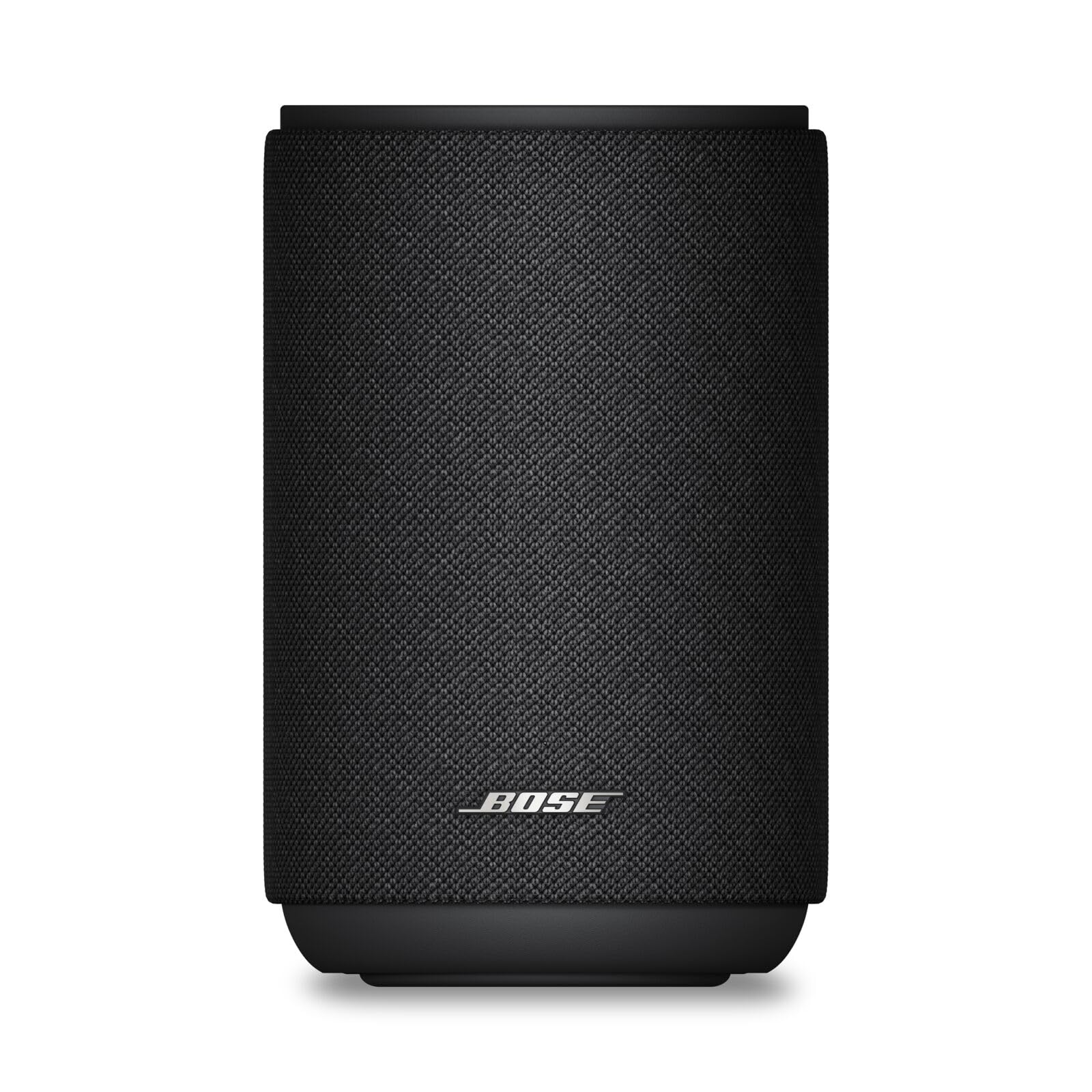
Bose repositions its home speaker strategy with the Lifestyle Ultra, a compact wireless speaker that uses TrueSpatial Audio processing to create an expansive, room-filling soundstage from a single cabinet. CleanBass technology keeps the low end articulate even when the volume pushes high, avoiding the bloat that plagues lesser speakers. The 7.27-inch height makes it unobtrusive enough for a kitchen counter or bookshelf, yet the acoustic output easily covers a 400-square-foot living area.
Connectivity is comprehensive: Wi-Fi, Bluetooth, AirPlay 2, Google Cast, and Spotify Connect are all built-in, plus a physical AUX input for legacy devices. The all-new Alexa+ integration provides voice control over playback, smart home devices, and even EQ presets through the Bose app. Bose also supports multi-room grouping, so adding a second Lifestyle Ultra for stereo or distributing units across your home is straightforward through the app interface.
TrueSpatial Audio is not the same as Dolby Atmos from a soundbar — it uses psychoacoustic processing to widen the perceived sound field rather than bouncing sound off ceilings. This works exceptionally well for ambient background music and vocal-forward content, though critical listeners may prefer the precise driver placement of a dedicated stereo pair. The app, while feature-rich, occasionally suffers from connectivity glitches that require re-launching.
Why it’s great
- TrueSpatial Audio processing creates wide, immersive sound from a single cabinet
- CleanBass maintains low-end clarity at high volumes without distortion
- Supports AirPlay 2, Google Cast, Spotify Connect, and AUX input
Good to know
- TrueSpatial processing is psychoacoustic, not physically discrete Atmos
- Bose app can be unreliable with occasional crash cycles
- Requires two units for true stereo separation
6. Polk Audio Signature Elite ES20

The Polk ES20 bookshelf speakers pack a 6.5-inch woofer into a cabinet that belies its size, producing bass that feels three decibels louder than conventional ported designs thanks to Polk’s patented Power Port technology. That flared port extends down the rear baffle and exits through a slot at the bottom, minimizing turbulence and port noise while coupling the rear wave more efficiently to the room. The result is surprising low-end extension from a speaker that fits comfortably on a standard bookshelf.
The Dynamically Balanced Acoustic Array pairs a 1-inch Terylene tweeter with the 6.5-inch woofer through precision crossovers. The tweeter avoids the metallic sheen that can cause listener fatigue, instead rendering vocals and violins with a warm, natural presence. Sensitivity is high enough that modest amplifiers — even 50-watt receivers — can drive them to satisfying levels without strain, though the ES20s truly shine with 80+ watts behind them.
These speakers are physically larger and deeper than typical bookshelf models, so confirm your shelf or stand dimensions before purchasing. The walnut vinyl finish looks premium from a few feet away but reveals its textured surface up close. Used as part of a surround setup with Polk’s ES60 towers and center channel, the ES20s integrate seamlessly due to timbre-matched drivers across the series, making them a smart choice for building a whole-home theater system incrementally.
Why it’s great
- Power Port technology yields 3dB louder bass with less distortion
- Warm Terylene tweeter reduces listener fatigue during long sessions
- High sensitivity pairs easily with a wide range of amplifiers
Good to know
- Large cabinet depth may not fit shallow bookshelves
- Faux wood vinyl finish lacks the tactile quality of real veneer
- Harsh treble reported before driver break-in period
7. Sonos Arc Ultra Soundbar

The Sonos Arc Ultra redefines what a soundbar can achieve with its 9.1.4-channel array and Sound Motion technology, which miniaturizes the transducer architecture to pack more drivers into a sleek chassis. Dolby Atmos content sounds genuinely three-dimensional: overhead effects for rain and helicopters pan convincingly above the listening position, while the wide soundstage places dialogue firmly at the screen center without sounding locked to the bar. AI-powered Speech Enhancement detects human voices and boosts clarity without making everything sound processed or hollow.
Setup requires a single HDMI eARC connection to your TV, after which the Sonos app walks you through Trueplay room calibration. The Arc Ultra also streams music over Wi-Fi, Bluetooth, AirPlay 2, and Spotify Connect, functioning as a standalone high-end speaker when you are not watching movies. Adding the Sonos Sub and Era 300 rears completes a reference-level surround system that rivals dedicated separates costing twice the price.
At this price point, the Arc Ultra is an investment that pays off best for home theater enthusiasts who watch Dolby Atmos content regularly. In smaller rooms, the bass output may be sufficient without a subwoofer, but large open spaces benefit from the Sub’s extension. The app, while functional, remains the weakest link — past reliability issues with Sonos’s software update rollouts have left some users wary, though the system has stabilized significantly in recent months.
Why it’s great
- 9.1.4-channel Dolby Atmos with convincing height effects from a single bar
- AI Speech Enhancement clarifies dialogue without unnatural processing
- Versatile music streaming via Wi-Fi, AirPlay 2, and Spotify Connect
Good to know
- Premium pricing; optimal Atmos requires adding Sub and rear speakers
- Sonos app has historical reliability concerns with software updates
- HDMI eARC input only — no analog or optical passthrough
8. Edifier R1280T
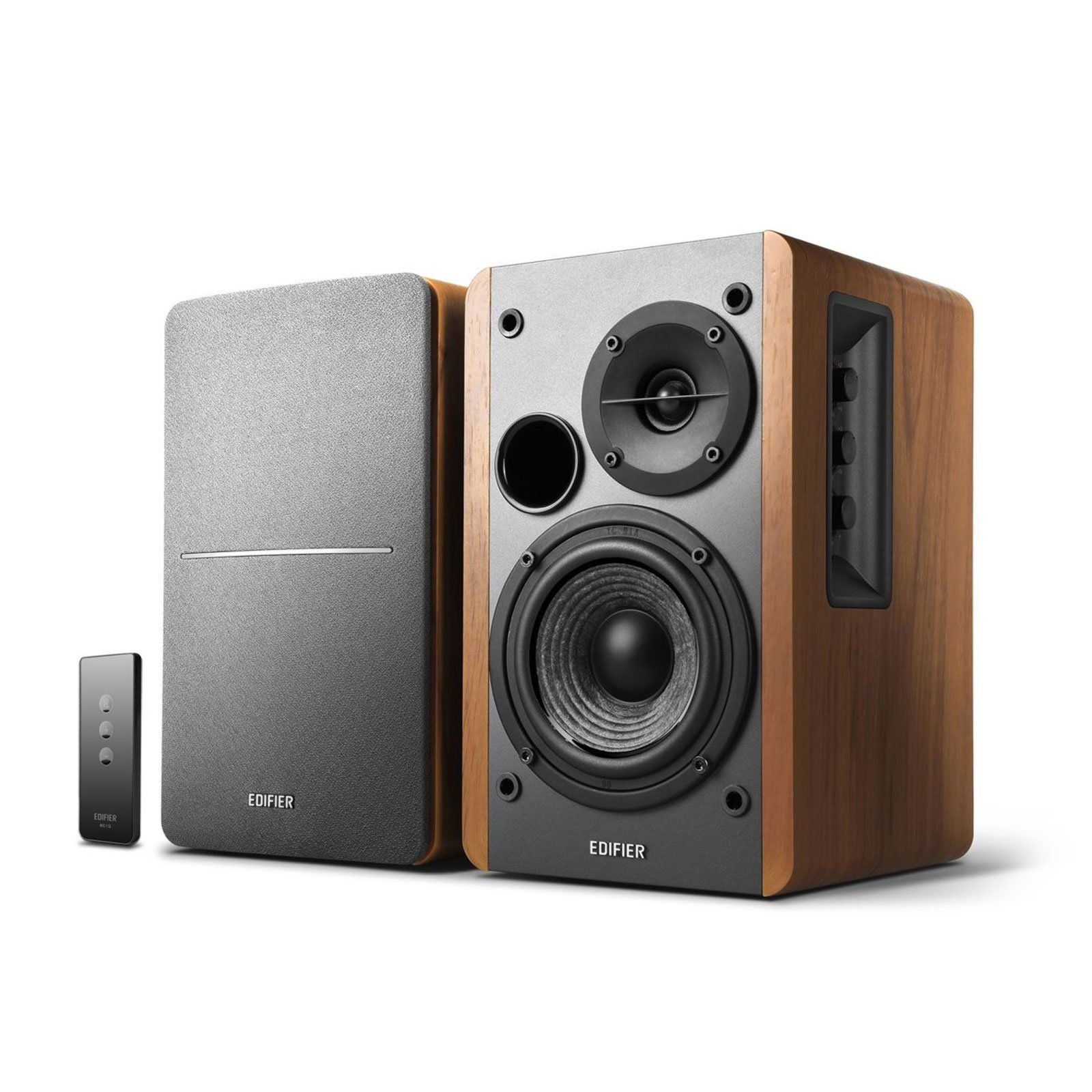
The Edifier R1280T has earned its reputation as the benchmark entry-level active bookshelf speaker. It pairs a 13mm silk dome tweeter with a 4-inch full-range driver powered by a 42W RMS amplifier, producing a sound signature that leans slightly warm but remains articulate enough for critical listening. The MDF wood cabinet — finished in a wood-effect vinyl — reduces resonance compared to the plastic housings common at this price, giving the R1280T a physical heft that signals higher build quality than its price tier suggests.
Dual AUX inputs let you connect two sources simultaneously, which is a practical feature for desktop setups bridging a computer and a turntable. The side-panel knobs control volume, bass, and treble independently, allowing fine tonal adjustment without a remote. Speaking of which, a basic remote is included for volume control from across the room, though the IR sensor requires line-of-sight to the active speaker.
The lack of Bluetooth is the most significant omission in an era of wireless everything. You can add a cheap Bluetooth receiver via AUX, but that adds cost and another box. Some listeners also note a slight coloration in the upper midrange that can make vocals sound a bit boxy compared to studio monitors. Still, for a pure wired stereo setup on a tight budget — especially paired with a TV headphone jack or a computer — the R1280T delivers sound quality that punches well above its weight and has proven reliable over years of daily use.
Why it’s great
- Silk dome tweeter delivers smooth, non-fatiguing high frequencies
- Dual AUX inputs allow simultaneous connection of two sources
- MDF cabinet construction reduces resonance for cleaner audio
Good to know
- No Bluetooth — wired AUX input only
- Upper midrange coloration can make some vocals sound boxy
- Remote requires direct line-of-sight to the active speaker
9. Panasonic SC-PM270PP-K

The Panasonic SC-PM270 revives the classic mini stereo system format for listeners who still own physical media. It combines a slot-loading CD player, FM radio tuner, and Bluetooth receiver into a single compact main unit connected to two passive speakers, each housing a 10cm woofer and 6cm tweeter with a bass reflex port. The total 20W RMS output (10W per channel) is modest by modern standards but perfectly adequate for bedroom, kitchen, or small office listening at moderate volumes.
Bluetooth Re-Master compensates for compression artifacts introduced during wireless streaming, restoring some of the signal clarity lost over the air. The result is noticeably cleaner Bluetooth audio than most budget micro systems deliver — voices sound less veiled, and cymbals retain more of their natural decay. FM radio reception is excellent, and the front-panel controls plus included remote make everyday operation straightforward without needing to glance at a phone screen.
The limitations are clear: there is no AUX input, headphone jack, or USB playback, which restricts connectivity to Bluetooth, CD, or radio only. The speakers themselves are lightweight and cannot produce deep bass below about 80 Hz, so electronic and hip-hop genres lack subwoofer slam. For its intended audience — someone who wants to listen to CDs and FM radio with the convenience of Bluetooth from their phone — the SC-PM270 delivers a compact, well-built, and sonically respectable package that preserves the simplicity of dedicated stereo components.
Why it’s great
- Built-in CD player and FM radio for physical media enthusiasts
- Bluetooth Re-Master restores compressed signal clarity effectively
- Compact footprint with simple front-panel and remote operation
Good to know
- No AUX, headphone, or digital inputs — limited connectivity
- 20W RMS output is low; struggles to fill large rooms cleanly
- Lightweight speakers lack deep bass extension below 80 Hz
FAQ
Do I need a subwoofer for home bookshelf speakers?
Can I connect a turntable to these home speakers?
Final Thoughts: The Verdict
For most users, the best at home speaker winner is the Sony SS-CS5M2 because its 3-way driver design and extended high-frequency response unlock true hi-fi detail when paired with a quality amplifier, offering a foundation that grows with your system over years. If you want effortless multi-room wireless streaming without extra gear, grab the Sonos Era 100 SL for its seamless app integration and Trueplay room tuning. And for living-room theater immersion, nothing beats the Sonos Arc Ultra with its 9.1.4-channel Dolby Atmos array that transforms movie night into a cinematic event without requiring in-ceiling speakers.