
Making the switch from heavy, slow-dying lead-acid batteries to a modern lithium-ion setup is one of the highest-return upgrades you can make for your RV, trolling motor, or solar system. The core promise is simple: more usable energy, delivered at a fraction of the weight, over thousands of cycles instead of hundreds. But not every drop-in replacement delivers on that promise, and the technical specs separating a smart buy from a frustrating one can be subtle.
I’m Min — the co-founder and writer behind Gadgets Feed. This guide is built on cross-referencing datasheets, analyzing battery management system configurations, and parsing hundreds of real-world user reports to isolate the specs that genuinely matter for deep-cycle 12V lithium power.
Whether you are powering a weekend fishing trip or a full-time off-grid home, choosing the right li ion 12v battery comes down to matching your amp-hour needs, physical footprint, and BMS features to your actual load profile.
How To Choose The Best Li Ion 12V Battery
Selecting a drop-in lithium battery isn’t just about voltage matching. The chemistry, physical dimensions, and the quality of its internal management system dictate whether it becomes a set-and-forget power source or a recurring headache.
Capacity and Chemistry: Amp-Hours vs. Real Energy
Most lithium drop-ins labeled “12V” run at a nominal 12.8V. The amp-hour (Ah) rating tells you the bucket size, but usable capacity depends on the BMS low-voltage cutoff. A 100Ah LiFePO4 battery often delivers 100Ah usable, whereas a lead-acid of the same rating only provides about 50Ah to avoid deep discharge damage. For high-drain applications like trolling motors or inverters, a 100Ah lithium battery effectively doubles your runtime compared to an equivalent lead-acid.
The BMS: The Brain Behind the Brawn
Every lithium battery relies on its Battery Management System to prevent overcharge, over-discharge, over-current, and short circuits. A 100A BMS continuous rating means it can sustain a 100A draw (roughly 1280W) indefinitely, but peak surge capacity varies. For motor starting or inverter loads with high inrush current, a higher BMS rating or a model with a dedicated surge allowance is critical. Low-temperature charging protection is a non-negotiable BMS feature if the battery will ever be charged below freezing.
Physical Footprint and Terminals
Group 24 (roughly 10.2″ x 6.6″ x 8.2″) and Group 31 (roughly 13″ x 6.8″ x 8.4″) are the most common sizes for drop-in replacements. Always verify the terminal type (M8 is standard for most lithium units) and whether the posts are long enough to accommodate stacked ring terminals for parallel connections. Some budget units ship short bolts that require a trip to the hardware store.
Quick Comparison
On smaller screens, swipe sideways to see the full table.
| Model | Category | Best For | Key Spec | Amazon |
|---|---|---|---|---|
| ECO-WORTHY 280Ah Metal Case | Premium | Full-time RV / Off-Grid | 200A BMS, 3584Wh | Amazon |
| DUMFUME 12V 150Ah | Mid-Range | High-capacity solar banks | 4000+ cycles, 1920Wh | Amazon |
| Power Queen 12.8V 100Ah | Premium | Marine / Trolling Motors | TVS surge protector, 10°F discharge | Amazon |
| Wattcycle 12V 100Ah Group 24 | Mid-Range | General RV / Solar | 15000 cycles, -4°F discharge | Amazon |
| HumsiENK 12V 100Ah Bluetooth | Mid-Range | Bluetooth monitoring fans | IP65, 19.73 lbs | Amazon |
| HRBEENERGY 12.8V 100Ah | Mid-Range | Budget-friendly 100Ah | IP67 waterproof | Amazon |
| SEFEPODER 2 Pack 12V 15Ah | Budget | Small electronics / Scooters | 16A BMS, 3.1 lbs each | Amazon |
In‑Depth Reviews
1. ECO-WORTHY 12V 280Ah Metal Case
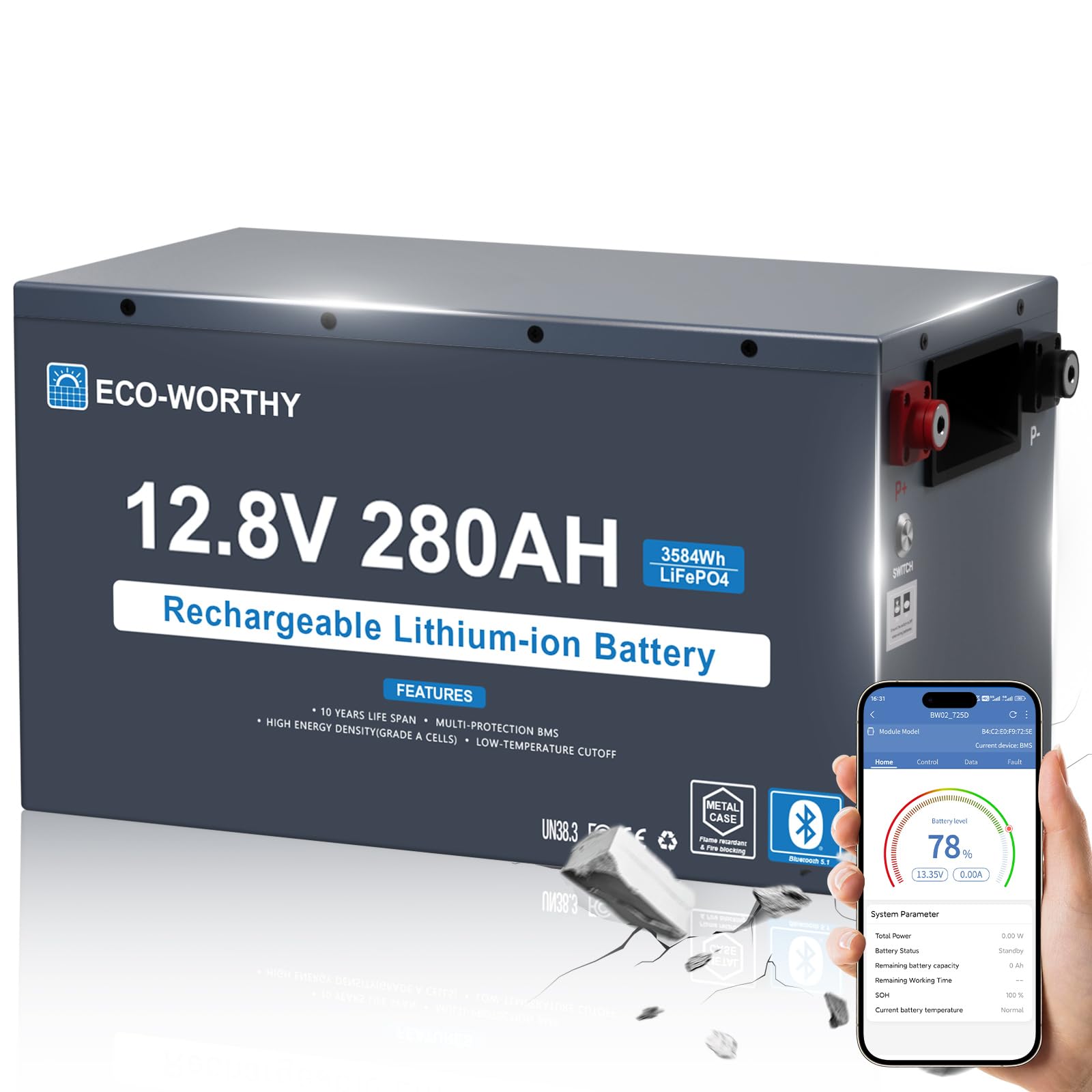
This 280Ah monster packs 3584Wh of stored energy into a rugged metal case, making it the ultimate single-battery solution for serious off-grid or full-time RV builds. The steel enclosure provides superior fire safety and shock resistance, and it includes mounting feet that eliminate the need for a separate battery box. A 200A continuous BMS handles high-draw inverters and large loads without breaking a sweat.
Bluetooth monitoring via the Overkill Solar-compatible app gives you real-time access to cell voltages, state of charge, and BMS status, all within a roughly 20-foot range. The low-temperature cutoff (20°F) protects cells during winter charging, while the integrated on/off switch simplifies installation and maintenance. Users consistently report that the battery exceeds its rated capacity out of the box.
At 68.5 pounds, it’s heavier than smaller lithium units but still lighter than a comparable lead-acid bank. It’s built for stationary or semi-stationary use — think camper vans, sheds, and solar sheds where the raw capacity justifies the footprint. The front-mounted terminals and tie-down brackets make wiring and security straightforward.
Why it’s great
- Massive 280Ah capacity in a single-unit metal case
- 200A BMS supports high-draw inverters
- Bluetooth app offers detailed cell-level monitoring
Good to know
- Heavy at 68.5 lbs for a lithium battery
- Large physical footprint requires dedicated space
2. Power Queen 12.8V 100Ah
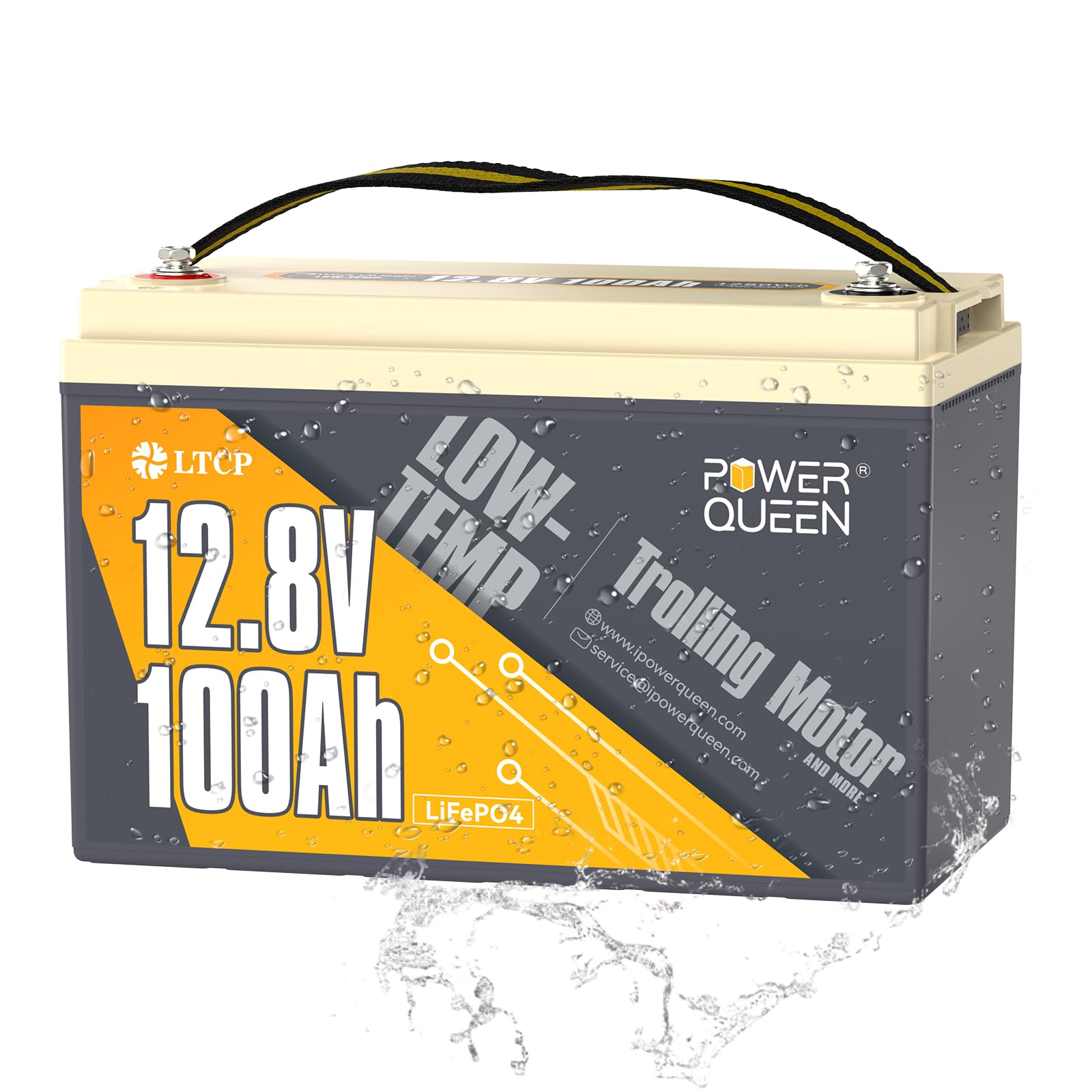
Power Queen’s 100Ah unit is engineered specifically for marine environments, with a built-in TVS surge protector that guards against the voltage spikes common with electric trolling motors up to 120lb thrust. The ABYC E-13 compliance means it meets rigorous safety standards for salt-spray, dust, and moisture resistance, making it a natural fit for bass boats, pontoons, and kayaks.
At just 22.16 pounds, it’s about 64% lighter than a lead-acid Group 31, significantly reducing your boat’s total weight for better handling. The low-temperature protection circuitry stops charging below 32°F and discharging below -4°F, specific protections that matter for off-season storage and early-morning winter fishing trips. Users report running a 50lb Minn Kota on high for four-hour sessions without draining the indicator.
The terminal bolts include flat and lock washers, and the strong plastic case with clear markings simplifies installation. It supports up to 4P4S configurations, allowing you to build a 51.2V 400Ah bank for larger solar or RV systems. If you are a dedicated angler or weekend boater, this is the most purpose-built marine lithium battery in this roundup.
Why it’s great
- TVS surge protector protects trolling motor electronics
- ABYC E-13 certified for marine safety
- Very light at 22.16 lbs
Good to know
- No Bluetooth monitoring included
- Group 31 size may be large for some battery trays
3. Wattcycle 12V 100Ah Group 24
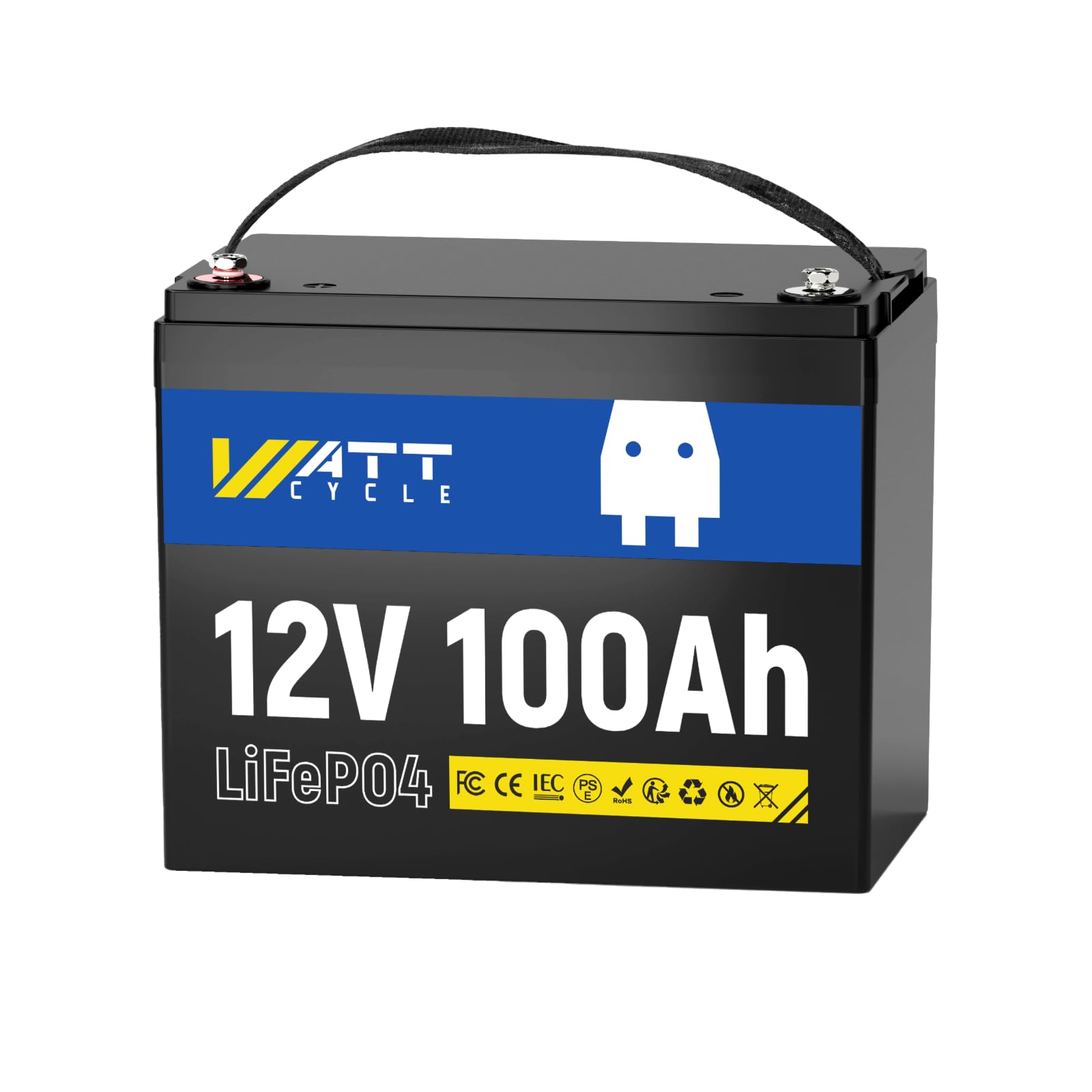
The Wattcycle 100Ah fits the popular Group 24 form factor (10.2 x 6.6 x 8.2 inches) at just 23.2 pounds, making it a drop-in replacement for countless RV battery trays and solar generator compartments. It packs a 100A BMS and claims up to 15,000 cycles, backed by A+ grade cells and certifications including SDS, UN38.3, and FCC. Users report that after heavy use with a 42A trolling motor, the batteries stayed well-balanced and recharged predictably.
Low-temperature protection cuts off charging below -4°F and discharging below -20°C, which is generous for an entry-level mid-range unit. It supports series connections up to 4S and parallel up to 4P, giving you room to expand to a 20.48kWh bank. The bolt posts are a known shortcoming — they ship with M8 x 16mm bolts, which are too short for stacked terminals in parallel setups, so budget for longer hardware if you plan to link multiple units.
There is no Bluetooth module, but for buyers who want a reliable, no-frills Group 24 with a strong cycle life warranty, this is a solid choice. The compact size also makes it a great fit for small camper vans and portable power stations where every inch counts.
Why it’s great
- True Group 24 size fits standard battery boxes
- 15,000-cycle rating with A+ cells
- Low-temp protection down to -4°F
Good to know
- Terminal bolts are too short for parallel connections
- No Bluetooth or app monitoring
4. HumsiENK 12V 100Ah with Bluetooth
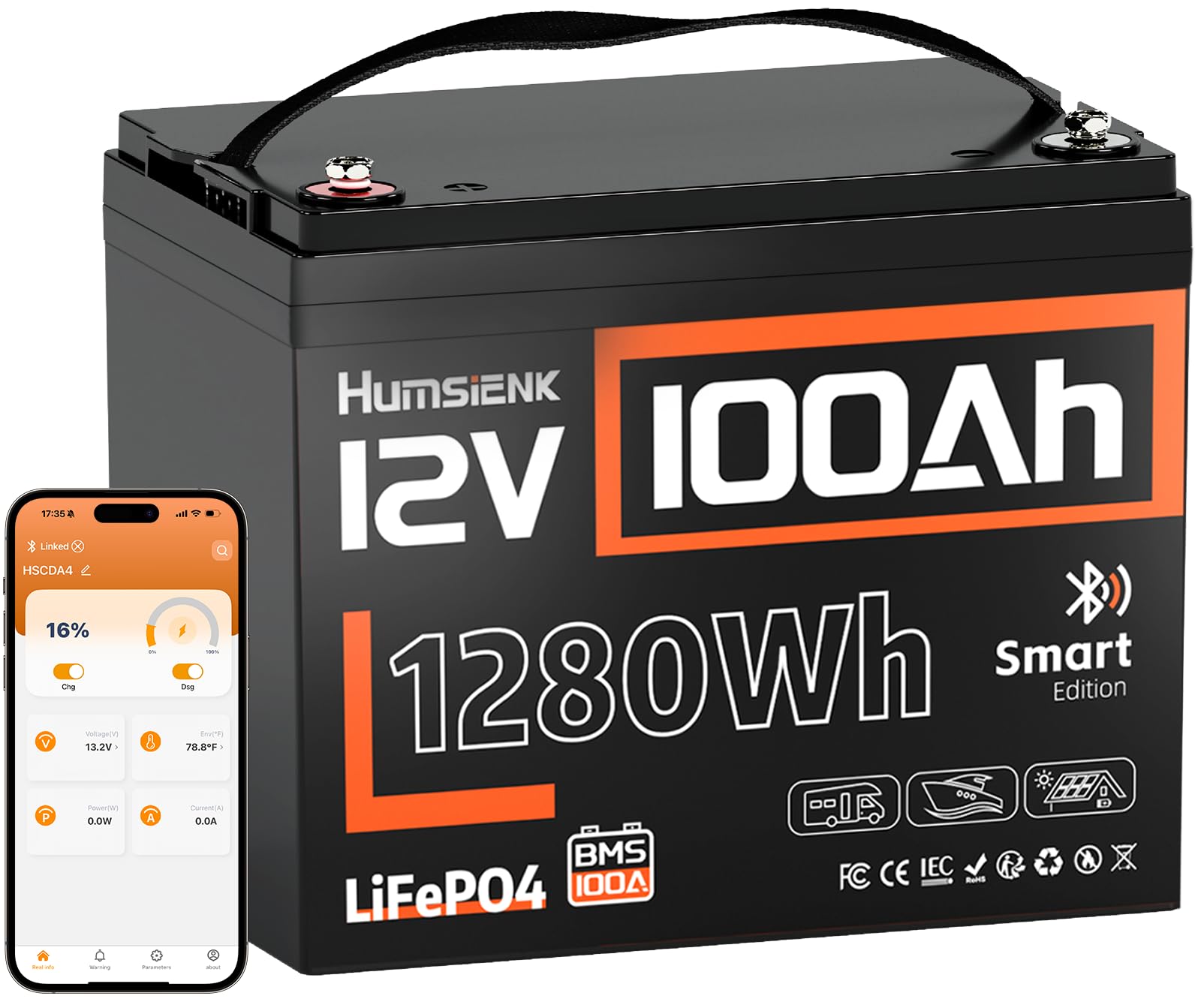
This 100Ah Group 24 battery adds Bluetooth monitoring at a price point that undercuts most competitors with similar connectivity. The dedicated app tracks voltage, state of charge, temperature, and cycle count in real time, allowing you to stop discharge remotely or check cell balance. At 19.73 pounds, it’s among the lightest 100Ah units available while maintaining an IP65 water resistance rating for outdoor installations.
The 100A smart BMS includes the expected protections (overcharge, over-discharge, short circuit) and a low-temperature cutoff that halts charging below -20°C. Users running mobile grooming trailers and solar arrays note that the Bluetooth connection range is roughly 5-20 feet depending on installation, which is adequate for most setups but not a whole-house range. The app interface is straightforward, though some users report a variance in state-of-charge percentage of up to 10% between units in parallel.
With a 5-year warranty and UL-tested A+ grade cells, HumsiENK positions this as a smart-buy for the tech-savvy user who wants visibility into battery health without paying a premium. It includes a carrying strap and two sets of terminal bolts, making it ready to install out of the box.
Why it’s great
- Bluetooth app with real-time monitoring
- Lightest 100Ah in the roundup at 19.73 lbs
- IP65 water resistance for outdoor use
Good to know
- Bluetooth range can be limited (~5ft reported)
- Parallel units may show uneven SoC readings
5. DUMFUME 12V 150Ah
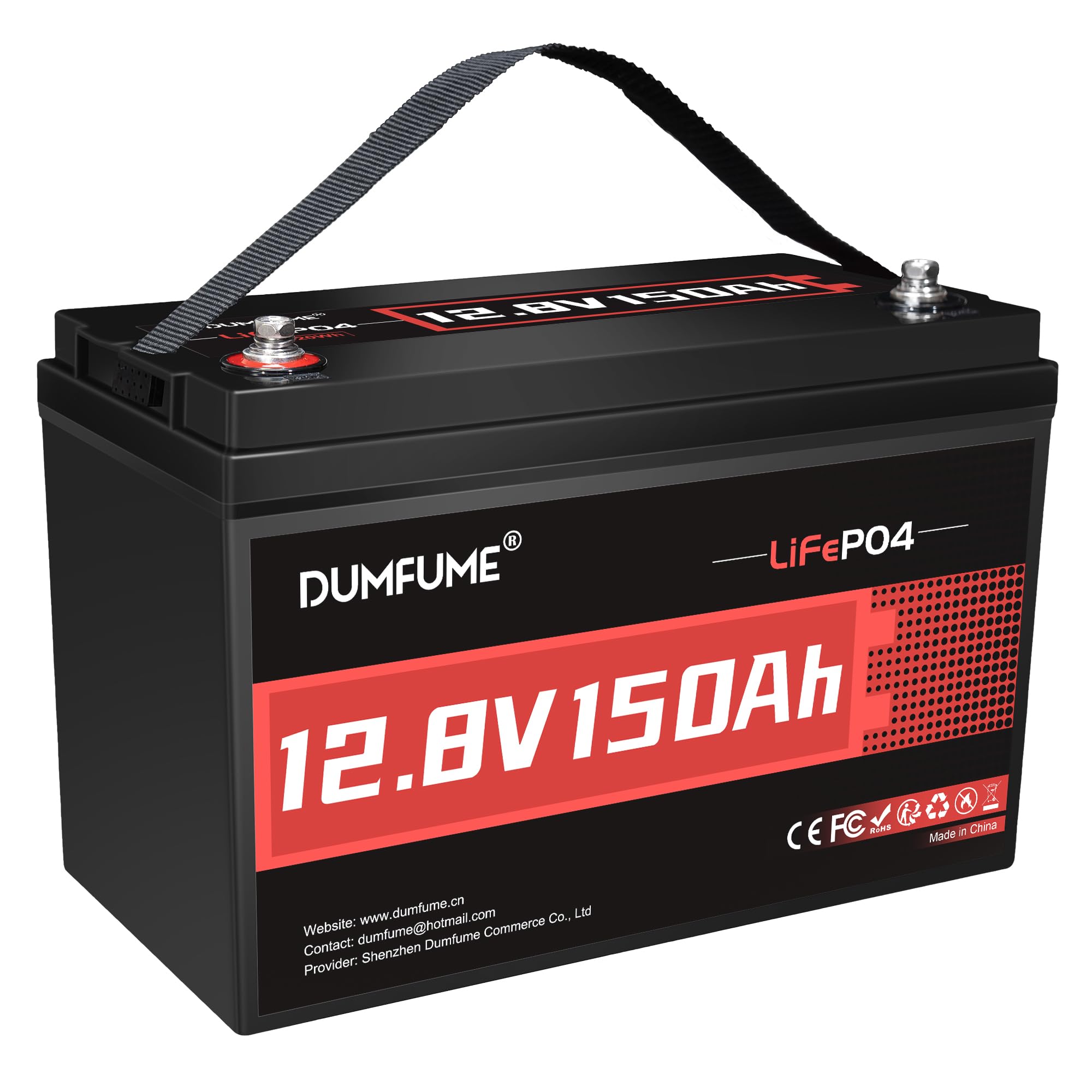
At 150Ah and 1920Wh, this Group 31-format battery offers a middle ground between a standard 100Ah and a massive 280Ah unit. It’s a strong match for RV owners who run a residential fridge, lights, and a small inverter without the weight penalty of a 280Ah brick. The DUMFUME uses a 100A BMS rated for 4000+ cycles to 80% capacity, and users report the cells actually exceed the rated capacity by about 7Ah in testing.
The unit measures 13.05 x 6.78 x 8.66 inches and weighs 22.05 pounds, making it one of the lighter 150Ah options. It supports series and parallel connections up to 4S4P, enabling a 600Ah bank at 48V for solar systems. Some units arrive at a lower voltage (12.2-12.4V) and require a brief parallel charge to activate the BMS, so plan for that during initial setup. One user reported a failure after one year, though the 5-year warranty should cover that if purchased directly from the manufacturer — Amazon third-party purchases may have a different claims process.
It lacks Bluetooth or smart features, but that also means fewer points of potential failure. For buyers who want a simple, high-capacity drop-in without app complexity, this is a compelling value in the mid-range tier.
Why it’s great
- 150Ah capacity with 1920Wh usable energy
- Light for its capacity at 22.05 lbs
- Users report cells exceed rated Ah
Good to know
- No Bluetooth monitoring
- Some units arrive needing a BMS activation charge
- Warranty claim process varies by purchase channel
6. HRBEENERGY 12.8V 100Ah

This 100Ah Group 24 battery from HRBEENERGY is a strong budget-friendly contender that doesn’t cut corners on core specs. It includes an IP67 waterproof rating — meaning it can survive submersion in up to one meter of water — making it a rare find for kayakers, marine environments, or exposed solar installations. The 100A BMS provides the standard suite of protections, plus a low-temperature cutoff on charging.
At 19.4 pounds (lighter than most 100Ah LiFePO4 units), it is truly a one-to-one replacement for AGM or lead-acid batteries without needing any device modifications. Users have deployed it in genie manlifts, trolling motors, and golf carts, reporting reliable performance and accurate capacity. One review noted that the low-voltage cutoff on the BMS kicks in at about 9.5V rather than the typical 10V, which may allow a slightly deeper discharge but also carries a small risk of over-depleting cells over many cycles.
The expandable design supports parallel connections up to 16 units (20480Wh total), though most buyers will find the single-unit capacity sufficient for a weekend camper or small solar shed. It’s a no-frills, high-value option for anyone who prioritizes weather sealing and low upfront cost over smart features.
Why it’s great
- IP67 waterproof rating for wet environments
- Very light at 19.4 lbs
- Accurate capacity at a budget-friendly price
Good to know
- Low-voltage cutoff is ~9.5V (lower than industry standard)
- No Bluetooth or smart features
7. SEFEPODER 2 Pack 12V 15Ah

This twin-pack of 15Ah LiFePO4 batteries is designed for lighter loads like power wheels, fish finders, kayak electronics, and emergency lighting. Each unit weighs just 3.1 pounds and measures 5.94 x 3.81 x 3.93 inches, making them a convenient upgrade for small form-factor devices that previously relied on lead-acid. The built-in 16A BMS handles up to 3C pulse discharge, which is sufficient for most small motors and high-drain electronics.
Users report swapping them into mobility scooters and seeing significant runtime improvements over the supplied AGM batteries — one user noted a full day of use versus four months of frequent replacement with lead-acid. The batteries can be connected in series up to 4S (48V) or parallel, offering flexibility for custom 12V or 24V builds. The 2000+ cycle rating is a massive step up from the 200-300 cycles of a typical SLA battery in this size class.
The key trade-off is the charger compatibility: these are LiFePO4 chemistry, so they require a dedicated lithium charger or a smart charger with a LiFePO4 profile. Using an automatic SLA charger may fail to reach the full 14.6V absorption voltage. For anyone looking to shed weight and gain cycle life on a small power system, this two-pack is an excellent entry point.
Why it’s great
- Extremely light at 3.1 lbs each
- 2000+ cycle life vs. 200-300 for SLA
- Versatile series/parallel configuration
Good to know
- 16A BMS is low for high-draw applications
- Requires a LiFePO4-specific charger for full charge
FAQ
What is the actual voltage range of a 12V LiFePO4 battery?
Can I replace my lead-acid battery with lithium without changing my charger?
Is it safe to connect lithium batteries in series or parallel?
Final Thoughts: The Verdict
For most users, the li ion 12v battery winner is the ECO-WORTHY 280Ah Metal Case because it delivers the highest single-unit capacity with a rugged enclosure, Bluetooth monitoring, and a 200A BMS that handles large inverters without blinking. If you want a purpose-built marine battery optimized for trolling motors and saltwater environments, grab the Power Queen 12.8V 100Ah. And for a smart budget 100Ah with Bluetooth visibility, nothing beats the HumsiENK 12V 100Ah with Bluetooth.