
Nothing drags a ride down quite like dry, grinding bearings in your hubs, bottom bracket, or headset. The wrong grease washes out in the first wet ride, or worse, separates under load, leaving your precision bearings to run dry and wear prematurely. Choosing a lubricant that actually stays put and protects against corrosion is the single most important maintenance decision for your bike’s rotating components.
I’m Min — the co-founder and writer behind Gadgets Feed. I’ve spent countless hours analyzing technical data sheets, sifting through real-world user experiences, and cross-referencing viscosity grades and waterproofing claims to find the grease that genuinely protects bearing surfaces under pressure.
Whether you’re overhauling classic cup-and-cone hubs or servicing a modern sealed cartridge bottom bracket, the best bike grease for bearings delivers extreme-pressure protection and lasting water resistance to keep your drivetrain spinning freely season after season.
How To Choose The Best Bike Grease For Bearings
Selecting a grease for bicycle bearings isn’t about grabbing the nearest tub of chassis lube. You need a formulation that handles high rolling loads, resists water washout, and stays黏 enough to cling to loose balls or cage bearings without migrating away under centrifugal force.
Waterproofing and Washout Resistance
Bicycle bearings face direct spray and immersion, especially on mountain bikes and commuters. A grease that emulsifies or washes out after one stream crossing leaves steel bearings exposed to rust and pitting. Look for terms like “waterproof,” “water-resistant,” or “polymer-fortified” in the description, which indicate a thickener system that repels water rather than absorbing it.
Extreme Pressure (EP) Additives
Bearings in hubs, bottom brackets, and headsets experience high point loads as the balls roll between races. Grease with EP additives — typically molybdenum disulfide or sulfur-phosphorus compounds — creates a sacrificial film that prevents metal-to-metal welding under shock loads and heavy pedaling torque. Without EP protection, grease can shear out and leave you with metal-on-metal wear.
Base Oil Viscosity and Temperature Range
Thicker greases (ISO 220 or SAE 140 equivalent) stay in place better in loose-bearing hubs but can cause drag in cold weather. Thinner greases (ISO 100 or SAE 90) allow free spin but may fling off at high RPM. For general bicycle use, a consistency around NLGI #2 is ideal — it balances enough body to stay put with enough fluidity to penetrate between balls and races.
Seal Compatibility
Modern bearings use nitrile rubber (NBR) or polyurethane seals. Some aggressive EP greases contain solvents or thickeners that can swell or harden these seals over time. If you’re greasing sealed cartridge bearings that will never be repacked, use a grease explicitly labeled “seal-safe” or “rubber-compatible” to avoid premature seal failure and subsequent contamination.
Quick Comparison
On smaller screens, swipe sideways to see the full table.
| Model | Category | Best For | Key Spec | Amazon |
|---|---|---|---|---|
| Buzzy’s Slick Honey | All-Purpose | Suspension and fork seals | SAE 15W-40 viscosity | Amazon |
| WELDTITE Multi-Use Grease | All-Purpose | General bike maintenance | 4.23 fl oz tube | Amazon |
| Motorex Bike Grease 2000 | All-Purpose | Threaded parts and bushings | Integrated brush applicator | Amazon |
| Phil Wood Grease | Waterproof | Loose-bearing hubs and BBs | Waterproof formula | Amazon |
| Finish Line Premium Grease | Extreme Pressure | Headsets and pivots | 1lb tub (bulk) | Amazon |
| Bel-Ray Waterproof Grease | Aluminum Complex | Wet-weather riding and marine | 16 oz can (bulk) | Amazon |
| WPL Absolute Bicycle Grease | Bio-Based | Eco-conscious maintenance | Bio-based, PTFE-free | Amazon |
In‑Depth Reviews
1. Phil Wood 3-Ounce Grease Tube

Phil Wood grease has been the gold standard for loose-bearing bicycle hubs and bottom brackets for decades, and that reputation is well-earned. Its dark green, waterproof formulation fills the bearing cup neatly without running, and the tacky consistency ensures it stays locked between the balls and races even after hard, wet rides. Real-world reviews on hubs that sat dry for years show dramatic improvement — eliminating clunking and freeing up drag immediately.
The grease provides exceptional shear stability under load, which is critical for cup-and-cone systems where pressure concentrates on a small contact patch. Users report that a single tube delivers two to three full services for a bike’s worth of loose bearings, making the premium cost per ounce irrelevant when measured against years of smooth operation. It works equally well on freewheel pawls, though applying too much can stiffen cold-weather engagement.
This grease is the reference standard for mechanics who rebuild classic wheelsets. If you maintain bikes with traditional loose bearings — or you want the longest possible service interval between hub overhauls — Phil Wood is the proven choice that has outperformed newer competitors for three decades.
Why it’s great
- Proven waterproof formula that resists washout in wet conditions
- Exceptional tackiness keeps grease in place on loose bearings
- One tube serves multiple full-bearing services
Good to know
- Premium cost per ounce compared to multipurpose greases
- Can slow freewheel pawl engagement in cold weather if over-applied
2. Finish Line Premium Grease – 1lb Tub

Finish Line’s Premium Grease is an off-white, polymer-fortified extreme-pressure grease designed specifically for the high loads found in bicycle headsets, hubs, and suspension pivots. Its advanced EP additives resist shearing under aggressive riding, while the waterproof thickener system prevents emulsification in wet weather. The 1lb tub provides enough volume for a small workshop’s worth of overhauls, making it a practical choice for mechanics who service multiple bikes.
Users consistently note that this grease needs a short break-in period of 30–45 minutes before bearings spin freely, because the thick base oil initially coats everything evenly before working into the bearing paths. After break-in, the grease forms a durable film that reduces metal-to-metal contact and extends service intervals. It has a neutral smell and cleans up easily, unlike some petroleum-based greases that leave a sticky residue.
The only catch is the lack of an integrated applicator — you’ll want to pick up a pack of acid brushes or a grease gun to avoid messy finger application. For the price per gram, this is the best value for high-volume bearing maintenance if you don’t need the niche waterproofing of Phil Wood.
Why it’s great
- Excels under extreme pressure on headsets and pivots
- Bulk tub offers the best cost per gram in this class
- Neutral odor makes it pleasant to work with indoors
Good to know
- Requires a 30–45 minute break-in ride for optimal free spin
- No brush included; plan to purchase separate applicators
3. Bel-Ray Waterproof Grease – 16oz Can

Bel-Ray builds heavy-duty aluminum-complex grease that comes from a motorsports and marine background, but its properties translate perfectly to bicycle bearings operating in wet conditions. This blue-green grease has extreme heat and water resistance, meaning it won’t wash out even after stream crossings or pressure-washing your bike. Large-volume can is overkill for casual riders but perfect for shop use or anyone servicing multiple bikes and components.
The aluminum-complex thickener system is chemically compatible with other aluminum-based greases, so you can mix it with existing residue in grease guns without worrying about separation. Users report the grease stays sticky and viscous even when warm, and it doesn’t sling off or leak out of bearing cups — a common problem with cheaper NLGI #1 greases. The 16oz can has a familiar wide-mouth lid that fits standard grease guns, making application clean and efficient.
This grease prioritizes staying power over free-spin efficiency. The high-viscosity base oil creates slight drag compared to lighter greases, which some riders notice on high-RPM hubs. For downhill, enduro, or any wet-weather riding where bearing contamination is the main enemy, Bel-Ray’s washout resistance justifies the trade-off.
Why it’s great
- Superior water washout resistance from aluminum-complex chemistry
- Large can offers excellent value for shop or fleet maintenance
- Won’t sling off or leak out of bearing cups under load
Good to know
- High base viscosity creates slight bearing drag vs. lighter greases
- Color change makes it harder to see if bearing cups are fully packed
4. Buzzy’s Slick Honey – 2oz Tube

Buzzy’s Slick Honey is specifically formulated for suspension components — fork stanchions, dropper posts, and rear shock seals — rather than wheel bearings, but its properties make it an excellent all-around grease for any low-speed, high-load bearing that sees seal contact. This honey-like waxy lubricant is less tacky than standard bearing grease, which reduces sliding friction on seal lips and prevents stiction in suspension.
The 2oz tube is compact but potent: users report that a single tube lasts two years across four bikes used for aggressive downhill and dirt jumps. Reviews highlight that it resolves fork seal noise under braking and restores smooth function to dropper posts that haven’t been serviced in five years. Because it’s designed for seal compatibility, Slick Honey won’t swell or harden nitrile rubber seals — a common failure mode with automotive EP greases pressed into bicycle service.
If your primary need is bearing lubrication for hubs and bottom brackets, this isn’t the cheapest or most waterproof option. But if you’re servicing both suspension and bearings, the ability to use one grease for both tasks simplifies your maintenance kit significantly.
Why it’s great
- Seal-safe formula won’t damage suspension fork seals
- Low tack reduces sliding friction on dropper post and shock seals
- Incredibly long-lasting — one tube lasts years for multiple bikes
Good to know
- Less effective in high-RPM hub bearings due to low tack
- Small tube size means less value per gram for bulk bearing jobs
5. WELDTITE Multi-Use Bike Grease – 4.23oz Tube
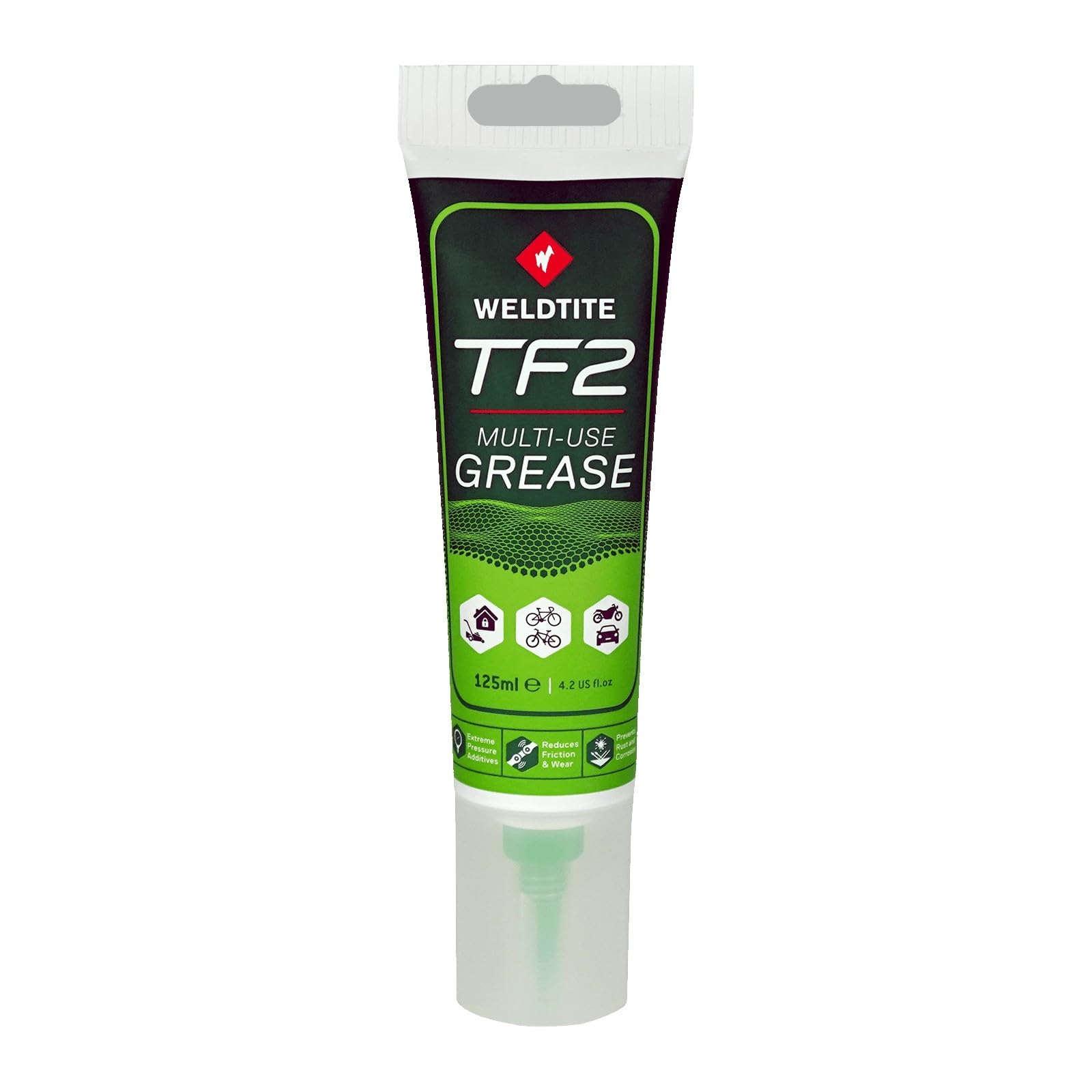
WELDTITE’s Teflon-infused bike grease occupies the reliable budget-friendly tier without cutting corners on performance. This red-colored, all-purpose grease is formulated for headsets, bottom brackets, hubs, pedals, and suspension pivots — essentially the full range of bicycle bearings. The inclusion of PTFE (Teflon) particles reduces friction coefficients compared to standard lithium soap greases, which helps free up draggy bearings.
The 4.23oz tube is a generous size for the home mechanic, and the nozzle fits standard grease guns perfectly — a feature noted by multiple users who praised the compatibility with Shimano grease guns. It provides durable corrosion protection on threaded parts and steel races, and the red coloring makes it easy to see where you’ve applied it and when it needs refreshing. However, reviewers note that its waterproofing is adequate rather than exceptional; heavy wet-weather riders may want a more water-resistant formula.
This grease is the practical choice for general maintenance when you have multiple bikes or components to service and don’t want to spend premium money on niche formulations. It handles the vast majority of bicycle bearing applications without complaint.
Why it’s great
- PTFE (Teflon) particles reduce friction in hubs and bottom brackets
- Fits standard grease guns for clean, mess-free application
- Large tube provides excellent value for the home mechanic
Good to know
- Waterproofing is adequate but not marine-grade for extreme wet conditions
- Some users report it separates if stored in very hot conditions
6. Motorex Bike Grease 2000 – 100g

Motorex Bike Grease 2000, distributed under the Shimano name in some markets, solves one of the messiest parts of bearing maintenance: application. The cap houses an integrated brush that lets you paint grease precisely onto threaded parts, bushings, and small bearing surfaces without getting it all over your fingers. This gel-like formula stays where you put it, reducing waste compared to squeezing a tube into a bearing cup.
The 100g (3.5oz) container is compact, but the brush applicator makes it last longer because you can apply exactly what’s needed. Reviews highlight its cleanliness advantage for threaded parts like bottom bracket cups, derailleur hanger bolts, and pedal threads. The gel consistency has excellent surface cling, meaning it doesn’t drip or run even on vertical surfaces. For home mechanics or anyone who hates greasy fingers, this is a game-changer.
The trade-off is cost per gram — this is priced as a premium option, and the 100g size won’t last as long as a bulk tub for full-hub overhauls. It also lacks the extreme-pressure rating of heavier-duty greases, so it’s best reserved for threaded connections and low-load pivot points rather than high-RPM wheel bearings.
Why it’s great
- Integrated brush allows precise, clean application on threaded parts
- Gel consistency clings well to vertical surfaces without dripping
- Perfect for home mechanics who hate greasy fingers and overspray
Good to know
- Small container size limits its use for full-bearing overhauls
- Lacks the extreme-pressure rating needed for heavy-load bearings
7. WPL Absolute Bicycle Grease – 16oz Jar

WPL Absolute Bicycle Grease takes a fundamentally different approach by using a calcium-based, bio-derived formulation that is non-toxic and PTFE-free. This 16oz jar contains 454 grams of grease that’s safe to handle without gloves — a significant advantage for mechanics who don’t want petroleum distillates absorbing through their skin during long maintenance sessions. The working temperature range from -40°C to 120°C covers everything from winter commuting to desert riding.
User feedback indicates the grease performs well on screws, seat posts, pedal threads, and quick releases, with a consistency that’s easier to spread than the thickest lithium greases. The natural formula has an earthy smell rather than the solvent odor typical of conventional greases, making it pleasant to work with in enclosed spaces. One reviewer specifically appreciated supporting a small Canadian business while getting a product that works as well as conventional petroleum options.
The calcium-based thickener isn’t as shear-stable as lithium-complex or aluminum-complex alternatives, meaning it may not hold up as long in high-load bearing applications like downhill hubs. If you ride in extreme conditions or want the longest possible service interval, a synthetic petroleum grease remains a safer bet. For general maintenance on a family fleet, this eco-friendly option performs admirably.
Why it’s great
- Non-toxic, bio-based formula safe to handle without gloves
- Wide operating temperature range from -40°C to 120°C
- Earthy smell makes it pleasant to use indoors
Good to know
- Calcium-based thickener less shear-stable than lithium or aluminum complex
- May not hold up as long in high-load downhill hub bearings
FAQ
Can I use automotive wheel bearing grease on my bike?
How often should I repack loose bicycle bearings?
What’s the difference between waterproof and water-resistant grease?
Can I mix different grease types in my bearings?
Final Thoughts: The Verdict
For most users, the best bike grease for bearings winner is the Phil Wood Grease because it delivers unmatched waterproofing and tackiness for loose-bearing hubs and bottom brackets, backed by decades of proven performance. If you want extreme-pressure protection in a bulk format for workshop use, grab the Finish Line Premium Grease. And for eco-conscious maintenance that’s safe to handle without gloves, nothing beats the WPL Absolute Bicycle Grease.