
That stubborn green film coating your glass, the stringy mess choking your plants, or the thick blue-green slime smothering your hardscape — aquarium algae is the single most visible frustration for any fishkeeper. Running your magnet cleaner over the front glass twice a week is a temporary fix at best; the underlying cause keeps blooming until you introduce a targeted chemical or biological agent designed specifically for your tank’s water chemistry.
I’m Min — the co-founder and writer behind Gadgets Feed. I’ve spent countless hours dissecting the chemical formulations, biological mechanisms, and real-world customer results of the most common algae treatments to separate the fast-acting solutions from the ones that just cloud your water.
Whether you are battling green water blooms, stubborn hair algae, or toxic cyanobacteria mats in a freshwater community tank or a sensitive reef setup, this guide covers the top-rated products to help you pick the right algae remover for aquarium and restore clear water quickly.
How To Choose The Best Algae Remover For Aquarium
Not all algae is the same, and using the wrong treatment can waste money, harm your fish, or even crash your biological filter. Before you pour anything into your tank, you need to identify the specific type of algae you’re fighting and understand the mechanism of the product you’re considering.
Identify Your Algae Type First
Green water (suspended single-celled algae), hair or string algae (long strands attached to surfaces), and cyanobacteria (blue-green slimy mats that peel off in sheets) each require a different chemical approach. Algaecides like those containing polyquaternium or sodium carbonate peroxyhydrate target free-floating and string algae effectively, while cyanobacteria (which is actually a bacteria) often requires antibiotic-based treatments like erythromycin or specialized enzyme blends.
Check Tank Inhabitants and Water Type
Invertebrates like shrimp and snails are extremely sensitive to copper-based algaecides and certain antibiotics. Reef tanks with corals demand products labeled safe for marine invertebrates. Freshwater planted tanks need treatments that won’t harm live plants or beneficial nitrifying bacteria. Always verify that the product is formulated for your specific water chemistry — fresh, salt, or both — before dosing.
Consider Prevention vs. Immediate Removal
Some products act as a biological preventative by consuming the nutrients (phosphates and nitrates) that fuel algae growth. Others are fast-acting chemical killers that work within 24–48 hours. A good long-term strategy often combines a quick knockdown treatment with a maintenance regimen of phosphate removers or bacterial supplements to stop the bloom from returning.
Quick Comparison
On smaller screens, swipe sideways to see the full table.
| Model | Category | Best For | Key Spec | Amazon |
|---|---|---|---|---|
| Fritz Aquatics Algae Clean Out | Algaecide | Green water & string algae | EPA-approved algaecide, 16 oz | Amazon |
| Boyd Chemi-Clean | Cyanobacteria Remover | Red slime & cyano stains | Treats 900 gallons per 6g pack | Amazon |
| UltraLife Blue Green Slime | Slime Remover | Freshwater cyanobacteria | 3-pack, 150 gallons per vial | Amazon |
| Brightwell MicroBacter Clean | Biological Cleaner | Live rock & nutrient reduction | Non-pathogenic microbes, 250 ml | Amazon |
| Brightwell Phosphāt-E | Phosphate Remover | Reef phosphate control | Treats 4,000 gallons, 250 ml | Amazon |
| TetraPond Algae Control | Pond Treatment | Ponds with fish & plants | Treats 3,000 gallons, 33.8 oz | Amazon |
| Tetra No More Algae Tablets | Tablet Algaecide | Glass & acrylic tanks | 24 tablets, 8 per pack (3-pack) | Amazon |
In‑Depth Reviews
1. Fritz Aquatics Algae Clean Out – 16 oz

Fritz Aquatics delivers a fast-acting EPA-registered algaecide that hits both green water caused by single-celled algae and string algae or blanketweed. Users report visible clearing of severe green water within 12–24 hours using as few as 12 drops in a 20-gallon tank. The 16-ounce bottle provides many doses for the average home aquarium, making it an economical choice for recurring blooms.
This product works in both freshwater and saltwater environments, including fountains and small ponds. The formula targets algae directly without harming fish or live plants when dosed according to the instructions. It is particularly effective against the suspended microalgae that turns tank water a murky green, restoring visibility faster than most bacterial additives can manage.
One important caveat — snails are sensitive to this treatment, and several users noted that temporary relocation is necessary to avoid die-offs. Overdosing can also stress the tank, so careful measurement with the included dropper is essential. For pure algae knockdown speed with broad compatibility, this remains the top recommendation for general use.
Why it’s great
- Visible results in under 24 hours for green water
- Safe for fish and live plants when used correctly
- Works in both fresh and saltwater aquariums
Good to know
- Not safe for snails — remove them before dosing
- Overdosing can stress tank inhabitants
2. Boyd Chemi-Clean – 6g

Chemi-Clean is the go-to solution when cyanobacteria (red slime, blue-green algae, or methane-producing bubbles) overtakes your tank. Each 6-gram packet treats up to 900 gallons, and users with heavily infested 300-gallon systems report full elimination of red slime coverage after two 40-hour treatments with water changes in between. The formula is completely safe for fish, corals, invertebrates, and nitrifying bacteria.
This powder treatment requires you to turn off your protein skimmer during the dosing period to prevent it from being removed mechanically. After treatment, the skimmer will produce excessive foam as the dead cyano is exported — users recommend restricting air intake or leaving the collection cup open to handle the foam. A 20–30% water change after each 48-hour cycle finishes the job.
The main downside is transparency — the manufacturer does not list active ingredients, though experienced aquarists suspect erythromycin. This lack of disclosure makes it difficult to predict interactions or resistance. It also causes protein skimmers to go “crazy,” requiring careful monitoring. For stubborn cyanobacteria that resists manual removal and blackouts, this is the proven nuclear option.
Why it’s great
- Eliminates red, black, and blue-green cyanobacteria completely
- Safe for corals, fish, and invertebrates
- One packet treats up to 900 gallons
Good to know
- Ingredients not disclosed on label
- Protein skimmer will foam excessively during treatment
3. UltraLife Blue Green Slime – 3 Pack

UltraLife’s formula uses natural cellular matter, biological accelerators, and supplements to target blue-green slime (cyanobacteria) in freshwater aquariums only. Each vial treats up to 150 gallons, and the 3-pack provides excellent coverage for multiple tanks or a large single system. Users with severe infestations that survived lighting changes, flow adjustments, manual removal, and blackouts reported full clearance after one to two treatments with no fish or shrimp losses.
The mode of action accelerates biological digestion of organic solids, effectively starving the cyanobacteria by outcompeting it for resources. It is safe for beneficial nitrifying bacteria, macro-algae, and all fish species. The product requires supplemental aeration with air-stones before and during application because the increased biological activity raises oxygen uptake rates — a critical step that should not be skipped.
The 3-pack is ideal for long-term maintenance or treating stubborn cases that need a follow-up dose. Some users found that a single vial was insufficient for heavy coverage and required a second treatment. The pellet form requires pre-dissolving in tank water before dosing. For a natural biological approach that avoids antibiotics, this is the top choice for freshwater cyanobacteria.
Why it’s great
- Antibiotic-free biological treatment for cyanobacteria
- Safe for fish, shrimp, snails, and plants
- 3-pack provides great value for large tanks
Good to know
- Requires extra aeration during treatment
- Some cases need a second dose for complete elimination
4. Brightwell MicroBacter Clean – 250 ml

Brightwell MicroBacter Clean uses a proprietary blend of non-pathogenic microbes and natural enzymes to break down organic waste on live rock and decorations. It targets the “ugly stage” that often follows tank cycling — the diatom and film algae coatings that make new setups look messy. Users report noticeable reduction of white/brown film on rock work within a week of dosing every other day.
Beyond cosmetic cleaning, this formula accelerates the reduction of organic carbon, ammonia, nitrite, nitrate, and phosphate, creating a low-nutrient environment that starves many types of nuisance algae. It digests uneaten food, excreta, and detritus without physically disturbing the substrate bed. The 250 ml bottle is a reasonable size for monthly maintenance in reef and marine fish-only tanks.
This is not a fast-acting algaecide — results build gradually over weeks as the microbial population establishes. It works best as a preventative maintenance tool rather than a rescue treatment for advanced blooms. Some users noted that while diatoms cleared fully, hair algae was only reduced but not eliminated. For a gentle biological approach that improves overall water quality, this is a solid addition.
Why it’s great
- Reduces multiple nutrient parameters including phosphate
- Safe for sensitive reef inhabitants
- Digests organic waste without disturbing substrate
Good to know
- Works slowly — takes weeks for visible results
- Not a standalone solution for heavy hair algae
5. Brightwell Phosphāt-E – 250 ml
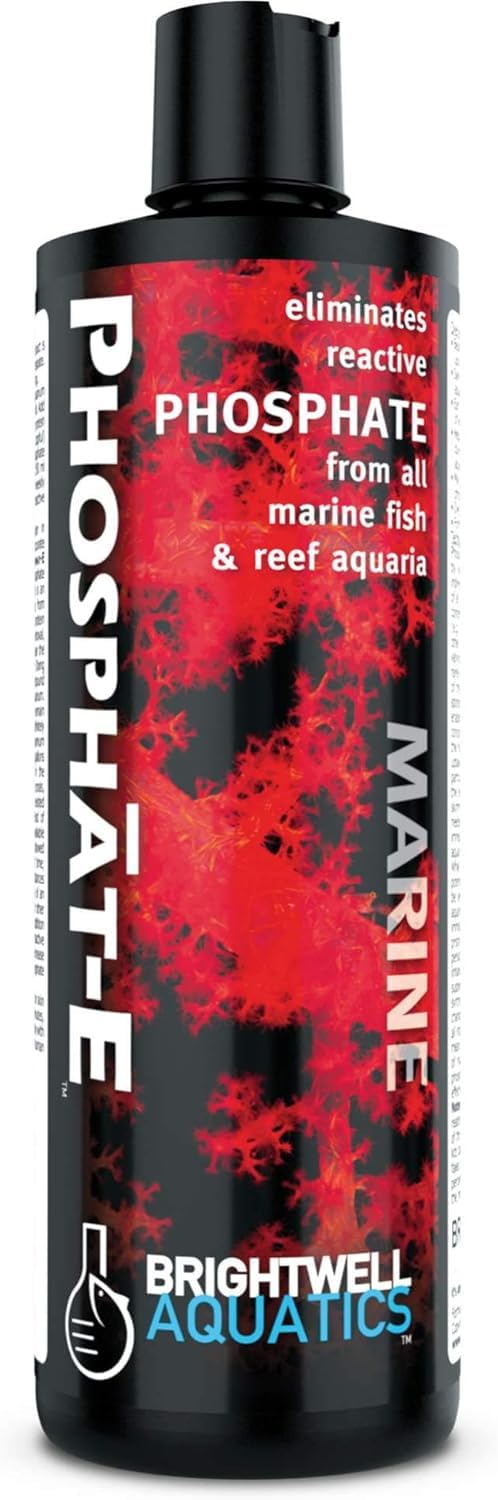
Phosphāt-E is a potent liquid phosphate remover designed specifically for reef aquariums and marine fish-only tanks. It works by binding reactive phosphate immediately upon addition, allowing you to drop elevated levels quickly. Users with 300-gallon reef systems reported reducing phosphate from 1.9 ppm to 0.06 ppm over six days using gradual daily dosing split into three applications, with noticeable improvement in coral coloration.
The 250 ml bottle treats up to 4,000 US gallons at the maximum dosing rate, making it extremely concentrated. A typical dose of 2.5 ml per 20 gallons removes approximately 0.5 ppm of phosphate. The product does cause temporary cloudiness after application, which is a normal chemical reaction and does not indicate failure. False positive readings on phosphate test kits after treatment are also possible due to interference from the chemical mechanism.
Dosing instructions require some calculation on your part, as there is no quick-reference chart for standard tank sizes. Gradual reduction is recommended to avoid shocking fish and corals from rapid nutrient swings. For aquarists battling persistent algae fueled by high phosphate, this addresses the root cause rather than just the visible symptoms.
Why it’s great
- Highly concentrated — treats 4,000 gallons per bottle
- Fast reduction of elevated phosphate levels
- Safe for corals and invertebrates
Good to know
- Temporary cloudiness after dosing
- Instructions require manual calculation for dosing
6. TetraPond Algae Control Treatment – 33.8 oz

TetraPond Algae Control is formulated for outdoor ponds containing ornamental fish and live plants. The 33.8-ounce bottle treats up to 3,000 gallons, targeting green water blooms, string algae, and blanketweed. Users with fountain ponds and koi setups report clear water after two treatments, with no harm to fish when the product is diluted before addition as instructed.
The formula works by disrupting the cellular processes of algae without affecting higher plants. It is effective against the free-floating algae that turns pond water green and the long filamentous strands that attach to rocks and liner. The large bottle size and low per-gallon treatment cost make it economical for pond owners who need repeated applications through the warm season.
Results are not instant — many users note that it takes up to a month of consistent treatment to fully manage string algae. Some reviewers with severe blooms found it underpowered and needed to switch to a stronger alternative. For seasonal maintenance in established ponds with moderate algae pressure, this is a reliable and fish-safe option.
Why it’s great
- Safe for ornamental fish and pond plants
- Large 33.8 oz bottle treats up to 3,000 gallons
- Controls green water and string algae effectively
Good to know
- Results can take up to a month for string algae
- May need a stronger product for heavy blooms
7. Tetra No More Algae Tablets – 24 Count

Tetra No More Algae Tablets offer a convenient pre-measured dosing method for glass and acrylic aquariums. This 3-pack contains 24 tablets total (8 per pack), and each tablet is simply dropped into the tank — no measuring liquids or mixing powders. Users with 10-gallon setups found that half a tablet was sufficient to control algae overgrowth without harming fish, while leaving a small amount of algae for otocinclus catfish to graze on.
The tablets work by releasing an algaecide that inhibits new growth and helps dissolve existing algae, which is then removed by the filter. For best results, the tank should be cleaned manually first, then the tablets used for maintenance. Many long-term users report these as a staple in their aquarium maintenance routine, keeping glass clear between water changes.
These tablets are designed for prevention and light control rather than heavy bloom knockdown. They will not rapidly clear a tank that is fully green with suspended algae. The tablet form also makes partial dosing less precise than liquid alternatives. For hassle-free maintenance in small to medium freshwater tanks, this is the simplest option on this list.
Why it’s great
- No measuring required — just drop in the tank
- Safe for glass and acrylic aquariums
- Good for ongoing algae prevention
Good to know
- Not designed for severe algae blooms
- Partial dosing requires breaking tablets manually
FAQ
Will an algae remover harm my aquarium plants?
How long does it take for an algae remover to work?
Can I use algae remover with snails and shrimp?
Why does my protein skimmer go crazy after using algae treatment?
Final Thoughts: The Verdict
For most users, the algae remover for aquarium winner is the Fritz Aquatics Algae Clean Out because it combines fast knockdown of both green water and string algae with broad freshwater and saltwater compatibility at an affordable dose-per-gallon cost. If you are fighting cyanobacteria specifically, grab the Boyd Chemi-Clean — it is the most proven solution for red slime in marine tanks and blue-green algae in freshwater. And for a natural preventative approach that addresses the root nutrient cause, nothing beats the Brightwell Phosphāt-E to starve algae by eliminating its phosphate fuel source.