
A 1-inch hole seems simple enough, but getting a clean, round cut through metal, wood, or tile without binding or burning is a battle. The wrong hole saw wanders, strips its teeth, and leaves a ragged hole that no amount of filing can fix. The right one slides through like butter and lasts through dozens of projects.
I’m Min — the co-founder and writer behind Gadgets Feed. I’ve spent countless hours analyzing tooth geometry, bi-metal construction, and carbide tip durability across dozens of models to find which 1-inch hole saws actually deliver on their promises.
Whether you’re cutting through steel plate, porcelain tile, or dimensional lumber, this guide breaks down the specific specs and real-world performance of the best 1 inch hole saw options available today.
How To Choose The Best 1 Inch Hole Saw
Selecting the right hole saw isn’t about brand loyalty — it’s about matching the cutting material to the saw’s tooth composition and geometry. Bi-metal, carbide-tipped, and diamond-grit each serve different purposes, and using the wrong type means wasted money and ruined workpieces.
Material Compatibility: What Are You Cutting?
Bi-metal hole saws with high-speed steel (HSS) teeth handle wood, plastics, and thin-gauge sheet metal with ease. For stainless steel, cast iron, or cement board, carbide-tipped teeth resist wear far longer. Diamond core bits are the only option for porcelain, ceramic tile, glass, and stone — standard teeth will glaze over instantly on these hard materials.
Tooth Pitch and Cutting Speed
A coarser tooth pitch (lower TPI) like 4 to 6 teeth per inch clears chips faster in wood but leaves a rougher edge. A finer pitch (8 to 10 TPI) produces smoother cuts in metal and reduces the chance of grabbing thin workpieces. Starrett’s 5.5-pitch straight design, for instance, is optimized for thin cross-sections of sheet metal where vibration and chatter are common problems.
Arbor Compatibility and Plug Ejection
Most standard hole saws require a separate arbor and pilot bit, which adds initial cost. Integrated designs like Bosch’s Edge line eliminate this hassle but lock you into a proprietary system. For production work, tool-less plug ejection — found on Lenox Speed Slot and Diablo Snap-Lock designs — drastically reduces downtime between cuts.
Quick Comparison
On smaller screens, swipe sideways to see the full table.
| Model | Category | Best For | Key Spec | Amazon |
|---|---|---|---|---|
| Diablo DHS1000CT | Carbide-Tipped | Deep cuts in wood and metal | 2-3/8″ cutting depth | Amazon |
| Lenox LXAH31 Carbide | Carbide-Tipped | Stainless and cast iron | Carbide-welded cutting edge | Amazon |
| Bosch HTW1 Edge | Bi-Metal Integrated | Impact driver use | 1/4″ hex shank | Amazon |
| DKIBBITH Diamond Core | Diamond Grit | Angle grinder masonry work | 5/8-11 thread adapter | Amazon |
| Starrett FCH0100-G | Bi-Metal HSS | Thin metal and interrupted cuts | 25 teeth, 5.5 pitch | Amazon |
| Lenox 1772481 Bi-Metal | Bi-Metal | General purpose wood and metal | Speed Slot plug ejection | Amazon |
| DECKRKAT Diamond Hole-Saw Set | Diamond Grit | Tile, glass, and concrete blocks | 2-piece set with pilot bits | Amazon |
In‑Depth Reviews
1. Diablo Carbide Teeth Hole Saw DHS1000CT
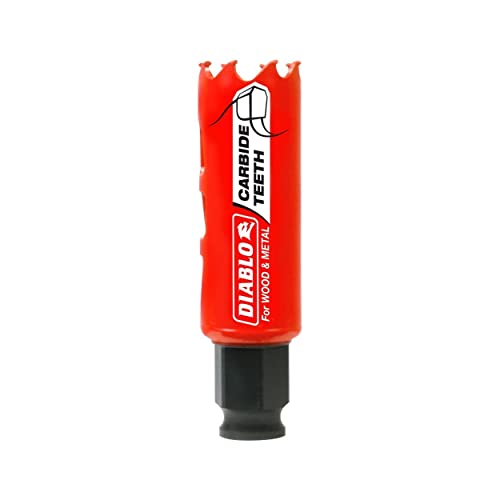
The Diablo DHS1000CT sets the standard for deep-cutting hole saws with a 2-3/8-inch cutting depth that punches through 2x dimensional lumber in a single pass. The carbide-tipped teeth stay sharp up to 50 times longer than standard bi-metal models, making it a true investment for frequent use. Its Snap-Lock Plus mandrel system allows tool-free plug ejection and quick swaps between sizes without losing the arbor.
Users report excellent results on softwoods like pine with minimal burning, though harder woods require slowing the drill speed to avoid scorch marks. The pilot bit that ships with the mandrel is the only weak point — it snaps easily if the saw binds during deep cuts. On metal, applying cutting oil extends tooth life significantly, and the wide gullets clear chips effectively.
For contractors and serious DIYers who need a single saw that handles both wood and metal all day, the Diablo delivers unmatched longevity per dollar. The Snap-Lock system alone saves enough time on job sites to justify the premium position in the lineup.
Why it’s great
- 2-3/8″ depth cuts deeper than most competitors in one pass
- Carbide tips resist wear far longer than standard HSS teeth
- Tool-free plug ejection speeds up repetitive drilling
Good to know
- Snap-Lock mandrel and pilot bit sold separately adds initial cost
- Pilot bit has a reputation for snapping under heavy side loads
2. Lenox Tools Carbide Hole Saw LXAH31
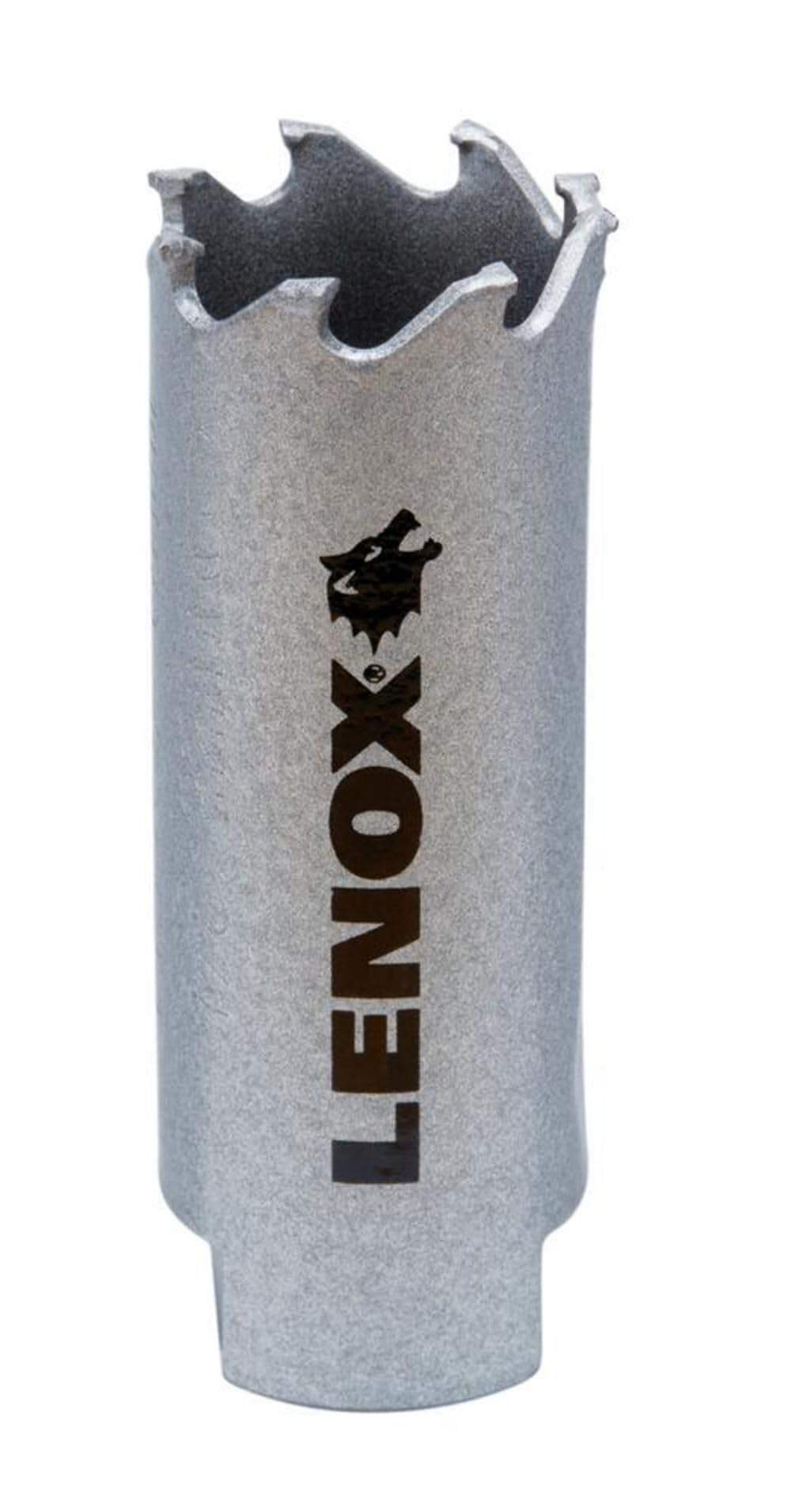
The Lenox LXAH31 brings carbide-welded cutting edges to a mid-range price point, making it the go-to choice for cutting stainless steel, cast iron, and fiber cement siding. The aggressive tooth geometry clears material fast while carbide segments resist the heat that dulls bi-metal saws within minutes on hard alloys. Its tall cutting depth easily handles 2x dimensional lumber for rough-in electrical work.
Electricians report it chews through HardiePlank cement board with no noticeable wear, where bi-metal saws go dull in under ten holes. On stainless steel, the carbide holds its edge through multiple cuts — a critical advantage for food service or marine applications. The Speed Slot staircase design provides multiple leverage points for popping out stubborn plugs without prying.
The only trade-off is brittleness: carbide tips can chip if the saw is run at excessive RPM or if the pilot hole is misaligned on thick steel. For its price range, though, this saw delivers professional-grade performance for anyone cutting hard materials regularly.
Why it’s great
- Carbide-welded teeth survive stainless and cast iron without dulling
- Speed Slot design provides multiple leverage points for plug ejection
- Tall body cuts through 2x lumber in a single pass
Good to know
- Carbide tips are brittle and can chip if the saw is misused at high RPM
- Frequent material removal required when cutting cement board
3. Bosch HTW1 Edge Impact Tough Hole Saw
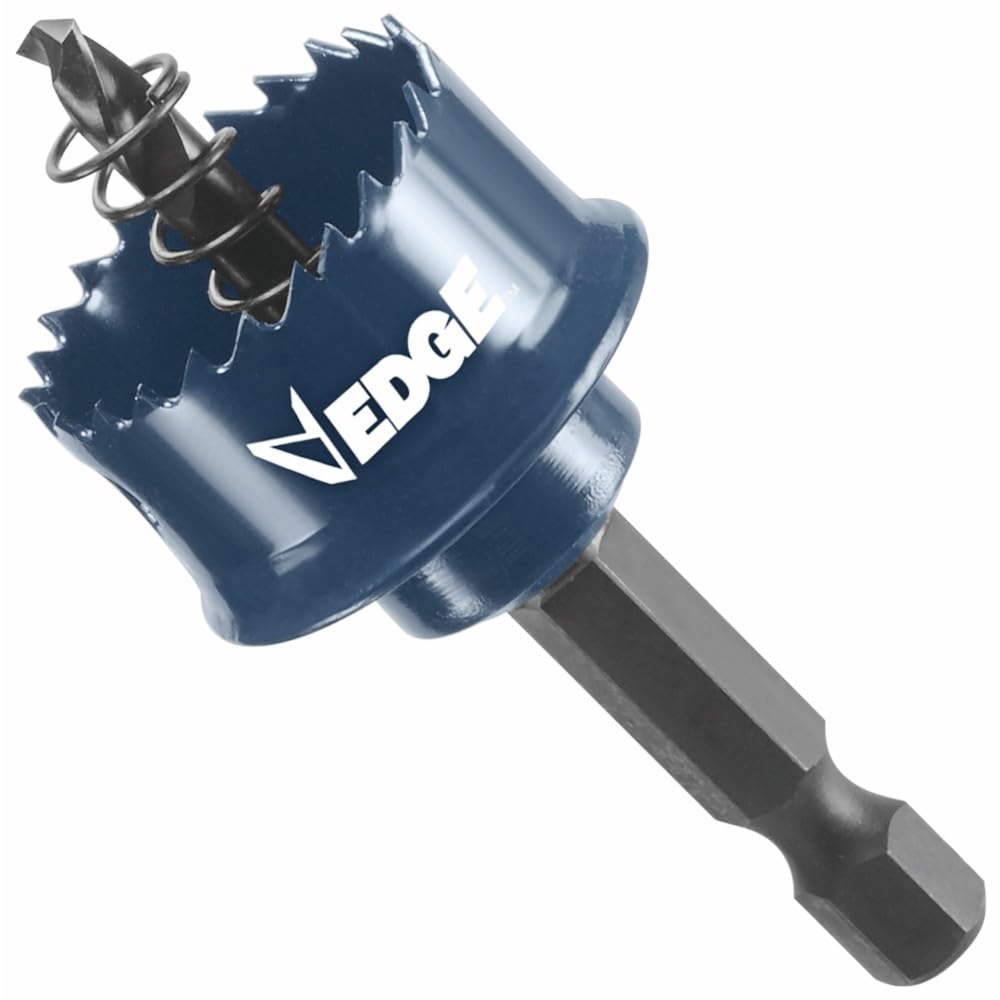
The Bosch HTW1 Edge is the only integrated one-piece hole saw in this lineup, with a 1/4-inch hex shank that plugs directly into impact drivers without needing a separate arbor or pilot bit. The bi-metal 8-TPI teeth are designed for clean sheet metal cuts, while the integrated depth stop prevents blow-through when drilling near sensitive areas. A spring-loaded pilot bit automatically ejects the plug when you withdraw.
Users love it for plastics and thin sheet metal — the thin wall design minimizes walking and grabbing that plague traditional hole saws in light-gauge materials. The compact form factor makes it ideal for furnace installations and electrical panel work where clearance is tight. On thicker materials, the 1-inch depth limit means it won’t replace a full-depth saw, but that’s not its intended role.
If you primarily work with an impact driver and need a fast, precise hole in thin materials without fumbling with arbors, this Bosch is purpose-built for that workflow. It’s a specialized tool that excels in its niche rather than a generalist that does everything poorly.
Why it’s great
- Integrated one-piece design works directly in impact drivers
- Depth stop prevents breakthrough damage on thin materials
- Thin wall design reduces walking and grabbing on sheet metal
Good to know
- Cutting depth is limited to about 1 inch, not for thick lumber
- No arbor compatibility — this saw works only with hex chucks
4. DKIBBITH 1 Inch Dry Diamond Core Drill Bit
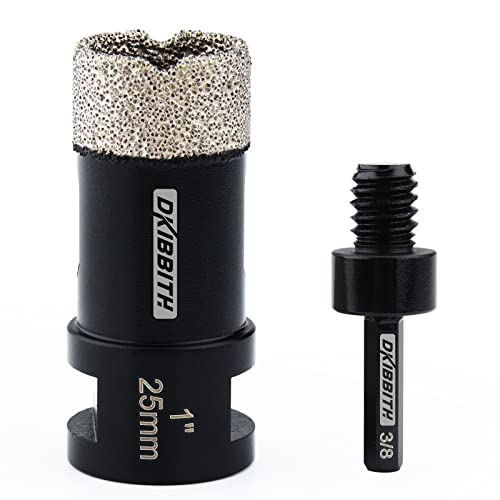
The DKIBBITH diamond core bit is built for the hardest materials: porcelain tile, granite, marble, concrete, and brick. It comes with a 5/8-11 female thread for angle grinders plus a 3/8-inch hex shank adapter for standard drills, giving you mounting flexibility. The vacuum-brazed diamond grit cuts dry or wet, though wet cutting with water cooling extends bit life dramatically on dense stone.
Users report drilling perfect holes in porcelain tile using a wood template to prevent walking — the diamond edge cuts quickly without chipping the glaze. On stucco and brick, it grinds through smoothly for electrical box cutouts. The included adapter lets you switch between an angle grinder for heavy material removal and a drill for precision work.
This is not a wood or metal saw — it’s designed specifically for masonry and tile. The diamond grit wears faster if used dry on very hard materials, so keep a spray bottle handy for cooling. For plumbing and electrical rough-ins through tile and concrete, this bit saves hours compared to hammer-drilling and chiseling.
Why it’s great
- Cuts porcelain, granite, concrete, and brick without chipping
- Includes both 5/8-11 thread for grinders and hex shank adapter for drills
- Vacuum-brazed diamond grit stays sharp through multiple tough-material cuts
Good to know
- Diamond wear accelerates if used dry on very hard stone
- Not suitable for wood or metal cutting at all
5. Starrett Bi-Metal Fast Cut FCH0100-G
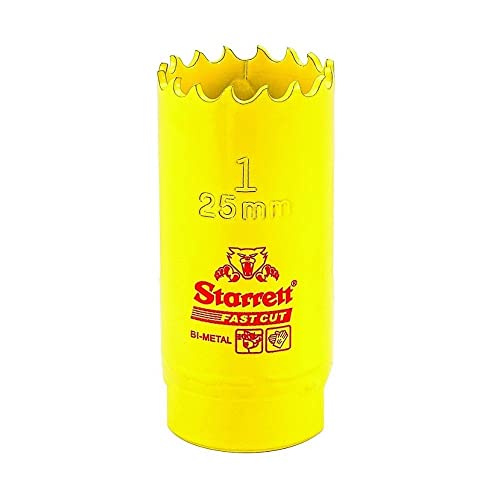
Starrett’s FCH0100-G features a 5.5-pitch straight tooth pattern with 25 teeth crafted from heat-resistant high-speed steel, specifically designed for thin sheet metal, corrugated steel, and interrupted cuts. The narrow tooth set produces an accurate hole diameter with minimal vibration, reducing fatigue on long drilling sessions. The tough alloy steel body resists flexing under load.
Users have used this saw to shred stripped lug nuts off rims, cut through wheel studs, and drill clean holes in thick steel plate — applications where lesser bi-metal saws would lose teeth instantly. On wood, it cuts cleanly but requires slow speeds and frequent clearing of dust from the gullets to prevent clogging. The HSS teeth are sharp but brittle; dropping the saw or hitting a hard inclusion can chip them.
For metalworkers who need precision cuts in thin-gauge steel and occasional wood work, the Starrett offers the best tooth geometry in this class. The yellow finish and brand reputation for accuracy make it a trusted choice in shops where cut quality matters more than raw speed.
Why it’s great
- 5.5-pitch straight teeth produce smooth cuts in thin sheet metal
- 25 HSS teeth resist heat and maintain edge longer than standard carbon steel
- Narrow tooth set reduces vibration and ensures accurate hole diameter
Good to know
- HSS is brittle — chips easily if the saw binds or is dropped
- Gullets clog quickly in wood, requiring frequent cleaning
6. Lenox Bi-Metal Speed Slot 1772481

Lenox’s entry-level bi-metal hole saw punches above its price point with increased wall thickness and an optimized tooth design that penetrates metal more easily than previous generations. The Speed Slot staircase design provides quick plug ejection without hammering the saw against a workbench. Users report cutting clean through two stacked 2x6s for security camera wiring, even while working awkwardly on a ladder.
The pilot bit is the main weak point — several users report it bending when emerging through steel plate, so pre-drilling a separate pilot hole is recommended for thick metal work. On wood and thin sheet metal, this saw performs admirably for the cost, cutting clean holes for kitchen faucet installations and general rough-in work. The industrial finish resists rust better than painted alternatives.
This is the right choice for DIYers and light professionals who need a reliable 1-inch hole saw for occasional use across multiple materials. It won’t outlast carbide options on heavy-duty jobs, but for the price, the durability improvement over previous Lenox models is tangible.
Why it’s great
- Increased wall thickness improves durability over previous Lenox models
- Speed Slot design enables fast plug ejection without tools
- Optimized tooth design penetrates metal with less effort
Good to know
- Pilot bit is prone to bending when emerging from thick steel
- Not designed for high-volume stainless or cast iron cutting
7. DECKRKAT 1 Inch Diamond Hole-Saw Bits with Pilot Drill Bit
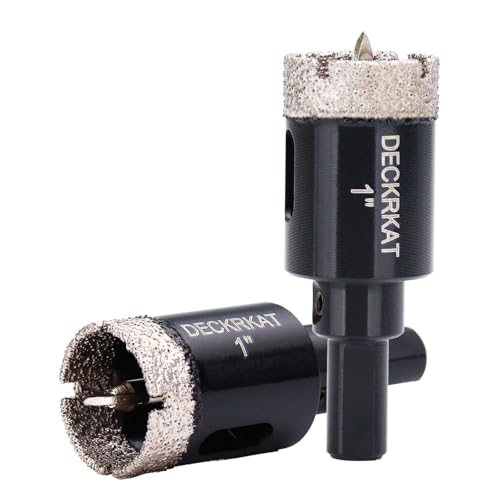
The DECKRKAT set includes two diamond-tipped 1-inch hole saws plus pilot bits, giving you a spare for long tile jobs where diamond grit can wear. The 3/8-inch triangle shank provides excellent grip in drill chucks to prevent slipping during startup. The wet/dry diamond core design works best with water cooling, which users confirm is essential for cutting concrete blocks and porcelain tile without overheating the matrix.
On porcelain tile, this set cuts three holes without losing aggression — a feat that destroys standard carbide bits. The pilot bit centers the cut precisely, then the wobbling motion recommended by the manufacturer helps clear debris from the cut line. On concrete blocks, each hole takes about 10 minutes with constant water spray, and the diamond grit remains intact for future use.
For anyone tiling a shower or cutting holes for outdoor lighting in brick, this two-pack offers redundancy and excellent value. The included plastic case keeps the bits organized, and the Allen wrench for installing the pilot bit is a thoughtful touch that first-time diamond core users will appreciate.
Why it’s great
- Two diamond hole saws in one set provide backup for long jobs
- Triangle shank prevents chuck slipping during drilling startup
- Cuts porcelain, tile, granite, glass, and concrete without chipping
Good to know
- Cutting depth of 1-3/8″ may not penetrate thick block in one pass
- Pilot bit can fall out of the chuck if the retention screw loosens
FAQ
Can I use a 1 inch hole saw for porcelain tile without a diamond core bit?
Why does my hole saw keep walking on the surface before starting the cut?
What does the Speed Slot feature on Lenox hole saws actually do?
How do I prevent overheating when using a diamond core bit on tile?
Final Thoughts: The Verdict
For most users, the best 1 inch hole saw winner is the Diablo DHS1000CT because its carbide-tipped teeth and 2-3/8-inch cutting depth handle both wood and metal with exceptional longevity. If you need a dedicated masonry and tile cutter, grab the DKIBBITH Diamond Core. And for impact-driver-centric work on thin materials, nothing beats the convenience of the Bosch HTW1 Edge.