
The appeal of a cat without the vet bills, shedding, or litter box is no longer a futuristic fantasy. Today’s robot cats use multi-sensor arrays and advanced animatronics to deliver purrs, meows, and even heartbeat simulations that fool real pet owners. Whether you’re looking for a plush companion for an elderly relative or a STEM-programmable robo-pet for a curious child, the market now offers options that range from simple interactive toys to sophisticated companions that respond to touch, voice, and gesture.
I’m Min — the co-founder and writer behind Gadgets Feed. For this guide, I’ve spent weeks dissecting the technical specifications and customer feedback across dozens of robot cat models to identify which ones genuinely deliver on their promises of realistic interaction and reliable build quality.
After comparing hundreds of reviews and analyzing sensor capabilities, battery life, and material quality, here is my curated list of the best ai robot cat options available right now for every type of owner.
How To Choose The Best AI Robot Cat
The real challenge isn’t finding a robot cat, but finding one that genuinely interacts rather than just moves. The market is split between two different philosophies: animated plush toys and autonomous robotic pets. Understanding where your priorities lie — realistic feel versus programmable complexity — will narrow your choices immediately.
Interactive Realism vs. Programmable Functionality
The most important fork in the road is deciding whether you want a robot cat that feels alive or one that can be taught tricks. Models like the Chongker Companion prioritize passive realism — purring, heartbeat, weighted bodies — while options like the Ruko Smart Robot Dog prioritize active play with programmable moves and gesture control. A child who loves coding may prefer the latter, while an elderly person seeking comfort will value the former.
Battery Life and Charging Convenience
Nothing kills the illusion of a living pet faster than a dead battery after 20 minutes. Look for models that advertise at least one hour of active play, but understand that many robopets with impressive motor actions may only deliver 30–45 minutes per charge. The charging interface also varies — some use a hidden belly pouch, others use a traditional USB-A to C cable. If the user is elderly or has dexterity issues, a straightforward charging port matters enormously.
Sensory Input and Triggered Response
Touch sensors (often hidden in the head, back, and belly) determine how naturally a robot cat reacts to petting. A good model will distinguish between a gentle stroke and a tap, triggering different sounds or movements. Voice control adds another layer — some respond to specific commands, while others simply meow when spoken to. The quality of the sound module matters: cheap speakers produce tinny, robotic meows that break immersion, while premium units use real cat recordings sampled through hours of research.
Quick Comparison
On smaller screens, swipe sideways to see the full table.
| Model | Category | Best For | Key Spec | Amazon |
|---|---|---|---|---|
| Chongker Interactive Robot Cat 2.0 | Plush Companion | Emotional support & realism | 4 touch sensors, purr & heartbeat | Amazon |
| Eilik Blue + Pink Combination | Desktop Companion | Multi-unit interaction & emotions | Infrared sensor, 3 touch points | Amazon |
| Sega Fave KIMIT Ragdoll | Animatronic Plush | Lifelike motions & size | 24-inch length, neck & tail movement | Amazon |
| Ruko 18011 Smart Robot Dog | Programmable Pet | STEM learning & obstacle avoidance | 98-ft remote range, 30 LED faces | Amazon |
| Dingdongwu Smart Robot Dog | Coding Robot | Voice commands & 30 actions | 600mAh battery, 6-hour standby | Amazon |
| Chongker Plush Cat 1.1 | Weighted Plush | Budget-friendly comfort | Realistic pulse, 47-step crafting | Amazon |
| LEXiBOOK Power Kitty | Entry-Level Toy | Simple remote control fun | STEM programming, LED eyes | Amazon |
In‑Depth Reviews
1. Chongker Interactive Companion Robot Cat (Black Cat)
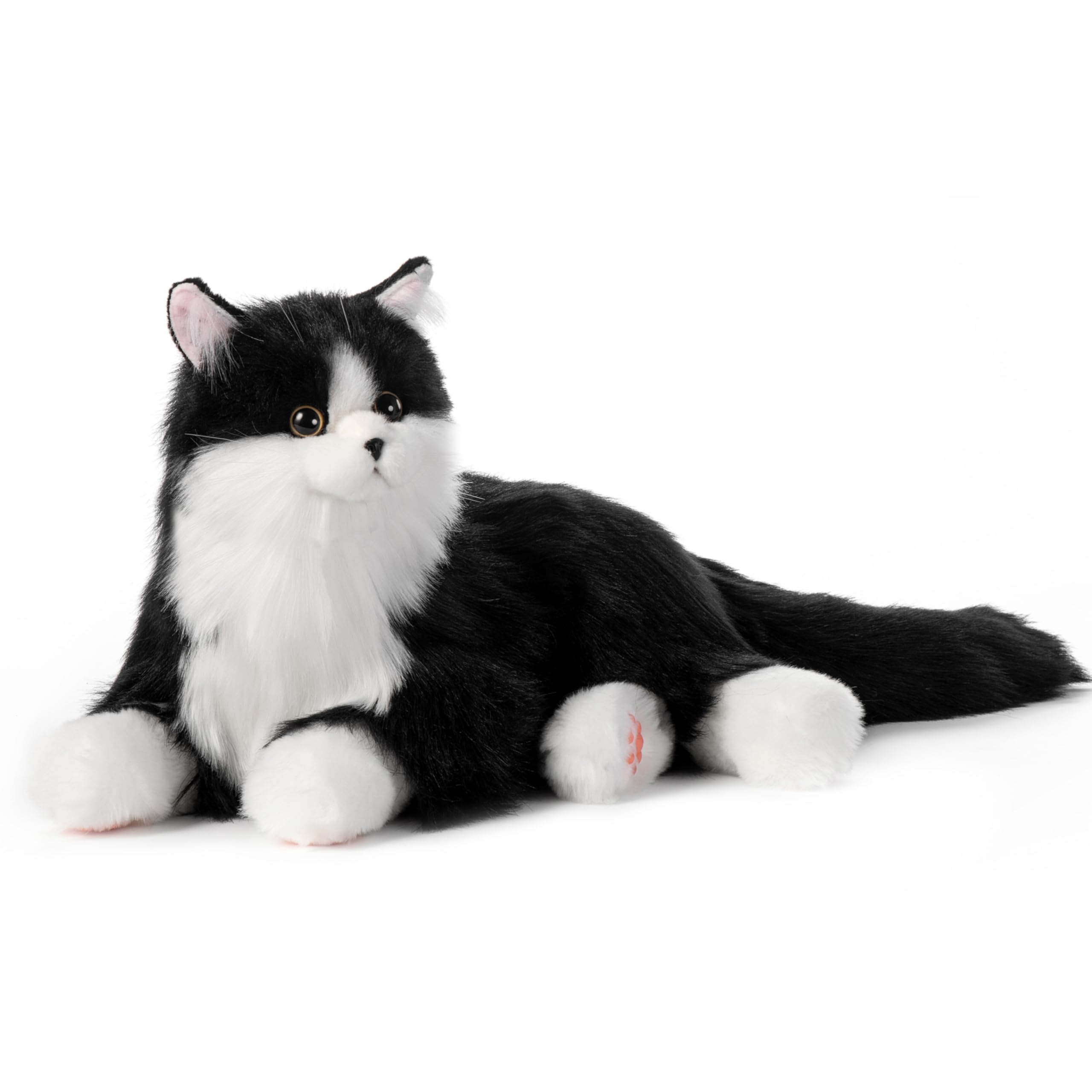
The Chongker Interactive Companion Robot Cat nails the hardest challenge for any robot pet: feeling convincingly alive. Its four built-in touch sensors are positioned in the head, back, and sides, each triggering distinct reactions — a gentle head stroke produces a soft purr, while a belly rub elicits a realistic heartbeat sensation. The weighted body combined with the 23.6-inch length gives it the heft and cradling comfort of a real cat, which is critical for the elderly users and dementia patients that this model explicitly targets.
What separates this from lesser plush options is the audio quality. The purring mechanism uses vibration rather than a simple speaker, creating the low-frequency rumble that cat owners instantly recognize. The meow sounds were sampled from real cats, which avoids the cheap electronic noise that plagues budget units. The charging port is cleverly hidden in a belly pouch, keeping the exterior seam-free and maintaining the illusion of a living animal. The included comb and greeting card show the attention to gifting detail.
A few users noted that the “meow” sounds can occasionally sound human-like rather than feline, and the mechanical grinding noise from the internal motors can briefly break the realism during movement. However, for someone who simply wants to hold and pet a robot cat that responds softly, this Chongker model offers the most cohesive experience in the mid-range. It is the best choice for caregivers seeking a non-pharmaceutical comfort solution.
Why it’s great
- Four well-placed touch sensors provide varied, natural responses
- Weighted body and 23-inch length mimic real cat proportions
- Vibrating purr and heartbeat feel far more realistic than speaker-only alternatives
Good to know
- Internal motor grinding noise can be heard during active movement
- Some users find the meow sound slightly synthetic compared to higher-tier models
2. Sega Fave KIMIT Ragdoll (White Pet Robot Cat)

The Sega Fave KIMIT Ragdoll is the closest you can get to a living cat without the litter box. At 24.4 inches long and weighing 900 grams, it has the substantial presence and lap-filling size that smaller robot cats simply cannot achieve. Sega Toys brings decades of robotic pet engineering to this model, and it shows in the articulated neck and tail that move with fluid, organic pacing — not the jerky, canned motions of cheaper alternatives. The LCD eyes display varied pupil shapes and gaze directions that follow sound and touch.
This KIMIT model excels in passive realism. The purring sound is deep and chesty, and the heartbeat simulation matches the tempo of a resting cat. The white Ragdoll fur is exceptionally soft, with individual hairs that catch light like real coat texture. The dedicated AC adapter ensures consistent charging power, which is important because the large battery needs a full charge to deliver extended session times. The included comb is a thoughtful touch for grooming the plush fur.
The primary friction point is the instruction manual, which is not guaranteed to include English — a consideration for non-Japanese-speaking owners. Some users also noted the tail motion could be more fluid. But for anyone who has experienced pet loss or cannot own a real cat due to allergies, the Sega KIMIT provides an uncanny level of companionship. The premium is justified by the build quality and the sheer size of the unit.
Why it’s great
- Full-size lap cat dimensions offer unmatched physical presence
- LCD eyes with dynamic gaze tracking enhance live-pet illusion
- Sega’s engineering delivers smooth, non-jerky neck and tail articulation
Good to know
- Instruction manual may not contain English version
- Tail articulation could be more expressive
3. ENERGIZE LAB Eilik (Blue + Pink Combination)

The Eilik from ENERGIZE LAB takes a fundamentally different approach: it prioritizes personality and social interaction over realism. These 4.3-inch-tall desk robots do not pretend to be cats, but they do something arguably more engaging — they build real-time emotional relationships. Each unit has touch sensors on the head, belly, and back, and responds differently to pokes, strokes, and lifts. The onboard shock sensor means you can gently tap its head to trigger surprise animations, and the infrared sensor detects other Eilik units within range.
This is where the magic happens. When two Eilik units are placed near each other, they initiate a connection sequence — chatting, playing mini-games, or even bickering. The combination of idle animations, emoji-style facial expressions, and situational awareness creates a desktop pet that feels genuinely alive in a social sense. Frequent firmware updates add new emotions and interactions, which extends the toy’s shelf life dramatically. The setup is truly zero-friction: power on and play, no app required for basic interaction.
The package reviewed here includes both a Blue and Pink unit, which doubles the fun but also the price. Some buyers reported receiving two units of the same color instead of the advertised combination, so verify the package contents upon arrival. But for anyone — child or adult — who wants an expressive, evolving companion that interacts with other units, the Eilik system is genuinely unique and entertaining.
Why it’s great
- True social interaction between paired units creates emergent behavior
- Zero setup required — power on for instant play
- Frequent firmware updates add long-term value
Good to know
- Small desktop size may feel less substantial than plush alternatives
- Color accuracy in multi-unit packages should be double-checked on delivery
4. Ruko 18011 Smart Robot Dog
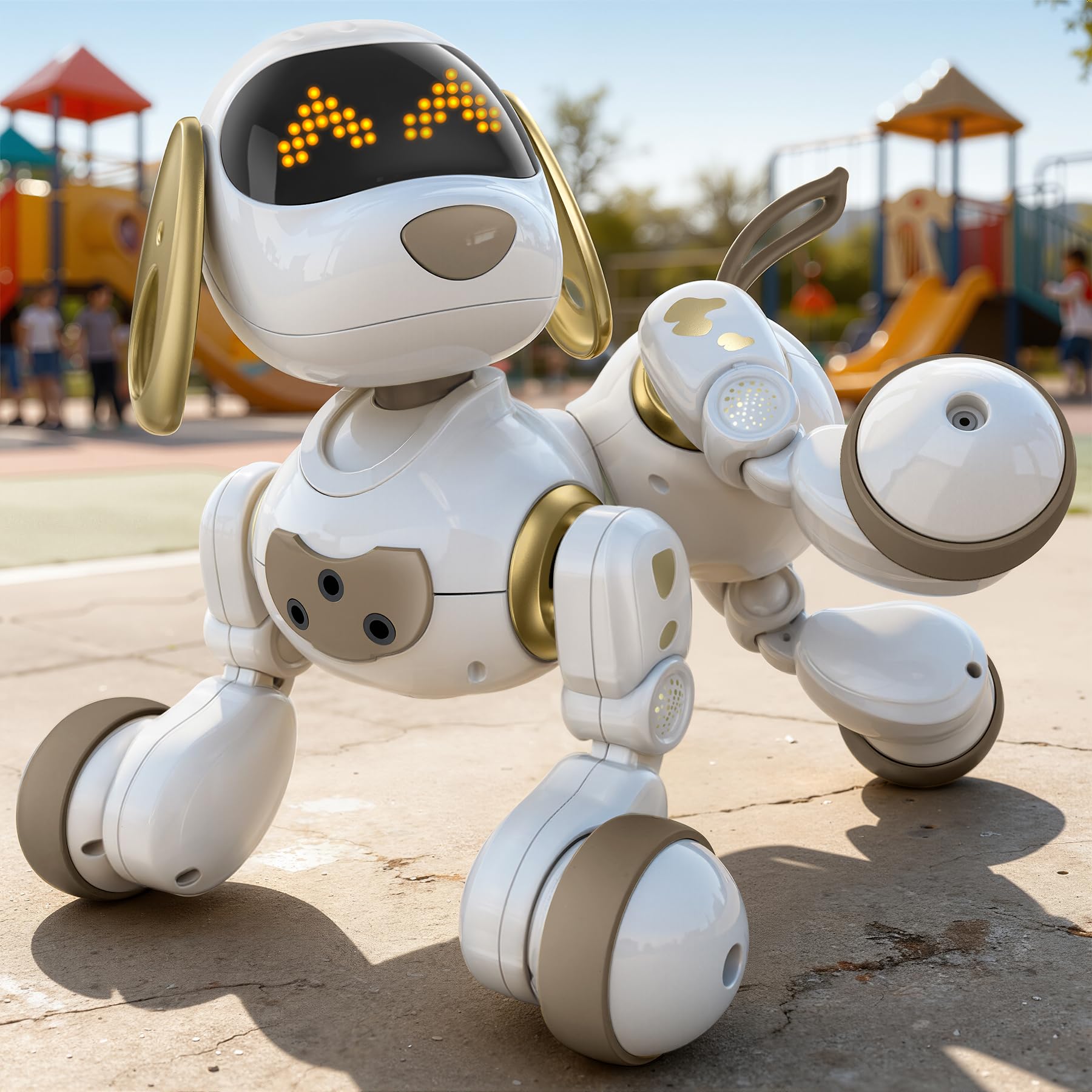
The Ruko 18011 is technically a robot dog, but its interactive capabilities and programmability make it a strong contender in the broader AI pet category — especially for families who want a durable, active companion. The headline feature is the 70 LED lights covering the face, enabling over 30 animated expressions. A gentle head touch triggers a happy face, while bumping into a wall produces a confused look. This visual feedback loop is fantastic for teaching cause-and-effect thinking to children as young as three years old.
Beyond the faces, the Ruko excels in autonomous navigation. The obstacle-avoidance sensors detect walls and furniture at about four inches of distance, causing the dog to change direction before colliding. This makes it far more safe for indoor use in small apartments than remote-controlled robots that require constant supervision. The programming mode allows kids to sequence up to 50 custom moves, building a dance routine or trick parade that the dog executes on command. The 2.4GHz remote works up to 98 feet away.
Battery life is the single weak point — about 45 minutes of active play from a 3-hour charge. That ratio means you will need to plan play sessions or have a backup charging schedule. Some users also found the nursery rhyme songs slightly too babyish for older kids. But for fostering early STEM skills through a lovable, obstacle-avoiding pet, the Ruko 18011 delivers remarkable depth for its tier.
Why it’s great
- Obstacle-avoidance sensors enable worry-free indoor play
- 50-move programming mode teaches sequencing and logic
- 30 distinct facial expressions driven by 70 LEDs
Good to know
- 45-minute battery life requires frequent recharging
- Built-in songs skew toward younger children
5. Dingdongwu Smart Robot Dog
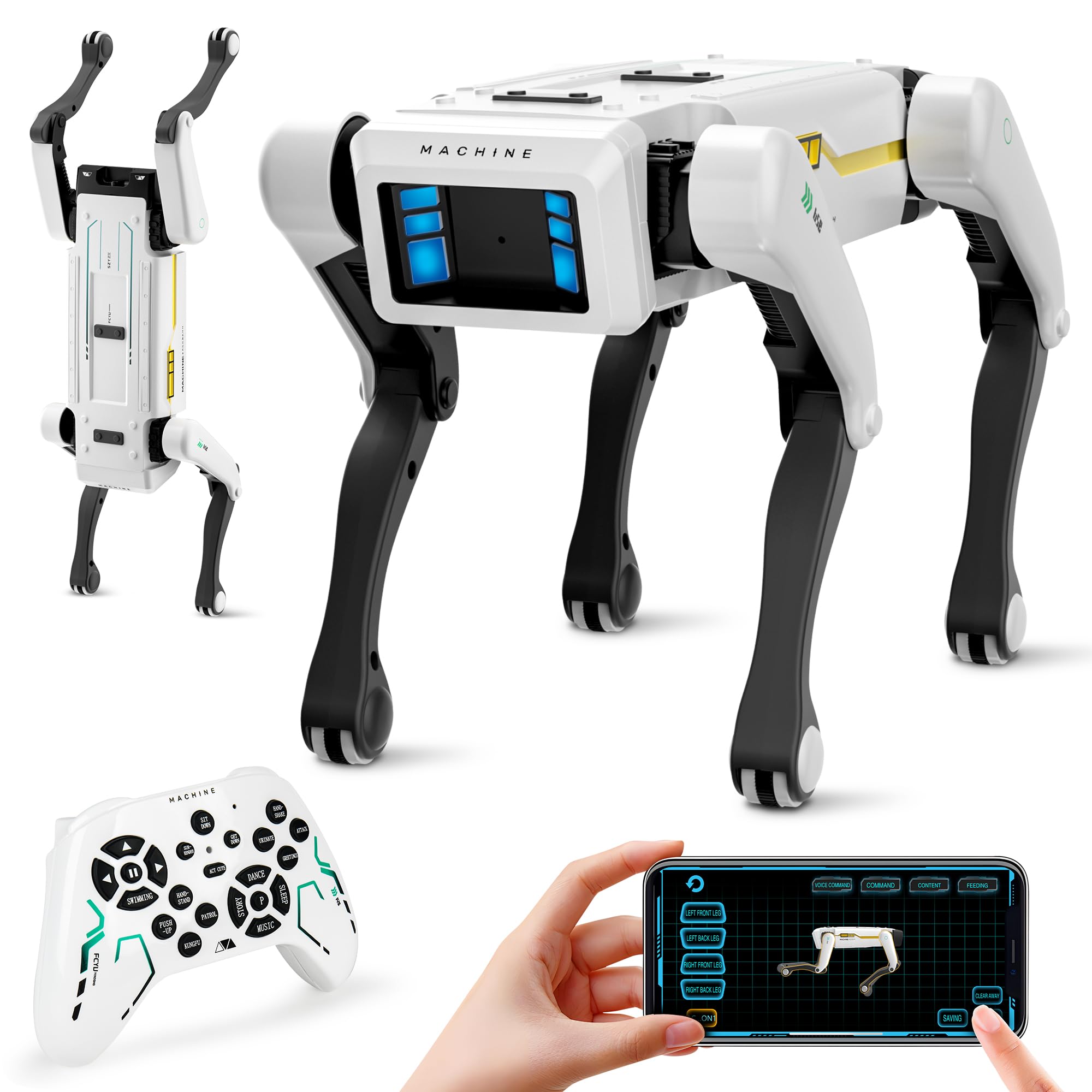
The Dingdongwu Smart Robot Dog solves the most common complaint in this category: battery anxiety. Its 600mAh battery delivers a genuine 6-hour standby runtime, and full recharge takes only 1.5 hours via the USB-C port. That 4:1 play-to-charge ratio is best-in-class among the robots in this roundup. The 30-plus actions include surprisingly complex maneuvers — Kung Fu poses, handshakes, somersaults, and the crowd-pleasing “pee attack” prank that kids find hilarious and adults find endearing.
The dual-control approach is smart: a physical remote for immediate, lag-free control and a free iOS/Android app that unlocks voice commands and custom programming sequences. The app also lets parents adjust volume, toggle language between English and Chinese, and lock controls when playtime is over. The build uses non-toxic ABS plastic with ultra-smooth edges, which passed the drop test from a child’s height without cracking. The precision motors allow for more fluid motion than typical budget robot dogs.
The main drawback is that this is a robot dog, not a cat, so cat-specific features like purring or gentle head rubs are absent. One customer reported the remote stopped pairing after three days, which suggests quality control can vary. However, the majority of positive reviews highlight the durability and the depth of interactive features. For families wanting a STEM pet that stays alive all day without constant charging, this Dingdongwu model is a smart value proposition.
Why it’s great
- Industry-leading 6-hour standby from a 1.5-hour charge
- 30+ actions including complex trick sequences
- USB-C fast charging and parent-friendly app controls
Good to know
- Form factor is a dog, not a cat — no purring or cat-like traits
- Remote pairing reliability may be inconsistent across units
6. Chongker Plush Companion Cat 1.1 (White)
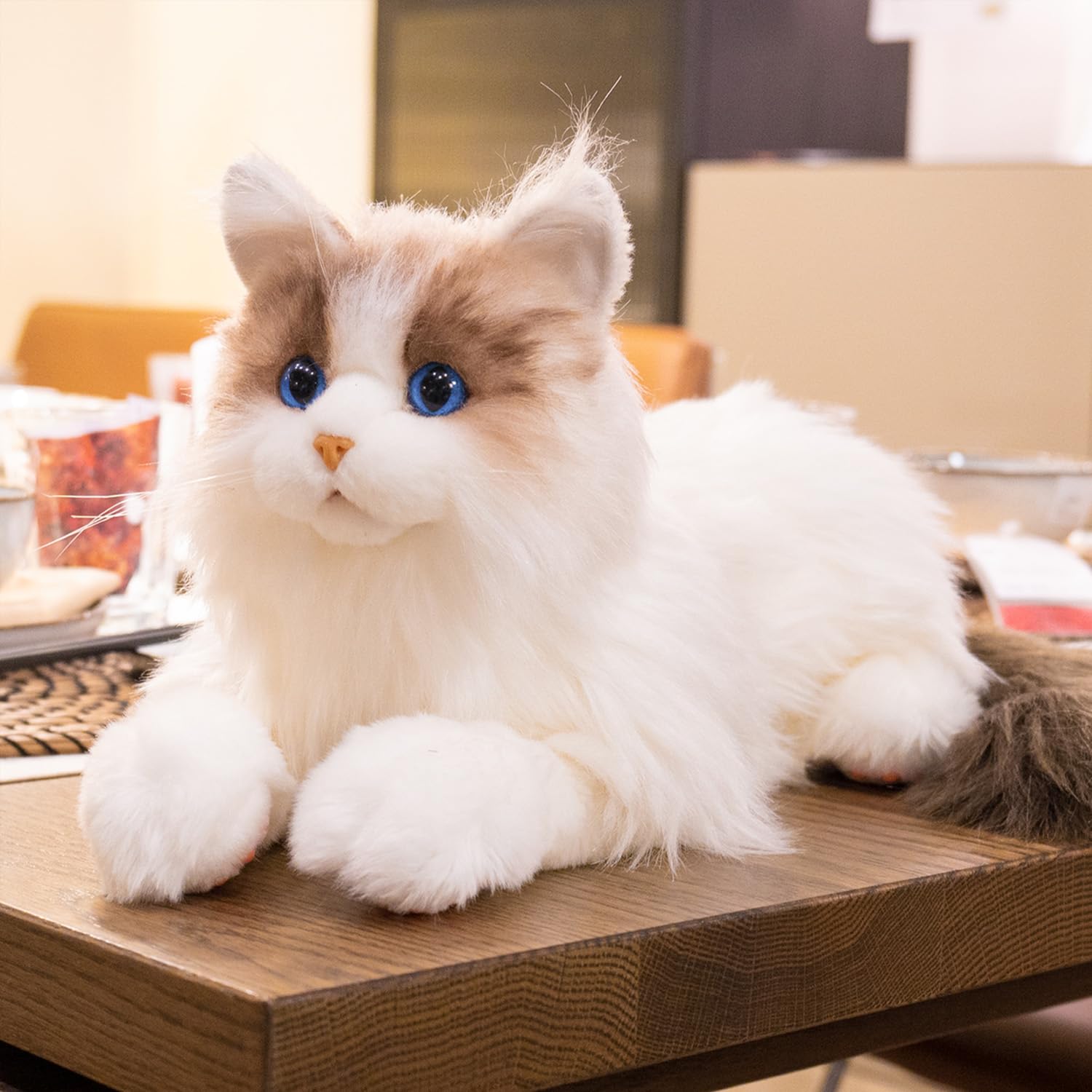
The Chongker Plush Companion Cat 1.1 represents the more affordable sibling of the top-ranked Chongker model, and it shares the same DNA of tactile realism. The 47-step handcrafting process — from material selection to precise stitching — gives this cat a genuinely luxurious feel. The artificial hair is engineered to mimic the texture of real cat fur, which is critical for sensory comfort therapy. The internal polyester stuffing provides a consistent, huggable density that doesn’t clump over time.
The purring motor is the standout feature at this tier. Rather than using a small speaker, Chongker implemented a vibrating motor that resonates through the plush body, creating the deep, low-frequency rumble that cat owners instantly recognize. The heartbeat simulation is also present, beating at a pace that mimics a relaxed cat. The head and tail have limited articulation — the cat can turn its head slightly and the tail can be posed — but this is not a highly mobile robot; it is a stationary comfort object with sensory responses.
The criticisms revolve around the mechanical noise. The purring motor does produce a low grinding sound that some users find distracting. Additionally, the head movement can be audible enough to break the illusion. And at this price point, some buyers felt the interactivity was too limited — it purrs, it meows, but it does not walk, follow, or perform tricks. For a dedicated companion for an elderly person or child who just wants something warm to hold that responds to petting, it is excellent. For anyone wanting an active robotic pet, look at the Ruko or Dingdongwu options instead.
Why it’s great
- 47-step handcrafting delivers premium fur texture
- Vibrating purr motor provides deep, resonant feedback
- Heartbeat simulation adds emotional realism for comfort therapy
Good to know
- Mechanical motor noise can interfere with purr illusion
- Limited mobility — no walking, following, or trick execution
7. LEXiBOOK Power Kitty (White/Pink)

The LEXiBOOK Power Kitty is an entry-level robot cat that punches above its weight by including both Follow-Me and Gesture control modes at a very accessible price. The robot responds to hand waves and directional gestures, which is impressive at this tier where most competitors offer only basic remote control. The LED eyes and collar lights add visual appeal, and the STEM programming mode allows children to sequence simple commands — walk forward, turn, play a sound — to create basic routines.
The rechargeable battery means you are not continuously buying AA batteries (though the remote does require AAA cells). The 10.2-inch height makes it a tabletop-friendly size that doesn’t dominate a room but is substantial enough to feel like a real toy. The white and pink color scheme is clearly targeted at younger children, and the Lexibook brand offers the reassurance of a certified toy manufacturer with safety compliance. Customer reviews consistently mention that it makes a good introductory gift for kids around age 4–8.
The limitations are predictable at this tier. The motion is not as smooth as premium robots — the wheels and motors produce a somewhat jerky, robotic gait. The sound quality is noticeably tinny compared to the Chongker or Sega models, and the Follow-Me function works best on smooth, bare floors rather than carpet. The included instruction manual is basic. But for a child’s first robot pet, the Power Kitty’s combination of gesture control, STEM programming, and low price makes it a sensible starting point that won’t cause regret if it gets dropped or lost.
Why it’s great
- Gesture and Follow-Me control are rare features at this entry tier
- STEM programming mode introduces basic coding logic
- Rechargeable battery reduces ongoing costs
Good to know
- Jerky wheel-driven motion lacks the fluidity of premium units
- Sound quality is basic and may not satisfy older children
FAQ
Can robot cats replace real cats for people with severe allergies?
How loud are the motors and speakers on most AI robot cats?
Do any robot cats respond to voice commands in English?
Final Thoughts: The Verdict
For most users, the best ai robot cat winner is the Chongker Interactive Companion Robot Cat because it strikes the best balance between realistic tactile feedback, weighted comfort, and responsive touch sensors. If you want a desktop companion that builds emotional relationships with other units, grab the ENERGIZE LAB Eilik Blue + Pink Combination. And for the ultimate in size and motion realism, nothing beats the Sega Fave KIMIT Ragdoll.