
The wrong oil in a 4-stroke dirt bike turns crisp shifting into vague mush and invites premature wear that shows up long before the piston should need replacing. Wet clutches, shared transmission sumps, and extreme heat loads demand a lubricant formulated for the unique demands of off-road thumpers—not automotive oil repurposed for the job.
I’m Min — the co-founder and writer behind Gadgets Feed. For this guide I cross-referenced JASO MA/MA2 certifications, shear stability tests, viscosity retention data, and hundreds of real-world owner reports to separate the oils that truly protect from those that merely lubricate.
Every oil on this list earned its spot by delivering measurable thermal protection, clutch-friendly friction modifiers, and sustained film strength through a full ride day. This is your definitive resource for finding the best 4 stroke dirt bike oil for your specific machine and riding conditions.
How To Choose The Best 4 Stroke Dirt Bike Oil
A dirt bike’s engine and transmission share the same oil sump, which means the lubricant must simultaneously protect high-RPM valvetrain components and a wet clutch that demands specific frictional behavior. Choose wrong and you get clutch slippage, notched shift dogs, or accelerated cam wear. Here is what separates the oils worth buying from the ones best left on the shelf.
JASO MA/MA2 Certification Isn’t Optional
The Japanese Automotive Standards Organization created the MA and MA2 ratings specifically for motorcycles with wet clutches. MA2 oils have stricter friction limits that prevent clutch slippage while still providing enough lubricity for gearbox components. Oils lacking this certification—including many passenger-car synthetics—contain friction modifiers that can turn a healthy clutch pack into a slipping mess within a single ride. Always confirm the JASO logo on the bottle.
Viscosity Grade and Your Riding Environment
Most 4-stroke dirt bikes spec 10W-40 from the factory, and it remains the best all-around choice for moderate climates and trail riding. If you ride in sustained 100°F desert conditions or have a modified, high-compression engine that runs hotter, stepping up to a 10W-50 or 5W-50 delivers thicker high-temperature film strength. For cold-weather starts below freezing, a 5W-40 base flows faster on the first kick. Match the grade to your average operating temperature, not your brand loyalty.
Synthetic vs. Conventional: The Real Trade-Off
Full synthetic base oils resist thermal breakdown and viscosity shear far longer than conventional or semi-synthetic blends. If you change oil every 5-10 hours of hard riding, a quality conventional like Pro Honda GN4 works fine. If you stretch intervals to 15-20 hours or ride in extreme heat, a full synthetic—especially an ester-fortified synthetic like Maxima Pro Plus+—maintains film strength and protects against deposits longer. The extra cost per quart buys extended protection, not necessarily more power.
Quick Comparison
On smaller screens, swipe sideways to see the full table.
| Model | Category | Best For | Key Spec | Amazon |
|---|---|---|---|---|
| Royal Purple Max Cycle 10W-40 | Premium Synthetic | Heat reduction & wear protection | Synerlec additive tech; flash point 204°C | Amazon |
| Maxima Pro Plus+ 10W-40 | Premium Synthetic | Ester-fortified stability | Ester-fortified formula; shear stable | Amazon |
| Yamaha Yamalube 10W-40 Full Synthetic | Full Synthetic | OEM-spec reliability | JASO MA; API SL; full synthetic base | Amazon |
| Quicksilver 5W-50 Full Synthetic | Full Synthetic | Broad viscosity range & cold starts | 5W-50 viscosity; full synthetic | Amazon |
| Pro Honda GN4 10W-30 | Conventional | Budget-friendly Honda OEM | 32 oz; conventional base stock | Amazon |
| Kimpex 10W40 Moto/ATV | Synthetic Blend | Value synthetic blend | 3.78 L jug; synthetic blend | Amazon |
| Valvoline 4-Stroke ATV/UTV 10W-40 | Conventional | ATV & utility quad use | 1 QT (case of 6); wet clutch safe | Amazon |
In‑Depth Reviews
1. Royal Purple Max Cycle 10W-40

Royal Purple’s Synerlec additive package sets it apart in the dirt bike segment. Real-world data from an XR650L running in 105°F Arizona heat showed oil temperatures dropping from over 300°F to the 210-225°F range after switching to Max Cycle 10W-40, and rebuild intervals extended from 5,000 to 7,000-10,000 miles. That is a measurable thermal performance gain, not marketing hype.
The 10W-40 viscosity covers the vast majority of trail and track conditions, and the JASO MA2 certification ensures clutch compatibility across bikes from CRF450Rs to DR-Z400s. Reviewers consistently note quieter valvetrain operation and smoother shifting after the swap, with several reporting elimination of cam and lifter galling at inspection intervals.
It carries a flash point of 204°C, which resists vaporization under sustained high-RPM load better than many competitors in its tier. If you ride hard in hot climates or have a modified engine that runs hotter than stock, this oil earns the premium it commands.
Why it’s great
- Proven oil temp reduction in extreme heat (300°F to 210-225°F)
- JASO MA2 certified for wet clutch safety
- High 204°C flash point resists thermal breakdown
Good to know
- Priced higher per quart than most semi-synthetic options
- Some riders report it is overkill for low-hour recreational use
2. Maxima Pro Plus+ 10W-40
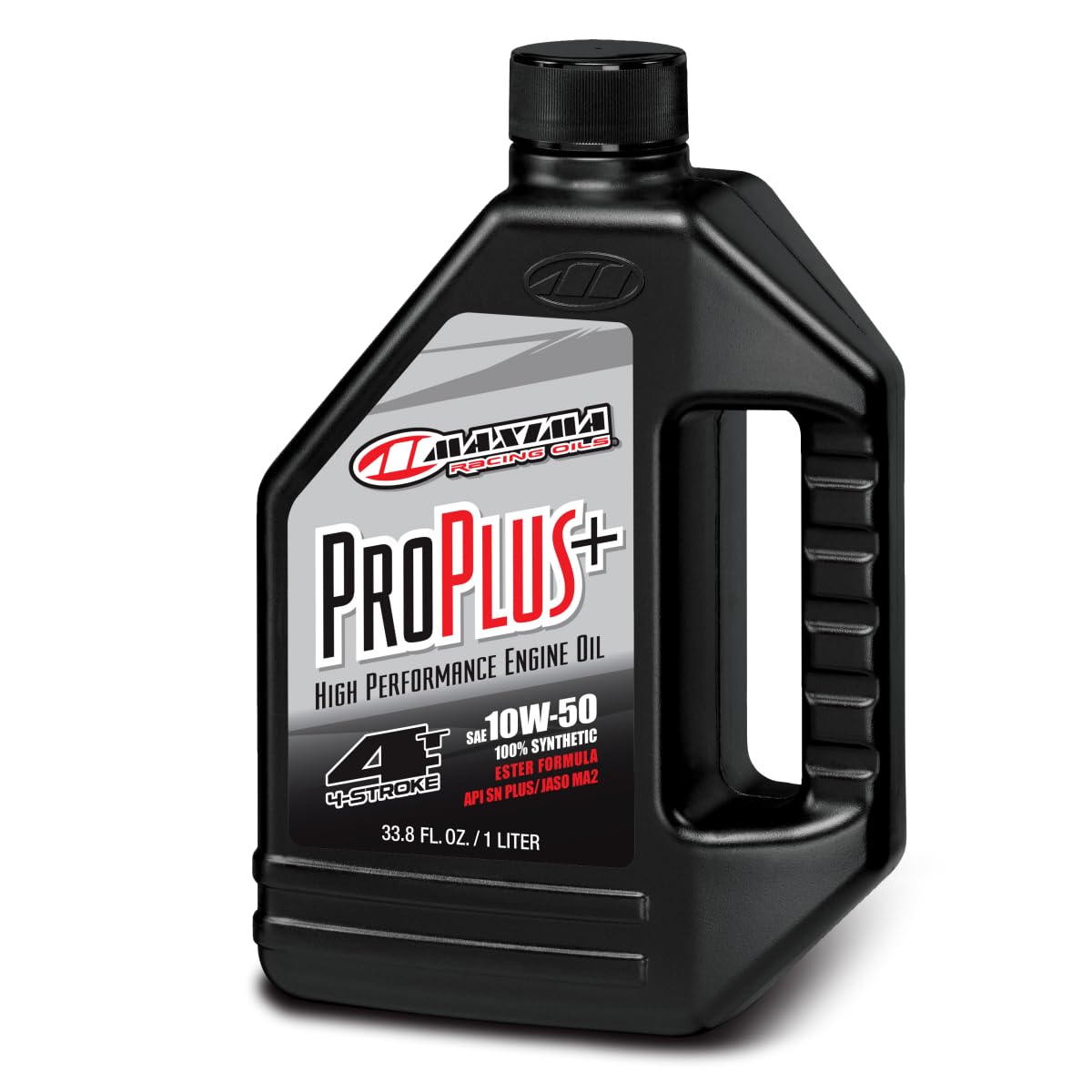
Maxima Pro Plus+ uses an ester-fortified synthetic base that resists viscosity shear longer than standard Group III synthetics. That matters for 4-stroke dirt bikes because the transmission gears mechanically shear oil molecules over time, thinning the lubricant and reducing film strength. The ester chemistry also attaches aggressively to metal surfaces, providing a cling layer that persists after shutdown.
Owners of DR650s, KX450Fs, and V-Strom 650s report noticeably smoother shifting and improved clutch feel after switching to Pro Plus+. One KX450F owner running a 2006 model noted the bike shifted cleanly after the change and that he would reorder—a strong signal from the hard-use motocross crowd. The surface-active additive system keeps engine interiors clean, reducing deposit buildup on piston skirts and valve stems.
If you prioritize shift feel and long-term wear resistance over upfront cost, this is one of the strongest options at its tier.
Why it’s great
- Ester-fortified base resists viscosity shear from transmission gears
- Improves shift smoothness and clutch feel noticeably
- 1-liter bottle provides extra volume beyond most fill requirements
Good to know
- Not JASO MA2 certified on all viscosity grades—confirm the specific bottle
- Premium price per liter compared to conventional options
3. Yamaha Yamalube 10W-40 Full Synthetic

Yamalube 10W-40 Full Synthetic delivers OEM-spec protection at a price that undercuts many boutique synthetics. It carries JASO MA and API SL certifications, so it is safe for wet clutches and meets Yamaha’s own engineering standards for engines like the YZ250F, WR450F, and TTR series. The fully synthesized base oil provides excellent thermal stability for trail riding and weekend motocross.
Owner feedback spans from FJ-09 street bikes with 40,000 miles to Kayo 110cc pit bikes, with consistent reports of reliable performance and no premature engine wear. One shop owner buys it in bulk for his entire fleet, confirming its consistent quality across multiple machines. The 1-quart bottle matches the most common fill volume for dirt bikes, so you get exactly what you need without leftover partial bottles.
It is worth noting that a small number of riders reported faint clutch slip on aggressive upshifts near the end of a 3,500-mile change interval on a street bike, though dirt bike intervals are far shorter (typically 5-15 hours), making this a non-issue for off-road use. For the price, this is the most accessible full synthetic that still carries the JASO MA badge.
Why it’s great
- Full synthetic at a price near conventional oils
- JASO MA certified for wet clutch compatibility
- Proven reliable in thousands of Yamaha engines across all displacement sizes
Good to know
- Some street riders report minor clutch slip at very long change intervals
- Only available in 1-quart bottles—not ideal for multi-bike shops buying by the gallon
4. Quicksilver 5W-50 Full Synthetic

The 5W-50 viscosity range is unusual in the dirt bike oil segment, but it addresses a specific need: riders who face cold morning starts followed by hard afternoon riding. The 5W winter rating flows quickly at low temperatures, reducing starter strain and getting oil to the valvetrain faster, while the 50 hot-rating maintains film strength when the engine reaches operating temperature in summer conditions.
Quicksilver is a Mercury Marine brand, and this oil carries the same formulation philosophy used in high-output marine engines—corrosion protection, deposit minimization, and wear resistance. ATV and UTV users report easy starting even in cold weather and consistent performance throughout the day. One Can-Am owner noted the oil held up well under sustained high-load trail riding without noticeable breakdown.
It is designed primarily for ATV/UTV use, but its JASO-like friction characteristics make it suitable for dirt bikes running 5W-50 or 10W-50 specs. If your owner’s manual calls for a 10W-50 or you ride in environments with extreme temperature swings, this broad-range synthetic deserves a spot in your toolbox.
Why it’s great
- 5W-50 range covers sub-freezing starts and 100°F+ riding
- Full synthetic resists thermal breakdown under sustained load
- Corrosion protection package suits wet or humid environments
Good to know
- Not widely tested in pure motocross applications—primarily ATV/UTV focused
- Lacks explicit JASO MA certification on the bottle for some markets
5. Pro Honda GN4 4-Stroke Motor Oil 10W-30
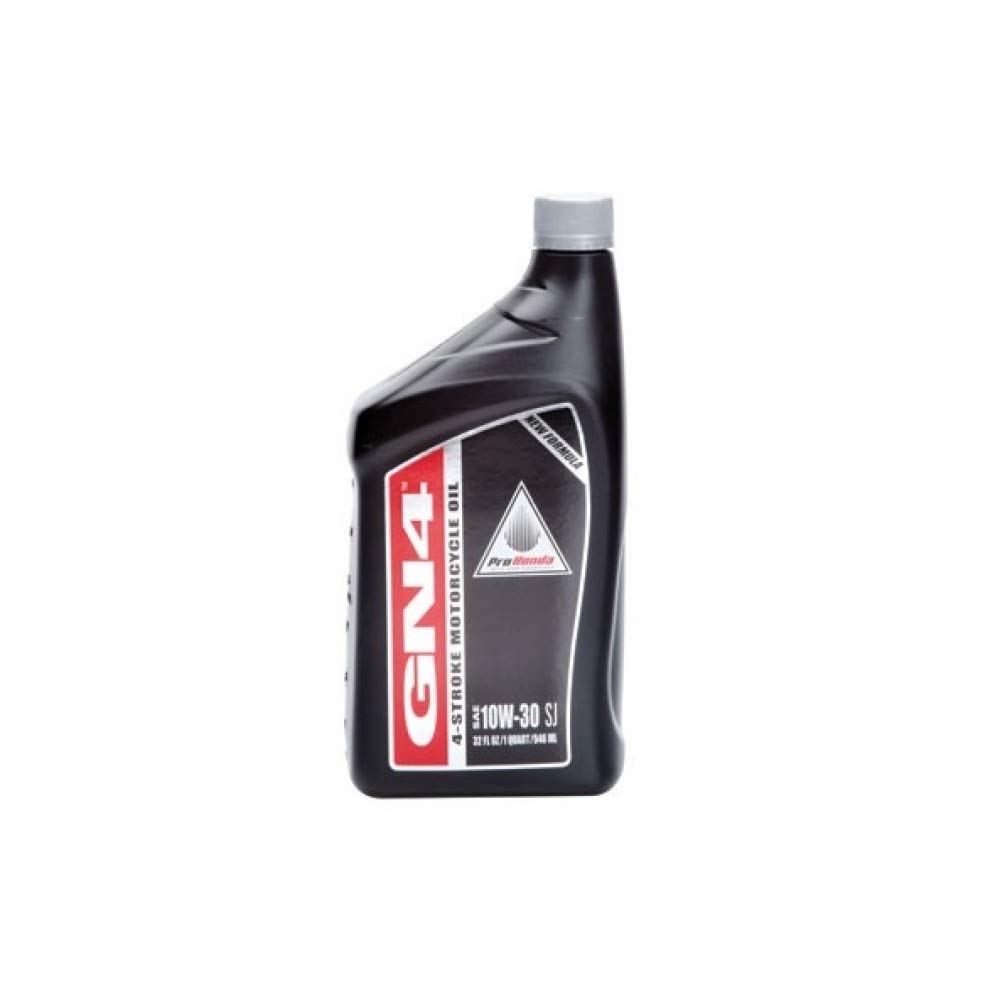
Pro Honda GN4 is the conventional oil that ships in countless CRF, XR, and TRX models from the factory. It is a mineral-based 10W-30 that meets Honda’s own specifications for engines like the CRF250R, CRF450R, and Gold Wing’s DCT transmission. For riders who change oil every 5-10 hours—the correct interval for race conditions—this oil provides adequate protection without the cost of synthetics.
Owners of 2007 CRF250Rs and 2023 Honda Groms report trouble-free operation and clean oil at drain intervals. One Gold Wing DCT owner with a 2018 model confirmed the oil holds up well between changes and keeps the dual-clutch transmission shifting smoothly. The 32-ounce bottle is a standard size for most single-cylinder dirt bike fills, usually leaving a small amount for top-offs.
The 10W-30 viscosity is lighter than the 10W-40 most dirt bikes spec, so check your owner’s manual before using it in hot climates or high-compression engines. This oil is best suited for recreational trail riding, pit bikes, and machines that see moderate duty and frequent changes rather than extreme conditions.
Why it’s great
- Factory-fill for Honda dirt bikes—guaranteed compatibility
- Lowest cost per quart in this guide
- Works well in DCT transmissions (Gold Wing, Africa Twin)
Good to know
- 10W-30 grade may be too thin for high-compression or hot-climate riding
- Conventional base breaks down faster under extreme heat than synthetics
6. Kimpex 10W40 Moto/ATV 4-Stroke Oil

Kimpex’s 10W-40 synthetic blend hits the sweet spot for riders who want better protection than conventional oil but do not want to pay full synthetic prices. The 3.78-liter (one-gallon) jug provides enough oil for approximately four to five dirt bike oil changes, making it a cost-effective choice for households with multiple bikes or frequent change schedules.
Feedback from Arctic Cat 400 ATV owners confirms smooth cold starts and consistent performance under normal trail riding conditions. Motorcycle-specific buyers report it meets all the specs they need for 4-stroke dirt bikes, with one buyer planning to use it in their full stable of bikes. The synthetic blend formulation offers improved shear stability over conventional oil at a modest price premium.
This oil is categorized as a synthetic blend, not full synthetic, so it is best suited for recreational-to-intermediate riding rather than extreme endurance events or professional motocross. If you change oil every 10-15 hours and ride at a moderate pace, the Kimpex provides reliable protection without the sticker shock of ester-based competitors.
Why it’s great
- Gallon jug offers lowest per-change cost for multi-bike owners
- Synthetic blend improves shear resistance over conventional oil
- Compatible with ATV, motorcycle, and UTV applications
Good to know
- Not a full synthetic—limited high-temperature performance vs. ester oils
- Less user feedback from hard-core motocross riders
7. Valvoline 4-Stroke ATV/UTV 10W-40 (Case of 6)

Valvoline’s 4-Stroke ATV/UTV oil is formulated specifically for the extreme operating environments of off-road vehicles—sustained low-speed load, dusty conditions, and stop-and-go heat cycles. The additive package includes shear-stable viscosity improvers that resist film breakdown under the constant gear-meshing stress of a shared sump transmission.
Users running this oil in Honda Rancher 350s and Kawasaki Vulcan 800s report no clutch issues and consistent performance through normal change intervals. The case of six quarts works out well for owners who change oil multiple times per season and want to keep a consistent supply on hand. One owner also uses it in an inverter generator, noting it provides the correct viscosity for small engines as well.
This is a conventional oil, not synthetic, so it is best matched to moderate-duty use and shorter change intervals (10-15 hours for dirt bikes, or per the vehicle manual for ATVs). The cleaning agent package helps prevent sludge and varnish in engines that see frequent cold starts. For riders on a tight budget who maintain multiple machines, the case format delivers solid value.
Why it’s great
- Specifically formulated for ATV/UTV extreme operating conditions
- Case of 6 quarts provides consistent supply for multiple change cycles
- Shear-stable viscosity improvers resist film breakdown
Good to know
- Conventional base oil—limited high-temperature life versus synthetics
- Primarily ATV/UTV focused; less dirt bike-specific testing feedback
FAQ
Can I use automotive oil in my 4-stroke dirt bike?
What happens if I use 10W-30 instead of 10W-40?
How often should I change 4-stroke dirt bike oil?
Final Thoughts: The Verdict
For most riders, the best 4 stroke dirt bike oil winner is the Royal Purple Max Cycle 10W-40 because it delivers measurable oil temperature reduction, proven wear protection, and JASO MA2 certification that works across the widest range of dirt bike platforms. If you prioritize shift smoothness and long-term shear resistance, grab the Maxima Pro Plus+ 10W-40. And for budget-conscious riders who change oil frequently and want OEM reliability at a lower cost, nothing beats the Yamaha Yamalube 10W-40 Full Synthetic.