
Nothing ruins a road trip faster than a drip of water trickling down the inside of your windshield after a rainstorm. That persistent leak isn’t just annoying — it can damage your dashboard, foster mold, and even compromise the structural bond holding your glass in place. The right sealant stops that moisture at the source, restoring the factory-tight barrier between your cabin and the outside elements.
I’m Min — the co-founder and writer behind Gadgets Feed. I’ve spent hundreds of hours analyzing adhesive chemistries, curing times, and real-world weather resistance data across dozens of automotive sealant formulations to separate the quick fixes from the permanent solutions.
Whether you’re patching a cracked gasket or reinstalling a full windshield, the best automotive window sealant must deliver a durable, flexible, and leak-proof bond that holds up against vibration, extreme temperatures, and constant UV exposure.
How To Choose The Best Automotive Window Sealant
Selecting a window sealant isn’t a one-size-fits-all decision. The wrong chemical type or viscosity can turn a simple repair into a sticky, leaking mess. Focus on three factors that directly determine performance in your specific scenario.
Chemistry Type: Polyurethane vs. Butyl vs. Silicone
Polyurethane adhesives cure into a rigid but flexible bond with high structural strength, making them ideal for holding glass in place during replacement. Butyl rubber sealants never fully cure — they remain tacky and pliable, which makes them perfect for sealing pre-existing gaskets and molding where movement is expected. General silicone sealants offer excellent waterproofing and UV resistance but lack the structural bond strength needed for glass retention in moving vehicles.
Viscosity and Application Method
Flowable sealants like Permatex 81730 are thin enough to wick into hairline cracks and gaps between the glass and existing gasket by capillary action. Thick, non-sagging pastes in 310ml cartridges are designed for vertical and overhead application on windshield flanges. If you’re trying to fill a fixed gap, use a non-sag grade. If you’re chasing a leak path through an existing seal, a flowable liquid is the smarter choice.
Cure Time and Working Window
Moisture-curing urethanes require ambient humidity to set, and full cure depth depends on exposure conditions—typically 0.13 inches per day at 73°F and 50% humidity. Beginners benefit from slower-curing formulas that allow adjustment time, while professionals often prefer fast-curing urethanes that reach handling strength within hours. Never water-test a urethane bond before 24 hours, whereas butyl rubber can be tested immediately after application.
Quick Comparison
On smaller screens, swipe sideways to see the full table.
| Model | Category | Best For | Key Spec | Amazon |
|---|---|---|---|---|
| Berkland 2‑Pack Polyurethane | Premium Polyurethane | Full windshield replacement | 310ml cartridge, OEM bond strength | Amazon |
| FORTIVO 2‑Pack (B0DB3FH7VZ) | Premium Polyurethane | Glass channel bonding | Quick‑curing, 310ml, includes gloves | Amazon |
| Akfix 2‑Pack Urethane | Mid-Range Urethane | DIY replacement on cars/trucks/SUVs | 300%+ elongation, 10.1 fl oz per cartridge | Amazon |
| PAULINN Silicone 4‑Pack | Premium Silicone | RV windows, marine, non‑structural seals | 100% silicone, clear, 10.2 fl oz per tube | Amazon |
| CRL CRL7708 Butyl | Specialty Butyl | Vintage car gasket resealing | Non‑curing, 11 fl oz, water‑testable immediately | Amazon |
| FORTIVO Single (B0CXJKZPNP) | Mid-Range Polyurethane | Trim and sidelight bonding | 310ml, weather‑resistant, no primer needed | Amazon |
| Permatex 81730 Flowable | Entry-Level Flowable | Filling hairline cracks in existing gaskets | Flowable silicone, 1.5 oz, 2‑pack | Amazon |
In‑Depth Reviews
1. Berkland 2-Pack Polyurethane Windshield Adhesive

The Berkland 2-Pack delivers professional-strength polyurethane chemistry that cures to handling strength within hours, not days. Each 310ml cartridge is engineered to bond glass to metal, fiberglass, and painted surfaces with a permanent yet flexible hold that resists shrinking and cracking through temperature swings. Users routinely report successful full-windshield replacements on RAV4s, Jeep Commanders, and Toyota Solara coupes using a single cartridge per job.
What sets this kit apart is the completeness of the package — two full cartridges, disposable nitrile gloves, and a precision nozzle, all from a family-owned American business. The paste-like consistency holds perfectly on vertical glass flanges without sagging, and the adhesive does not require a separate primer for most applications. That translates to a cleaner workflow for DIYers who want professional results without the dealership markup.
The flexibility of the cured bond is critical for vehicles that experience chassis flex and road vibration. Unlike brittle epoxies that can snap under stress, this urethane maintains a watertight grip that absorbs impacts. The only real caveat is cleanup — the uncured adhesive is extremely sticky and requires Goo Gone or isopropyl alcohol for paint-safe removal, so use the included gloves without exception.
Why it’s great
- Handles full windshield replacement with one cartridge per job
- Cures to handling strength in hours for same-day results
- Includes gloves and nozzle — no extra tools needed
Good to know
- Uncured adhesive is very sticky; use gloves and have solvent ready
- Thick paste requires a sturdy caulking gun, not a cheap squeeze model
2. FORTIVO 2-Pack Polyurethane Windshield Adhesive (B0DB3FH7VZ)
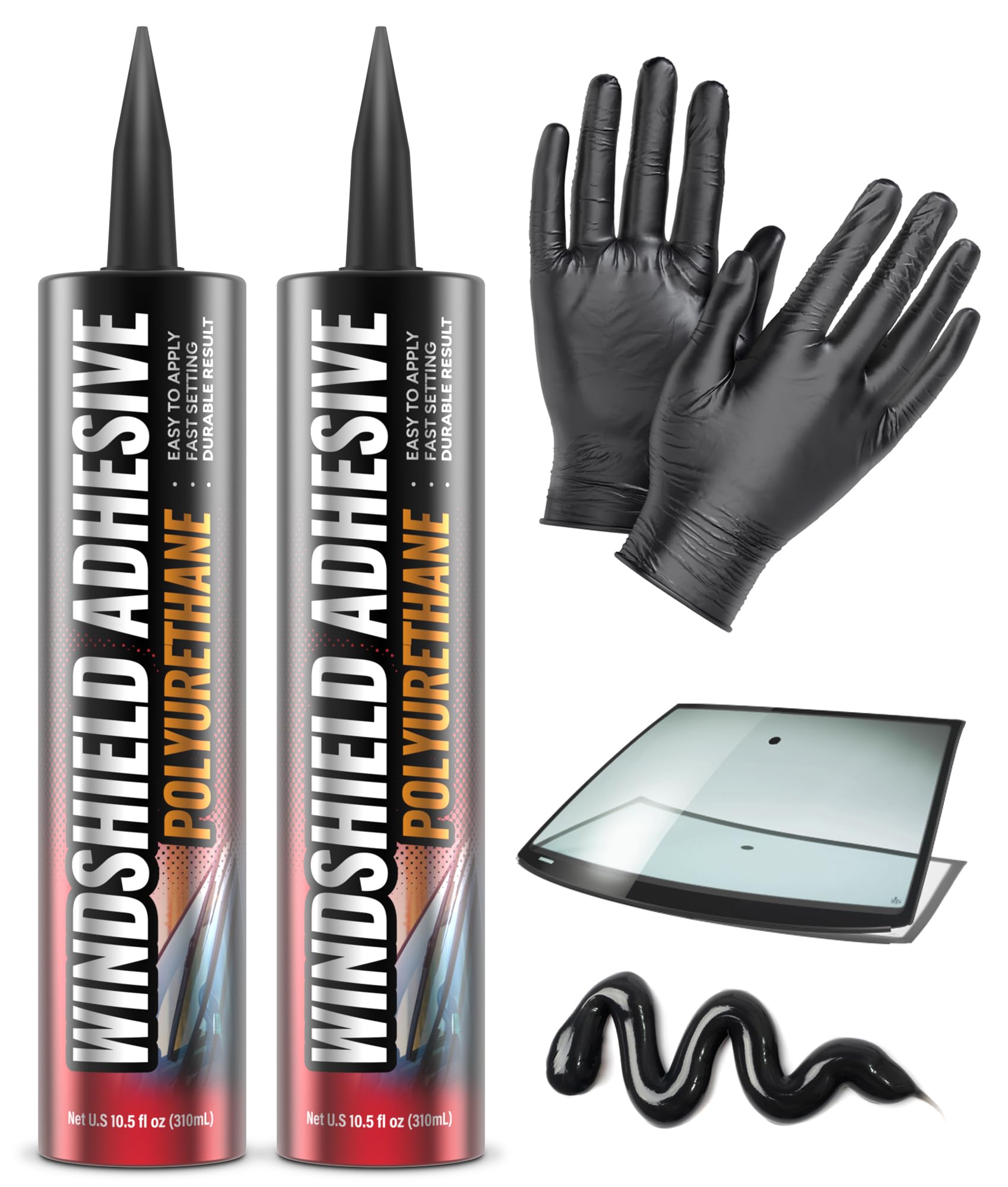
FORTIVO’s dual-pack brings the same specialized polyurethane formula found in their single cartridge, but doubles the volume for multi-vehicle households or future repairs. The non-sag formula is engineered specifically for vertical and overhead application, which means it stays exactly where you place it on windshield flanges, door windows, and rear quarter glass without dripping down the paintwork.
This sealant shines brightest in classic car restoration and heavy-equipment repairs. Users have successfully bonded glass into the window channels of vintage cars, replacing the outdated tape method with a permanent urethane bond that allows windows to roll up and down after a week-long cure. One Kubota excavator owner reported fixing a shattered door window that held securely even after butyl tape and 3M glass glue had failed over several months.
The all-weather performance is backed by a formula that maintains its grip in both high heat and freezing rain. Each cartridge comes with gloves and an applicator tip, and the adhesive works without primer on most factory and aftermarket glass surfaces. The main drawback is the learning curve — the half-inch thick bead requires steady hand control, and the sticky residue demands immediate cleanup with mineral spirits before it sets.
Why it’s great
- Non-sag formula perfect for vertical and overhead applications
- Proven on classic cars, excavators, and modern daily drivers
- Weather-resistant grip in extreme temperature ranges
Good to know
- Thick bead requires a steady hand and a quality caulking gun
- Uncured residue is stubborn — clean immediately with solvent
3. Akfix 2-Pack Urethane Windshield Adhesive
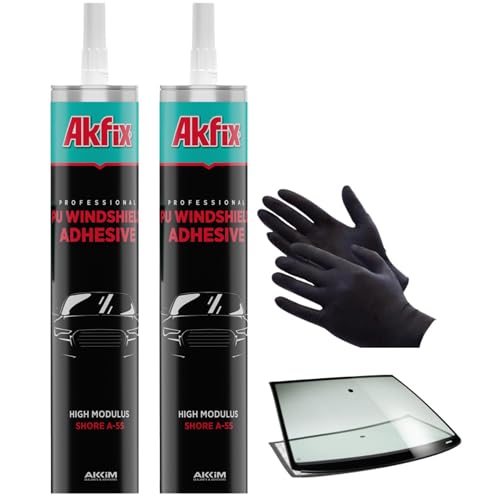
Akfix delivers a professional-grade urethane windshield sealant that hits the sweet spot between price and performance. Each 10.1 fl oz cartridge uses a one-component, moisture-curing formula that achieves a 300% elongation rate — meaning the cured bond can stretch to three times its original length before breaking. That kind of flexibility is what keeps a windshield sealed as the chassis twists during off-road driving or over speed bumps.
The non-sag formula is engineered for drip-free application on vertical and inverted surfaces. DIY users report success sealing Freightliner Cascadia windshields and performing full replacements on standard trucks and SUVs. The 15-minute working window gives you enough time to position the glass before the initial tack sets, and the full cure depth reaches about 0.13 inches per day under standard humidity conditions — fast enough for a same-day interior reassembly.
Where this kit saves money is the two-pack format at a mid-range price point. The included neoprene gloves and precut nozzle eliminate the need to buy applicator tips separately. The trade-off is the dispensing force required — the thick urethane paste is noticeably hard to squeeze through a manual caulking gun, and several users recommend using a battery-operated gun for consistent bead control. Also, the surface remains tacky for about a month, so dust can stick to exposed edges during that window.
Why it’s great
- 300% elongation absorbs vibration and chassis flex without cracking
- 15-minute working window allows careful glass positioning
- Two-pack format provides great cost-per-job value
Good to know
- Very difficult to dispense with manual caulking guns
- Remains tacky for roughly 30 days after application
4. PAULINN 100% Silicone Sealant 4-Pack
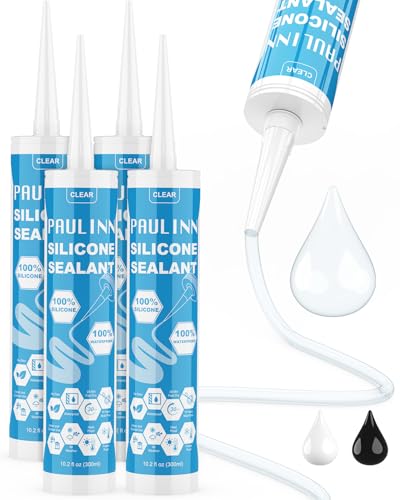
PAULINN’s silicone sealant is not a structural windshield adhesive — it belongs in a different category entirely. This is a 100% silicone formula designed for waterproof sealing of RV windows, marine hatches, and non-structural automotive gaps where water intrusion is the only enemy. The clear finish dries invisible, making it ideal for sealing around window frames, door trim, and shower enclosures in an RV or boat.
The lab-tested formula resists UV degradation and prevents the black spotting common with cheaper silicone blends. PAULINN claims a 15-year lifespan against weather-induced shrinkage and cracking, and real-world users report six months of leak-free performance on shower doors and tub surrounds without any mold growth. The temperature tolerance spans -122°F to +302°F after cure, which covers everything from winter freezes to engine-bay-near applications.
The four-pack format gives you ample supply for multiple projects, and the 30-minute surface dry time allows quick recoating if needed. However, this silicone is extremely thick — several users noted it was harder to apply than competing brands even with a high-quality caulking gun. It is also not designed for structural glass bonding, so do not use it to hold a windshield in place. Stick to sealing pre-existing gaskets and trim pieces only.
Why it’s great
- Clear finish blends invisibly on glass and trim
- UV-resistant formula prevents yellowing and cracking
- Four-pack covers multiple RV or marine sealing jobs
Good to know
- Extremely thick consistency — requires a firm caulking gun
- Not a structural adhesive; do not use for glass retention
5. CRL CRL7708 Windshield and Body Sealant

CRL’s CRL7708 is a non-curing flow-grade butyl rubber that stays tacky for the entire life of the seal. This is the opposite of a rigid polyurethane bond — the butyl never skins over, never hardens, and never cracks. It remains a flexible, rubbery gasket that can absorb movement between the glass and body without breaking the seal, which is exactly what you need when restoring a classic car with original rubber molding.
This sealant was specifically recommended by Steele Rubber Company for vintage truck gasket installations. Owners of 1953 GMC pickups and 1967 Mustangs have successfully used it to reseal windshields and back windows, flowing the liquid rubber behind existing gaskets with a standard caulking gun. The ability to water-test immediately after application is a massive time-saver — you don’t have to wait 24 hours to see if the leak is fixed.
The major trade-off is the mess. Butyl rubber is extremely sticky and never fully dries, so any over-application will remain as a tacky residue that attracts dirt and can transfer to hands and clothing. Cleanup requires mineral spirits or Goo Gone, and over-application around interior trim can leave a sticky film that contacts passengers entering or exiting the vehicle. Use painter’s tape to mask off surrounding areas before applying.
Why it’s great
- Never cures or hardens — remains flexible for the life of the seal
- Can be water-tested immediately after application
- Flows easily into existing gaskets on warm days
Good to know
- Extremely messy and permanently tacky — mask surrounding areas
- Not an adhesive; will not bond or hold glass in place
6. FORTIVO Single Polyurethane Windshield Adhesive (B0CXJKZPNP)
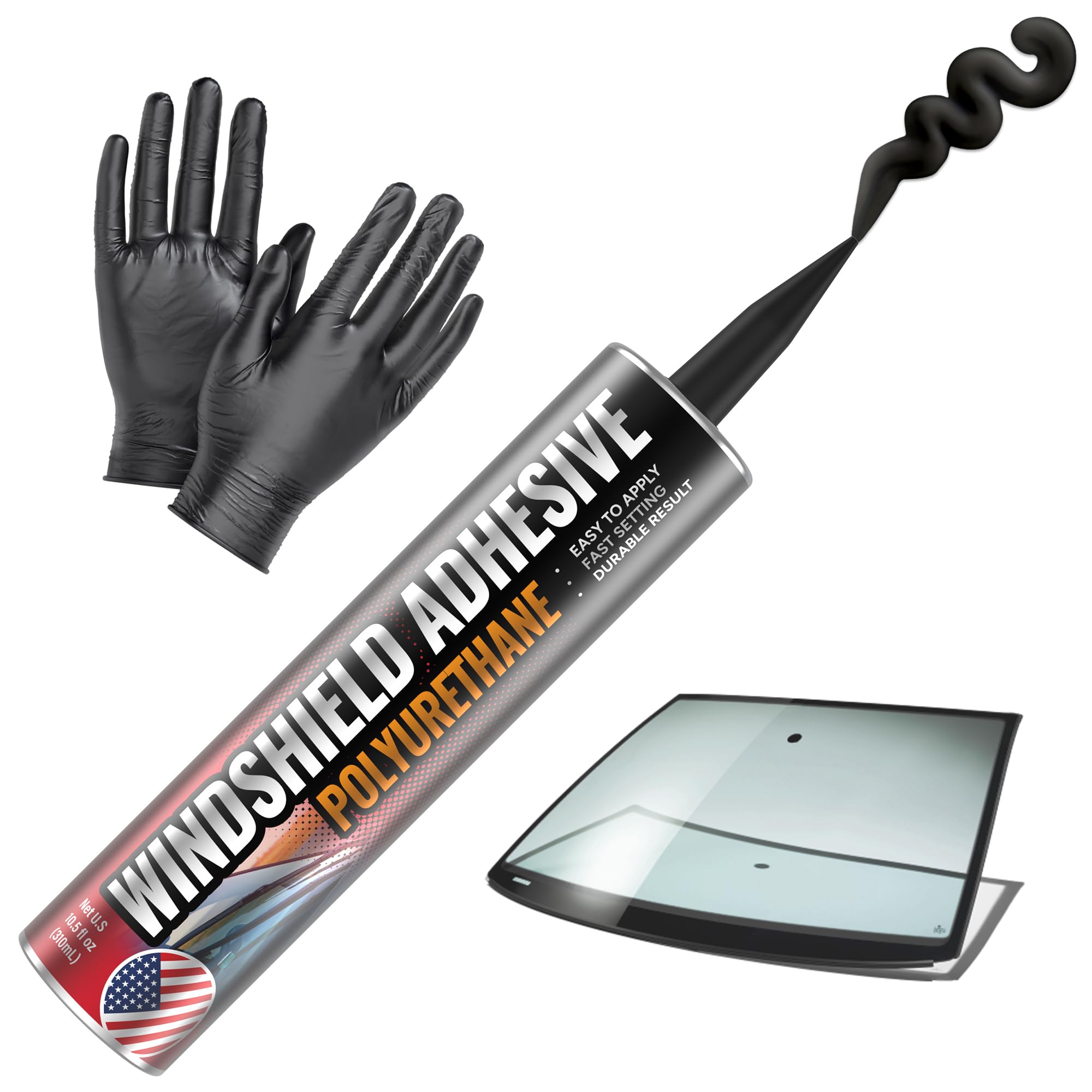
This single-cartridge FORTIVO is the same specialized polyurethane formula sold in the two-pack, but at a lower entry price point for one-time repairs. The quick-curing, non-sagging adhesive bonds glass to metal, plastic, and painted surfaces with a robust hold that absorbs vibrations and impacts without cracking. It is marketed as a no-primer-required formula, which simplifies the process for first-time users.
Real-world applications include sealing windshield trim, bonding bumper parts, and repairing back window leaks. One user reported sealing a back window perfectly, saving significant money on a professional installation. The main complaint across reviews is the extreme thickness — the paste requires a sturdy caulking gun, and users warn against using the cheap squeeze-style dispensers that can’t generate enough force.
The all-weather claim holds up in practice, with the sealant maintaining its integrity in hot and rainy conditions. The single cartridge is enough for one windshield or about three smaller trim repairs. The biggest practical tip from experienced users: do not get this adhesive anywhere you don’t want it permanently, because removing fresh material from skin or paint requires immediate action with a solvent.
Why it’s great
- Quick-curing formula reaches full bond strength in hours
- No primer needed for most factory and aftermarket glass
- Non-sag properties keep it in place on vertical surfaces
Good to know
- Very thick paste; requires a high-quality caulking gun
- Single cartridge — price-per-job is higher than the two-pack
7. Permatex 81730 Flowable Silicone Windshield Glass Sealer 2-Pack

Permatex 81730 is the go-to solution for hairline cracks and micro-gaps where thicker pastes simply cannot penetrate. The flowable silicone has a water-thin consistency that wicks into the smallest crevices between glass and existing gasket by capillary action alone. You do not need a caulking gun — the precision tip allows controlled application directly from the squeeze tube.
The two-pack format gives you two 1.5-ounce tubes, which is enough for a windshield leak and a back glass leak separately. Users report successfully sealing leaking rear glass on sedans and even seam-sealing camping tents, which speaks to the versatility of the thin formula. The silicone dries fairly quickly — within 30 minutes to a touch-dry state — and remains somewhat flexible after curing to accommodate minor glass movement.
The limitation is obvious: this is a flowable sealant for gap-filling, not a structural adhesive. You cannot use it to bond a loose windshield back into the frame because it lacks the shear strength to hold glass under pressure. It also will not fill gaps wider than about 1/16 inch — if the gap is larger, you need a thicker urethane or butyl product to bridge it. Keep the tubes at room temperature before application to maintain ideal flow.
Why it’s great
- Thin viscosity wicks into hairline cracks by capillary action
- Precision tip applicator — no caulking gun needed
- Dries quickly and remains flexible after curing
Good to know
- Not a structural adhesive — cannot hold glass in place
- Ineffective on gaps wider than roughly 1/16 inch
FAQ
Can I use silicone caulk to glue my windshield back in place?
How do I clean uncured window sealant off my paint or trim?
Does butyl rubber sealant ever fully harden?
Final Thoughts: The Verdict
For most users, the best automotive window sealant winner is the Berkland 2-Pack Polyurethane because it offers professional-grade OEM bond strength, a complete kit with gloves and nozzle, and the peace of mind that comes from a family-owned American company. If you need a non-curing flexible gasket for a vintage restoration, grab the CRL CRL7708 Butyl. And for chasing hairline cracks in a stubborn gasket, nothing beats the Permatex 81730 Flowable Silicone for its capillary-action penetration.