
The decision to install a built-in espresso machine is a commitment to a permanent morning ritual — one where the machine becomes an architectural fixture of your kitchen rather than another countertop appliance competing for space. Unlike freestanding models, these units are designed to integrate into cabinetry, requiring a dedicated water line and often a 20-amp circuit, transforming a simple coffee habit into a home renovation consideration. The payoff is a streamlined workflow that eliminates the visual clutter and manual filling routines that plague surface-level machines, giving you a dedicated brewing station that is always ready.
I’m Min — the co-founder and writer behind Gadgets Feed. I’ve spent hundreds of hours dissecting the technical specifications, pressure profiles, and brewing algorithms that separate a good built-in from a great one, analyzing everything from PID stability and rotary pump durability to the real-world output consistency reported by owners over months and years of daily use.
This guide cuts through the marketing gloss to present the best built-in espresso machine options that genuinely deliver café-quality extraction and steam performance on a daily basis.
How To Choose The Best Built-In Espresso Machine
Selecting a built-in espresso machine requires a different mindset than buying a countertop unit. You are wiring it into your home, so mistakes are costly. Focus on the core systems that govern shot quality, milk steaming, and long-term reliability — not flashy touchscreens or one-touch menus.
Brewing Architecture: Single Boiler, Heat Exchanger, or Dual Boiler
The boiler system dictates everything about your workflow. Single boilers force you to wait between brewing and steaming. Heat exchangers let you brew and steam simultaneously, but temperatures can drift if you pull back-to-back shots. Dual boilers — with dedicated circuits for brew and steam — offer the best temperature stability and are the standard for premium built-in machines. Look for PID controllers on both boilers for independent tuning.
Pump Type: Vibratory vs. Rotary
Vibratory pumps are common in entry-level and mid-range countertop machines. They are loud, prone to vibration, and less durable over hundreds of shots. Rotary pumps are quieter, produce more consistent pressure, and are designed for continuous use — essential if you are plumbing the machine directly into your water line. A rotary pump also supports a higher flow rate, which improves the body and texture of the shot.
Group Head and Thermal Stability
The group head is where hot water meets coffee. E61 group heads are the gold standard — they use a thermosyphon system to circulate water and maintain a stable temperature during extraction. Machines with integrated PID controllers on the brew boiler or group head allow you to adjust in 1-degree increments, which matters when dialing in light-roast beans that require higher temperatures or darker roasts that need a cooler brew to avoid bitterness.
Quick Comparison
On smaller screens, swipe sideways to see the full table.
| Model | Category | Best For | Key Spec | Amazon |
|---|---|---|---|---|
| Breville Oracle Jet | Super-Automatic | Effortless café-quality espresso | Auto dose & tamp with Baratza burrs, PID, 45 grind settings | Amazon |
| Rocket Espresso R58 | Semi-Prosumer | Plumbable double-boiler workflow | Dual boiler, rotary pump, E61 group, PID touchscreen | Amazon |
| Diletta Bello+ | Semi-Automatic | Hands-on barista skill development | E61 group, PID, programmable 10s pre-infusion | Amazon |
| Breville Barista Touch Impress | Semi-Automatic | Step-by-step guidance + cold extraction | 3-second ThermoJet heat-up, assisted 22lb tamp | Amazon |
| De’Longhi Eletta Explore | Super-Automatic | 50+ recipes including cold brew | 2 LatteCrema systems, cold extraction, 13 grind settings | Amazon |
| Jura E6 Platinum | Super-Automatic | Consistent one-touch espresso & milk drinks | Pulse Extraction Process, Aroma Grinder, 3D brewing | Amazon |
| Jura E4 Piano Black | Super-Automatic | Purely espresso, ristretto & lungo | Pulse Extraction Process, conical burr grinder | Amazon |
| De’Longhi Dinamica Plus | Super-Automatic | 4-user profiles and 24+ one-touch recipes | 3.5” TFT touchscreen, LatteCrema Hot, 13 grind settings | Amazon |
| De’Longhi Rivelia | Super-Automatic | Switching between two bean types easily | Dual 8.8-oz bean hoppers, Bean Switch System, 13 grind settings | Amazon |
| Smeg EGF03 | Semi-Automatic | Retro design with professional 58mm portafilter | Dual thermoblock, 15-bar pressure, built-in pressure gauge | Amazon |
| Miele CM 7750 | Super-Automatic | High-end bag-to-cup convenience with WiFi | OneTouch for Two, AromaticSystem, auto descale, 10 profiles | Amazon |
In‑Depth Reviews
1. Breville Oracle Jet Espresso Machine
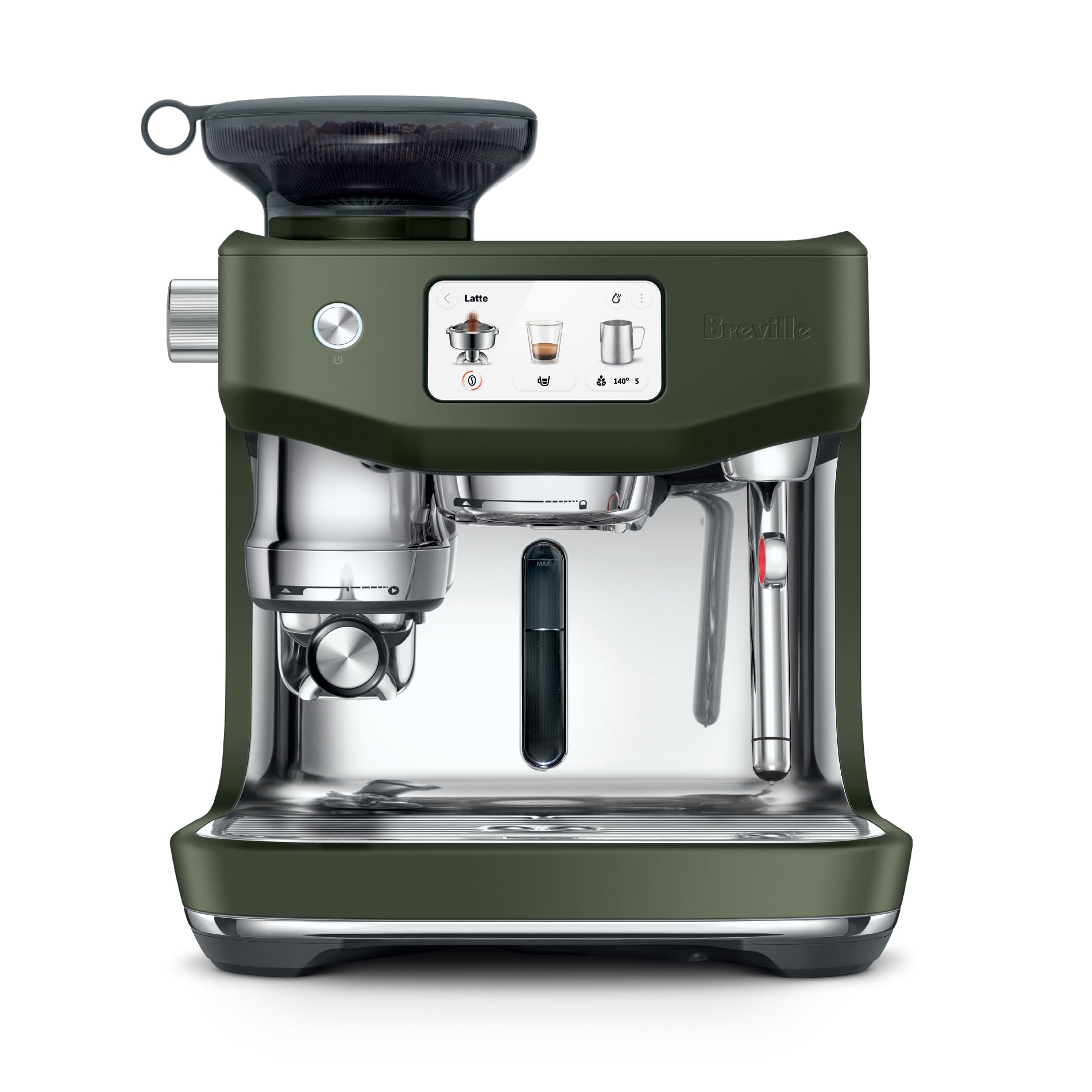
The Breville Oracle Jet redefines what a super-automatic can achieve by merging the Oracle’s auto dose-and-tamp convenience with Baratza European Precision Burrs and 45 separate grind settings. The ThermoJet heating system reaches extraction temperature in three seconds and is up to 32% more energy efficient than a traditional thermoblock, making it ideal for households that pull multiple shots back-to-back without waiting.
The Auto MilQ system independently calibrates air injection and temperature for dairy, soy, almond, and oat milk — a feature that directly addresses the inconsistent foam quality that plagues other all-in-one machines when using plant-based alternatives. The stainless steel 58mm portafilter accepts a 22-gram dose, matching professional café baskets, while the Auto Queue function lets you sequence steaming and extraction so both finish simultaneously.
Cold brew and cold espresso extraction at lower temperatures preserve delicate flavor notes without the acidity spike typical of hot extraction, and the Barista Guidance system automatically detects over- or under-extraction to suggest grind adjustments. Some owners report that pucks can stick in the portafilter, but the sheer consistency and drink quality — especially for milk-based recipes — make this the most complete built-in-capable machine at this tier.
Why it’s great
- Auto grind, dose, and tamp removes the steepest learning curve in espresso
- Dedicated oat/almond/soy milk profiles with adjustable temperature range (104°F–167°F)
- Up to 32% more energy efficient than thermoblock systems
Good to know
- Heavy at 26.7 pounds — verify cabinetry support before installing
- Some firmware glitches reported post-update affecting tamping consistency
2. Rocket Espresso R58 Cinquantotto

The Rocket Espresso R58 Cinquantotto is a dual-boiler, rotary-pump machine built for permanent plumbing integration — the exact specification set that defines a true built-in espresso system. The separate brew and steam boilers, each controlled by a detachable PID touchscreen, allow independent temperature tuning so you can pull a 93°C light-roast shot while steaming at 130°C without any thermal interference.
The commercial-caliber rotary pump operates far more quietly than vibratory pump machines and supports direct water line connection, meaning you never have to refill a reservoir or worry about pump burnout during heavy use. The E61 group head uses thermosyphon technology to maintain thermal stability across multiple shots, and the shot timer is mirrored for easy visibility without compromising the machine’s classic aesthetic.
Owners consistently praise the rapid heat-up — roughly 5 to 10 minutes to full temperature — and the unlimited steam capacity for making multiple milk drinks in succession. The cup clearance under the group is limited, requiring short espresso cups unless you invest in a low-profile drip tray. Pre-infusion is not clearly mapped in the interface, so you will need to adjust your technique manually. The learning curve is real, but the build quality and repairability (non-proprietary parts) justify the investment for anyone serious about daily espresso.
Why it’s great
- Commercial rotary pump is quiet and built for continuous plumbed use
- Independent PID on both boilers for precision temperature control
- Durable, repairable construction with non-proprietary components
Good to know
- Limited clearance under group for larger cups
- Some units have experienced excessive brew pressure requiring a pump bypass adjustment
3. Diletta Bello+ Espresso Machine

The Diletta Bello+ is a hand-built semi-automatic from Milan that centers on the classic E61 group head — a design that has defined prosumer espresso since the 1960s. What sets this iteration apart is the front-mounted PID screen that doubles as a shot timer, giving you direct feedback on steam boiler temperature and extraction duration without lifting your eyes from the portafilter.
Programmable pre-infusion of up to 10 seconds allows you to saturate the puck at low pressure before ramping to full brew pressure, a technique that dramatically improves shot consistency with lighter roasts. The low-power eco-mode drops the boiler temperature when idle but still recovers to brewing temperature faster than a full cold start, saving energy without forcing a long wait between the morning’s first and second shot.
This machine is not for beginners — it requires a separate grinder, a scale, and an understanding of WDT distribution techniques to get the most out of the naked portafilter. Once dialed in, the Bello+ produces espresso with the smooth mouthfeel and layered sweetness that only a thermally stable E61 group and PID control can deliver. The small drip tray and initial factory smell are minor trade-offs for the shot quality and Italian craftsmanship.
Why it’s great
- E61 group head with thermosyphon for passive temperature stability
- Programmable up to 10 seconds of passive pre-infusion for better extraction
- Hand-built in Milan with stainless steel frame and boiler
Good to know
- Requires external grinder — not a built-in grinding system
- Heat exchanger design needs a flush after 50–60 minutes idle to avoid overheating
4. Breville Barista Touch Impress
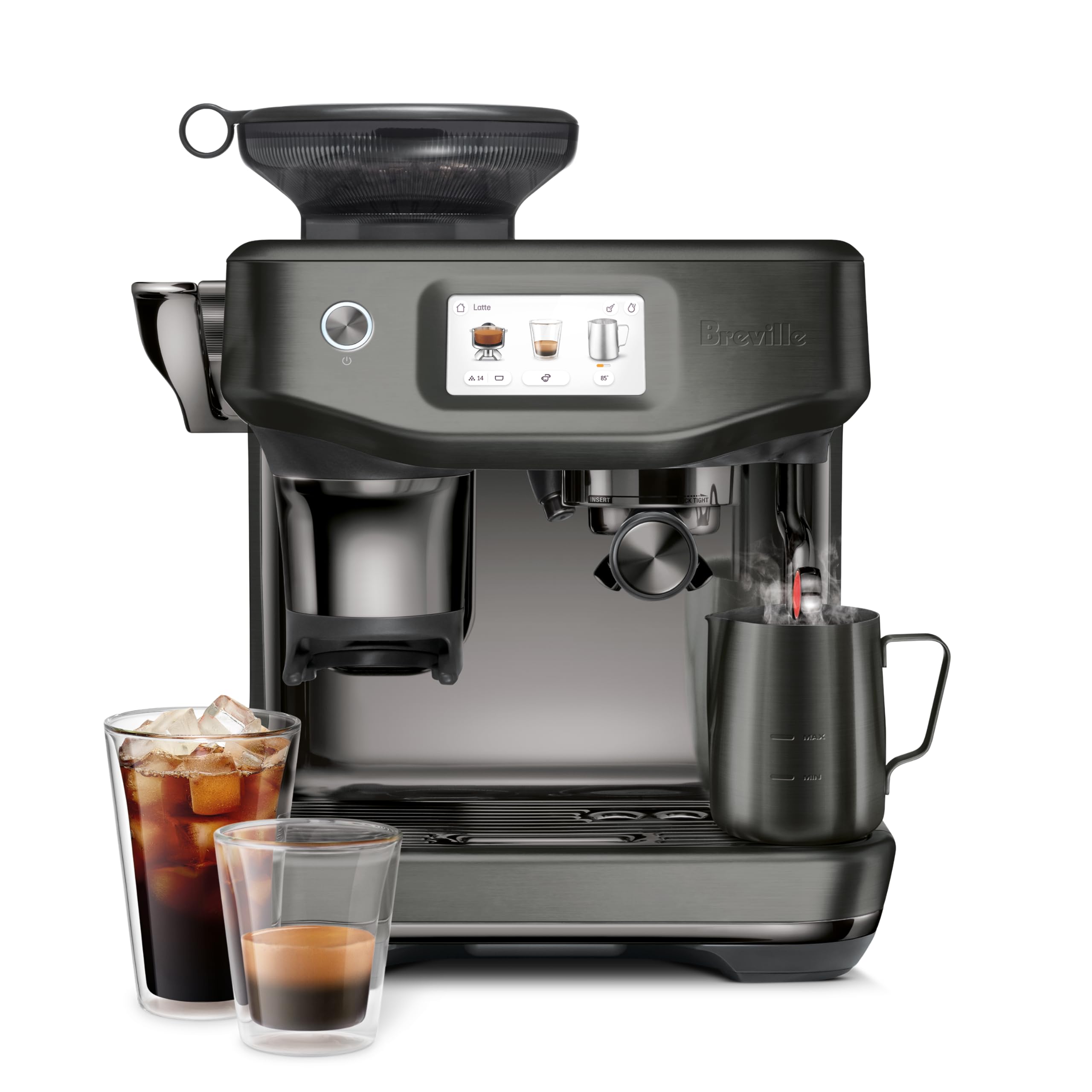
The Barista Touch Impress simplifies espresso without removing the control. Its Impress Puck System grinds, doses, and tamps automatically with a 22-pound assisted tamp and a 7-degree barista twist, then self-corrects the next dose based on real-time feedback from the previous puck. The ThermoJet heating system reaches extraction temp in three seconds — the fastest heat-up in this lineup — making it viable for quick morning shots without pre-planning.
The touchscreen interface guides you through eight café presets plus eight customizable slots, and the Auto MilQ feature calibrates air injection and temperature for dairy, soy, almond, or oat milk with three distinct settings. The steam wand is hands-free and self-purging, and the included cold extraction capability produces cold espresso and cold brew without the bitterness of traditional hot extraction.
The primary concern among long-term users is consistency: several report needing to recalibrate grind and dose settings between every use, which can waste beans and erode the convenience this machine promises. When it works, the output rivals café quality, but the variance suggests a tolerance stackup in the grinding path that Breville has not fully resolved across all units. For those willing to dial in daily, it remains a remarkably capable semi-automatic.
Why it’s great
- Auto-grind, dose, and assisted tamp eliminates the messiest parts of espresso prep
- 3-second ThermoJet heat-up for instant readiness
- Cold extraction for cold brew and iced espresso
Good to know
- Frequent grind and dose recalibration needed between uses for consistent shots
- Robust feature set but reliability may vary between units
5. De’Longhi Eletta Explore

The De’Longhi Eletta Explore pushes the super-automatic format further than most by offering over 50 one-touch recipes — including hot and cold espresso, cappuccino, latte, iced latte, and a full cold brew extraction that finishes in under three minutes. Two separate LatteCrema systems handle hot and cold milk frothing, so you can produce velvety cold foam for iced drinks without heating the milk first.
The Bean Adapt Technology walks you through optimizing grind, dose, and temperature based on the specific beans you load, and the 13-setting conical burr grinder delivers consistent particle size across roast levels. The 3.5-inch TFT touchscreen makes navigation intuitive, and the machine supports full smartphone control via the De’Longhi Coffee Link App for creating and saving custom recipes.
The cold extraction technology is a genuine differentiator — it uses precisely measured water flow and pressure at lower temperatures to produce a smooth cold brew concentrate without the 12-hour steep required by traditional methods. The 60-ounce removable water tank and included travel mug add everyday practicality. Milk drink temperature caps at around 125°F, which some owners find too cool for flat whites, and the self-cleaning cycles consume noticeable water that must be emptied often.
Why it’s great
- Dual LatteCrema systems for hot and cold milk foam from one machine
- Cold brew in under 3 minutes using Cold Extraction Technology
- 50+ recipes via touchscreen and companion app
Good to know
- Milk drinks limited to approximately 125°F — may not satisfy traditional flat white drinkers
- Frequent self-cleaning cycles require regular drip tray emptying
6. Jura E6 Platinum 15465

The Jura E6 Platinum uses the eighth-generation brew unit with 3D brewing technology and the Pulse Extraction Process (PEP), which alternates water flow to saturate the coffee grounds more uniformly than constant-pressure brewing. The result is a higher extraction yield — Jura claims 12.2% more aroma — without the bitterness that typically accompanies over-extraction in conventional systems.
The Professional Aroma Grinder is a conical burr grinder designed to maintain consistent particle size over its entire service life, and the machine offers programmable coffee strength, volume, temperature, and milk foam amount from the intuitive color display. The milk system uses an external tube and container rather than an integrated carafe, which means less cleaning but requires you to provide your own milk pitcher.
Owners note that milk-based drinks like cappuccino produce noticeably better foam than several competing super-automatics at a similar price point, and the self-cleaning cycle is thorough. The water tank is only 1.9 liters, which is small for a household drinking multiple milk drinks per day. The machine also requires Jura-specific water filters to avoid triggering the filter replacement light and automatic descaling mode — third-party filters are not recognized.
Why it’s great
- Pulse Extraction Process delivers higher aroma extraction without bitterness
- Professional Aroma Grinder maintains grind consistency over years of use
- Excellent milk foam quality for cappuccino and latte
Good to know
- No integrated milk carafe — requires external container
- Small 1.9-liter water tank for a household machine
7. Jura E4 Piano Black
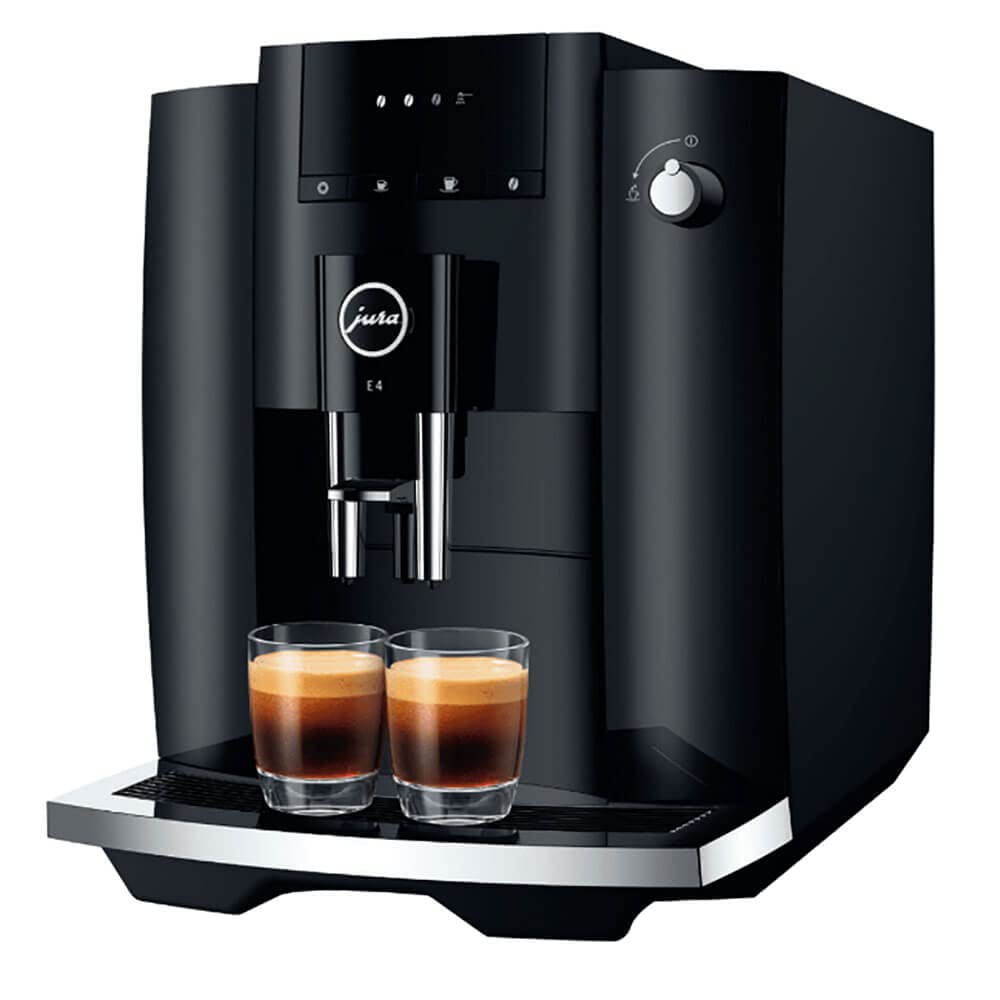
The Jura E4 is the most focused machine in Jura’s lineup — it dispenses espresso, coffee, ristretto, Café Barista, and Lungo Barista, and nothing else. There is no milk system, no latte art, and no touchscreen. What you get is Jura’s Pulse Extraction Process paired with a professional Aroma Grinder in a compact Piano Black chassis that produces consistently excellent straight shots.
The interface uses pictograms rather than text labels, showing strength from 1 to 3 and water volume selection, which some owners find initially unintuitive but programmable. The bypass chute allows pre-ground coffee, and the machine intelligently rejects whole beans placed in that chute — dropping them unground into the grounds bin — a clever safeguard against user error.
The 64-ounce water tank is adequate for a household focused on straight espresso, and the grounds bin is easy to empty. Avoid oily beans to prevent clogging the grinder. The hot water dispenser temperature is not adjustable and runs noticeably cooler, making it less useful for tea. For households that prioritize ristretto, espresso, and lungo above all else, the E4 delivers the cleanest extraction profile in the Jura range.
Why it’s great
- Focused on ristretto, espresso, and lungo with no unnecessary milk complexity
- Pulse Extraction Process maximizes flavor without bitterness
- Intelligent bypass chute rejects whole beans mistakenly placed for pre-ground
Good to know
- No milk frother — strictly for black coffee drinks
- Hot water dispenser runs too cool for proper tea brewing
8. De’Longhi Dinamica Plus
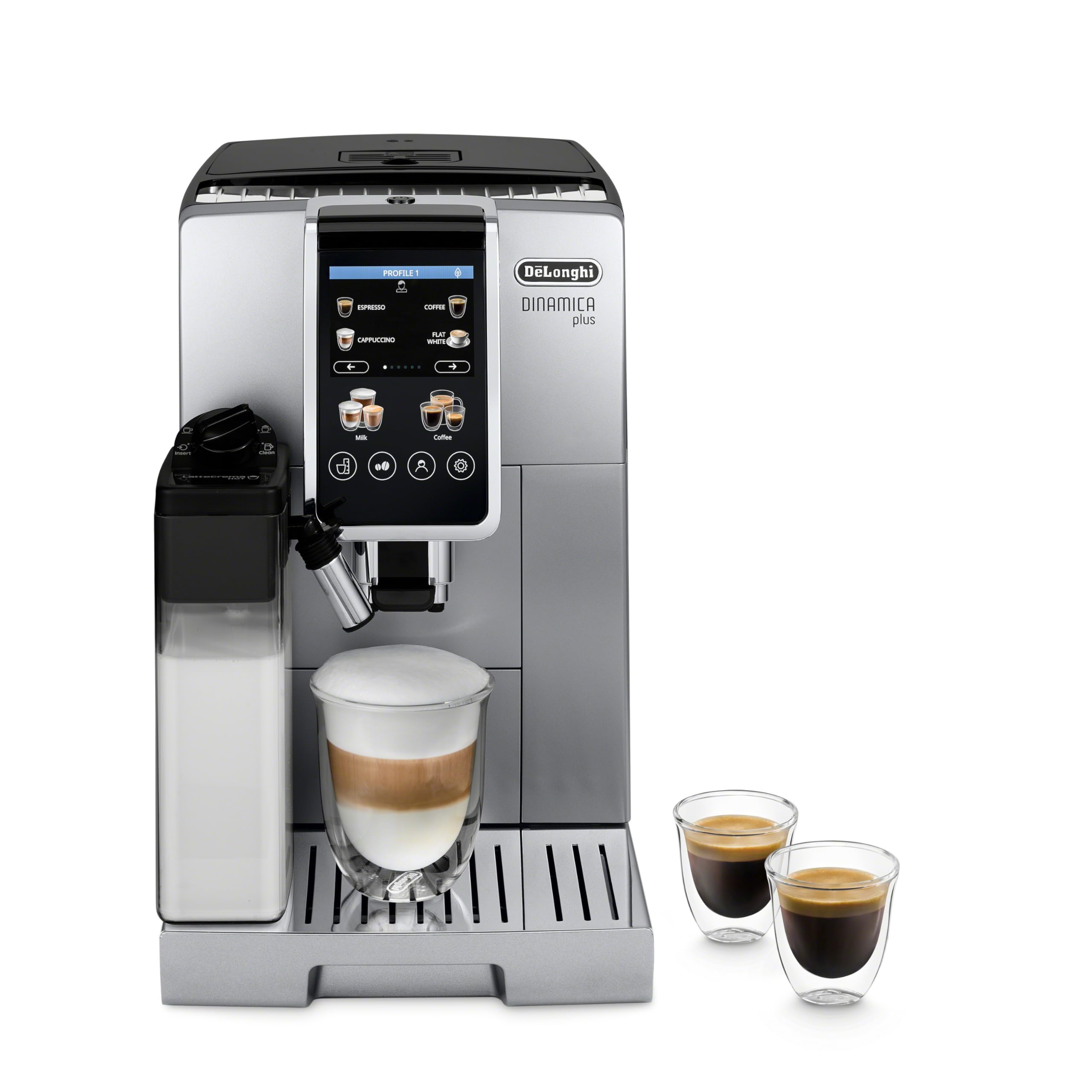
The Dinamica Plus is De’Longhi’s answer to multi-user households, supporting up to four individual profiles that remember each person’s preferred drink settings, strength, volume, and temperature. The 3.5-inch full-touch TFT color display sorts recipes by how frequently you select them, so your morning go-to rises to the top without needing to scroll through the full list of 24 options.
The built-in conical burr grinder offers 13 settings and feeds directly into the brewing chamber, while the LatteCrema Hot System handles milk and plant-based alternatives with automatic frothing. The Smart One-Touch system learns your preferences over time and rearranges the recipe list accordingly — a small but meaningful convenience for daily use.
Shot quality is reliable and consistent, with owners reporting espresso that rivals or exceeds what they were getting from previous Philips or Gaggia machines. The grinder start-up sound is audible and distinctive — owners describe it as a “grumpy” growl. The milk carafe port can be tight, making removal difficult initially, and the machine goes through noticeable amounts of water during its purge cycles, but these are minor friction points against the overall build quality and customization depth.
Why it’s great
- Four separate user profiles with independent drink memory
- Smart One-Touch learns your preferences and re-sorts the menu
- 13-setting conical burr grinder for whole beans
Good to know
- Excessive purge cycles consume water and require frequent emptying
- Milk carafe port is tight and difficult to remove at first
9. De’Longhi Rivelia

The Rivelia’s defining feature is the Bean Switch System: two removable 8.8-ounce hoppers that allow you to swap between bean types without emptying the existing hopper. Pop in a dark roast for the morning espresso and switch to a decaf or single-origin light roast in the afternoon without cross-contamination — a practical solution for households that drink multiple roast levels or have guests with caffeine preferences.
The 13-setting burr grinder doses fresh grounds for every shot, and the machine offers 18 preset one-touch recipes including latte, cappuccino, cortado, flat white, and iced coffee. Step-by-step visual guidance on the interface helps you dial in grind, dose, and temperature for each bean type, and the profiles save those settings automically so you don’t need to recalibrate with every hopper swap.
The LatteCrema Hot System froths milk or plant-based alternatives automatically with an auto-clean function, and the Rivelia is upgradeable with a LatteCrema Cool accessory for cold foam. Some owners switching from Breville found the espresso strength insufficient even at the maximum intensity setting, leading to weak, thin-bodied shots with minimal crema. The machine is clearly focused on convenience and variety rather than extracting the last drop of intensity from each bean.
Why it’s great
- Two removable hoppers let you switch bean types instantly without waste
- Step-by-step visual calibration for grind, dose, and temperature per bean
- 18 one-touch recipes including iced and cold drinks
Good to know
- Maximum strength setting may still produce thin-bodied espresso for dark roast lovers
- Milk drink temperature can be cooler than expected for traditional flat whites
10. Smeg EGF03 Semi-Automatic Espresso Machine

The Smeg EGF03 is a semi-automatic that proves a retro aesthetic can coexist with modern brewing hardware. The 58mm professional portafilter — the same size used in commercial espresso machines — pairs with a dual thermoblock heating system that separates brew and steam heating elements, allowing faster transition between pulling shots and steaming milk without the single-thermoblock wait time.
The built-in pressure gauge gives real-time visual feedback on extraction pressure, and the 15-bar professional pump ensures adequate pressure for dense, oily crema. Single or double shot baskets are included, and the machine supports adjustable pre-infusion and temperature control for those who want to dial in shot profiles beyond the default settings.
Reviewers consistently praise the build quality — the stainless steel and plastic chassis feels heavier and more substantial than its size suggests — and the steam wand produces genuine microfoam suitable for latte art. The machine is made in China, not Italy as some buyers expected, and warranty coverage depends on purchasing from an authorized dealer. For the semi-automatic crowd that values design and form factor heavily, the Smeg offers a rare combination of aesthetics and a real 58mm basket.
Why it’s great
- Professional 58mm portafilter for uniform extraction and third-party accessory compatibility
- Dual thermoblock reduces downtime between brewing and steaming
- Iconic retro design with stainless steel accents
Good to know
- Manufactured in China, not Italy as some expect from the brand
- Warranty only valid if purchased from an authorized Smeg dealer
11. Miele CM 7750 CoffeeSelect
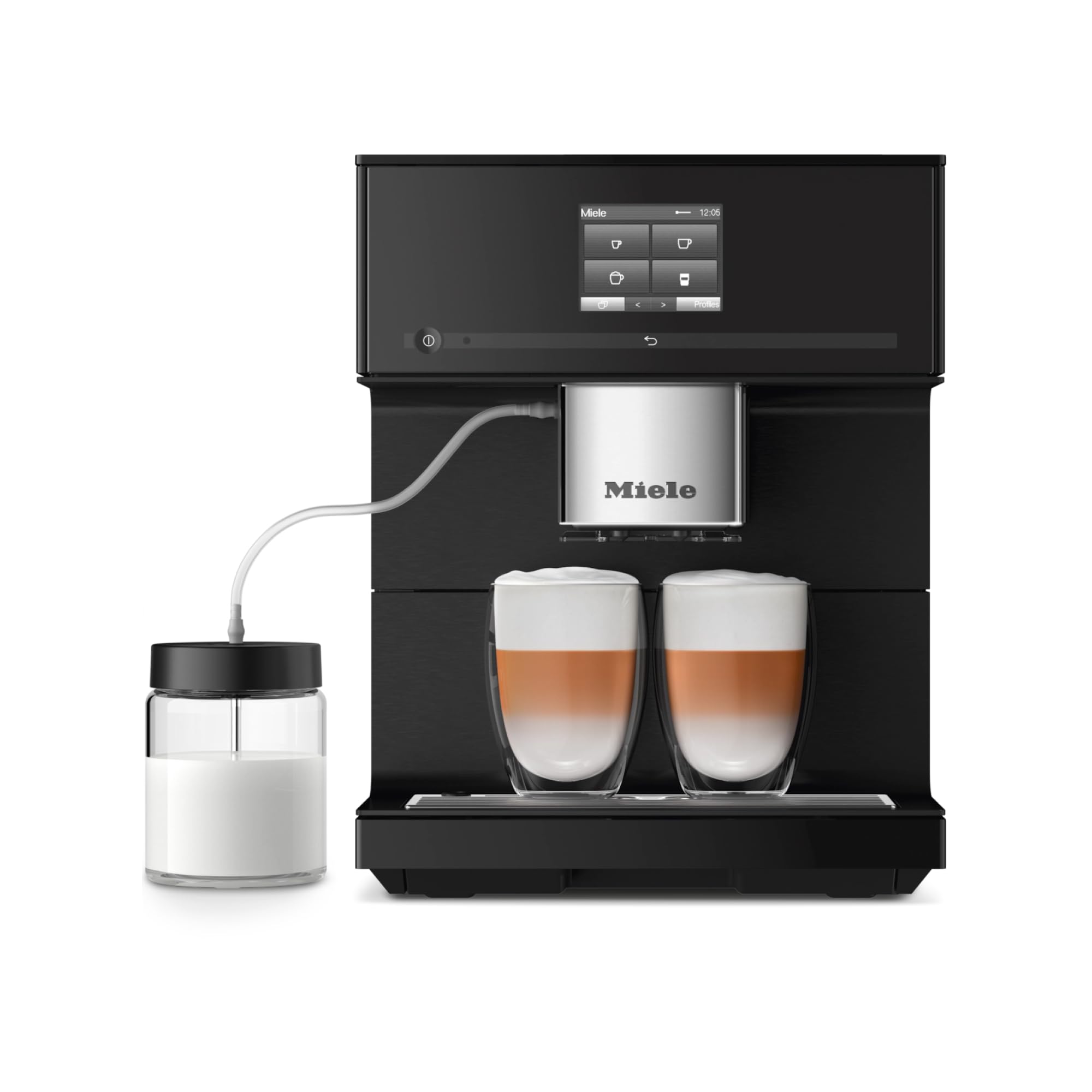
The Miele CM 7750 is the most appliance-like entry in this guide — it is designed to disappear into your kitchen workflow with the same polish as Miele’s dishwashers and ovens. The CoffeeSelect system lets you brew a full pot of coffee (up to 8 cups) as well as single-serve espresso drinks, making it the only machine here that truly bridges drip-coffee batch brewing and espresso extraction.
OneTouch for Two prepares two of any specialty drink simultaneously, and the CupSensor detects the height of your cup and adjusts the central spout position automatically — a small but genuinely useful detail when switching between espresso cups and travel mugs. The WiFiConnect feature integrates with Miele’s app for remote operation, and AutoDescale handles the most hated maintenance task entirely automatically.
The AromaticSystem combines a dynamic brewing process with a quiet grinder, and the timer function can be programmed to preheat and rinse before you wake up. Build quality is predictably high — the 31.3-pound machine feels substantial — but the coffee output quality has drawn mixed feedback, with some owners describing shots as mediocre compared to dedicated espresso machines at a third of the price. The milk attachment and overall drink quality have not universally impressed, and the machine’s complexity (WiFi, auto functions) introduces failure points that are difficult to service outside warranty.
Why it’s great
- Full pot drip coffee plus espresso in a single built-in unit
- OneTouch for Two brews dual drinks with one command
- Fully automatic descaling and WiFi connectivity
Good to know
- Espresso quality lags behind dedicated machines at lower price points
- Complex electronics and proprietary parts make out-of-warranty repair difficult
FAQ
Do I need a plumber to install a built-in espresso machine?
What is the advantage of a rotary pump over a vibratory pump for a built-in machine?
Should I prioritize a dual-boiler or a heat exchanger machine for milk-based drinks?
What is the ideal water hardness level for a plumbed espresso machine?
Final Thoughts: The Verdict
For most users, the best built-in espresso machine winner is the Breville Oracle Jet because it combines professional-grade Baratza burrs, auto dose-and-tamp, and dedicated milk profiles for dairy and plant-based alternatives in a package that requires no separate grinder or barista training. If you want the thermal precision of a dual-boiler, rotary-pump system and plan to hard-plumb the machine, grab the Rocket Espresso R58. And for a hands-on barista experience that rewards technique with genuine E61 quality, nothing beats the Diletta Bello+.