
Trying to print a single-piece cosplay helmet, a functional automotive duct, or a full-scale prototype only to hit the dreaded “model too large” slicing error is the defining frustration of a standard-size 3D printer. A machine with a real large build volume changes everything—it eliminates complex model splitting, reduces post-processing glue work, and lets you print objects that physically dominate the build plate rather than the other way around.
I’m Min — the co-founder and writer behind Gadgets Feed. I’ve spent countless hours analyzing build volume dimensions, chamber heating strategies, and extrusion systems to understand what actually separates a capable large-format printer from one that fails on a 12-hour print. This guide breaks down the specs and real-world trade-offs you need to navigate.
Whether you need a jumbo-sized FDM workhorse or a specialized resin machine for detailed large parts, this deep-dive analysis of the best 3d printer for large prints covers every serious option on the market today.
How To Choose The Best 3D Printer For Large Prints
Choosing a large-format 3D printer is not just about picking the biggest number on a spec sheet. The right machine for your workflow balances actual usable build volume, material capabilities, structural rigidity, and the level of automation that saves you from failed 12-hour prints.
Real Build Volume vs. Advertised Cubic Inches
Manufacturers often list a single cubic dimension, but check the precise X, Y, and Z axis lengths. A 400x400x400mm build volume like the Creality Ender 5 Max offers a full 64,000 cm³ of space, while the Anycubic Kobra 3 Max’s 420x420x500mm gives you an even taller Z-axis. The QIDI Max4 Combo’s 390x390x340mm is slightly smaller in Z but still massive for most functional parts. The real question: can you fit your specific model without rotating or splitting it?
Heated Chamber vs. Open Frame for Large Parts
Printing large objects in ABS, ASA, PC, or nylon almost demands an actively heated chamber to prevent warping and layer separation. The QIDI Plus4 and Max4 Combo both offer a 65°C active chamber, while the Bambu Lab P1S enclosure passively retains heat but isn’t actively heated. Open-frame machines like the Creality Ender 5 Max rely on their enclosure kit and powerful bed heater—you need to understand whether you’ll print advanced filaments or stick to PLA.
Speed, Acceleration, and the CoreXY Advantage
Large prints take time, but a CoreXY structure with high acceleration (up to 30,000 mm/s² on the QIDI Max4 Combo) dramatically reduces print time while maintaining accuracy. The ELEGOO Centauri Carbon and Bambu Lab P1S achieve 500mm/s speeds with excellent stability. Belt-style printers like the IdeaFormer IR3 V2 use an infinite Z-axis for continuous production—perfect for long parts but requiring a different learning curve.
Multi-Color and Multi-Material Expansion
If you need large parts with multiple colors or support materials, consider a printer with an add-on material system. The Bambu Lab P1S supports up to 16 colors via AMS, and the QIDI Max4 Combo and Creality K2 Plus Combo both offer 16-color capabilities with their respective CFS/BOX systems. This adds significant cost and complexity but unlocks professional-grade large prints.
Quick Comparison
On smaller screens, swipe sideways to see the full table.
| Model | Category | Best For | Key Spec | Amazon |
|---|---|---|---|---|
| Anycubic Kobra 3 Max | FDM / Open Frame | Oversized single-part prints | 420x420x500mm build volume | Amazon |
| Creality Ender 5 Max | FDM / CoreXY | Print farm & batch production | 400x400x400mm build volume | Amazon |
| QIDI Max4 Combo | FDM / Enclosed | Industrial materials & multi-color | 390x390x340mm + 65°C chamber | Amazon |
| Creality K2 Plus Combo | FDM / Enclosed | 16-color large prints | 350x350x350mm + 30,000mm/s² | Amazon |
| QIDI PLUS4 | FDM / Enclosed | High-temp engineering filaments | 305x305x280mm + 370°C hotend | Amazon |
| Bambu Lab P1S | FDM / Enclosed | Out-of-box reliability | 256x256x256mm + 500mm/s | Amazon |
| IdeaFormer IR3 V2 | Belt / Infinite Z | Continuous & very long parts | 250x250x∞mm belt system | Amazon |
| ELEGOO Saturn 4 Ultra 16K | Resin / MSLA | Ultra-detailed large resin parts | 8.33×4.66×8.66in + 16K LCD | Amazon |
| FLASHFORGE Adventurer 5M Pro | FDM / CoreXY | Beginner-friendly high speed | 220x220x220mm + 600mm/s | Amazon |
| ELEGOO Centauri Carbon | FDM / CoreXY | Budget-friendly enclosed printing | 256x256x256mm + 320°C nozzle | Amazon |
| Original Prusa MK4S | FDM / Open | Reliable open-source workflow | 250x210x220mm + Input Shaping | Amazon |
In‑Depth Reviews
1. Anycubic Kobra 3 Max

The Anycubic Kobra 3 Max delivers the largest single-piece build volume in this lineup at 420x420x500mm, making it the undisputed king for printing oversized models like full-scale sand tables, pet playgrounds, or large cosplay props without any splitting. Its 600mm/s maximum speed and 10,000 mm/s² acceleration ensure that even massive prints complete in reasonable time, while the Kobra OS firmware platform keeps motion control stable.
This printer supports multicolor printing when paired with the optional ACE Pro unit (up to 4 colors, or 8 with two units), and the AI recognition system monitors for spaghetti failures during long runs. The removable magnetic build plate offers excellent adhesion, and the 1000W rapid-heating bed gets to temperature quickly. The 47-pound weight and large footprint require a sturdy dedicated table.
User feedback highlights fast assembly under an hour, great print quality straight out of the box, and responsive customer support. However, some reports mention that the AI spaghetti detection can be inconsistent, and the ACE Pro system lacks manual feed options. For sheer build volume, this is the most capable single-part machine at this price point.
Why it’s great
- Massive 420x420x500mm build volume—largest in class
- Fast 600mm/s printing with stable dual-axis core design
- Easy assembly and excellent bed adhesion
Good to know
- AI spaghetti detection can miss failures
- ACE Pro multi-color system lacks manual filament control
- Requires a very sturdy, large table
2. Creality Ender 5 Max
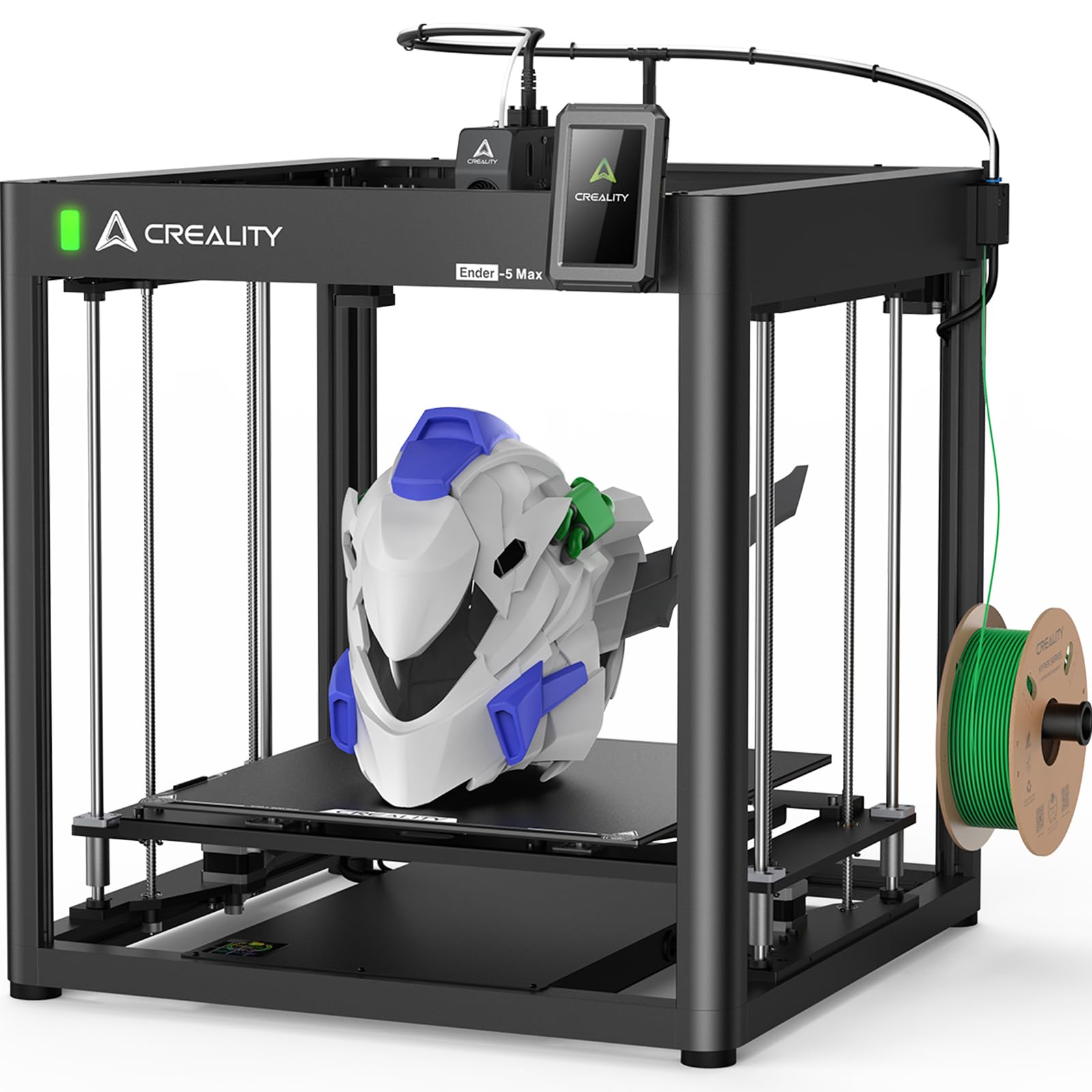
The Creality Ender 5 Max is engineered specifically for volume production and print farm workflows, offering a 400x400x400mm build volume that lets you batch-produce multiple parts or print oversized prototypes without splitting. Its 700mm/s CoreXY system with high-torque motors delivers impressive speed, and the reinforced die-cast aluminum frame minimizes vibration for stable tall prints.
The 64-point automatic leveling system and auto Z-offset ensure a perfect first layer every time without manual intervention, critical for 24/7 operation. WLAN multi-printer control and grouped management make it easy to scale from one machine to a full farm. The 1000W heated bed reaches working temperature quickly and supports PLA, PETG, ABS, ASA, PA, and more.
Some user experiences have been mixed—while many report excellent speed and print quality, others cite bed adhesion issues and violent shaking that can break extruder components. Replacement part availability has also been a concern. This is a high-speed large-format workhorse that rewards careful initial setup and maintenance.
Why it’s great
- 400mm³ build volume ideal for batch production
- 700mm/s CoreXY speed for fast throughput
- WLAN multi-printer management for scaling
Good to know
- Some units suffer from bed adhesion problems
- Parts can loosen quickly; requires regular tightening
- Replacement parts not always readily available
3. QIDI Max4 Combo
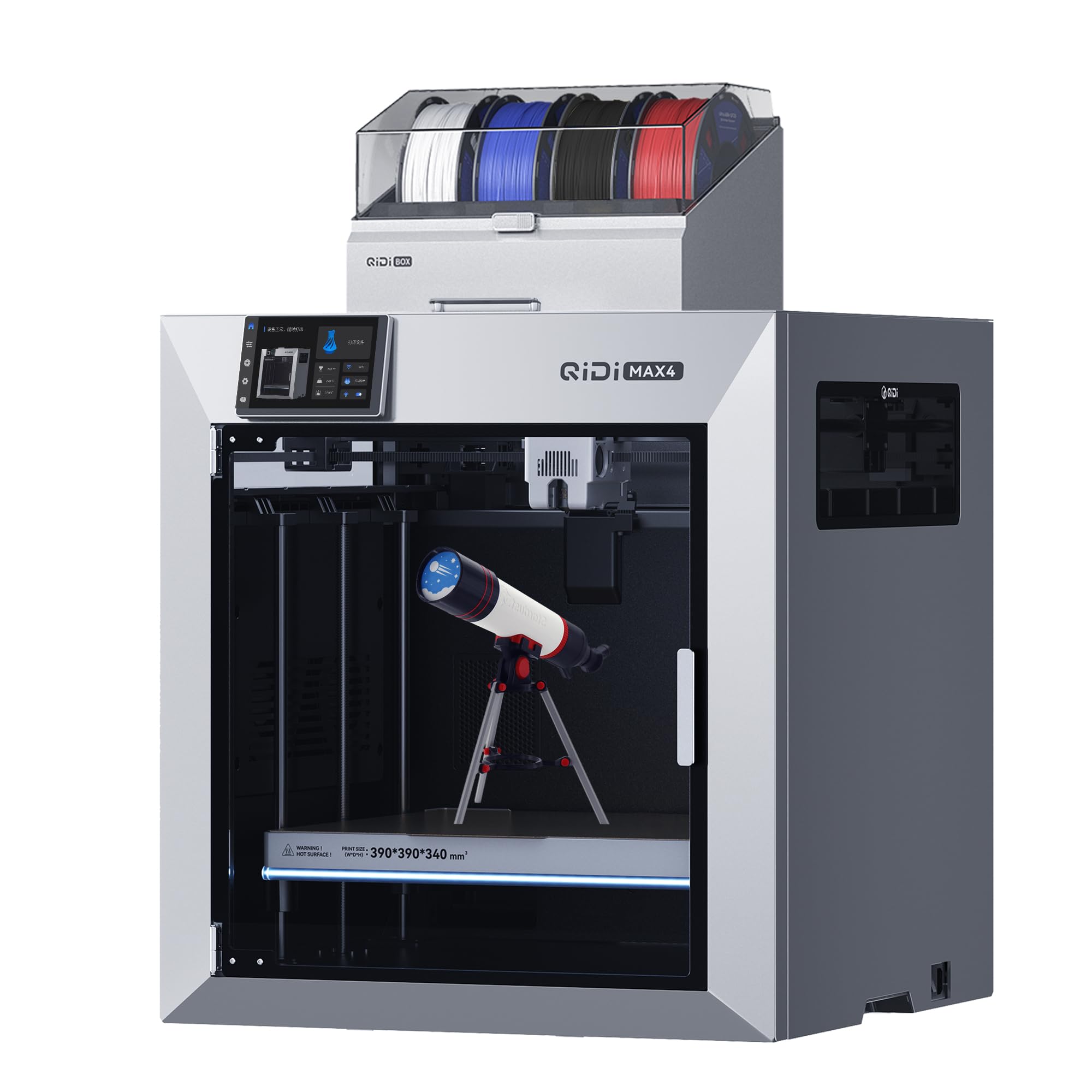
The QIDI Max4 Combo is a serious machine for anyone needing reinforced engineering materials in large formats. Its 390x390x340mm build volume is paired with a 65°C active heated chamber, enabling reliable printing of ABS-CF, PPA-CF, PC, and PPS-CF without warping. The 800mm/s speed and 30,000 mm/s² acceleration with closed-loop X/Y motors make it one of the fastest large-format printers.
The 40mm³/s high-flow hardened steel hotend handles abrasive carbon-fiber filaments with ease, and the QIDI BOX system supports up to 16-color printing. The built-in AI camera detects print failures like spaghetti errors and pauses automatically. The full-surface silicone heated bed ensures even temperature distribution, critical for large first layers.
Users praise its outstanding print quality with engineering filaments, easy setup, and fast speeds without losing detail. A few note the high initial power consumption, a sometimes choppy UI, and that the Polar Cooler for advanced cooling must be purchased separately. For industrial-grade large prints, this is the most capable machine in the lineup.
Why it’s great
- 65°C active heated chamber for engineering filaments
- 800mm/s speed with 30,000 mm/s² acceleration
- 16-color multi-material with QIDI BOX
Good to know
- High power draw during initial heating
- UI can feel unresponsive at times
- Polar Cooler is an extra purchase
4. Creality K2 Plus Combo

The Creality K2 Plus Combo brings true 16-color printing to the large-format segment with its Creality Automatic Material System (CFS) that manages up to four units. The 350x350x350mm build volume is substantial, and the step-servo motor system delivers 600mm/s speed with a staggering 30,000 mm/s² acceleration, reducing print time on large multi-color projects.
The actively heated chamber and hardened steel nozzle allow printing of PLA, ABS, PETG, PA-CF, and PPA-CF. Dual AI cameras provide real-time monitoring and spaghetti detection, while the strain gauge-based auto-leveling ensures a perfect first layer. The “Matrix” frame with die-cast construction and dual Z-axis with four linear rods provides exceptional rigidity for tall prints.
Users report superb out-of-box operation with no calibration needed, and excellent print quality from the CFS system. However, the printer is very heavy and requires two people to unbox. Some technical issues with Y-axis servo communication have been reported, and Creality support can be slow for replacement parts.
Why it’s great
- 16-color printing with CFS multi-filament system
- 30,000 mm/s² acceleration for fast large prints
- Rigid die-cast frame for precision at scale
Good to know
- Heavy construction—needs two people for unboxing
- Technical issues with servo systems reported
- Customer support response can be slow
5. QIDI PLUS4

The QIDI PLUS4 is purpose-built for extreme materials, featuring a 370°C direct extruder and an 80W high-temperature hotend that unlocks PPS-CF, PPA-CF, and other industrial-grade filaments. Its 305x305x280mm build volume is smaller than the Max4 but still generous for most large part needs, and the 65°C active chamber heating (with 400W power) drastically reduces warping.
The CoreXY structure achieves 600mm/s speed, and the second-generation chamber heating system adds air circulation and dual-layer insulation for even temperature distribution. The independent dual motor-driven Z-axis with 10mm lead screws and a 6mm thickened aluminum bed provides exceptional stability. QIDI BOX support enables multi-color expansion.
Experienced users love the open-source Klipper firmware, excellent print quality with engineering materials, and strong customer support. Some early units experienced firmware issues and hotend problems, but QIDI has been proactive with upgrades. This is a printer for users who need high-temp capability and aren’t afraid of some initial tuning.
Why it’s great
- 370°C hotend for PPS-CF and high-temp materials
- 65°C active chamber with 400W heater
- Open-source Klipper for full control
Good to know
- Early firmware and hotend issues reported
- Heavy at 59.4 pounds
- Best suited for experienced users
6. Bambu Lab P1S

The Bambu Lab P1S is the go-to choice for users who value out-of-box reliability above all else. While its 256x256x256mm build volume is modest compared to the true giants in this guide, it’s still large enough for many complex parts, and the fully enclosed design supports ABS and ASA printing. The 500mm/s CoreXY speed with 20,000 mm/s² acceleration makes it impressively fast for its size.
Auto bed leveling occurs before every print, and the Bambu Studio slicer streamlines the entire workflow. The AMS system (purchased separately) enables up to 16-color printing. Users consistently report that the P1S prints PLA and ABS flawlessly out of the box, with minimal layer lines and reliable first-layer adhesion.
Customer feedback is overwhelmingly positive, with many upgrading from older Creality printers and finding the P1S dramatically faster and more consistent. TPU can be a bit tricky, and the enclosed chamber isn’t actively heated, but for most users, this is the most frustration-free large-ish format printer available.
Why it’s great
- Excellent out-of-box reliability and ease of use
- 500mm/s speed with auto leveling every print
- 16-color AMS support for multi-material
Good to know
- Modest 256mm³ build volume
- Enclosure is not actively heated
- TPU printing can be challenging
7. IdeaFormer IR3 V2

The IdeaFormer IR3 V2 is a completely different approach to large-format printing: its conveyor belt system provides an infinite Z-axis, enabling continuous production of long parts like swords, signs, and cosplay armor pieces. The 250x250mm bed is standard, but the belt moves the part forward indefinitely, allowing prints that would be impossible on any Cartesian or CoreXY machine.
Powered by Klipper firmware with a Y-offset strain sensor for auto-leveling, the IR3 V2 achieves 400mm/s speed. The upgraded metal conveyor belt with PEI coating provides good adhesion for PLA, PETG, ABS, TPU, and ASA. This printer excels at support-free overhangs—because the part prints at a 45° angle, many complex geometries don’t require supports.
Users confirm it’s excellent for mass production but not for beginners. Precise 45° gantry alignment is critical, and parts can have leading-edge artifacts that need tweaking. The specialized nature makes it a perfect second printer for small businesses or cosplayers needing long, continuous parts.
Why it’s great
- Infinite Z-axis for continuous long parts
- Support-free complex overhangs at 45°
- Great for Etsy/small business mass production
Good to know
- Not for beginners; requires precise alignment
- Noisy during operation
- Leading edge requires manual tweaking
8. ELEGOO Saturn 4 Ultra 16K
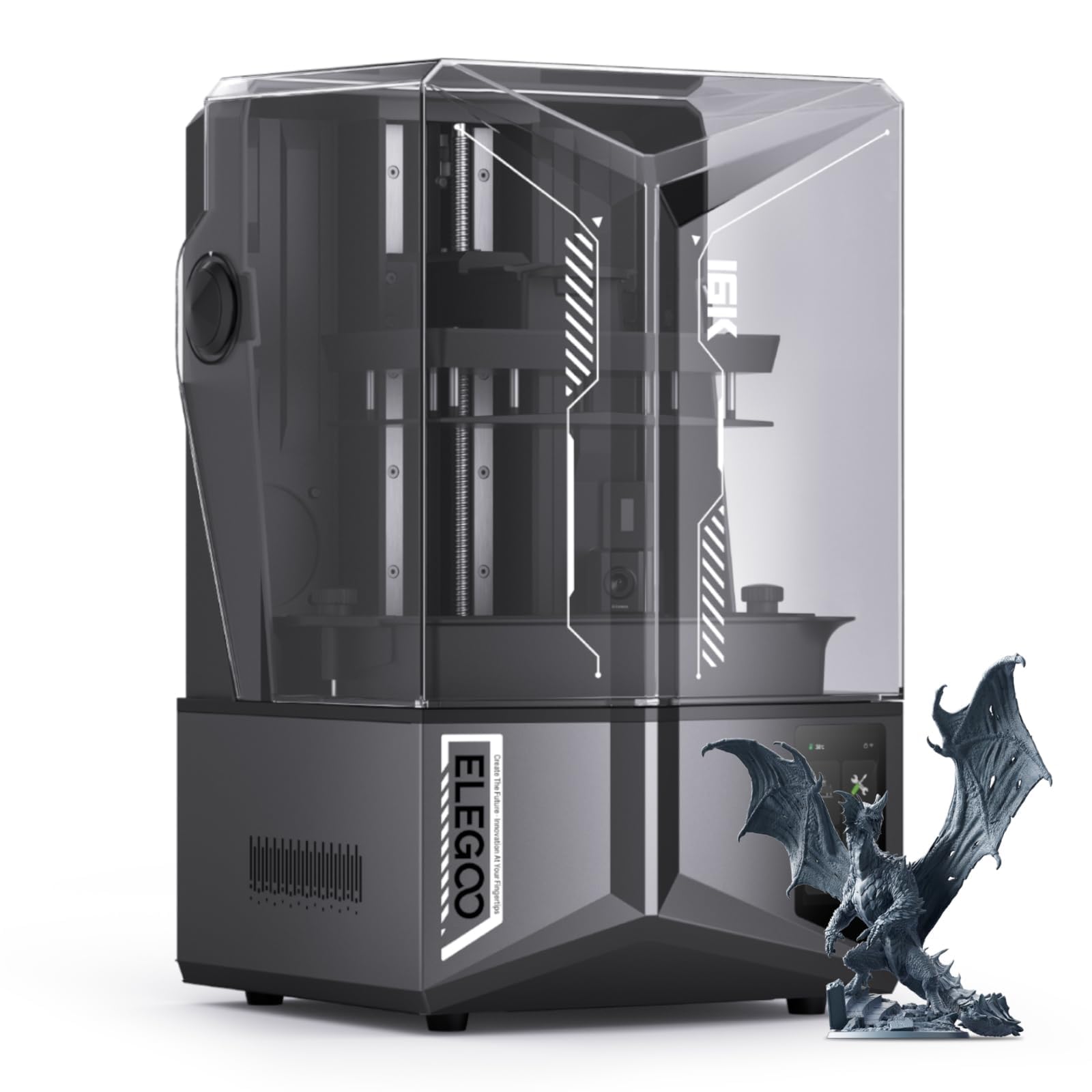
The ELEGOO Saturn 4 Ultra 16K is the resin option for large prints that demand extraordinary detail. With a 16K monochrome LCD (8.33×4.66×8.66 inches), it achieves ultra-high resolution capable of rendering visible hairs, fabric textures, and smooth surfaces. The tilt release technology enables fast peeling at up to 150 mm/h while maintaining detail.
The smart tank heating system keeps resin at a perfect 30°C, improving fluidity and reducing bubbles and layer separation. An AI camera provides real-time monitoring and alerts for empty build plates or warped models. The fully automatic leveling and plug-and-play workflow make it accessible to beginners.
Users consistently praise its quiet operation, massive build plate for a resin machine, and incredible out-of-box print quality. Some note that resin can pool on the build plate after printing (requiring a drip bracket), and that proper base exposure settings are critical for first-layer adhesion. For large, ultra-detailed resin prints, this is the best option.
Why it’s great
- 16K resolution for incredible surface detail
- Smart tank heating at 30°C for consistent quality
- Large build plate for resin machines
Good to know
- Resin pooling on build plate needs a drip bracket
- Base exposure settings require fine-tuning
- Requires flat, vibration-free surface
9. FLASHFORGE Adventurer 5M Pro

The FLASHFORGE Adventurer 5M Pro offers an impressive feature set at an accessible price point. Its 220x220x220mm build volume is on the smaller side for this guide, but the 600mm/s CoreXY speed and 20,000 mm/s² acceleration make it remarkably fast. The nozzle heats to 200°C in just 35 seconds, reducing warm-up time.
The pressure-sensing auto bed leveling ensures flawless first layers without manual adjustment, and the dual-sided PEI platform allows tool-less model removal. The enclosed design includes a HEPA filtration system, and the Flash Maker mobile app provides remote video monitoring and parameter adjustments. Material compatibility extends to PLA, ABS, PETG, TPU, and carbon-fiber filaments.
Beginners appreciate the 10-minute unbox-to-print setup and user-friendly app, though some experience software compatibility issues with macOS Sequoia. Quality control can be inconsistent—some units arrive with defects—but customer service is generally responsive. For the price, this is an excellent entry point into large-format-ish printing.
Why it’s great
- Super-fast 35-second nozzle heating
- HEPA filtration for safer operation
- Excellent beginner-friendly setup and app
Good to know
- Software compatibility issues with macOS
- Some quality control inconsistencies
- Smaller 220mm³ build volume
10. ELEGOO Centauri Carbon
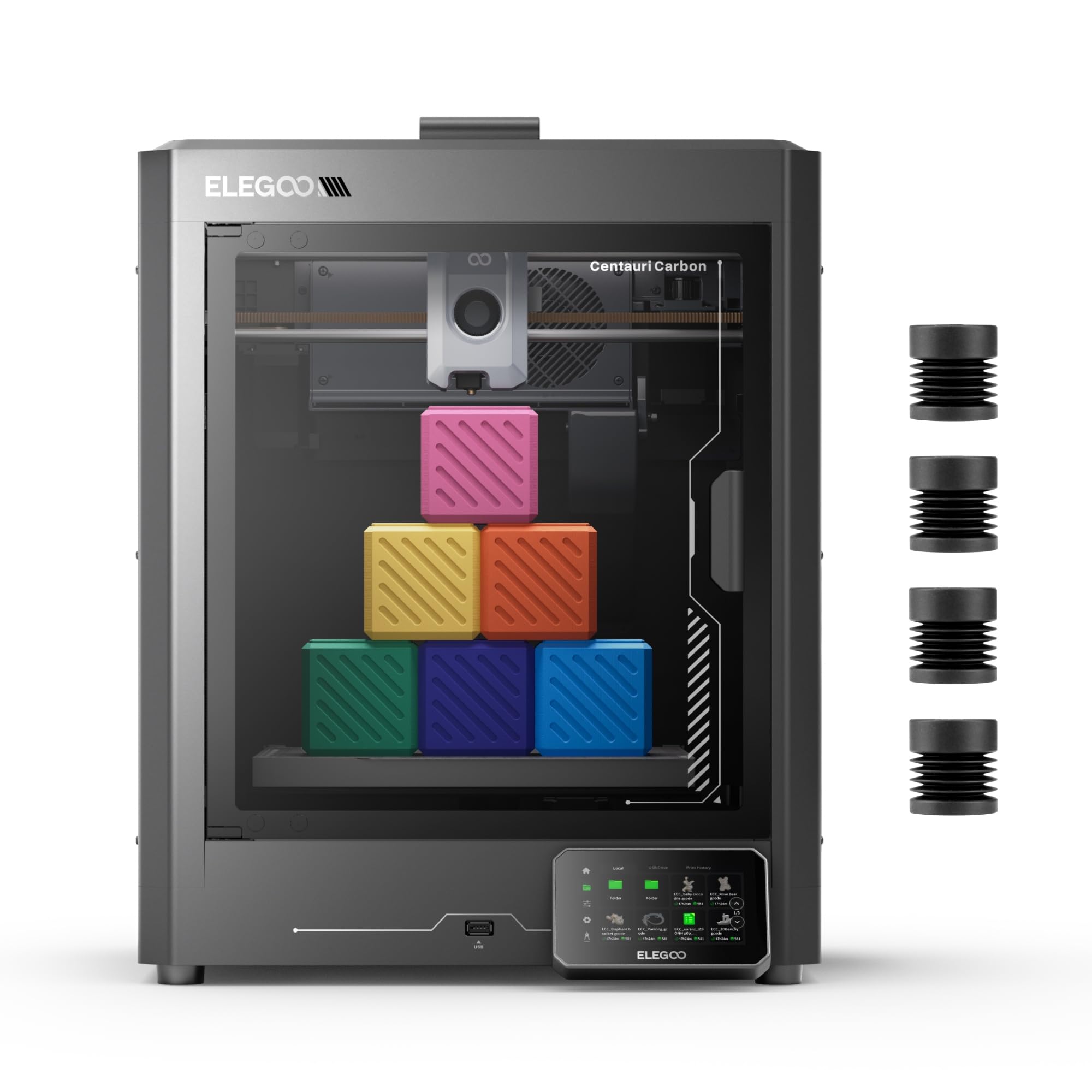
The ELEGOO Centauri Carbon delivers an enclosed CoreXY experience at a very friendly price point. With a 256x256x256mm build volume, it matches the Bambu P1S in size while offering a 320°C brass-hardened steel nozzle for carbon-fiber filaments. The 500mm/s speed with 20,000 mm/s² acceleration is competitive with higher-priced machines.
The integrated die-cast aluminum frame minimizes vibrations, and automatic vibration compensation combined with pressure advance ensures smooth first layers. The built-in chamber camera with dual LED lighting provides real-time monitoring and time-lapse capture. The upgraded dual-sided plate features a PLA-specific surface for excellent adhesion even at lower bed temperatures.
Users praise the easy setup (fully assembled and pre-calibrated), reliable performance at high speed, and excellent value. Some units have had reliability issues, particularly with hotend communication errors, though customer support has been responsive. For an enclosed, high-speed printer at this price, it’s a strong contender for budget-conscious large-format users.
Why it’s great
- Enclosed CoreXY at a budget-friendly price
- 320°C nozzle for carbon-fiber filaments
- Auto vibration compensation for quality
Good to know
- Some reliability issues reported with hotend
- USB-C cable routing could be better
- Slicer can struggle with complex STLs
11. Original Prusa MK4S
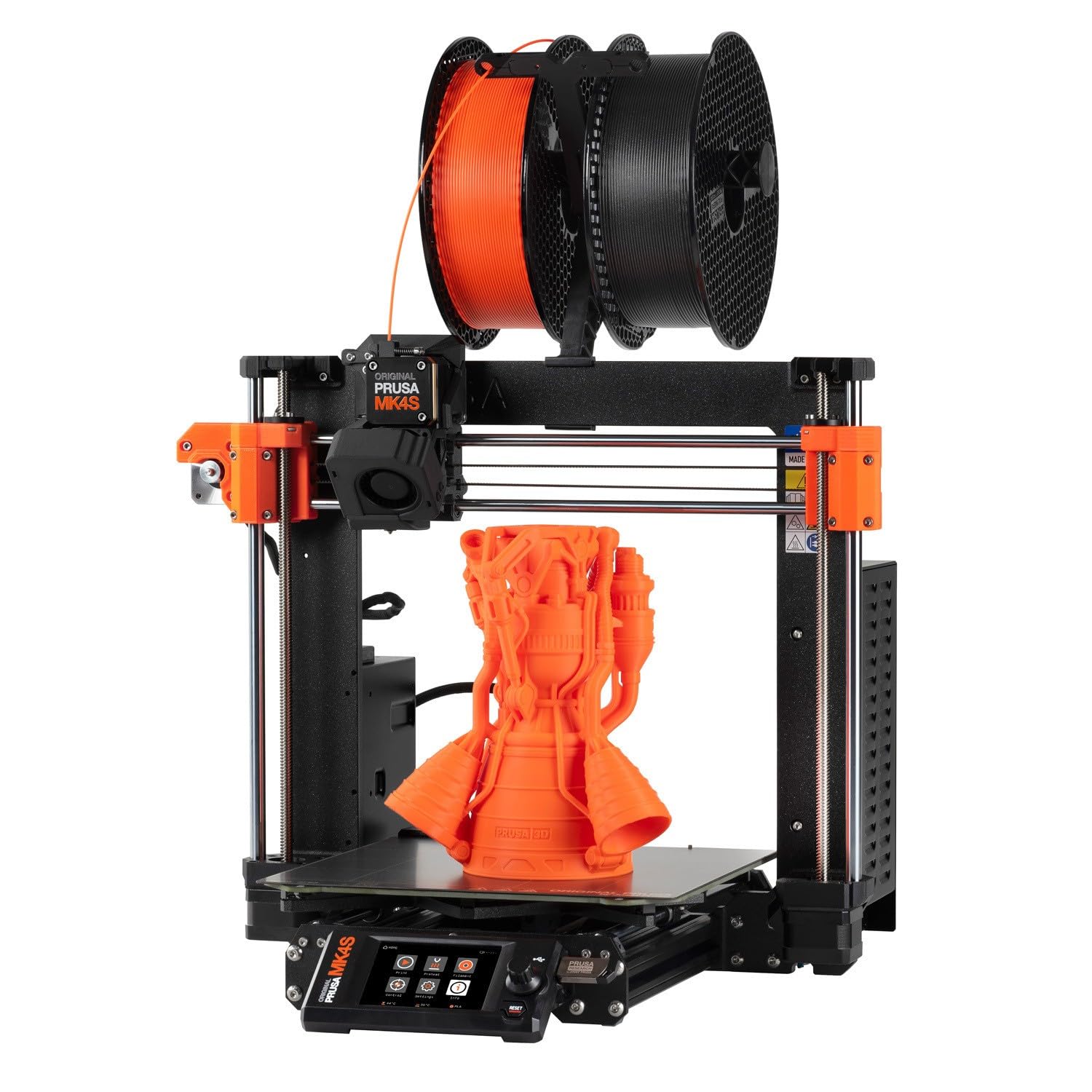
The Original Prusa MK4S is the gold standard for reliability and open-source upgradability. Its 250x210x220mm build volume holds its own for many medium-large prints, and the Input Shaping technology reduces ringing at higher speeds. The fully assembled version arrives tested and ready to print with a 1kg spool of Prusament PLA included.
The open-source design means you can upgrade components over time, and the Prusa ecosystem (Prusa Slicer, Prusa Connect, EasyPrint app) provides a seamless workflow. The self-cleaning nozzle, loadcell-based bed leveling, and intuitive menu system make it accessible to all skill levels. It prints PLA, PETG, ABS, and many other materials reliably.
Users who upgrade from cheaper machines are consistently blown away by the MK4S’s print quality and reliability. Its speed is modest compared to CoreXY competitors, and the build volume is smaller than the true giants in this guide, but for users who prioritize lifetime support and open innovation, it’s unmatched.
Why it’s great
- Unmatched reliability and print quality
- Open-source with long-term upgrade path
- Excellent Prusa software ecosystem
Good to know
- Build volume is smaller than large-format competitors
- Moderate speed compared to CoreXY machines
- Premium price for the build size
FAQ
What is the minimum build volume I should look for in a large-print 3D printer?
Do I need a heated chamber for large PLA prints?
Can a resin printer handle truly large prints?
What does CoreXY mean and why does it matter for large prints?
Final Thoughts: The Verdict
For most users, the best 3d printer for large prints winner is the Anycubic Kobra 3 Max because it offers the largest single-piece build volume (420x420x500mm) at a reasonable price, combined with fast 600mm/s printing and easy assembly. If you need industrial-grade engineering materials and active chamber heating, grab the QIDI Max4 Combo. And for ultra-detailed large resin prints that look like factory-made, nothing beats the ELEGOO Saturn 4 Ultra 16K.