
Chemical fumes from paints, solvents, epoxy resins, and household cleaning agents create invisible hazards that standard air purifiers often ignore. Most units on the market excel at trapping dust and pollen but fall short against volatile organic compounds (VOCs) and offensive odors, leaving your workspace or home compromised. You need a machine that combines dense activated carbon with high-quality HEPA filtration to neutralize these gaseous irritants effectively.
I’m Min — the co-founder and writer behind Gadgets Feed. I’ve spent countless hours analyzing certified lab data, CADR ratings for smoke and VOC removal, and real-world user feedback to find machines that actually handle chemical off-gassing rather than just circulating it.
This guide breaks down the top contenders that pair robust carbon filters with advanced HEPA stages, helping you select the best air purifier for chemical fumes for your specific exposure level and room size.
How To Choose The Best Air Purifier For Chemical Fumes
Selecting a purifier for chemical fumes is different from choosing one for allergies. You must prioritize the filtration stages that target gases, not just particulates. A machine that looks great on paper with a high CADR for dust may be useless if its carbon layer is thin or absent.
Activated Carbon Mass & Type
The carbon filter is your primary weapon against VOCs and chemical odors. Look for units with a dense, pelletized activated carbon filter rather than a thin fibrous sheet coated with carbon. Heavier carbon beds (measured in pounds) last longer and adsorb more gaseous pollutants before becoming saturated. Some premium units add potassium permanganate to the carbon blend to chemically break down gases like formaldehyde and ammonia.
VOC Sensor & Real-Time Feedback
Chemical fumes can spike suddenly during mixing, painting, or cleaning. A built-in VOC sensor that visually indicates air quality (green/yellow/red) and automatically ramps fan speed gives you immediate protection. Without this sensor, the machine runs on a timer or manual setting and may not react to a sudden release of fumes from an open solvent bottle.
CADR for Smoke as a Proxy
Since there is no universal CADR rating for chemical fumes, the CADR for Smoke is the best proxy. Smoke particles behave similarly to many VOC-laden aerosols. A higher Smoke CADR (200 CFM or above for a large room) indicates the unit can cycle air quickly enough to capture fume-laden air and push it through the carbon filter repeatedly.
Sealed Filtration & Bypass Prevention
Some air purifiers leak unfiltered air around the filter edges — a critical failure when dealing with chemical fumes. Seek units with a gasketed or sealed filter compartment that forces all incoming air through the carbon and HEPA stages. This prevents toxic vapors from sneaking past the filter media and recirculating into your breathing zone.
Quick Comparison
On smaller screens, swipe sideways to see the full table.
| Model | Category | Best For | Key Spec | Amazon |
|---|---|---|---|---|
| AirDoctor AD3500 | Premium | Large room VOC control | UltraHEPA 0.003 microns | Amazon |
| AirDoctor AD2000 | Premium | Bedroom chemical off-gassing | Carbon + potassium permanganate | Amazon |
| Nuwave Forever Smart | Premium | Zero replacement filter cost | 7-stage washable system | Amazon |
| Coway Airmega 200M | Mid-Range | Reliable brand for VOCs | HyperCaptive filtration | Amazon |
| Resiners Purair | Mid-Range | Epoxy resin workspace | 83.59% VOC removal SGS | Amazon |
| SIESEAN AP-400 | Mid-Range | Large open-concept homes | 235 CFM CADR Smoke | Amazon |
| PuroAir 240 | Mid-Range | Compact fume control | CarbonTech 500X stronger | Amazon |
| Levoit Vital 200S-P | Mid-Range | Smart app integration | Smoke CADR 250 CFM | Amazon |
| Winix 5520 | Budget | Entry-level odor control | AOC Carbon Filter | Amazon |
In‑Depth Reviews
1. AirDoctor AD3500
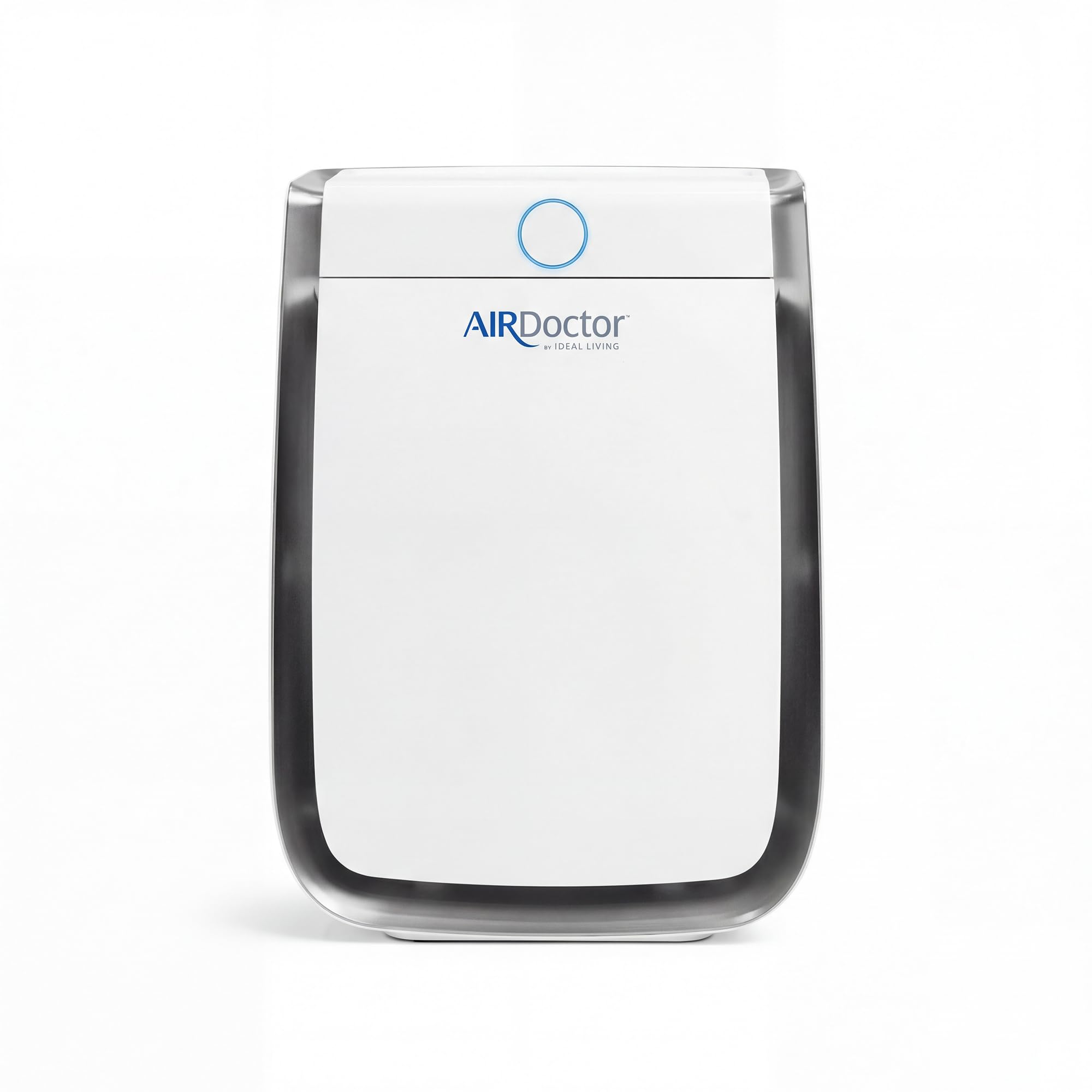
The AirDoctor AD3500 is a heavyweight when it comes to neutralizing chemical fumes. Its three-stage filtration system combines a pre-filter, a premium activated carbon filter infused with potassium permanganate, and an UltraHEPA filter that captures 99.99% of particles down to 0.003 microns — 100 times smaller than the HEPA standard. This chemical-reactive carbon blend specifically targets VOCs, cooking fumes, and gas emissions rather than just adsorbing them.
Covering up to 2,520 square feet in one hour, the AD3500 features a Halo PM2.5 sensor that displays real-time air quality and triggers Auto Mode to boost fan speed when it detects a spike in pollutants. Users consistently report that it clears strong cooking smells and off-gassing from new furniture within minutes. The unit runs whisper-quiet on low speed, though at 24 pounds it is a stationary machine best placed in a central location.
The biggest trade-off is the ongoing filter cost — the carbon filter needs replacement every six months and the UltraHEPA once per year. However, for anyone dealing with persistent chemical exposure from hobbies, renovations, or urban pollution, the AD3500 delivers the most scientifically robust defense available at this tier.
Why it’s great
- Potassium permanganate carbon blend chemically breaks down VOCs
- UltraHEPA captures particles at 0.003 microns for near-sterile air
- Real-time PM2.5 Halo display with responsive Auto Mode
Good to know
- Replacement filters are a significant recurring expense
- Heavy unit at 24 pounds limits portability
2. AirDoctor AD2000
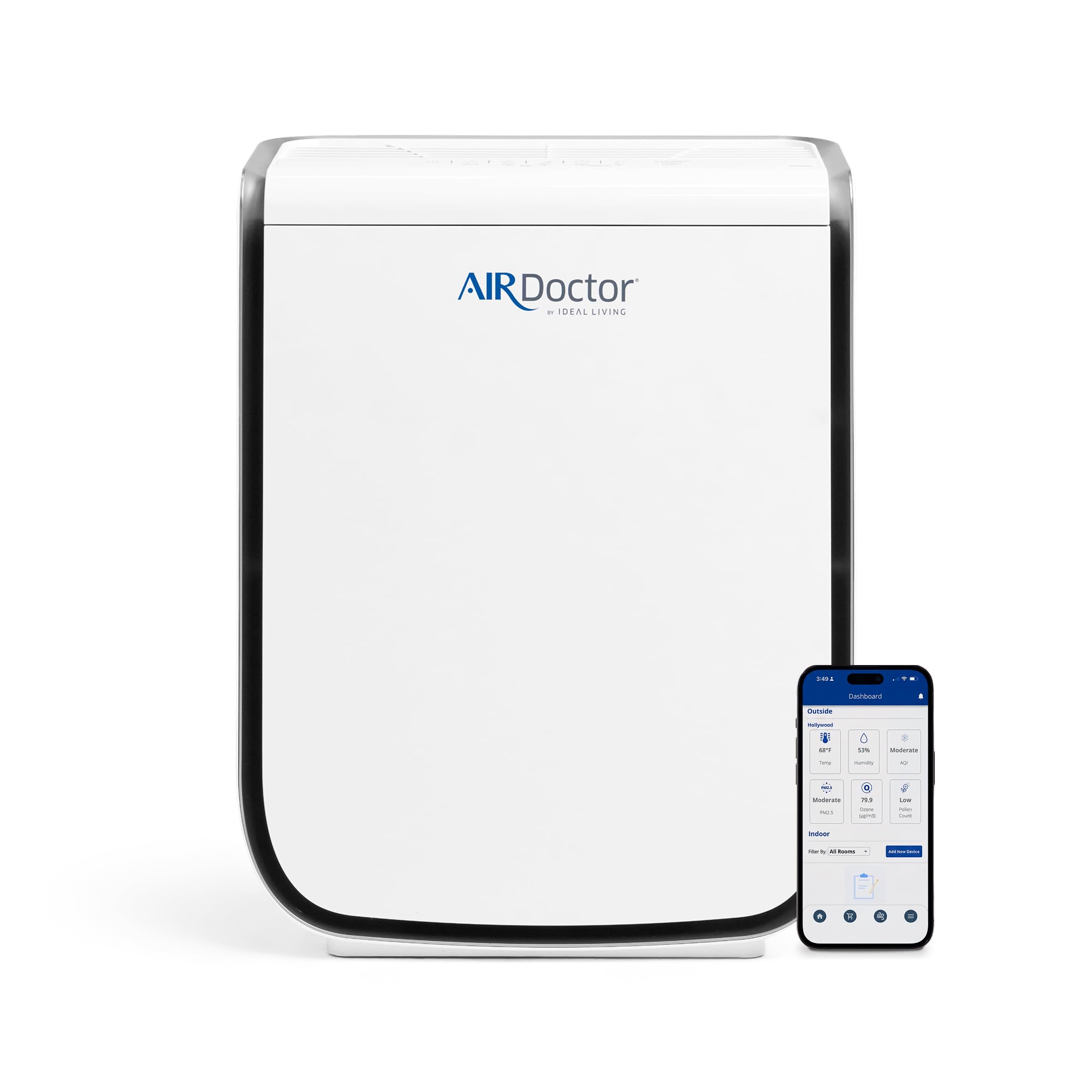
The AirDoctor AD2000 brings the same core technology as its larger sibling but in a more manageable footprint for smaller and medium rooms. It rapidly cleans 305 square feet in 15 minutes and handles up to 1,220 square feet per hour. The UltraHEPA filter captures 99.99% of particles at 0.003 microns, while the Premium Activated Carbon filter uses potassium permanganate to reduce toxic gases and odors from pets, cooking, and off-gassing furniture.
Real user feedback highlights its effectiveness against strong VOC sources. One reviewer noted that a new couch with a “horrible VOC smell” became barely noticeable the day after running the AD2000. The Halo PM2.5 sensor provides clear visual feedback, and the unit responds decisively in Auto Mode when it detects chemical spikes from cleaning products or adjacent kitchen activity.
At just over 7 pounds, this unit is far more portable than the AD3500 and fits neatly into a bedroom or home office. The trade-off is a smaller carbon filter volume, meaning it will saturate faster in heavy fume environments than the larger AD3500. For consistent protection against household VOCs in a sleeping or working space, this is a precision tool.
Why it’s great
- UltraHEPA filtration at 0.003 microns in a compact chassis
- Activated carbon with potassium permanganate targets VOCs
- Lightweight at 7.34 pounds for easy room-to-room movement
Good to know
- Smaller carbon bed may saturate faster in heavy fume zones
- Replacement filters still carry a premium cost
3. Nuwave Forever Smart Air Purifier

The Nuwave Forever Smart fundamentally changes the cost equation for chemical fume purification. Its patented 7-stage filtration system uses stainless-steel pre-filters and Bio-Guard 360 electrostatic filters that are all washable and reusable — no paper filters to replace. This system captures 100% of particles down to 0.1 microns and includes an ozone removal filter that lowers ozone levels to 1 ppb, exceeding CARB requirements.
Covering up to 2,002 square feet, the unit features an adjustable flow panel and WiFi app control. Users with multiple pets report it eliminates wet dog smell and reduces allergy symptoms without recurring filter bills. The Auto Mode is sensitive enough to respond to kitchen odors and adjust fan speed accordingly. At speed 1-3, the machine runs quietly, though higher settings produce noticeable fan noise.
The main compromise is the washable filter maintenance cycle — the Bio-Guard filters require a 24-hour drying period after washing, meaning you need a backup strategy if you run the unit continuously. Additionally, while the 7-stage system handles particulates well, its chemical fume reduction relies more on electrostatic attraction than dense carbon adsorption, making it slightly less aggressive on heavy VOCs than dedicated carbon-rich units.
Why it’s great
- Zero recurring filter costs with fully washable 7-stage system
- Large 2,002 sq ft coverage with adjustable airflow panel
- WiFi app control and sensitive auto mode
Good to know
- Washable filters require 24-hour dry time for maintenance
- Less carbon mass means lower peak VOC adsorption
4. Coway Airmega 200M

The Coway Airmega 200M is a well-established mid-range option that combines a washable pre-filter, a deodorization carbon filter, and a True HEPA filter to reduce 99.97% of 0.3-micron particles while also reducing 99% of VOCs and odors. Its HyperCaptive filtration system draws air from three sides for efficient intake, and the Auto Mode reacts to real-time air quality changes detected by its built-in sensor.
Designed for rooms up to 1,748 square feet in one hour, this unit features an Eco Mode that shuts off the fan when the air remains clean for 30 minutes, saving energy. Users appreciate its low-pitch sound profile — speed 1 is nearly inaudible from four feet away. Long-term owners report consistent performance over multiple years, with easy vacuuming of the pre-filter extending the life of the main filters.
One notable drawback reported by some users is an initial chemical smell from the new HEPA filter that can cause headaches for up to a week — ironic for a unit meant to combat fumes. This off-gassing fades over time, but sensitive individuals should run the unit outdoors or with windows open during the first few days. Overall, the 200M offers reliable and quiet VOC reduction from a trusted brand.
Why it’s great
- Three-sided intake maximizes air capture efficiency
- Eco Mode saves energy when air quality is stable
- Low-pitch sound is unobtrusive at low speeds
Good to know
- New filter may emit temporary chemical odor during break-in
- No WiFi or smart app connectivity
5. Resiners Purair Air Purifier

The Resiners Purair is purpose-built for one of the most intense fume-generating hobbies: epoxy resin crafting. It is SGS-certified to remove 83.59% of harmful VOCs from resin fumes specifically. The two-stage system uses a pre-filter for large particles and an H13 True HEPA & Resin Fumes Purifying Filter that decomposes VOCs without secondary pollution. A built-in resin TVOC sensor provides real-time readings with green, yellow, or red LED indicators.
The 360-degree intake and 45-degree angled outlet design optimize air circulation for spaces up to 158.76 square feet — ideal for a dedicated craft station or small studio. Users confirm that the sensor detects rubbing alcohol instantly and clears epoxy odors from the entire upstairs within minutes. The Auto Mode ramps fan speed aggressively when fumes spike, and the timer function allows 1-9 hour operation for overnight curing sessions.
This unit is relatively compact at 8.25 pounds and fits easily on a workbench. The filter life is rated up to 2,000 hours with recommended replacements every 3-6 months. For anyone working with resin, acrylics, or 3D printing, this is the only purifier in this guide specifically designed and tested for that chemical profile, though its small coverage area limits it to personal workspaces rather than whole-room treatment.
Why it’s great
- SGS certified for 83.59% VOC removal from resin fumes
- Built-in TVOC sensor with color-coded real-time feedback
- Compact benchtop design with 360-degree intake
Good to know
- Coverage limited to 158 sq ft — not for whole-room use
- Filter replacement every 3-6 months in heavy use
6. SIESEAN AP-400
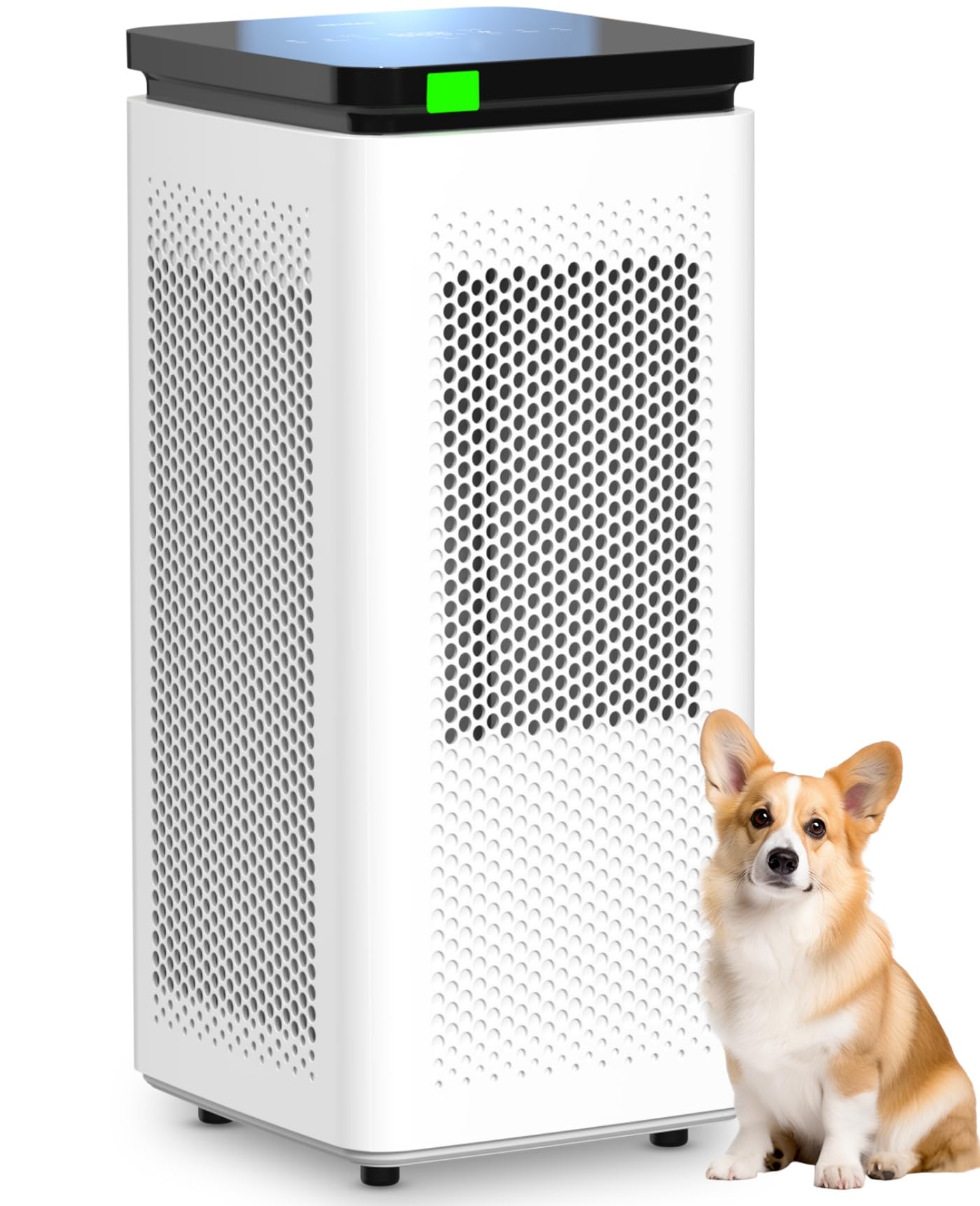
The SIESEAN AP-400 packs a punch with a 235 CFM CADR and dual-inlet airflow that cleans 500 square feet in 15 minutes and covers up to 3,500 square feet per hour. Its H13 True HEPA filter captures 99.97% of particles down to 0.1 microns, while the activated carbon filter targets smoke, VOCs, and odors. The built-in PM2.5 digital display shows real-time particle counts so you can see the air quality improve as the unit runs.
Auto Mode adjusts fan speed based on the PM2.5 readings, and Sleep Mode drops noise to 30dB — barely audible for light sleepers. A child lock, timer, and dimmable control panel make it family-friendly for shared spaces. Users report that the sensor responds instantly to deodorant sprays and cooking smoke, and pet owners note a significant reduction in dog-related allergy symptoms after a few days of use.
At 11.25 pounds and a floor-standing design, this unit is relatively easy to move between rooms. The main callout is that the carbon filter is integrated rather than a separate bulk stage, so heavy chemical fume exposure may saturate it faster than dedicated carbon-canister designs. For general household VOC control combined with powerful particulate removal, the AP-400 delivers exceptional value at this price tier.
Why it’s great
- 235 CFM CADR with dual-inlet for fast large-room turnover
- PM2.5 digital display for real-time particle feedback
- Sleep Mode at 30dB with child lock and dimmer
Good to know
- Integrated carbon stage may saturate faster than bulk carbon
- Filter replacement recommended every 3-4 months
7. PuroAir 240
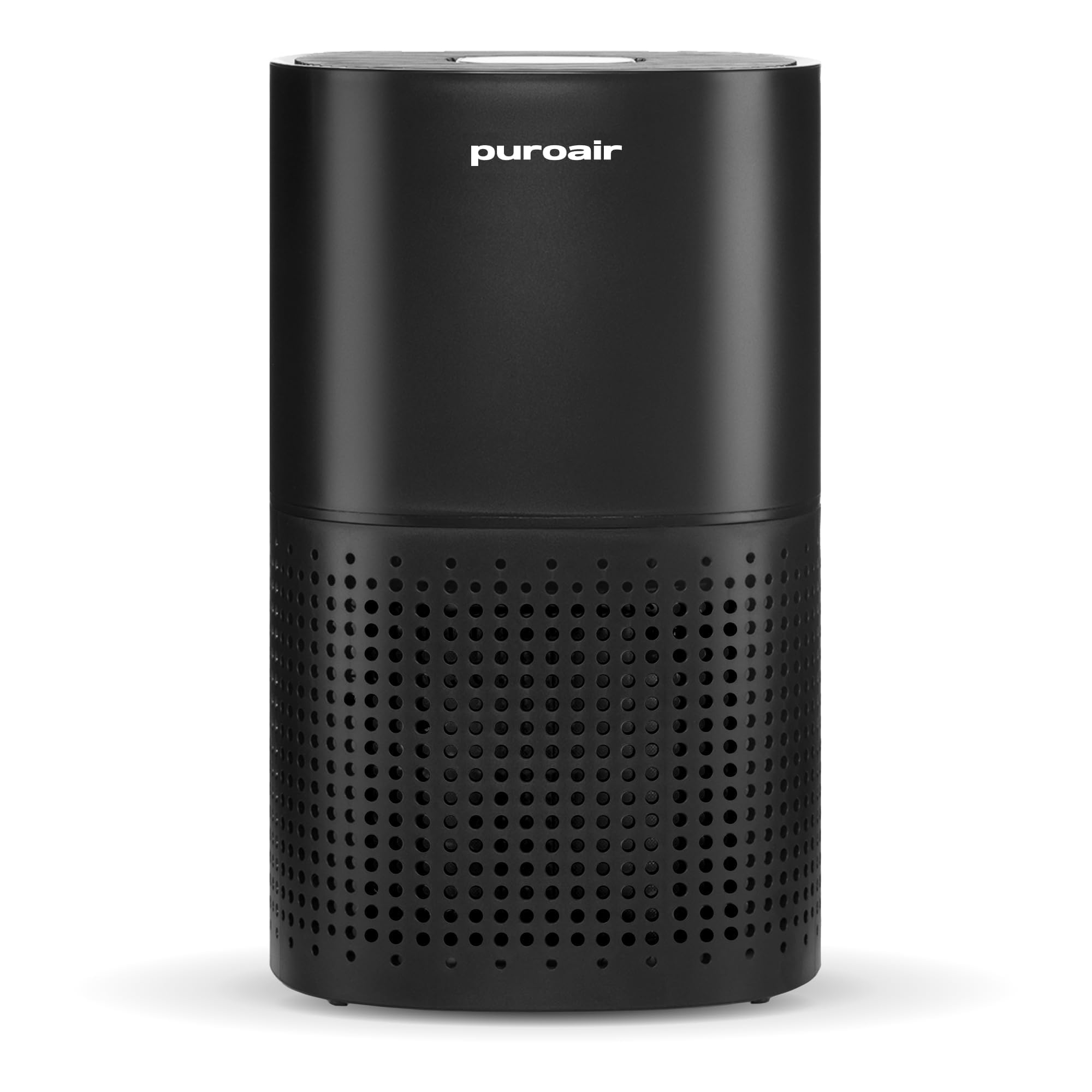
The PuroAir 240 uses a three-layer filtration system — pre-filter, HEPA filter, and activated carbon with CarbonTech technology that the manufacturer claims is up to 500 times stronger than standard carbon. This unit filters 99.9% of pollutants including dust, pollen, smoke, pet dander, and VOCs, and can clean rooms up to 1,000 square feet in one hour. Its smart particle sensor monitors air quality and automatically adjusts fan power when it detects pollution.
Users consistently praise its near-silent operation on low speed and its small footprint — it measures just 10.63 x 10.63 inches at the base. Several reviewers with mold allergies reported that their symptoms (runny nose, itchy eyes, congestion) resolved within three weeks of 24/7 use. The unit is CARB, ETL, ISO, and UL certified, and comes with a 2-year risk-free warranty based in the USA.
The primary limitation for chemical fume fighting is the carbon layer thickness. While CarbonTech is more efficient per gram, the total carbon mass in the PuroAir 240 is physically smaller than what you would find in dedicated VOC-focused units like the AirDoctor series. For light chemical exposure from cooking or occasional paint use, it works well. For regular epoxy or solvent work, look at the Resiners Purair instead.
Why it’s great
- CarbonTech carbon layer claims 500X stronger gas adsorption
- Whisper-quiet low speed operation in a compact form
- 2-year risk-free warranty with US-based support
Good to know
- Limited carbon mass compared to dedicated VOC units
- Some users find higher fan speeds noisy for bedroom use
8. Levoit Vital 200S-P

The Levoit Vital 200S-P is AHAM Verifide certified with a Smoke CADR of 250 CFM, a Dust CADR of 254 CFM, and a Pollen CADR of 289 CFM — strong numbers for its price bracket. Its 3-stage filtration includes a washable pre-filter, an efficient middle/activated carbon filter, and a HEPA-grade filter that removes 99.97% of airborne particulates. The U-shaped air inlet helps trap pet hair without clogging the main filter.
Smart features include the VeSync app for remote control, scheduling, and filter life monitoring, plus compatibility with third-party voice assistants. The HEPA Sleep Mode automatically adjusts fan speed based on room light levels detected by the built-in light sensor. Users in apartments mention it excels at clearing cooking odors and cigarette smoke, and the auto mode keeps the room feeling fresh without manual intervention.
The Vital 200S-P covers up to 1,875 square feet in one hour, making it suitable for open-concept homes. The carbon filter in the 3-stage system is effective for typical household odors and VOCs, but it is not as specialized for heavy chemical fume environments as units with discrete bulk carbon stages. For a connected, quiet, and well-rounded solution to everyday chemical smells, this is a top contender.
Why it’s great
- AHAM Verifide with Smoke CADR of 250 CFM
- VeSync app for scheduling, timers, and remote control
- Light sensor enables automatic HEPA Sleep Mode
Good to know
- Carbon stage is integrated, not a bulk standalone filter
- Max fan speed is noticeably loud for some users
9. Winix 5520
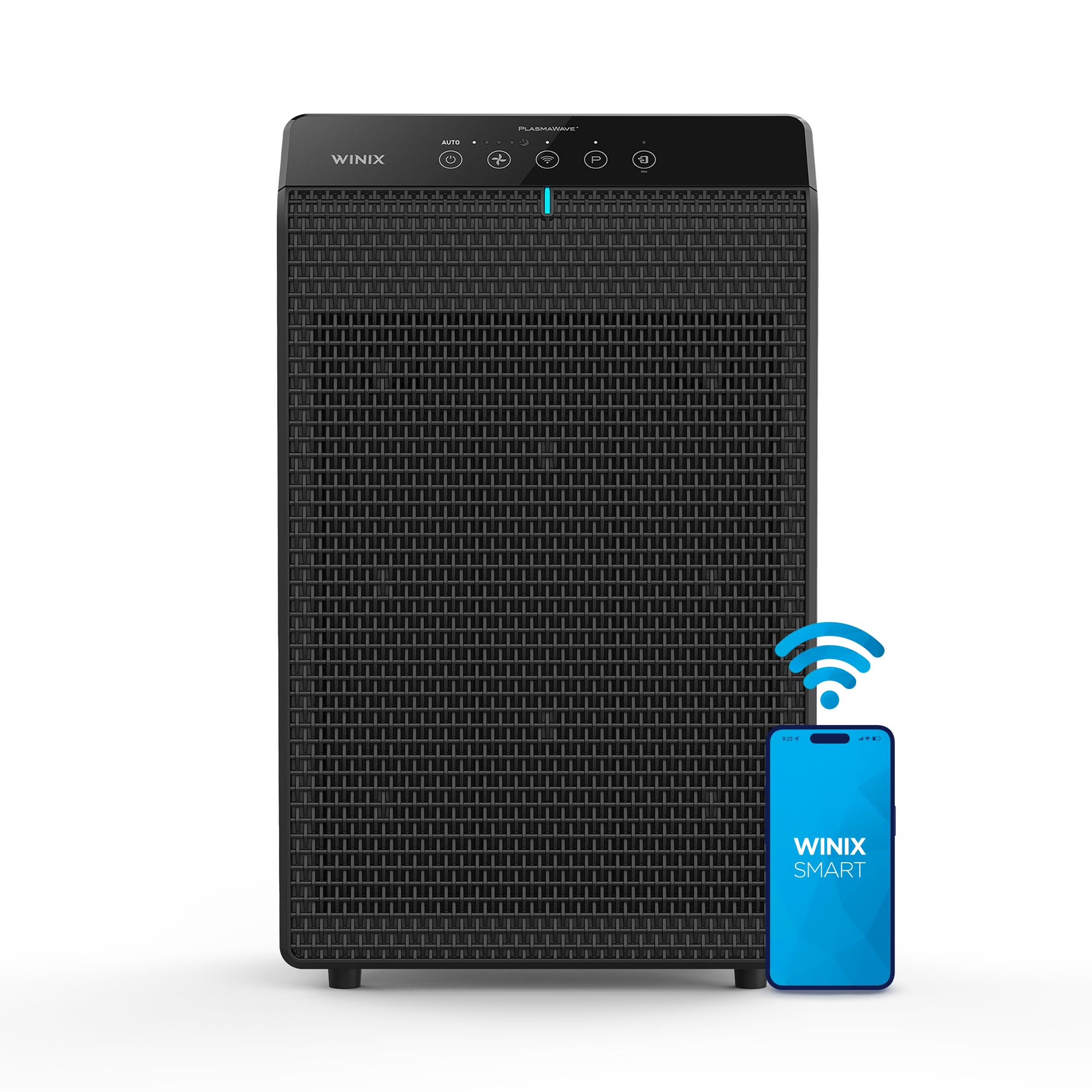
The Winix 5520 brings four-layer filtration to a budget-friendly package: a washable fine mesh pre-filter, an Advanced Odor Control (AOC) carbon filter for VOCs and household odors, a True HEPA filter capturing 99.99% of particles as small as 0.01 microns, and the Plasmawave ionizer technology. It is AHAM Verifide at 392 square feet and cleans rooms up to 1,882 square feet in one hour on the high setting.
Built-in smart sensors with an LED air quality indicator (blue/orange/red) drive Auto Mode, and the unit supports WiFi control via the Winix Smart App with Alexa voice compatibility. Users report that the unit eliminated carpet smells within 1-2 days and that the sensor even detects air freshener and mouthwash, proving its sensitivity to airborne chemicals. The Sleep Mode automatically dims lights and slows the fan when the room darkens.
The key compromise is the AOC carbon filter, which is effective for everyday odors but has less carbon mass than premium units. For light chemical fume exposure from cooking, pets, or mild smoke, the 5520 performs admirably. Heavy resin or solvent users will want to step up to a unit with a denser carbon bed. The washable pre-filter extends the life of the main filters, and OEM replacements run roughly per year — a low ongoing cost.
Why it’s great
- Four-stage filtration including AOC carbon and Plasmawave
- Smart sensor with real-time LED air quality display
- Low annual filter replacement cost at ~/year
Good to know
- AOC carbon filter has less mass than bulk carbon options
- Alexa integration is reportedly clunky in practice
FAQ
Can a standard HEPA filter remove chemical fumes?
How often should I replace the carbon filter for chemical fume use?
Do air purifiers with ionizers help with chemical fumes?
What room size is ideal for a resin workspace purifier?
Final Thoughts: The Verdict
For most users, the best air purifier for chemical fumes winner is the AirDoctor AD3500 because its potassium permanganate-infused carbon bed chemically breaks down VOCs while the UltraHEPA catches particles at 0.003 microns. If you want a smaller unit for a bedroom or home office, grab the AirDoctor AD2000 for the same technology in a lighter chassis. And for resin artists needing a sensor that specifically tracks epoxy VOCs, nothing beats the Resiners Purair with its SGS-certified 83.59% fume reduction.