
The biggest lie in action cameras is that you have to point the lens at the action. A 360 camera eliminates that constraint entirely — you capture everything around you in a single spherical take, then choose your angle later. The real-world trade-off is between sensor size, resolution, and battery life, because stitching and stabilizing a full sphere demands far more processing power than a standard wide-angle shot.
I’m Min — the co-founder and writer behind Gadgets Feed. I have spent hundreds of hours analyzing 360-degree camera specifications, comparing sensor sizes, frame rates, and stabilization algorithms to separate marketing claims from real-world performance in this specific category.
Whether you are mounting a camera to a motorcycle helmet, skiing down a black diamond run, or creating immersive real estate tours, this deep-dive guide will help you find the best action 360 camera for your specific use case and budget.
How To Choose The Best Action 360 Camera
Choosing a 360 action camera is fundamentally different from picking a standard action camera. With 360 capture, you are trading immediate framing convenience for post-production flexibility, and the quality of that flexibility depends entirely on sensor size, resolution, and stabilization algorithms. Here are the three factors that matter most.
Sensor Size and Low-Light Performance
The sensor is the single most important component in a 360 camera. A larger sensor — 1-inch equivalent versus the common 1/2-inch — captures significantly more light, which translates to cleaner footage in twilight, indoor, or shaded environments. Cameras like the DJI Osmo 360 and Xtra 360 use 1-inch sensors, while most mid-range options rely on smaller sensors that produce noticeable noise below ISO 800. If you shoot primarily in daylight, the smaller sensors work fine. For dusk, dawn, or indoor action, the larger sensor is non-negotiable.
Resolution and Reframing Headroom
360 video resolution is not the same as standard video resolution. A 5.7K 360 video captures the full sphere, but when you reframe to a standard 16:9 or 9:16 clip, you are effectively cropping into that sphere. Higher native resolution — 8K versus 5.7K — gives you much more usable pixels after reframing, which matters for maintaining sharpness in the final export. True 8K 360 sensors, like those in the Insta360 X5 and GoPro MAX2, retain crisper detail after cropping compared to 5.7K sensors that can look soft in the final edit.
Stabilization and Horizon Lock
In a 360 camera, stabilization is handled in software, not by a physical gimbal. The best systems — FlowState Stabilization from Insta360 and HyperSmooth from GoPro — use gyroscope data to smooth out bumps and jitters, then add Horizon Lock to keep the video level even during full camera rotations. Mid-range cameras like the AKASO 360 also offer reliable horizon lock, but budget-friendly options may struggle with aggressive motion like mountain biking or motorcycle vibrations. Check for a dedicated stabilization chipset in the specifications, not just marketing claims about “smooth video.”
Quick Comparison
On smaller screens, swipe sideways to see the full table.
| Model | Category | Best For | Key Spec | Amazon |
|---|---|---|---|---|
| Insta360 X5 | Premium 8K | Low-light and action sports | Dual 1/1.28″ sensors, 8K30fps | Amazon |
| DJI Osmo 360 | Premium 1-Inch | Travel and vlogging | 1-inch sensor, 8K30fps, 105GB storage | Amazon |
| GoPro MAX2 | Premium 8K | Replaceable lenses | True 8K 360, HyperSmooth, 29MP stills | Amazon |
| Xtra Edge 360 | 1-Inch Mid-Range | 8K panoramas and travel | 1-inch sensor, 100MP panoramas | Amazon |
| Bundle It Better Insta360 X5 | Premium Bundle | All-in-one kit | 8K 360, 72MP stills, 50-in-1 accessories | Amazon |
| GoPro MAX | Mid-Range | Family adventures and hiking | 5.6K30, Max HyperSmooth, 32GB card | Amazon |
| DJI Osmo 360 Standard | Mid-Range | First-time 360 buyers | 1-inch sensor, 8K30fps, 105GB storage | Amazon |
| AKASO 360 | Mid-Range Value | Budget-friendly 360 | 5.7K video, 72MP photos, 64GB card | Amazon |
| PANOX V2 | Budget Entry | Motorcycle and GPS tracking | 5.7K30, 72MP, Android 10 OS, GPS | Amazon |
In‑Depth Reviews
1. Insta360 X5 Essentials Bundle

The Insta360 X5 sets the benchmark for what an action 360 camera should deliver in 2025. Its dual 1/1.28-inch sensors capture native 8K30fps 360 video, and the triple AI chip design significantly reduces noise in low-light situations — a genuine advantage over the previous generation. The 208-minute battery life and fast charging to 80% in 20 minutes mean you can shoot an entire day of skiing without carrying multiple spares.
The new replaceable lenses address the single biggest durability concern with 360 cameras: scratched optics. Combined with waterproofing to 49 feet without a housing, the X5 is genuinely adventure-ready. The FlowState Stabilization with full 360-degree Horizon Lock keeps footage smooth through bumps and full rotations, and the 4-mic array with Wind Guard delivers clear audio even at highway speeds.
The AI-powered reframing in the Insta360 app makes post-production accessible for beginners, while manual controls satisfy advanced editors. The invisible selfie stick effect works seamlessly up to 114cm, and the InstaFrame mode lets you export a flat video instantly without editing. It is the most complete 360 action camera package available today for serious creators.
Why it’s great
- Best-in-class low-light performance with triple AI chip
- 208-minute battery life and 20-minute fast charge to 80%
- Replaceable lenses address durability concerns
- Waterproof to 49 feet without housing
Good to know
- MicroSD card sold separately
- Battery life in 8K mode is shorter than the 208-minute claim at lower resolutions
2. DJI Osmo 360 Essential Combo
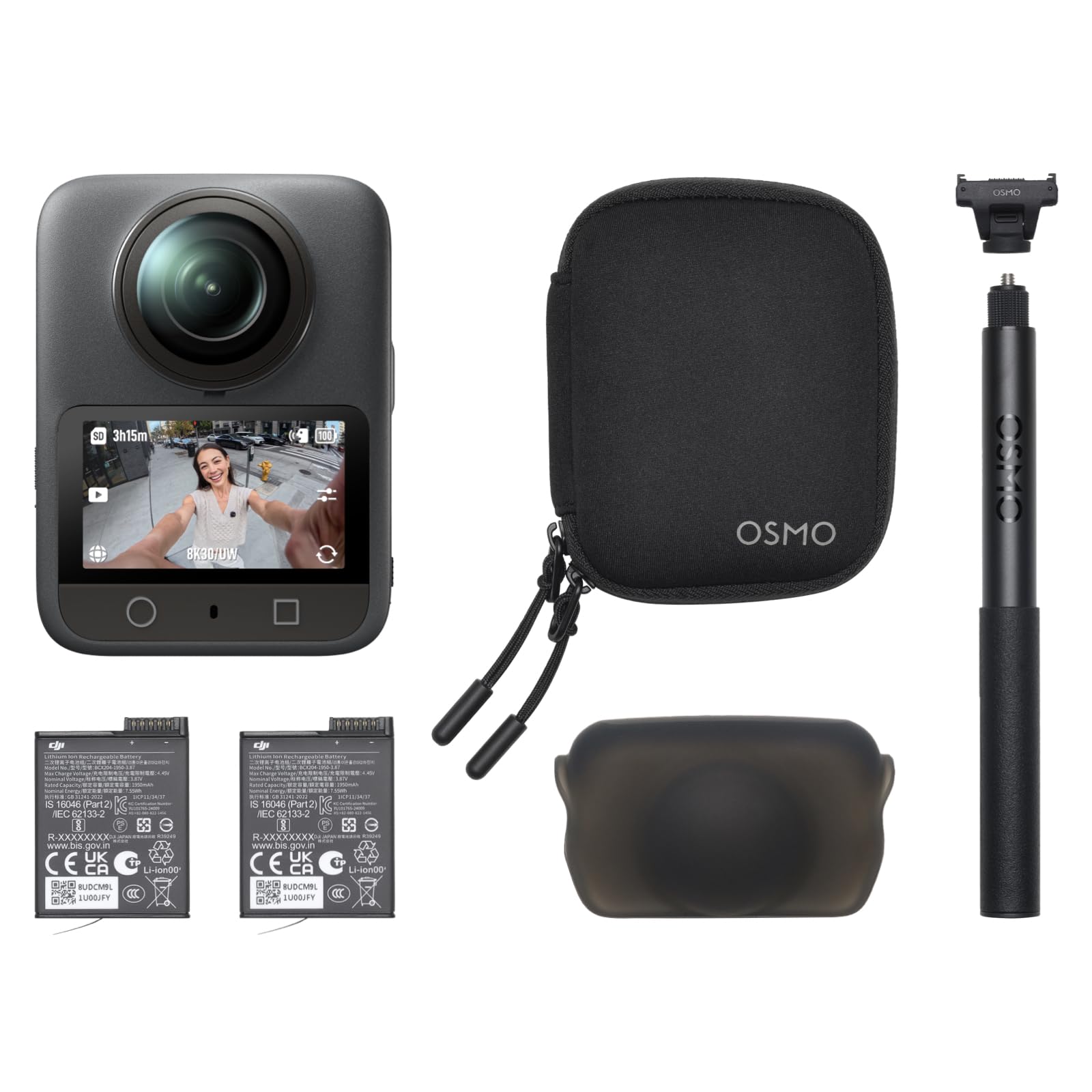
The DJI Osmo 360 Essential Combo is built around a true 1-inch 360 imaging system, which gives it a clear advantage in dynamic range and low-light detail over cameras with smaller sensors. Native 8K30fps 360 video and 120MP 360 photos provide excellent reframing headroom. The 105GB of built-in storage means you never need a memory card for most day trips — a practical detail that saves frustration on location.
Recording at 4K120fps from the 170-degree Boost mode is a standout feature for action shots, and the 1.2-meter invisible selfie stick creates convincing third-person perspectives. The magnetic quick-release system lets you switch between 360 and single-lens vlog mode in seconds, and compatibility with the Osmo Action Quick-Release Adapter Mount means your existing DJI accessories still work.
The DJI Mimo app includes Pano Dewarp and Pano Camera Movement tools that simplify the reframing workflow, though the learning curve for 360 editing remains present. Four microphones with OsmoAudio support for two DJI transmitters provide clean directional audio without a receiver. The build quality is premium, and the 100-minute battery life in the combo is adequate for most adventures with the included spare battery.
Why it’s great
- 1-inch sensor delivers superior low-light and dynamic range
- 105GB built-in storage removes memory card dependency
- 4K120fps Boost mode for slow-motion action
- Magnetic quick-release for fast mode switching
Good to know
- 360 editing has a noticeable learning curve in Mimo app
- Battery life is shorter than Insta360 X5 in 8K mode
3. GoPro MAX2
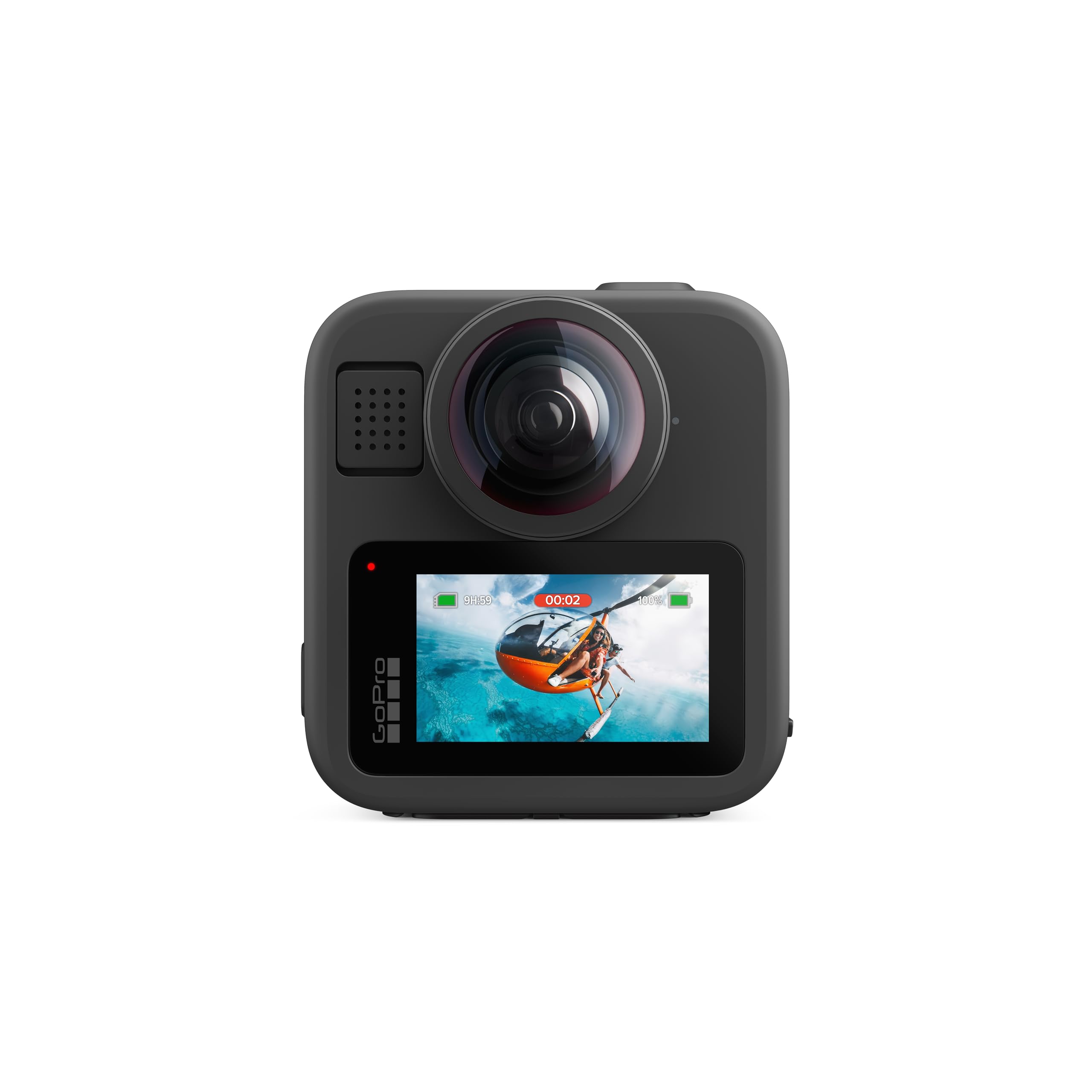
GoPro MAX2 delivers true 8K 360 spherical video with up to 21% more resolution than the previous generation, according to GoPro’s internal testing. The replaceable glass lenses with water-repelling coating solve the single most frustrating failure point of 360 cameras — one scratch and your footage has a permanent artifact. Now you can swap a damaged lens without replacing the entire camera.
The HyperSmooth stabilization with Horizon Lock keeps footage level even when the camera spins 360 degrees, which is essential for dynamic action like mountain biking or motorcycle riding. The six-microphone array captures ambisonic audio that shifts perspective with the reframed view, and the wind reduction is effective at speeds up to 30 mph. The 29MP 360 stills have impressive dynamic range for a 360 camera, and the Quik app makes reframing accessible.
The dual-mode operation lets you toggle between 360 and traditional Hero mode, giving you flexibility without carrying two cameras. The 1960mAh Enduro battery provides solid runtime, and the waterproof design works without a housing. Some users report heat buildup during extended 8K recording, and the GoPro subscription is required for full desktop editing features, which is a recurring cost to factor into your budget.
Why it’s great
- Replaceable glass lenses solve scratch durability
- True 8K 360 with high reframing headroom
- Six-microphone ambisonic audio with wind reduction
- Dual-mode: 360 and traditional Hero mode
Good to know
- GoPro subscription needed for full desktop editing features
- Heat buildup possible during extended 8K recording
4. Xtra Edge 360 Camera
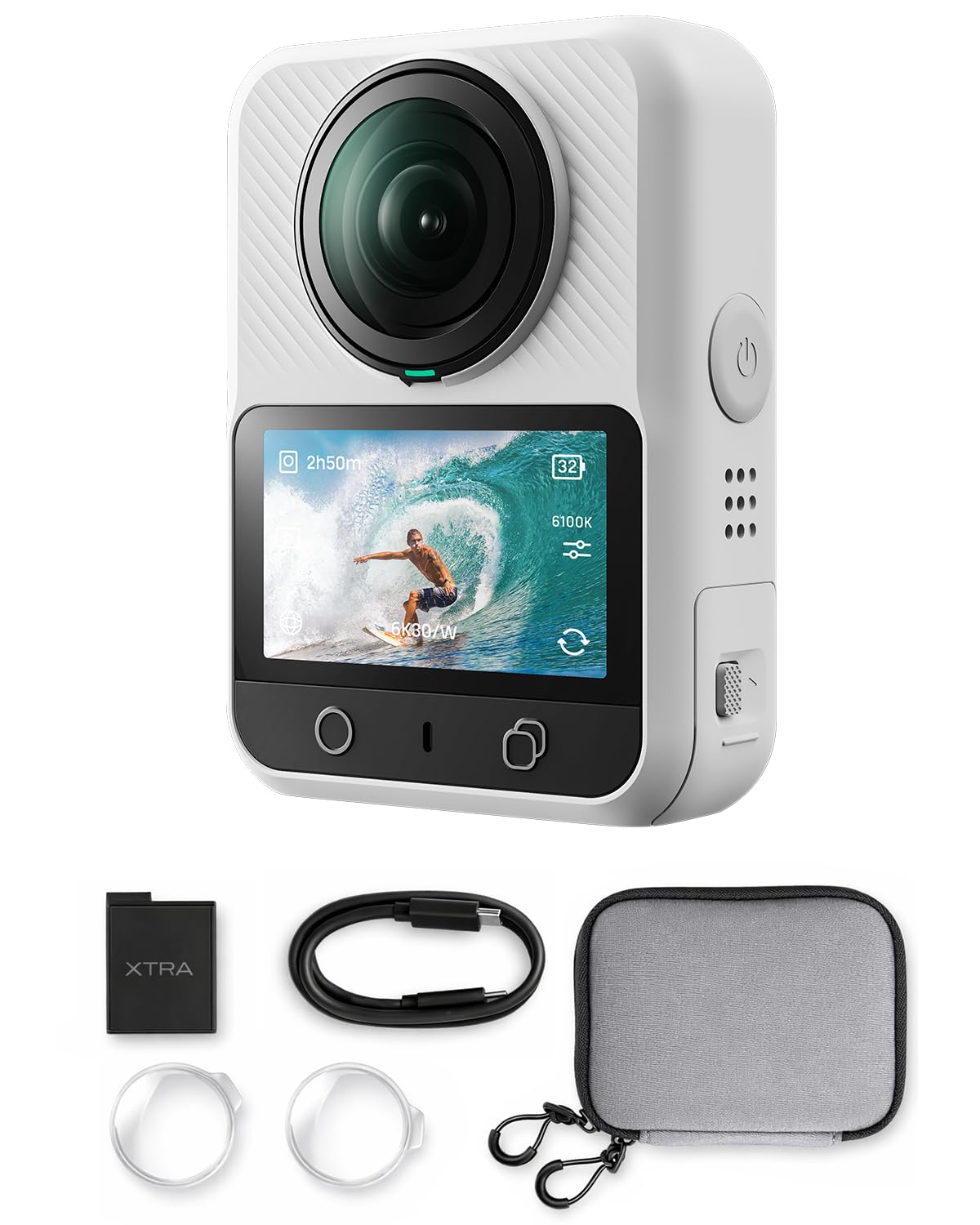
The Xtra Edge 360 is the most affordable camera in this guide to feature a true 1-inch sensor equivalent, which gives it a massive advantage in image quality over similarly priced 5.7K competitors. The 8K 360 video and 100MP panoramic photos produce stunning detail, and the 105GB of built-in storage eliminates the need for a memory card entirely — a genuine convenience for travelers who always forget their MicroSD.
The magnetic quick-release system and universal mounting compatibility make it easy to switch between tripod, selfie stick, and helmet mounts. The waterproof design and Bullet Time mode add versatility for action sequences. Reviewers consistently note that the image quality rivals or exceeds the Insta360 X4, with sharper details and better dynamic range in high-contrast scenes.
The primary limitation is the software ecosystem. The Xtra Edge app is functional but lacks the polished AI reframing tools found in Insta360 or DJI apps. Some creators have reported that they cannot export individual 360 clips for editing in Final Cut Pro, which is a dealbreaker for professional video workflows. If you primarily use mobile editing and want the best sensor for the price, this is a compelling option.
Why it’s great
- 1-inch sensor at a mid-range price point
- 105GB built-in storage — no MicroSD needed
- 8K video with excellent dynamic range
- Waterproof and includes Bullet Time mode
Good to know
- Software editing tools are less polished than Insta360 or DJI
- Limited export options for professional video NLE workflows
5. Bundle It Better Insta360 X5
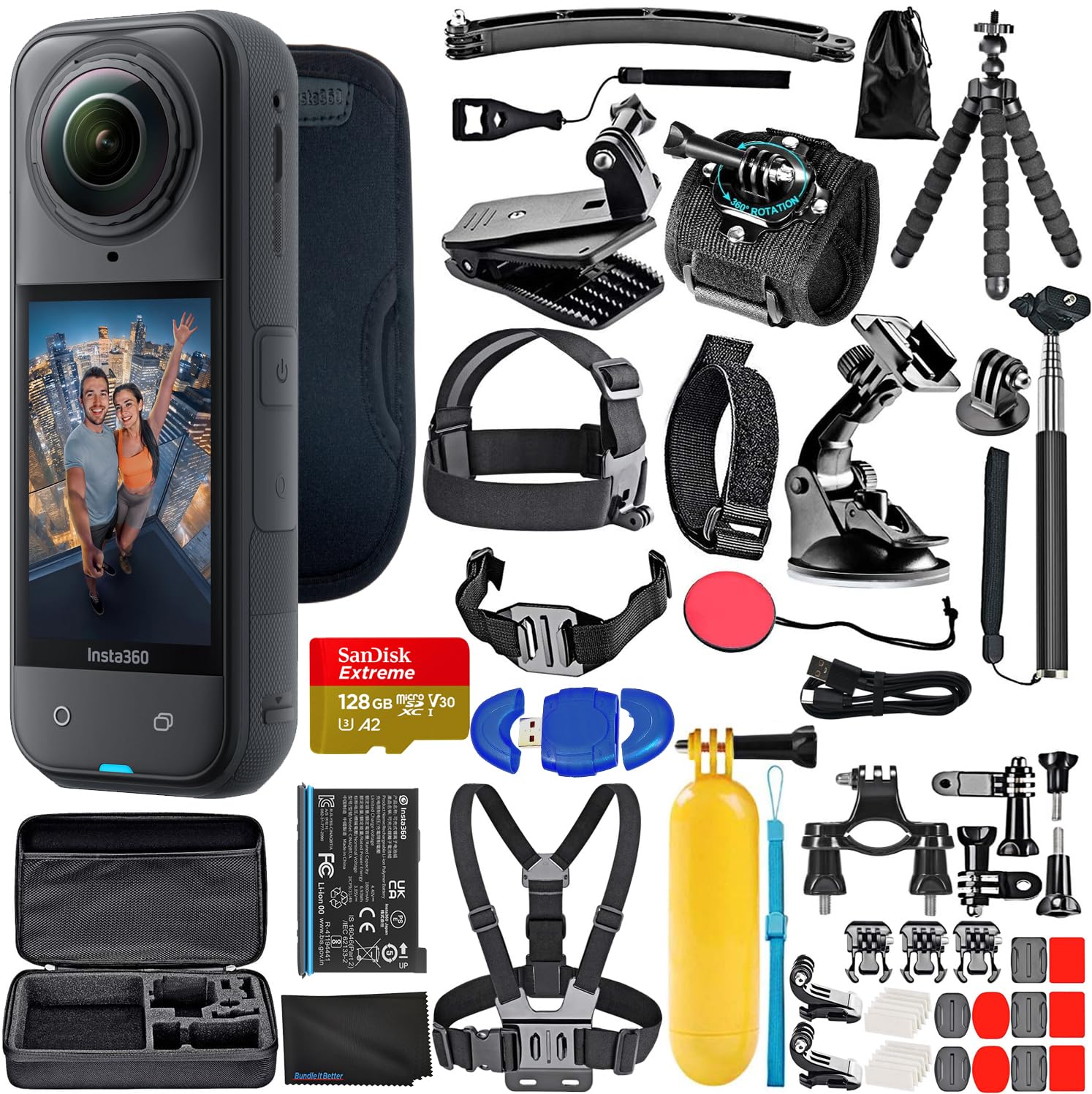
This bundle packages the excellent Insta360 X5 camera with a 50-in-1 accessory kit and a 128GB MicroSD card, making it the complete out-of-box solution for someone starting from scratch. The X5 itself delivers 8K 360 video, 72MP stills, PureVideo AI processing, and waterproofing to 49 feet — the same core camera that earned the top spot in this guide.
The bundle includes mounts, straps, a selfie stick, and protective cases that would otherwise cost a significant amount purchased separately. For anyone who wants a single box with everything needed to start shooting, this is the most convenient option available. The 128GB card is fast enough to handle 8K bitrates without buffering issues.
The critical caveat is accessory quality. Multiple verified reviews report that the included selfie stick broke on the first use, and plastic fittings on mounts tend to be flimsy. The camera itself is 5-star, but the accessories are disposable. Buy this bundle for the X5 and the MicroSD card, then replace the accessories with aftermarket options from known brands if they fail. The core value is in the camera, not the extras.
Why it’s great
- Insta360 X5 camera is the current best-in-class 360 action cam
- Includes 128GB MicroSD card for immediate use
- 50+ accessories provide every mount you could need initially
- Convenient single-box solution for beginners
Good to know
- Accessory quality is poor — selfie stick and mounts may break quickly
- Better to buy camera alone and source accessories separately
6. GoPro MAX

The GoPro MAX remains a solid mid-range 360 action camera, recording 5.6K 360 video with Max HyperSmooth stabilization and PowerPano photos. It includes two Enduro batteries and a 32GB MicroSD card, which extends the practical runtime compared to buying the camera alone. The 1600mAh Enduro battery performs well in cold weather down to 14°F — a real advantage for winter sports.
Six microphones capture true-to-life sound, and the Max HyperSmooth stabilization with horizon leveling delivers smooth footage without a gimbal. The bundle makes this a ready-to-go kit for casual users who want a 360 camera without spending premium-tier money. The PowerPano feature stitches together wide panoramic photos that look great on social media.
The 5.6K resolution is noticeably lower than the 8K options in this guide. When you reframe 5.6K 360 footage to standard 16:9, the final resolution drops to approximately 1080p or less, which lacks the sharpness of 4K reframed from 8K source. The lack of external microphone support and the requirement for a GoPro subscription to access full editing features are significant drawbacks for serious creators.
Why it’s great
- Reliable HyperSmooth stabilization without gimbal
- Two Enduro batteries included in bundle
- Cold-weather battery performance down to 14°F
- Six microphones capture immersive audio
Good to know
- 5.6K 360 reframes to ~1080p max — soft compared to 8K cameras
- No external microphone support
- GoPro subscription required for full desktop editing
7. DJI Osmo 360 Standard Combo
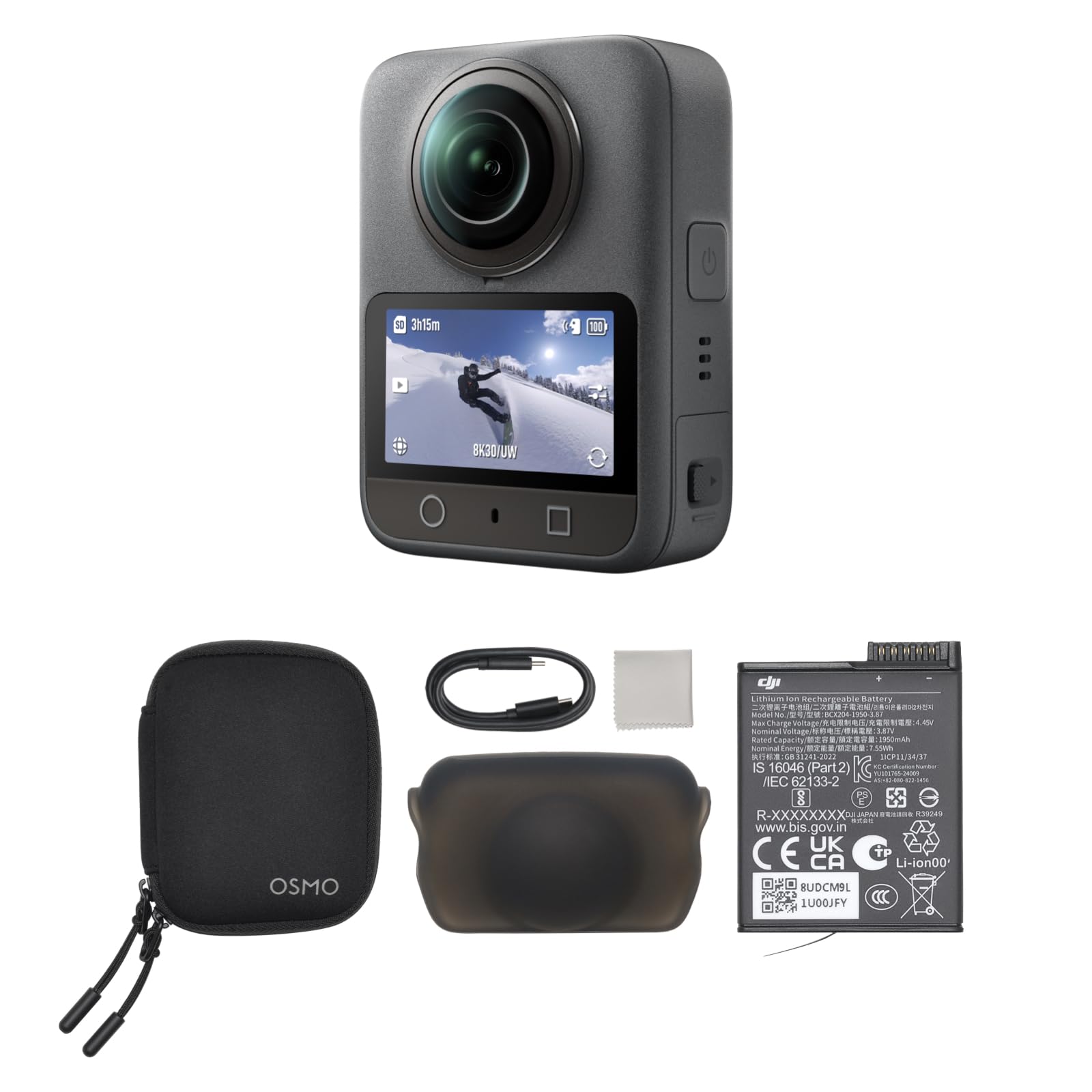
The DJI Osmo 360 Standard Combo brings the same groundbreaking 1-inch 360 imaging sensor as the Essential Combo at a more accessible price point. You get native 8K30fps 360 video, 120MP 360 photos, and 105GB of built-in storage — the same core imaging hardware. The 1950mAh battery delivers up to 100 minutes of 8K recording, which is solid for a day of moderate shooting.
The magnetic quick-release system works with the Osmo Action Quick-Release Adapter Mount and standard 1/4-inch threads, making it compatible with existing tripods and accessories. The four-microphone array with DJI OsmoAudio supports two wireless transmitters directly, without requiring a separate receiver. The DJI Mimo app offers Pano Dewarp and Pano Camera Movement tools for post-production.
The essential difference from the Essential Combo is accessories: the Standard Combo does not include the 1.2-meter invisible selfie stick or the extra battery. If you already own compatible selfie sticks and batteries, this is the smarter buy. If you are starting from nothing, the Essential Combo’s additional accessories represent genuine value. The camera itself is identical, so image quality is equally impressive.
Why it’s great
- Identical 1-inch sensor and 8K30fps as the more expensive combo
- 105GB built-in storage — no MicroSD required
- Magnetic quick-release mount system
- OsmoAudio supports two wireless mics without receiver
Good to know
- Does not include invisible selfie stick or extra battery
- DJI Mimo app removed from Google Play — download from DJI site
8. AKASO 360
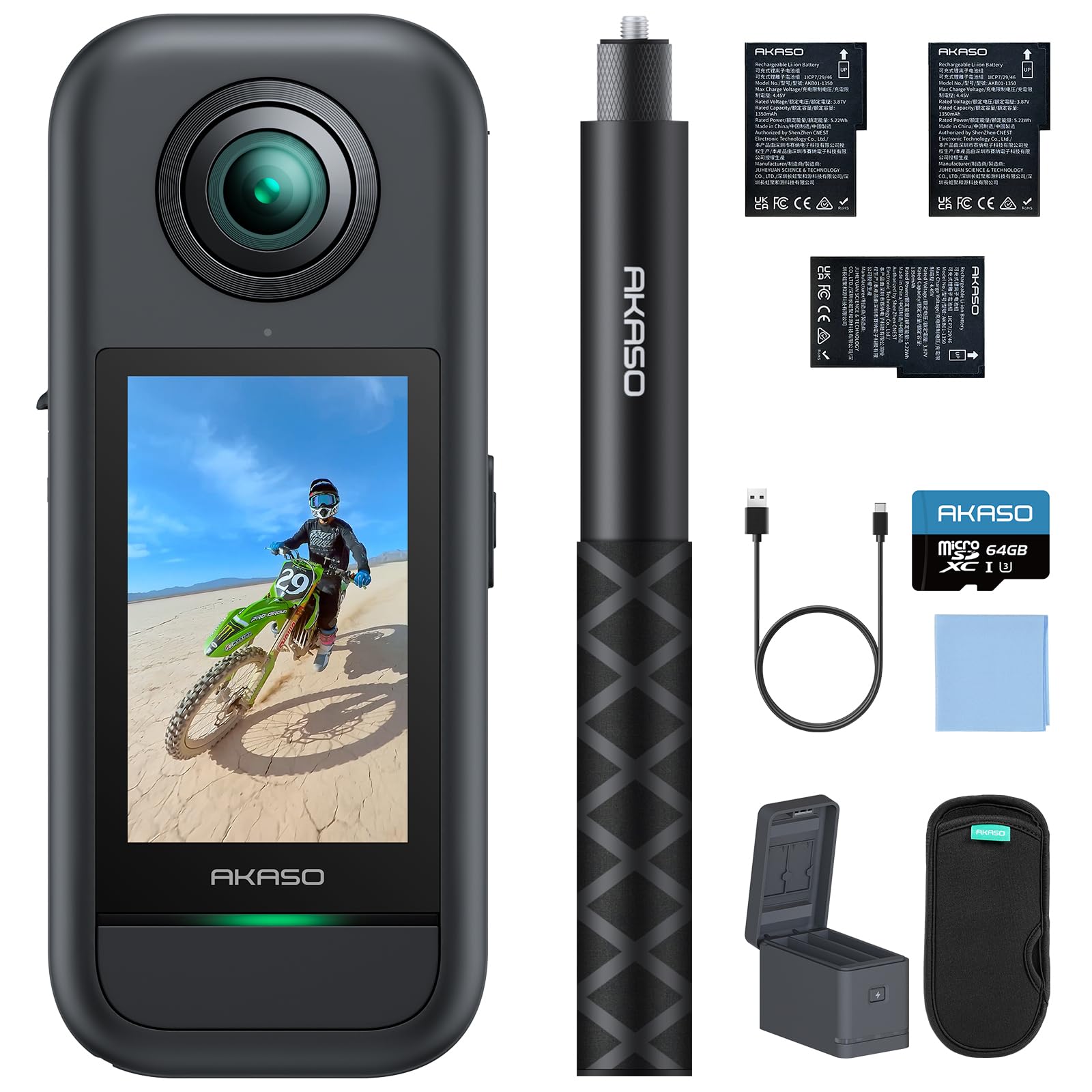
The AKASO 360 delivers 5.7K 360 video and 72MP 360 photos at a price significantly below the premium entries. Dual 1/2-inch 48MP sensors capture solid daytime footage, and the 360-SuperSmooth stabilization algorithm does a credible job smoothing out hand-held or helmet-mounted action. The 360-degree Horizon Lock keeps footage level through spins, which is impressive at this tier.
The invisible selfie stick effect works as advertised, and the included 64GB MicroSD card means you can start shooting immediately. The weatherproof design handles light rain and splashes, making it suitable for hiking, beach days, and casual biking. The AKASO 360 Studio app provides basic reframing and editing tools that are intuitive for beginners.
The trade-offs are clear at this price point. Low-light footage loses detail and introduces noticeable noise. Battery life is approximately 54 minutes of continuous recording, which is short compared to premium options. The accessory selfie stick and mounts in the box are functional but not rugged. For budget-conscious buyers who shoot primarily in daylight and want to experiment with 360 capture, the AKASO 360 is the strongest value proposition.
Why it’s great
- Best value in 360 action cameras under premium tier
- 5.7K video and 72MP photos for daytime use
- Effective 360 Horizon Lock and stabilization
- Includes 64GB MicroSD card for immediate use
Good to know
- Battery life is only ~54 minutes
- Low-light footage is noisy and lacks detail
- Accessory build quality is budget-tier
9. PANOX V2

The PANOX V2 is the most affordable entry point into 360 action cameras in this guide, and it brings a unique feature: built-in GPS for automatic geotagging of panoramas. The Android 10 operating system runs on a 3-inch touchscreen, providing a smartphone-like interface for controlling settings and reviewing footage. Dual-lens capture produces 5.7K30fps 360 video and 72MP photos.
The AI-powered subject tracking and keyframe editing after shooting let you refine perspectives without pre-planning shots — the core promise of the 360 format. The 4K live streaming to YouTube and Facebook via the PANOX App is functional for creators who want real-time 360 broadcasts. Dual-band WiFi and 5G compatibility ensure fast file transfers.
The image quality is entry-level. The 1/2-inch sensor struggles in low light, and the 5.7K resolution limits reframing headroom compared to 8K cameras. The distinctive Android OS interface is not as polished as the app ecosystems from Insta360, DJI, or GoPro. The PANOX V2 is best suited for budget-conscious users who specifically want GPS geotagging and live streaming capabilities in a 360 camera, and who are willing to accept the image quality trade-offs.
Why it’s great
- Built-in GPS for automatic geotagging of panoramas
- 5.7K30fps video with AI tracking and keyframe editing
- 4K live streaming to YouTube and Facebook
- Large 3-inch touchscreen with Android 10 OS
Good to know
- Image quality is entry-level — weak low-light performance
- 5.7K limits reframing resolution compared to 8K cameras
- Software ecosystem is less polished than major brands
FAQ
Can I use an action 360 camera as my primary vlogging camera?
How does the invisible selfie stick actually work on 360 cameras?
Why do 360 cameras need more storage than standard action cameras?
Are 360 cameras waterproof without housing?
Final Thoughts: The Verdict
For most users, the best action 360 camera winner is the Insta360 X5 because it combines the best-in-class low-light performance with the longest battery life and the most polished software ecosystem. If you want the sensor quality of a 1-inch sensor and the convenience of built-in storage, grab the DJI Osmo 360 Essential Combo. And for the budget-conscious daytime shooter who wants 360 capability without a premium price, nothing beats the value of the AKASO 360.