
A fresh coat of paint should transform a surface, not flake off days later. The real culprit behind peeling, chipping, and bubbling paint isn’t the topcoat — it’s a weak bond between the paint and the substrate. An adhesion primer solves that by creating a chemical and mechanical bridge that locks paint onto glossy, slick, or non-porous surfaces where standard primers fail outright.
I’m Min — the co-founder and writer behind Gadgets Feed. I’ve spent hundreds of hours diving into the chemistry behind primers, analyzing VOC content, epoxy formulations, and real-world adhesion test results to find the ones that actually work on metal, plastic, glass, and tile without sanding.
Whether you’re painting a kitchen cabinet, an automotive bumper, or a boat hull, the right undercoat determines the lifespan of your finish. This guide breaks down the six best products to help you pick the best adhesion primer for your exact project.
How To Choose The Best Adhesion Primer
Selecting an adhesion primer starts with identifying your substrate and the environmental stresses the finish will face. A primer that grips bare metal in a marine environment is overkill for indoor drywall, but the wrong choice on glossy tile or plastic will peel regardless of price.
Surface Compatibility
Not all adhesion primers are formulated for every material. Epoxy-based primers bond aggressively to metal, aluminum, and fiberglass but may lack flexibility on flexible plastics. Water-based acrylic primers work well on drywall and masonry but struggle on glass, ceramic tile, and glossy surfaces where mechanical adhesion is nearly impossible without etching. For plastic bumpers or truck bed liners, look for a dedicated adhesion promoter that chemically softens the plastic surface for a fusion bond.
Dry Time and Sandability
A fast-drying primer can speed up a project, but the trade-off is often reduced open time for the topcoat to penetrate. Water-based primers dry to the touch in 25–45 minutes and are ready for recoating within a couple of hours. Oil-based and 2K epoxy primers require longer cure times — some up to 12 hours — but they create a harder, more solvent-resistant base that sands smoothly and supports multiple topcoat layers without lifting.
Chemical Resistance and Durability
For automotive, marine, or outdoor applications, the primer must resist moisture, UV exposure, and chemical cleaners. Epoxy primers like the SprayMax 2K system crosslink into a thermoset plastic that is impervious to gasoline, brake fluid, and salt spray. Standard acrylic primers lack this chemical resistance and will soften or blister when exposed to harsh solvents or constant humidity.
Quick Comparison
On smaller screens, swipe sideways to see the full table.
| Model | Category | Best For | Key Spec | Amazon |
|---|---|---|---|---|
| Rust-Oleum Marine Metal Primer | Oil-Based | Bare metal & fiberglass | 100 sq ft coverage per quart | Amazon |
| SEM 39133 Flexible Primer Surfacer | Flexible Primer | Flexible plastic bumpers | 13 oz aerosol, quick-dry | Amazon |
| SprayMax 2K Epoxy Primer | 2K Epoxy | Automotive & metal restoration | 15 min dust-dry, 12h cure | Amazon |
| Zinsser Odor Killing Primer | Water-Based | Odor sealing on interior surfaces | 32 fl oz, dries clear | Amazon |
| NADAMOO All Surface Primer Spray | Epoxy Spray | Multi-surface craft & DIY | 10–12 sq ft per can | Amazon |
| Custom Shop Adhesion Promoter | Adhesion Promoter | Hard-to-sand automotive plastics | 12 oz, clear spray | Amazon |
In‑Depth Reviews
1. Rust-Oleum Marine Metal Primer

The Rust-Oleum Marine Metal Primer is an oil-based formulation engineered for bare, painted, or lightly rusted metals above the waterline. It dries to the touch in 1 to 2 hours and covers 100 square feet per quart, making it efficient for larger hulls, trailers, or outdoor furniture.
Real users have pushed this primer beyond marine applications — it adheres aggressively to epoxy and fiberglass on RC aircraft, filling weave textures and sanding down smoothly without chipping. The corrosion-resistant formula bonds to snow plow blades and truck frames after rust removal, and thins easily with acetone for spray application.
Because it is oil-based, expect longer recoat times and stronger solvent odor compared to water-based alternatives. But for projects where humidity and salt exposure are constant, this is the most reliable bridge primer money can buy.
Why it’s great
- Exceptional adhesion to bare and lightly rusted metal
- Sands easily and contours without chipping
- High coverage of 100 sq ft per quart
Good to know
- Strong solvent odor during application
- Longer dry time than water-based primers
2. SEM 39133 Flexible Primer Surfacer

The SEM 39133 Flexible Primer Surfacer is a ready-to-spray aerosol formulated specifically for automotive plastics. Its flexible resin system moves with flexible substrates like polypropylene and TPO bumpers, preventing the cracking that occurs with rigid primers when the part flexes during installation or road impact.
Buyers report excellent results on a 2005 Honda Accord bumper and a golf cart body, where it filled small imperfections after light wet sanding with 800 grit. The quick-drying formula allows recoating within 30 minutes, and the surfacer sands to a very smooth base for basecoat and clearcoat.
The primary drawback is the nozzle quality — some cans sputter and require frequent cleaning to maintain a consistent fan pattern. At three coats plus wet sanding, this product demands patience, but the final chip-resistant finish justifies the effort for show-quality plastic refinishing.
Why it’s great
- Flexible formulation prevents cracking on bumpers
- Sands to a smooth, imperfection-free base
- Quick-drying for fast project turnaround
Good to know
- Nozzle can sputter and needs regular cleaning
- Requires 3 coats plus wet sanding for best results
3. SprayMax 2K Epoxy Primer
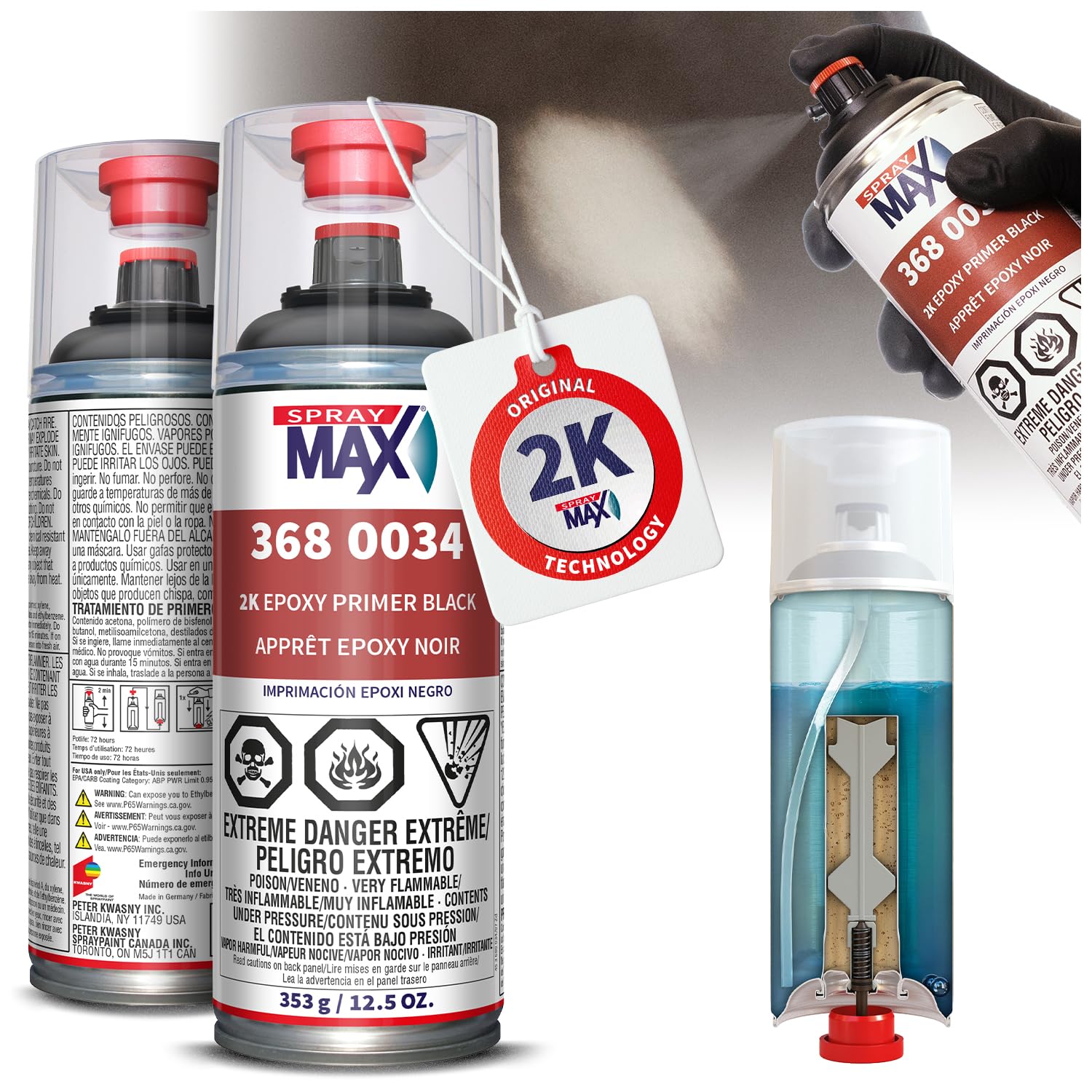
The SprayMax 2K Epoxy Primer is a true two-component epoxy system in an aerosol can, activated by pressing a button on the bottom to release the hardener. Once mixed, it delivers a thermoset film that crosslinks into an incredibly hard, solvent-resistant coating that adheres to steel, aluminum, fiberglass, and galvanized metal.
Users report dust-dry in 15 minutes and full sandability within hours. The adjustable nozzle produces a wide fan pattern for even coverage, and one can covered a motorcycle tank plus two fenders with two coats each. The primer sands well with 800 grit and accepts basecoat without any lifting after 48 hours of cure time.
The coverage is less generous than some competitors — expect to use two cans for a hood and two fenders. Also, the 12-hour cure before topcoating means you cannot rush this product. But for corrosion resistance and bond strength that rivals a professional spray booth, this is the gold standard in a rattle can.
Why it’s great
- True 2K epoxy crosslinking for extreme durability
- Dust-dry in 15 minutes, sandable within hours
- Excellent adhesion to bare metal and fiberglass
Good to know
- Coverage is lower than standard primers
- Requires 12-hour cure before topcoating
4. Zinsser Odor Killing Primer

The Zinsser Odor Killing Primer is a water-based formula engineered to seal in stubborn odors from pets, smoke, fire damage, and mildew. It applies white but dries clear, and one quart covers up to 100 square feet on drywall, wood, metal, and even glossy ceramic tile without sanding.
User reports confirm it completely eliminated cat urine odor from subflooring and mildew smells from water leaks. The advanced odor-encapsulating technology seals volatile compounds rather than masking them, and the low-odor formulation makes it tolerable for interior use without requiring heavy ventilation.
Some users found the consistency thinner than expected and reported clumps forming during stirring. It also has a mild odor during cure that lasts 3–4 weeks. For painting over smoke-damaged walls or sealing pet stains before remodeling, this primer performs a dual role that standard adhesion primers cannot match.
Why it’s great
- Seals pet, smoke, and mildew odors permanently
- Adheres to glossy surfaces without sanding
- Dries clear for easy topcoat application
Good to know
- Thin consistency may require two coats
- Mild odor remains during 3–4 week cure
5. NADAMOO All Surface Primer Spray

The NADAMOO All Surface Primer Spray is a one-part epoxy-based aerosol that bridges the gap between craft-grade spray primer and professional automotive systems. It is formulated to bond to metal, wood, plastic, porcelain, glass, and fiberglass, making it a true all-rounder for DIY projects and small repairs.
The matte gray finish neutralizes dark surfaces so topcoat colors appear vibrant, and the modified epoxy resins resist corrosion and chemical damage better than standard acrylic spray primers. Users praise its even spray pattern and coverage, noting that it prepares surfaces for paint without requiring intensive sanding prep.
The coverage is limited to 10–12 square feet per can for two light coats, so larger projects will require multiple cans. Additionally, some users noted the can does not explicitly label itself as an epoxy primer despite the marketing claims. For small craft projects, furniture upcycling, or painting plastic trim pieces, it delivers surprising bonding strength at a budget-friendly price.
Why it’s great
- Epoxy resin blend for strong multi-surface adhesion
- Even spray pattern without drips
- Neutralizes dark colors for vibrant topcoats
Good to know
- Coverage is limited to 10–12 sq ft per can
- Labeling is vague about epoxy formulation
6. Custom Shop Adhesion Promoter
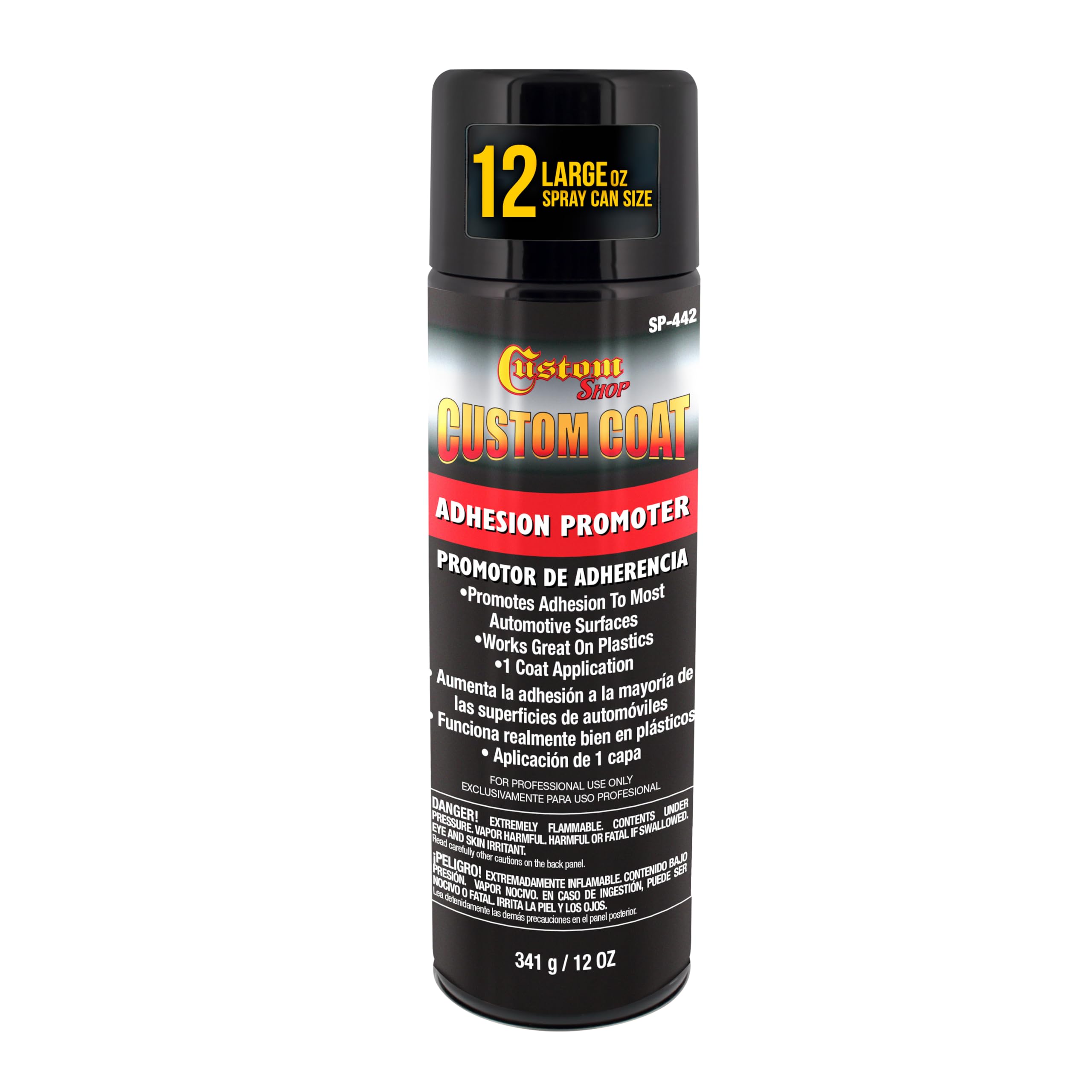
The Custom Shop Adhesion Promoter is not a primer in the traditional sense — it is a clear bonding agent designed to chemically soften plastic and other slick surfaces so paint can form a mechanical lock. It is formulated for use on plastic bumpers, aluminum, fiberglass, and painted surfaces, and it eliminates the need for sanding in cramped or contoured areas.
Automotive users report using it successfully on an Altima melting dash before vinyl paint, on plastic golf cart bodies, and as a prep coat before spraying bed liner. The high-atomization nozzle delivers a wide fan pattern, and the product dries quickly enough to allow topcoating within 30 minutes.
Because it is a promoter rather than a built-up primer, it does not fill scratches or imperfections — its sole job is adhesion. For parts with existing damage, you will still need to sand and apply a filler primer. Used correctly, the Custom Shop promoter creates a bond tenacious enough to prevent peeling on the most challenging substrates.
Why it’s great
- Eliminates sanding on hard-to-reach plastic areas
- Works as a pre-coat for bed liner and vinyl paint
- Dries quickly for same-day topcoating
Good to know
- Does not fill imperfections or scratches
- Requires a separate primer for damaged surfaces
FAQ
Do I need to sand before applying an adhesion primer?
Can I use a standard wall primer on metal or plastic?
What is the difference between a primer and an adhesion promoter?
Final Thoughts: The Verdict
For most users, the best adhesion primer winner is the Rust-Oleum Marine Metal Primer because it delivers exceptional bond strength on bare and rusted metal while sanding easily and lasting years in harsh environments. If you need a flexible primer for plastic bumpers or trim, grab the SEM 39133 Flexible Primer Surfacer. And for professional-grade corrosion resistance on automotive metal, nothing beats the SprayMax 2K Epoxy Primer.