
Grinding down a weld seam, shaping a piece of agate, or deburring a sharp steel edge—every rotary tool user knows the frustration of a mounted point that disintegrates after thirty seconds of contact. The abrasive stone market is flooded with brittle, off-center bits that wobble, clog, or simply crumble, wasting both time and material. Finding a set that actually holds its shape under pressure is the difference between finishing a project and abandoning it in frustration.
I’m Min — the co-founder and writer behind Gadgets Feed. For this guide, I’ve analyzed dozens of product listings, cross-referenced grit ratings against real-world durability claims, and parsed hundreds of verified buyer reports to separate the abrasive mounted points that merely claim performance from those that deliver it consistently.
Whether you’re carving hard granite, polishing stainless steel, or engraving glass, the right abrasive mounted point determines your final finish. This guide breaks down the top contenders so you can invest in best abrasive mounted points that actually last through demanding work sessions.
How To Choose The Best Abrasive Mounted Points
Selecting the right mounted points isn’t just about grabbing the cheapest bulk pack. You need to match the abrasive material and bond to your workpiece, ensure the shank fits your collet, and pick a grit that balances cut speed with surface finish. Here are the three most critical factors to get right.
Match The Abrasive To The Material
Aluminum oxide points are the workhorse for ferrous metals like steel and iron—they’re tough, self-sharpening, and readily available. For non-ferrous metals, glass, tile, or stone, diamond-coated points are far superior because diamond’s hardness chews through brittle materials without glazing over. For extremely aggressive material removal on steel or aluminum, solid carbide burrs with a double-cut flute pattern offer the fastest stock removal, though they leave a rougher finish.
Check The Shank Diameter Before You Buy
The standard shank size for most Dremel-style rotary tools is 3mm (1/8 inch). Larger die grinders, both electric and pneumatic, typically accept 6.35mm (1/4 inch) shanks. Purchasing a set with the wrong shank diameter renders the entire collection unusable unless you have an adapter. Always verify your tool’s collet capacity—many budget packs only offer the smaller 3mm shank, which limits their use with professional die grinders.
Understand Grit Progression For Finishing
Coarse grits (30-80) remove material quickly but leave visible scratches. Medium grits (100-150) are the sweet spot for general shaping and deburring. Fine grits (200+) are reserved for polishing and surface blending. A quality set offers a progression across at least two grit ranges, allowing you to rough out a shape and then refine the surface without switching to a completely different system.
Quick Comparison
On smaller screens, swipe sideways to see the full table.
| Model | Category | Best For | Key Spec | Amazon |
|---|---|---|---|---|
| YURINWOO 52-Piece Diamond Set | Diamond Coated | Rock & glass carving | Grit 120, 52 shapes | Amazon |
| Sworker 5-Pc Carbide Burr | Solid Carbide | Extreme steel removal | 1/4″ shank, 8mm head | Amazon |
| Luo ke 100-Pc Aluminum Oxide | Aluminum Oxide | General steel grinding | Grit 120, 100 pcs | Amazon |
| Oudtinx 100-Pc Rubber Heads | Rubber Bonded | Polishing detailed metal | Aluminum oxide, 100 pcs | Amazon |
| Oudtinx 100-Pc Stone Points | Aluminum Oxide | Medium-grit steel shaping | Grit 30, 100 pcs | Amazon |
| Oudtinx 50-Pc Diamond Burrs | Diamond Coated | Budget stone engraving | Grit 120, 50 pcs | Amazon |
| Luo ke 100-Pc Polishing Kit | Multi-Material | Mixed metal finishing | 5 grit materials, 100 pcs | Amazon |
In‑Depth Reviews
1. YURINWOO 52-Piece Diamond Grinding Bit Set
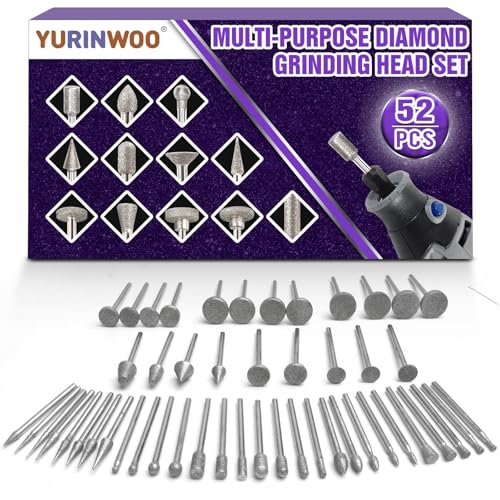
This set offers the widest shape variety among the diamond-coated contenders, packing 52 distinct bits including spherical, teardrop, flat rectangular, and needle-tip profiles. The electroplated diamond layer is bonded to a steel core, which means the cutting surface stays aggressive until the diamond particles are fully consumed—critical when working on granite, marble, or glass where aluminum oxide points glaze over in seconds.
Buyers consistently report success drilling through antique porcelain and carving deep contours into granite slabs without the bit disintegrating. The universal 3mm shank fits standard rotary tools, and the included plastic storage box keeps each shape organized. The diamond coating does demand light pressure and controlled speeds to avoid overheating and stripping the diamond layer prematurely.
For anyone tackling hard, brittle materials like tile, jade, or ceramic, this kit provides the shape diversity and abrasive durability needed to move from rough contouring to fine finishing without swapping to a separate system. The 120-grit rating hits the sweet spot between material removal speed and surface smoothness for intricate work.
Why it’s great
- 52-piece shape variety covers roughing to fine engraving
- Diamond electroplating handles granite and ceramic without glazing
- Universal 3mm shank works with nearly all rotary tools
Good to know
- Diamond layer wears faster under high RPM with heavy pressure
- Blue display stand shown in images is not included
2. Sworker 5-Piece Carbide Burr Set

When standard mounted points bounce off hardened steel or clog with swarf, a solid carbide burr is the correct answer. This Sworker set uses double-cut flutes on 8mm heads with a 6.35mm shank, making it compatible with full-size die grinders from DeWalt, Milwaukee, and Makita. The tungsten carbide material is significantly harder than aluminum oxide, allowing these bits to chew through mild steel plate, bolts, and welds without dulling.
User reports confirm these burrs handle aggressive garage work—eating through steel with minimal vibration and leaving a finish that requires only light sanding afterward. The double-cut pattern produces finer chips than a single-cut burr, reducing the risk of the tool grabbing or chattering. The set includes five common shapes: ball, cylinder, tree, inverted cone, and flame, covering most deburring and porting scenarios.
The major trade-off is compatibility: the 1/4-inch shank will not fit a standard Dremel collet. This set is designed for users who already own a die grinder and need heavy material removal capacity. For anyone porting engine heads, trimming steel plates, or cleaning up heavy welds, the Sworker set delivers carbide-level longevity at a fraction of the price of premium industrial brands.
Why it’s great
- Tungsten carbide construction outlasts aluminum oxide 10-to-1 on steel
- Double-cut flutes produce a finer finish than single-cut burrs
- 8mm head diameter removes material aggressively yet controllably
Good to know
- Requires a die grinder with 1/4-inch collet; not for Dremel tools
- Only 5 pieces—limited shape variety compared to larger kits
3. Luo ke 100-Piece Aluminum Oxide Grinding Stones

This 100-piece kit from Luo ke represents the benchmark for value in the aluminum oxide category. Each stone is made from corundum sand bonded to a 3mm steel shank, and the set includes ten pieces per size across five diameters (4mm through 10mm) in both column and cone shapes. The 120-grit rating lands in the medium range, making these stones effective for weld cleanup, edge deburring, and general shaping on steel and stainless steel.
Verified buyers consistently note that these stones outperform name-brand Dremel equivalents on hardened 440-C stainless steel, with several reviewers commenting that the stones lasted longer than expected without crumbling. The corundum bond holds together well under moderate pressure, though using water as a coolant extends life significantly when working on metals prone to heat buildup.
The primary limitation is that every stone is the same 120 grit—there is no coarse option for rapid stock removal or fine grit for polishing. You get only column and cone profiles, so complex contours require creative angling. For the price-per-stone ratio, however, this is the most economical way to stock up on reliable general-purpose grinding points for a rotary tool.
Why it’s great
- 100 pieces provide exceptional value for bulk buyers
- Ten pieces per size ensure you always have a fresh stone ready
- Corundum bond holds up well on hardened stainless steel
Good to know
- Single 120 grit—no coarse or fine options in the set
- Occasional QC issue with stones mounted off-center on the shank
4. Oudtinx 100-Piece Rubber Grinding Heads

These rubber-bonded grinding heads fill a specific niche: conformable polishing on contoured metal surfaces. Instead of a rigid stone, the abrasive is suspended in a rubber matrix that flexes slightly under pressure, allowing the head to reach into fillets, grooves, and tight internal corners where a hard stone would leave scratches or simply not fit. The aluminum oxide grit is embedded at a medium coarseness, and the set includes 50 cylinder and 50 bullet shapes across five diameters each.
Users polishing vintage motors and detailed metalwork report that these heads clean oxidation off 20-year-old surfaces without gouging the base metal. The rubber bond provides a forgiving cut that transitions well from deburring to a near-polished finish with the same head. The 3mm shank fits standard rotary tools, and the 100-piece count makes this a cost-effective solution for restorers and metal finishers.
The downsides are predictable: rubber-bonded heads wear faster than vitrified stone points, especially under aggressive pressure or on sharp edges. They are also ineffective for shaping or grinding hard materials like stone or carbide—their purpose is finishing, not stock removal. For jewelers, metal modelers, and anyone polishing intricate ferrous parts, this set is a precision tool, not a brute-force grinder.
Why it’s great
- Rubber matrix conforms to curved and recessed surfaces
- Transitions from light deburring to polishing in one head
- 100 pieces with five diameter options for fine detail work
Good to know
- Wears quickly under heavy pressure or on sharp edges
- Not suitable for aggressive stock removal or hard materials
5. Oudtinx 100-Piece Abrasive Stone Points

This Oudtinx set shifts toward the coarse end of the spectrum with a grit rating of 30, making it the most aggressive aluminum oxide kit in this roundup. The coarse grit is ideal for rapid material removal on soft steel, cast iron, and wood, and the 100-piece count ensures you can afford to wear them down without rationing. The red corundum bond is pressed into common shapes suitable for chain-saw sharpening, hedge trimmer maintenance, and heavy deburring.
Buyer feedback highlights that these stones last longer than expected for the grit rating—several users reported successfully grinding hardened engine bearing seats without the points disintegrating. The medium bond hardness keeps the abrasive cutting until the stone is nearly consumed, rather than shedding grit prematurely. The universal 3mm shank fits most rotary tools, and the included plastic case keeps the 100 pieces organized.
The trade-off is visible scratch patterns: the 30-grit surface leaves a rough finish that requires secondary smoothing with a finer stone or sandpaper. This set is not designed for polishing or fine engraving—it is a dedicated roughing kit for users who need to remove material fast and don’t mind cleaning up the surface later.
Why it’s great
- Grit 30 removes material faster than any other kit reviewed
- Stones hold together well on hardened steel applications
- 100 pieces provide ample supply for frequent roughing work
Good to know
- Leaves a rough surface finish that requires follow-up with finer grit
- Not suitable for polishing, glass, or fine detail work
6. Oudtinx 50-Piece Diamond Coated Burr Set
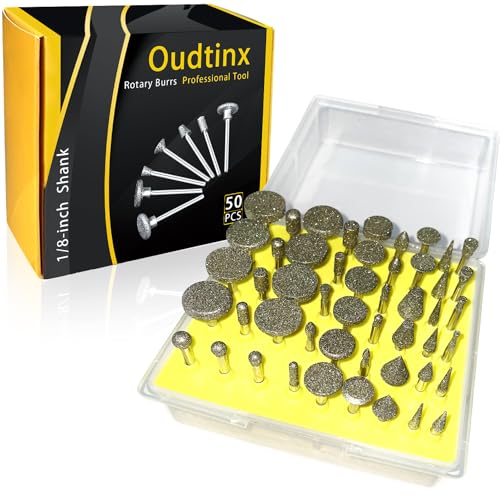
For users who occasionally work with stone, tile, or glass but don’t want to invest in a premium diamond kit, this Oudtinx 50-piece set offers an entry point at a lower cost per bit. The diamond particles are electroplated onto alloy steel shanks with a 3mm diameter, and the set includes eight distinct shapes including cylinder, sphere, bullet, and inverted ladder profiles. The 120-grit rating mirrors the premium YURINWOO set, providing medium aggression suitable for carving, engraving, and edge smoothing on non-metallic materials.
Wood modelers and hobbyist stone carvers report satisfactory results on soft stone and hardwood, with the diamond coating lasting through several projects before showing significant wear. The bits handle light carving on ceramic tiles and glass without chipping the workpiece, provided the user maintains a steady hand and moderate RPM. The compact plastic case makes organization simple.
The main compromise is durability: the diamond layer is thinner than on premium sets, and users who apply heavy pressure or work on extremely hard granite may strip the coating within a single session. These bits are best suited for hobby-level use on materials like soapstone, alabaster, or ceramic tile rather than production-level granite carving.
Why it’s great
- Diamond coating enables stone and glass work at an entry-level price
- Eight shape profiles cover common engraving and carving needs
- Compact case keeps 50 bits organized and portable
Good to know
- Diamond layer is thinner; wears faster on hard granite
- Not suitable for heavy industrial use or frequent high-speed grinding
7. Luo ke 100-Piece Multi-Material Polishing Kit
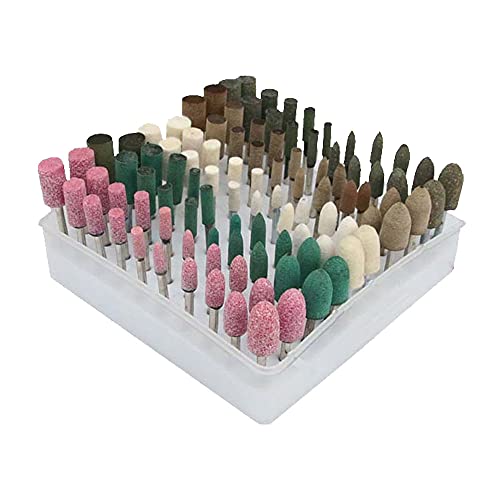
This kit is unique in the lineup because it does not rely on a single abrasive—it includes bits made from corundum sand, sesame, cowhide, rubber, and wool, all on 3mm shanks. The 100 pieces are split between cylinder and bullet shapes across five diameters, and the kit includes coarse through fine grit stages. The idea is to provide a complete grinding-to-polishing workflow from a single box: start with the corundum sand bits for rough shaping, move to rubber for blending, and finish with wool for a high-gloss polish.
Users appreciate the smooth grit staging for metal finishing, noting that the bits cut well with minimal wear when used in sequence. The kit works particularly well on non-ferrous metals like brass and aluminum, where the progression reduces the need for separate sanding steps. The included plastic carrying case keeps the different material types separated, though the labeling could be clearer.
The drawback is that no single material type excels—the corundum bits are less durable than a dedicated aluminum oxide set, and the wool bits shed fibers faster than dedicated felt polishing wheels. This kit is best viewed as a convenient starter bundle for beginners who want to experiment with different finishing techniques without buying five separate sets.
Why it’s great
- Five abrasive materials from coarse corundum to soft wool
- Enables a full grinding-to-polishing sequence from one kit
- 100-piece count at a low entry barrier for beginners
Good to know
- Corundum bits wear faster than dedicated stone sets
- Wool bits may shed fibers during use
FAQ
Why do my mounted points keep disintegrating while I use them?
Can I use diamond coated bits on steel or other metals?
What is the difference between a mounted point and a carbide burr?
Final Thoughts: The Verdict
For most users, the best abrasive mounted points winner is the YURINWOO 52-Piece Diamond Set because its diamond coating and diverse shape selection handle the widest range of hard materials—from granite to porcelain—without the glazing that plagues aluminum oxide stones. If you need aggressive steel removal with a die grinder, grab the Sworker 5-Piece Carbide Burr Set for tungsten carbide longevity. And for a budget-friendly general-purpose stone pack that outperforms its price tag on hardened steel, the Luo ke 100-Piece Aluminum Oxide Set is the smart bulk buy.