
Landing in a sea of 8GB “budget” cards, the 16GB VRAM segment is the single most critical differentiator for any gamer or creator who wants to play at 1440p without texture pop-in or run modern AI models locally. Choosing the wrong one means hitting a VRAM wall in just a year or two.
I’m Min — the co-founder and writer behind Gadgets Feed. I’ve spent countless hours parsing the silicon-level specs, memory bus widths, and clock speed trade-offs to separate the cards that genuinely deliver from those that just look good on paper.
After deep-diving into thermal designs, boost clocks, and real-world benchmarks, this guide narrows down the field to help you pick the best 3060 ti 16gb graphics card for your specific build and budget.
How To Choose The Best 16GB Graphics Card
Picking a 16GB GPU isn’t just about the memory count. You need to weigh memory type (GDDR6 vs GDDR7), memory bus width, core architecture, cooler size versus your case, and connectivity standards like PCIe 5.0 and DisplayPort 2.1.
VRAM Type and Bandwidth
GDDR7 offers significantly higher bandwidth than GDDR6, often compensating for a narrower 128-bit memory bus. Cards with GDDR7 can push higher frame rates at 1440p and handle 4K textures more consistently, but they also tend to run hotter when pushed hard.
Cooler Design and Form Factor
Dual-fan and triple-fan designs affect both thermals and case compatibility. A compact dual-fan card (under 10 inches) fits small-form-factor (SFF) builds but may hit higher noise levels under load. Larger cards with three fans run cooler and quieter but require a roomier case.
Connectivity and Power
PCIe 5.0 support future-proofs your build for next-gen motherboards, though its real-world advantage over PCIe 4.0 is negligible for current games. A single 8-pin power connector is standard for mid-range cards, but some premium models may require dual connectors. DisplayPort 2.1 enables higher refresh rates on the latest monitors.
Quick Comparison
On smaller screens, swipe sideways to see the full table.
| Model | Category | Best For | Key Spec | Amazon |
|---|---|---|---|---|
| ASUS Dual RTX 5060 Ti OC | Premium | Best Overall 1440p | 16GB GDDR7, 2632 MHz | Amazon |
| ASUS Prime RTX 5060 Ti OC | Premium | SFF Builds / AI Work | 16GB GDDR7, 2647 MHz | Amazon |
| GIGABYTE RTX 5060 Ti Gaming OC | Premium | Top Performance / Ray Tracing | 16GB GDDR7, 2647 MHz | Amazon |
| MSI RTX 5060 Ti Ventus 2X OC Plus | Mid-Range | High Value / Quiet | 16GB GDDR7, 2.6 GHz | Amazon |
| PNY RTX 5060 Ti OC Dual Fan | Mid-Range | Entry-Level AI / 1080p | 16GB GDDR7, 2692 MHz | Amazon |
| GIGABYTE RTX 5060 Ti WINDFORCE OC | Mid-Range | Budget / Compact Builds | 16GB GDDR7, 2587 MHz | Amazon |
| MSI RTX 5060 Ti Shadow 2X OC | Mid-Range | Slim Case / No RGB | 16GB GDDR7, 28.0 Gbps | Amazon |
| ASUS Prime RTX 5060 Ti | Mid-Range | Productivity / AI | 16GB GDDR7, 2647 MHz | Amazon |
| XFX Swift RX 9060 XT OC | Budget | Best Value / High FPS 1080p | 16GB GDDR6, 3320 MHz | Amazon |
| ASRock RX 9060 XT Challenger OC | Budget | AI Inference / 1440p | 16GB GDDR6, 3290 MHz | Amazon |
| MSI RTX 3060 Ti Ventus 2X OCV1 LHR | Budget | Entry-Level Upgrade | 8GB GDDR6, 1695 MHz | Amazon |
In‑Depth Reviews
1. ASUS Dual NVIDIA GeForce RTX 5060 Ti 16GB GDDR7 OC Edition

The ASUS Dual RTX 5060 Ti OC strikes the best balance between raw performance, build quality, and thermal efficiency. Its 2632 MHz OC clock and 767 AI TOPS make it a powerhouse for both 1440p gaming and local AI workloads, while the dual axial-tech fans keep noise levels impressively low even under sustained load.
Gamers upgrading from a 2060 Super will see massive frame rate gains at 1440p High/Ultra settings, with temperatures hovering in the low 60s during extended sessions. The 16GB of GDDR7 memory on a 128-bit bus delivers 448 GB/s bandwidth, enough to handle modern textures without stutter.
It supports PCIe 5.0, HDMI 2.1b, and DisplayPort 2.1b, making it future-proof for the next generation of monitors and motherboards. The compact 2.5-slot design fits comfortably in most mid-tower cases, though the standard 8-pin power connector means it won’t stress older power supplies.
Why it’s great
- Excellent 1440p performance with DLSS 4
- Runs cool and quiet under load
- SFF-ready for compact builds
Good to know
- 128-bit bus may limit extreme 4K scenarios
- Price can fluctuate above MSRP
2. ASUS SFF-Ready Prime RTX 5060 Ti 16GB GDDR7 OC Edition

The ASUS Prime OC variant pushes performance slightly higher than the Dual, with a 2647 MHz boost clock and a massive 772 AI TOPS, making it the best pick for anyone running LLMs or Stable Diffusion locally. Users report that it handles 4K gaming at 140+ FPS in titles like Indiana Jones and Doom Eternal when paired with DLSS.
Build quality is exceptional, with zero sag and premium materials throughout. The dual axial-tech fans with 0dB technology stay completely silent during desktop use, only spinning up under gaming or compute loads. The included Dual BIOS switch lets you toggle between performance and silent profiles without software.
Its 2.5-slot design is SFF-ready, meaning it fits snugly in small cases like the Fractal Terra or Cooler Master NR200. The single 8-pin connector keeps cable management clean, and the all-black aesthetic suits minimalist builds.
Why it’s great
- 772 AI TOPS for serious AI workloads
- Dual BIOS for flexible tuning
- Compact and SFF-compatible
Good to know
- Premium price tag
- Requires good case airflow for sustained loads
3. GIGABYTE GeForce RTX 5060 Ti Gaming OC 16G

The GIGABYTE Gaming OC takes the top spot for raw thermal performance, thanks to its triple-fan WINDFORCE cooling system. This card runs exceptionally cool and quiet even during extended ray-traced gaming sessions at ultra settings, making it ideal for gamers who prioritize silent operation.
At 2647 MHz boost clock and 16GB GDDR7, it handles all modern AAA titles at 1440p with smooth frame rates and no stutter. The robust metal backplate prevents PCB sag, and the dual BIOS lets you switch between OC and Silent modes. Users upgrading from a GTX 1660 Super or GTX 1080 Ti report night-and-day differences.
PCIe 5.0 support ensures maximum compatibility with the latest motherboards, and the DisplayPort 2.1 outputs are ready for high-refresh monitors. The card measures 11.06 inches, so it requires a roomier case than some compact rivals.
Why it’s great
- Superior thermal performance with triple-fan setup
- Excellent ray tracing and VRAM headroom
- Dual BIOS for performance/silent profiles
Good to know
- Longer card may not fit small cases
- Premium pricing tier
4. MSI GeForce RTX 5060 Ti 16G Ventus 2X OC Plus
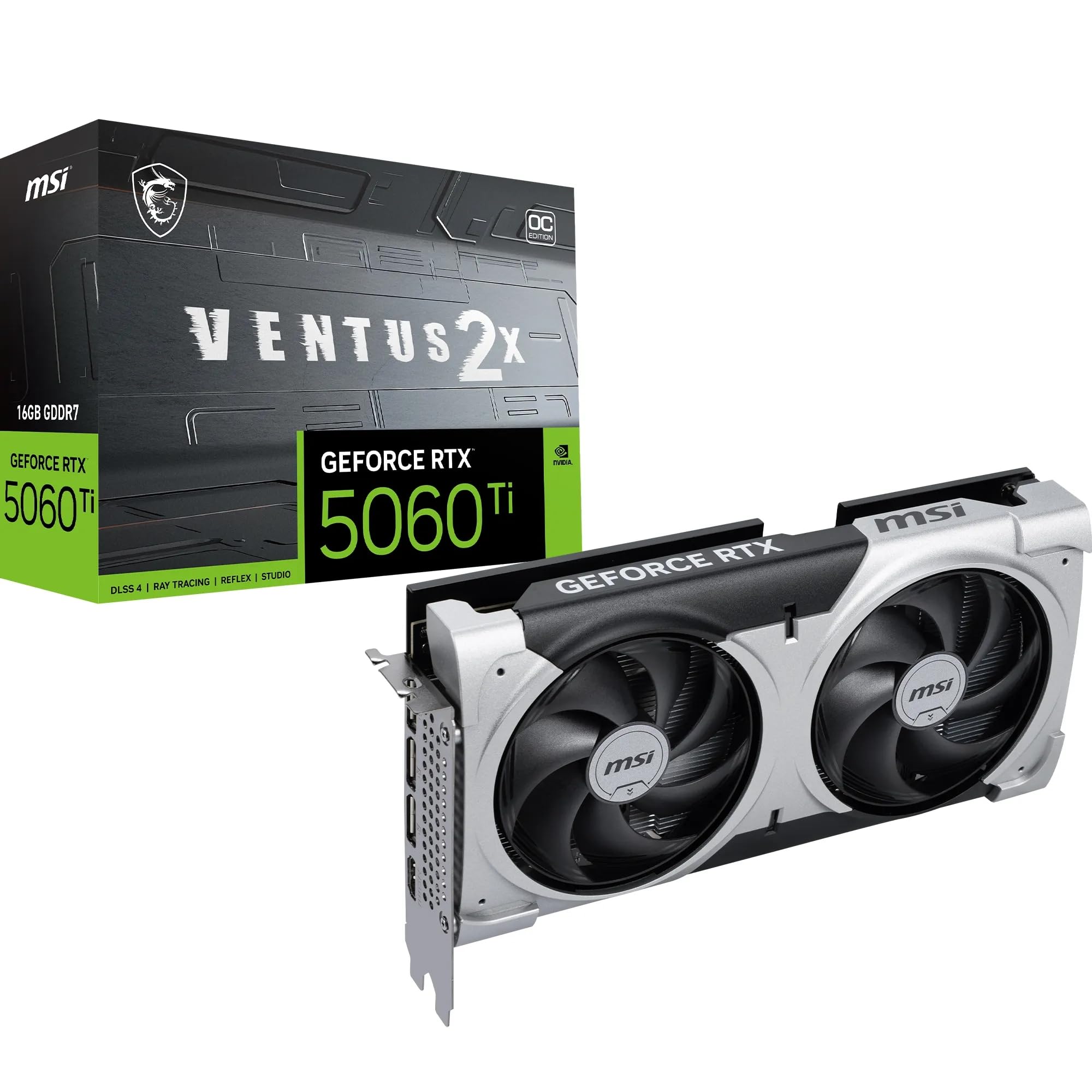
The MSI Ventus 2X OC Plus delivers a compelling price-to-performance ratio, pairing 16GB of fast GDDR7 (28 Gbps effective) with a reliable dual-fan thermal solution. It runs games like Cyberpunk 2077 at high settings smoothly, and users note it remains virtually silent thanks to the STORMFORCE fan design.
One standout is the nickel-plated copper baseplate and square core pipes that maximize contact with the GPU die, keeping temperatures under control even in cramped cases. The card is fully PCIe 5.0 compliant and includes three DisplayPort 2.1b outputs alongside HDMI 2.1b for multi-monitor setups.
It’s an excellent choice for budget-conscious builders who want 16GB VRAM without paying the absolute premium. Some users note a slight learning curve with MSI Afterburner for tweaking fan curves, but out of the box it works well.
Why it’s great
- High memory bandwidth at competitive price
- Very quiet cooling solution
- Robust build with copper baseplate
Good to know
- Legacy BIOS boot may require UEFI switch
- Fans can be aggressive out-of-box
5. PNY NVIDIA GeForce RTX 5060 Ti OC Dual Fan
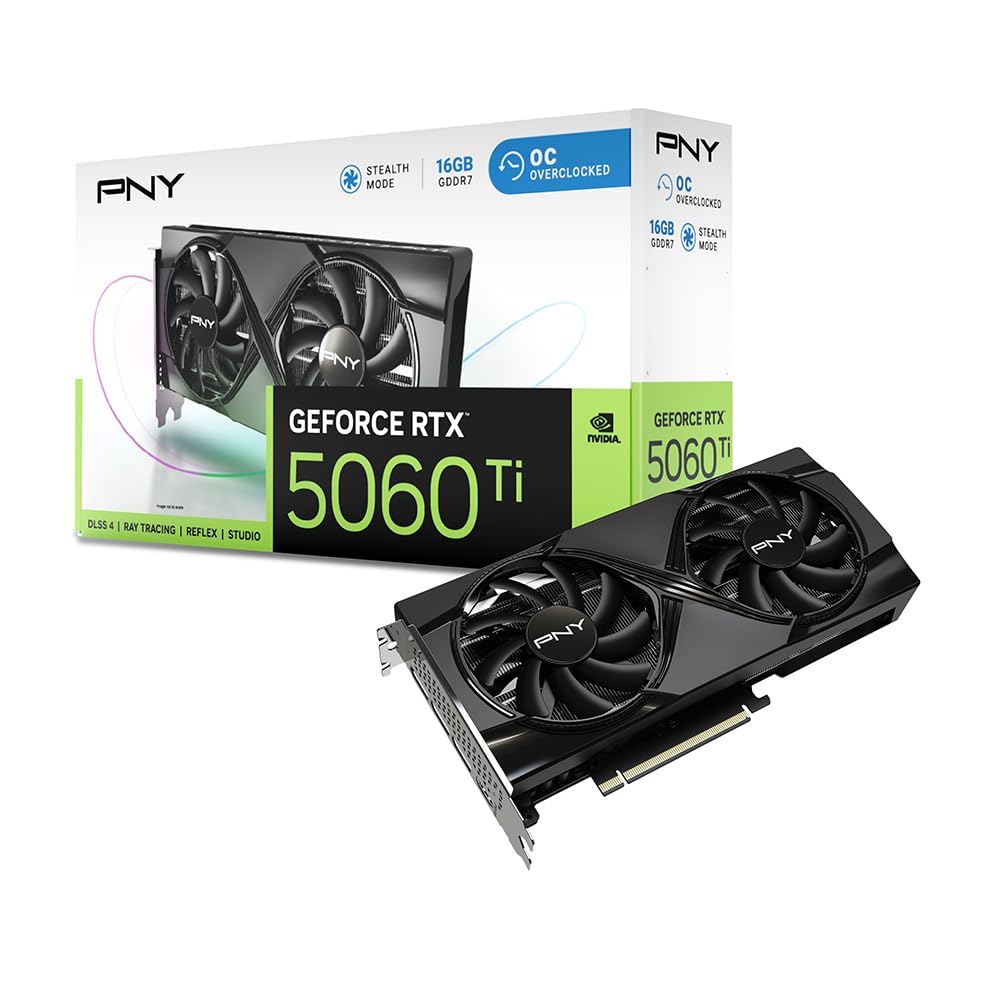
The PNY RTX 5060 Ti OC offers the highest factory boost clock among the entry-tier models at 2692 MHz, making it a sleeper for gamers who want a little extra headroom without manual overclocking. It handles 1080p max settings on 95% of modern AAA titles and scales well into 1440p with DLSS.
Its compact dual-fan design and 2-slot thickness make it an excellent drop-in upgrade for older systems, even those still on PCIe 4.0. Users upgrading from a 2080 Super report massive gains in titles like Final Fantasy XVI at 3440×1440, jumping from low settings to high at 60+ FPS.
The card’s 16GB GDDR7 memory is a boon for entry-level AI workloads, running LLMs and Stable Diffusion comfortably. The power draw sits around 150W under gaming load, making it one of the most efficient options in this tier.
Why it’s great
- Highest stock boost clock in its tier
- Excellent for 1080p max and 1440p balanced
- Low power draw for efficient builds
Good to know
- Only two DisplayPort outputs
- PCIe 5.0 x8 connection may feel limited
6. GIGABYTE GeForce RTX 5060 Ti WINDFORCE OC 16G

The GIGABYTE WINDFORCE OC is the shortest of the RTX 5060 Ti 16GB models at just 8.19 inches, making it the prime choice for micro-ATX and small mid-tower builds where space is tight. Despite its compact size, it packs a 2587 MHz boost clock and 16GB of GDDR7 memory.
Its dual-fan WINDFORCE cooling system keeps the card quiet at idle (5-10W power draw, 35°C) and adequately cool under load, though users recommend ensuring good case airflow for optimal noise levels. The card is a direct upgrade from last-gen models like the Intel Arc A750, offering significant improvements in Minecraft mods with shaders.
PCIe 5.0 support and HDMI 2.1b outputs keep it current, and the 8-pin power connector is standard across most PSUs. The card’s short PCB and simple aesthetics make it a no-nonsense choice for builders focused on function over flash.
Why it’s great
- Shortest PCB for tight case builds
- Very low idle power consumption
- Good 1440p price/performance
Good to know
- Fans can be audible under sustained load
- Lower boost clock than some rivals
7. MSI Gaming RTX 5060 Ti 16G Shadow 2X OC
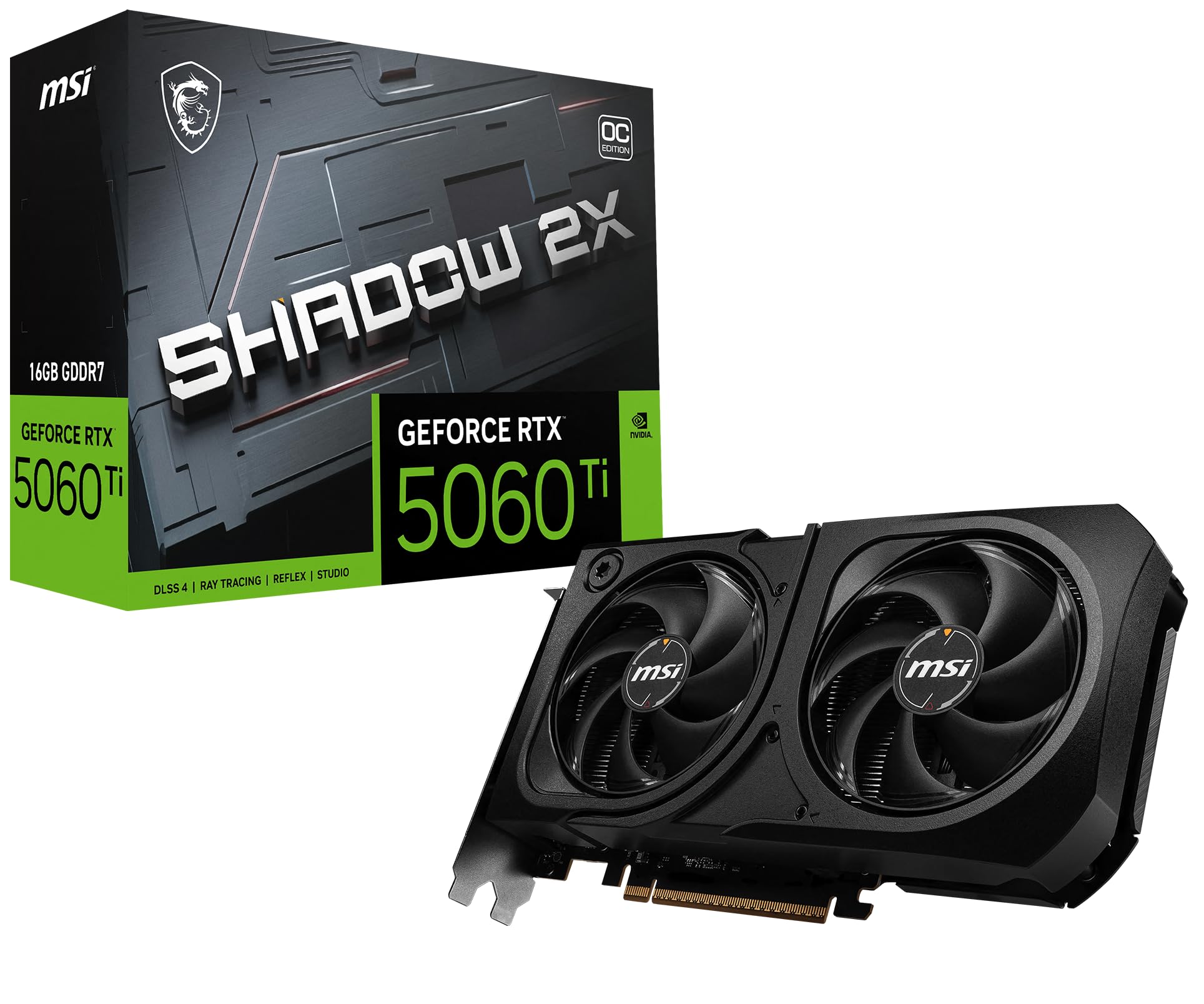
The MSI Shadow 2X OC stands out for its understated matte black design and slim form factor, appealing to users who want a no-RGB, professional-looking card. Its TORX Fan 5.0 blades, linked by ring arcs, maintain high-pressure airflow while remaining quiet even during intensive tasks like video editing and photogrammetry.
The 16GB GDDR7 memory eliminates VRAM constraints found in 8GB cards, preventing system RAM swapping on PCIE 3.0 x8 systems. Users upgrading from a GTX 1060 3GB report a ~40% improvement in GLMark2 scores and the ability to run Unreal Engine 5 games comfortably at 1440p.
The card includes a nickel-plated copper baseplate that efficiently captures heat from both the GPU and memory. It’s an ideal choice for users who want the performance of a 5060 Ti without the gamer aesthetic.
Why it’s great
- Discreet matte black design, no RGB
- Quiet operation under load
- Excellent heat transfer from copper baseplate
Good to know
- Priced close to 5070 territory
- Requires tuning for competitive 4K
8. ASUS SFF-Ready Prime NVIDIA GeForce RTX 5060 Ti 16GB GDDR7
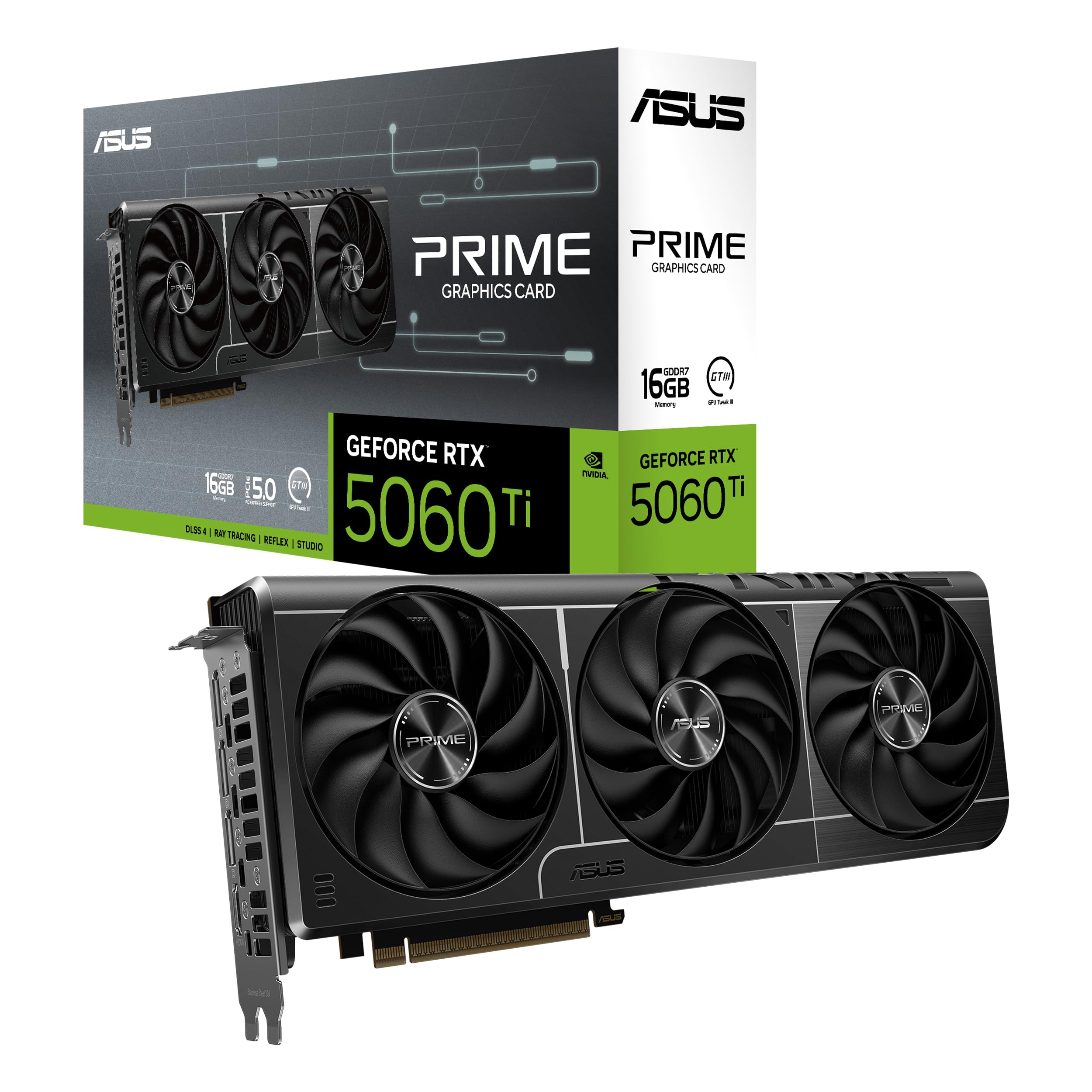
The non-OC version of the ASUS Prime RTX 5060 Ti shares the same robust build quality and SFF-ready design as its OC sibling, but at a slightly lower price point. It still delivers 758 AI TOPS and a 2647 MHz boost clock, making it more than capable for both gaming and local AI model hosting.
Users in dual-GPU setups report that Ollama instantly recognizes the extra VRAM, enabling 20GB models to run 24/7. This makes it a cost-effective option for hobbyists and researchers who want to run LLMs without renting cloud compute. The build quality is exceptional, with no sag and premium materials.
The 2.5-slot axial-tech fans with 0dB technology ensure silent operation during desktop use. Three DisplayPort 2.1 outputs and one HDMI 2.1b support triple 8K displays. It’s a solid choice for productivity-focused builders who may not need the factory OC.
Why it’s great
- Excellent for AI and creative workloads
- Premium build with zero sag
- Quiet operation with 0dB fan stop
Good to know
- Overpriced relative to raw gaming performance
- Aggressive DLSS can soften image quality
9. XFX Swift AMD Radeon RX 9060 XT OC Gaming Edition 16GB
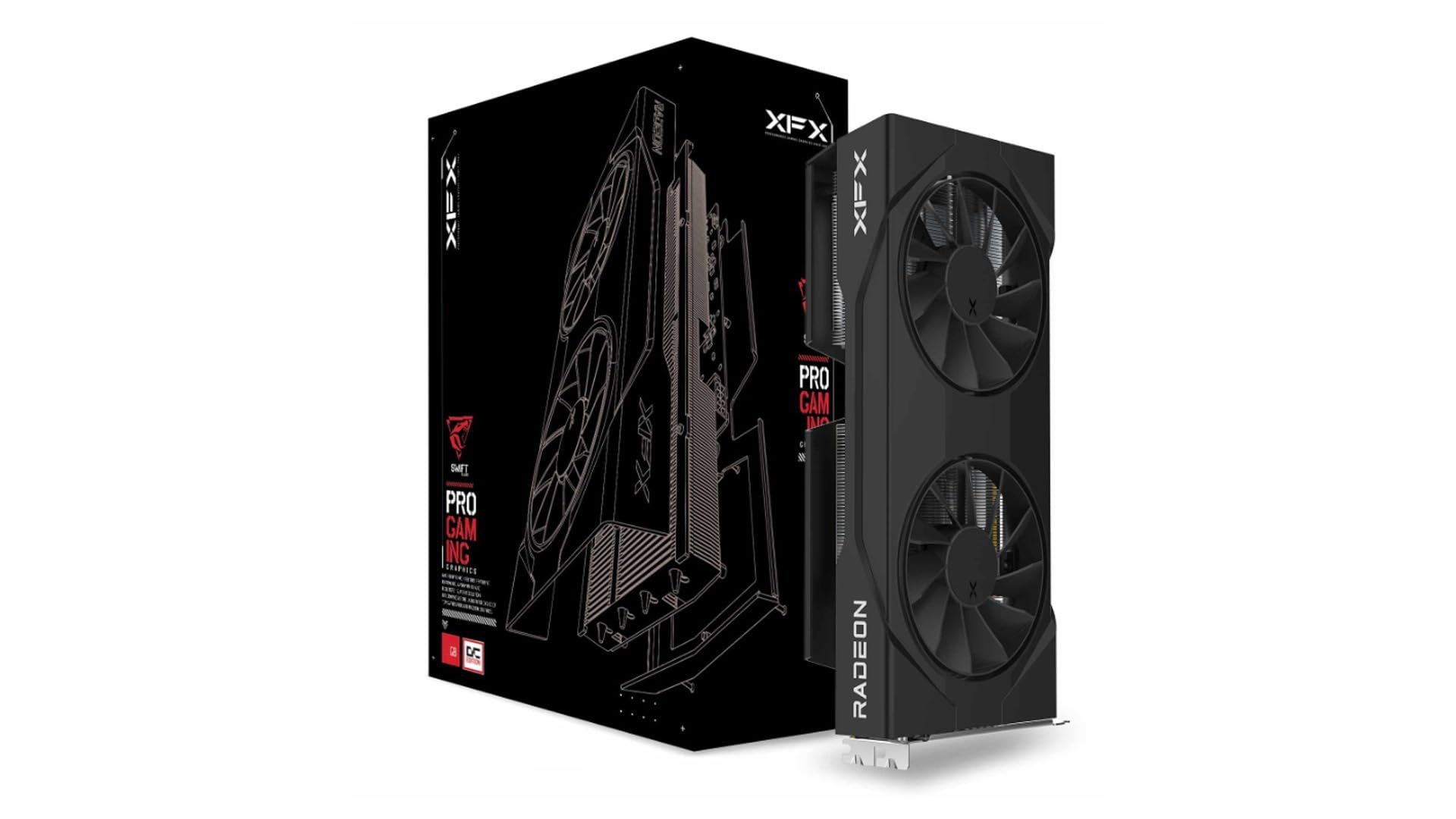
The XFX Swift RX 9060 XT OC delivers outstanding value with its RDNA 4 architecture and 3320 MHz boost clock. It’s a beast at 1080p, handling max settings in 95% of modern AAA titles with ease, and it punches well above its weight at 1440p thanks to FSR 4 upscaling.
Temperatures hover around 60°C under load, and the dual-fan SWFT cooling solution is remarkably quiet. Users report Timespy scores around 17000, rivaling cards that cost significantly more. The 16GB GDDR6 on a 128-bit bus is adequate for most gaming scenarios, though bandwidth is lower than GDDR7 rivals.
The card is slightly larger than expected at 10.63 inches, so check your case clearance. It’s a perfect budget upgrade for those coming from older XFX cards or previous-gen AMD GPUs like the 6650 XT.
Why it’s great
- Excellent value for the performance
- Runs cool and quiet under load
- High boost clock out of the box
Good to know
- Only 3 video outputs (2 DP + 1 HDMI)
- GDDR6 lacks bandwidth of GDDR7
10. ASRock Radeon RX 9060 XT Challenger 16GB OC
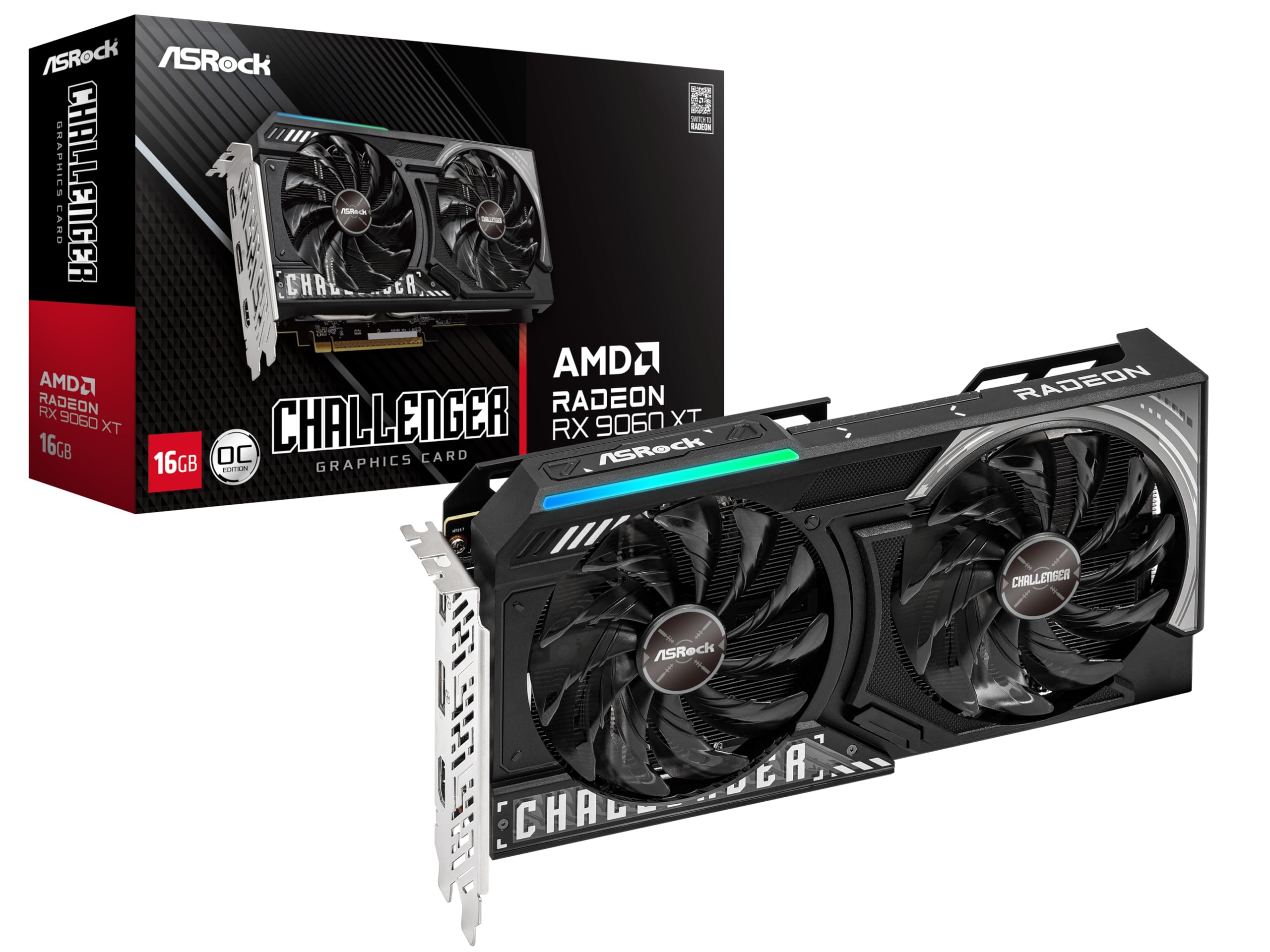
The ASRock Challenger is a compact 2-slot card at 249mm, making it one of the most versatile options for fitting into tight builds. Its RDNA 4 architecture with 32 Compute Units and 3rd Gen Ray Tracing cores delivers impressive 1440p gaming performance, with users reporting buttery-smooth 1080p and excellent 1440p medium-high settings.
What sets this card apart is its AI inference capability. Users successfully run models like Qwen3.6-35b-a3b with ROCM support, noting it’s a strong budget option for local AI. The dual-fan 0dB Silent Cooling technology stops fans completely under low load, making it silent for everyday tasks.
PCIe 5.0 support ensures future compatibility, and the DisplayPort 2.1a outputs support up to three 8K displays. The card requires a single 8-pin power connector and a recommended 550W PSU. It strikes a fine balance between gaming and productivity.
Why it’s great
- Compact size fits many cases
- 0dB fan stop for silent operation
- Capable of AI inference with ROCM
Good to know
- 128-bit bus limits bandwidth vs higher-tier cards
- FSR 4 not yet as mature as DLSS
11. MSI Gaming GeForce RTX 3060 Ti LHR 8GB Ventus 2X OCV1

The MSI Ventus 2X RTX 3060 Ti LHR is a proven workhorse for mid-range gaming. Its 8GB GDDR6 on a 256-bit bus delivers solid 1440p performance, handling 5120×1440@120Hz without issue. Users report smooth gameplay in CryEngine, Unreal, and Unity titles at high to max settings, with quiet Torx Fan 3.0 cooling.
At 9.1 inches, it fits most cases easily and requires a single 8-pin power connector. The LHR (Lite Hash Rate) designation means reduced crypto mining performance, but it doesn’t affect gaming. It’s a great option for budget builds or as a first dedicated GPU for a teenager’s gaming PC.
However, with only 8GB VRAM, it’s already feeling the strain in some modern AAA titles at 1440p. Users looking for future-proofing will want the 16GB cards higher up this list, but for entry-level 1080p or older 1440p monitors, this card remains a capable and affordable choice.
Why it’s great
- 256-bit memory bus for great bandwidth
- Proven, reliable architecture
- Quiet cooling and compact size
Good to know
- 8GB VRAM is limiting for modern AAA titles
- Older architecture lacks DLSS 4 and frame gen
FAQ
Is 16GB VRAM necessary for 1440p gaming in 2025?
Does a 128-bit memory bus bottleneck a 16GB card?
Can I use a 16GB card for AI and machine learning?
Final Thoughts: The Verdict
For most users, the 3060 ti 16gb graphics card winner is the ASUS Dual RTX 5060 Ti OC because it offers the ideal mix of GDDR7 speed, quiet cooling, and price-to-performance for 1440p gaming. If you want a compact card for SFF builds or AI workloads, grab the ASUS Prime RTX 5060 Ti OC. And for the best value on a budget, nothing beats the XFX Swift RX 9060 XT OC.