
Dust, pollen, and grime build a layer of insulation on the condenser and evaporator fins, forcing the compressor to work harder, raising energy bills, and often leading to frozen coils or total system breakdown. Picking the wrong cleaner can mean corrosive damage, clogged fins, or residue that traps dirt faster next time.
I’m Min — the co-founder and writer behind Gadgets Feed. After sifting through hundreds of technical spec sheets and customer performance reports on foam density, dilution ratios, and pH levels, I’ve isolated the formulas that dissolve buildup without collateral damage.
The market is flooded with options, but only a few deliver on the promise of restoring airflow and thermal transfer without leaving a mess. This guide breaks down the best ac coil cleaner for every job size, from a mini-split evaporator to a whole-home condenser.
How To Choose The Best AC Coil Cleaner
Not every cleaner is safe for every coil. The wrong formula can corrode thin aluminum fins or leave a sticky residue that accelerates dirt buildup. Buyers need to match the cleaner type to the unit and the level of soiling.
Foam vs. No-Rinse Concentrate
Foaming cleaners expand on contact, pushing debris out from between tightly packed fins. They are ideal for condenser coils where you can rinse aggressively with a garden hose. No-rinse concentrates rely on condensation to wash away dissolved dirt, making them preferable for indoor evaporator coils where overspray and drainage are concerns.
pH Level and Metal Safety
Alkaline cleaners (pH 9–11) are effective at breaking down oil and grease but must be completely rinsed to avoid etching aluminum. Neutral pH cleaners (pH 7–8) are safer for microchannel coils and delicate fin stock but may require more mechanical agitation or higher concentration for heavy buildup. Always check that the formula is explicitly labeled safe for the metal in your specific coil type.
Dilution Ratio and Cost Per Job
A ready-to-use aerosol is convenient for a single cleaning, but a gallon of concentrate (diluted 4:1 to 12:1) can yield 8 to 12 gallons of usable cleaner, drastically lowering the cost per application. Homeowners with multiple units or rental properties should prioritize concentrates for long-term value.
Quick Comparison
On smaller screens, swipe sideways to see the full table.
| Model | Category | Best For | Key Spec | Amazon |
|---|---|---|---|---|
| Nu-Calgon 416808 Evaporator Power | Premium Concentrate | Indoor Evaporator & Mini-Split | 1-Gallon Concentrate | Amazon |
| Leak Saver AC Coil Cleaner | Premium Concentrate | All HVAC & Refrigeration Coils | 4:1 to 10:1 Dilution | Amazon |
| Lundmark Coil Cleen | Ready-to-Use | Outdoor Condenser Coils | 1-Gallon Ready-to-Use | Amazon |
| Maplefield Concentrated AC Coil Cleaner | Value Concentrate | High-Yield Residential Cleaning | Makes 12 Gallons | Amazon |
| Four Seasons 69994 Super Flush Solvent | Specialty Solvent | Line Flush After Burnout | 32 oz. Fast-Drying | Amazon |
| Refrigeration Technologies RT375A Viper | Aerosol Foam | Small Kitchen Equipment & Condensers | Aerosol Can | Amazon |
| QwikProducts Foaming Coil Cleaner | Aerosol Foam | Residential Condenser Coils | No-Rinse Foam Spray | Amazon |
In‑Depth Reviews
1. Nu-Calgon 416808 Evaporator Power, 1-Gallon

Nu-Calgon’s Evaporator Power is the most trusted name in the HVAC service industry, and for good reason. This 1-gallon concentrate is formulated specifically for evaporator coils, where gentle but effective cleaning is non-negotiable. Mixed at a 3:1 water-to-formula ratio, it cuts through years of dust, lint, and biological growth without damaging the thin aluminum fins or leaving a conductive residue that could affect sensor readings.
Real-world feedback from homeowners confirms that it resolves persistent issues like the “dirty sock” smell and error codes caused by a clogged squirrel cage fan. A Fujitsu mini-split owner reported that a single application with a water rinse cleared a heat mode error 10-1, restoring the system to factory-level operation. The formula is low-odor, which is critical for indoor applications where chemical fumes would be unpleasant or unsafe.
The product is also exceptionally easy on the wallet when measured per job. A gallon concentrate yields roughly 4 gallons of ready-to-use cleaner, making it far more economical than aerosol cans. For anyone with a mini-split, ducted air handler, or window unit that runs seasonally, this is the one cleaner that covers every indoor coil scenario with professional-grade results.
Why it’s great
- Professional-grade formula trusted by HVAC techs; neutral pH safe for all evaporator metals.
- Low odor and non-conductive residue keeps electronics safe.
- Economical concentrate — a 3:1 dilution delivers four gallons of cleaner.
Good to know
- Requires a separate sprayer and water for dilution; not a grab-and-go aerosol.
- Best for indoor evaporator coils; heavy outdoor grease may need a stronger alkaline cleaner.
2. Leak Saver AC Coil Cleaner for All Condensers & Evaporators
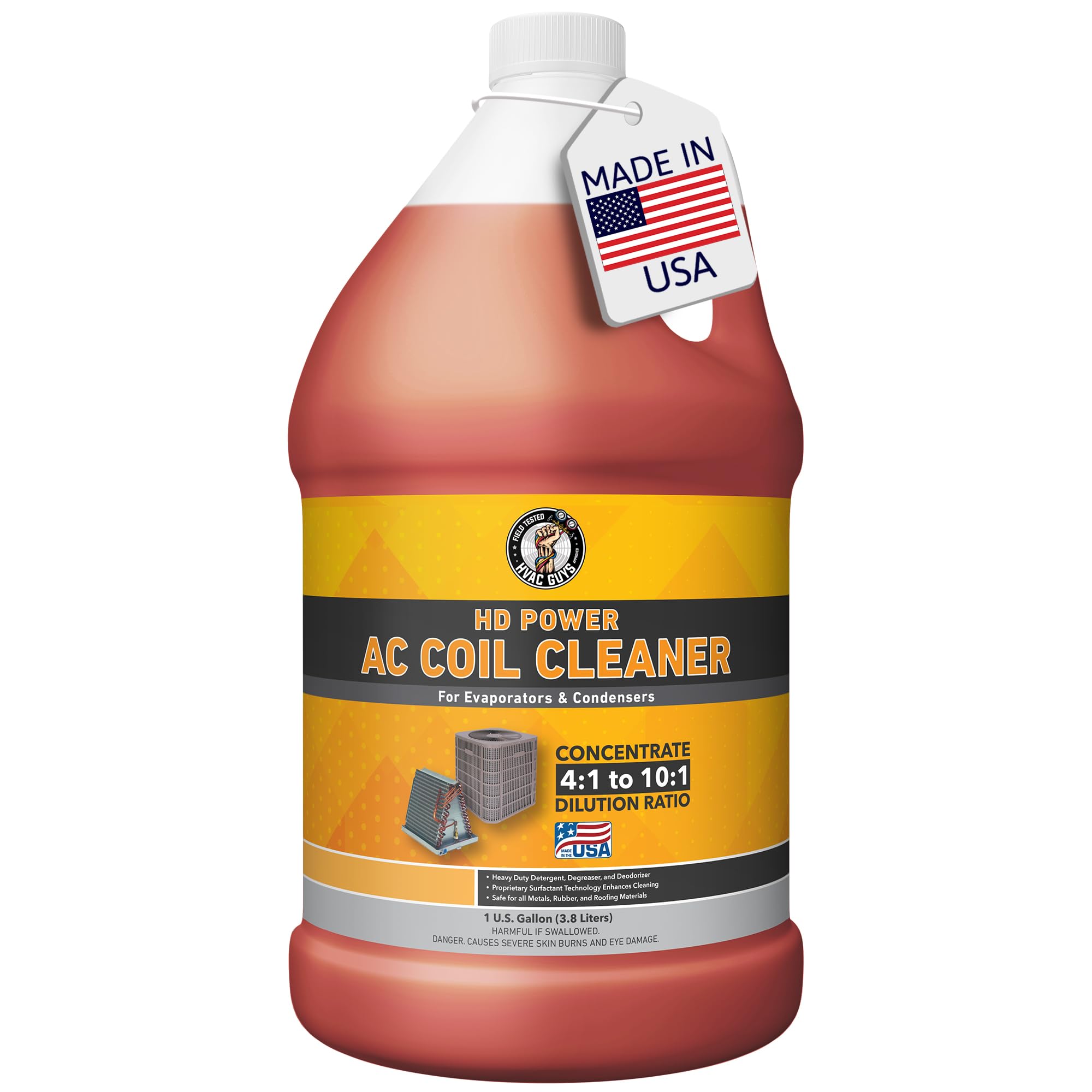
Leak Saver’s HD Power concentrate brings a triple-action punch — detergent, degreaser, and deodorizer — all in a single jug. Its most impressive feature is the wide dilution range: from a strong 4:1 ratio for heavy grease and nicotine stains up to a gentle 10:1 for routine maintenance or no-rinse indoor applications. This flexibility lets you tailor the strength to the specific job without buying multiple products.
User reports paint a clear picture of its capabilities. One reviewer struggled with a condenser coil stained by wood stain overspray. After mixing at 4:1, spraying, waiting ten minutes, and hosing off, the fins and coils looked brand new.
The manufacturer is owned by EPA card-holding HVAC technicians, which lends credibility to the claim that this formula is safe for microchannel coils, mini-splits, and even rubber roofing membranes. The pleasant citrus scent is a bonus, though the cleaner is alkaline so thorough rinsing is still mandatory. If you need a single concentrate that handles everything from a greasy restaurant condenser to a residential mini-split, this is it.
Why it’s great
- Adjustable dilution (4:1 to 10:1) covers both heavy degreasing and light maintenance in one bottle.
- Safe for microchannel coils, mini-splits, rubber roofing, and permanent filters.
- Formulated by active HVAC techs with real-world service experience.
Good to know
- Low-foaming formula — don’t expect thick bubble expansion.
- Alkaline pH requires complete rinsing to prevent residue on aluminum fins.
3. Maplefield Concentrated AC Coil Cleaner
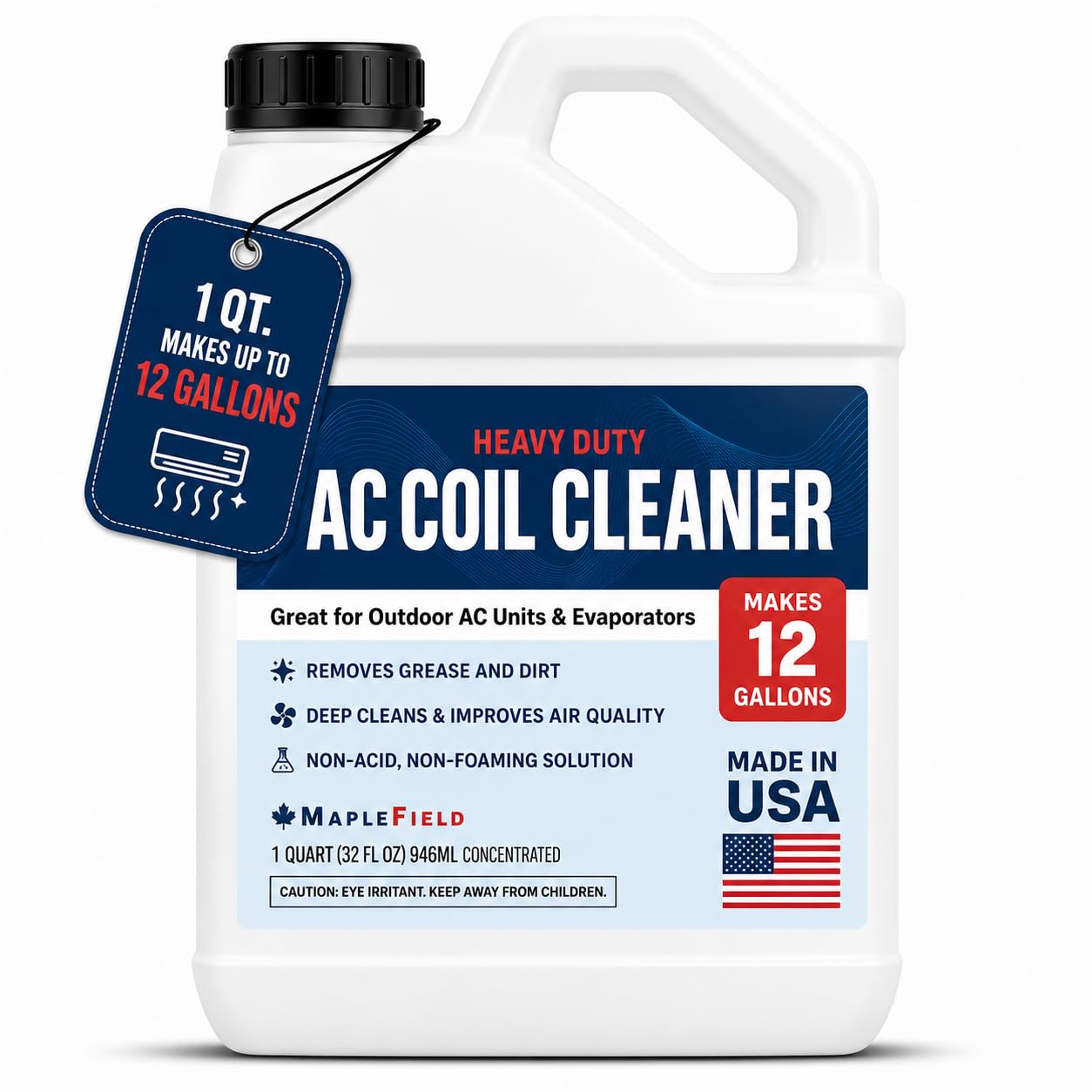
Maplefield’s concentrated AC coil cleaner offers the highest yield of any product in this comparison. With a 1:11 dilution ratio, a single gallon transforms into 12 gallons of spray-ready solution. That equates to roughly a dozen heavy-duty coil cleanings or upwards of twenty routine maintenance washes. The non-foaming, heavy-duty alkaline formula is ideal for outdoor condenser units where you want the cleaner to penetrate deeply rather than just sit on top of the fins.
Customer reports confirm that the formula does exactly what a good coil cleaner should: dissolve the gunk. One user reported being shocked at the amount of debris flushed from his air conditioner fins after a simple mix-and-spray routine. The biodegradable warning on the label is a nice touch for environmentally-conscious homeowners who want to avoid dumping harsh chemicals into their yard.
There are, however, a couple of trade-offs. The product is non-foaming, so you lose the visual satisfaction of seeing dirt pushed out by expanding bubbles. Additionally, some users noted that a standard garden sprayer is required for application, adding a small upfront tool cost. For the DIY homeowner who wants a low-cost, high-volume solution, the Maplefield concentrate is tough to beat on a per-job basis.
Why it’s great
- Unbeatable value — one gallon makes 12 gallons of cleaner, dropping per-job cost dramatically.
- Biodegradable formula is safer for landscaping and runoff.
- Non-foaming design allows deep penetration into tightly packed fins.
Good to know
- Requires a pump sprayer; not a grab-and-go solution.
- Non-foaming means less visual feedback during application.
4. Lundmark Coil Cleen, 1-Gallon

Lundmark’s Coil Cleen is a stalwart in the HVAC maintenance category, trusted by servicemen for years. Unlike concentrates, this gallon jug is ready to use — no mixing, no dilution, no guesswork. Simply pour it into a spray bottle, apply to the condenser or evaporator fins, wait, and rinse. The camphor-based scent is a unique distinguishing factor; it neutralizes musty odors rather than masking them with perfume.
Owners of heat pumps and outdoor condensers report that a quarterly application keeps clothes dryer lint, grass clippings, and pollen from accumulating. The recommended process — spray, wait 15 minutes, scrub with an AC brush, then hose off — delivers visibly clean fins and measurably improved airflow. One reviewer specifically noted that the product helped clear lint buildup from a heat pump located near a dryer vent, a common pain point.
The critical downside is the material. Multiple users have reported that spills on stainless steel sinks cause permanent discoloration. While this doesn’t affect the cleaner’s performance on coils, it’s a costly mistake if you fill a spray bottle over a kitchen sink. As long as you apply the cleaner outdoors and handle it with care, Lunkmark’s Coil Cleen remains a solid, no-fuss option for quick maintenance.
Why it’s great
- Ready-to-use — zero mixing needed, ideal for quick monthly maintenance.
- Safe for landscaping and surrounding plants when used as directed.
- Camphor scent effectively neutralizes organic odors from dirt and mildew.
Good to know
- Can permanently stain stainless steel sinks; must avoid spills.
- Requires manual brushing for heavily soiled fins; not a fully self-cleaning solution.
5. Four Seasons 69994 Super Flush Solvent, 32 oz

Four Seasons Super Flush Solvent is a specialty product that serves a different purpose than the other cleaners on this list. It is a fast-drying, residue-free solvent designed specifically for flushing refrigerant lines after a compressor burnout. When a compressor fails internally, it deposits acidic oil and carbonized debris into the line set. This solvent dissolves and carries out that contamination, leaving the tubing chemically clean for the new compressor and refrigerant.
Real-world HVAC techs confirm that it cuts through PAG oil, UV dye, and stop-leak particles with a single pass. One user performed three sequential flushes on a 3-ton system, using 1.5 quarts total, and reported no detectable debris on the final pass. The solvent evaporates almost instantly, which is critical for same-day service since any residual moisture would contaminate the new refrigerant charge.
This is not a product for routine coil cleaning — it’s a line set flush. It is highly flammable and requires proper ventilation and PPE. For DIY homeowners replacing a mini-split or repairing a burned-out compressor, it is the correct tool for the job. For simple condenser fin cleaning, skip this and choose a dedicated coil cleaner above.
Why it’s great
- Evaporates completely with zero residue, preventing future system contamination.
- Effectively dissolves PAG oil, UV dye, and carbonized debris from compressor burnout.
- A little goes a long way — 32 oz can flush a typical residential system multiple times.
Good to know
- Highly flammable — requires careful handling, ventilation, and no ignition sources.
- Not intended for general coil cleaning; use only for line set flushing.
6. Refrigeration Technologies RT375A Viper Food Grade AEROSOL Coil
Refrigeration Technologies RT375A Viper is a food-grade aerosol cleaner that is purpose-built for small indoor kitchen equipment, such as reach-in coolers, beverage dispensers, and undercounter refrigeration. Its food-grade formulation offers a safety margin in environments where chemical residues could contact food surfaces, even though the cleaner is intended for coils, not food-contact surfaces themselves.
The aerosol delivery system is the star here. It produces a thick, clingy foam that expands on contact, which is critical for cleaning condenser and evaporator coils in tight, hard-to-reach locations inside commercial equipment. Users report that one can is sufficient to clean a standard condenser and leave the fins looking like new. The no-rinse claim holds true under normal conditions, saving time in fast-paced kitchen environments.
There are two caveats. First, the product is expensive compared to a gallon of concentrate. For a single cleaning, it’s acceptable; for regular maintenance of multiple units, it becomes cost-prohibitive. Second, the instructions explicitly state not to shake the can before use, as shaking creates foam blobs rather than the desired fine spray. Pay attention to the can orientation and technique, and this Viper aerosol delivers exactly what it promises.
Why it’s great
- Food-grade safety rating makes it suitable for commercial kitchen equipment.
- Thick foaming action clings to vertical coil surfaces and expands into tight fin gaps.
- True no-rinse formula saves time on small, hard-to-drain units.
Good to know
- Cost per ounce is higher than concentrates — not economical for frequent use.
- Do not shake the can; shaking ruins the spray pattern.
7. QwikProducts Foaming Coil Cleaner

QwikProducts Foaming Coil Cleaner is the entry-level aerosol that delivers solid performance without demanding a premium price. The no-rinse, self-foaming formula is designed for DIY homeowners who want to spray, let the foam do the work, and walk away. The expanding foam pushes dirt, dust, and grease out of the fin gaps, and the included pleasant lemon scent neutralizes odors without being overpowering.
Buyers report using it successfully on outdoor condenser units, window ACs, CPU heatsinks, and even car evaporators. One reviewer noted that the foam expanded and lifted nicotine residue from a heavily soiled indoor unit without damaging the aluminum or copper. The can size is well-calibrated for a single condenser and a small mini-split, making it easy to take on as a weekend project without leftover product going to waste.
The main limitation is capacity. For owners of large central AC units, a single can may run short. A second can would be needed for a thorough job, pushing the cost closer to that of a gallon of concentrate. Additionally, while it is marketed as a no-rinse cleaner, many users found that a light hose rinse improved results. If you have a single unit to clean and want the simplest possible process, the QwikProducts can is a fine starting point.
Why it’s great
- Affordable single-can solution perfect for one-time or annual residential coil cleaning.
- Self-foaming and no-rinse design makes the cleaning process incredibly straightforward.
- Pleasant lemon scent neutralizes musty conditioning system odors.
Good to know
- Can size only covers one condenser and one mini-split; larger systems need a second can.
- No-rinse performance improves with a light water rinse, despite the label.
FAQ
Can I use a foaming cleaner on my mini-split evaporator coil?
How often should I clean my AC condenser coils?
Is it safe to use a coil cleaner on microchannel coils?
What is the difference between a no-rinse and a rinse-required coil cleaner?
Final Thoughts: The Verdict
For most users, the best ac coil cleaner winner is the Nu-Calgon 416808 Evaporator Power because it balances professional-grade cleaning power with a neutral pH that is safe for indoor evaporator and mini-split coils, and a concentrate format that makes it economical for multiple cleanings. If you need a versatile cleaner for both condenser and evaporator coils with adjustable strength, grab the Leak Saver HD Power. And for the best value per gallon, nothing beats the Maplefield Concentrated AC Coil Cleaner‘s 1:11 dilution ratio that yields 12 gallons of ready-to-use formula.