
Choosing an eight-channel audio interface is the moment a home studio stops being a toy and becomes a serious recording rig. The leap from a two-input interface to eight means you can track a full drum kit, record a band live off the floor, or expand your synth rig without constantly repatching cables. But not every box labeled “8-channel” actually delivers eight discrete mic preamps, and that difference separates a useful studio tool from an expensive paperweight.
I’m Min — the co-founder and writer behind Gadgets Feed. I’ve spent hundreds of hours dissecting the technical specifications of recording interfaces, cross-referencing dynamic range figures against real-world noise floors to separate marketing claims from actual performance for this guide.
The market offers everything from budget-conscious eight-input boxes to flagship units used on professional film sets, making the search for the best 8 channel audio interface a maze of conflicting feature sets and connectivity standards.
How To Choose The Best 8 Channel Audio Interface
Selecting the right eight-channel interface means understanding which specifications actually affect your recording workflow. The headline number of channels is only the starting point.
Mic Preamplifier Quality and Gain
The preamps are the heart of any interface. Look for EIN (Equivalent Input Noise) ratings below -127 dBu for truly quiet operation. Gain range matters too — 60 dB or more lets you drive dynamic microphones like the Shure SM7B without needing an external cloudlifter. Interfaces in the mid-range tier often use preamp designs derived from professional consoles, offering more headroom and lower distortion than entry-level units.
ADAT Expansion and Future-Proofing
An eight-channel interface with ADAT optical input becomes a sixteen-channel interface the day you add an ADAT expansion unit. This single spec determines whether your interface can grow with your studio or caps your channel count permanently. Premium tier interfaces almost always include ADAT, while some budget-friendly models omit it entirely, making ADAT support a critical decision point for long-term value.
Sample Rate, Bit Depth, and Converters
Most modern interfaces operate at 24-bit/96 kHz as the baseline, with premium models reaching 192 kHz and high-end units like the Neumann MT 48 hitting 32-bit/192 kHz internal processing. Higher sample rates reduce aliasing in the ultrasonic range, but the real quality differentiator is the converter dynamic range. A dynamic range above 115 dB on the D-A converters translates to noticeably cleaner playback and mix translation.
Quick Comparison
On smaller screens, swipe sideways to see the full table.
| Model | Category | Best For | Key Spec | Amazon |
|---|---|---|---|---|
| Focusrite Scarlett 18i20 4th Gen | Premium | Multi-track home studio | 69 dB gain preamps, 122 dB dynamic range | Amazon |
| Focusrite Clarett+ 8Pre | Premium | Critical listening, high-headroom recording | Analog Air circuit (ISA 110 emulation) | Amazon |
| Neumann MT 48 | High-End | Reference-grade conversion, AES67 networking | 136 dB AD converter dynamic range | Amazon |
| Zoom F8n Pro | Premium | Field recording, film production | 32-bit float, 75 dB preamp gain | Amazon |
| Zoom LiveTrak L-8 | Mid-Range | Podcasting, portable mixing | Battery powered, SD card recording | Amazon |
| Universal Audio Volt 476p | Mid-Range | Classic preamp color with built-in compression | Vintage 610 preamp mode, 1176-style compressor | Amazon |
| Tascam US-16×08 | Mid-Range | High-count input recording, drum tracking | 16 simultaneous inputs (8 XLR + 8 line) | Amazon |
| Audient EVO 8 | Mid-Range | Simplicity, compact desktop setup | SmartGain auto-level, JFET DI input | Amazon |
| Behringer U-Phoria UMC1820 | Budget | Maximum channels at minimal cost | MIDAS preamps, ADAT expandable | Amazon |
In‑Depth Reviews
1. Focusrite Scarlett 18i20 4th Gen
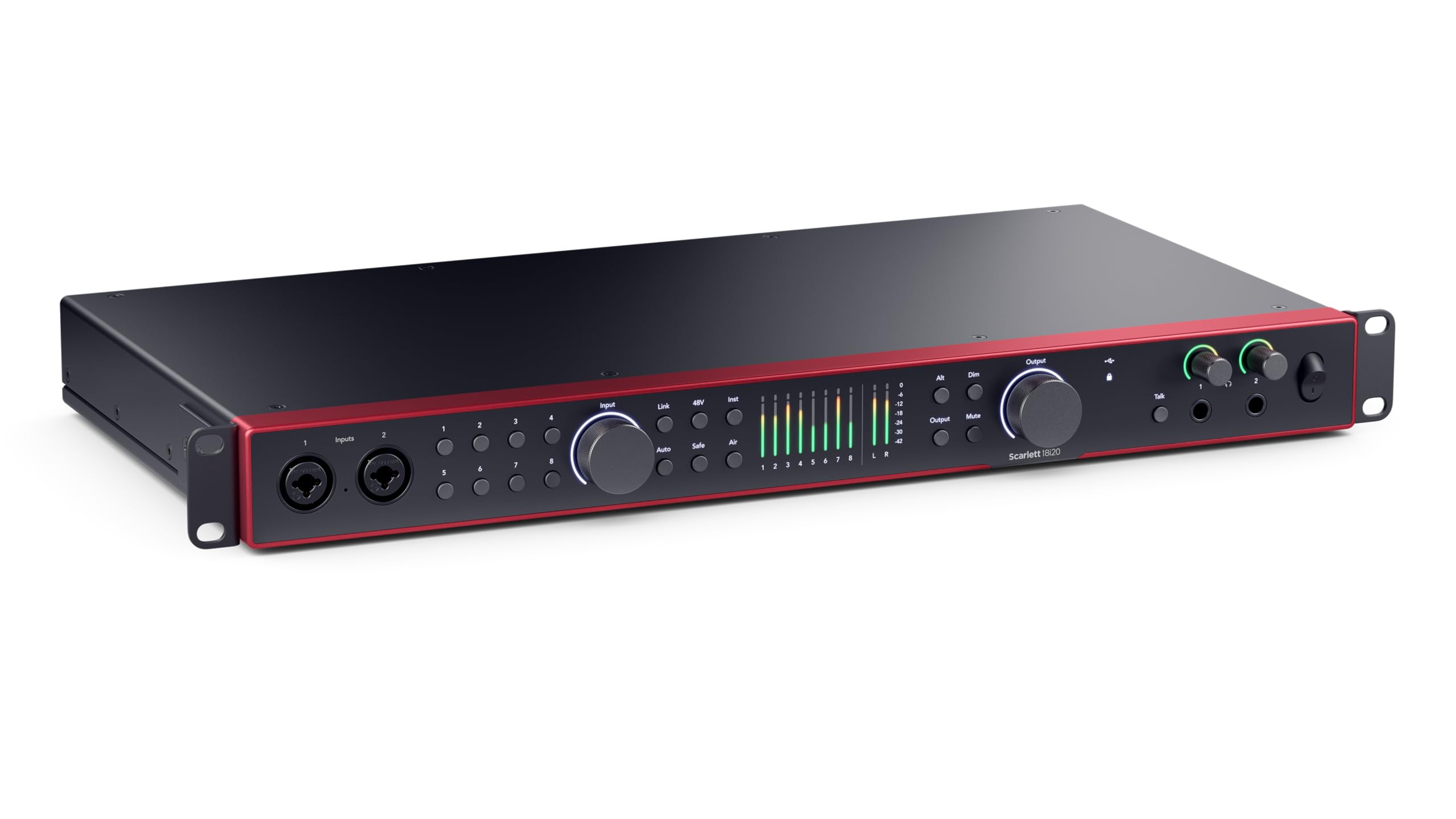
The fourth-generation Scarlett 18i20 represents the most complete eight-channel recording solution in its tier. Each of the eight preamps delivers 69 dB of gain with a 122 dB dynamic range derived from the flagship RedNet converters, giving you studio-grade headroom for dynamic microphones and line-level synths alike. The 18-in/20-out capability means you can expand via ADAT to connect a second eight-preamp unit, effectively turning this into a 16-preamp rig.
The Smart Gain and Clip Safe features work intelligently during setup — Smart Gain sets initial recording levels automatically, while Clip Safe continuously monitors and adjusts gain to prevent digital clipping during takes. The Air mode adds a presence boost at high frequencies, and the new Harmonic Drive setting introduces a controlled saturation that adds character to sterile digital recordings. The included software bundle includes Pro Tools Intro, Ableton Live Lite, Cubase LE, and the Hitmaker Expansion with emulations of classic compressors and reverbs.
Build quality is robust with a metal chassis that occupies about half a rack width, and the front-panel metering on every input makes gain staging straightforward even in low-light studio conditions. The USB-C connection runs at bus-powered speeds, though the unit requires external power for full operation.
Why it’s great
- RedNet-derived converters provide 122 dB dynamic range
- Clip Safe prevents digital distortion during takes
- Eight preamps plus ADAT expandability for future studio growth
Good to know
- No Word Clock I/O for multi-unit synchronization
- Requires external power supply
2. Focusrite Clarett+ 8Pre
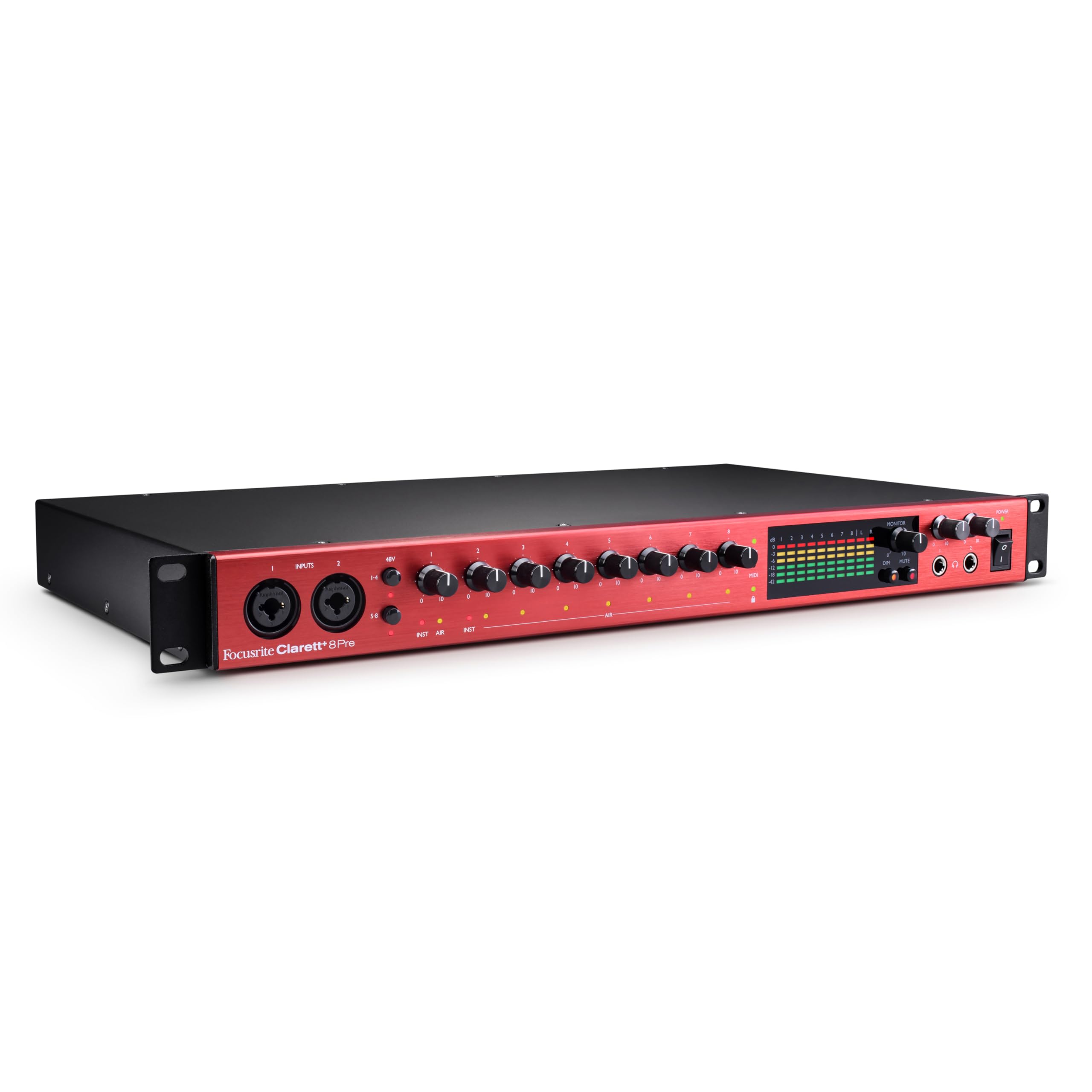
The Clarett+ series sits above the Scarlett line in Focusrite’s hierarchy, and the 8Pre justifies every dollar of the premium with its all-analogue Air circuitry. This isn’t a digital EQ curve — it’s relay-controlled analog circuitry on every preamp that shifts the input impedance and adds two cumulative high-frequency shelves totaling a 4 dB boost, faithfully recreating the sound of the classic Focusrite ISA 110 console channel. The preamps themselves deliver ultra-low noise at -128 dBu EIN with masses of headroom.
The A-D and D-A converters are independent high-performance units rated at 122 dB dynamic range, which translates to extremely low distortion and jitter-free clocking during critical monitoring sessions. The two headphone outputs drive even high-impedance studio headphones with a flat frequency response across all volume levels, making this a powerful hub for headphone mixing in shared spaces. The ADAT optical input accepts eight additional channels from units like the Clarett OctoPre, expanding to 16 inputs without degrading signal quality.
Focusrite Control software gives granular control over routing, with the ability to create separate monitor mixes for each of the eight outputs. The unit ships with a full software bundle including the Relab LX480 Essentials reverb, a studio-grade algorithmic reverb that alone justifies part of the upgrade cost for producers who value spatial processing.
Why it’s great
- Analog Air circuitry emulates classic ISA 110 console preamps
- Independent A-D and D-A converters for pristine signal paths
- High-power headphone outputs handle demanding studio headphones
Good to know
- Heavy chassis at 9 pounds for a half-rack unit
- Rear-panel controls for output level require software to configure
3. Neumann MT 48
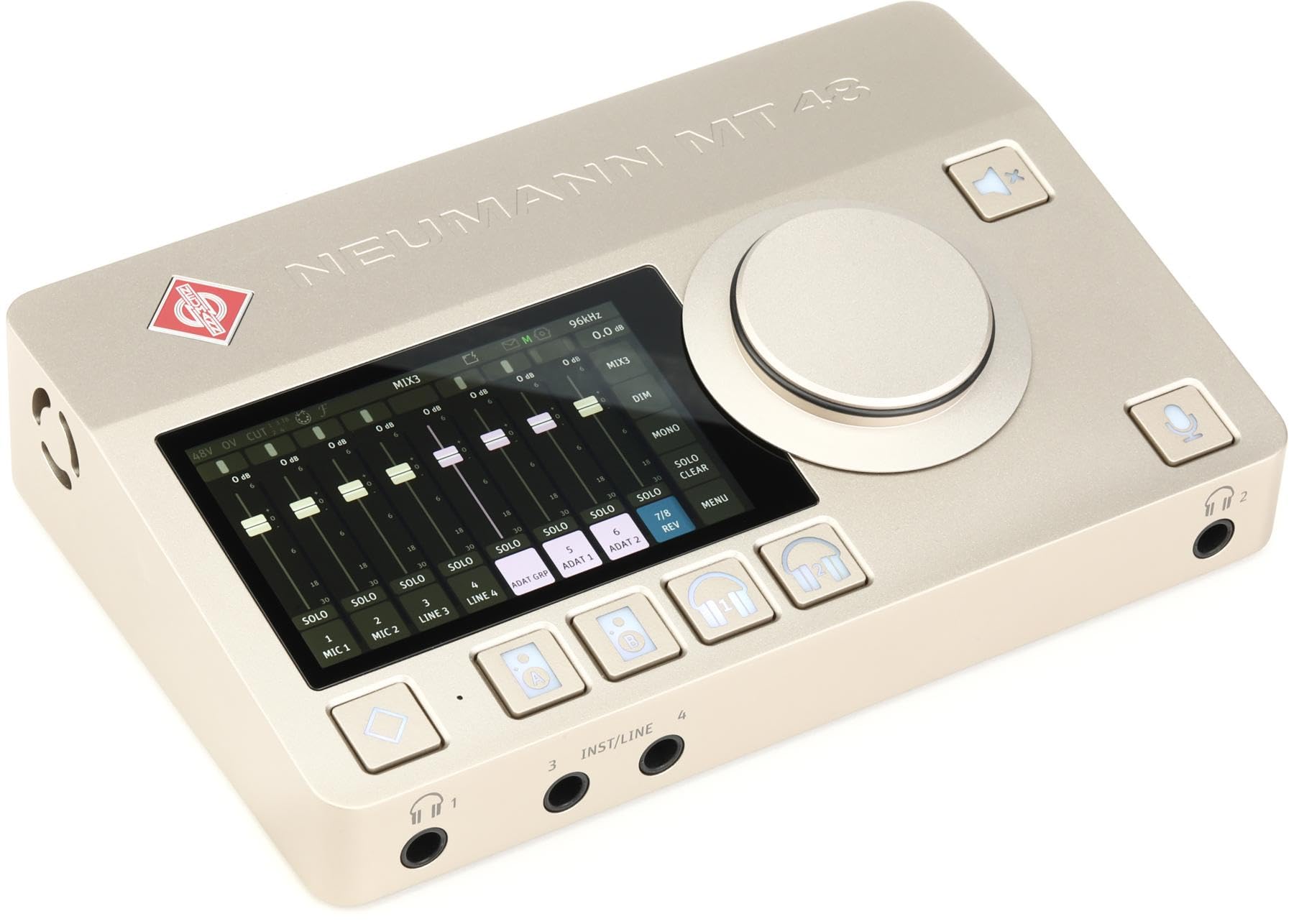
The Neumann MT 48 is the sonic equivalent of putting a magnifying glass over your audio chain. Its AD converter achieves a staggering 136 dB dynamic range — a figure that surpasses many high-end standalone converters and places it firmly in mastering-grade territory. The four analog inputs include two premium mic/line preamps with Neumann’s signature transparency and two line/instrument inputs that maintain the same pristine signal path.
The touchscreen interface provides intuitive control over the integrated DSP processing, which includes parametric EQ, dynamics processing, and reverb on every channel. Four independent mixers with integrated talkback make the MT 48 a powerful communication hub for tracking sessions with multiple performers. Connectivity extends beyond standard USB-C to include AES67 audio-over-IP networking, making it suitable for broadcast and install environments where Dante-like networking is required.
MIDI I/O and ADAT/S/PDIF expansion round out the connectivity, and the unit’s ultra-low impedance headphone outputs deliver clean signal to headphones with loads as low as 16 ohms. Note that the unit ships with 4 inputs rather than 8, but the AES67 and ADAT expansion allow for channel count growth in professional installations. The build quality matches Neumann’s reputation — the metal chassis and glass touchscreen feel substantially engineered.
Why it’s great
- 136 dB AD converter dynamic range is reference-grade
- AES67 networking for broadcast and pro install environments
- Onboard DSP with parametric EQ, comp, and reverb
Good to know
- Only 4 analog inputs in the base configuration
- Not a plug-and-play device; routing requires learning curve
4. Zoom F8n Pro

The Zoom F8n Pro is the definitive field recorder for professional film and location sound, but its 8-in/4-out USB audio interface mode makes it equally capable as a studio interface. The headline feature is 32-bit float recording, which uses dual AD converters per channel to capture audio across a dynamic range so wide that clipping becomes effectively impossible — you can record a whisper and a gunshot in the same take without touching the gain knob.
The preamps deliver 75 dB of gain with an EIN of -127 dBu, matching the noise floor of high-end standalone preamps. Timecode accuracy down to 0.2 ppm via TCXO keeps multi-camera audio perfectly aligned, and dual SD card slots support redundant recording up to 1 TB each. The unit runs on 8 AA batteries for approximately 8.5 hours, making it truly portable for location shoots without hunting for AC power.
While the F8n Pro is heavier than dedicated desktop interfaces at 1.8 kg, its versatility as a standalone recorder and computer interface in one package makes it the right choice for anyone who records both in a studio and on location. The included wireless control via iOS/Android app adds remote adjustment capability during live recording sessions.
Why it’s great
- 32-bit float recording eliminates clipping risk entirely
- 75 dB preamp gain for quiet dialogue capture
- Dual SD slots with redundant recording and timecode sync
Good to know
- Heavier and bulkier than desktop-only interfaces
- Advanced menu system takes time to master
5. Zoom LiveTrak L-8

The Zoom LiveTrak L-8 blurs the line between mixer and audio interface, offering six combo inputs with -121 dBu noise floor preamps plus two stereo inputs for a total of eight channels. The unit records 12 tracks simultaneously at 24-bit/96 kHz directly to SD card, making it a standalone recorder that doesn’t require a computer at all — a major advantage for podcasters and live performers who want to capture multitrack audio without lugging a laptop.
Four headphone outputs with three independent monitor mixes let every performer or podcast guest dial in their own mix, while the onboard 3-band EQ and effects on each channel allow for polished monitor mixes without post-processing. The TRRS phone input means you can conduct remote interviews by connecting a smartphone directly, and the USB interface mode lets you record to both SD card and computer simultaneously for redundant backup.
Battery power via 4 AA cells or USB bus power means this unit is genuinely portable — it weighs just 1.5 kg and fits in a backpack. The analog mixer section has a slight learning curve for users accustomed to software-based routing, but the tactile faders and mute buttons provide immediate visual feedback that software can’t match.
Why it’s great
- Records multitrack to SD card without a computer
- Four headphone outs with three independent mixes
- Battery powered for true portability
Good to know
- Micro USB connection (outdated connector)
- Only 6 XLR inputs; global phantom power only
6. Universal Audio Volt 476p
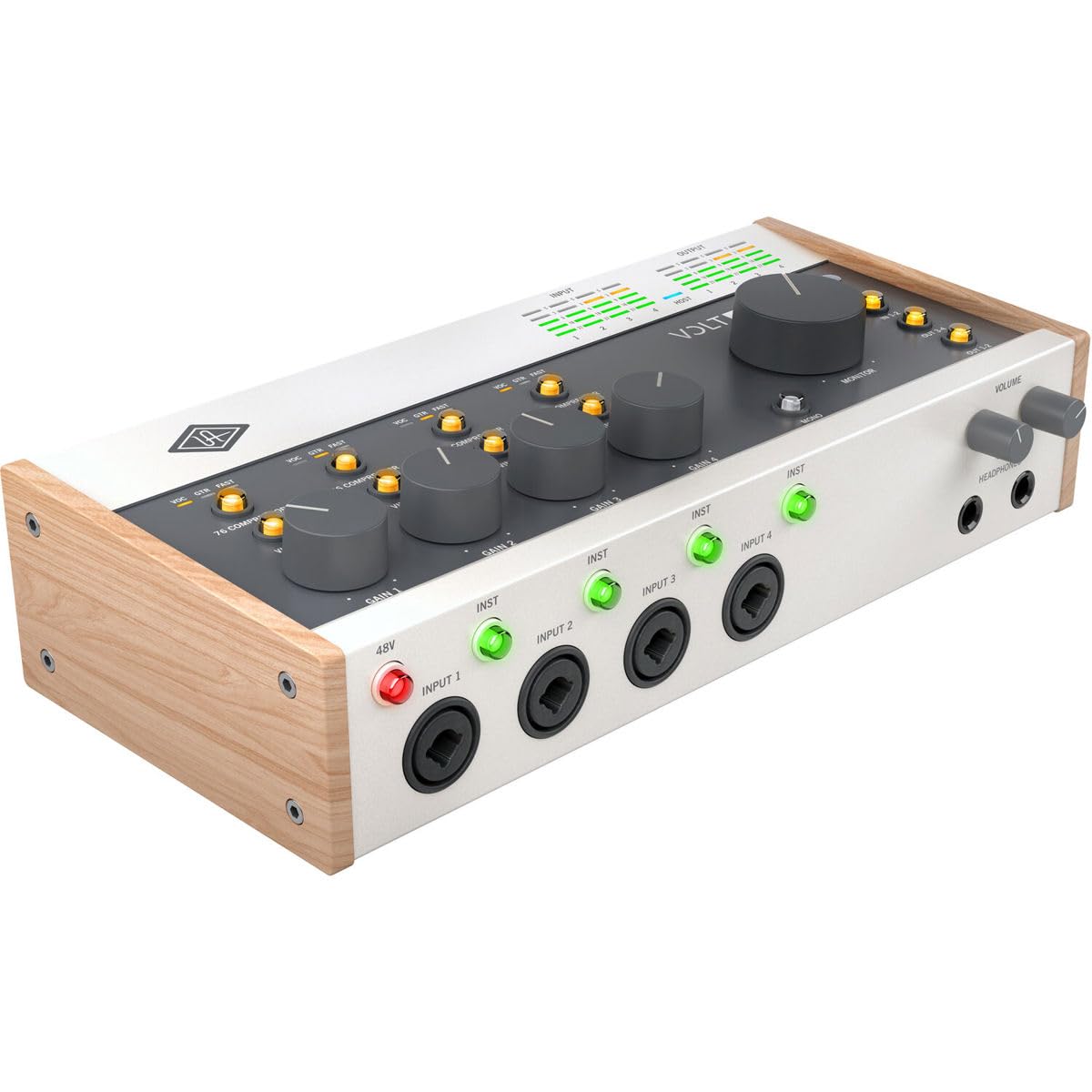
The Universal Audio Volt 476p brings iconic analog processing to the desktop interface market. Each of the four mic preamps includes a Vintage mode that emulates the UA 610 preamp — the same circuit found in classic Neve consoles — adding a warm harmonic saturation that thickens vocals and acoustic instruments. The built-in analog compressor is based on the legendary 1176, offering fast FET compression that adds punch and consistency to recorded tracks before they hit your DAW.
The unit records at up to 24-bit/192 kHz with 115 dB dynamic range, and the all-metal chassis with walnut wood side panels looks professional on any desk. Two independent headphone outputs with dedicated volume controls allow separate cue mixes for talent and engineer. The bundle includes the LUNA DAW, which integrates with UA hardware for near-zero-latency tracking through UAD plug-ins, plus a suite of virtual instruments and effects.
The four-input configuration means the Volt 476p is better suited for solo artists recording drums with three mics and a room mic, or podcasters who need multiple mic inputs without the bulk of a full 8-input rack unit. Phantom power is global rather than per-channel, which limits flexibility when mixing dynamic and condenser microphones in the same session.
Why it’s great
- Vintage 610 preamp mode and 1176-style compressor onboard
- 192 kHz recording with 115 dB dynamic range
- Includes LUNA DAW and UAD plug-in bundle
Good to know
- Only four mic inputs — not a true 8-channel interface
- No ADAT or optical expansion for future channel growth
7. Tascam US-16×08

The Tascam US-16×08 is built for one specific job: recording a large number of channels simultaneously without spending premium-tier money. Eight Ultra-HDDA microphone preamps deliver up to 56 dB of clean gain with a noise floor that reviewers consistently describe as silent, while an additional eight line inputs bring the total to 16 inputs — all of which can be recorded simultaneously as individual tracks over USB. The front panel includes two instrument-level inputs for direct guitar or bass recording.
The built-in DSP mixer provides zero-latency monitoring with 4-band EQ and compression on every channel, creating polished monitor mixes directly from the hardware without taxing your computer’s CPU. Eight balanced line outputs include two with front-panel level controls for flexible monitoring setups. The half-rack form factor fits in a standard 19-inch rack with included rack ears, making it ideal for permanent installation in a home studio rack.
Users report that driver installation requires following specific steps — plugging the interface in before installing drivers can cause system conflicts on Windows. Once configured, the unit is reliable with DAWs like Reaper and Sonar, and the MIDI I/O provides connectivity for synthesizer control surfaces.
Why it’s great
- 16 simultaneous inputs at a budget-friendly price point
- DSP mixer with 4-band EQ and compression per channel
- Rack-mountable with included rack ears
Good to know
- Driver installation requires careful order of operations on Windows
- Bulky chassis at 22 inches wide
8. Audient EVO 8

The Audient EVO 8 packs four EVO mic preamps and SmartGain technology into a chassis significantly smaller than its competitors. The preamps are derived from Audient’s professional console heritage, delivering a clean -127 dBu EIN with plenty of headroom for condenser microphones. SmartGain automatically sets optimal input levels by playing a short burst of audio — the unit analyzes the signal and adjusts gain within seconds, eliminating the tedious channel-by-channel gain staging process during setup.
The JFET instrument input is a standout feature at this price point, providing the warm, harmonically rich DI sound associated with classic valve amplifiers. Two headphone outputs with independent mixes allow simultaneous monitoring for separate performers, and the USB-C connectivity ensures compatibility with modern computers. The control knob changes function contextually depending on what you touch — volume, monitor mix, or headphone mix — keeping the interface clean while maintaining access to critical controls.
Some users note that the chassis is lightweight enough that heavy XLR cables can lift the front edge, requiring a small weight or adhesive feet to keep it planted. The EVO app is required to configure some routing settings that aren’t accessible from the hardware controls, which adds a minor software dependency for setup.
Why it’s great
- SmartGain auto-levels all inputs in seconds
- JFET DI input adds tube-like warmth to direct recordings
- Ultra-compact footprint saves desk space
Good to know
- Lightweight chassis lifts under heavy cable pressure
- Advanced routing requires EVO app on computer
9. Behringer U-Phoria UMC1820

The Behringer U-Phoria UMC1820 proves that eight-channel recording doesn’t require a premium budget. Eight MIDAS-designed mic preamplifiers provide up to 60 dB of gain with a noise floor that users consistently describe as impressive for the price point. The unit records at 24-bit/96 kHz and supports simultaneous use of all analog inputs alongside coaxial S/PDIF and optical ADAT expansion, allowing the interface to handle up to 18 inputs and 20 outputs when fully expanded.
The zero-latency monitoring via the front-panel mix knob lets you blend direct input with DAW playback without audible delay, essential for tracking overdubs. MIDI I/O is included, and the drivers are lightweight enough to run on modest Windows machines without dropouts. Users report the unit works flawlessly with major DAWs including Cubase, Ableton Live, and Pro Tools after driver installation.
Build quality is utilitarian rather than premium — the plastic faceplate and lightweight chassis reflect the cost-saving measures required to hit the price tier. Some users note that the instrument inputs require a DI box for optimal guitar signal, as the preamps are slightly lower gain than dedicated instrument inputs on more expensive units.
Why it’s great
- Eight MIDAS preamps with ADAT expansion at an entry-level price
- Simultaneous 18-in/20-out operation with digital expansion
- Lightweight Windows drivers run on modest systems
Good to know
- Plastic construction feels less durable than metal competitors
- Instrument inputs may need external DI for optimal guitar tone
FAQ
What’s the difference between 8 inputs and 8 preamps on an audio interface?
Do I need ADAT expansion on my 8-channel audio interface?
Can 8-channel audio interfaces work with an iPad or iPhone?
Is 24-bit/96kHz good enough for professional recording?
Final Thoughts: The Verdict
For most users, the best 8 channel audio interface winner is the Focusrite Scarlett 18i20 4th Gen because it combines eight high-gain preamps, ADAT expandability, and professional workflow tools like Clip Safe at a price that doesn’t require a second mortgage. If you want analog preamp character with the iconic 1176-style compressor onboard, grab the Universal Audio Volt 476p. And for field recording or film production where clip-free 32-bit float recording and timecode sync are non-negotiable, nothing beats the Zoom F8n Pro.