
A backcountry sleeping bag is your single most critical piece of survival gear once the sun drops behind the ridge. Choosing the wrong one means shivering through a 30°F night or hauling a 5-pound brick that steals space from food and shelter. The difference between a great trip and a miserable one often comes down to grams, fill power, and a temperature rating you can trust.
I’m Min — the co-founder and writer behind Gadgets Feed. I’ve spent countless hours analyzing insulation materials, temperature ratings, and packability trade-offs across dozens of backcountry sleeping bag models to find the ones that genuinely perform when your life depends on staying warm.
Whether you’re thru-hiking the Appalachian Trail or sleeping under the stars in the Rockies, finding the right best backcountry sleeping bag means balancing weight, warmth, and durability for your specific terrain and climate.
How To Choose The Best Backcountry Sleeping Bag
A backcountry sleeping bag isn’t a piece of gear you buy based on brand loyalty or color preference. The three variables that define every good bag are temperature rating, insulation type, and cut. Get these right for your body and climate, and you’ll sleep soundly on trail. Get them wrong, and you’ll be awake at 3 a.m. shivering or sweating.
Temperature Ratings: Comfort vs. Limit vs. Extreme
The ISO/EN standard tests bags on a thermal mannequin and outputs three numbers. Comfort rating is the low end at which a cold sleeper stays warm. Limit rating is where a warm sleeper can still survive without hypothermia. Extreme rating means six hours of survival without frostbite. For backcountry use, target a comfort rating 10–15°F below the coldest overnight temperature you expect. A bag rated to 20°F comfort is appropriate for nights that hit 30°F, but inadequate for a 15°F forecast.
Down vs. Synthetic: The Moisture Tradeoff
Down offers the best warmth-per-gram ratio by a wide margin — 850-fill down compresses smaller than any synthetic and lasts decades if cared for. The catch is that wet down loses nearly all insulating ability. Synthetic bags like those using Cirroloft maintain loft when damp and dry faster, but they’re heavier and bulkier for the same warmth rating. For dry alpine environments, down is king. For coastal or humid backcountry trips, synthetic wins the reliability argument.
Mummy vs. Semi-Rectangular vs. Envelope
A mummy cut minimizes internal air volume to maximize thermal efficiency at a given weight — the most common shape for ultralight backpacking. Semi-rectangular bags trade a few ounces of warmth for more hip and knee room, which matters for side sleepers. Full envelope bags let you move freely and can be unzipped as a blanket, but they waste heat through dead air space and rarely pack small enough for minimalist backcountry use. Taller backpackers above 6’2” should hunt for specific long sizes to avoid compressed footbox insulation.
Quick Comparison
On smaller screens, swipe sideways to see the full table.
| Model | Category | Best For | Key Spec | Amazon |
|---|---|---|---|---|
| Sea to Summit Spark Ultralight | Ultralight Down | Fast-and-light missions | 14.6 oz total weight | Amazon |
| Therm-a-Rest Hyperion 32F | Premium Ultralight | Gram-counting thru-hikers | 900-fill Nikwax hydrophobic down | Amazon |
| Rab Ascent Down | Winter Expedition | Sub-freezing camp nights | ISO comfort rating 5°F | Amazon |
| Kelty Cosmic 20 Down | Mid-Range Down | Budget-conscious backpackers | 550-fill RDS-certified down, 2.8 lbs | Amazon |
| Sea to Summit Trek Down | Versatile 3-Season | Relaxed fit for side sleepers | 650-fill duck down, 2.95 lbs long | Amazon |
| Kelty Cosmic Synthetic 0F | Synthetic Workhorse | Wet-weather and winter camping | Cirroloft synthetic, 4 lbs 11 oz | Amazon |
| ATEPA 700FP Down | Eco-Conscious Light | Environmentally aware trekkers | RDS down + recycled 15D shell, 2.2 lbs | Amazon |
| OMVMO Wearable Down | Innovative 4-Season | Versatility and camp comfort | Wearable design with arm holes | Amazon |
| QEZER 600FP Down | Budget Down | First-time backpacker buy | 600-fill duck down, 3.68 lbs | Amazon |
In‑Depth Reviews
1. Sea to Summit Spark Ultralight Down Sleeping Bag
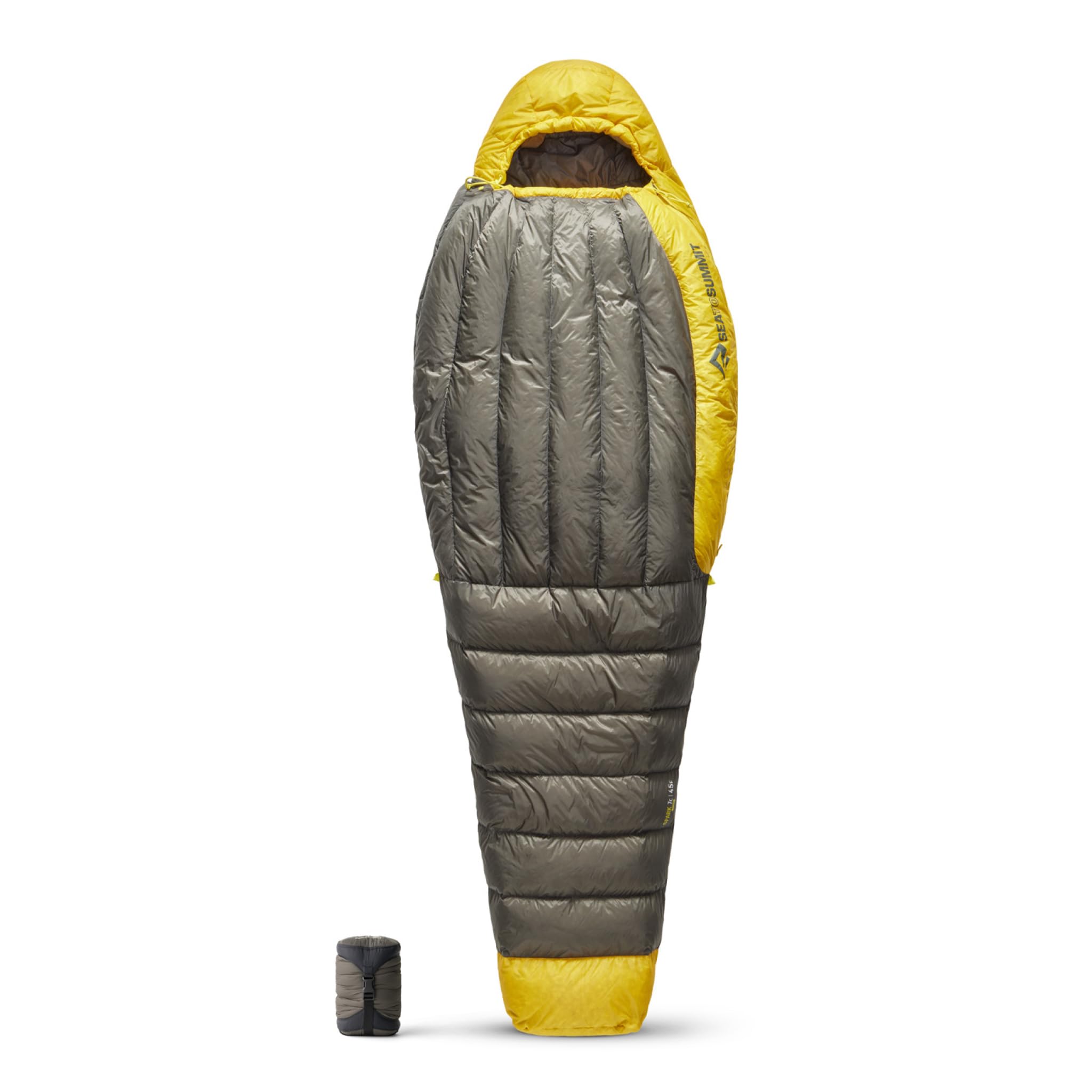
The Sea to Summit Spark redefines what a backcountry sleeping bag can be at just 14.6 ounces. It uses 850+ fill power goose down with a non-PFC Ultra-Dry treatment that helps the insulation maintain loft when humidity creeps in — a genuine advantage over untreated down bags when condensation builds inside a tent. The 10D shell fabric with PFC-free DWR sheds light moisture while the contoured mummy shape provides a trim but not restrictive fit for moving around in the night.
Designed for warm-weather backpacking, bike packing, and touring, the Spark achieves its featherweight by using sewn-through baffles rather than box baffles, which saves grams but means you won’t want to push it below 45°F comfort. The YKK #5 zipper slides smoothly without snagging, and the hook-and-loop strap at the neck seals warmth effectively. The included Ultra-Sil compression sack shrinks the bag to roughly the size of a 1-liter water bottle, freeing immense pack volume for other essentials.
For gram-conscious trekkers who sleep warm and travel fast, the Spark delivers a weight-to-warmth ratio that few competitors match. If you regularly face sub-40°F nights or need a bag that performs in damp coastal air, look toward higher-temperature-rated options — but for summer alpine missions and ultralight ridge walks, this bag is the clear standout.
Why it’s great
- Astounding 14.6 oz weight frees up enormous pack space
- 850+ fill down with moisture-resistant Ultra-Dry treatment
- Smooth zipper and effective draft collar seal warmth
Good to know
- Sewn-through baffles limit use to warm-weather conditions
- 10D shell requires careful handling around sharp tent stakes
- Trim fit may feel restrictive for broad-shouldered sleepers
2. Therm-a-Rest Hyperion 32F/0C Ultralight Down Mummy Sleeping Bag
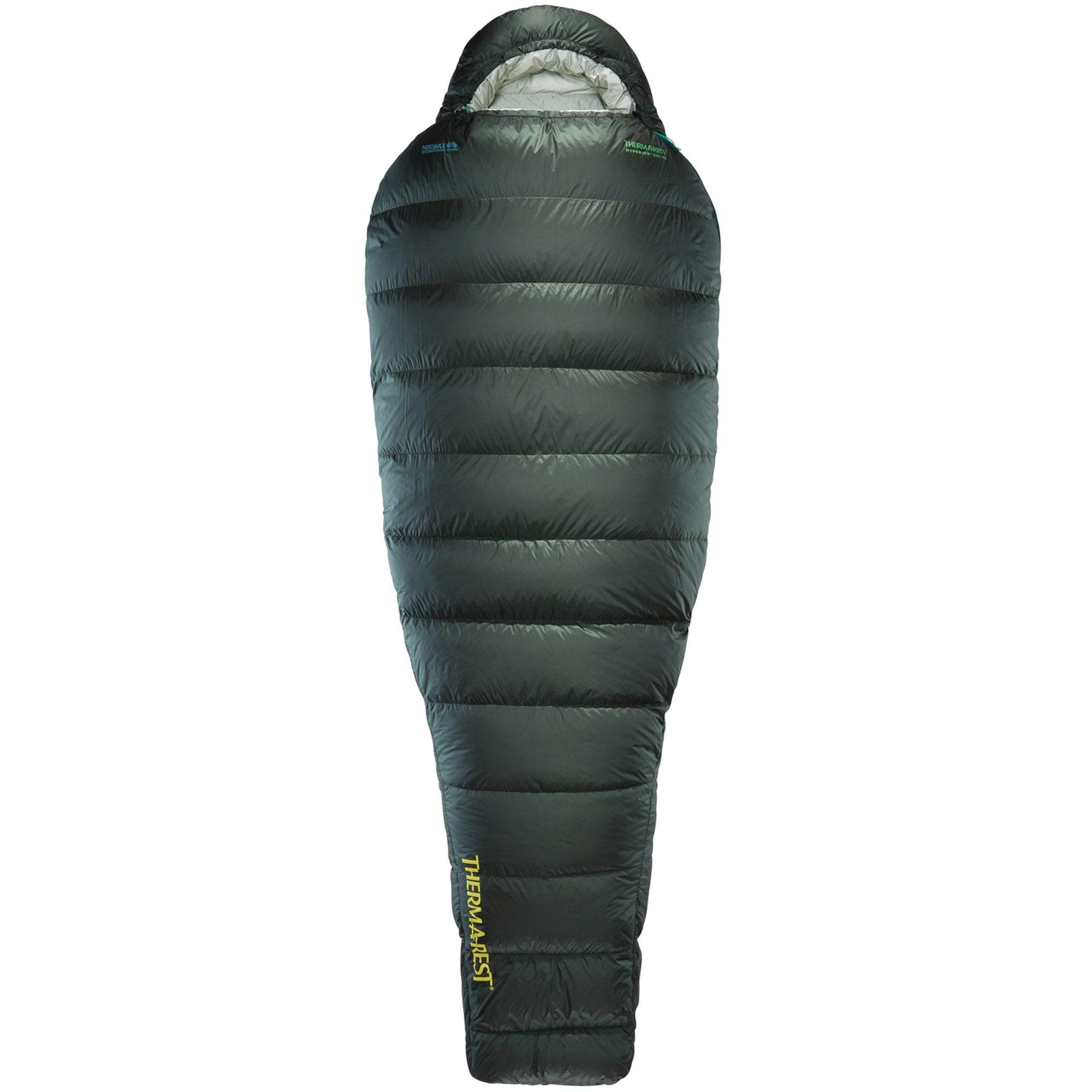
The Therm-a-Rest Hyperion packs 900-fill Nikwax Hydrophobic Down into a mummy shell that weighs just 18 ounces in the long version. That’s an astonishing spec — the highest fill power available in this lineup, meaning each ounce of down traps more dead air than any lower-fill competitor. The Nikwax treatment ensures the down retains loft sixty times longer than untreated down when exposed to humidity, a critical detail for multi-day trips where condensation is unavoidable.
The Hyperion uses box baffle construction throughout the torso and footbox to maximize loft and eliminate cold spots, while sewn-through baffles in the hood save weight. The ergonomic mummy shape is designed for efficient thermal retention — the trade-off is a snug fit that full-size adults may find confining, particularly through the shoulders and hips. The SynergyLink Connectors are loops that integrate the bag with a sleeping pad, preventing you from rolling off the pad on sloped campsites.
At a comfort rating around 41°F, this is a three-season bag best suited for summer and shoulder-season use in moderate climates. Thru-hikers and fastpackers who count every gram will find the Hyperion unmatched for its loft-to-weight ratio. For those who need a bag that performs below 35°F or prefer more internal wiggle room, a wider cut or higher temperature rating would be a better match.
Why it’s great
- 900-fill down with hydrophobic treatment resists moisture
- Box baffle construction prevents cold spots in key areas
- SynergyLink Connectors keep you on the sleeping pad
Good to know
- Snug mummy fit limits movement for broader sleepers
- Comfort rating near 41°F — not a cold-weather bag
- Slippery shell can cause shifting on inclines
3. Rab Ascent Down Sleeping Bag
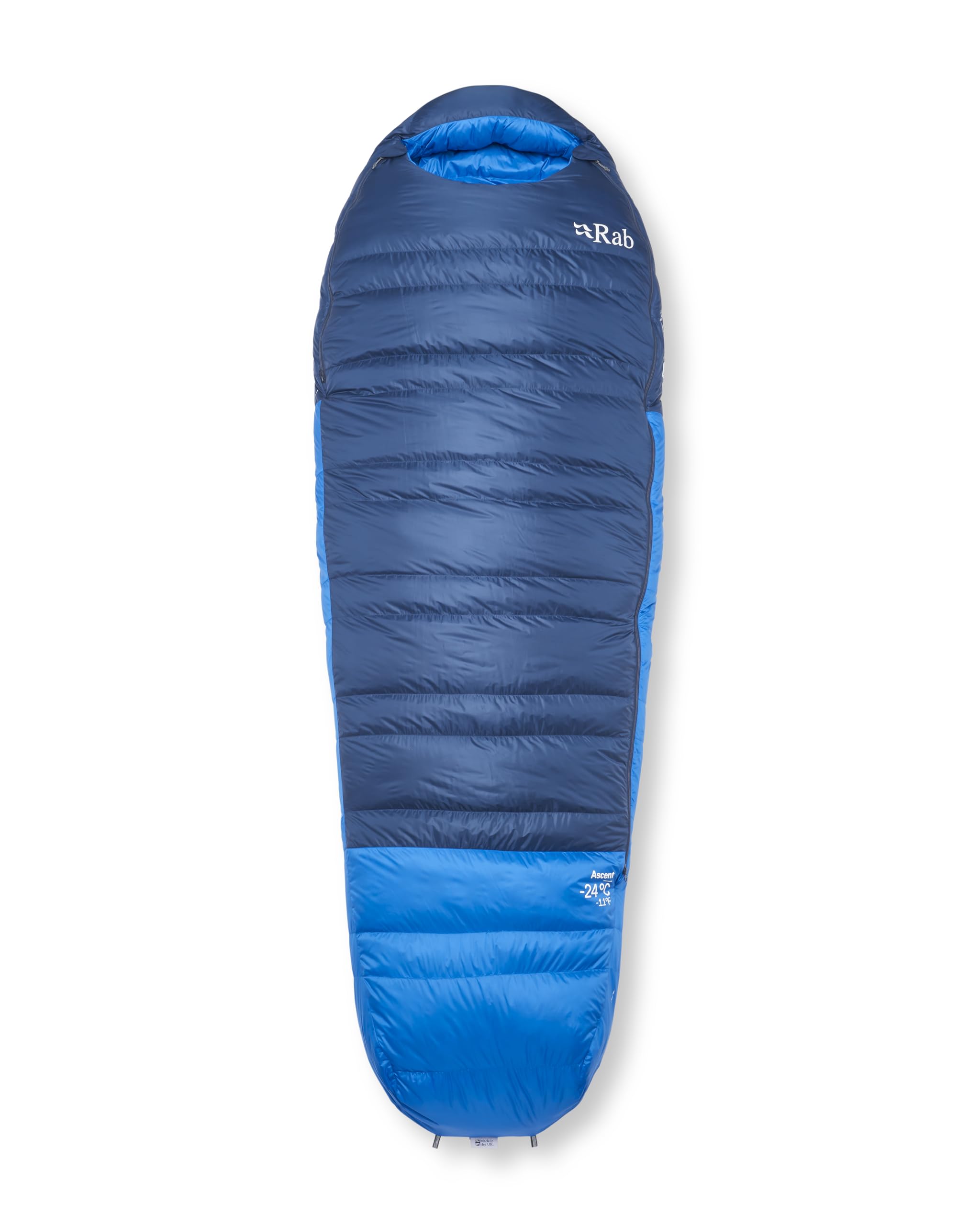
The Rab Ascent is engineered for serious winter backpacking with a tested ISO comfort rating of 5°F and a limit rating of -11°F. That puts it far ahead of any other bag in this comparison for raw cold-weather capability. Rab uses 650-fill European duck down treated with Grangers hydrophobic finish and encases it in a 20D Pertex Quantum shell — a downproof, windproof fabric with a PFC-free DWR coating that sheds snow and frost effectively.
The construction details reflect Rab’s mountaineering heritage: L.O.F.T baffling minimizes down migration and optimizes heat retention, an anatomic hood with a drawcord adjustment seals around the face, and a 3D insulated collar prevents warm air from escaping at the neck. The ¾-length main zipper reduces weight while still allowing easy entry, and the down-filled draft tube along the zipper eliminates that dreaded cold stripe. The bag also features left- and right-zippered options that can mate together for two-person use.
Weighing 4.2 pounds in the regular size, the Ascent is not an ultralight bag — its bulk reflects the insulation required to keep you alive in sub-zero conditions. Winter campers, mountaineers, and anyone sleeping in actual snow conditions will find the warmth-to-weight ratio impressive for its class. Users who mainly backpack in three-season conditions at moderate altitudes will find the Ascent over-insulated and unnecessarily heavy.
Why it’s great
- True winter capability with 5°F comfort rating
- Pertex Quantum shell blocks wind and resists moisture
- Anatomic hood and 3D collar seal warmth exceptionally
Good to know
- 4.2 lbs is heavy for three-season backpacking
- Some users report temperature rating over-optimism
- Zipper can occasionally snag on the draft tube
4. Kelty Cosmic 20 Down Mummy Sleeping Bag

The Kelty Cosmic 20 Down has earned its reputation as the go-to entry-level down bag for backpackers who want genuine down performance without a premium price tag. It packs 550-fill RDS-certified duck down into a recycled nylon shell with a PFAS-free DWR finish, weighing 2.8 pounds in the regular size. The ISO limit rating of 21°F means it handles shoulder-season conditions reliably at a fraction of the cost of high-fill-power options.
Kelty’s build quality is evident in the dual-direction zippers that allow venting from the footbox, the effective draft collar that seals around the neck, and the hood that cinches down without excessive fabric bunching. The bag compresses to a 13 x 7-inch stuff sack that slips easily into a 50-liter pack. The mummy shape is snug but not claustrophobic — several user reports note it’s warm enough with a base layer down to the high 20s°F.
Side sleepers with broader shoulders may find the cut restrictive, particularly through the upper body. The 550-fill down is heavier per unit of loft than higher-fill options, meaning the bag is bulkier for its warmth rating than premium competitors. For first-time backcountry buyers or anyone building a kit on a sensible budget, the Cosmic 20 delivers reliable down insulation that will perform for years with proper care.
Why it’s great
- Genuine down fill at an accessible price point
- RDS-certified down with recycled shell fabric
- Packs small enough for a standard 50L pack
Good to know
- Snug shoulders for broad or muscular builds
- 550-fill down is bulkier than premium alternatives
- Zipper can be tricky to operate smoothly
5. Sea to Summit Trek Down Sleeping Bag
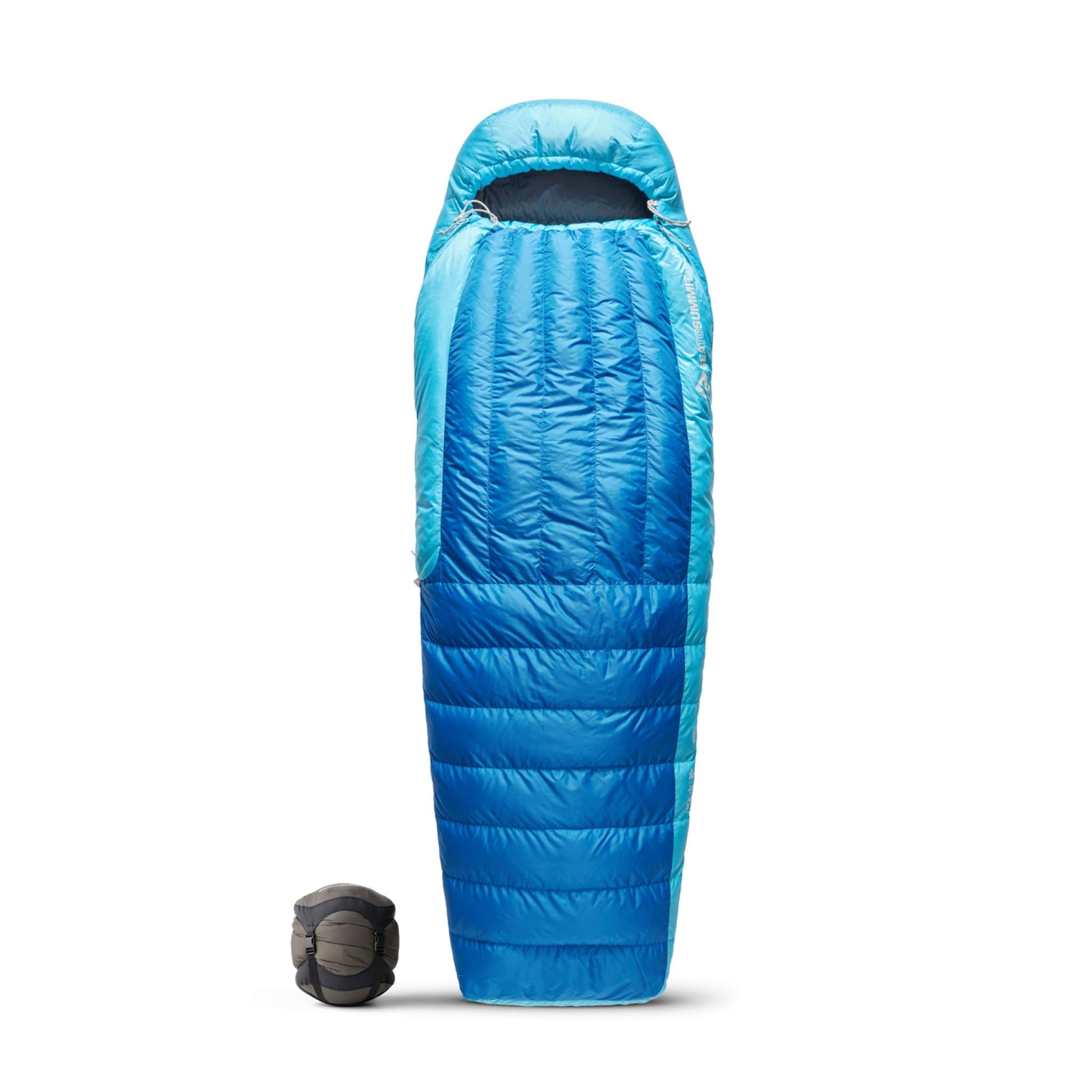
The Sea to Summit Trek Down breaks from the mummy mold with a relaxed cut that provides noticeably more room through the hips, knees, and feet. The 30°F-rated bag uses 650-fill RDS-certified duck down with a non-PFC Ultra-Dry treatment, and the recycled 20D polyester shell with DWR finish handles wind and light moisture without issue. At 2.95 pounds for the long size, it’s heavier than a pure mummy bag but delivers genuine comfort for those who toss and turn.
The Free Flow Zip System is a standout feature: a two-way zipper that lets you open the footbox independently without losing shoulder insulation, giving excellent temperature regulation across changing overnight conditions. The shaped hood and draft tube seal warmth effectively even when the bag is partially unzipped. The Ultra-Sil compression sack shrinks the bag to a manageable size for a 55-liter pack, though not as small as higher-fill-power competitors.
Some users report that the 650-fill down distribution can feel uneven out of the box, requiring a few hours of loft time before use. The zipper has drawn criticism for occasional sticking, particularly when navigating the transition around the footbox. For side sleepers, larger-framed backpackers, or anyone who values wiggle room over the last gram saved, the Trek is a rare find that doesn’t sacrifice warmth for comfort.
Why it’s great
- Relaxed cut provides genuine room for side sleepers
- Free Flow Zip System enables precise temperature control
- Ultra-Dry down treatment improves moisture resistance
Good to know
- Down distribution may require initial fluffing
- Zipper can stick near the footbox transition
- Heavier and bulkier than mummy equivalents
6. Kelty Cosmic Synthetic Fill 0 Degree Backpacking Sleeping Bag
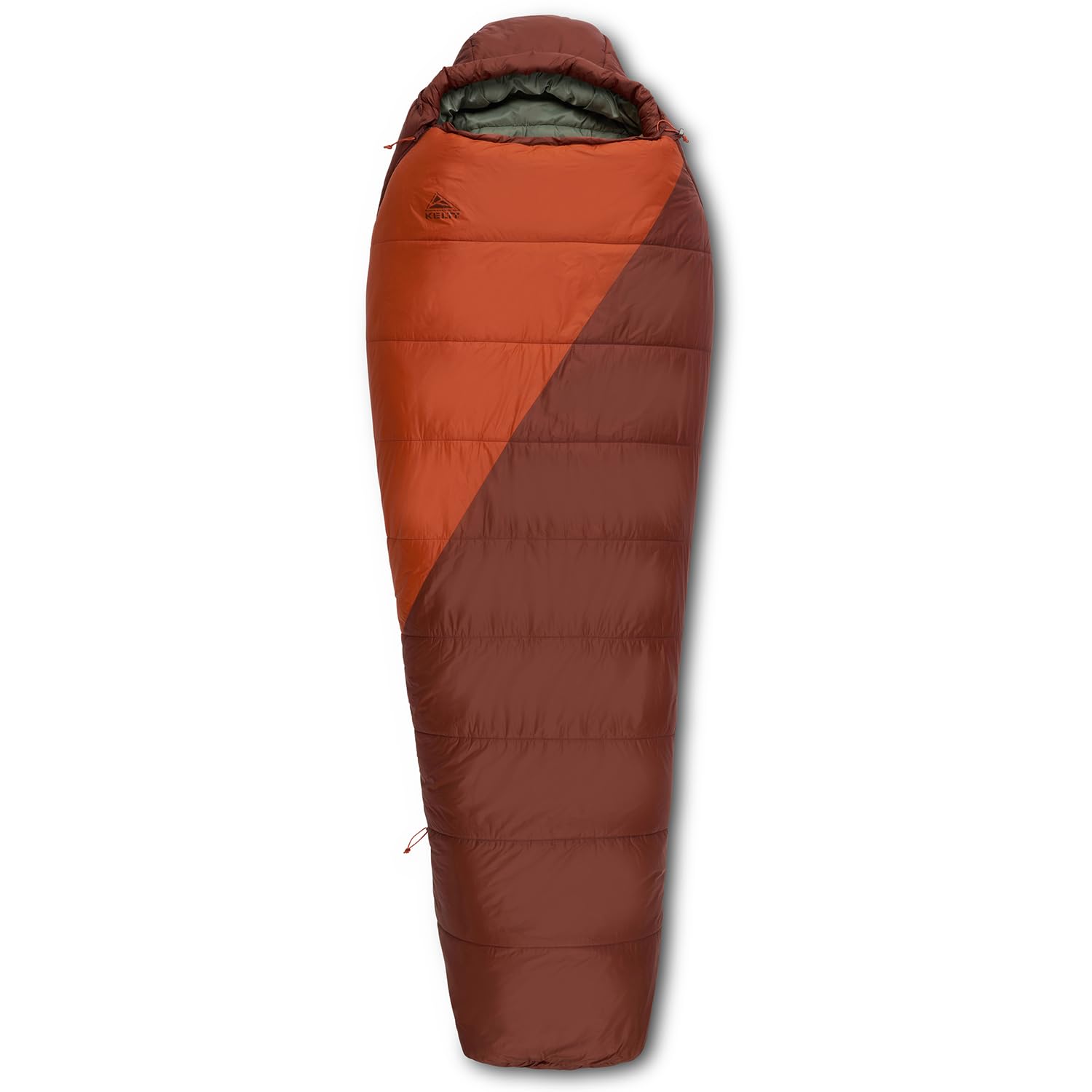
The Kelty Cosmic Synthetic 0F uses Cirroloft synthetic insulation that provides reliable warmth in damp conditions where down would fail entirely. With an ISO-tested comfort temperature around 18°F, this bag is built for winter camping, scout trips, and wet-weather backpacking where condensation or rain is a real threat. The 20D recycled nylon shell with PFAS-free DWR sheds moisture while the synthetic fill maintains loft and warmth even when partially wet.
The bag features an integrated compression stuff sack that, combined with the packability of modern synthetic fibers, compresses the bag to a reasonable size for a 65-liter pack. The natural-fit spacious footbox gives toes room to move without compressing insulation, and an external stash pocket on the side provides a convenient spot for a headlamp or phone. The 0°F temperature rating means this bag handles genuine winter conditions — snow camping, ice fishing, and high-altitude shoulder seasons.
Weighing 4 pounds 11 ounces, the Cosmic Synthetic is not the right choice for ultralight hikers or those trying to shave every ounce. The zipper has been noted to snag occasionally near the bicep area, and the bag lacks a draft collar at the shoulders, which some users find reduces neck warmth in sub-20°F conditions. For reliability in wet or humid conditions where down loses its edge, this is a workhorse that delivers consistent performance at a fair price.
Why it’s great
- Synthetic fill performs when damp or wet
- ISO-tested warmth rating near 18°F comfort
- Integrated compression sack for easy packing
Good to know
- Heavy at 4 lbs 11 oz for backpacking
- Zipper can snag near the bicep area
- No shoulder draft collar reduces neck warmth
7. ATEPA 700FP Down Sleeping Bag
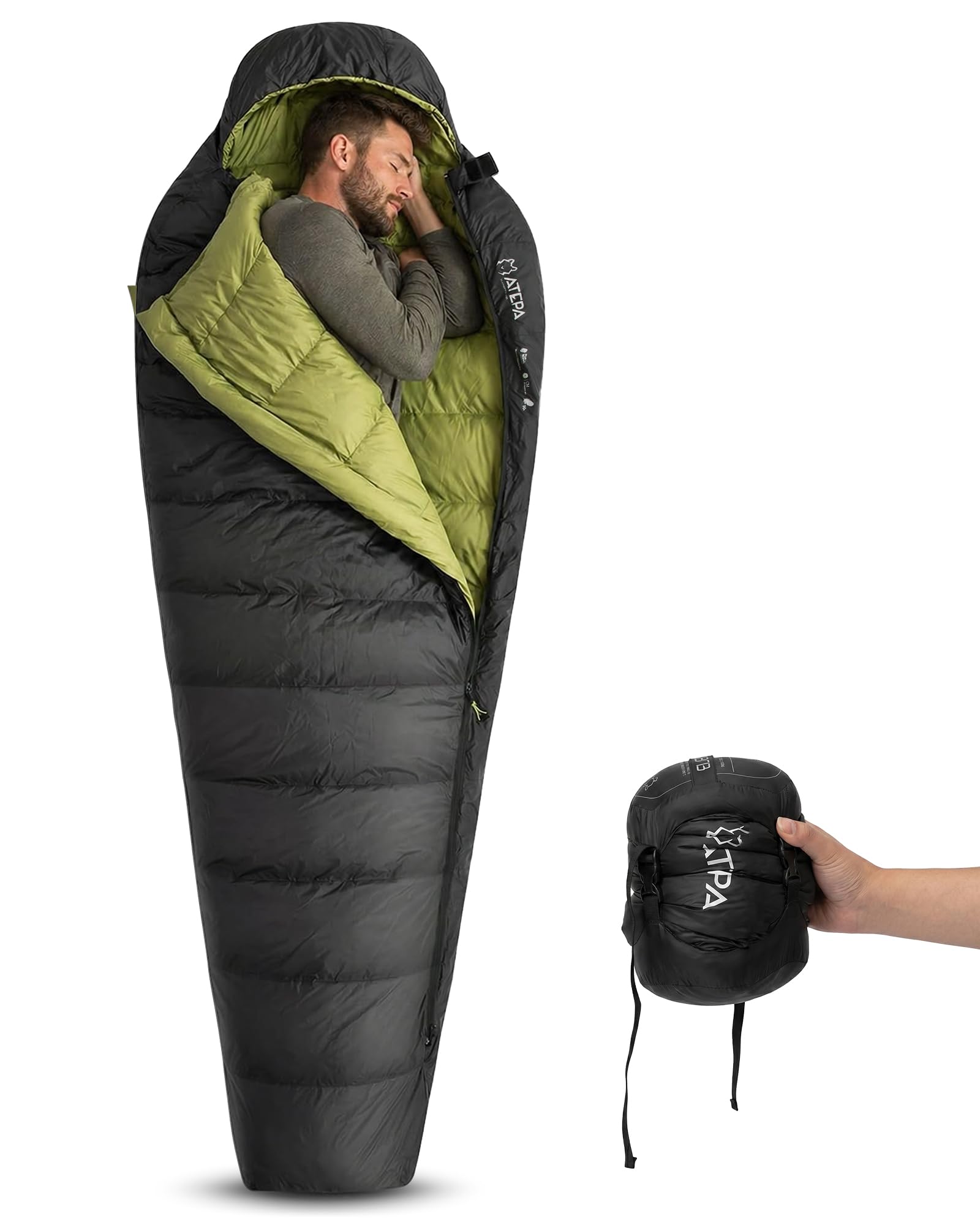
The ATEPA 700FP bag combines RDS-certified down and recycled synthetic fibers in a 2.2-pound package that fits users up to 6’5”. The shell is made from GRS-certified recycled 15D nylon with a 20D recycled liner, making this one of the most environmentally thoughtful bags in the lineup. The ISO limit rating of 34°F places it solidly in three-season territory, suitable for spring through fall backpacking in moderate climates.
The bag uses 3D box baffle construction in the main body and a vaulted footbox that allows natural foot movement while eliminating cold spots. The YKK two-way locking zipper features anti-snag tape that genuinely reduces catching, and the adjustable hood drawstring and draft collar work together to seal warmth around the face and neck. The included compression sack reduces the bag to a compact 13.8 x 7.5 inches, freeing substantial pack volume for other gear.
Some users report that the insulation density is insufficient for sustained exposure below 35°F, noting the bag feels more like a warm-weather solution than its 34°F limit rating suggests. The draft collar has also been described as ill-fitting on certain body types. For warm-season backpackers who prioritize sustainability and packability, the ATEPA delivers a compelling combination, but cold sleepers should plan to layer up or choose a warmer-rated bag.
Why it’s great
- GRS-recycled shell and RDS-certified down
- 2.2 lbs with great packability
- 3D box baffle and vaulted footbox reduce cold spots
Good to know
- Insulation may be insufficient below 35°F for cold sleepers
- Draft collar fit is inconsistent across body types
- Not a true 0°F bag despite marketing claims
8. OMVMO Wearable Down Sleeping Bag

The OMVMO reimagines the backcountry sleeping bag as a wearable piece of camp gear with arm holes, shoulder straps, and chest pockets that let you walk, read, or use your phone without leaving the bag. The 400T 20D nylon shell with DWR coating is tear-resistant and treated to prevent down leakage, while the fill uses natural white goose down fiber for breathable, lightweight warmth. The bag is rated for 20°F and fits users up to 6 feet tall.
Innovative details include zippered chest pockets for reaching out, buttons at the bottom and waist for walking freely, and a clip system that attaches the bag to an air pad to prevent sliding. The bag can be unzipped fully to serve as a blanket or mat, and two bags with opposite zipper orientations can be spliced into a double sleeping bag. YKK zippers with anti-snag sliders and draft tubes around the shoulder and zipper track help seal warmth effectively.
Build quality concerns appear in user reports — the small ties that hold the bottom can tear during first use, and the down fill is susceptible to clumping and mildew if the bag requires washing. The weight of 3.1 pounds makes it a middle-ground option weight-wise, heavier than ultralight mummies but lighter than most full-envelope bags. For car camping, basecamp use, or backpackers who prioritize camp comfort over minimum weight, the OMVMO offers unmatched versatility at its price tier.
Why it’s great
- Wearable design allows walking and using hands
- Can be used as blanket, mat, or double bag
- YKK zippers with anti-snag sliders
Good to know
- Small bottom ties prone to tearing
- Down clumps and mildews if washed improperly
- Not suitable for ultralight backpacking
9. QEZER 600FP Down Sleeping Bag

The QEZER 600FP bag delivers genuine down fill at an entry-level price point, using 2.2 pounds of 600-fill duck down inside a 400T high-density nylon shell. The comfort temperature range is listed at 18°F to 32°F, making it a reasonable choice for three-season use in moderate climates. The semi-rectangular shape provides more internal space than a true mummy bag, measuring 30.71 x 86.61 inches to accommodate taller sleepers comfortably.
The bag features a double zipper design that helps prevent cold air entry, chest insulation for improved warmth retention, and a foot zipper for ventilation on warmer nights. The included compression sack reduces the packed size to 14.96 x 7.48 inches — respectable for the price tier, though not as compact as higher-fill-power options. The down distribution is reported as even, with dense stitching that minimizes down leakage through the seams.
Some users note that the outer shell fabric is thin, with one report of a 1-inch tear from a splinter during normal use. The stuff sack is also described as thin and potentially insufficient for long-term compression. At 3.68 pounds, the QEZER is heavier than mid-range down bags, but for backpackers on a tight budget who want the warmth and breathability of down over synthetic, it provides an acceptable entry point into the category.
Why it’s great
- Genuine 600-fill down at a budget-friendly price
- Semi-rectangular shape offers room for movement
- Dense stitching minimizes down leakage
Good to know
- Outer shell fabric is thin and prone to tearing
- 3.68 lbs is heavy for backpacking use
- Stuff sack quality could be improved
FAQ
How do I know if a 20°F bag is actually warm enough for 20°F nights?
Should I buy a down or synthetic sleeping bag for backpacking in the Pacific Northwest?
What’s the difference between a mummy and a semi-rectangular backcountry sleeping bag?
Final Thoughts: The Verdict
For most users, the best backcountry sleeping bag winner is the Sea to Summit Spark Ultralight because it achieves a near-unbeatable 14.6-ounce weight while maintaining reliable warmth for three-season missions with its 850+ fill down and moisture-resistant treatment. If you need serious winter capability for sub-zero camps, grab the Rab Ascent Down for its 5°F comfort rating and expedition-grade Pertex shell. And for budget-conscious backpackers who want genuine down fill without the premium price, the Kelty Cosmic 20 Down delivers proven reliability at a price that won’t break your gear budget.