
The APS-C sensor format strikes a unique balance between portability and image quality, but the lens you mount on it is the single biggest factor determining whether your photos look professional or merely passable. Choosing the wrong zoom lens can mean sacrificing low-light capability for reach, or conversely, paying a premium for a constant aperture that rarely leaves your camera bag. The best APS-C zoom lens isn’t a single product—it’s the one that matches your specific shooting style without breaking your budget or your back.
I’m Min — the co-founder and writer behind Gadgets Feed. I’ve spent countless hours analyzing the optical formulas, AF motor types, and real-world performance data behind every major APS-C zoom lens currently on the market to help you make a genuinely informed choice.
Whether you need ultra-wide interiors, a constant f/2.8 for portraits, or a superzoom that covers everything from a 27mm landscape to a 525mm bird-in-flight, this guide to the best aps-c zoom lens breaks down the strengths and trade-offs of 11 top contenders across every meaningful spec and use case.
How To Choose The Best APS-C Zoom Lens
Before you sort through focal lengths and f-stops, you need to lock in two things: which camera mount you own (Sony E, Nikon Z, Canon RF, FUJIFILM X, or L-Mount) and the primary subject you shoot. A real estate photographer needs a wide-angle zoom like a 10-18mm, while a travel shooter will get far more use from an 18-140mm or 18-300mm superzoom. The right choice eliminates lens swaps and keeps you shooting.
Understand Focal Length Equivalency on APS-C
Every APS-C sensor has a crop factor—typically 1.5x for Sony, Nikon, and FUJIFILM, and 1.6x for Canon. That means an 18-50mm lens behaves like a 27-75mm full-frame equivalent. If you need the field of view of a traditional 24mm wide-angle, you need a lens starting around 16mm. If you want a 400mm reach, a 70-350mm will give you a 105-525mm equivalent. Ignoring the crop factor is the most common mistake beginners make when shopping for an APS-C zoom lens.
Decide Between Constant Aperture and Variable Aperture
A constant f/2.8 zoom (like the Sigma 18-50mm f/2.8 or Sony 16-55mm f/2.8 G) maintains the same bright aperture across the entire zoom range, giving you consistent exposure and shutter speed when zooming in—critical for video and event photography. Variable-aperture zooms (like the Tamron 18-300mm f/3.5-6.3) are lighter and cheaper but darken as you zoom, forcing higher ISO or slower shutter speeds at the long end. Your tolerance for that trade-off determines which tier is right for you.
Image Stabilization: In-Lens vs. In-Body
Some APS-C zoom lenses include optical image stabilization (VR, VC, OSS, or IS), while others rely on your camera’s in-body stabilization (IBIS). If you own a Sony A6600 or Canon R7 with effective IBIS, you can safely choose an unstabilized lens like the Sigma 10-18mm f/2.8. If your body lacks IBIS—such as the Sony A6100 or Canon R50—you absolutely want a lens with built-in stabilization, particularly for telephoto shooting beyond 135mm.
Quick Comparison
On smaller screens, swipe sideways to see the full table.
| Model | Category | Best For | Key Spec | Amazon |
|---|---|---|---|---|
| Sony E 16-55mm f/2.8 G | Premium Standard Zoom | Pro-level sharpness & constant f/2.8 | 16-55mm; f/2.8 constant; 494g | Amazon |
| Canon RF 24-70mm f/2.8 L IS USM | Full-Frame L-Series | L-series build with 5-stop IS | 24-70mm; f/2.8; 5-stop IS; 900g | Amazon |
| Sigma 17-40mm f/1.8 DC DN Art | Ultra-Bright Wide Zoom | Low-light wide-angle with f/1.8 | 17-40mm; f/1.8 constant; 545g | Amazon |
| Tamron 28-200mm f/2.8-5.6 Di III RXD | All-in-One Zoom | Travel versatility with f/2.8 at wide | 28-200mm; f/2.8-5.6; 575g | Amazon |
| Sigma 18-50mm f/2.8 DC DN Contemporary | Compact Standard Zoom | Lightest f/2.8 zoom for Sony E | 18-50mm; f/2.8 constant; 290g | Amazon |
| Canon RF-S 18-150mm f/3.5-6.3 IS STM | Travel Superzoom | All-in-one RF-S walkaround | 18-150mm; 4.5-stop IS; 408g | Amazon |
| Nikon NIKKOR Z DX 18-140mm VR | Nikon All-in-One | Great travel/hiking zoom for Z DX | 18-140mm; VR; 315g | Amazon |
| Nikon NIKKOR Z DX 50-250mm VR | Telephoto Zoom | Lightweight telephoto for Z DX | 50-250mm; 5-stop VR; 405g | Amazon |
| Tamron 18-300mm f/3.5-6.3 Di III-A VC VXD | Ultra Superzoom | Maximum reach in a single lens | 18-300mm; VC; 620g | Amazon |
| Sony E 70-350mm f/4.5-6.3 G OSS | Super-Telephoto Zoom | 525mm equivalent wildlife reach | 70-350mm; OSS; 625g | Amazon |
| Sigma 10-18mm f/2.8 DC DN | Ultra-Wide Zoom | Real estate & astro wide-angle | 10-18mm; f/2.8 constant; 270g | Amazon |
In‑Depth Reviews
1. Sony E 16-55mm f/2.8 G Lens

The Sony E 16-55mm f/2.8 G is widely considered the benchmark standard zoom for Sony APS-C shooters. Its constant f/2.8 aperture delivers consistent low-light performance across the entire 24-82.5mm equivalent range, and the XD linear motor ensures near-instantaneous autofocus that locks onto subjects without hunting. The G-series optics produce exceptional center-to-corner sharpness even wide open, making it a legitimate alternative to full-frame setups for portrait, event, and travel work.
At 494 grams, the 16-55mm G is not the lightest f/2.8 zoom on this list—the Sigma 18-50mm f/2.8 is significantly smaller—but its build quality, weather sealing, and optical performance justify the added heft. The lens features a customizable focus hold button and an aperture ring with a click/de-click switch, giving videographers precise manual control. Users paired with the A6600 or A6700 report that the camera’s IBIS complements the lens’s lack of in-lens stabilization perfectly, producing shake-free results down to 1/15 second.
Where the Sony 16-55mm G truly shines is in its resolving power: it out-resolves most APS-C sensors, meaning you get every last megapixel of detail from a 24MP or 26MP body. That said, it lacks optical stabilization, so pairing it with a body without IBIS like the A6100 or ZV-E10 requires a steady hand or a tripod for critical sharpness. The premium price tag puts it firmly in prosumer territory, but for Sony shooters who demand the absolute best from their standard zoom, it remains the gold standard.
Why it’s great
- Constant f/2.8 with exceptional sharpness across the frame
- XD linear motor delivers fast, silent, and precise autofocus
- Dust and moisture-resistant build with physical aperture ring
Good to know
- No optical image stabilization—requires IBIS body for best handheld results
- Heavier and more expensive than the Sigma 18-50mm f/2.8 alternative
- Modest 16-55mm range compared to all-in-one superzooms
2. Canon RF 24-70mm f/2.8 L IS USM

While the Canon RF 24-70mm f/2.8 L IS USM is technically a full-frame lens, it earns a spot here because Canon APS-C shooters frequently mount it on R7 and R10 bodies for its L-series durability and 5-stop optical image stabilization. On an APS-C sensor, the effective focal range becomes roughly 38-112mm, which is ideal for portrait, event, and street photography. The Nano USM motor provides virtually silent, lightning-fast autofocus that pairs seamlessly with Canon’s Dual Pixel CMOS AF for video work.
The combination of in-lens Optical IS and in-body IBIS on the R7 delivers up to 8 stops of shake correction, allowing handheld shooting at absurdly slow shutter speeds. The L-series build includes comprehensive weather sealing that matches Canon’s professional R5/R3 bodies, making it a reliable companion in rain, dust, or cold. Users consistently report that the lens produces stunningly sharp images with minimal chromatic aberration, even at f/2.8, and the control ring offers direct access to aperture, ISO, or exposure compensation.
The obvious downside is the premium price point and the weight: at 900 grams, the RF 24-70mm f/2.8 L is one of the heaviest lenses on this list, and on a compact R10 or R50 body, the combination can feel front-heavy. Additionally, the 82mm filter thread demands expensive filters. For Canon APS-C shooters who value build quality and stabilization above portability, however, this lens delivers professional-grade results that justify the investment over native RF-S options.
Why it’s great
- 5-stop optical IS plus IBIS compatibility for up to 8 stops total
- L-series build with professional weather sealing
- Nano USM delivers silent, fast autofocus for photo and video
Good to know
- Heavy at 900g—can feel unbalanced on smaller R10/R50 bodies
- Full-frame designed lens; APS-C crop reduces effective wide-angle
- Premium price and 82mm filter cost add to total investment
3. Sigma 17-40mm f/1.8 DC DN Art
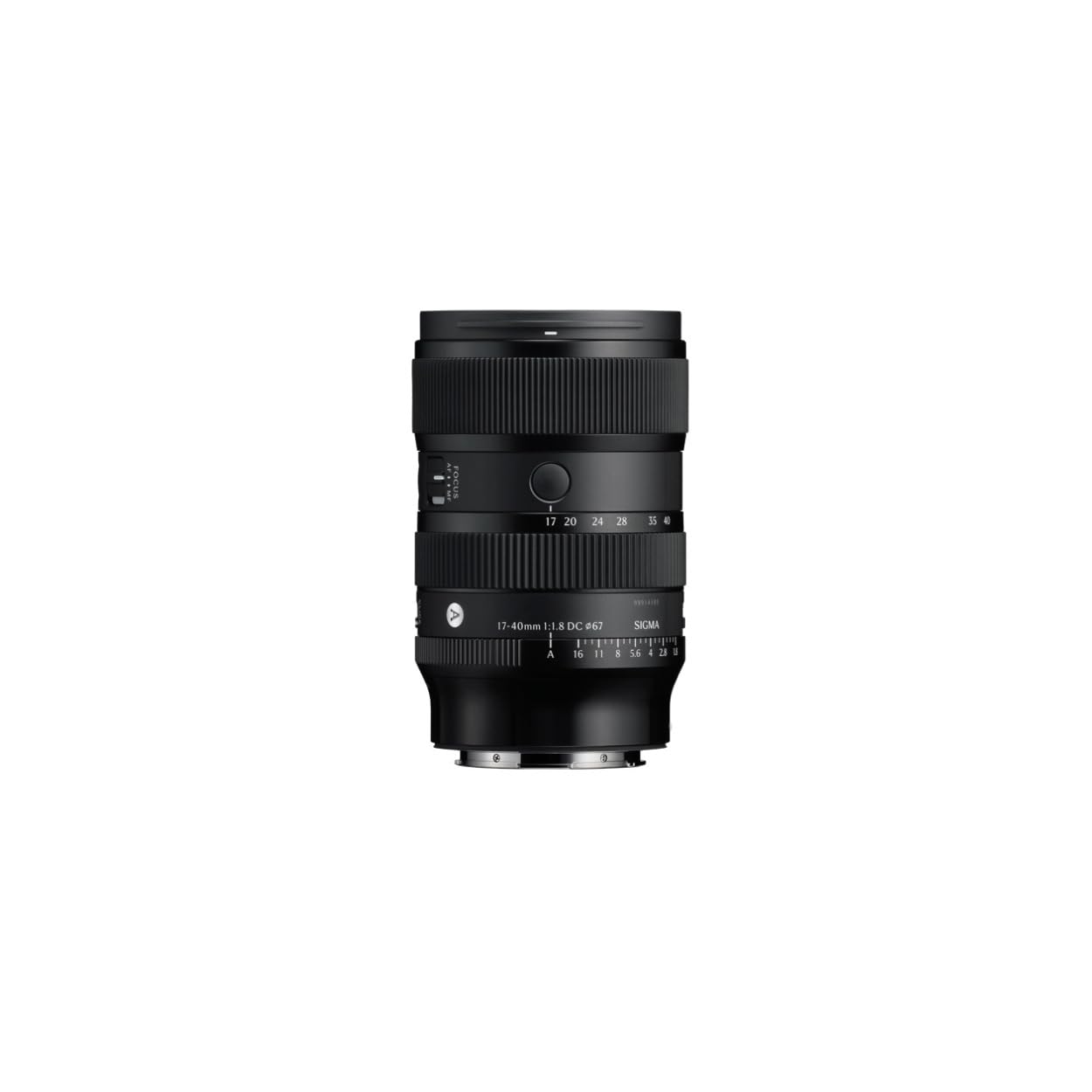
The Sigma 17-40mm f/1.8 DC DN Art is a truly unique lens: it offers a constant f/1.8 aperture across a wide-to-standard zoom range on APS-C, equivalent to roughly 25.5-60mm. That extra two-thirds of a stop over a typical f/2.8 zoom makes a tangible difference in low-light environments like indoor events, museums, and twilight cityscapes. The Art-series optics deliver outstanding center sharpness and controlled distortion, and the internal zoom mechanism means the lens length does not change when focusing or zooming—critical for gimbal work.
Autofocus performance is exceptional for a third-party lens, with a stepping motor that keeps up with Sony’s Real-time Tracking on bodies like the A6400 and A6700. The build quality typical of Sigma’s Art line includes a metal mount, a focus mode switch, and a customizable AFL button. Users have noted that the lens produces strong longitudinal chromatic aberration (LoCA) in high-contrast close-up situations, but this is correctable in post and rarely noticeable in standard landscape or portrait work.
At 545 grams and a 67mm filter thread, the Sigma 17-40mm f/1.8 sits in a reasonable weight class for its speed. The main trade-off is the zoom range: it’s narrower than the 18-50mm f/2.8 options, so you won’t get as tight for portraits. For Sony APS-C shooters who prioritize low-light capability and wide-angle performance above all else—particularly astrophotographers and indoor event photographers—this is the brightest standard zoom you can buy.
Why it’s great
- Constant f/1.8 aperture is unmatched for APS-C standard zooms
- Art-series optics deliver excellent sharpness and minimal distortion
- Internal zoom design is ideal for gimbal and video use
Good to know
- Narrower zoom range than f/2.8 equivalents (17-40mm vs 18-50mm)
- Longitudinal chromatic aberration visible in high-contrast close-ups
- No optical image stabilization
4. Tamron 28-200mm f/2.8-5.6 Di III RXD

The Tamron 28-200mm f/2.8-5.6 Di III RXD is a full-frame lens that performs beautifully on APS-C bodies, giving you an effective range of 42-300mm. What makes it special is the f/2.8 starting aperture at 28mm—unprecedented for an all-in-one zoom—which lets you capture low-light wide shots without immediately reaching for a prime lens. The RXD stepping motor is exceptionally quiet and accurate, making it a strong choice for both stills and video on Sony E-mount cameras.
At just 575 grams, the Tamron 28-200mm is lighter than many dedicated 70-200mm f/2.8 zooms while offering vastly more range. The moisture-resistant construction and fluorine coating add durability for travel in less-than-ideal weather. Users consistently praise the sharpness across the frame, with particularly strong center resolution even at 200mm. The lens lacks optical stabilization, so it’s best paired with an IBIS-equipped body like the A6600 or A6700 for consistent results at the telephoto end.
The key limitation is the slow aperture at the long end—f/5.6 at 200mm means you’ll need bright light or higher ISO for telephoto action shots. The 28mm (42mm FF equiv.) wide end also feels somewhat tight for landscape work on APS-C; you’ll want a separate 10-18mm for ultra-wide shots. For the traveler who wants one lens that covers everything from environmental portraits to distant wildlife, the Tamron 28-200mm offers a compelling balance of reach, speed, and portability.
Why it’s great
- f/2.8 at the wide end is class-leading for an all-in-one zoom
- Lightweight 575g design with impressive 28-200mm range
- Moisture-resistant build and fluorine coating for travel durability
Good to know
- No optical image stabilization; best with IBIS bodies
- Wide end (28mm) is tight for landscape on APS-C
- Slows to f/5.6 at 200mm, limiting low-light telephoto performance
5. Sigma 18-50mm f/2.8 DC DN Contemporary
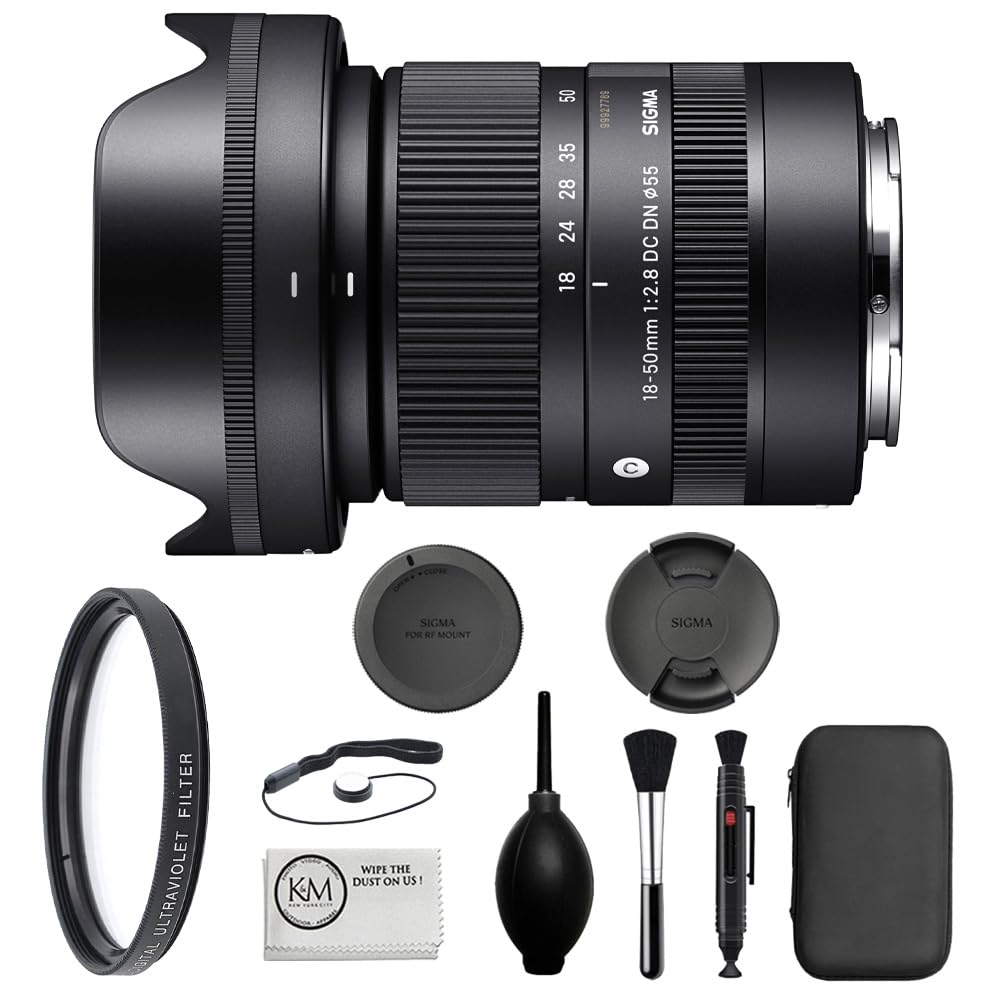
The Sigma 18-50mm f/2.8 DC DN Contemporary is precisely what APS-C mirrorless users have been asking for: a constant f/2.8 zoom that is genuinely compact and lightweight. At just 290 grams and roughly the size of a standard kit lens, this 27-75mm equivalent zoom is small enough to leave mounted on your camera every single day without feeling bulky. Despite its size, the optical performance rivals lenses twice its price, delivering sharp images with good contrast and minimal chromatic aberration.
Autofocus is driven by Sigma’s stepping motor, which is fast and quiet enough for most shooting scenarios, though it’s not quite as instantaneous as Sony’s XD linear motors. The 12.1 cm minimum focusing distance at the wide end allows for semi-macro shots with decent subject separation. The included lens hood and the availability of a UV filter bundle add practical value. Sony E-mount users particularly appreciate that this lens offers f/2.8 performance in a package that doesn’t overwhelm small bodies like the A6100 or ZV-E10.
The main compromises are the lack of optical image stabilization—so pairs best with IBIS bodies—and the relatively simple weather sealing compared to Sigma’s Art-series lenses. The 55mm filter thread keeps accessory costs low, and the overall build quality feels solid for the price point. For Sony APS-C shooters who want a bright standard zoom without the weight and cost of the Sony 16-55mm G, the Sigma 18-50mm f/2.8 DC DN Contemporary is the smartest value proposition on the market.
Why it’s great
- Remarkably compact and lightweight (290g) for a constant f/2.8 zoom
- Excellent optical quality and sharpness for its price class
- Short 12.1cm minimum focus distance enables close-up work
Good to know
- No optical image stabilization
- Weather sealing is basic compared to higher-end lenses
- AF stepping motor is good but not class-leading for tracking
6. Canon RF-S 18-150mm f/3.5-6.3 IS STM

The Canon RF-S 18-150mm f/3.5-6.3 IS STM is the ultimate walk-around lens for Canon’s APS-C R-series cameras like the R50, R10, and R7. Its 29-240mm full-frame equivalent range covers everything from group shots to moderate wildlife, and the built-in 4.5-stop optical IS (upgradable to 6.5 stops with IBIS on the R7) ensures sharp handheld results even at the telephoto end. The lead-screw-type STM motor delivers smooth, quiet autofocus that is ideal for video work without clicky focus noises.
Image quality is noticeably better than Canon’s basic 18-45mm kit lens, with improved sharpness across the frame and more pleasing color rendition. The lens balances well on the compact R50 and R10 bodies, making it a convenient everyday carry. Users who upgraded from the EF-S 55-250mm report that the RF-S 18-150mm offers comparable reach in a more versatile package that eliminates the need to swap lenses for wide-angle shots.
The lens does show noticeable chromatic aberration (purple/orange fringing) in high-contrast edges, and the variable f/3.5-6.3 aperture limits low-light performance compared to constant-aperture options. The all-plastic construction feels less premium than L-series glass, but it keeps the weight low at 408 grams. For Canon RF-S shooters who want a single lens for travel, family outings, and everyday photography without carrying a second lens, this is the perfect match.
Why it’s great
- Versatile 29-240mm equivalent range in a compact 408g package
- Effective 4.5-stop optical image stabilization
- Smooth lead-screw STM AF is ideal for video work
Good to know
- Chromatic aberration visible in high-contrast edges
- Variable f/3.5-6.3 aperture limits low-light telephoto performance
- All-plastic build lacks premium feel
7. Nikon NIKKOR Z DX 18-140mm VR

The Nikon NIKKOR Z DX 18-140mm VR is the definitive all-in-one zoom for Nikon Z-series DX cameras like the Z50, Zfc, and Z30. With an effective range of 27-210mm, it covers wide-angle landscapes, standard portraits, and telephoto compression in a single lens. The built-in VR (Vibration Reduction) provides up to 4.5 stops of stabilization, making handheld shooting at 1/10 second possible even at the telephoto end—a significant advantage for travel and hiking where a tripod isn’t practical.
The optical performance is impressive for a superzoom, with sharp results across most of the zoom range and pleasant color rendering straight out of camera. The stepping motor is effectively silent for video recording, and the customizable control ring gives direct access to aperture, ISO, or exposure compensation. Weighing just 315 grams (11 ounces), this lens is lighter than many standard kit lenses and balances beautifully on the compact Z50 body.
The all-plastic construction is the primary compromise—users report it feels less robust than metal-barreled lenses and requires gentle handling. The variable f/3.5-6.3 aperture is typical for this class, but it means you’ll need to raise ISO when shooting indoors at 140mm. Nevertheless, the combination of image quality, VR, and ultra-light weight makes the Nikon 18-140mm VR the most versatile single-lens solution for Nikon Z DX shooters who value portability.
Why it’s great
- Very lightweight at 315g—perfect for hiking and travel
- Effective VR stabilization enables sharp handheld telephoto shots
- Versatile 27-210mm equivalent range eliminates lens swaps
Good to know
- All-plastic construction requires careful handling
- Variable f/3.5-6.3 aperture limits indoor low-light performance
- Some barrel distortion at the wide end
8. Nikon NIKKOR Z DX 50-250mm VR

The Nikon NIKKOR Z DX 50-250mm VR is the telephoto partner to the 16-50mm or 18-140mm kit lens, giving Z DX shooters a 75-375mm full-frame equivalent reach in a compact 405g package. The built-in VR offers up to 5 stops of stabilization, which is genuinely useful for handheld shooting at 250mm. The optical quality is surprisingly sharp for a consumer telephoto zoom, with lively colors and minimal artifacts that make it a standout value proposition for Nikon Z users.
Autofocus is fast and silent thanks to the stepping motor, and the lens pairs well with the Z50’s subject-tracking AF for capturing moving subjects like birds or runners. The lens features an assignable control ring that can be set to manual focus, aperture, or exposure compensation—a nice touch for a lens at this price. Users report that cropping images taken at 250mm still retains sharpness, giving you effective reach beyond 375mm in post.
The f/4.5-6.3 maximum aperture does mean this is a daylight-only lens for most action scenarios; low-light telephoto work will push ISO high. The plastic barrel lacks a lens hood (sold separately), and the zoom ring feels slightly stiff on some units. When purchased as part of a Z50 two-lens kit, the 50-250mm VR costs significantly less than buying separately, making it an excellent entry into telephoto photography for Nikon Z DX users.
Why it’s great
- Excellent 5-stop VR for steady handheld telephoto images
- Lightweight (405g) and compact for its 375mm equivalent reach
- Surprisingly sharp optics with good color and contrast
Good to know
- Slow f/4.5-6.3 aperture limits low-light and action photography
- Plastic build; lens hood not included
- Best value when bought as part of a Z50 two-lens kit
9. Tamron 18-300mm f/3.5-6.3 Di III-A VC VXD

The Tamron 18-300mm f/3.5-6.3 Di III-A VC VXD is the world’s first 16.6x all-in-one zoom lens designed specifically for APS-C mirrorless cameras, offering an incredible 27-450mm full-frame equivalent range in a single lens. The VXD linear motor delivers fast, near-silent autofocus that rivals prime lenses in responsiveness, and the VC (Vibration Compensation) provides effective image stabilization for handheld telephoto shots. This lens genuinely replaces a bag full of glass for travel, wildlife, and event photography.
Maintaining consistent sharpness across such a massive zoom range is a formidable optical challenge, and the Tamron 18-300mm handles it admirably: images remain crisp from center to corners from 18mm through 200mm, with only slight softening at 300mm. The moisture-resistant construction and fluorine coating provide durability in challenging weather, and the 620g weight is reasonable given the extraordinary 16.6x ratio. Sony APS-C users on bodies like the A6700 and ZV-E10 II report excellent results for nature photography and event coverage.
The variable f/3.5-6.3 aperture becomes noticeably slow at the long end, requiring bright daylight or high ISO for acceptable shutter speeds at 300mm. The external zoom barrel extends as you zoom, which prevents using a gimbal at anything except the 18mm wide position. Some users report the zoom ring feels stiff through the middle range, making smooth video zooms challenging. For the photographer who values reach and convenience above all else, however, the Tamron 18-300mm is the ultimate one-lens solution.
Why it’s great
- Unmatched 16.6x zoom range (27-450mm equivalent) in one lens
- VXD linear motor provides fast, quiet, and precise autofocus
- Effective VC image stabilization for handheld telephoto shooting
Good to know
- Slows to f/6.3 at 300mm—bright daylight or high ISO needed
- External zoom extends barrel; gimbal use limited to wide angle
- 620g weight is noticeable on smaller bodies after extended shooting
10. Sony E 70-350mm f/4.5-6.3 G OSS

The Sony E 70-350mm f/4.5-6.3 G OSS is the ultimate super-telephoto zoom dedicated to Sony APS-C E-mount cameras, delivering a massive 105-525mm full-frame equivalent reach in a surprisingly manageable 625g package. The G-series optics produce outstanding corner-to-corner resolution and beautiful color rendering, and the XD linear motor ensures that autofocus keeps pace with fast-moving subjects for wildlife, birds-in-flight, and sports photography. This is the lens that brings distant subjects into your frame without requiring a full-frame setup.
The built-in Optical SteadyShot (OSS) image stabilization is crucial for handheld shooting at 525mm equivalent, giving you sharp results at shutter speeds as low as 1/60 second with good technique. When paired with an IBIS-equipped body like the A6600, the combined stabilization performs even better. Users consistently praise the lens for its ability to resolve fine feather detail and distant textures that would be lost with lesser telephoto options.
The variable f/4.5-6.3 aperture is this lens’s primary weakness: at 350mm (525mm equiv.), the f/6.3 maximum aperture means you’ll be shooting at high ISO indoors or in overcast conditions. The minimum focusing distance of roughly 1 meter limits close-up wildlife shots. For Sony APS-C shooters who want the longest reach available without switching to full-frame or a superzoom, the Sony 70-350mm G OSS offers the best balance of image quality, portability, and focal length.
Why it’s great
- 525mm equivalent reach in a portable 625g package
- G-series optics deliver excellent sharpness and color rendering
- OSS stabilization and XD linear motor for sharp handheld telephoto
Good to know
- Narrow f/6.3 aperture at 350mm limits low-light telephoto use
- Long minimum focusing distance for a telephoto zoom
- Not suitable for indoor portrait or event work
11. Sigma 10-18mm f/2.8 DC DN for Canon RF

The Sigma 10-18mm f/2.8 DC DN is the smallest and lightest f/2.8 ultra-wide zoom ever made for APS-C mirrorless cameras. With a full-frame equivalent range of 16-28.8mm, it is tailor-made for real estate photography, architectural interiors, vlogging, and astrophotography. The constant f/2.8 aperture is a significant advantage over slower ultra-wide kit options, allowing for clean low-light exposures and creative depth-of-field effects that are rare in such a wide lens.
Autofocus is fast and quiet—critical for video—and the optical performance is impressive, with minimal distortion and virtually no chromatic aberration even at the 10mm extreme. At just 270 grams, this lens is barely noticeable on the Canon R7 or R10 body, and the internal focus mechanism means the lens does not extend while focusing. Users coming from Canon’s EF-S 10-18mm IS STM report a dramatic upgrade in sharpness and low-light capability thanks to the brighter f/2.8 aperture.
The Canon RF-S version reviewed here is optimized for Canon APS-C bodies, but Sigma also produces this lens for Sony E and L-Mount systems. The lack of optical image stabilization is expected at this focal length and is easily compensated by IBIS on the R7 or a steady grip for short exposures. The reversed zoom ring direction (counter-clockwise to zoom in) takes some getting used to. For Canon RF-S shooters who need professional-grade ultra-wide performance in a pocketable package, the Sigma 10-18mm f/2.8 is the clear choice.
Why it’s great
- Remarkably compact and lightweight (270g) for an f/2.8 ultra-wide zoom
- Constant f/2.8 aperture is excellent for astro and indoor low-light work
- Sharp optics with minimal distortion and chromatic aberration
Good to know
- Zoom ring direction is reversed (counter-clockwise to zoom in)
- No optical image stabilization
- Limited weather sealing compared to higher-end wide zooms
FAQ
Can I use a full-frame zoom lens on my APS-C camera without problems?
Why do constant f/2.8 APS-C zooms cost significantly more than variable-aperture zooms?
What is the best APS-C zoom lens for real estate photography?
Does a weather-sealed APS-C lens guarantee protection in rain or dust?
Is a 16.6x superzoom like the Tamron 18-300mm sharp enough for professional work?
Final Thoughts: The Verdict
For most users, the best aps-c zoom lens winner is the Sony E 16-55mm f/2.8 G because it delivers professional-grade sharpness and constant f/2.8 performance in a durable, weather-sealed package that maximizes the resolution of APS-C sensors. If you want the lightest f/2.8 zoom for everyday carry and budget savings, grab the Sigma 18-50mm f/2.8 DC DN Contemporary. And for a single-lens travel solution that covers everything from wide landscapes to distant wildlife, nothing beats the extraordinary reach of the Tamron 18-300mm f/3.5-6.3 VC VXD.