
Leafy tops with hardly any fruit, blossom-end rot ruining your first tomatoes, or a pale, stunted look that no amount of water fixes — that’s the signal that your soil’s nutrient bank is empty. Choosing the wrong granular blend can lock out essential micronutrients, starve soil microbes, or burn tender roots, turning a season’s labor into a lesson in frustration.
I’m Min — the co-founder and writer behind Gadgets Feed. I’ve spent hundreds of hours cross-referencing N-P-K ratios, organic certifications, and real-world grower reports to isolate the formulations that deliver measurable yield gains without guesswork.
The difference between a mediocre harvest and a bumper crop often comes down to picking the right all purpose fertilizer for vegetable garden mix that feeds both the plant and the living soil beneath it.
How To Choose The Best All Purpose Fertilizer For Vegetable Garden
Not all granular bags are created equal. A fertilizer designed for a lawn will over-supply nitrogen and produce enormous tomato foliage with zero fruit. For an edible garden, you need a formulation that balances vegetative growth with flower and fruit set while feeding the microbial network in the root zone.
N-P-K Ratio: The Three Numbers That Drive Yield
The first number (nitrogen) drives green leaf growth. The second (phosphorus) fuels root development and flower initiation. The third (potassium) governs fruit quality, disease resistance, and water regulation. For a mixed vegetable plot, a ratio where the middle number matches or slightly leads the others — such as 4-6-2 or 5-7-3 — supports transplant establishment and fruiting without creating a nitrogen-heavy bush.
Organic vs. Synthetic: Soil Health vs. Immediate Green-Up
Organic granules rely on microbial activity to break down ingredients like bone meal, feather meal, and kelp into plant-available nutrients. This slow-release process builds long-term soil structure but acts more gradually. Synthetic water-soluble options like a 20-20-20 formulation deliver an immediate nutrient spike visible within days, ideal for container plants or correcting a deficiency fast, but they do little to improve soil biology.
Calcium, Mycorrhizae, and Micronutrients
Blossom-end rot — a black, sunken lesion on the bottom of tomatoes and peppers — is almost always a calcium transport issue, not a soil deficiency. A fertilizer that includes 5% calcium (such as Espoma Garden-Tone or FoxFarm Happy Frog Tomato & Vegetable) helps stabilize cell walls and prevent that rot. Mycorrhizal fungi extend the root network’s reach, improving water and phosphorus uptake, while trace elements like iron and zinc prevent chlorosis and stunted growth.
Quick Comparison
On smaller screens, swipe sideways to see the full table.
| Model | Category | Best For | Key Spec | Amazon |
|---|---|---|---|---|
| Down To Earth Organic All Purpose 4-6-2 | Organic Granules | Long-season tomatoes & peppers | 4-6-2 ratio with fish bone & kelp meal | Amazon |
| FoxFarm Happy Frog Tomato & Vegetable 5-7-3 | Organic Granules | Fruiting vegetables & berries | 5-7-3 with calcium & mycorrhizae | Amazon |
| FoxFarm Happy Frog All Purpose 6-4-5 | Organic Granules | Mixed beds & ornamentals | 6-4-5 with beneficial soil microbes | Amazon |
| Espoma Organic Garden-Tone 3-4-4 | Organic Granules | Cool & warm season vegetables | 3-4-4 with Bio-tone & 5% calcium | Amazon |
| Espoma Organic Plant-Tone 5-3-3 | Organic Granules | All-purpose feeding for flowers & veggies | 5-3-3 with Bio-tone & 5% calcium | Amazon |
| GS Plant Foods Water Soluble 20-20-20 | Water-Soluble Synthetic | Quick green-up & container plants | 20-20-20 with kelp & micronutrients | Amazon |
| GreenView 10-10-10 Multi-Purpose | Synthetic Granules | Large gardens & economical coverage | 10-10-10 balanced, 33-lb bag | Amazon |
In‑Depth Reviews
1. Down To Earth Organic All Purpose Tomato & Vegetable Mix 4-6-2

The Down To Earth 4-6-2 mix hits the ideal middle ground for a vegetable garden — the phosphorus is slightly elevated to drive flowering and fruiting without dumping excessive nitrogen on your tomatoes and peppers. The ingredient list reads like a soil-builder’s dream: fish bone meal, blood meal, feather meal, rock phosphate, langbeinite, greensand, humates, and kelp meal. Each component feeds a different microbial pathway, which means the 5-pound box lasts longer than a synthetic equivalent because the nutrients are released steadily rather than all at once.
Customer reports confirm that pale, flimsy tomato plants showed visible darkening and new growth within two weeks of a single application. The granules are gentle enough that over-application doesn’t cause the root burn common with higher-nitrogen synthetics. The bag’s 5-pound weight covers a medium-sized raised bed for the full season, making it one of the more cost-effective organic options per square foot of growing space.
One trade-off is the smell — the fish bone and blood meal produce an earthy, barnyard aroma that lingers for a few days after application. Working the granules into the top inch of soil dramatically reduces the odor. For gardeners who prioritize long-term soil fertility over instant results, this blend offers a remarkably complete nutrition profile without synthetic additives.
Why it’s great
- Balanced 4-6-2 ratio supports fruiting without excessive foliage growth
- Seven organic ingredients feed both plants and soil microbiology
- OMRI listed for certified organic production
Good to know
- Strong organic odor for the first few days after application
- Slow-release action means results appear over weeks rather than days
2. FoxFarm Happy Frog Tomato & Vegetable Fertilizer 5-7-3

FoxFarm designed this 5-7-3 blend specifically for “vigorous feeders” — the heavy fruit producers like tomatoes, peppers, squash, and berries that demand a higher phosphorus kick to set abundant fruit. The 7 in the middle position is the highest phosphorus number on this list, which translates directly to more flower clusters and, ultimately, more fruit per plant. Added calcium addresses blossom-end rot at the cellular level, a common frustration for tomato growers.
The inclusion of mycorrhizal fungi is a genuine differentiator. These symbiotic organisms colonize root systems and effectively expand the root zone’s reach, improving uptake of water and immobile nutrients like phosphorus. Customers report that bag-grown tomatoes produced fruit within days of feeding, and squash plants stayed large and productive through the season. The granular form is water-soluble, so it can be worked into soil or dissolved for liquid feeding.
The 4-pound bag is slightly smaller than the Down To Earth option, and the per-pound cost is higher. Some users note the price as a sticking point compared to bulk synthetic blends. However, for gardeners growing high-value fruiting crops in raised beds or large containers, the targeted 5-7-3 ratio and biological boost justify the premium.
Why it’s great
- Highest phosphorus ratio (7) for maximum fruit set on tomatoes and peppers
- Calcium content directly prevents blossom-end rot
- Mycorrhizal fungi enhance root efficiency and nutrient absorption
Good to know
- More expensive per pound than multi-purpose organic blends
- 4-pound bag covers less total area than larger-value options
3. FoxFarm Happy Frog All Purpose Fertilizer 6-4-5

While the 6-4-5 ratio of this Happy Frog All Purpose blend still carries a light nitrogen lean, it steps down the phosphorus compared to the Tomato & Vegetable version, making it a better fit for mixed beds that include ornamentals, leafy greens, and root crops alongside fruiting plants. The 6 nitrogen supports robust early foliage on crops like kale, chard, and lettuce, while the 5 potassium strengthens cell walls and improves overall plant resilience.
Like its sibling product, this formulation includes beneficial soil microbes that can enhance nutrient cycling in the root zone when applied consistently. Customers report revived yellow tomato and zucchini plants within a week of application, and the monthly feeding schedule keeps plants in active production. The granules are dry and loose, distributing easily by hand or with a broadcast spreader over large beds.
The strongest criticism from users is the odor — one review describes it as “manure” that is very pungent when stored indoors. The smell is a natural consequence of the organic compost-based ingredients, and ventilating the storage area or keeping the bag in a sealed container eliminates the issue. The 4-pound size is adequate for smaller gardens, though serious growers may want multiple bags for a full season of monthly applications.
Why it’s great
- Balanced 6-4-5 ratio suits leafy greens, root crops, and ornamentals
- Beneficial soil microbes support long-term soil fertility
- OMRI listed for organic gardening confidence
Good to know
- Pungent organic smell requires well-ventilated storage
- 4-pound bag may require multiple purchases for larger plots
4. Espoma Organic Garden-Tone 3-4-4 (Pack of 2)

Espoma has been formulating organic fertilizers since 1929, and the Garden-Tone 3-4-4 reflects that experience with a low-nitrogen profile that is deliberately mild. The 3 nitrogen minimizes the risk of burning even when beginners over-apply, while the 4 phosphorus and 4 potassium support steady flowering and fruit development. The 5% calcium content is a critical feature for preventing blossom-end rot on tomatoes and squash without needing a separate calcium supplement.
The pack-of-two configuration (8 pounds total) offers an excellent price-to-volume ratio for mid-sized gardens. The Bio-tone formula is Espoma’s proprietary blend of beneficial microbes that help break down organic matter into plant-available nutrients, accelerating the release curve slightly compared to raw organic meals. Gardeners switching from synthetic fertilizers find the transition seamless — just sprinkle around the drip line and water in.
A small percentage of users describe the product as “a little hot from the start,” though this is relative to other organic blends rather than synthetic fertilizers. The granules can also produce a noticeable smell, especially if stored in a warm garage. For gardeners who want a forgiving, calcium-rich formula that works across cool-season crops like lettuce and warm-season crops like melons, this two-pack is a compelling value.
Why it’s great
- Low 3-4-4 ratio is very forgiving and safe for seedlings
- Pack of two provides 8 pounds of coverage at a strong value
- 5% calcium directly targets blossom-end rot prevention
Good to know
- Some users report a slight “hot” effect if over-applied
- Organic odor is present during and after application
5. Espoma Organic Plant-Tone 5-3-3 (Pack of 2)

Espoma’s Plant-Tone is the broader-use cousin of Garden-Tone, formulated with 5-3-3 for all-purpose feeding across flowers, vegetables, trees, and shrubs. The higher nitrogen (5) gives leafy crops — lettuce, cabbage, kale — a faster green-up response, while the 3 phosphorus and 3 potassium maintain adequate support for root and fruit development. The 5% calcium is carried over, so tomato growers still get blossom-end rot protection.
The pack-of-two format delivers 8 pounds total, and the Bio-tone microbial inoculant is consistent across the Espoma Ton family. Customers report that spring application produces visibly rapid new growth on ornamentals and that the formula is recognized by plant organizations as a preferred organic fertilizer. The slow-release nature means a single spring feeding on trees and shrubs lasts through the growing season, while vegetables need monthly reapplication.
The 5-3-3 ratio is less fruiting-focused than the 4-6-2 or 5-7-3 options, so gardeners growing exclusively tomatoes and peppers may see better results with a phosphorus-elevated blend. The smell is also present — one reviewer compared it to chicken manure and advises standing upwind during application. For mixed ornamental-and-edible landscapes, Plant-Tone’s versatility and 5% calcium make it a strong daily-driver fertilizer.
Why it’s great
- Versatile 5-3-3 ratio works across vegetables, flowers, trees, and shrubs
- Pack of two offers 8 pounds with proven Bio-tone microbial blend
- Calcium content helps prevent blossom-end rot across the garden
Good to know
- Lower phosphorus ratio is not optimized for heavy fruiting crops
- Strong organic odor requires careful storage and application
6. GS Plant Foods All Purpose Water Soluble 20-20-20
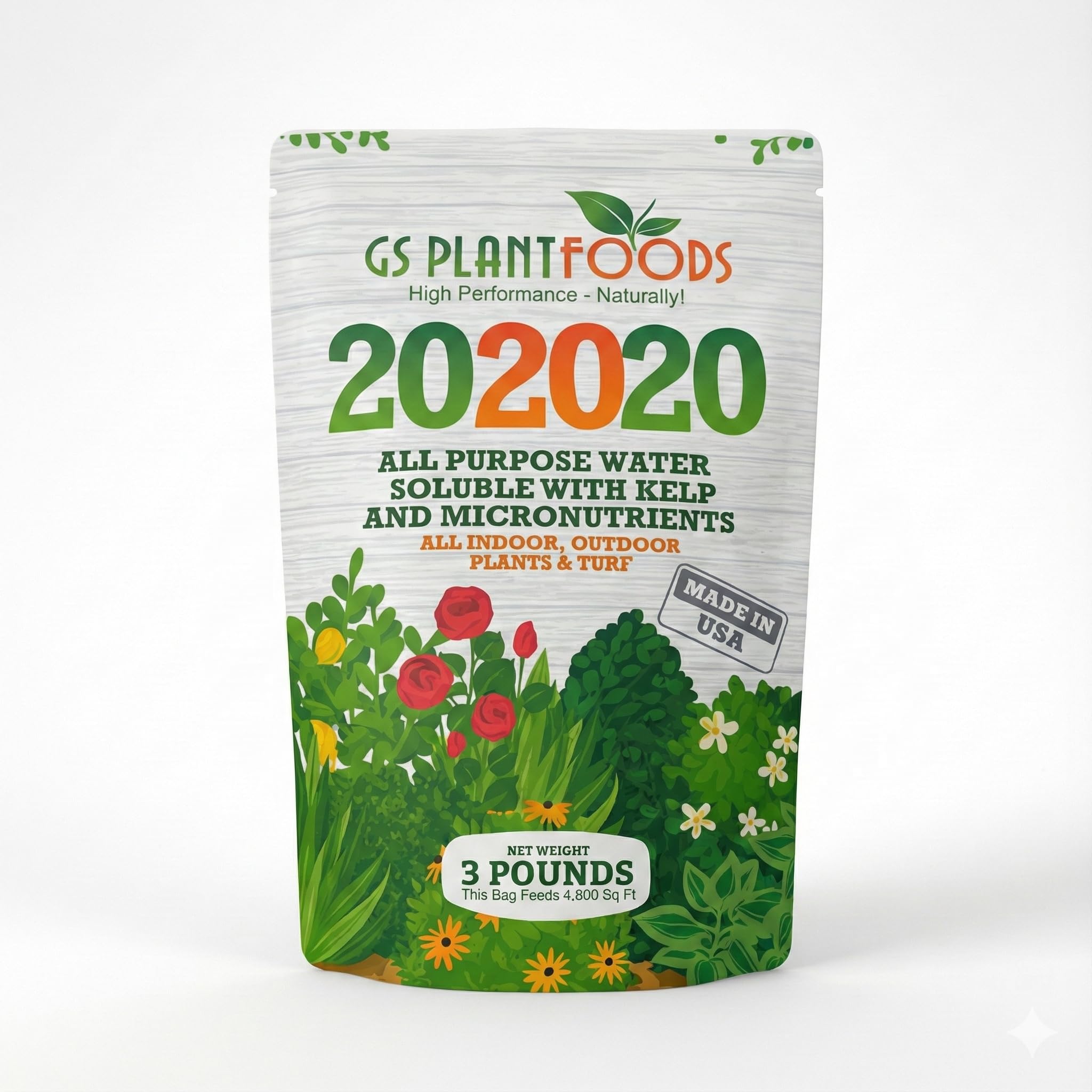
The GS Plant Foods 20-20-20 is the only entry-level synthetic water-soluble formula on this list, and it occupies a very specific niche: rapid correction of nutrient deficiencies in container plants, houseplants, and stressed garden beds. The balanced 1:1:1 ratio delivers nitrogen, phosphorus, and potassium in immediately plant-available form, meaning results are visible in days rather than weeks. A 3-pound bag feeds up to 4,800 square feet of turf when dissolved, making it extremely economical for large-area coverage.
The inclusion of kelp (Ascophyllum nodosum) adds natural growth hormones and trace elements that synthetic NPK granules usually lack. Customers report that unhealthy purple orchid trees produced dark green leaves and new shoots within a week of the first drench application. The formula dissolves completely with no sediment, and it can be applied via watering can, hose-end sprayer, or backpack sprayer for flexible feeding schedules.
This is not an organic product — the nitrogen, phosphorus, and potassium are derived from manufactured salts, and it does not contribute to long-term soil organic matter or microbial populations. It is best used as a supplement alongside compost or organic amendments rather than a sole fertility program. The kelp content is a nice touch, but the overall formulation is designed for immediate plant feeding, not soil building.
Why it’s great
- Instant nutrient availability corrects deficiencies within days
- 3-pound bag covers up to 4,800 sq ft when dissolved
- Kelp content adds natural growth hormones and trace minerals
Good to know
- Synthetic salts do not build soil organic matter or biology
- Requires mixing and regular reapplication for sustained results
7. GreenView Multi-Purpose Fertilizer 10-10-10

The GreenView 10-10-10 is the classic balanced synthetic granular fertilizer that has been a garden staple for decades. Every number is equal, meaning it provides a straightforward, no-fuss fertility boost for vegetables, flowers, trees, and shrubs. The 33-pound bag is the largest on this list by a wide margin — it covers up to 10,000 square feet, making it the obvious choice for large vegetable plots, community gardens, or anyone who wants to buy once for the whole season.
Users in the Midwest report consistent results across hostas, tomatoes, perennials, and trees throughout the growing season. The granules are well-formed and non-clumping, so they flow evenly through a broadcast spreader without clogging. For gardeners who prefer a synthetic approach and prioritize coverage area over organic certification, this is the most cost-effective option per square foot available here.
The 10-10-10 ratio is a true general-purpose formulation, which means it does not optimize for any specific growth stage. Nitrogen levels are high enough that over-application can burn sensitive transplants, and there is no calcium supplementation for blossom-end rot prevention. This bag is best suited to gardeners who already have good soil structure and just need a balanced maintenance feed, rather than those trying to correct specific deficiencies.
Why it’s great
- 33-pound bag provides unmatched coverage for large vegetable gardens
- Balanced 10-10-10 ratio works as a simple maintenance fertilizer
- Non-clumping granules feed evenly through spreaders
Good to know
- No calcium or micronutrients for preventing blossom-end rot
- Synthetic formula can burn plants if applied too heavily
FAQ
What does the 4-6-2 or 5-7-3 number mean on a vegetable fertilizer bag?
Do I need a separate calcium supplement if I use a 10-10-10 fertilizer?
Can I use a water-soluble 20-20-20 fertilizer as my only garden feed?
Why do organic granular fertilizers smell so strong?
Final Thoughts: The Verdict
For most users, the all purpose fertilizer for vegetable garden winner is the Down To Earth Organic All Purpose 4-6-2 because its balanced phosphorus ratio, seven-ingredient organic profile, and OMRI certification deliver reliable fruit set while building long-term soil fertility at a reasonable price. If you want targeted fungal support and the highest phosphorus content for maximum tomato and pepper production, grab the FoxFarm Happy Frog Tomato & Vegetable 5-7-3. And for large gardens needing economical coverage with a simple balanced feed, nothing beats the GreenView 10-10-10 33-pound bag.