
Waking up on cold, hard ground with a sore hip and a deflated air mattress is the fastest way to ruin a camping trip. A dedicated blow up mattress for camping needs to do more than just hold air—it must insulate you from the earth, support your body through the night, and pack down small enough to not dominate your gear bin. The difference between a restless night and a restful one comes down to foam density, R-value, and the pump system you choose.
I’m Min — the co-founder and writer behind Gadgets Feed. I’ve spent countless hours researching the latest camping sleep systems, cross-referencing foam types, R-values, and pump mechanisms to separate the gear that actually works from the marketing fluff. This guide focuses exclusively on the models that deliver real, measurable comfort in the backcountry.
Whether you car-camp every weekend or just need a reliable guest bed for the tent, finding the right blow up mattress for camping means balancing thickness, insulation, weight, and setup speed for your specific style of outdoor adventure.
How To Choose The Best Blow Up Mattress For Camping
Selecting the right camping mattress is less about brand loyalty and more about matching your sleep style, vehicle space, and the temperatures you expect. The wrong choice means cold spots, air loss, or a pad that simply isn’t thick enough to keep your hips off the ground.
Thickness and Foam Density
A mattress under 3 inches thick will often let you feel rocks and roots through the pad, especially if you sleep on your side. Models with 4 inches or more of foam—whether memory foam or open-cell polyurethane—provide the necessary cushioning to keep pressure points happy. High-density foam (around 28D to 30D) resists bottoming out under heavier users and maintains its shape over many nights.
Insulation and R-Value
R-value measures how well a pad resists heat loss to the ground. An R-value of 4 or higher is suitable for three-season use, while anything above 7 handles freezing conditions. Pure air mattresses inherently have low R-values (often under 2) because the air inside cools rapidly. Foam-filled or insulated pads trap body heat far more effectively and prevent that dreaded cold-suck feeling by morning.
Pump Systems and Setup Speed
Built-in electric pumps offer the fastest inflation at the cost of battery management and a few extra ounces. Manual pump sacks or self-inflating valves save weight and eliminate battery anxiety but require more physical effort. If you car camp and have a power bank, an electric pump is a no-brainer. For backpacking or minimalist trips, a reliable self-inflating valve with a pump sack is the smarter carry.
Quick Comparison
On smaller screens, swipe sideways to see the full table.
| Model | Category | Best For | Key Spec | Amazon |
|---|---|---|---|---|
| NYECHTO Self Inflating Pad | Mid-Range | Electric Pump Comfort | 3.14″ thick, 9.5 R-Value | Amazon |
| Wise Owl Outfitters Pad | Mid-Range | Adjustable Firmness | 4″ thick, Removable Pump | Amazon |
| Hikenture Comfort Plus | Mid-Range | Spacious 4-Season Pad | 4″ thick, 80×28″ size | Amazon |
| SoundAsleep Dream Series | Mid-Range | Indoor/Glamping Queen | 19″ tall, 40 Air Coils | Amazon |
| Acacia Y-Shaped Pad | Premium | Ultra-Portable Comfort | 4.3″ thick, 6 R-Value | Amazon |
| Big Agnes Rapide SL | Premium | Ultralight Backpacking | 4.25″ thick, 20 oz | Amazon |
| Therm-a-Rest LuxuryMap | Premium | Pressure Map Support | 3″ thick, 6 R-Value | Amazon |
| Exped MegaMat Medium Wide | Premium | Car Camping Luxury | 4″ thick, 8.1 R-Value | Amazon |
| Therm-a-Rest MondoKing 3D | Premium | Extreme Cold Comfort | 4.25″ thick, 7 R-Value | Amazon |
In‑Depth Reviews
1. NYECHTO Self Inflating Sleeping Pad with Electric Pump

The NYECHTO pad hits the sweet spot between camp luxury and genuine warmth with its 9.5 R-value and 3.14-inch thick memory foam layer. The built-in rechargeable pump inflates the pad in under a minute via USB-C, and the detachable pump unit doubles as a power bank for topping off devices. At 5.95 pounds, it’s not ultralight, but it packs down to a manageable 9-inch roll for car camping.
The 50D elastic knit fabric resists tears and moisture, and the built-in pillow eliminates the need for a separate camp pillow. Users consistently note that the foam-and-air hybrid feels far more supportive than a pure air mattress, with no sagging even after two nights. The integrated one-touch deflation function compresses the pad to 0.7 inches for storage, saving significant space.
Where this pad truly shines is its versatility across all four seasons. The combination of a 9.5 R-value and 665-pound weight capacity makes it suitable for winter camping and larger users alike. The pump’s 1200mAh battery inflates the pad about seven times per charge, which covers a week-long trip without needing a recharge.
Why it’s great
- Exceptional 9.5 R-value for true four-season use
- Built-in, rechargeable electric pump with USB-C charging
- One-touch deflation and compact storage size
Good to know
- First inflation takes longer as foam expands from vacuum pack
- At 5.95 pounds, too heavy for backpacking
2. Exped MegaMat Medium Wide
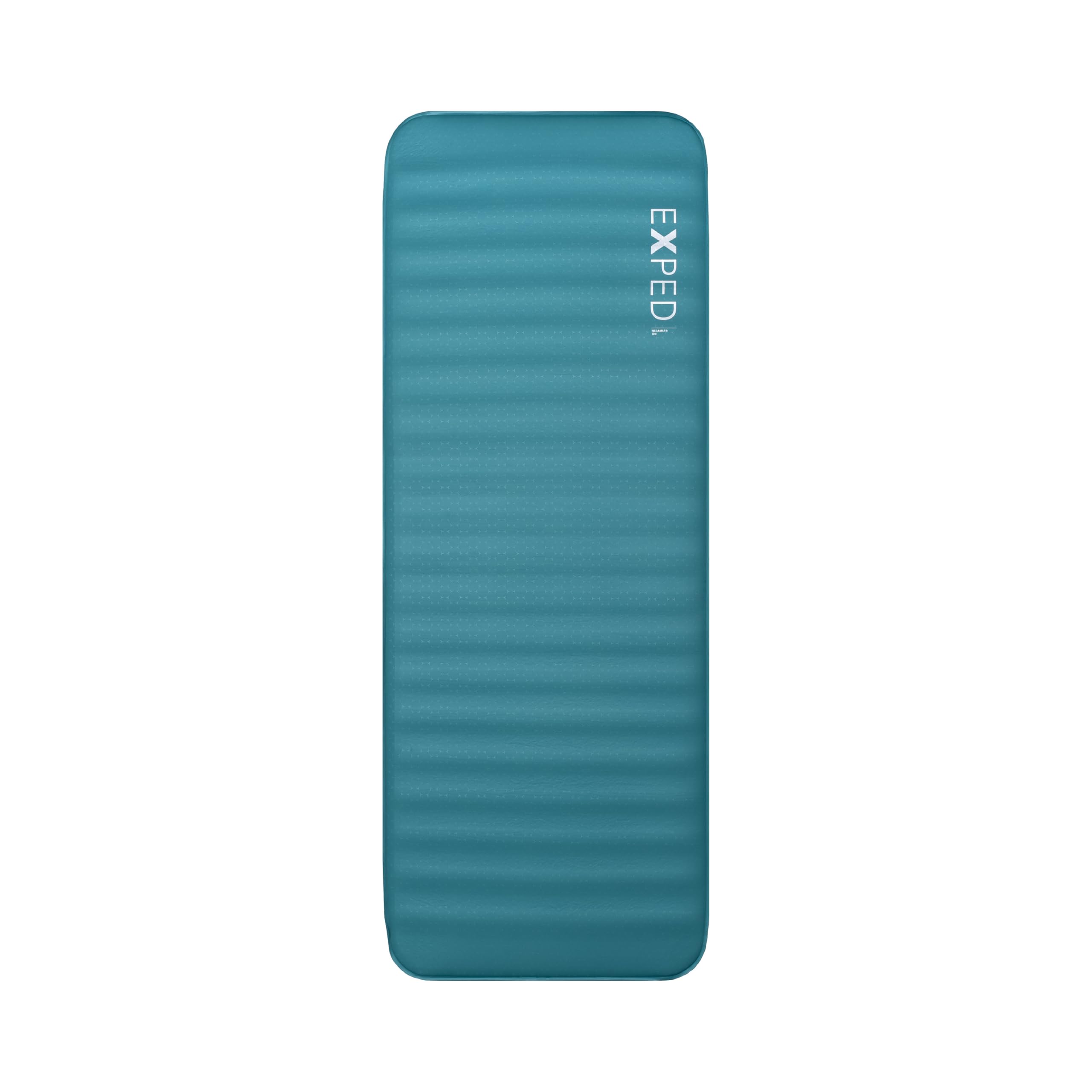
The Exped MegaMat is the gold standard for car camping sleep. Its 4-inch open-cell foam core with air-core-channeled insulation delivers an 8.1 R-value—enough to keep you warm well below freezing. The 3D vertical sidewalls prevent the dreaded roll-off feeling, giving you a full 25.6 inches of usable width. The included Top-Up Pump lets you dial in firmness from plush to firm without introducing moist breath into the pad.
The 100% recycled 4-way stretch tricot polyester surface feels more like a bed sheet than a camp pad, and the welded side handle makes repositioning inside a tent effortless. Users report zero air loss over a full week of use, and the oversized stuff sack simplifies rolling and packing. At 4.5 pounds, it’s not light, but the comfort-to-weight ratio is unmatched for vehicle-based trips.
What sets the MegaMat apart is its dual-purpose design: it works equally well as a tent pad and as a mattress replacement in rooftop tents or SUV sleep setups. The 50D recycled polyester fabric resists punctures and stains, and a quick wipe with a damp cloth restores it to like-new condition. For campers who prioritize real sleep over packed size, this is the benchmark.
Why it’s great
- 8.1 R-value for serious cold-weather camping
- 3D sidewalls maximize usable sleep surface
- Top-Up Pump for precise firmness adjustment
Good to know
- Heavy and bulky for any kind of backpacking
- Self-inflates slowly on first use; needs patience
3. Therm-a-Rest MondoKing 3D

The MondoKing 3D is Therm-a-Rest’s answer to the question of how thick a camp pad can get without sacrificing packability. The 4.25-inch StrataCore construction uses a continuous thermal foam layer sandwiched between alternating ridges of air and foam, resulting in a 7.0 R-value that handles sub-freezing temps with ease. The stretch knit fabric surface feels soft and prevents that sweaty vinyl sensation common to cheaper pads.
The TwinLock valve system separates inflation and deflation into two dedicated one-way valves, making setup and tear-down faster than single-valve designs. The 80×30-inch XXL size offers generous width for restless sleepers, and the vertical sidewalls eliminate the tapered edges that reduce effective surface area. At 5.5 pounds, it’s strictly for car camping, but the packed size is a respectable 31×10.3 inches.
Users consistently cite the MondoKing’s ability to support heavy sleepers—one reviewer at 300 pounds reported sleeping better on this pad than on their home bed. The pump sack inflates the pad in under 10 minutes, and the no-slip bottom keeps it planted on tent floors. For extreme cold glamping or winter base camps, this pad is nearly impossible to beat.
Why it’s great
- 7.0 R-value handles extreme winter conditions
- 80×30-inch XXL size for spacious sleeping
- Stretch knit fabric surface is quiet and comfortable
Good to know
- Bulky for anything beyond car camping
- Slides slightly on smooth tent floors without straps
4. Hikenture Comfort Plus Camping Mattress

The Hikenture Comfort Plus delivers 4 inches of memory foam comfort with a 9.5 R-value at a price point well below the premium competition. The 80×28-inch dimensions are wider and longer than most mid-range pads, accommodating taller sleepers without feet hanging off. The patented 2-way valve handles self-inflation and deflation efficiently, and the included pump sack allows for quick final inflation without bending over.
The polyester surface is soft to the touch and generates minimal noise during sleep—a common complaint with crinkly camp pads. Users report excellent insulation in 35°F conditions and note that the pad holds air without any perceptible loss overnight. The memory foam layer provides enough pressure relief that side sleepers with hip pain wake up without stiffness.
Where the Hikenture excels is in its packability for a 4-inch foam pad. It rolls up smaller than traditional self-inflating mattresses of the same thickness, and the carry bag’s large top opening makes storage straightforward. The repair kit and customer service response (one user reported a replacement sent without requiring a return) add peace of mind for the long haul.
Why it’s great
- 9.5 R-value at a mid-range price point
- Spacious 80×28-inch sleeping surface
- Quiet, soft-touch polyester fabric
Good to know
- Deflation requires some effort to squeeze air out
- Too heavy and bulky for backpacking use
5. Acacia Y-Shaped Telescopic Sleeping Pad

The Acacia pad’s standout feature is its Y-shaped telescopic foam structure, which compresses the pad’s volume by up to 60% after deflation—making it far more compact than traditional foam pads of the same thickness. At 4.3 inches thick with an R-value of 6, it offers three-season warmth with a plush, cradling feel. The 30D elastic fabric with TPU reinforcement resists punctures and abrasions, and the heat-molded seams prevent air loss over multiple trips.
The 2-way valve handles most of the inflation automatically, and the included carry bag doubles as a pump sack for fine-tuning firmness. Side buckles let you connect two pads together for a couple’s setup, expanding the sleeping surface to 53 inches wide. Users note that the pad is exceptionally comfortable for side sleepers, with one 60-year-old reviewer with compression fractures reporting zero back pain after use.
Where the Acacia falls short is in its bulk when rolled—it’s roughly the size of a laundry basket, which is fine for car camping but excessive for backpacking. The deflation process is slower than advertised, and the included pump sack is thin and requires careful handling. Still, for campers who prioritize comfort and packability over pure minimalism, the Acacia is a clever compromise.
Why it’s great
- Unique Y-shaped foam compresses 60% smaller than traditional foam pads
- 4.3-inch thickness with 6 R-value for three-season comfort
- Side buckles allow two pads to connect for a double-wide setup
Good to know
- Bulkier than expected; best for car camping or glamping
- Deflation takes patience and technique
6. Big Agnes Rapide SL

The Big Agnes Rapide SL is built for backpackers who refuse to sacrifice sleep quality for weight. At just over 20 ounces for the regular size, it packs down smaller than a water bottle while still offering 4.25 inches of cushioning. The quilted top creates a pillowy surface, and the offset I-Beam construction reduces the air mattress bounce that plagues cheaper pads. The 4.8 R-value handles three-season use down to about 20°F.
The high-volume valve with micro-adjustment allows for precise firmness tuning, and the included Pumphouse inflation sack fills the pad in under two minutes without introducing moisture. The superlight double ripstop nylon with aviation-grade TPU lamination is remarkably durable for its weight, with one user reporting zero issues after a week-long Grand Canyon trek. The 4.25-inch outer chambers keep you centered on the pad, preventing the dreaded roll-off.
For side sleepers, the Rapide SL is a revelation. The 4.25-inch thickness keeps hips and shoulders off the ground, and the lack of crinkly noise makes it suitable for shared tents. It’s not insulated enough for deep winter, but for spring, summer, and fall backpacking, it hits the perfect balance of weight, pack size, and comfort.
Why it’s great
- Ultralight at 20 ounces for a 4.25-inch pad
- Quiet, pillowy quilted top prevents crinkling
- High-volume valve for fast inflation/deflation
Good to know
- 4.8 R-value is not sufficient for winter camping
- Narrow 20-inch width may feel tight for broad-shouldered users
7. Therm-a-Rest LuxuryMap Self-Inflating Pad

The LuxuryMap uses pressure-mapping technology to vary foam density across the pad—softer under the torso and shoulders, firmer under the hips and lower back. This targeted support reduces pressure points without needing to adjust air volume. The 6 R-value provides genuine four-season insulation, and the TwinLock valve system offers separate inflation and deflation ports for fast setup. At 3 inches thick, it’s not the plushest pad, but the variable-density foam makes it feel thicker than it is.
The self-inflating foam core takes about 30 minutes to fully expand, and a few breaths via the included pump sack top it off. Users over 60 report that the LuxuryMap significantly reduces hip and shoulder soreness compared to standard foam pads. The PFAS-free DWR coating on the stuff sack keeps moisture out, and the pad’s 1440-pound capacity makes it suitable for heavy sleepers.
The trade-off is weight and pack size. At 4 pounds 3 ounces and rolled to 26×9.5 inches, it’s strictly a car camping or glamping accessory. The actual foam sleeping area measures slightly narrower than the fabric dimensions (22 inches of foam in a 25-inch fabric shell), which may surprise buyers expecting the full width. Still, for those who want pressure-mapped support without the premium price of a full-height pad, the LuxuryMap is a smart choice.
Why it’s great
- Pressure-mapped foam varies density by body zone
- 6 R-value for true year-round camping
- TwinLock valve system for fast, easy setup
Good to know
- Actual foam area is narrower than fabric dimensions
- Heavy and bulky; not for backpacking
8. Wise Owl Outfitters Self Inflating Pad
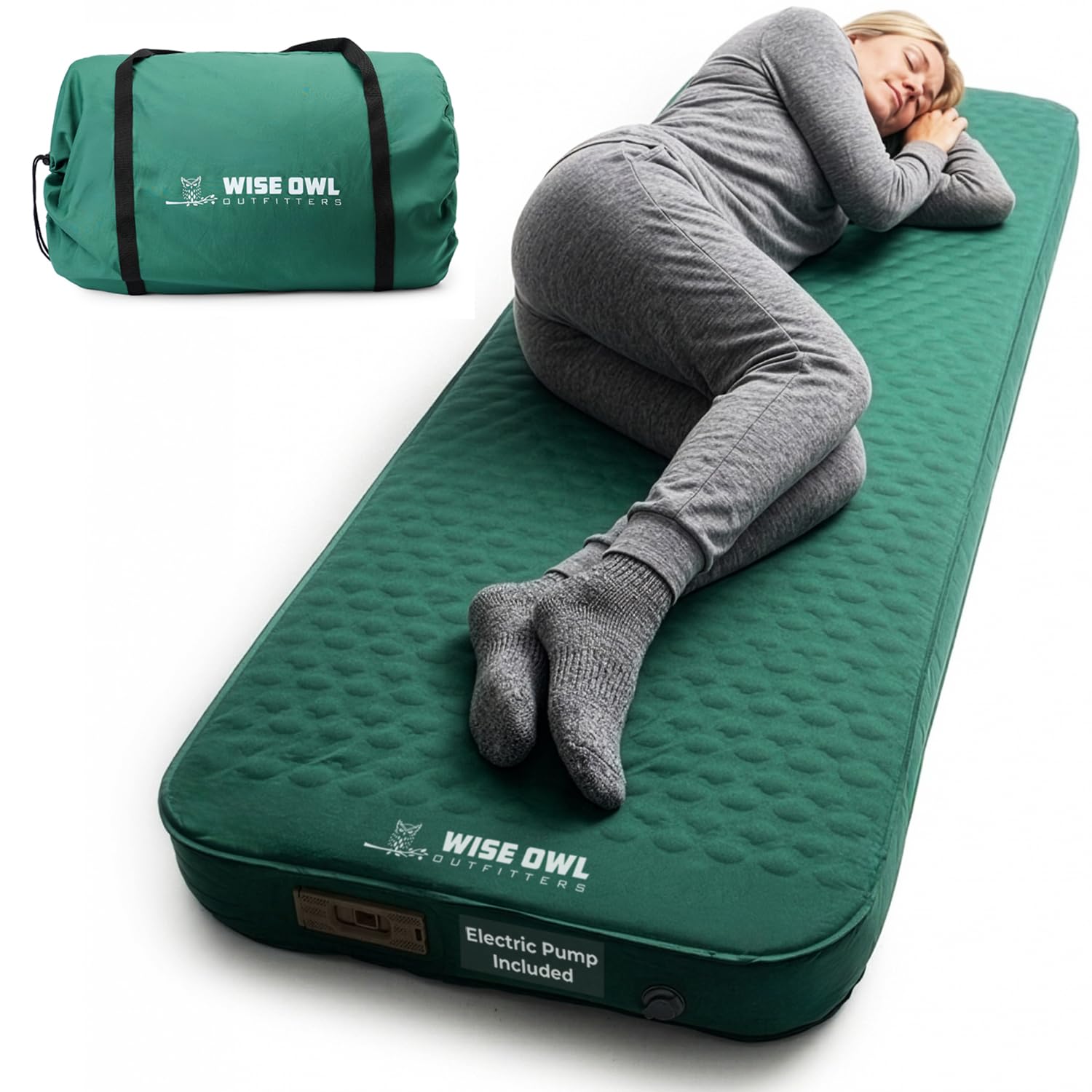
The Wise Owl Outfitters pad offers a removable electric pump that charges via USB-C, providing 4 inches of foam-and-air hybrid comfort at a weight of just 4 pounds. The pump inflates the 28×78-inch pad in about 90 seconds, and the adjustable firmness lets you dial in the perfect feel by checking the pad by hand as it fills. The multi-layer design combines a foam core with air support to create a cushioned, elevated sleep surface that reduces the hard-ground feel.
The included compression strap and carry bag make packing straightforward, and the repair patches add long-term value. Users report excellent air retention with no perceptible loss overnight, and the material is sturdy enough to handle kids jumping on it without damage. The 200-pound weight capacity means it’s best suited for single sleepers, though the 28-inch width provides ample room for average builds.
Where this pad differentiates itself is in its versatility across multiple setups—tent floor, SUV cargo area, rooftop tent, or even a cot. The removable pump means you have the option to inflate manually if the battery dies, though the pump itself is compact enough to store in the carry bag. For campers who want electric convenience without committing to a high price, the Wise Owl delivers solid value.
Why it’s great
- Removable USB-C electric pump inflates in 90 seconds
- Lightweight 4-pound carry weight
- Adjustable firmness for personalized comfort
Good to know
- 200-pound capacity may be too low for heavier sleepers
- Foam layer is modest; side sleepers may want more padding
9. SoundAsleep Dream Series Luxury Air Mattress
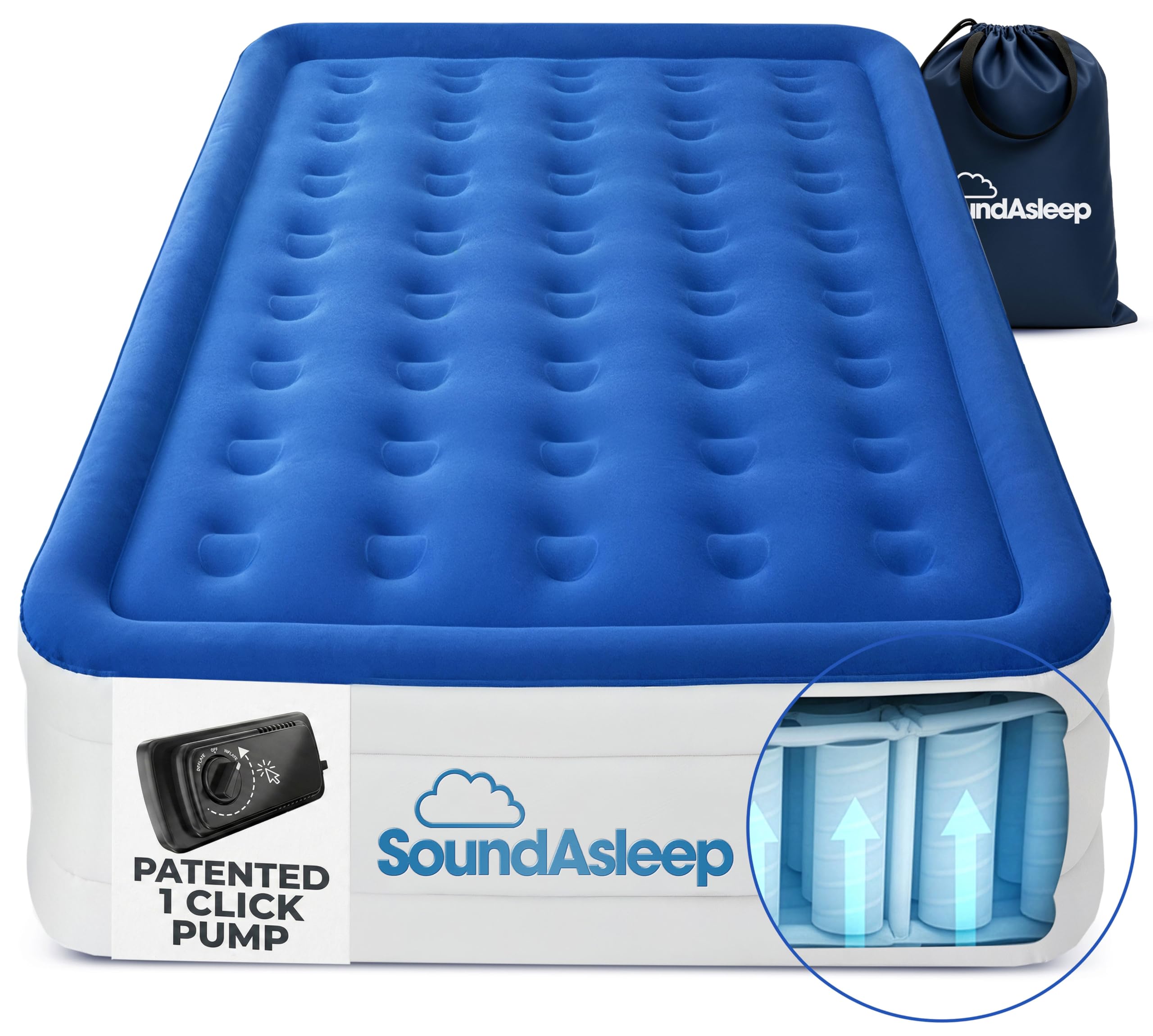
The SoundAsleep Dream Series is a different beast from the foam camping pads above—it’s a full-height, 19-inch queen air mattress built with 40 internal ComfortCoil air coils for structure and stability. The built-in pump inflates the mattress in under 4 minutes, and the dual-chamber construction elevates sleepers to bed height, making it easier to get in and out. The flocked top is soft to the touch and resists sheet slippage, while the SureGrip bottom keeps the mattress planted on tent floors or rv beds.
The puncture-resistant multilayer PVC construction is designed for repeated indoor and outdoor use, and the included carry bag makes transport manageable for car camping or glamping. Users consistently praise the customer service—multiple reviewers reported that SoundAsleep replaced units that developed slow leaks even months after purchase with no hassle. The adjustable firmness setting lets you tailor the feel from plush to firm, and the mattress holds air well between uses with only a minor 20-second top-up every few days.
This is not a pad for backpacking or minimalist camping—it weighs over 20 pounds and requires a large vehicle—but for family camping, guest rooms, or RV use, the Dream Series delivers a bed-like experience that foam pads simply cannot match. The 80x60x19-inch queen size sleeps two adults comfortably, and the lack of foam means it packs smaller than any 4-inch foam pad when fully deflated.
Why it’s great
- 19-inch double-height design for easy entry and exit
- 40 internal air coils for stable, flat support
- Excellent customer service with prompt replacements
Good to know
- Heavy and bulky—strictly for car or RV camping
- Low R-value; requires additional insulation underneath in cold weather
FAQ
Can I use a foam camping pad without a tent?
How do I fix a slow leak in a self-inflating camping mattress?
Final Thoughts: The Verdict
For most users, the blow up mattress for camping winner is the NYECHTO Self Inflating Pad because it combines a 9.5 R-value, built-in electric pump, and memory foam comfort at a mid-range price that outperforms many premium competitors. If you want ultralight packability for backpacking, grab the Big Agnes Rapide SL. And for extreme cold car camping where nothing less than a 7 R-value will do, nothing beats the Therm-a-Rest MondoKing 3D.