
If your aging laptop or desktop takes minutes to boot, stutters when you open multiple browser tabs, or leaves you waiting on file transfers, the single most impactful upgrade you can make is swapping out your old mechanical hard drive for a solid-state drive. The 500GB SATA SSD sits in the sweet spot — enough capacity for your operating system, applications, and a decent game library, while delivering the sequential read speeds that make everyday computing feel instant again. The question is not whether you need one, but which specific controller, NAND flash type, and endurance rating actually justifies your money.
I’m Min — the co-founder and writer behind Gadgets Feed. I’ve spent dozens of hours analyzing controller architectures, NAND flash types, and real-world performance data from the 500GB SATA SSD market to separate the drives that genuinely accelerate your workflow from those that simply look good on a spec sheet.
Whether you are reviving an old office PC, expanding a home server, or just tired of the grinding noise of a dying HDD, this guide dissects exactly what makes a best 500gb sata ssd worthy of your system.
How To Choose The Best 500GB SATA SSD
Not all 500GB SATA SSDs are created equal. The internal controller, the type of NAND flash memory, and the presence or absence of a DRAM cache dictate real-world performance far more than the peak sequential read number printed on the box. Here are the three specifications that separate a smart purchase from a regrettable one.
DRAM Cache vs. DRAMless Designs
A SATA SSD with an onboard DRAM cache uses that memory to store the mapping table that tracks where every bit of data lives on the drive. When you perform sustained writes — like installing a large game or copying a video file — a DRAM-equipped drive maintains consistent speeds. DRAMless drives, on the other hand, must use the host system’s RAM (via a protocol called HMB) or the NAND itself to store that map, which can cause write speeds to drop sharply during prolonged transfers. For a boot drive that handles constant small read/write operations, a DRAM cache provides smoother day-to-day responsiveness.
TLC vs. QLC NAND Flash
NAND flash stores data in cells. Triple-Level Cell (TLC) stores three bits per cell, Quad-Level Cell (QLC) stores four bits per cell. TLC offers faster write speeds and higher endurance — measured in Total Bytes Written (TBW) — because each cell experiences less electronic wear per write cycle. QLC packs more storage at a lower cost but suffers from slower write performance and a shorter lifespan. For a 500GB drive that you intend to use as a primary OS and application drive, TLC is the safer bet, especially if you expect the drive to remain reliable for years beyond the warranty period.
Sequential Read Speeds and Real-World Impact
Nearly every modern SATA III SSD advertises sequential read speeds of 500–550 MB/s. That number represents the best-case scenario for reading one large, contiguous file. In everyday usage — launching applications, loading game levels, or booting an operating system — random read and write performance matters more. A drive with a fast controller and DRAM cache will deliver snappier random I/O, which translates directly into the “feels faster” experience. Always check independent benchmarks for random 4K read/write performance rather than fixating solely on the peak sequential number.
Quick Comparison
On smaller screens, swipe sideways to see the full table.
| Model | Category | Best For | Key Spec | Amazon |
|---|---|---|---|---|
| Crucial MX500 500GB | Premium SATA | Boot drive with DRAM cache | Onboard DRAM + 256MB cache | Amazon |
| SANDISK SSD Plus 500GB | Premium SATA | Replacement for PS2 / retro consoles | 545 MB/s read, 515 MB/s write | Amazon |
| Crucial BX500 500GB | Mid-Range SATA | External enclosure builds | 550 MB/s read, 500 MB/s write | Amazon |
| PNY CS900 500GB | Mid-Range SATA | PS4 Pro internal upgrade | 550 MB/s sequential read | Amazon |
| Kingston 480GB A400 | Entry-Level SATA | Reviving decade-old laptops | 500 MB/s read, 450 MB/s write | Amazon |
| fanxiang S101 500GB | Entry-Level SATA | Budget gaming secondary drive | 530 MB/s read, TLC NAND | Amazon |
| Vansuny 512GB SATA III | Budget SATA | Emergency OS upgrade for old PCs | 500 MB/s read, 3D NAND | Amazon |
In‑Depth Reviews
1. Crucial MX500 500GB 3D NAND SATA 2.5 Inch Internal SSD

The Crucial MX500 is the gold standard for SATA SSDs because it includes a dedicated DRAM cache — a component most budget drives omit. This cache stores the file mapping table in fast RAM rather than on the NAND itself, preventing the severe performance drops that DRAMless drives suffer during sustained writes. With sequential read speeds up to 560 MB/s and random read I/O that feels dramatically snappier than any HDD, this drive transforms even a laptop from 2012 into a viable daily machine.
The MX500 also features integrated power-loss immunity, meaning sudden power cuts won’t corrupt in-flight data — a crucial advantage for desktop systems without battery backup. Its Dynamic Write Acceleration technology uses a small SLC cache to absorb bursts of writes, keeping transfer speeds high during the initial phase of large file copies. Active garbage collection and TRIM support ensure the drive maintains its performance over years of use without manual intervention.
On the endurance front, the 500GB model is rated for 180 TBW, which translates to roughly 100 GB of writes per day for nearly five years. Combined with the included Acronis True Image cloning software and a 7mm-to-9.5mm spacer, the MX500 fits nearly any 2.5-inch bay. For users who want a reliable boot drive with predictable long-term performance, this is the benchmark every other SATA SSD is measured against.
Why it’s great
- Onboard DRAM cache for consistent sustained write performance
- Power-loss immunity protects against data corruption
- Included cloning software simplifies migration from HDD
Good to know
- Premium pricing compared to DRAMless alternatives
- Occasional firmware updates required via Crucial Storage Executive
2. SANDISK SSD Plus 500GB Internal Solid State Drive
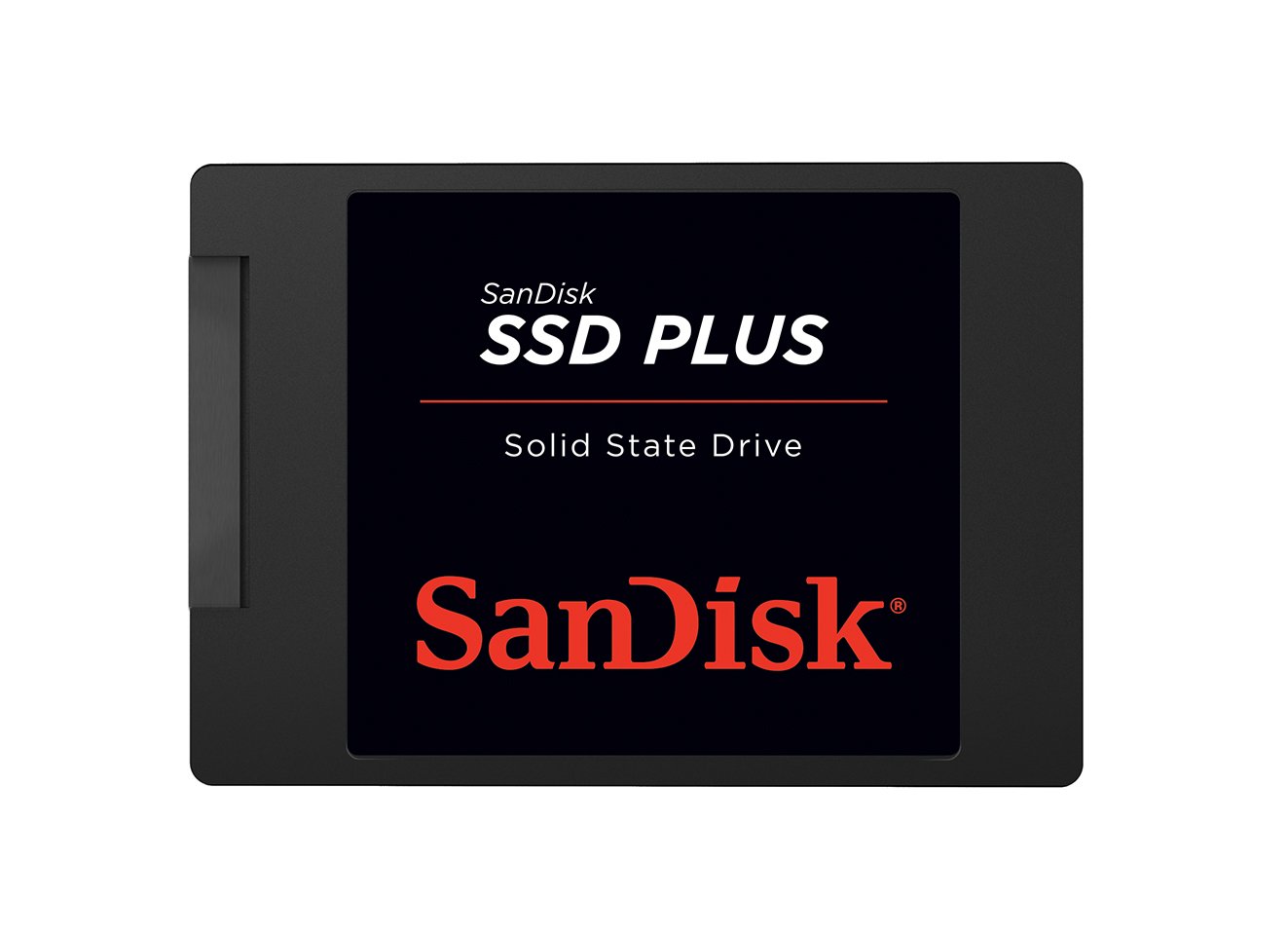
The SANDISK SSD Plus delivers sequential read speeds of 545 MB/s and writes up to 515 MB/s, placing it at the top of SATA III bandwidth limits. Its controller is optimized for large sequential transfers, making it an excellent choice for tasks like moving video files or serving as a secondary game library drive. The shock-resistant construction — rated for drops that would destroy a spinning hard drive — adds an extra layer of durability for laptops that travel frequently.
This drive is particularly well-suited for non-traditional applications like retro console modding or security camera DVR replacement. The silent operation and low power draw (under 2W during active use) make it a drop-in upgrade for systems sensitive to heat and noise. Multiple verified customer reports confirm compatibility with modded PS2 consoles and Eufy HomeBase 3 units, where the drive’s 5V 1.0A power profile matches the required specification exactly.
One consideration: the SSD Plus uses a DRAMless architecture, which means its sustained write performance can dip once the SLC cache fills. For typical desktop and laptop workloads involving booting, browsing, and light file editing, this limitation rarely surfaces. However, power users who regularly write multi-gigabyte files should look to the MX500 or another DRAM-equipped drive for consistent speeds.
Why it’s great
- Near-max SATA III sequential speeds (545/515 MB/s)
- Proven compatibility with non-PC devices like security DVRs
- Shock-resistant design for portable use
Good to know
- DRAMless design limits sustained write performance
- Endurance rating lower than DRAM-based competitors
3. Crucial BX500 500GB Solid State Drive

The Crucial BX500 uses Micron’s own 3D NAND flash and a Silicon Motion SM2258XT controller — a proven DRAMless design that still manages to hit 550 MB/s sequential reads and 500 MB/s sequential writes. Where it shines is in everyday responsiveness: boot times for Windows or macOS drop to under 10 seconds, application launches feel instant, and the drive runs cool enough to forgo any active cooling in tight laptop chassis. For the price-conscious buyer, this drive delivers 90% of the performance of premium options at a significantly lower entry point.
Installation is straightforward in both laptops and external USB enclosures. The 2.5-inch form factor fits standard 7mm bays, and the drive is immediately recognized by Windows, macOS, and Linux without driver installation. Several customer reviews highlight its use inside external enclosures to create fast portable drives for photo and video backups, where the BX500’s low power draw makes it ideal for bus-powered operation.
The trade-off comes in endurance and sustained write consistency. The BX500 uses QLC NAND, which has a lower write endurance than the TLC found in pricier models. For typical consumer workloads — web browsing, office applications, media consumption — the drive’s 120 TBW rating is ample. But if you plan to write hundreds of gigabytes daily for server or content creation tasks, the higher price of a TLC-based drive is justified by the longer lifespan.
Why it’s great
- Strong sequential performance for its price tier
- Low power draw ideal for USB enclosures
- Micron NAND ensures consistent quality control
Good to know
- QLC NAND limits write endurance
- DRAMless architecture can slow sustained transfers
4. PNY CS900 500GB 3D NAND 2.5″ SATA III Internal SSD

The PNY CS900 is a dependable workhorse that consistently delivers 550 MB/s sequential reads and 500 MB/s sequential writes without unnecessary frills. Its backward compatibility with SATA II (3 Gb/s) makes it an excellent drop-in upgrade for older motherboards that lack native SATA III support — the drive negotiates the slower interface seamlessly and still offers a dramatic improvement over any mechanical hard drive. This is a drive designed for plug-and-play simplicity.
Gamers have found the CS900 particularly useful as an internal upgrade for PlayStation 4 consoles, where it noticeably reduces load times in open-world titles and eliminates the texture pop-in common with the stock 5400 RPM HDD. The drive runs cool under sustained gaming sessions, and its ultra-low power consumption — under 2W during active reads — means it won’t tax the console’s thermal design. Several verified reviews confirm successful 500GB and 2TB installations in both PS4 and PS4 Pro models.
The CS900 uses 3D NAND but employs a DRAMless controller, which means its performance profile mirrors the BX500 and fanxiang S101. For single-drive desktop or laptop use, this limitation is rarely noticeable. However, the drive lacks the hardware encryption or power-loss protection found on premium SATA SSDs, so it is best suited for general-purpose storage rather than mission-critical data. The 500GB variant includes a Data Recovery Service option, adding a layer of safety for less technical users.
Why it’s great
- Compatible with both SATA III and SATA II motherboards
- Proven upgrade path for PS4/PS4 Pro load times
- Cool and quiet operation during extended use
Good to know
- DRAMless controller limits sustained write performance
- No onboard power-loss protection
5. Kingston 480GB A400 SATA 3 2.5″ Internal SSD

The Kingston A400 is designed specifically for slim notebooks and ultrabooks with limited internal space. Its 7mm z-height fits into thin laptop bays where standard 9.5mm drives would not physically close, and its shock and vibration resistance adds durability for mobile use. The drive delivers up to 500 MB/s sequential reads and 450 MB/s sequential writes, which is enough to make an older Windows laptop feel responsive again after upgrading from a mechanical drive.
Kingston backs the A400 with a straightforward installation process: the drive works with any SATA revision 2.0 or 3.0 port and requires no additional drivers. For systems running Windows 10 or 11, the operating system recognizes the drive immediately and applies the appropriate TRIM commands automatically. Customer reviews consistently mention successful upgrades in laptops from the early 2010s, where the A400’s low power draw and silent operation transformed machines that were previously unusably slow.
The 480GB capacity (slightly below the nominal 500GB mark) is a minor concession for the price, but it still offers ample space for a Windows 11 installation plus a dozen or so applications. The primary trade-off is the A400’s DRAMless controller, which uses QLC NAND and a small SLC cache. While adequate for boot drives and light productivity use, sustained write speeds drop noticeably during large file transfers. For write-heavy workloads or server use, a DRAM-equipped drive with TLC NAND is a better long-term investment.
Why it’s great
- Ultra-slim 7mm profile fits thin and light laptops
- Shock and vibration resistant for mobile computing
- Kingston’s reputation for reliable NAND flash manufacturing
Good to know
- QLC NAND and DRAMless design limit write endurance
- Sustained write speeds drop after SLC cache fills
6. fanxiang S101 500GB SSD SATA III 6Gb/s 2.5″ Internal Solid State Drive

The fanxiang S101 stands out in the budget segment because it uses TLC NAND rather than the cheaper QLC found in many competing entry-level drives. TLC offers higher write endurance — the 500GB model is rated for significantly more total bytes written than QLC-based alternatives — and delivers more consistent write speeds during sustained transfers. The drive achieves 530 MB/s sequential reads and respectable random I/O, making it a legitimate option for a secondary gaming drive or a primary boot drive in a budget build.
Installation is standard for a 2.5-inch SATA drive: connect the power and data cables, format the drive, and it is ready for use. The S101 is compatible with Windows, Linux, and macOS, and its polycarbonate enclosure helps dissipate heat effectively even under load. Customer reviews note that the drive runs noticeably cooler than an NVMe SSD in equivalent use, which matters in systems with limited airflow or passive cooling.
The S101 does not include an onboard DRAM cache, so its performance profile follows the DRAMless pattern — strong in bursts but slower under sustained heavy writes. Additionally, while the 3-year warranty provides basic coverage, fanxiang’s customer support infrastructure is leaner than that of established brands like Crucial or Kingston. For users comfortable with a smaller brand and seeking the endurance benefits of TLC NAND at a budget price, the S101 delivers disproportionate value.
Why it’s great
- TLC NAND offers better endurance than QLC competitors
- 530 MB/s sequential read speeds for under entry-level pricing
- Runs cool without active cooling
Good to know
- DRAMless design affects sustained write consistency
- Smaller brand with leaner support infrastructure
7. Vansuny 512GB SATA III SSD Internal Solid State Drive

The Vansuny 512GB SSD offers the most accessible entry point into SATA SSD ownership, delivering 500 MB/s sequential reads and 450 MB/s sequential writes using advanced 3D NAND flash. Its plastic ABS casing with integrated heat dissipation features keeps thermals in check during extended use, and the drive operates in complete silence — a welcome upgrade for anyone accustomed to the clicking and whirring of an aging mechanical hard drive.
Compatibility is broad: the 2.5-inch SATA III drive works with most desktops, laptops, and all-in-one PCs running Windows, macOS, or Linux. The drive’s low power draw makes it particularly suitable for older laptops with limited battery capacity, as the SSD consumes far less energy than a spinning hard drive. Customer feedback highlights successful installations in systems as old as 2010, where the Vansuny SSD revived machines that had been relegated to closet storage.
As an entry-level drive, the Vansuny makes compromises that power users should note. It uses a DRAMless controller and QLC NAND, so sustained write performance and endurance are lower than mid-range or premium options. The included warranty and customer service are functional but lack the dedicated storage management software offered by Crucial or Kingston. For users who need a cheap, silent, and fast boot drive for a secondary system or an old laptop, the Vansuny hits the essential notes without overspending.
Why it’s great
- Lowest price entry into SATA SSD performance
- Silent operation with decent heat dissipation
- Works with older SATA II systems
Good to know
- DRAMless design and QLC NAND limit write endurance
- No bundled cloning software or management tools
FAQ
Can I use a 500GB SATA SSD in an external USB enclosure?
What does TBW mean and how much do I need in a 500GB SSD?
Will a SATA III SSD work in a SATA II port?
Final Thoughts: The Verdict
For most users, the best 500GB SATA SSD winner is the Crucial MX500 because its onboard DRAM cache, TLC NAND, and power-loss immunity deliver consistent performance over years of use without the write speed cliffs that plague DRAMless drives. If you want the best blend of price and performance for a secondary drive or external enclosure, grab the Crucial BX500. And for reviving an ancient laptop on the tightest budget, nothing beats the Kingston A400.