
A blinking check-engine light tied to a slow or failed oxygen sensor doesn’t just waste fuel—it robs your engine of the precise air-fuel ratio it needs to run clean and smooth. The Bank 1 Sensor 1 position (the upstream sensor before the catalytic converter on cylinder bank 1) is the most critical reading your engine computer uses for closed-loop fuel trim, and a lazy or dead unit here can drag down performance across the entire RPM range.
I’m Min — the co-founder and writer behind Gadgets Feed. I’ve spent hundreds of hours cross-referencing OEM part numbers, connector types, and real-world durability data across dozens of aftermarket and OE-grade O2 sensor listings to find the units that actually do what their spec sheets claim.
This guide cuts through the signal noise to recommend the most reliable bank 1 sensor 1 o2 sensor replacements you can install without second-guessing fitment or signal integrity.
How To Choose The Best Bank 1 Sensor 1 O2 Sensor
Replacing the wrong oxygen sensor is a common mistake that leaves the check engine light on and your wallet lighter. For the Bank 1 Sensor 1 slot—the upstream sensor on the cylinder bank containing cylinder 1—you need a unit with a fast-acting heater, correct connector shape, and a sensing element that switches voltage rapidly to let the ECU adjust fuel trims in real time.
Heater Circuit and Warm-Up Time
The upstream sensor enters closed-loop sooner when its internal heater reaches operating temperature in seconds—not minutes. Look for sensors explicitly described as “fast-acting heater” or “planar” type, which reach operational temperature faster than older thimble designs. A slow heater keeps your engine running in open-loop, wasting fuel and increasing emissions until the exhaust stream alone heats the element.
Connector and Harness Compatibility
Direct-fit sensors come with the exact OEM-style connector and pre-measured wiring length, so you don’t splice or guess pinouts. Verify the number of wires (most upstream sensors use 4-wire circuits: two for the heater, two for the signal/ground) and check that the connector shape matches your vehicle’s harness plug. A mismatched connector means the sensor is physically incompatible, regardless of thread size.
Material and Build Quality
Stainless steel housing resists corrosion from exhaust condensation, while a PTFE filter in the connector vents pressure without letting contaminants reach the zirconia sensing element. Sensors with laser-welded bodies and pre-applied anti-seize compound on the threads reduce the risk of seizing in the exhaust manifold—a common headache when removing old units.
Quick Comparison
On smaller screens, swipe sideways to see the full table.
| Model | Category | Best For | Key Spec | Amazon |
|---|---|---|---|---|
| NTK 22060 | Premium | OE-grade Ford/Lincoln fitment | 4-wire, 12V heater supply | Amazon |
| BOSCH 17321 | Premium | Fast heat-up for Ford/Lincoln engines | Planar wide-range element | Amazon |
| GM Genuine 213-4229 | Premium | Exact OEM GM replacement | 4-wire heated, GM spec | Amazon |
| BOSCH 15284 | Mid-Range | GM truck/SUV upstream sensors | Laser-welded stainless body | Amazon |
| Denso 234-4012 | Mid-Range | GM, Honda, Isuzu compatibility | Refined zirconia element | Amazon |
| Walker 350-34039 | Value | Budget-friendly 4-wire direct fit | Platinum electrode layer | Amazon |
| TINJO 234-4528/4529 | Value | Two-sensor set for Cruze/Sonic | Double protection layer | Amazon |
In‑Depth Reviews
1. NTK 22060 Oxygen Sensor

NTK is the OEM oxygen sensor manufacturer for a huge swath of Ford, Mazda, and Nissan applications, and the 22060 carries that factory-grade pedigree into the aftermarket. Designed specifically for the upstream position, this sensor uses a four-wire design with a robust internal heater that reaches closed-loop temperature quickly, allowing your ECU to dial in fuel trims within seconds of startup. The pre-attached connector and harness eliminate guesswork—no splicing, no wire diagrams, just a plug-and-play swap.
Owners of 2003-2004 Mustang Mach 1s and Focus Zetec engines report that this sensor is the correct front O2 unit that actually heats up—unlike some cross-fit parts that remain cold and cause the PCM to ignore the signal entirely. The stainless steel housing resists corrosion from exhaust condensation, and the wiring leads are slightly longer than some OE replacements, which actually makes routing cleaner in tight engine bays with aftermarket headers or downpipes.
One experienced installer noted that the connector lacks alignment ribs compared to the Motorcraft unit, but the electrical contact is secure and the voltage readings on a scan tool match factory specification immediately. Given NTK’s reputation as the original equipment supplier for many Asian and domestic nameplates, this sensor is an excellent choice for anyone who wants OE-level switching speed without visiting a dealership.
Why it’s great
- Actual OEM-grade sensor from NTK/NGK—used as factory equipment by many automakers
- Pre-applied anti-seize on threads and factory-fitted OE connector reduce install time
- Internal heater reaches operating temperature quickly for faster closed-loop operation
Good to know
- Connector design lacks alignment ribs found on some Motorcraft units
- Longevity data limited—recommended for owners who track sensor health regularly
2. BOSCH 17321 Premium Original Equipment Oxygen Sensor
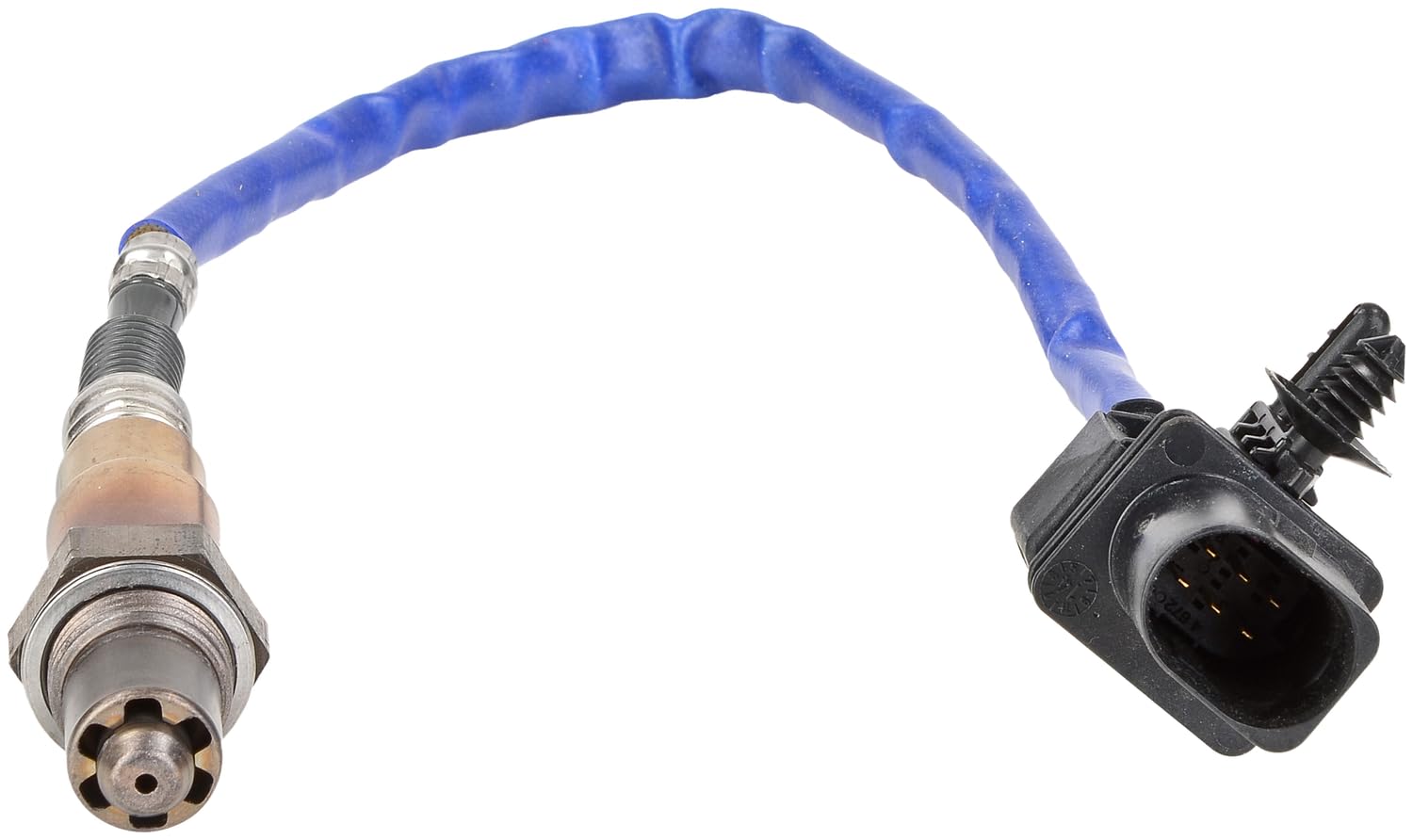
Bosch invented the automotive oxygen sensor in the late 1960s, and the 17321 carries that heritage with a planar wide-range element that reaches operating temperature in well under 10 seconds. This sensor is the correct upstream unit for a massive cross-section of Ford and Lincoln vehicles—including the 2011-2016 F-150, 2013-2019 Explorer, 2011-2017 Expedition, and the Navigator—making it one of the most widely applicable Bank 1 Sensor 1 replacements on the market.
The double laser-welded stainless steel body is fully submersible, which matters when exhaust systems trap condensation during cold starts. Threads arrive pre-coated with anti-seize, and the connector clicks onto the factory harness without modification. Users consistently report that installing this sensor clears P0051, P0052, P0030, and P0135 codes—all related to heater circuit or oxygen sensor signal issues—and that fuel mileage improves noticeably within the first tank.
One interesting use case emerged from a tuner who installed the 17321 on an AEM wideband controller as a direct replacement for the X-series sensor, confirming that the signal output is accurate enough for aftermarket ECU integration. The factory 100% quality test leaves a seared appearance on the protection tube, which is normal and not a defect—just evidence that the sensor passed its functional check before leaving the factory.
Why it’s great
- Planar element heats up in seconds, bringing the ECU into closed-loop faster
- Double laser-welded stainless body is sealed against exhaust moisture damage
- Broad Ford/Lincoln vehicle coverage—one of the most versatile upstream sensors available
Good to know
- Not compatible with GM or Asian domestic vehicles—confirm fitment before purchase
- Harness length is shorter than the original on some Ford Focus models
3. GM Genuine Parts 213-4229 Heated Oxygen Sensor
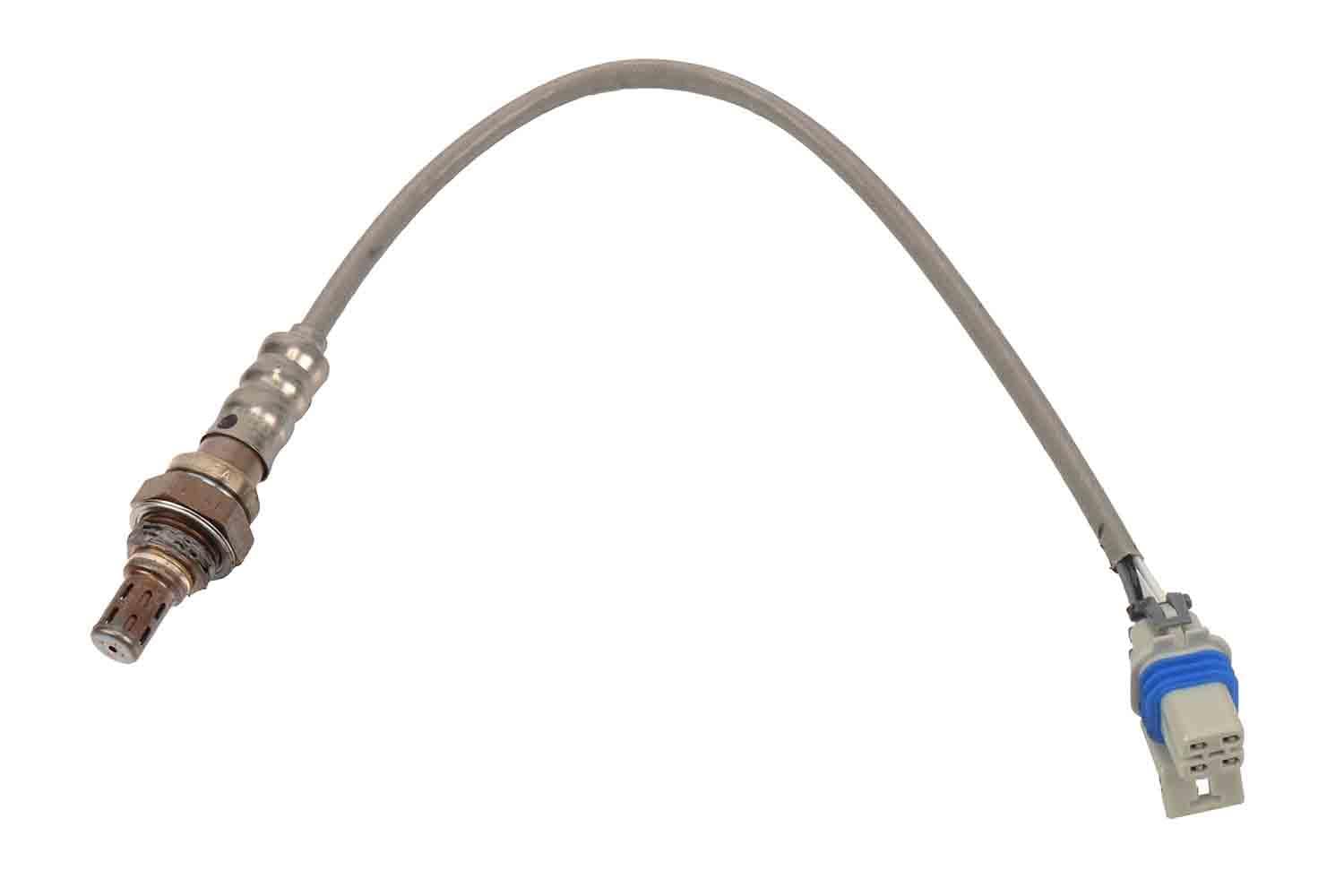
For owners of GM LS-based vehicles like the 2009-2013 Silverado 1500, 2010-2015 Camaro SS, and 2013-2015 ZL1, the GM Genuine 213-4229 is the same part number that ships with the vehicle from the factory. This sensor is manufactured to GM OE specification for fit, form, and function, meaning the connector shape, wire color coding, and thread pitch match the original exactly—no adaptation or electrical tape required.
The internal heater draws current through a dedicated circuit that ensures the zirconia element reaches operating temperature regardless of exhaust gas temperature, which is critical for the upstream Bank 1 Sensor 1 position that controls fuel trim during warm-up. GM uses a 4-wire configuration (two white wires for the heater, one black signal wire, and one gray ground reference) that late-model PCMs expect to see. Using a non-OE sensor with different electrical characteristics can cause the computer to reject the signal and illuminate the check engine light.
One verified buyer with a 2009 Chevrolet 2500HD reported that installing this sensor instantly resolved code P2270 (Oxygen Sensor Signal Stuck Lean Bank 1 Sensor 2), and noted that the build quality felt identical to the original part removed. Another ZL1 owner replaced all four sensors after installing a new exhaust system and confirmed that the upstream units plugged in without issue. If your priority is maintaining factory calibration and avoiding downstream tuner issues, this GM-branded sensor is the safest bet.
Why it’s great
- Exact GM OE specification—same part number as the factory sensor on LS and Vortec engines
- Dedicated heater circuit ensures fast warm-up regardless of exhaust temperature
- Connector and wire colors match original wiring exactly, eliminating electrical confusion
Good to know
- Only compatible with GM vehicles—no universal fitment for Ford or Asian brands
- Premium pricing compared to aftermarket alternatives
4. BOSCH 15284 Premium OE Fitment Oxygen Sensor

While Bosch’s 17321 targets Ford platforms, the 15284 is their direct-fit solution for late-90s through mid-2000s GM trucks and SUVs—specifically the 2003-2005 Chevrolet Silverado 1500, Tahoe, Suburban, and GMC Yukon with the 5.3L LS engine. This sensor uses the same double laser-welded stainless steel body and fast-acting heater technology as the more expensive Bosch models, but at a price point that competes with generic aftermarket units.
The heater element inside the 15284 is a four-wire thimble type that Bosch optimizes to reach operational temperature within seconds, helping trucks with larger exhaust volumes (and slower heat-up times) enter closed-loop sooner. Real-world reviews from Silverado and Escalade owners confirm that this sensor fixed P0135 and P0155 codes—both related to heater circuit performance—and that fuel economy improved noticeably after the first few drive cycles. One 2004 Escalade owner reported that the sensor felt premium in hand and matched the original’s weld quality exactly.
A small but important detail: some 5.3L LS owners found that the sensor works perfectly for the upstream Bank 1 Sensor 1 position but noted that the PCM can be sensitive to switching rate. If the sensor is a non-flex-fuel application on a flex-fuel vehicle, the computer may still store a lean code. Verify your specific engine’s flex-fuel status before purchasing, and if your vehicle is flex-fuel capable, confirm that the 15284 is the correct variant for your VIN range.
Why it’s great
- Direct-fit for GM LS trucks/SUVs with the 5.3L—no wiring modifications needed
- Fast-acting thimble heater reaches operating temperature quickly for better fuel trims
- Double laser-welded stainless body resists corrosion and exhaust emissions damage
Good to know
- Some flex-fuel 5.3L vehicles may require a different sensor variant—check VIN compatibility
- PCM switching sensitivity reported on non-flex vehicles; verify before final install
5. Denso 234-4012 Oxygen Sensor

Denso’s 234-4012 covers an unusually broad vehicle range spanning GM, Honda, Isuzu, and Daewoo applications, including the Chevrolet Corvette 1994-2003, Chevy Camaro 1994-1997, the S10 and Blazer with the 4.3L Vortec, and even the Honda Passport. With a 15.35-inch wiring harness and a refined zirconia element that improves sensor response time, this sensor is a reliable choice for the upstream position on vehicles that predate wide-band lambda requirements.
What sets Denso apart from generic replacements is their use of a PTFE filter that blocks efficiency-robbing contaminants while allowing the sensor to vent pressure changes inside the exhaust stream. Several S10 and Silverado owners have posted that this sensor resolved rough idle, high fuel consumption, and daily engine light issues after Bosch and other brands failed. One mechanic noted that the factory-recommended Denso sensor for a 2000 Silverado fixed faults that a Bosch unit had caused—including a catalytic converter repair when the wrong sensor caused a rich condition.
The sensor arrives with pre-applied graphite anti-seize (most professionals prefer copper compound for high-temp threads, but the graphite coating is a good start). Installers should note that the upstream Bank 1 Sensor 1 position on 2000-2005 GM trucks can be difficult to access—a split socket tool is recommended over an open-end wrench. The Denso 234-4012 is built to OE specifications and carries a ±1% measurement accuracy rating, making it suitable for DIYers who want dealership-grade results without dealership pricing.
Why it’s great
- Extremely broad compatibility—covers GM, Honda, Isuzu, and Daewoo applications
- PTFE filter blocks contaminants that degrade sensor accuracy over time
- Refined zirconia element provides faster voltage switching for accurate fuel trim
Good to know
- Graphite anti-seize included, but copper compound is preferred for high-temp threads
- Difficult upstream access on some GM trucks requires a split socket tool
6. Walker Products 350-34039 Oxygen Sensor 4-Wire Direct Fit

Walker Products has been manufacturing engine management components since 1946, and their 350-34039 oxygen sensor offers a functional route to fixing a P0135 or P0141 code without spending premium money. This is a 4-wire direct-fit sensor with platinum electrode layers gas-permeable enough to deliver accurate oxygen readings across the sensor’s lifespan. The protective coating on the electrode surfaces helps prevent erosion from combustion residue and exhaust particulates—a common failure mode on entry-level sensors.
Verified buyers report that this sensor works on a wide range of vehicles including the 2013 Jeep Wrangler, Dodge Grand Caravan, and various Chrysler sedans, in addition to the standard GM applications. The ceramic and metal construction feels solid, and the wire length is long enough to route without stretching. One buyer reported that their P013C code cleared immediately after installation and the vehicle passed emissions inspection the same afternoon.
The main consideration here is that Walker defines this as an “Original Equipment Replacement” rather than an OE-grade component, meaning the internal materials and switching speed may not match the OEM sensor’s performance in all conditions. If your engine is heavily modified or tuned for aggressive cam profiles, the response time of this sensor may lag slightly behind what the ECU expects. For a stock daily driver with a mild check engine light, the Walker 350-34039 provides reliable signal restoration at a fraction of the dealer cost.
Why it’s great
- Price significantly lower than dealer or premium aftermarket options
- Gas-permeable platinum electrodes deliver accurate readings throughout the sensor life
- Direct-fit 4-wire design—no splicing or wire diagram matching needed
Good to know
- Not an OE-grade component—internal materials may not match OEM switching speed
- Less suitable for modified or tuned engines that require precise wide-band feedback
7. TINJO 234-4528/234-4529 Upstream & Downstream O2 Sensor Set

If you own a Chevrolet Cruze 2011-2015 (1.4L L4), Sonic 2012-2020 (1.4L L4), or Trax 2012-2020 (1.4L L4), the TINJO two-sensor set is a time-saver that lets you replace both Bank 1 sensors at once. The set includes the upstream (234-4528) and downstream (234-4529) sensors, both built with a dual protection layer—an aluminum oxide trap layer and a PTFE filter—wrapped in a stainless steel housing. This construction reduces the risk of premature catalytic converter failure by ensuring the sensor doesn’t allow raw fuel or excess oxygen into the catalyst.
Users consistently note that the kit arrives with anti-seize pre-applied on the threads, protective caps in place, disposable gloves, and zip ties for cable management—small details that make a DIY job feel professional. Several Cruze owners reported that the set resolved P0420 (Catalyst System Efficiency Below Threshold) and P0138 codes immediately, returning fuel economy to normal within a single tank. The connectors are exact matches for the factory harness on these GM small-displacement turbo engines.
The trade-off is brand recognition: TINJO is a less-established name compared to Bosch, Denso, or NTK. However, the sensor set’s 5-volt maximum supply voltage and -40°C to 125°C operating range match OEM specifications for the 1.4L EcoTec platform. If you want to replace both Bank 1 sensors at the same time (a smart maintenance step if one has failed, as the other may be close behind), this kit delivers complete coverage at a budget-friendly price point that undercuts buying two individual premium sensors.
Why it’s great
- Complete two-sensor set—upstream and downstream—for Cruze/Sonic/Trax 1.4L engines
- Double protection layer (aluminum oxide trap + PTFE filter) extends sensor lifespan
- Includes gloves, zip ties, and pre-applied anti-seize for a clean installation
Good to know
- Less established brand than Bosch, Denso, or NTK—long-term durability data limited
- Only compatible with specific GM 1.4L L4 engines—verify connector shape before ordering
FAQ
What does the Bank 1 Sensor 1 position mean?
Can I use a downstream sensor for the Bank 1 Sensor 1 position?
How do I verify the correct sensor before buying?
Why does my new O2 sensor still show a code?
How often should I replace the upstream oxygen sensor?
Final Thoughts: The Verdict
For most users, the bank 1 sensor 1 o2 sensor winner is the BOSCH 17321 because it combines planar heater technology with the broadest Ford and Lincoln vehicle coverage of any sensor in this range, ensuring fast closed-loop operation and consistent signal output. If you want a sensor with OEM factory pedigree for GM trucks, grab the GM Genuine 213-4229 for a direct bolt-in replacement that maintains factory calibration. And for a budget-friendly two-sensor set that covers both upstream and downstream positions on the Cruze/Sonic/Trax 1.4L platform, nothing beats the TINJO 234-4528/234-4529 kit.