
The wrong premix turns a crisp, responsive two-stroke into a carbon-fouled, piston-scuffing money pit. Selecting a synthetic or castor-based lubricant is the single most critical decision a dirt bike owner makes for engine life and throttle snap. This guide cuts through the marketing noise to rank the oils that genuinely protect rings, bearings, and exhaust ports under extreme RPMs.
I’m Min — the co-founder and writer behind Gadgets Feed. My research involves cross-referencing flash points, film strength claims, and JASO/API certifications against thousands of rider testimonials to separate true performance formulas from overpriced hype.
Whether you ride a motocross track or a single-track trail, the right mix ratio and base stock chemistry determine how your bike runs. Read on for the definitive, no-fluff analysis of the best 2 stroke oil for dirt bike.
How To Choose The Best 2 Stroke Oil For Dirt Bike
Selecting the wrong premix oil leads to carbon locking, ring sticking, and premature bottom-end rebuilds. Focus on three factors that directly impact how your engine breathes and cools under load.
Base Stock: Castor vs. Full Synthetic vs. Blended
Castor oils like Klotz BeNOL deliver unmatched film strength at extreme temperatures, but they leave a sticky carbon residue that can foul powervalves if not ridden hard. Full synthetic formulas (Maxima K2, Red Line) burn cleaner and reduce exhaust port deposits, making them ideal for trail riders and motocross bikes that see heavy throttle modulation. Blended oils sacrifice some protection for lower cost — fine for low-RPM pit bikes, risky for high-compression race engines.
JASO FD & API SN/ SL Certification
JASO FD is the highest two-stroke oil quality standard from Japan. It guarantees detergent chemistry that prevents ring sticking, exhaust port blocking, and pre-ignition. API SN/SL standards are gasoline-engine-focused, so a JASO FD rating should be your primary benchmark. Oils without JASO FD (like many budget chainsaw oils) lack the corrosion inhibitors and carbon dispersants a dirt bike’s transmission bearings need.
Flash Point & Viscosity at Ratio
Flash point tells you at what temperature the oil vaporizes and ignites. A low flash point (~120°C) means the oil burns off too quickly, leaving dry cylinder walls during sustained high-RPM runs. Premium oils hover around 240–260°C, maintaining a lubricating film even under peak combustion heat. Viscosity (SAE 30–50) also dictates how the oil clings to crank bearings — thinner oils shear faster in gear-driven transmissions.
Quick Comparison
On smaller screens, swipe sideways to see the full table.
| Model | Category | Best For | Key Spec | Amazon |
|---|---|---|---|---|
| Yamaha Yamalube 2R | Synthetic Blend | OEM-Spec Protection | Flash Point: 124°C | Amazon |
| Maxima Formula K2 | Full Synthetic | Aggressive Racing | Surface-Active Ester Additives | Amazon |
| TRIAX Power Sport 2T | Full Synthetic | Best Value Synthetic | JASO FD / API SN | Amazon |
| Red Line 40603 | Full Synthetic | Dyno-Proven Power Gain | 3–5% Power Increase Claim | Amazon |
| Klotz BeNOL | Castor Blend | Ultimate Film Strength | Double Film Strength vs. Std Castor | Amazon |
| Motorex Cross Power 2T | Full Synthetic | Austrian OE Spec | KTM/ GasGas Factory Fill | Amazon |
| AMSOIL Dominator | Full Synthetic | Extreme High-RPM | Race-Proven Ring Seal | Amazon |
In‑Depth Reviews
1. Yamaha Yamalube Racing 2R

Yamalube 2R is the same oil the Yamaha factory race team pours into their YZ250s — it’s not a marketing gimmick. The special base stock formulation resists thermal breakdown at sustained high RPM, and the additive package leaves minimal carbon on pistons, rings, and exhaust ports. Riders consistently report pistons looking clean after 40–50 hours at 32:1, which is a strong indicator of proper film strength and detergent performance.
The flash point of 124°C is lower than premium synthetics, but the oil is designed to work within Yamaha’s specific combustion window. Running it at 32:1 delivers the correct lubricating film without excessive smoke or fouling. It is not intended for oil injection systems, so premix only.
This quart works reliably across YZ, WR, and older DT models. For riders who want a proven, manufacturer-endorsed solution without experimenting, the 2R is the safest bet in the lineup.
Why it’s great
- Factory race team provenance
- Low carbon deposit formation verified by long-term user reports
- Affordable for an OEM-spec synthetic blend
Good to know
- Flash point is lower than full synthetics — not ideal for extreme lean ratios
- Vehicle-specific fit; not recommended for many non-Yamaha engines without ratio testing
2. Maxima Formula K2 100% Synthetic Racing Premix

Maxima K2 is a full synthetic premix developed with factory race teams, and its defining feature is the proprietary ester additive system. Esters are polar molecules that electrostatically bond to metal surfaces, creating a clinging film that resists wash-off even when fuel is wet or ratios are leaned out. Riders switching to K2 often report a snappier low-end throttle response and a noticeably sweeter exhaust smell compared to mineral-based oils.
The oil is marketed for universal fit across motorcycles and ATVs. Its clean-burn chemistry leaves very little ash, which translates to fewer exhaust port blockages over long race seasons. The trade-off is a higher per-ounce cost and the need to measure carefully — over-oiling at the recommended ratio can cause brief smoke on start-up until the engine reaches operating temperature.
K2’s film strength particularly benefits aggressive riders who keep the throttle pinned in deep sand or who rip through tight single-track at high RPM. It is not a casual weekend oil; it is built for bikes that see sustained abuse.
Why it’s great
- Ester additives provide superior anti-wear bonding
- Noticeable throttle response improvement in high-RPM riding
- Burns clean with minimal exhaust port carbon
Good to know
- 16 oz bottle only — frequent rebuying for heavy riders
- Over-oiling at low RPM can produce brief smoke clouds
3. TRIAX Power Sport 2T Full Synthetic
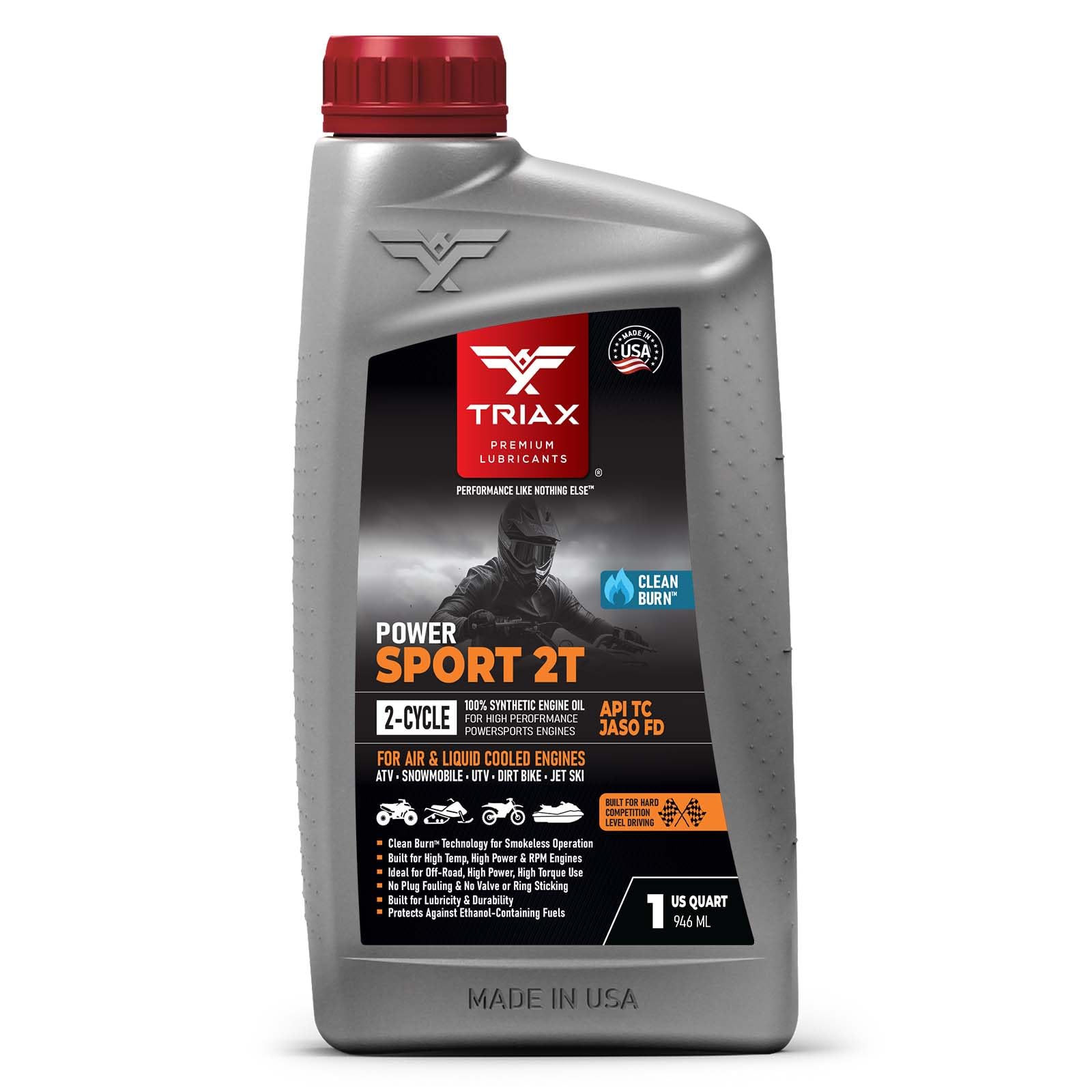
TRIAX Power Sport 2T punches above its price bracket by carrying JASO FD and API SN/SL certifications — a combination usually found in much pricier oils. Its “Clean Burn” technology uses synergistic detergent chemistry that actively breaks down existing carbon deposits while preventing new ones. Snowmobile and dirt bike users have reported a noticeable smoke reduction after just two tank fills, indicating the oil is dispersing built-up carbon rather than just masking it.
The anti-friction formula is designed for severe off-road conditions, maintaining film strength even when the engine is lugging at low RPM or screaming near the limiter. The easy-pour spout on the quart bottle is a practical touch that reduces spill waste during mixing.
TRIAX works across a wide range of vehicles — ATVs, UTVs, snowmobiles, jet skis, and dirt bikes. Its biggest drawback is a smaller brand footprint compared to industry giants, so some riders hesitate to trust an unfamiliar name. The user data, however, shows consistent longevity with no power or idling issues.
Why it’s great
- JASO FD certified at a fraction of premium oil cost
- Clean Burn tech reduces smoke and existing carbon
- Versatile — works in marine, snow, and dirt applications
Good to know
- Less brand recognition may raise skepticism
- Some users report shorter runtime per tank at high RPM
4. Red Line 40603 Two-Stroke Oil Racing Synthetic
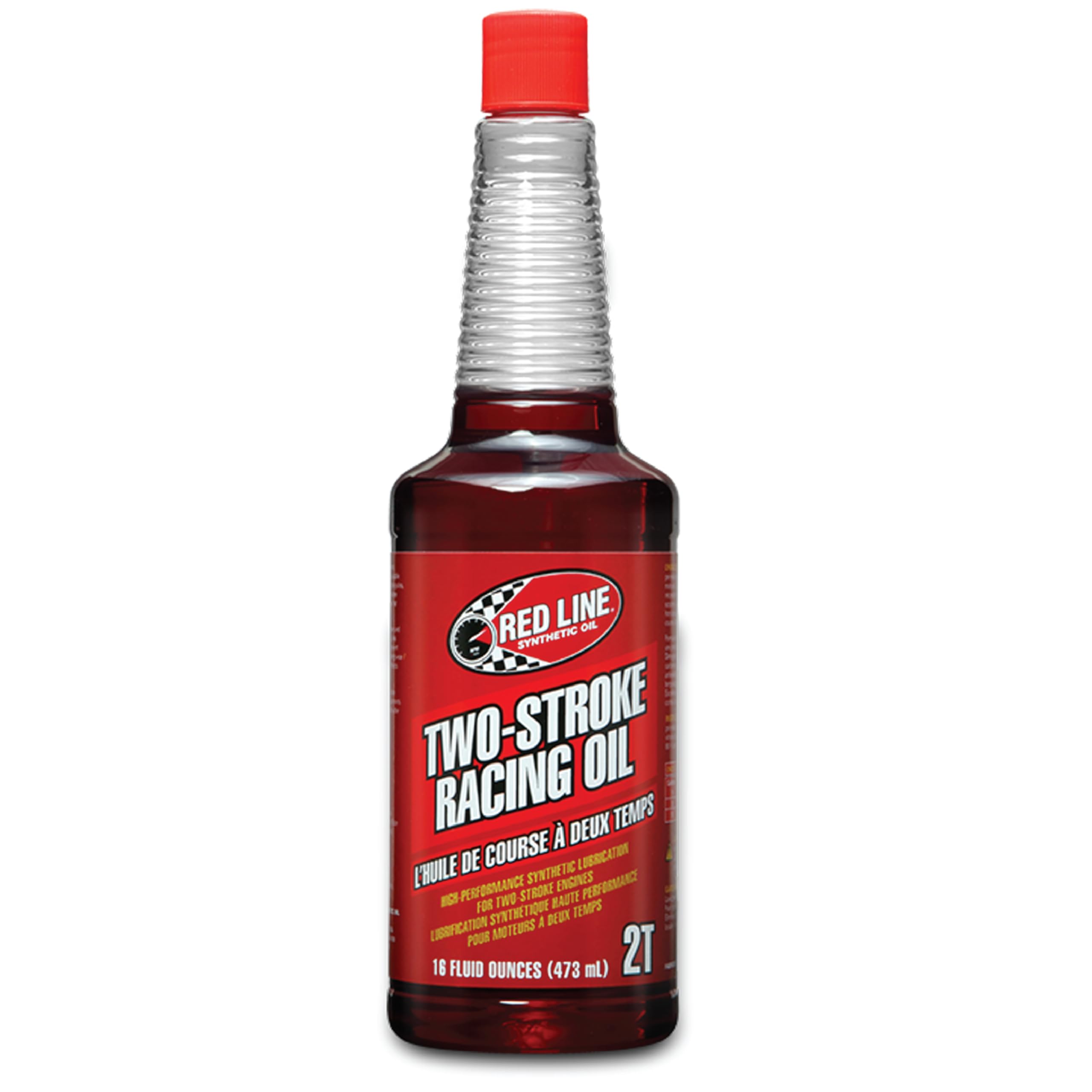
Red Line 40603 is a dyno-proven full synthetic that claims a 3–5% horsepower gain over standard oils, achieved through reduced internal friction and better combustion chamber seal. Its high-temperature stability prevents varnish and lacquer buildup on pistons and exhaust ports, which keeps the ring groove clean and compression consistent over the engine’s life.
The recommended ratio is 50:1, with safe usability up to 100:1 depending on riding conditions. This lean mixing capability means a single 16 oz bottle goes further than most 32 oz competitors — an important math factor for budget-conscious racers. The oil is particularly popular in snowmobiles and motorcycles, but also sees heavy use in giant-scale RC aircraft engines where oil quality directly impacts reliability at high RPM.
Red Line does not carry JASO FD certification, which may concern purists. However, its API SN rating and decades of racing use make its real-world performance hard to argue with.
Why it’s great
- Dyno-validated power increase from lower friction
- High-temp stability prevents carbon ring deposits
- Can be mixed lean (50:1 – 100:1) to extend bottle life
Good to know
- No JASO FD certification
- Smaller 16 oz bottle size may require frequent ordering for heavy users
5. Klotz BeNOL Pre-Mix Castor Oil
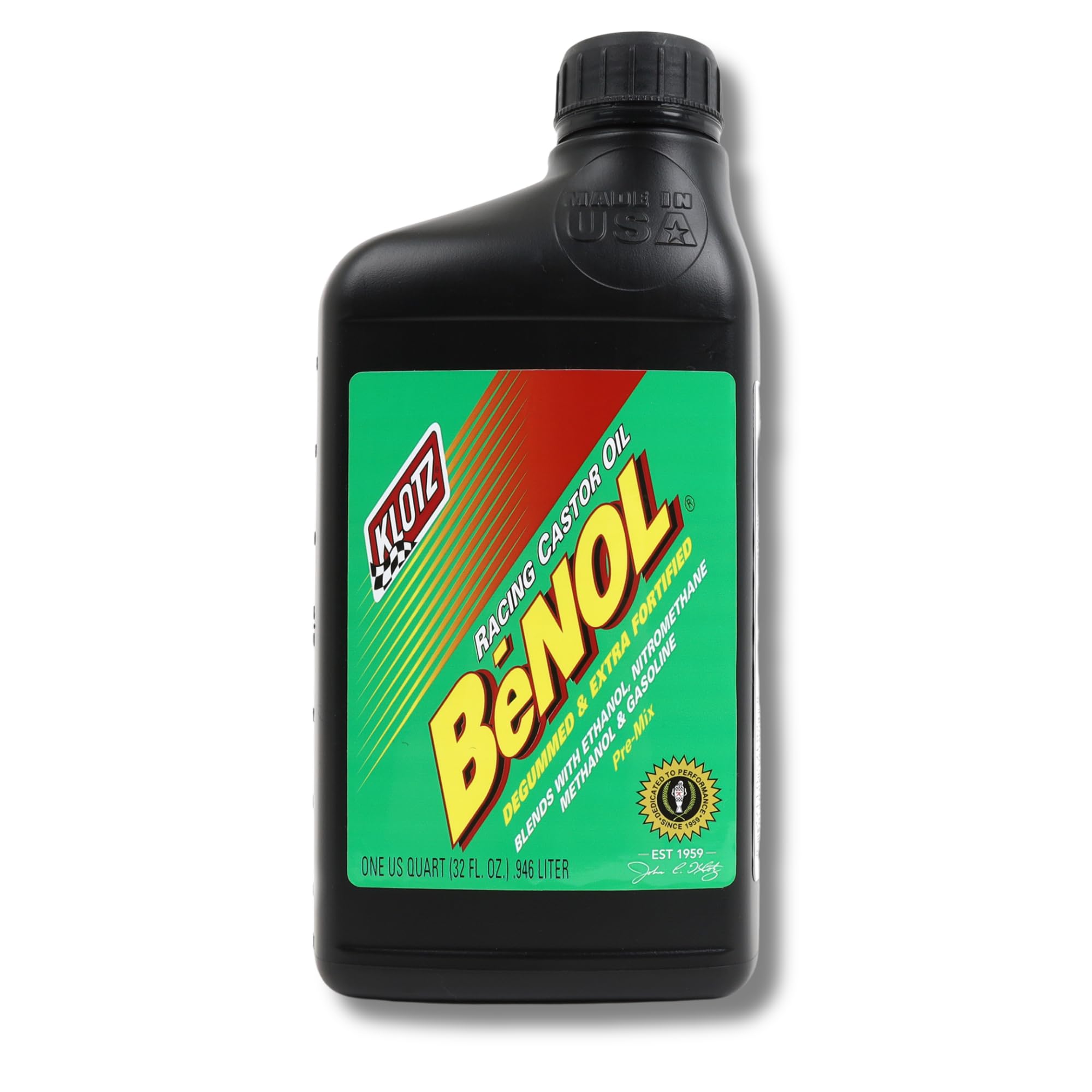
Klotz BeNOL is the standard-bearer for castor-based lubrication, offering double the film strength of conventional castor oils. In a 2-stroke, film strength is the oil’s ability to stay on cylinder walls under the intense heat and pressure of combustion — castor’s natural polymer structure excels here, preventing metal-to-metal scuffing even when the engine is pushed far beyond normal limits.
The refined castor blend burns with the iconic, nostalgic scent that hardcore racers associate with competition. It includes de-gumming and clean-burn technology that reduces smoke compared to traditional castor oils, though some carbon residue is still expected in the exhaust port if the bike is not ridden aggressively enough to burn it off. This oil is intended for premix only and should never be used in injection systems.
Recommended mixing ratios range from 20:1 for air-cooled engines up to 50:1 for water-cooled bikes. Riders using BeNOL in older YZ and KTM models frequently report restored compression and less piston slap, indicating the thick oil film is compensating for worn rings.
Why it’s great
- Unmatched film strength for racing and high-compression engines
- Nostalgic castor scent associated with race day
- De-gummed formula reduces smoke vs. traditional castor
Good to know
- Leaves carbon if engine is not run hard consistently
- Not compatible with oil injection systems
6. Motorex Cross Power 2T 100% Synthetic

Motorex Cross Power 2T is the factory-recommended lubricant for KTM, Husqvarna, and Gas Gas two-strokes. This means the oil’s viscosity, flash point, and detergent package are specifically calibrated to work with the power valve systems and cylinder coatings used on Austrian-built engines. Riders who switch to Motorex often see better power valve function and fewer mid-range stutter issues.
The 100% synthetic formula burns very clean, producing minimal smoke at the recommended 50:1 ratio. In mixed-use riding with 2023 Gas Gas trials bikes, users report clean plug reads and consistent jetting even after hours of slow-speed technical work. The 1-liter bottle size is slightly larger than the standard quart (32 oz vs. 33.8 oz), giving you about 6% more oil per purchase.
Motorex’s main hurdle is its premium price point — it is the most expensive oil in this lineup by volume. For non-KTM/Gas Gas owners, the price is harder to justify unless you specifically want the factory-specified chemistry profile.
Why it’s great
- Factory-fill spec for KTM/Gas Gas/Husqvarna engines
- Very low smoke output at 50:1 ratio
- 1-liter bottle offers slightly more volume than standard quarts
Good to know
- Higher cost per ounce than most competitors
- Overkill for low-RPM recreational riding on non-Austrian bikes
7. AMSOIL Dominator Full Synthetic 2-Cycle Oil

AMSOIL Dominator is a heavy-duty full synthetic designed specifically for high-RPM two-stroke racing engines, including track bikes and ultra-light aircraft. Its additive chemistry focuses on maintaining ring seal — a critical factor when the cylinder pressure is high enough to blow past standard oil films. Riders running the Dominator in Aprilia RS125 track bikes report consistent compression readings across multiple race weekends, which directly points to reduced ring and bore wear.
The oil’s viscosity and film strength support mixing ratios from 32:1 to 50:1, giving the rider flexibility depending on ambient temperature and engine load. The 32 oz quart size is practical for frequent mixers, but the cost per bottle has risen significantly in recent years. Users caution against letting opened bottles sit for months since two-stroke oil can absorb moisture and degrade over time.
Dominator is not JASO FD certified but holds a strong reputation among club racers and privateer motocross teams who prioritize real-world piston inspections over paperwork.
Why it’s great
- Excellent ring seal maintenance for racing engines
- Flexible mixing ratio range (32:1 to 50:1)
- Trusted by privateer track bike and motocross racers
Good to know
- Price has increased — not a budget option
- Oil should be used quickly after opening to prevent degradation
FAQ
Can I use automotive 2-cycle oil in my dirt bike transmission?
What ratio should I mix a 2 stroke oil for my dirt bike?
Is castor oil better than synthetic for racing?
Final Thoughts: The Verdict
For most users, the best 2 stroke oil for dirt bike winner is the Yamaha Yamalube Racing 2R because its factory race team pedigree and low carbon deposit profile make it the safest and most consistent choice for Yamaha and universal engines alike. If you want maximum film strength and that classic race-day scent, grab the Klotz BeNOL Castor Oil. And for the best value in a certified full synthetic, nothing beats the TRIAX Power Sport 2T.