
The moment you pour water into a newly planted tank, the cloud of dust rising from the substrate can trigger immediate regret. Aquatic plant soil is the literal foundation of a planted aquarium, and picking the wrong one means fighting cloudy water, unstable pH, and plants that refuse to root. The difference between a thriving underwater garden and a murky mess lies in the granules beneath your hardscape.
I’m Min — the co-founder and writer behind Gadgets Feed. I’ve spent countless hours analyzing the granular structure, nutrient profiles, and pH buffering capabilities of dozens of aquatic substrates to separate the soils that perform from those that simply look good in the bag.
From nutrient-packed active soils to stable inert gravels, this guide breaks down the top contenders so you can pick the best aquatic plant soil for your specific aquascaping goals without wasting time or money on substrates that fail under water.
How To Choose The Best Aquatic Plant Soil
Not all black granules in a bag are created equal. Some soils actively lower pH and provide nutrients for years; others are simply colored gravel that requires heavy supplementation. Understanding the following factors will save you from pulling out half-rotted plants two months after setup.
Active Soil vs Inert Gravel
Active soils — like ADA Amazonia and Fluval Stratum — contain baked clay or natural earth that buffers pH downward and releases nutrients. They’re ideal for demanding plants and shrimp that prefer soft, slightly acidic water. Inert substrates like Seachem Flourite or Aqua Natural Gold Pearl provide no pH shift or nutrition on their own, but they last indefinitely and give you full control over water chemistry via root tabs and liquid fertilizers.
Grain Size and Porosity
Aquasoil granules typically range from 1–5 mm. Smaller grains allow finer root penetration for carpeting plants like Monte Carlo, but they can compact and restrict water flow if packed too deep. Larger 3–5 mm granules promote water circulation through the substrate bed and are easier to plant stem plants into. Porous granules also host beneficial bacteria that break down fish waste and prevent anaerobic pockets.
Ammonia Leaching and Cycling
Many premium active soils release a significant ammonia spike during the first 2–4 weeks. This is intentional — the ammonia feeds the nitrogen cycle and establishes a robust biofilter. However, it means you cannot add fish or shrimp immediately. Budget-friendly or inert soils bypass this entirely, allowing instant stocking if you use a seeded filter. If you buy an active soil, plan for a month-long dry or fishless cycle before introducing livestock.
Quick Comparison
On smaller screens, swipe sideways to see the full table.
| Model | Category | Best For | Key Spec | Amazon |
|---|---|---|---|---|
| ADA Aqua Soil Amazonia Ver 2 | Active | High-tech planted tanks | 9L bag, strong pH buffering | Amazon |
| FZONE Aquarium Soil | Active | Dust-free setup | 8L (17.64 lbs), 3mm granules | Amazon |
| CaribSea Samurai Soil | Active | Shrimp and betta tanks | 9 lbs, neutral pH, no ammonia | Amazon |
| LANDEN Aqua Soil Substrate | Active | Budget active soil | 5L (10 lbs), 3-5mm grains | Amazon |
| Fluval Plant and Shrimp Stratum | Active | Shrimp breeding | 4.4 lbs, porous granules | Amazon |
| Seachem Flourite Black Clay Gravel | Inert | Long-term inert tanks | 7.7 lbs, clay-based | Amazon |
| Aqua Natural Gold Pearl | Inert | Natural riverbed look | 20 lbs, 2-4mm pebbles | Amazon |
In‑Depth Reviews
1. ADA Aqua Soil Amazonia Ver 2 (9L)

ADA Amazonia Ver 2 is the benchmark that all other aquasoils are measured against. Made from rare Japanese plant-based black soil, its granules naturally buffer pH down to the 5.5–6.5 range and lower KH to near-zero — exactly what demanding plants like dwarf baby tears, Monte Carlo, and Tonina require. The 9L bag provides enough depth for a 20-gallon tank with a nice slope for hardscape contouring.
This version 2 formula has slightly fewer nutrients than the original, which reduces the severity of the initial ammonia spike and minimizes algae outbreaks during the cycling phase. The included Amazon concentrate supplement lets you spot-treat high-demand areas with extra organic compounds. Granules are irregular and porous, giving roots immediate purchase and preventing the substrate from compacting over time.
The trade-off is the famous ADA ammonia leach — expect 2–4 ppm for the first two to three weeks. You cannot add shrimp or fish safely during this window. The price is also steep per bag, but the foundation it creates for a high-tech, CO2-injected aquascape is unmatched by any budget alternative.
Why it’s great
- Industry-leading pH and KH buffering for soft-water plants
- Porous, irregular granules prevent compaction and boost root growth
- Includes Amazon concentrate supplement for targeted nutrient boosting
Good to know
- Strong ammonia spike requires a 3–4 week fishless cycle
- Premium price well above mid-range competitors
2. FZONE Aquarium Soil for Planted Tanks (8L)
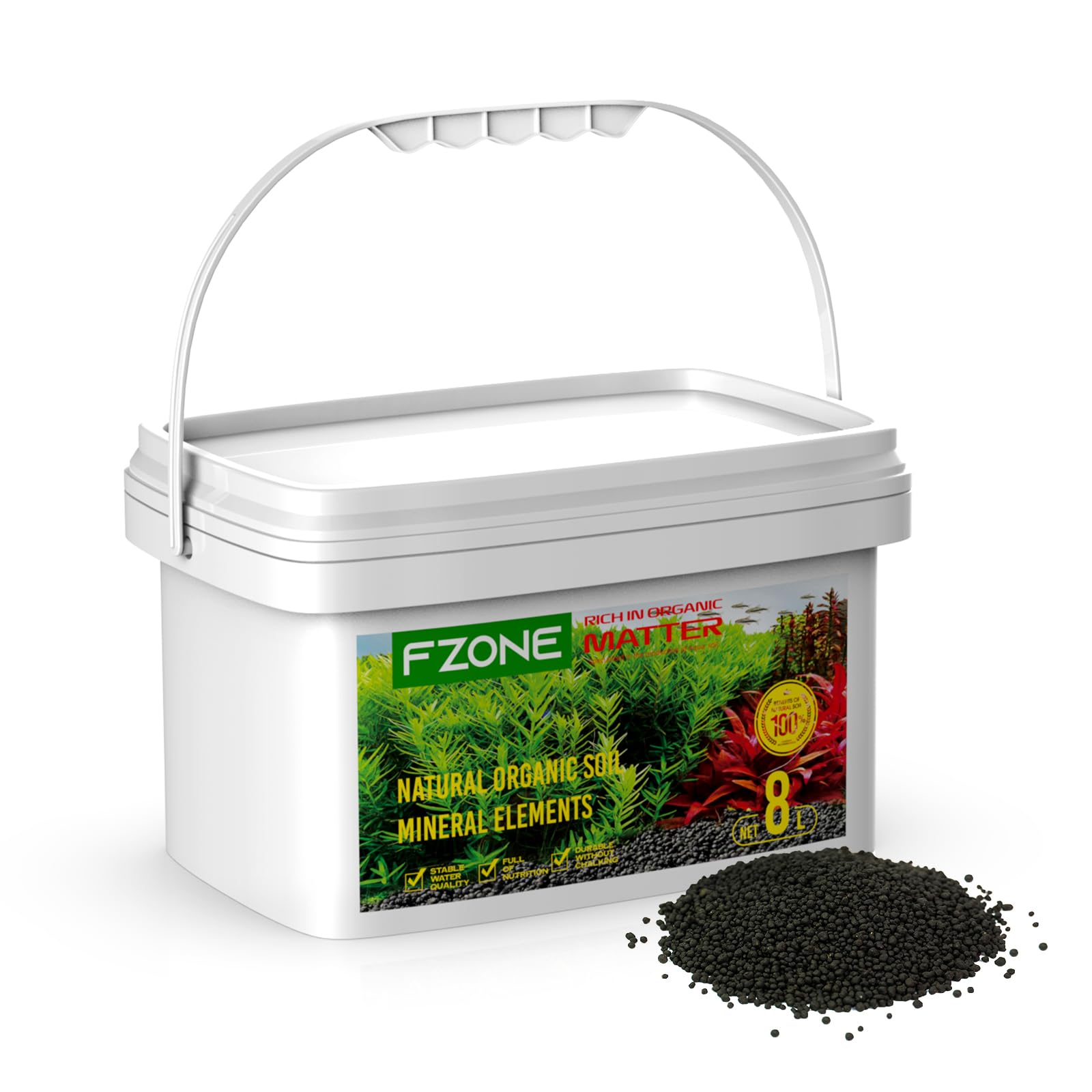
FZONE has quietly become the strongest challenger to Fluval and ADA in the active soil space. Its 3mm granules are sintered at high temperature, which means they hold shape under water without breaking into dust — a common frustration with softer aquasoils that turn to mud after a year. Users report zero cloudiness on first fill with no rinsing required, which is a massive time saver.
The nutrient profile is rich enough to grow a Monte Carlo carpet faster than Fluval Stratum in dry-start setups, according to multiple user comparisons. The soil buffers pH downward by absorbing alkaline ions, keeping conditions stable for soft-water species. The packaging itself is a reusable container that doubles as a storage bin, a small but appreciated detail for aquascapers with multiple tanks.
Be aware that FZONE leaches ammonia — reviewers measured 4–8 ppm for roughly 17 days, requiring aggressive 50% water changes during that window. Some sensitive plants like Bucephalandra may melt during the transition while heavy root feeders like Rotala and hair grass boom once the cycle settles.
Why it’s great
- Dust-free, no-rinse granules with high-temperature sintering
- Drives explosive growth in carpeting plants during dry start
- Reusable packaging adds real storage value
Good to know
- High ammonia leach (4–8 ppm) for first 2–3 weeks
- Some sensitive epiphytes may melt during transition
3. CaribSea Dry Packed Substrate Samurai Soil (9lb)
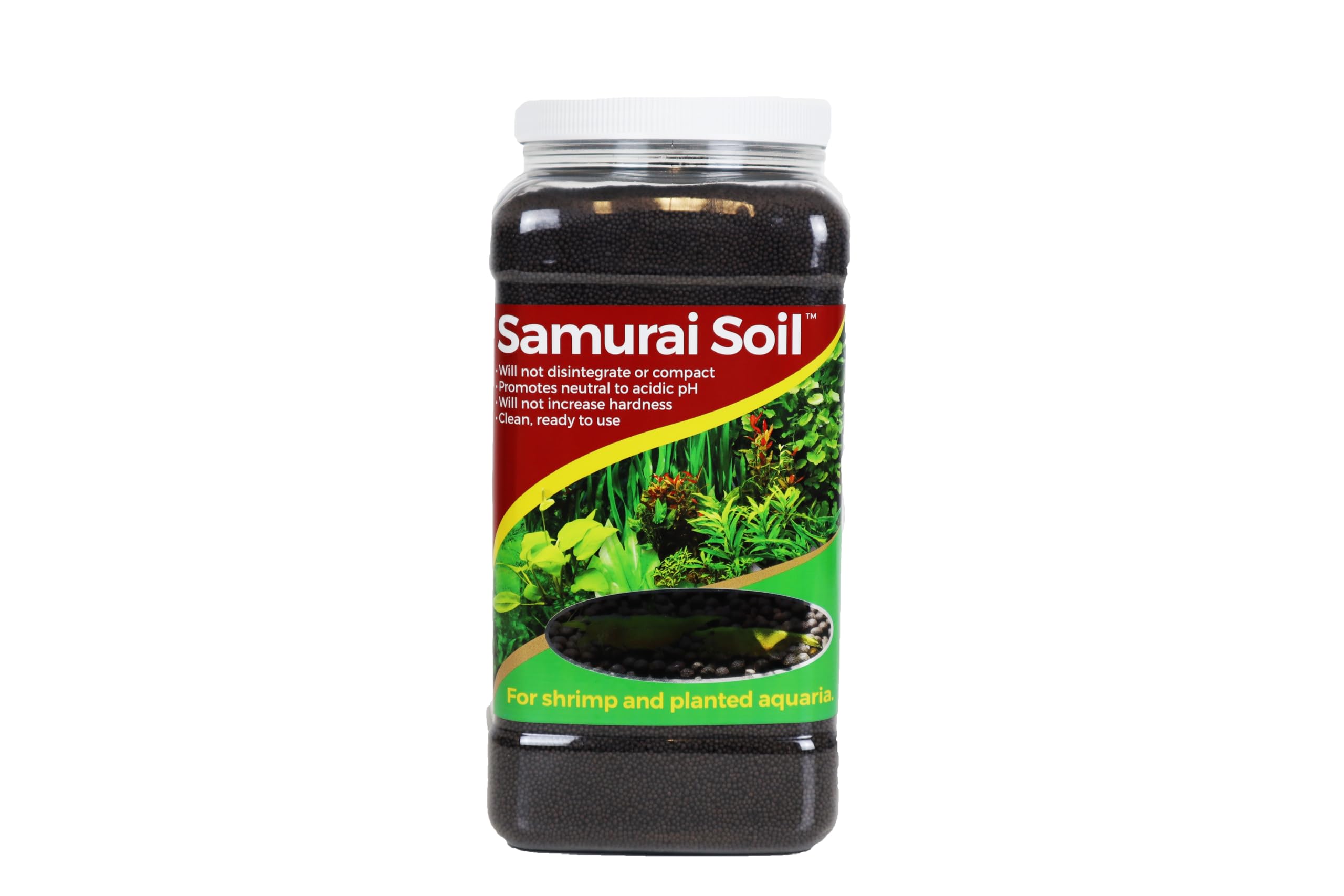
CaribSea Samurai Soil solves one of the biggest headaches of active substrates: the ammonia spike. Users consistently report that this soil produces no detectable ammonia during setup, making it safe for immediate use with shrimp and bettas as long as your tank is already cycled. The granules are cleaned and ready to use straight from the bag with zero rinsing, and the water stays crystal clear from day one.
The soil promotes neutral to slightly acidic pH without increasing water hardness, which is ideal for Neocaridina shrimp breeding and soft-water fish species. It will not disintegrate or compact over time, maintaining its granular structure for years. This durability makes it a better long-term investment than softer soils that eventually break down into sludge.
The 9lb bag covers about a 1–2 inch layer in a 10-gallon tank. At a premium price point, you pay for the convenience of no ammonia cycling and the confidence of a stable, non-disintegrating substrate. It lacks the extreme buffering power of ADA, but for hobbyists who want active soil performance without the waiting period, this is the cleanest option available.
Why it’s great
- Zero ammonia spike — safe for immediate shrimp and fish introduction
- No rinsing needed, water stays crystal clear on first fill
- Granules resist disintegration and compaction long-term
Good to know
- Premium cost per pound compared to mid-range alternatives
- Less aggressive pH buffering than ADA Amazonia
4. LANDEN Aqua Soil Substrate (5L / 10lbs)

LANDEN Aqua Soil aims to deliver the performance of premium Japanese aquasoils like ADA and Controsoil at a fraction of the cost. The 3–5mm black granules are porous and packed with organic acids and nitrogen nutrients designed to promote healthy root systems in stem plants and provide softer water for shrimp. Users have successfully used it in 55-gallon tanks by mixing multiple bags, with plants and shrimp thriving after a brief settling period.
The soil does buffer pH to around 6.0–6.5 and fixes KH issues, which is remarkable at this price point. However, it arrives with noticeable debris — dried grass, leaves, and fine dust — that requires thorough rinsing before use. Some users report the granules are light enough that stem plants float out easily, requiring planting anchors or extra depth to secure roots.
Setup is straightforward: no rinsing is officially recommended, but the user consensus is that a good rinse prevents the first-day cloudiness. The soil produces minimal ammonia compared to ADA or FZONE, which means you can add hardy fish sooner. For budget-conscious aquascapers who want active soil properties without paying the ADA premium, this is the most compelling option.
Why it’s great
- Significantly lower cost than ADA and Controsoil with similar buffering
- Porous structure supports beneficial bacteria colonization
- Mild ammonia release allows faster stocking than high-leach soils
Good to know
- Bag contains plant debris and dust that needs rinsing
- Lightweight granules make planting stem plants tricky
5. Fluval 12693 Plant and Shrimp Stratum (4.4 lbs)
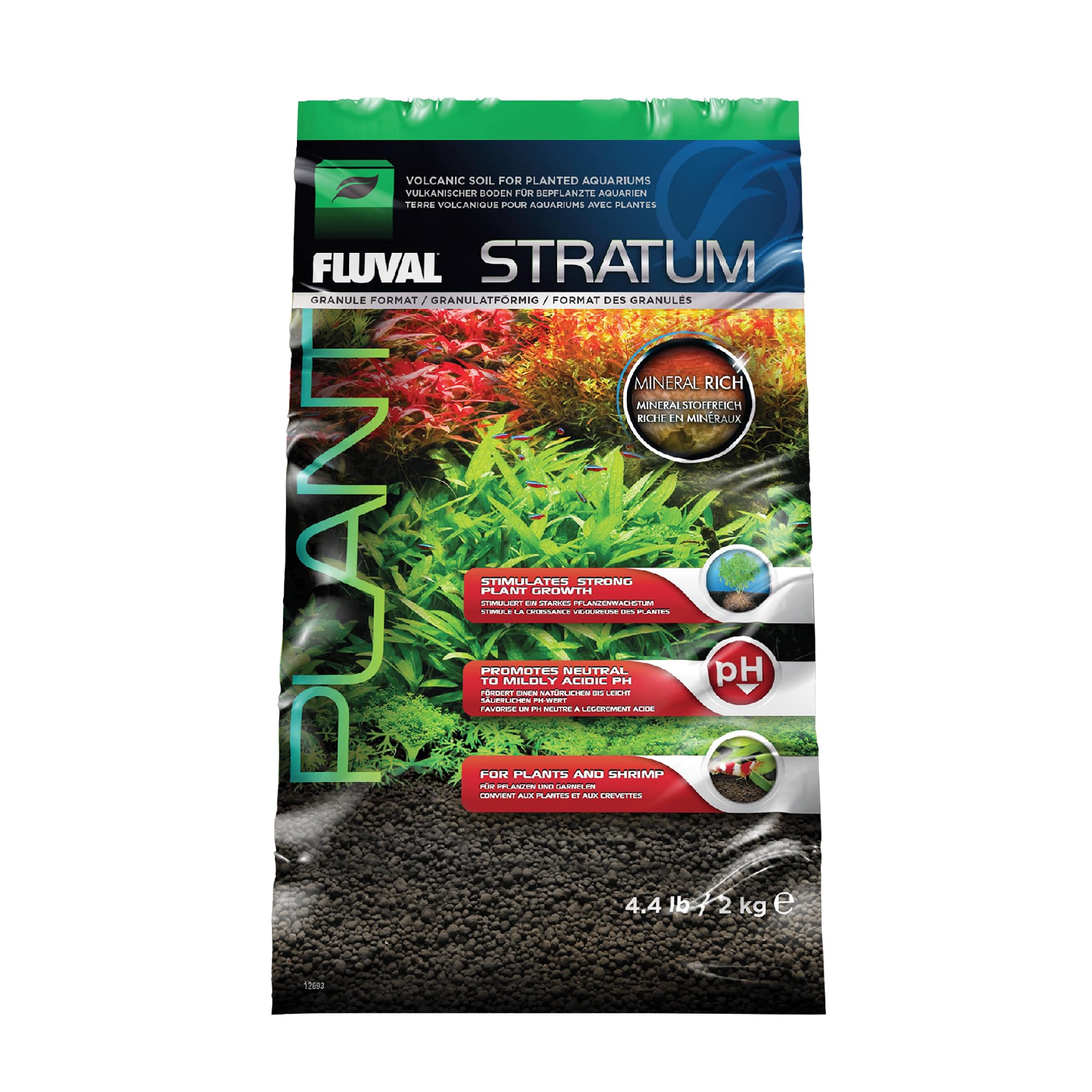
Fluval Stratum is one of the most widely recommended substrates in the planted aquarium hobby for good reason. Its porous structure rapidly colonizes beneficial nitrifying organisms, and it maintains a neutral to slightly acidic pH that suits most tropical fish, plants, and especially shrimp. The granules provide excellent shelter for newborn shrimp, significantly boosting survival rates in breeding colonies.
The lightweight pellets are easy to work with but require careful placement — do not mix or rinse them before use. Pour the substrate directly into the tank, then fill slowly using a plate to diffuse water pressure. Expect a black cloud on day one that clears within 24–48 hours as the filter runs. Users report water tests showing perfect parameters after the initial cloudiness settles, with plants growing abnormally large and healthy.
The 4.4lb bag is relatively small, designed for nano tanks up to 10 gallons. Larger setups will need multiple bags, and the per-bag cost adds up quickly compared to bulk options like LANDEN or FZONE. Some users also note that the lightweight pellets can allow plants to float up if not planted deep enough or secured with planting tweezers.
Why it’s great
- Ideal pH for shrimp breeding and soft-water plants
- Porous granules rapidly develop beneficial bacteria colonies
- Proven track record for massive plant growth
Good to know
- Small bag size requires multiple purchases for larger tanks
- Lightweight pellets can cause plants to float without anchoring
6. Seachem Flourite Black Clay Gravel (7.7 lb)

Seachem Flourite is the go-to inert clay gravel for aquascapers who want complete control over water chemistry. Because it provides no pH buffering or nutrients on its own, you must supplement with root tabs and liquid fertilizers — but this also means zero ammonia spikes, zero pH swings, and instant livestock safety. The clay-based material is heavier than sand, so it settles quickly after disturbance and doesn’t stay suspended in the water column.
The granules are actual black clay material, not painted gravel, so the color remains consistent for years without fading. The dust issue is real — users recommend rinsing using a tray method to avoid clouding the tank. Once settled, the dust clears within 1–2 days. The grain size is consistent and larger than sand, making it safe for bottom-dwellers like Corydoras that need smooth substrates for their barbels.
Flourite is inert and durable, meaning it never breaks down or needs replacement. A single bag can last through multiple tank redecorations. The trade-off is that heavy root feeders like Amazon swords will need regular root tab replenishment, and you cannot rely on the substrate to soften water or lower pH — those parameters are entirely controlled by your source water and additives.
Why it’s great
- Zero ammonia or pH impact — instant livestock safety
- Durable clay material never disintegrates or compacts
- Heavy granules settle fast and stay put during water changes
Good to know
- Requires root tabs for heavy root-feeding plants
- Dusty out of the bag — thorough rinsing is mandatory
7. Aqua Natural Gold Pearl Substrate (20 lbs)

Aqua Natural Gold Pearl sits at the opposite end of the spectrum from active soils. This is a triple-washed, kiln-dried natural pebble substrate ethically sourced from New Zealand that functions purely as an inert decorative layer. The 2–4mm granules are remarkably uniform in size, with natural shade variations ranging from tan to gold that create a three-dimensional riverbed texture in the tank.
The pebbles are smooth and round, making them completely safe for bottom-dwelling fish and snails that root through the substrate. At 20 lbs per bag, this is the most economical option by weight among all seven products reviewed. The triple-washing process means less dust than most inert gravels, though users still recommend a quick rinse until the water runs clear before adding to the tank.
The major limitation is that this is pure pebble — no nutrients, no pH buffering, no beneficial bacteria hosting capability. It is strictly an aesthetic substrate that requires heavy root tab supplementation for any planted tank. Best suited for low-tech tanks with hardy, low-light plants or as a top dressing over a nutrient-rich base layer in a more advanced setup.
Why it’s great
- Best value per pound — 20 lb bag for a fraction of active soil cost
- Uniform, smooth pebbles safe for all bottom-dwelling species
- Beautiful natural color variation without painted coatings
Good to know
- Completely inert — no nutrients or pH buffering
- Too small for undergravel filter systems
FAQ
Can I mix active aquasoil with inert gravel?
How much aquatic plant soil do I need for my tank size?
Does aquatic plant soil expire or lose its nutrients over time?
Why does my aquarium soil release ammonia after adding water?
Final Thoughts: The Verdict
For most users, the best aquatic plant soil winner is the ADA Aqua Soil Amazonia Ver 2 because its unmatched pH buffering and nutrient profile create the ideal foundation for demanding high-tech planted tanks. If you want a dust-free setup with explosive carpeting plant growth at a better value, grab the FZONE Aquarium Soil. And for immediate shrimp stocking without the ammonia wait, nothing beats the CaribSea Samurai Soil.