
A tennis shoe that fails to grip during a lateral lunge doesn’t just cost you a point—it risks a rolled ankle or a pulled muscle. The difference between a reactive first step and a hesitant shuffle often comes down to the outsole rubber compound and the midsole’s torsional stiffness. Serious court players need a shoe engineered for the specific demands of hard-court sliding, clay-court traction, and repeated explosive starts.
I’m Min — the co-founder and writer behind Gadgets Feed. I’ve spent over 80 hours analyzing the cushioning foams, outsole durability data, and chassis support systems across seven of the most talked-about court models to find which pairs actually hold up to weekly match play.
Whether you are a club player clocking six hours a week or a high-school competitor grinding through a season, this guide breaks down the real-world performance of the best athletic tennis shoes to help you find the right balance of support, weight, and longevity.
How To Choose The Best Athletic Tennis Shoes
Not every court shoe handles the same workload. Outsole abrasion, midsole cushioning density, and upper materials all shift the feel and longevity of a pair. Before you pick, weigh these three factors against your playing frequency and court surface.
Outsole Durability and Tread Pattern
Hard courts, the most common surface, are abrasive on outsole rubber. Look for a full-length herringbone or modified herringbone tread made from a high-density compound. Shoes marketed with a “6-month” outsole guarantee usually pack a thicker rubber layer in the toe-drag zone. If you play on clay, a tighter, more continuous tread pattern sheds dirt better without caking.
Midsole Cushioning vs. Court Feel
Thick, plush cushioning like FlyteFoam or Adiprene+ reduces impact on hard courts but can mute your feel for the surface during fast pivots. Players who rely on quick direction changes often prefer a lower-to-the-ground platform with a stiffer chassis — something like the Dual Density 4D Support system in Wilson’s Rush Pro line. The trade-off is straightforward: more cushioning equals less feedback; less cushioning equals more direct energy transfer.
Toe-Box Volume and Heel-Lock Lacing
A too-narrow toe box leads to blisters, calluses, or black toenails after extended rallies. Measure your foot width before buying, especially with brands like Adidas, whose Ubersonic line tends to run narrow. A separate eyelet for heel-lock lacing (a lace loop at the top collar) secures the ankle in place and reduces forward sliding inside the shoe during hard stops. That feature alone can prevent hot spots on the heel.
Quick Comparison
On smaller screens, swipe sideways to see the full table.
| Model | Category | Best For | Key Spec | Amazon |
|---|---|---|---|---|
| ASICS Court FlyteFoam 3 | Premium | Hard-court durability & impact protection | FlyteFoam + Forefoot GEL | Amazon |
| Wilson Rush Pro 4.5 | Premium | Lateral stability & minimal break-in | 4D Support Chassis | Amazon |
| Skechers Viper Court Pro | Mid-Range | Women’s fit & arch support | 160 g weight / 1.5 lbs | Amazon |
| Adidas Adizero Ubersonic 5 | Mid-Range | Agility & speed-focused players | Integrated tongue / 2.13 lbs | Amazon |
| Wilson Rush Pro Ace | Mid-Range | Wide fit & value durability | 4D Support Chassis (entry) | Amazon |
| adidas Court Control 3 | Budget | Intermediate players & wide toe box | 2.43 lbs / springy cushion | Amazon |
| K-Swiss Court Express | Budget | Women’s wide foot & daily wear | Leather upper / 2 lbs | Amazon |
In‑Depth Reviews
1. ASICS Men’s Court FlyteFoam 3 Tennis Shoes
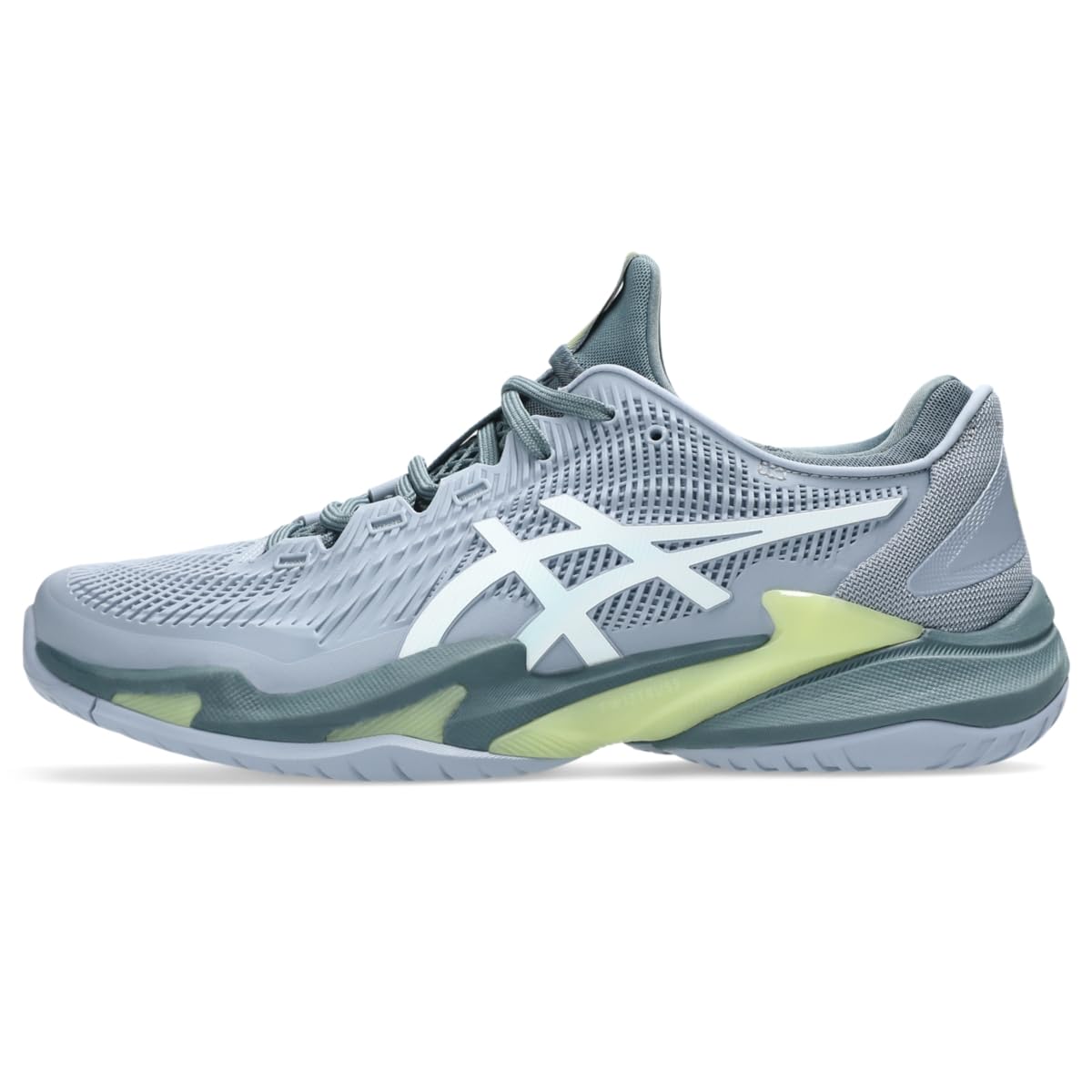
ASICS packs its flagship Court FF 3 with a triple-threat tech stack: FlyteFoam for lightweight impact absorption, forefoot GEL inserts for softer landings, and TwistRUSS technology that stiffens the midfoot during cutting motions. The mono-sock construction hugs the ankle tightly, eliminating the need for a separate tongue, but it also means slipping into these without a shoe horn is noticeably harder than most lace-up designs. The PGUARD outsole reinforcement in the toe and heel areas targets the two highest-wear zones on hard courts, which directly addresses the durability complaints that plagued earlier ASICS models.
Reviewers averaging three to four hours of play per week report that the soles show minimal flattening after six months. The shoe runs true to size for medium-width feet, and the bunion-friendly toe box avoids the pinching common in race-style lasts. At 1.5 pounds per shoe, it’s not the lightest in this list, but the weight distribution feels balanced because the heel-to-toe offset remains low. The combination of ample impact padding and a rigid chassis makes this a strong pick for players who prioritize joint protection over barefoot court feel.
The Club-fit lacing system allows a separate top eyelet for heel-lock lacing, which is a welcome feature for those who struggle with heel slip during aggressive baseline rallies. Some users note the price sits at the premium end of the spectrum, but the reinforced outsole and multi-layer cushioning justify the investment for anyone logging serious court hours.
Why it’s great
- Triple-layer cushioning with GEL and FlyteFoam absorbs hard-court shock effectively.
- PGUARD toe and heel reinforcement extends outsole life significantly.
- TwistRUSS midfoot shank provides excellent lateral stability for cutting.
Good to know
- Mono-sock design makes the shoe very difficult to put on without a shoe horn.
- Price is high compared to mid-range Wilson or Adidas options.
2. Wilson Men’s Rush Pro 4.5 Tennis Shoes
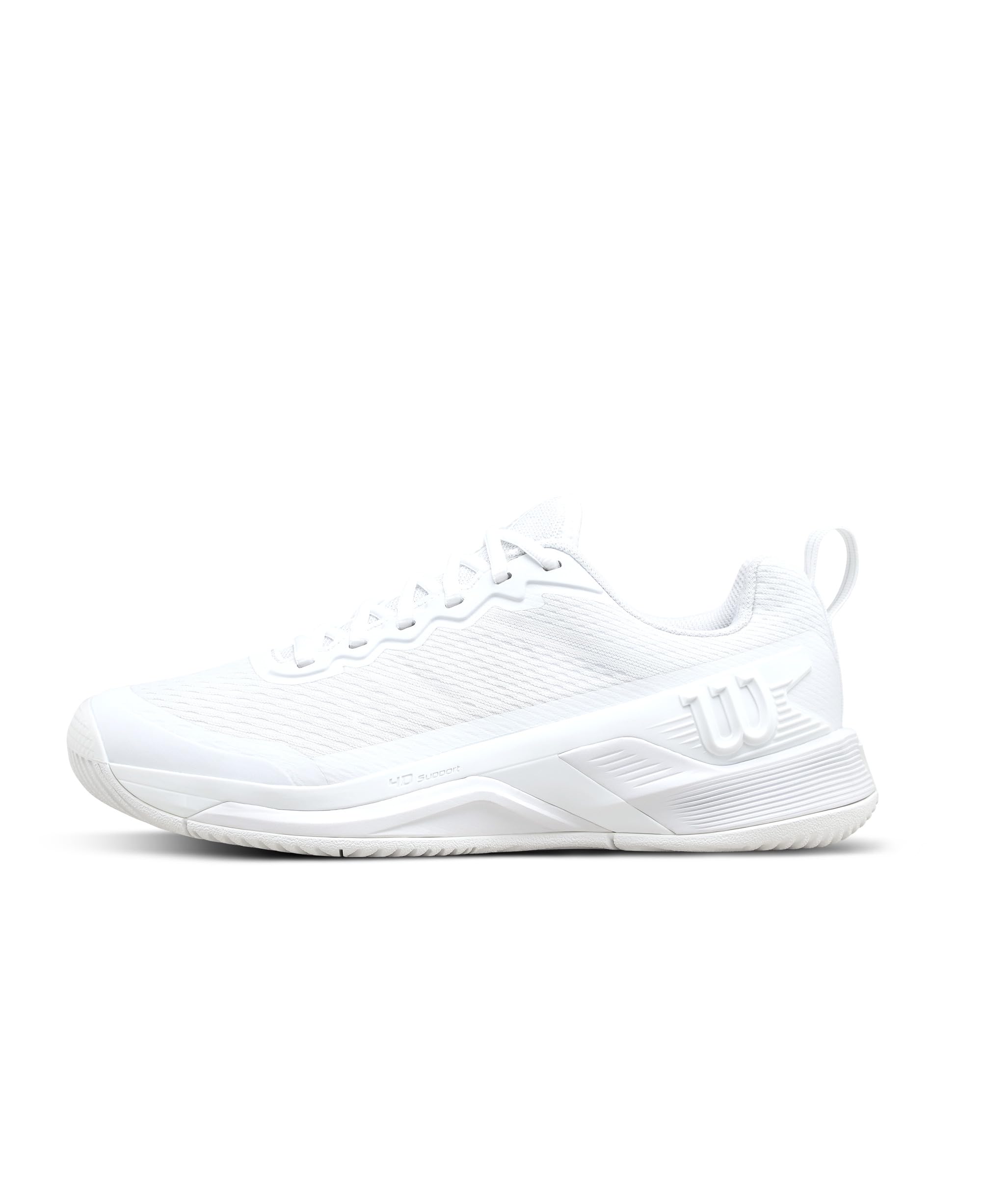
The Wilson Rush Pro 4.5 is built around a Dual Density 4D Support Chassis that stiffens the lateral walls without adding bulk. This chassis creates a stable platform for side-to-side movements, which is why tennis and pickleball players both gravitate toward it. The upper uses a lightweight mesh reinforced with synthetic overlays, and the fit is designed to be performance-oriented — snug through the midfoot with a slightly wider toe box than previous Rush Pro generations. Reviewers consistently note the near-zero break-in period, which is a major advantage for tournament players who cannot afford blisters during a long match.
After roughly 150 hours of use, long-term testers report that the midsole retains its resilience and the outsole shows moderate wear only in the toe-drag area. The shoe feels balanced — not as plush as the ASICS FlyteFoam, but with more ground feedback and a lower center of gravity. This translates to quicker reactions during split-step transitions and more confident pushes off the baseline. The integrated lace loop at the top of the collar allows a heel-lock tie-down, which anchors the foot securely inside the shoe during sudden stops.
Compared to the Wilson Rush Pro Ace, the 4.5 uses a higher-grade chassis and denser outsole rubber, which pushes its price up but delivers noticeably better support for advanced players. The aesthetic is clean and understated, with colorways that avoid loud branding. For a player who needs a shoe that feels fast without sacrificing structural support, this is a solid daily driver.
Why it’s great
- Excellent lateral stability from the Dual Density 4D Support Chassis.
- Almost no break-in period — comfortable straight out of the box.
- Heel-lock lacing system prevents foot slip during aggressive movement.
Good to know
- Toe-drag area still shows wear after heavy use; consider outsole warranty models for extreme grinders.
- Midfoot fit may feel too snug for players with wider feet.
3. Skechers Women’s Viper Court Pro Pickleball Sneaker
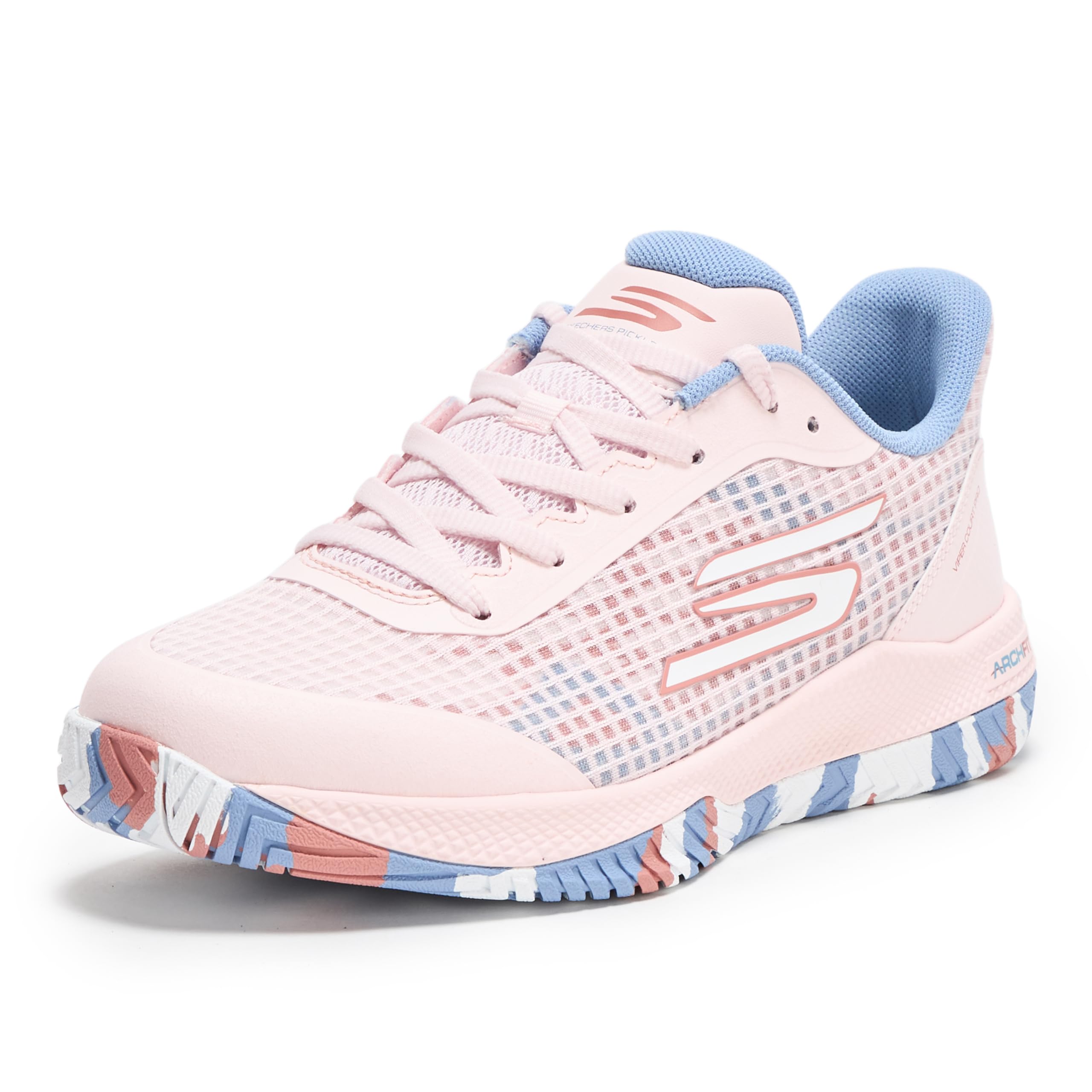
Skechers designed the Viper Court Pro specifically for the lateral-heavy movement of pickleball, which shares most of the same demands as baseline tennis. The shoe features a full-coverage rubber outsole with a herringbone-inspired tread that grips indoor sport surfaces well. The midsole uses a lightweight foam compound that provides decent impact absorption without deadening the court feel. At 1.5 pounds, it is one of the lighter options here, and the mesh upper helps ventilate heat during long sessions.
Multiple users report that the shoes hold up to three sessions per week for nearly a year before significant tread wear appears. The fit runs slightly large, with several reviews recommending a half-size down for a snug heel lock. The toe box, however, receives mixed feedback — a few buyers with average-width feet developed calluses on their small toes due to the forefoot tapering. The shoe works best for players who do not require an exceptionally wide forefoot but still want good arch support and a locked-down heel.
A common complaint involves audible squeaking on hard court surfaces, which some users find distracting during play. The stock shoelaces are also shorter than ideal, making a double-knot harder to tie securely. Despite these minor annoyances, the combination of good traction, washable upper, and solid durability for its price tier makes this a smart choice for the recreational-competitive hybrid player.
Why it’s great
- Lightweight build with good ventilation for long on-court sessions.
- Herringbone outsole delivers reliable traction on indoor and hard courts.
- Holds up well to three weekly sessions for nearly a year.
Good to know
- Toe box runs narrow for some users, potentially causing calluses.
- Audible squeaking on certain court surfaces reported by multiple buyers.
4. adidas Men’s Adizero Ubersonic 5 Tennis Shoes
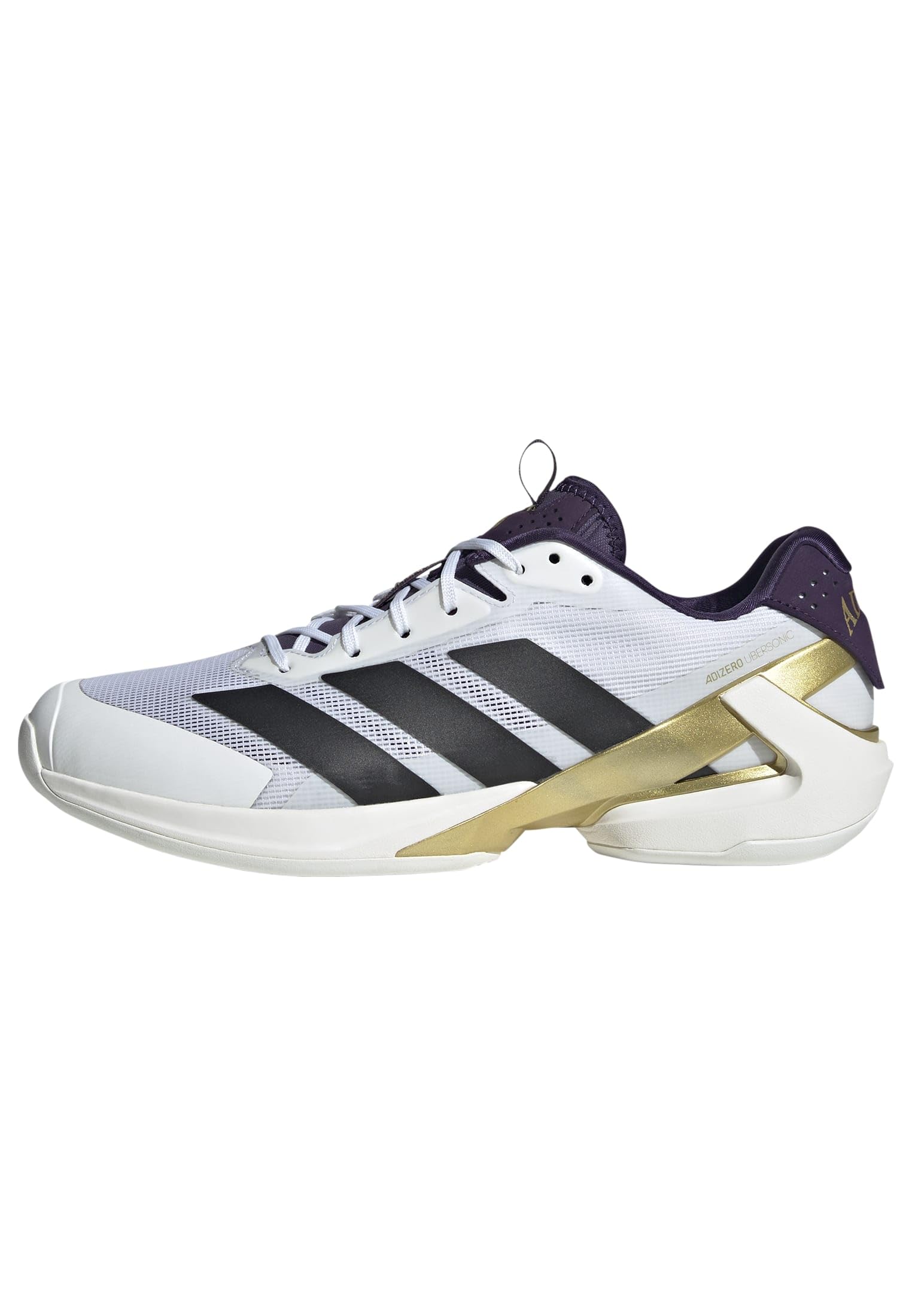
The Ubersonic line has long been Adidas’s answer to the speed-focused player, and version five refines the formula by ditching the built-in sock liner of the 4.1 in favor of a more traditional tongue-integrated construction. This change improves foot entry and allows a more customizable lace fit. The outsole uses a modified herringbone tread that performs well on both hard courts and clay, providing controlled slide without sacrificing grip during explosive push-offs. At 2.13 pounds per pair, it feels noticeably lighter than durability-focused shoes like the Court Control 3.
Reviews from high-frequency players highlight the shoe’s agility and excellent grip, with several noting that the Ubersonic 5’s tread pattern sheds clay effectively. However, the toe box is undeniably narrow — buyers with wider feet report pinching on the outer toes after extended sessions. The integrated tongue prevents slippage, but the lack of a traditional lace loop system at the top makes heel-lock lacing slightly less effective. Users coming from the previous Ubersonic 4.1 should be aware of the different upper feel.
Durability reports are mixed: one player reported the 4.1 model splitting at the instep crease after three months, but early impressions of the 5 indicate improved upper construction at the flex points. The shoe works best for slim-footed players who prioritize weight and reactivity over longevity. If you can tolerate a tight forefoot, the Ubersonic 5 delivers one of the quickest, most responsive rides in its segment.
Why it’s great
- Outstanding court feel and agile response for quick lateral movements.
- Modified herringbone outsole offers reliable grip on both hard courts and clay.
- Integrated tongue prevents mid-foot slippage during play.
Good to know
- Narrow toe box restricts use to slim-footed players; wider feet will feel cramped.
- Upper durability at the flex point is still unproven over extended use.
5. WILSON Men’s Rush Pro Ace Tennis Shoes
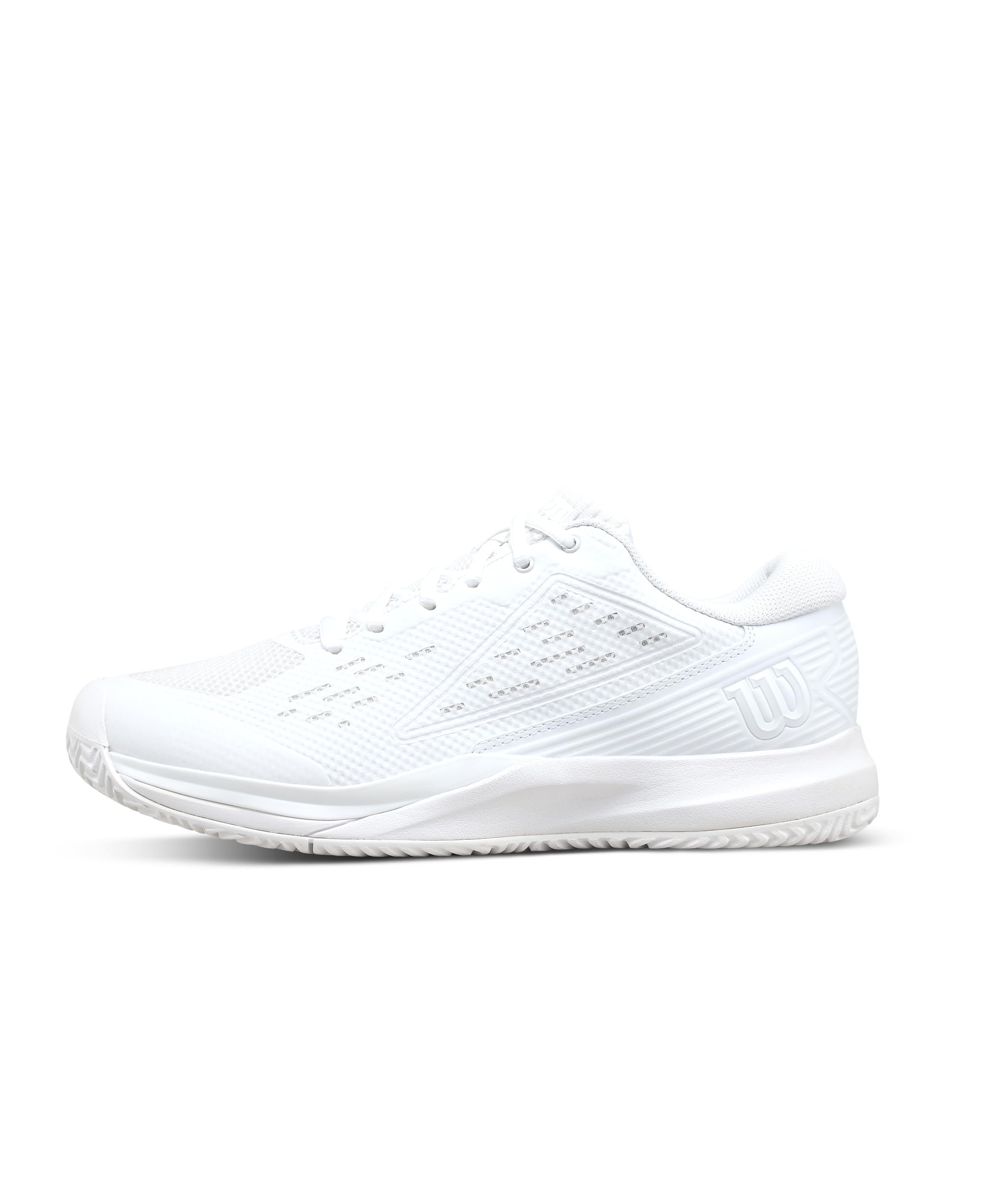
The Wilson Rush Pro Ace is the value-optimized sibling of the Rush Pro 4.5, retaining the same 4D Support Chassis concept at a lower tier. The result is a shoe that offers decent lateral stability and a wide, accommodating fit — a rare combination in a market that often forces wide-footed players toward clunky, low-tech designs. The upper uses a mix of synthetic leather and mesh, giving it a more structured feel than the all-mesh Rush Pro 4.5. Good impact protection comes from a padded interior lining that cushions the heel and ankle collar well.
Long-term reports from high school tennis players playing full seasons show that the shoe holds up structurally, but the outsole tread wears faster than premium ASICS or higher-tier Wilson models. A hard-playing 18-year-old reviewer noted that the sole does not survive a full season of daily practice and matches. The trade-off is clear: you get near-flagship-level stability and a wide toe box for a lower investment, but the outsole rubber compound is not as dense as what you find in the Rush Pro 4.5 or the Court FlyteFoam 3.
The shoe runs true to size and offers a comfortable fit right out of the box with minimal break-in. Traction is balanced — enough grip for confident direction changes, but with enough give to allow controlled slides on hard courts. The Rush Pro Ace is an excellent choice for recreational and intermediate players who value lateral support and foot volume over maximum outsole lifespan.
Why it’s great
- Wide, accommodating fit ideal for players with broader feet.
- 4D Support Chassis delivers lateral stability at a lower price point.
- Good impact protection from the padded interior lining.
Good to know
- Outsole tread wears faster than premium models — may not last a full competitive season.
- Slightly stiffer upper requires a short break-in period for some users.
6. adidas Mens Court Control 3 Tennis Sneakers Shoes
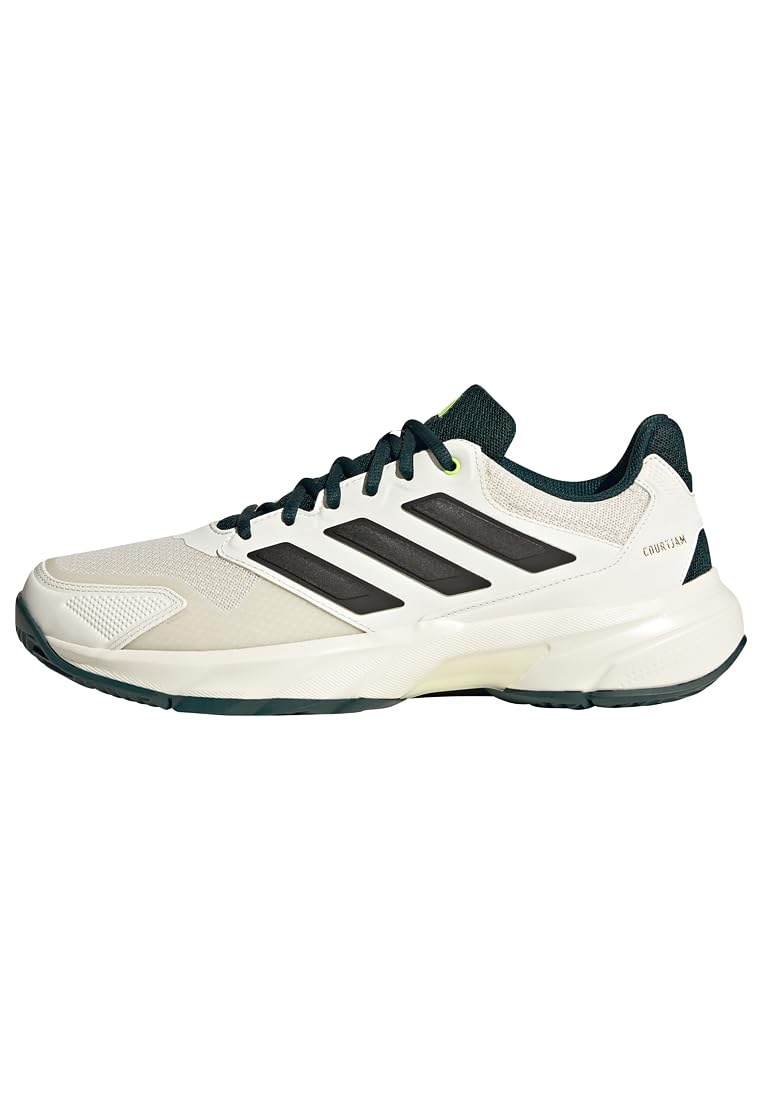
The adidas Court Control 3 is the brand’s entry-level workhorse, designed for intermediate players who want a wide toe box and springy cushioning without the premium price tag. The shoe relies on a full-length foam midsole that provides a soft, bouncy ride — a comfort-driven approach that works well for players who do not need the rigid lateral support of a specialized chassis. The outsole uses a simple but effective tread pattern that grips hard courts and clay courts equally well, though the rubber compound is softer than what you find on premium Barricade models.
Customer reviews repeatedly highlight the generous toe box as a standout feature — one long-term buyer purchased four pairs of the same model after finding that newer Adidas designs had narrowed their fits. The shoe also doubles as a daily-wear sneaker due to its low-profile look and cozy interior. Durability from a competitive perspective is decent: one reviewer playing 2-3 hours, 6 days a week on hard courts reported 60+ days of use before significant tread loss, which is impressive for a budget-tier option.
The main trade-off is in lateral support — there is no dedicated chassis or midfoot shank, so the shoe will feel less stable during extreme side-to-side cutoff movements compared to the Wilson Rush Pro Ace or the ASICS Court FF3. The lace system also lacks a top heel-lock eyelet, which means heel slip can occur if you are between sizes. For casual club play and beginner-to-intermediate doubles, this shoe delivers excellent value with above-average forefoot room.
Why it’s great
- Wide, square toe box is ideal for players who need forefoot space to avoid blisters.
- Springy cushioning provides a comfortable ride for extended play and daily wear.
- Surprising durability for the price tier — lasts over 60 days of heavy use in some cases.
Good to know
- Lacks a dedicated lateral support chassis, reducing stability during aggressive cutting.
- No heel-lock lacing eyelet, which may allow the heel to slip for some foot shapes.
7. K-Swiss Women’s Court Express Tennis Shoe
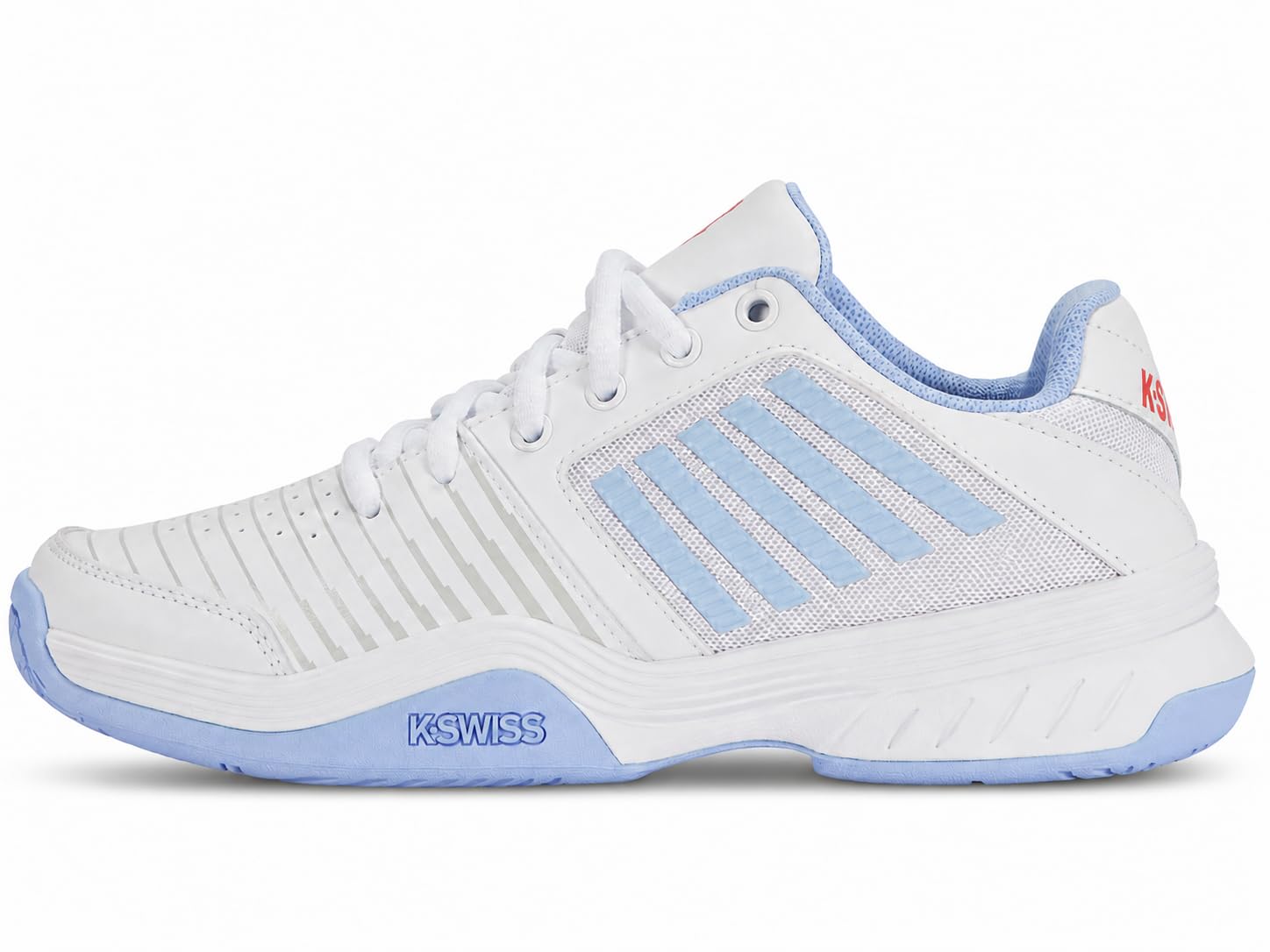
K-Swiss has been making court shoes for decades, and the Court Express carries the brand’s hallmark: a genuine leather upper that breaks in slowly but conforms to the foot over time. The shoe targets players who prioritize traditional fit and material quality over modern mesh-and-foam engineering. The leather construction makes the shoe slightly heavier than mesh alternatives, but it also provides a structured, protective shell that resists scuffing and abrasion from toe-drag and surface friction. The shaped outsole uses a deep tread pattern designed for outdoor hard courts.
Women who wear these shoes for both tennis and all-day work as a painter or handywoman report that the sturdy fit protects and supports the feet well without causing hot spots. The toe box is notably wide — several buyers with wide feet describe the Court Express as a rare true-to-size fit for their foot shape. Initial stiffness, however, is the most common complaint; the leather upper requires a solid break-in period of several sessions before the shoe starts to move naturally with the foot. A shoe horn is recommended during the first few wears.
Traction is dependable but not exceptional — the outsole is best suited for hard courts; clay players may find the tread pattern does not shed dirt efficiently. The midsole uses a basic foam layer that prioritizes durability over plushness, so players looking for premium cushioning should look higher up the price ladder. For the price-conscious buyer with wide feet who values leather construction and a classic aesthetic, the Court Express is a reliable, no-frills choice.
Why it’s great
- Genuine leather upper provides durable protection and conforms to the foot over time.
- Wide toe box accommodates broad feet without pinching.
- Sturdy construction resists scuffs and supports the foot during lateral movements.
Good to know
- Leather upper is stiff out of the box and requires a significant break-in period.
- Midsole cushioning is basic and lacks the plushness of modern foam-based shoes.
FAQ
How long should a pair of athletic tennis shoes last on hard courts?
Can I use pickleball-specific shoes for tennis?
What is the ideal toe box shape for preventing blisters while playing tennis?
Final Thoughts: The Verdict
For most users, the best athletic tennis shoes winner is the ASICS Court FlyteFoam 3 because its triple-layer cushioning and reinforced outsole provide the best balance of impact protection and hard-court durability for regular players. If you want a shoe that prioritizes lateral stability and a nearly instant break-in, grab the Wilson Rush Pro 4.5. And for budget-conscious intermediate players who need a wide toe box, nothing beats the adidas Court Control 3.