
The difference between a reliable automated water shutoff and a constant headache often comes down to one choice: the right 2-inch electric valve. Most buyers grab the first solenoid valve they see, then discover the AC hum, the heat buildup, and the internal spring that just refuses to open under pressure. Motorized ball valves solve many of those problems but introduce slower opening times and a more complex wiring setup. Knowing which internal architecture matches your pressure range, fluid type, and duty cycle is the actual trick to a rig that runs for years without a single leak.
I’m Min — the co-founder and writer behind Gadgets Feed. I spent over 60 hours comparing AC solenoid designs, DC motorized ball valves, and stainless steel bodies with Viton seals to isolate the specific specs that prevent premature coil burnout and internal corrosion for industrial and irrigation buyers.
Whether you are automating a well-tank fill, a smart-home water main, or a high-temp chemical line, the right 2″ electric valve must match your voltage, your pressure profile, and your continuous-run needs. This guide compares the top seven models across brass and stainless steel builds.
How To Choose The Best 2″ Electric Valve
A 2-inch electric valve is not a simple on/off switch — it is a balancing act between flow coefficient, pressure rating, voltage availability, and the thermal limits of the actuator itself. Beginners often ignore the duty-cycle spec, then wonder why the solenoid quit after three hours of continuous operation. Serious buyers look at three things first: the body material, the seal compound, and whether the valve uses a solenoid pilot or a motorized ball mechanism.
Solenoid vs. Motorized Ball Valve
A solenoid valve uses an electromagnetic coil to lift a plunger off an orifice, allowing flow through a narrow internal path. These open fast — often under one second — but they dissipate significant heat during sustained operation. Most 2-inch solenoid valves explicitly state a maximum continuous cycle of 8 to 10 hours, after which the coil risks thermal failure. A motorized ball valve uses a small electric actuator to rotate a full-bore ball, matching the pipe ID exactly. Motorized valves are naturally slower (5 to 12 seconds for a 90-degree turn), but they generate almost no heat at rest, making them ideal for applications that need to stay open or closed for days at a time.
Body Material and Seal Compatibility
Brass bodies cost less and offer good corrosion resistance for water and mild chemical solutions. Stainless steel (typically 304 or CF8) handles higher temperatures, acidic fluids, and fuels like gasoline and diesel without pitting. The seal compound matters just as much: Viton (FKM) resists high heat and aggressive chemicals, NBR works best with oil, and EPDM is preferred for hot water and steam. If your fluid includes any petroleum derivative, do not use EPDM — the seal will swell and lock the valve within days.
Voltage, Pressure, and Wiring Considerations
AC solenoid valves run on 110V or 220V mains voltage and produce a characteristic 50/60 Hz hum. DC solenoids and DC motorized ball valves operate from 12V or 24V supplies, which is safer for residential smart-home integration and battery-backed systems. Maximum working pressure for most 2-inch electric valves sits between 100 PSI and 145 PSI, but check the burst pressure rating if your system includes water hammer. Finally, any valve with a built-in capacitor can return to its original position (normally closed) during a power failure — a critical feature for main-water shutoff automation.
Quick Comparison
On smaller screens, swipe sideways to see the full table.
| Model | Category | Best For | Key Spec | Amazon |
|---|---|---|---|---|
| BOKYWOX CR2-02 DN50mm | Motorized Ball | Smart home / remote control | 12 sec open/close, 70k cycles | Amazon |
| HSH-Flo 2″ 110-230VAC | Motorized Ball | Fail-safe main shutoff | Capacitor return, 50mm full bore | Amazon |
| BACOENG Brass Solenoid | Solenoid Pilot | Budget irrigation / low PSI | 110V AC, normally closed | Amazon |
| Eastman 20055LF | Manual Ball | High-pressure manual shutoff | 600 WOG, Teflon seal | Amazon |
| U.S. Solid 2″ Stainless Solenoid | Solenoid Pilot | Chemicals / high-temp fluids | Viton seal, 110V AC | Amazon |
| U.S. Solid 2″ 24V DC Solenoid | Solenoid Pilot | Low-voltage / OEM replacement | <1 sec open, Viton seal | Amazon |
| HSH-Flo 2″ 12VDC/24VAC Brass | Motorized Ball | 12V smart-home water control | Position feedback, capacitor return | Amazon |
In‑Depth Reviews
1. BOKYWOX NPT 2″ Motorized Ball Valve CR2-02 DN50mm
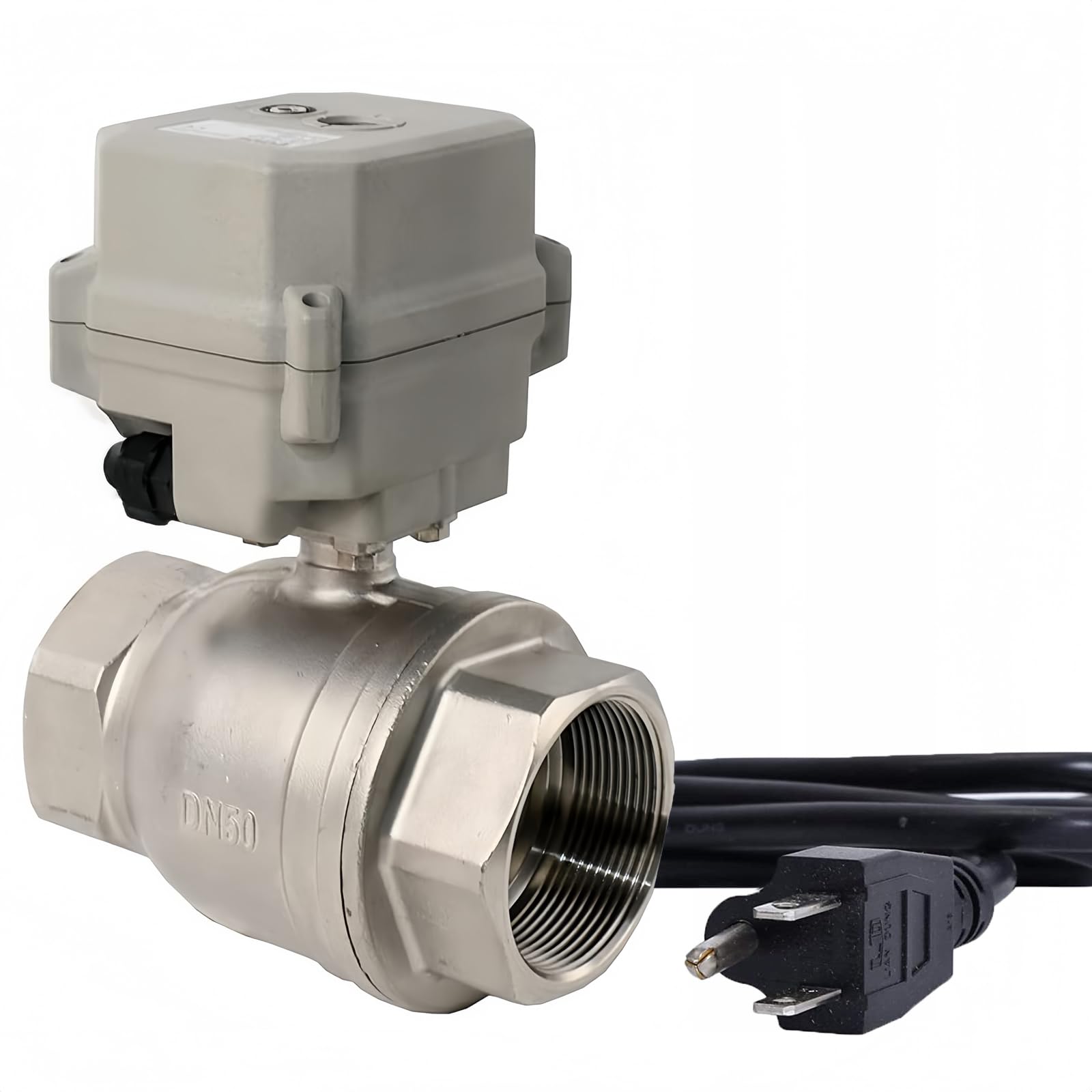
The BOKYWOX CR2-02 is a motorized ball valve that sidesteps the heat and hum problems of conventional solenoids entirely. The 2-inch NPT stainless steel body houses a full-bore ball, giving you the same flow capacity as your pipe without any pressure drop. The actuator runs on universal 110V to 230V AC and includes a manual override and open/close indicator — essential for maintenance scenarios where power is unavailable.
Real users have integrated this valve into smart-home setups via Wi-Fi plugs, scheduling weekly water flushes for cistern first-flush systems and managing well-tank fills remotely. The 12-second open/close time is acceptable for any automated shutoff role, and the 70,000-cycle rated lifespan means you would have to open and close it four times a day for nearly 50 years before mechanical wear becomes a risk.
One caveat: the actuator housing includes some plastic components, though the ball itself is quality stainless steel. The manual override knob turns slowly, so do not rely on it for quick emergency shutoff — keep an upstream manual ball valve for that role. For a reliable motorized solution that works across standard household voltages, this is the unit to beat.
Why it’s great
- Full-bore 50mm ball eliminates flow restriction
- Manual override and position indicator for troubleshooting
- Rated for 70,000 cycles with documented real-world smart-home use
Good to know
- 12-second cycle is slower than solenoid-based valves
- Some plastic components on actuator housing
2. HSH-Flo 2″ DN50 Motorized Ball Valve with U.S. Plug
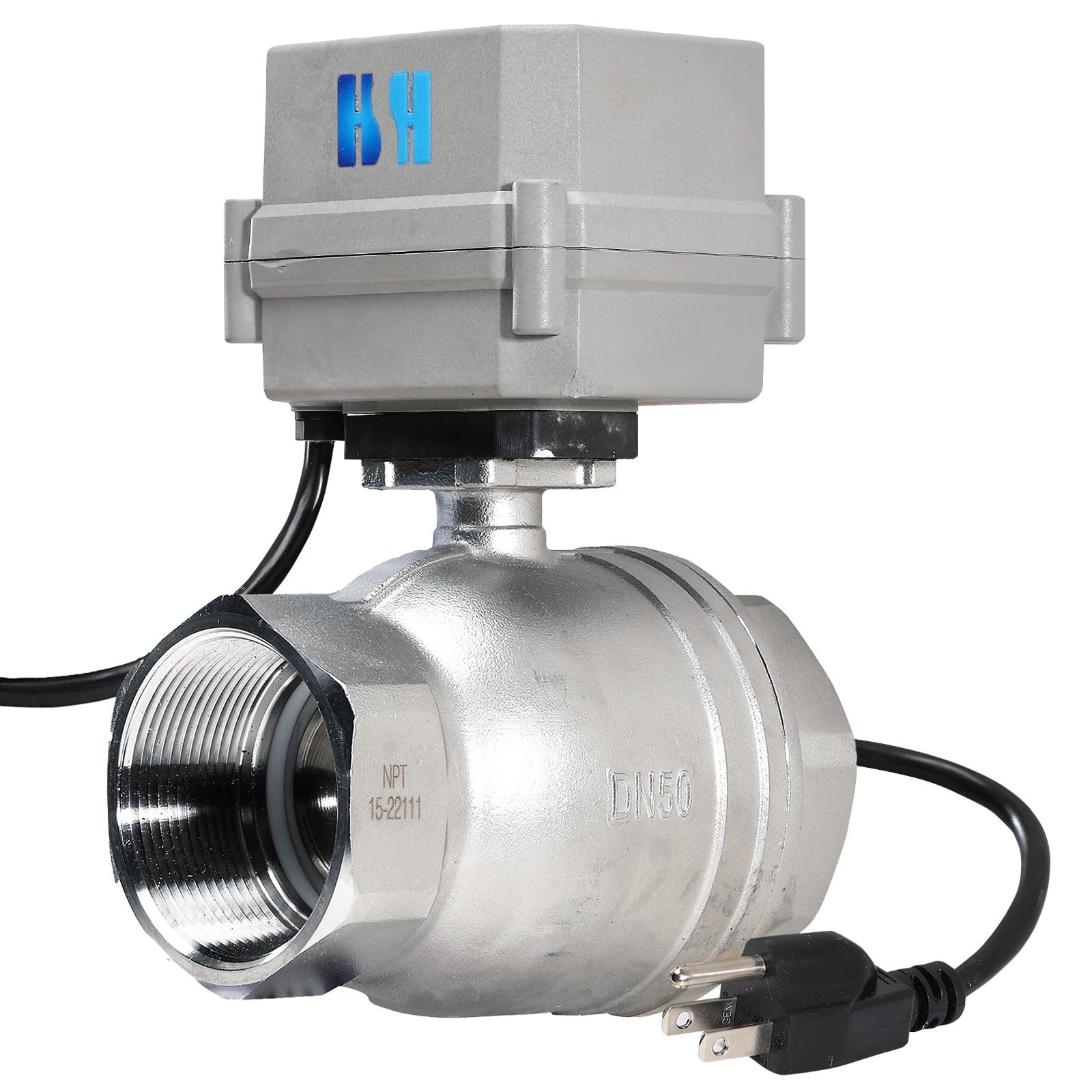
The HSH-Flo motorized ball valve brings two features that elevate it above standard solenoid valves: a built-in capacitor that returns the valve to its original position (normally closed) during power loss, and integrated limit switches that cut power to the actuator when the ball reaches full open or full close. The 2-inch NPT CF8 stainless steel body uses a 50mm full bore, so there is no flow coefficient penalty even at high-flow rates.
The pre-wired 3-pin U.S. plug simplifies installation, and the wide voltage range (110-230V AC) makes it compatible with almost any mains supply without a transformer.
The only meaningful limitation is that the valve must stay powered for at least five minutes after first startup or extended idle time to charge the internal capacitor for fail-safe return. If your application involves frequent power cycling in short bursts, this quirk can leave the capacitor undercharged and the fail-safe function inactive during the first use cycle.
Why it’s great
- Capacitor-based fail-safe return to closed position on power loss
- CF8 stainless steel body resists corrosion in high-temp water and chemicals
- Limit switches prevent actuator burn-out at endpoints
Good to know
- Requires 5 minutes of power to fully charge the return capacitor
- Slightly heavier than solenoid alternatives at over 4 lbs
3. U.S. Solid 2″ Stainless Steel Solenoid Valve 110V AC
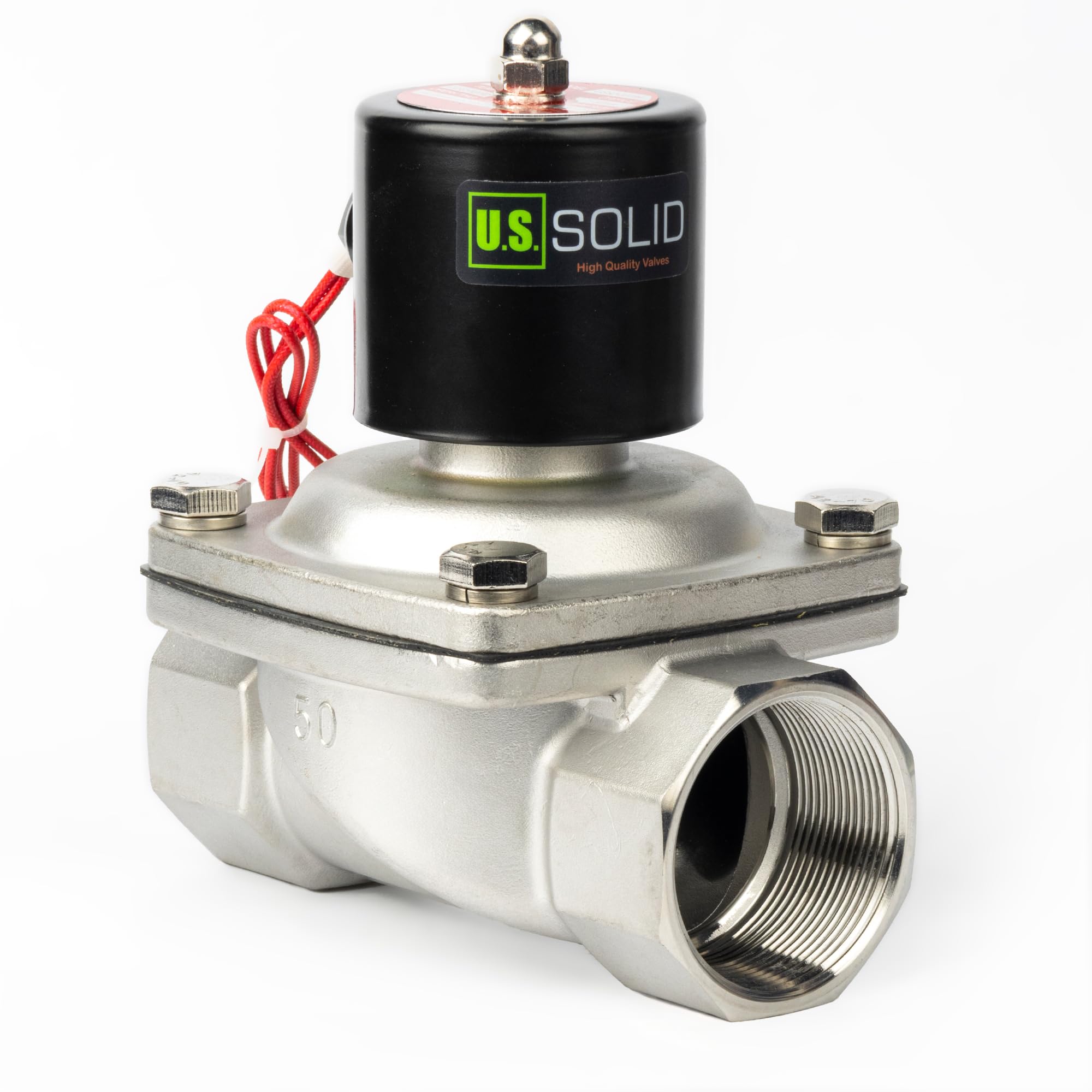
This U.S. Solid solenoid valve wraps a 2-inch stainless steel body around a Viton seal, giving it chemical compatibility that brass and NBR combinations cannot touch. The normally closed design opens in under three seconds when energized, making it suitable for automated fill systems, fuel transfer, and industrial chemical dosing where rapid actuation is critical. The stainless construction also makes it weldable for permanent pipe integration.
Buyers have successfully used this valve on natural gas lines with bypass valves — one reviewer reported flawless operation on a 1-inch gas line hardwired to gas sensors for automatic emergency closure. The Viton seal stays pliable with gasoline, diesel, kerosene, and lubricants, where EPDM would swell and fail within weeks.
The important constraint is that U.S. Solid explicitly states this is not a continuous-duty valve — it should not run for more than 10 hours in a single cycle. Beyond that window, the solenoid coil risks overheating and burn-out. For intermittent tasks like tank fills, timed irrigation cycles, or emergency shutoff, the 10-hour limit is generous enough that most users never approach it.
Why it’s great
- Viton seal handles gasoline, diesel, oils, and high-temp chemicals
- Stainless steel body is corrosion-resistant and weldable
- Fast actuation in under 3 seconds from de-energized state
Good to know
- Do not run for more than 10 continuous hours per cycle
- Produces an audible bang when the pilot shifts open
4. HSH-Flo 2″ 12VDC/24VAC Brass Motorized Ball Valve

The HSH-Flo brass motorized ball valve is purpose-built for low-voltage automation where safety and position feedback matter. It operates on a wide voltage range — 9-24V AC or 9-36V DC — and includes built-in limit switches that cut current to zero milliamps once the ball reaches its destination. The normally closed design includes a capacitor return, so the valve closes automatically when power is removed, providing fail-safe shutoff without a continuous power draw.
One buyer integrated this into a home automation system via a smart plug to control his shower water flow, confirming that the valve closes using reserved buffer power within seconds of losing mains voltage. Another used it as a drop-in replacement for a leaking inline sprinkler valve on a gravity drain isolation line, and a third installed it on a compressor tank to prevent nighttime pressure loss from minor leaks. The position feedback wires allow a controller to confirm the valve state — open or closed — without relying on secondary flow sensors.
Quality control is a mild concern: one buyer received a faulty unit where the manual open failed to trigger an auto-close on power restoration, and the manual override knob operates slowly. Keep a conventional manual valve upstream as a backup emergency shutoff, and test the unit before full installation.
Why it’s great
- Wide input range (9-36V DC, 9-24V AC) compatible with most control systems
- Position feedback wires allow remote state verification
- Capacitor return closes valve automatically on power loss
Good to know
- Manual override is slow; rely on upstream manual valve for emergency shutoff
- Occasional QC issues — one of three units was DOA for one buyer
5. BACOENG Brass Electric Solenoid Valve 2″ AC110V

The BACOENG brass solenoid valve delivers 2-inch electric valve functionality at an entry-level price point that makes automated shutoff affordable for hobbyists and small-scale irrigation projects. The normally closed brass body uses a 110V AC solenoid pilot, opening when energized and spring-closing when power drops. The NPT threading fits standard US pipe systems without adapters, and the wide temperature range (-5°C to 80°C) covers most outdoor and indoor water applications.
Bulk buyers appreciate the value proposition — one 40-year industry veteran confirmed the solid brass construction and pointed out that the hum and heat are inherent to AC solenoids operating at 50/60 Hz, not defects. Adding a rubber washer at the mounting point dampens the audible hum significantly. Several users interfaced the valve with smart plugs for voice control via Google Home or Alexa, effectively converting a basic solenoid into a smart irrigation component.
There are two real limitations. First, the tension spring inside can prevent the valve from opening under higher inlet water pressures — one buyer had to trim the internal spring after the valve failed to open at 130 PSI despite a 145 PSI rating. Second, the valve leaks if you install it backward relative to the flow arrow direction. Verify your flow orientation and test at full system pressure before burying the line.
Why it’s great
- Affordable brass construction for budget irrigation and DIY automation
- Wide -5°C to 80°C operating range suitable for outdoor use
- Compatible with smart plugs for voice-controlled operation
Good to know
- Internal spring may require modification at pressures near 145 PSI
- AC solenoid produces audible 50/60 Hz hum and noticeable heat
6. U.S. Solid 2″ 24V DC Stainless Steel Solenoid Valve
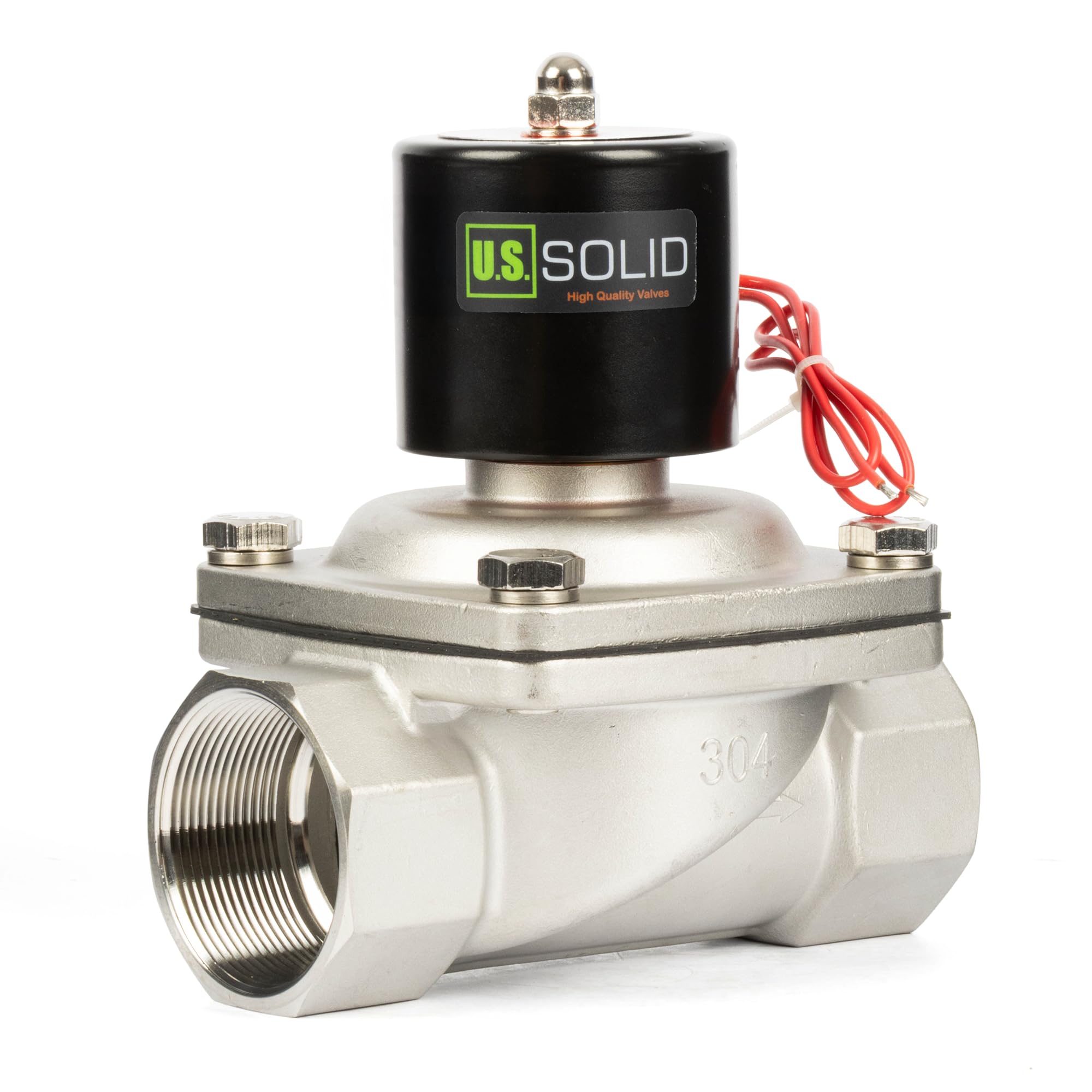
This U.S. Solid solenoid matches the 24V DC voltage common in industrial control panels, agricultural timers, and battery-backed automation systems. The stainless steel body and Viton seal provide the same chemical resistance as the AC version, but the 24V coil draws a steady ~20W of power when energized. The response time is the fastest of any valve in this roundup — under one second from signal to full flow.
Buyers have used this as a direct OEM replacement for 24V DC industrial valves costing four times as much, fitting it onto an Italian granite saw without modification. Others have run it at 12V DC with reduced performance but acceptable function, noting the valve is not limited to exactly 24V. The million-cycle lifespan estimate from U.S. Solid is optimistic under continuous operation, but for intermittent use the valve should outlast most projects.
The main headache is thermal management. The valve dissipates about 20 watts continuously, which builds up heat inside the solenoid coil. Several buyers warned that running it for more than 8 hours straight will cook the coil. Adding a PWM solenoid driver board (available for under ) can reduce current draw by 60% and coil temperature by 80%, but that adds wiring complexity. If you need 24-hour continuous operation, a motorized ball valve is a safer choice than any solenoid.
Why it’s great
- Sub-1-second actuation for rapid-cycle applications
- Stainless steel + Viton for chemical and fuel compatibility
- Direct 24V DC replacement for industrial OEM valves at a fraction of the cost
Good to know
- Continuous 8-hour duty limit — coil will overheat beyond that
- 20W power dissipation generates noticeable heat; external PWM driver recommended
7. Eastman 2″ IPS Heavy Duty Full Port Ball Valve
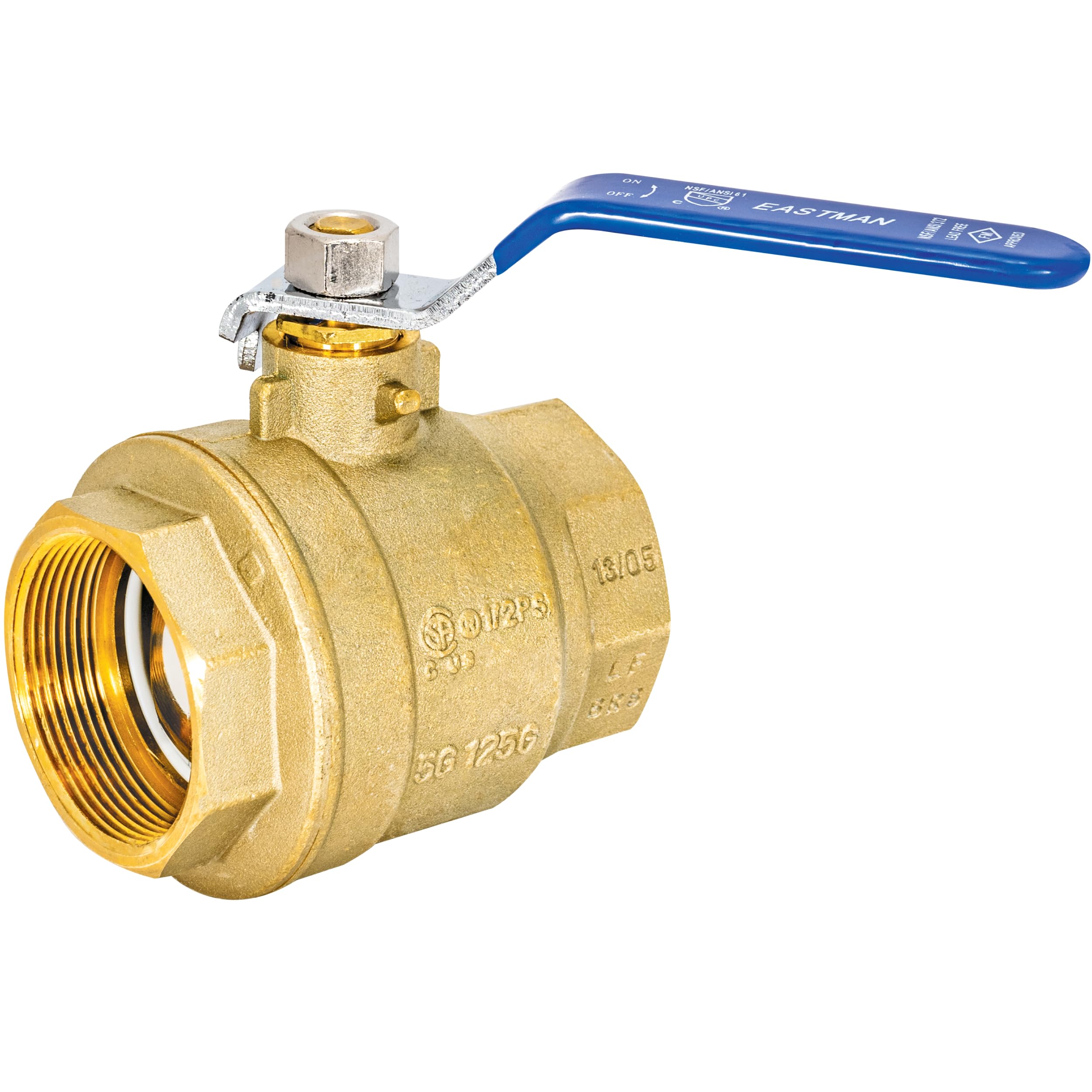
The Eastman 20055LF is a manual full-port ball valve, not an electrically actuated valve, but it earns a spot here as the ideal companion for any automated system. The 2-inch IPS brass body uses a Teflon seal and is rated to 600 WOG (water, oil, gas) and 150 PSIG for saturated steam. When you need to isolate an automated valve for maintenance or emergency shutoff that does not depend on power availability, this manual valve provides the mechanical redundancy.
The full-port design matches the pipe diameter exactly, delivering zero pressure drop when fully open. The stamped steel handle with vinyl coating offers a comfortable grip, and the valve opens and closes smoothly even under high system pressure. Owners report no leaks after years of service, and the CSA certification plus potable water approval makes it safe for drinking-water lines.
For buried or exposed installations, consider wrapping the stem nut with weatherproof tape or replacing it with a stainless nut. If you are building a fully automated system, pair this with one of the motorized ball valves above and install it upstream as your manual safety isolation point.
Why it’s great
- Full-port design ensures zero flow restriction
- Rated for 600 WOG and 150 PSIG steam — extremely rugged
- UPC approved and CSA certified for potable water systems
Good to know
- Manual only — no electric actuator for remote or automated control
- Stem fastening nut may rust in prolonged outdoor exposure
FAQ
Can a 2-inch electric valve be used with a smart home system?
What pressure rating should I look for in a 2-inch electric valve?
Final Thoughts: The Verdict
For most users, the 2″ electric valve winner is the BOKYWOX CR2-02 DN50mm because its motorized ball architecture eliminates the heat and hum of solenoids while providing full-port flow and a manual override for maintenance safety. If you need fail-safe closure on power loss, grab the HSH-Flo 2″ with capacitor return. And for chemical or fuel handling where Viton compatibility and sub-second response matter, nothing beats the U.S. Solid 2″ Stainless Steel Solenoid.