
The search for an Acer Palmatum Katsura is a search for the perfect chartreuse glow in a shaded garden corner—a tree that shifts from butter-yellow spring leaves to lime-green summer coolness before igniting into orange and gold in autumn. Finding a healthy, well-rooted specimen that matches this exact cultivar’s legendary color progression, however, is where the real challenge begins.
I’m Min — the co-founder and writer behind Gadgets Feed. My approach to this guide involved analyzing dozens of nursery listings, cross-referencing USDA hardiness data, and weighing hundreds of verified customer reports to distinguish genuine Katsura characteristics from generic Japanese maple marketing.
Whether you are planting a focal specimen or filling a shaded border, this guide cuts through the confusion to help you identify the best acer palmatum katsura for your specific landscape conditions and aesthetic goals.
How To Choose The Best Acer Palmatum Katsura
Not every green Japanese maple is a Katsura. The cultivar’s defining trait is its luminous chartreuse spring foliage that holds a soft lime-green through summer, then erupts into vivid oranges and golds in fall. Bark color, graft quality, and the tree’s growth habit separate a true Katsura from a generic green maple.
Spring Color Authenticity
A genuine Katsura emerges in spring with bright yellow-green leaves edged in a faint red blush — a color unlike any other Japanese maple. Sellers who cannot confirm this specific spring coloration are likely selling a different cultivar. Look for product descriptions that explicitly mention “chartreuse,” “yellow-green,” or “Katsura” in the botanical name, not just “green Japanese maple.”
Graft Union Health
Most Katsura maples sold online are grafted onto a standard rootstock. A clean, well-healed graft union — with no cracking, swelling, or discoloration — determines whether the tree will thrive or fail within the first year. Check customer photos and reviews that mention graft quality. A poor graft is the most common hidden defect in budget-priced maples.
Shipping Restrictions and Acclimation
Many growers cannot ship to CA, AZ, AK, or HI due to agricultural laws. Even within eligible zones, a tree that shipped in a fabric grow bag or bare-root needs careful hardening before full-sun exposure. The best Katsura specimens arrive with moist soil, a stable root ball, and clear instructions for transition from pot to ground.
Quick Comparison
On smaller screens, swipe sideways to see the full table.
| Model | Category | Best For | Key Spec | Amazon |
|---|---|---|---|---|
| Sango Kaku Maple | Premium | Year-round visual interest | Coral-red winter bark | Amazon |
| Bloodgood Japanese Maple (4-5 ft) | Premium | Instant mature impact | 4-5 ft shipped height | Amazon |
| Orangeola Weeping Laceleaf | Premium | Unique cascading form | Dissectum weeping habit | Amazon |
| Crimson Queen Japanese Maple | Mid-Range | Compact crimson weeping accent | Summer crimson color hold | Amazon |
| Emperor 1 Japanese Maple | Mid-Range | Late-frost resistance | Late spring budding | Amazon |
| Japanese Red Maple (3 gal) | Mid-Range | Larger potted starter | 3-gallon nursery pot | Amazon |
| TriStar Bloodgood 2-Pack | Budget-Friendly | Value multi-plant buy | Two 3.5″ cups included | Amazon |
In‑Depth Reviews
1. Sango Kaku Japanese Maple (1 Gal Nursery Pot)
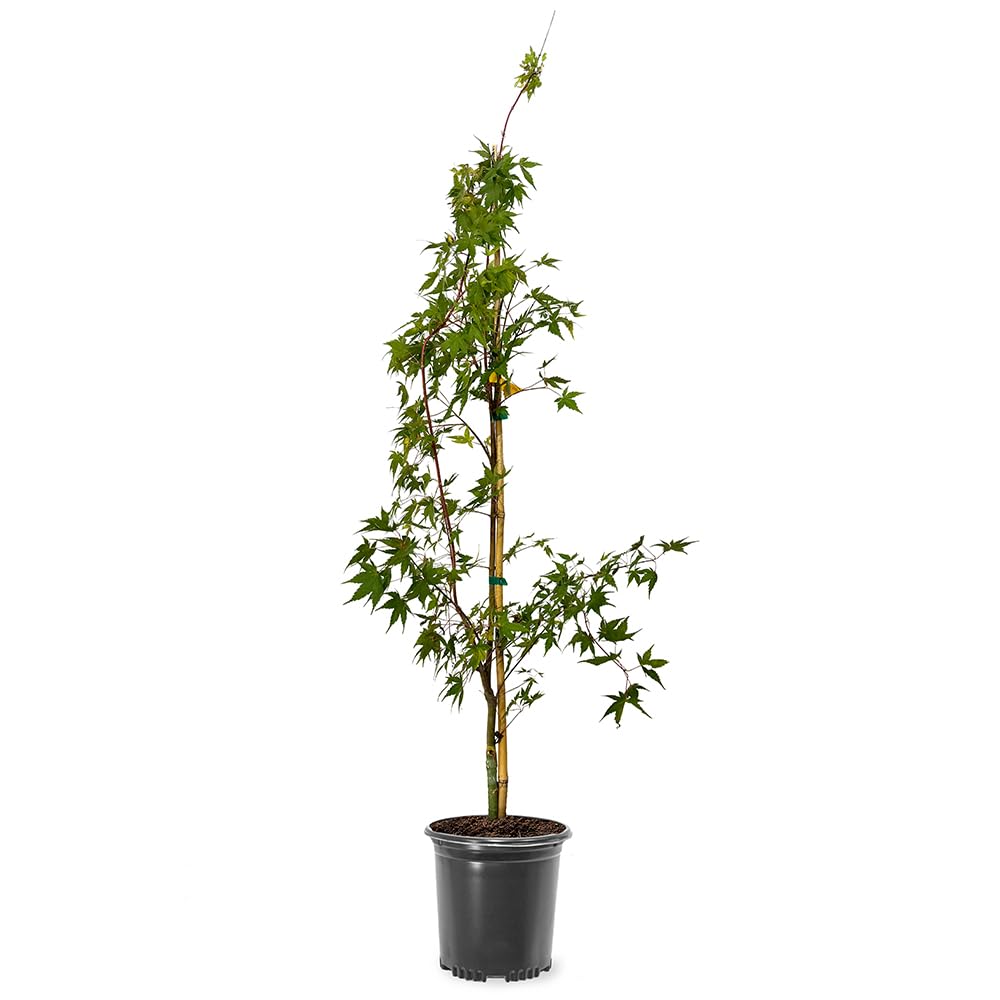
The Sango Kaku is the closest you will find to a Katsura-level color chameleon, but with a twist: instead of chartreuse spring leaves, it delivers yellow-to-orange autumn foliage and, uniquely, coral-red bark that glows through winter. In a 1-gallon nursery pot, this specimen ships at roughly 12-18 inches with a visible graft union that buyers consistently report as clean and well-healed. The tree is drought-tolerant once established and fits zones 5-10, giving it a broader range than most Japanese maples.
Customer reports confirm the coral bark begins showing color within the first winter, even on young trees. The vase-shaped growth habit — reaching up to 25 feet at maturity — makes it ideal as a focal point rather than a foundation plant. Several buyers noted the packaging was secure and the trees arrived leafing out well, with no shipping damage.
The trade-off is the same as with any grafted maple: you cannot ship to CA, AZ, AK, or HI. Also, the spring color is yellow-green, not the pure chartreuse of a true Katsura. If your priority is a specimen that offers four-season interest, this is the stronger pick. If you specifically want Katsura’s signature lime-green summer canopy, keep looking.
Why it’s great
- Year-round visual interest from coral winter bark to golden fall leaves
- Broad USDA zone compatibility (5-10)
- Strong graft union reported in verified reviews
Good to know
- Not a true Katsura cultivar — spring color is yellow-green, not chartreuse
- Cannot ship to CA, AZ, AK, or HI
- Mature height of 25 feet may be too large for compact spaces
2. Brighter Blooms Bloodgood Japanese Maple (4-5 ft)

The Brighter Blooms Bloodgood Japanese Maple delivers the most immediate landscape impact of any option in this guide. At 4-5 feet tall in a nursery pot, this is not a starter tree — it arrives with a developed root system and a canopy that provides instant privacy screening or accent presence. The deep red foliage holds through summer and turns brilliant scarlet in fall, matching the classic Bloodgood performance at full maturity of 13 feet.
Customer feedback highlights the tree’s straight central leader and well-branched structure. One reviewer measured theirs at nearly 6 feet upon arrival. The packaging uses a sturdy box with interior supports, and Brighter Blooms includes a warranty for plants damaged during transit. The Bloodgood cultivar is one of the most cold-hardy Japanese maples, thriving in zones 5-8 with minimal care.
The primary drawback is that this is not a Katsura — it is a red maple, not a chartreuse cultivar. Additionally, leaves may arrive with some dry edges or browning tips from shipping stress, which is cosmetic but can worry first-time maple owners. If you prioritize size over specific color, this tree delivers unmatched value for its stature.
Why it’s great
- Shipped at 4-5 feet — instant landscape presence
- Cold-hardy and low-maintenance in zones 5-8
- Warranty coverage protects against shipping damage
Good to know
- Deep red, not chartreuse — not a Katsura substitute
- May arrive with minor cosmetic leaf stress
- Cannot ship to AK, AZ, or HI
3. Orangeola Weeping Laceleaf Japanese Maple (Trade Gallon)
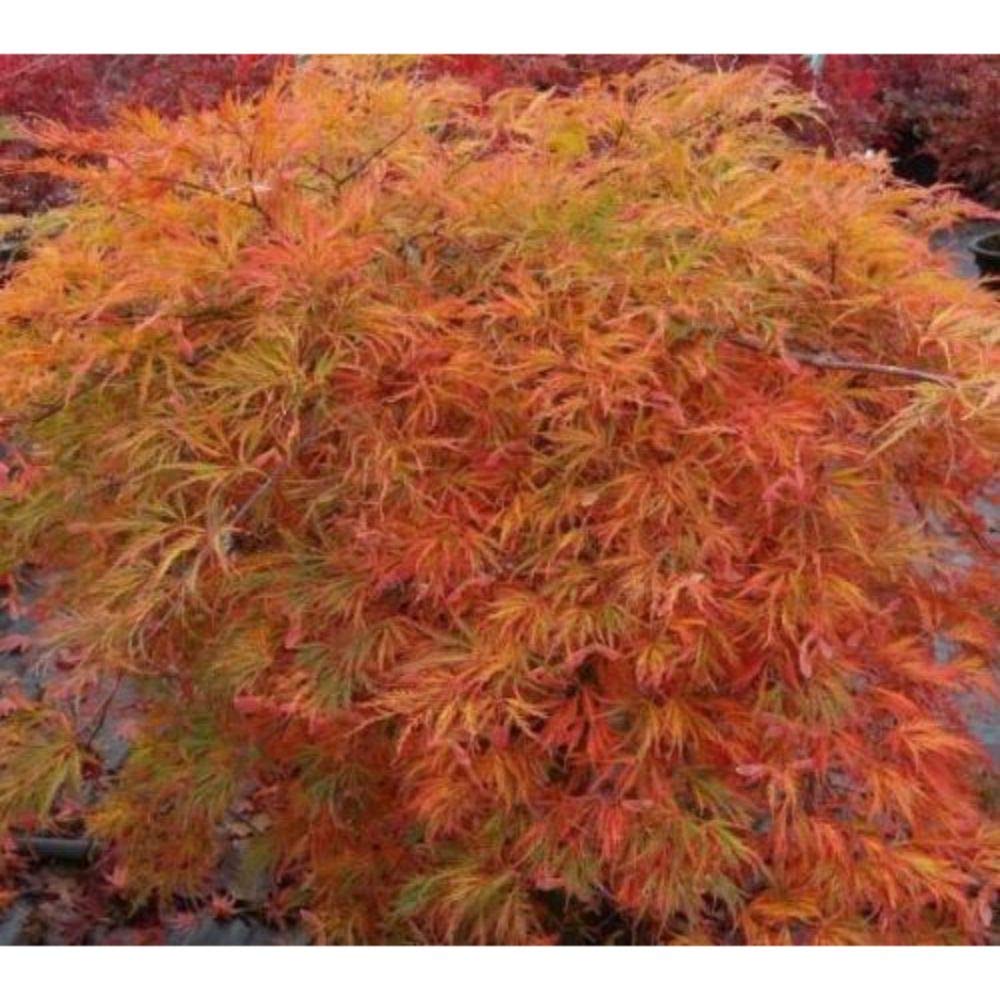
The Orangeola Weeping Laceleaf is the only dissectum (laceleaf) option in this list, and its cascading, weeping form is radically different from the upright Katsura habit. Spring foliage emerges bright orange before maturing to dark red, then transitioning through orange-red in fall — a color progression that rivals Katsura’s range but in a compact, mounded shape reaching 6-10 feet tall and 6-8 feet wide. The glossy leaves and sun tolerance make this laceleaf more versatile than most dissectum cultivars.
Buyers consistently praise the tree’s vigor and size relative to the trade gallon pot. Multiple reviewers reported receiving trees 28-40 inches tall with healthy, well-leafed branches. The tree thrives in full sun to partial shade in zones 5-9. One customer noted excellent performance in 90°F heat in Zone 5, proving this cultivar handles sun better than typical laceleaf maples.
The main concern is grafting. One verified buyer reported a grafted plant that died within weeks, though this is an outlier among overwhelmingly positive reviews. Additionally, the weeping form does not produce the classic upright Katsura silhouette. If you want a Katsura’s specific color and shape, the Orangeola’s cascading habit may not match your vision.
Why it’s great
- Unique cascading laceleaf form with orange-to-red seasonal color
- Sun-tolerant for a dissectum cultivar
- Strong vigor — often arrives larger than expected
Good to know
- Weeping habit differs from upright Katsura form
- Occasional graft quality issues reported
- Cannot ship to CA, AZ, AK, or HI
4. Crimson Queen Japanese Maple (2.5 QT)

The Crimson Queen Japanese Maple is a classic weeping dwarf that holds its deep crimson color from spring through summer, then turns brilliant scarlet in fall. Shipped in a 2.5-quart fabric grow bag rather than a plastic pot, this tree reaches 8-10 feet at maturity with a graceful, low-branching, weeping habit perfect for patios and entryways. The fabric bag allows roots to air-prune, reducing circling and encouraging better establishment after planting.
Customer reviews highlight the tree’s healthy arrival and compact size. One buyer described it as “simple beautiful” and well-packaged. The low-maintenance profile makes it suitable for beginners, and the compact dimensions fit smaller yards where a Katsura’s 15-foot spread would be excessive. The summer color retention is one of the best among red laceleaf cultivars.
However, a single critical review reported a dormant tree that never leafed out, with the seller unresponsive after the refund window. This underscores the risk of buying any grafted maple during dormant season. Additionally, the Crimson Queen is red, not chartreuse, so it cannot replicate Katsura’s spring lime-green glow. If you want Katsura color in a compact form, this is not it.
Why it’s great
- Dwarf size (8-10 ft) fits compact gardens and patios
- Summer crimson color holds well even in heat
- Fabric grow bag encourages healthy root development
Good to know
- Red color, not chartreuse — not a Katsura alternative
- Dormant-season purchases carry risk of non-sprouting
- Customer support responsiveness varies
5. Emperor 1 Japanese Maple (2.5 QT)
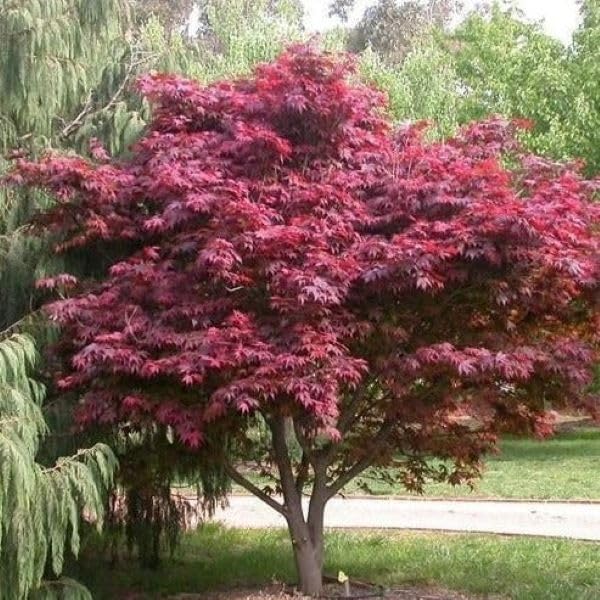
The Emperor 1 Japanese Maple is engineered for a specific pain point: late spring frosts that kill tender new growth on earlier-budding varieties. Its dark red foliage emerges later than most maples, protecting it from frost damage while still delivering brilliant scarlet fall color. The bark itself is black-red, adding winter interest that competitors like Bloodgood do not offer. Mature height of 12-15 feet makes it a larger upright specimen.
Buyers who received healthy trees rave about the quality. One review described a 3.5-foot well-formed tree with exceptional packing. The full sun exposure brings out the most intense color, and the low-maintenance tag is genuine — this tree requires minimal pruning or fertilizing beyond standard maple care. Shipped in a fabric grow bag from New Life Nursery, it arrives with moist roots ready for transition.
The most common criticism is size disappointment. Because the tree ships as a starter, some buyers expected a more mature specimen based on product imagery. One reviewer called it “nice but small for the price.” If you need instant impact, the Brighter Blooms Bloodgood (4-5 ft) is a better choice. But if you have late frosts in your zone and want a red upright maple, the Emperor 1 is a smart pick.
Why it’s great
- Late spring budding avoids frost damage
- Black-red bark adds winter visual interest
- Full sun intensifies scarlet fall color
Good to know
- Starter size may disappoint those expecting a mature tree
- Red, not chartreuse — not a Katsura alternative
- Hardiness zone 1 listing seems incorrect; confirm zone 5-8 compatibility
6. Japanese Red Maple (3 Gal Nursery Pot)

The 3-gallon Japanese Red Maple is a mid-range option that delivers a larger root system and more established trunk than 1-gallon or quart-sized competitors. The compact, spreading growth habit suits smaller gardens or containers, with a mature height of 2 feet (though this seems conservative — real buyers reported receiving trees 3-5 feet tall). The deep red or burgundy foliage is typical of red Japanese maples, with a delicate, lace-like leaf texture that adds ornamental detail.
Customer reviews are overwhelmingly positive. One buyer called it “larger than expected” at 5 feet, while another described it as “beautiful and well-packaged.” The tree arrived with moist soil and no damage in multiple reports. The 15-pound item weight suggests a substantial pot and root ball, giving it a head start over lighter options. Suitable for clay soil and partial shade, this tree offers flexibility for less-than-ideal planting conditions.
The main drawback: this is a generic “Japanese Red Maple,” not a named cultivar. You cannot guarantee it is a Katsura — or any specific variety. The description mentions “no blossoms,” which is standard for Japanese maples but may confuse new buyers. If you want the guaranteed chartreuse foliage and fall color of a true Katsura, this listing does not promise that.
Why it’s great
- 3-gallon pot provides larger root system for better establishment
- Compact habit fits small gardens and containers
- Excellent value — often ships larger than listed height
Good to know
- Generic red maple — not a guaranteed Katsura cultivar
- Cannot ship to CA, AZ, AK, or HI
- Mature height of 2 ft seems inaccurate based on buyer reports
7. TriStar Plants Bloodgood Japanese Maple 2-Pack (3.5″ Cups)

The TriStar Plants 2-pack is the budget-friendly entry point for anyone wanting to test Japanese maple cultivation without a large investment. Each tree comes in a 3.5-inch cup — essentially a starter plug — with established roots ready for potting up or direct planting. The Bloodgood cultivar delivers the classic deep red foliage that turns scarlet in fall, with a mature height of 10-15 feet. Hardy in zones 5-8 and tolerant of full sun to partial shade.
Customer feedback is mixed but leans positive. Several buyers received healthy plants that were 12 inches tall or more, well-packed in a cardboard box. One buyer described them as “beautiful little trees.” The two-pack allows for experimentation — planting one in a pot and one in the ground, or using both to create symmetry in a garden bed.
The biggest risk is inconsistency. One buyer reported unhealthy plants, and another noted that leaves arrived with some damage (expected for shipping). The small pot size means the root system is young, requiring careful watering and protection from harsh sun until established. If you are looking for a mature Katsura specimen, this starter two-pack will not satisfy that need. But for budget-conscious gardeners or those wanting to learn maple care, it is a low-risk starting point.
Why it’s great
- Affordable two-pack for experimenting or symmetry planting
- Bloodgood cultivar is reliable and easy to care for
- Compact 3.5″ cups are easy to pot up and transport
Good to know
- Starter size requires patience and careful nurturing
- Inconsistent health reports from buyers
- Not a Katsura cultivar — red foliage, not chartreuse
FAQ
How can I tell if a Japanese maple listing is a genuine Katsura and not a generic green maple?
Why do some Japanese maple sellers refuse to ship to California, Arizona, Alaska, or Hawaii?
Final Thoughts: The Verdict
For most buyers seeking the best acer palmatum katsura, the Sango Kaku Maple is the strongest pick because it delivers the closest color progression to Katsura — chartreuse-to-gold spring leaves and spectacular fall color — plus the unmatched bonus of coral-red winter bark. If you want a mature specimen with instant landscape impact, the Brighter Blooms Bloodgood at 4-5 feet delivers immediate presence. For a unique sculptural form with a different color story, nothing beats the cascading Orangeola Weeping Laceleaf. Each option serves a distinct vision, but the Sango Kaku offers the most complete four-season package.