
Capturing a hockey game means freezing pucks flying at 100 mph and players in full stride under the worst lighting in all of sports. Rink lighting is a notorious mix of uneven, dim, and flickering mercury vapor or LED arrays that confuse autofocus and push every camera to its sensitivity limits. The difference between a blurry, grainy shot and a crisp, gallery-worthy frame comes down to choosing a camera with a sensor and autofocus system engineered for this specific chaos.
I’m Min — the co-founder and writer behind Gadgets Feed. I spend hundreds of hours analyzing technical specifications, autofocus algorithms, and real-world performance data from the hockey rink sidelines to bring you this guide.
Whether you are shooting for a scouting portfolio or capturing your kid’s first goal in sharp detail, finding the right camera for hockey games depends on mastering the interplay of burst rate, low-light sensitivity, and lens reach.
How To Choose The Best Camera For Hockey Games
Rink photography punishes mediocre gear. Selecting the right body and lens combination requires specific attention to autofocus performance, high ISO image quality, and sustained burst speed. Ignoring any of these three pillars will leave you with disappointing results even from otherwise capable cameras.
Autofocus Tracking and Burst Rate
A player accelerating from a standstill to full speed in under three seconds demands a camera that can lock focus and stay locked. Look for systems with phase-detection autofocus covering a wide percentage of the sensor — at least 80% coverage is ideal — and a burst rate of no less than 8 frames per second. Cameras that offer subject recognition for people, with head and eye detection, give you a dramatically higher keeper rate when shooting through glass or boards.
High ISO Performance and Sensor Size
Rink lighting typically measures between 50 and 150 lux — significantly darker than a daylight sports field. A full-frame sensor with native ISO range reaching 25,600 or higher allows you to shoot at shutter speeds of 1/800th or faster without introducing excessive noise. Crop sensor and Micro Four Thirds cameras can work, but they require lenses a full stop wider to compensate for their smaller sensor surface area
Lens Reach and Maximum Aperture
You need to cover the full rink from end-zone glass or the bleachers. A telephoto zoom in the 70-200mm range is the baseline, with 300mm giving you cleaner headshots from center ice. The lens aperture is the single most important spec — f/2.8 zooms let in four times more light than an f/5.6, which can mean the difference between a sharp action shot and a motion-blurred mess. Fast prime lenses like 135mm f/2 or 85mm f/1.8 are also viable for rink-side positions.
Quick Comparison
On smaller screens, swipe sideways to see the full table.
| Model | Category | Best For | Key Spec | Amazon |
|---|---|---|---|---|
| Canon EOS R6 Mark II | Mirrorless | Overall Rink Action | 40fps burst, Dual Pixel AF II | Amazon |
| Nikon D500 | DSLR | Sports Autofocus Speed | 153-point AF, 10fps | Amazon |
| Sony Alpha 7 IV | Mirrorless | High Resolution Hybrid | 33MP, Real-time Eye AF | Amazon |
| Canon EOS R5 | Mirrorless | Maximum Detail | 45MP, 20fps e-shutter | Amazon |
| Nikon D850 | DSLR | High-Res DSLR Action | 45.7MP, 9fps | Amazon |
| Sony a7 III | Mirrorless | Budget Full-Frame Value | 24.2MP, 693 AF points | Amazon |
| Sony a6400 | Mirrorless | Compact Budget Body | 0.02s AF, 11fps | Amazon |
| Nikon Z6 III | Mirrorless | Video/Action Hybrid | 6K/60p N-RAW, -10EV AF | Amazon |
| Canon 5D Mark IV | DSLR | Reliable DSLR Workflow | 30.4MP, Dual Pixel AF | Amazon |
| OM System E-M10 IV | Mirrorless | Portable Entry-Level | 4.5-stop IBIS, 20MP | Amazon |
| Panasonic Lumix ZS99 | Compact | Pocket Zoom Convenience | 30x Leica zoom, 24-720mm | Amazon |
In‑Depth Reviews
1. Canon EOS R6 Mark II

The Canon EOS R6 Mark II delivers a 24.2-megapixel full-frame sensor paired with the DIGIC X processor that enables an electronic shutter burst of 40 frames per second with full autofocus. On the rink, this means you can fire off a 30-shot sequence during a single rush and come away with every frame in focus. The Dual Pixel CMOS AF II with head and eye detection locks onto a player’s face through glass or cages without hunting, even when the skater veers behind the net.
Low-light performance is class-leading for the price bracket — ISO 100-102400 native produces clean, detailed images at 1/1000th shutter under dim rink lighting. The 6K oversampled 4K video at 60fps gives you crisp slow-motion replays of a goal celebration or a big hit, recorded without overheating even after multiple periods. The vari-angle touchscreen makes shooting at glass-level or overhead positions effortless, and the weather-sealed body handles cold, damp rink environments without complaint.
Battery life is robust enough to cover a full double-header, and the dual SD card slots provide immediate backup for important games. Paired with an RF 70-200mm f/2.8, this kit is the benchmark for rink photography at this price point. The only sacrifice is the 24.2-megapixel resolution if you intend to crop heavily for headshots from center ice, but for most shooters the combination of speed, AF reliability, and low-light power wins out.
Why it’s great
- 40fps burst with full AF tracking captures peak action every time
- Excellent high-ISO performance keeps shutter speeds high in dim arenas
- Dual Pixel AF II tracks faces and eyes even through glass
Good to know
- 24.2MP limits heavy cropping compared to 45MP rivals
- Mechanical shutter limited to 12fps for silent rink shooting
2. Nikon D500

The Nikon D500 remains the gold standard for crop-sensor sports photography, and for good reason. Its 153-point autofocus system, inherited from the flagship D5, provides the fastest and most accurate subject acquisition of any DSLR at this price. The 20.9-megapixel DX sensor delivers 10fps continuous shooting with a massive buffer that can hold 200 raw frames — ideal for capturing a full shift without the camera stalling.
Where the D500 truly separates itself from lower-end crop bodies is its autofocus tracking at -4EV, which lets the camera lock onto a dark-jerseyed player skating across a shadowed defensive zone when the rink lights are flickering. The dedicated joystick and group-area AF modes give you precise control over which player is tracked when two skaters cross paths. The tilting touchscreen is a practical tool for low-angle boardside shooting.
The 1.5x crop factor gives your telephoto lenses extra reach — a 70-200mm lens becomes an effective 105-300mm, which is hugely beneficial for end-zone seats. ISO performance is usable through 6400 and passable through 12,800, though noise is more visible than on full-frame bodies. The D500’s SnapBridge wireless implementation is frustrating, but wired tethering and fast UHS-II SD cards handle the data transfer. For a dedicated action DSLR, this is still the definitive option.
Why it’s great
- D5-derived 153-point AF locks onto players in near-darkness
- 10fps with a 200-frame raw buffer never chokes mid-play
- 1.5x crop turns standard zooms into extended reach tools
Good to know
- DSLR workflow is bulkier than mirrorless options
- Wireless image transfer via SnapBridge is unreliable
3. Sony Alpha 7 IV

The Sony Alpha 7 IV combines a new 33-megapixel full-frame Exmor R sensor with the BIONZ XR processing engine, giving you a significant resolution bump over the a7 III while maintaining the fast autofocus this platform is famous for. The Real-time Eye AF for humans works with incredible reliability when shooting through the glass — it tracks a player’s eye even when they are wearing a full cage, as long as their face is partially visible. The 693 phase-detection points covering 93% of the sensor ensure quick initial acquisition of a player entering the frame.
The 33-megapixel resolution is a sweet spot for rink shooting because it offers enough detail to crop into a face-off or a close goal-mouth scramble without requiring a 400mm lens, yet it produces manageable file sizes compared to 45-megapixel bodies. 4K 60fps video with 10-bit 4:2:2 color and S-Cinetone profile allows you to capture warm, film-like game footage straight out of camera without extensive grading. The five-axis in-body stabilization is helpful for panning shots along the boards.
Build quality is fully weather-sealed, and the revised menu system from Sony is significantly more navigable than previous generations. The touchscreen has intuitive controls, and the electronic viewfinder with 3.69 million dots makes tracking a fast break easy. Battery life exceeds 2000 shots per charge in real-world use. The downside is the 4K 60fps crop — at 60fps you lose the full-frame field of view, which matters for wide-angle rink coverage.
Why it’s great
- 33MP provides excellent cropping headroom for distant action
- Real-time Eye AF tracks players even through cages and glass
- 4K 60fps with S-Cinetone for broadcast-quality game footage
Good to know
- 4K 60fps mode crops the sensor to Super 35mm
- Electronic viewfinder blackout can be distracting during high-speed bursts
4. Canon EOS R5

The Canon EOS R5 brings a 45-megapixel stacked full-frame sensor with a DIGIC X processor that delivers 12fps mechanical and 20fps electronic shutter with full autofocus. The resolution allows you to shoot from the far end of the rink with a 70-200mm and crop down to a tight headshot with no visible loss of detail. The Dual Pixel CMOS AF with 1,053 AF points offers 100% frame coverage, with Eye Control AF that lets you select focus points by looking at them through the viewfinder — a genuine advantage when the puck is behind a pile-up.
ISO performance through 6400 is remarkably clean, and the 8-stop coordinated IBIS makes handheld panning at 1/60th possible for artistic motion blur effects on skates. The 8K internal recording is overkill for hockey, but the 4K HQ mode derived from 8K oversampling produces some of the most detailed slow-motion playback of any camera under . The body is weather-sealed to a professional standard, and the magnesium alloy chassis feels impervious to cold and condensation.
The electronic viewfinder is large and bright with no perceptible lag, critical for tracking a player through a fast zone entry. Overheating concerns from the early firmware have been largely resolved, but shooting 8K RAW in a warm arena for extended periods can still trigger a thermal warning. The LP-E6NH battery delivers approximately 650 shots, so carrying a spare is mandatory for multi-game tournaments. For maximum crop-ability and pure image quality, this is the mirrorless leader.
Why it’s great
- 45MP sensor allows aggressive cropping from distant rink positions
- Eye Control AF changes focus points instantly without hand movement
- 4K HQ oversampled video gives incredible slow-motion detail
Good to know
- Battery life is shorter than the R6 Mark II
- High-res bursts generate very large files on memory cards
5. Nikon D850

The Nikon D850 combines a 45.7-megapixel backside-illuminated full-frame sensor with no optical low-pass filter and the Expeed 5 processor, delivering a resolution-to-speed ratio that still competes with current mirrorless options. For rink photography, the BSI design improves light gathering in those dim corners behind the net where lighting is always at its worst. The 153-point autofocus module from the D5 provides consistent subject tracking, and the 9fps burst with full AF is sufficient for most breakouts and rushes.
The tilting touchscreen is a practical advantage for low boardside compositions, and the illuminated buttons are a genuine quality-of-life feature when shooting in dark arenas or on the bench. The optical viewfinder provides zero-lag tracking with a bright, large view that many sports photographers still prefer over electronic finders for following fast lateral movement. The 4K time-lapse feature also makes it easy to capture a rink transformation from warm-ups to packed stands.
The D850 delivers exceptional dynamic range at ISO 64, but for rink lighting you will live in the ISO 800-6400 range, where it produces clean, detailed files. The battery performance is outstanding, with CIPA ratings near 1,840 shots — enough to cover a full tournament weekend without recharging. The trade-offs are the sheer size and weight of the body and the fact that DSLR video autofocus is not competitive with modern mirrorless systems for tracking skaters during video recording.
Why it’s great
- 45.7MP BSI sensor captures superb detail in low arena light
- Optical viewfinder offers zero-lag tracking for fast plays
- Outstanding battery life handles multi-game events easily
Good to know
- Heavy build is tiring for handheld shooting over multiple periods
- Video autofocus is noticeably behind mirrorless competition
6. Sony a7 III

The Sony a7 III remains a benchmark for affordable full-frame mirrorless photography, and its performance in low-light conditions is still impressive years after its launch. The 24.2-megapixel backside-illuminated sensor offers 15 stops of dynamic range and a native ISO range that reaches 204,800. On the rink, this means you can push shutter speeds to 1/1000th without worry — the files clean up beautifully in post-processing with minimal luminance noise visible even at ISO 6400.
The 693 phase-detection AF points cover approximately 93% of the sensor, and the Real-time Eye AF for humans works reliably for tracking players as long as you keep half-press engaged. The 10fps burst with continuous autofocus is adequate for most hockey action, though the buffer fills more quickly with 24-megapixel raw files than on dedicated sports bodies. The five-axis in-body stabilization is excellent for panning shots, letting you get crisp motion-blur backgrounds on players skating laterally.
The kit lens is a 28-70mm f/3.5-5.6, which is too slow for rink photography — you must budget for a fast telephoto zoom or prime. The battery life is genuinely excellent, delivering about 710 shots per charge. The main downsides are the complex menu system and the lack of a fully articulating touchscreen, which makes overhead or glass-level framing a bit awkward. For the budget-conscious shooter willing to invest in glass, the a7 III is a strong foundation.
Why it’s great
- Fantastic high-ISO performance for budget full-frame
- 693-point AF with reliable human eye tracking
- Excellent battery life for long games
Good to know
- Kit lens is too slow for rink use — budget for f/2.8 glass
- Menu system is complex and dated compared to newer Sony bodies
7. Sony a6400

The Sony a6400 packs a 24.2-megapixel APS-C sensor with the same Real-time Eye AF and Object Tracking found in Sony’s full-frame lineup, delivering 0.02-second autofocus acquisition. For a crop sensor, the 425 phase-detection points covering 84% of the frame are impressive, and the autofocus reliably picks up and tracks a player skating from one end of the rink to the other. The 11fps continuous burst with live-view display is responsive enough for most action sequences without blackout.
The 1.5x crop factor gives your telephoto lenses extra reach, making a budget-friendly 55-210mm f/4.5-6.3 reach to an effective 82-315mm equivalent. However, the smaller sensor means you need one to two stops more light than a full-frame body, and the kit lens aperture of f/3.5-5.6 is too slow for rink use without pushing ISO to 6400 and beyond. Paired with a Sigma 56mm f/1.4 or 30mm f/1.4 prime, the a6400 can produce sharp, well-lit shots at 1/500th near the glass.
The tiltable LCD screen flips up 180 degrees for vlogging or easy low-angle shots. Video quality at 4K 30fps is oversampled from 6K and looks excellent. The compact size makes it easy to bring to games without a heavy bag. The downsides are a single card slot and a battery life of roughly 400 shots, meaning a spare battery is necessary for any game longer than a single period. It is a capable, lightweight entry point for parents or scout photographers on a limited budget.
Why it’s great
- Lightning-fast 0.02s autofocus acquisition for unpredictable plays
- Compact and lightweight build for easy rink-side carrying
- Excellent 4K oversampled video quality for game highlights
Good to know
- Small sensor struggles at high ISO — needs fast prime lens
- Battery life requires planning for multi-period games
8. Nikon Z6 III

The Nikon Z6 III is a significant generational leap from the Z6 II, with a new partially stacked 24.5-megapixel sensor and the Expeed 7 processor that enables 6K/60p internal N-RAW video recording and a continuous burst of 20fps with full autofocus. The autofocus system with deep-learning subject recognition tracks humans at distances as small as 3% of the frame — perfect for picking up a player’s face from across the rink. The 299 phase-detection points offer reliable coverage, and the -10EV sensitivity means the camera can lock focus in lighting so dim your eyes struggle to see.
The new electronic viewfinder is one of the brightest in the class at 4000 nits, maintaining a clear view even when you are shooting from behind sunlit glass at an afternoon game. The 5-axis IBIS is rated at 8 stops, making panning along the boards exceptionally smooth. The 4K 120p and Full HD 240p slow-motion modes are incredibly useful for breaking down skating mechanics or capturing a goal celebration in over-the-top detail. The body is weather-sealed to withstand rink condensation and occasional snow.
Battery life is about 2 hours of continuous shooting, which is shorter than the D850 but standard for mirrorless cameras. The dual memory card slots accept CFexpress Type B and SD UHS-II, offering flexible backup options. The Nikon Z6 III is the best option for shooters who prioritize video alongside stills, especially if you are recording scouting footage or creating highlight reels after the game. The only shortcoming is the limited native Z lens selection compared to Nikon’s F-mount, but the FTZ adapter solves that.
Why it’s great
- 6K/60p N-RAW video for professional-grade game footage
- -10EV autofocus locks in the darkest rink corners
- 4000-nit EVF stays clear behind bright arena glass
Good to know
- Battery life is limited compared to DSLR alternatives
- Native Z telephoto lens selection is still growing
9. Canon 5D Mark IV
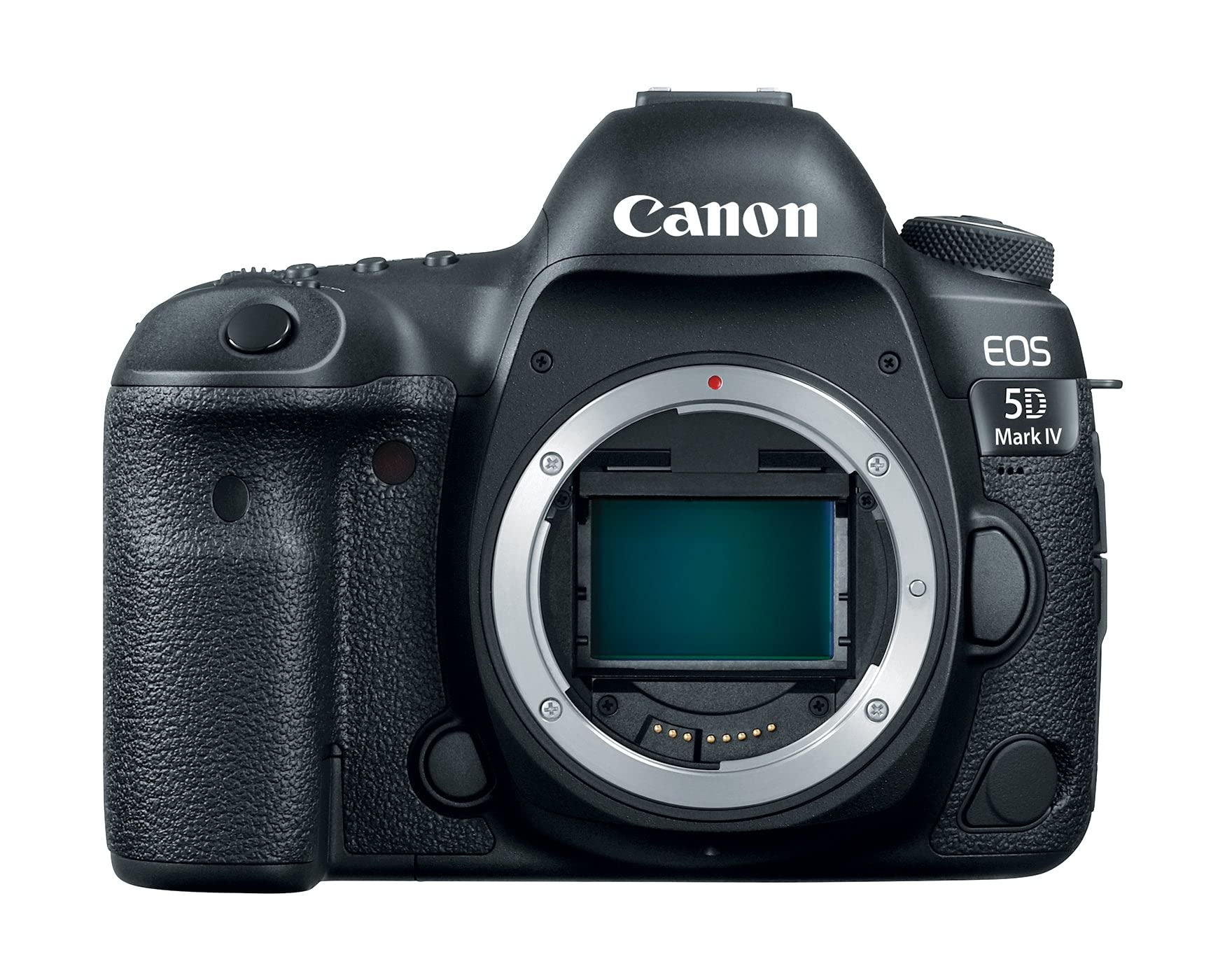
The Canon EOS 5D Mark IV is a proven full-frame DSLR with a 30.4-megapixel CMOS sensor and the DIGIC 6+ image processor that still delivers reliable results for sports photography. The 61-point autofocus system with 41 cross-type points and the Dual Pixel CMOS AF in Live View ensures accurate subject tracking, especially when shooting through glass with the contrast detection. The 7fps burst is slower than modern mirrorless flagships, but the optical viewfinder’s zero-lag tracking makes it easier to follow a fast breakout without any blackout.
The 30.4-megapixel resolution gives you meaningful cropping flexibility for those moments when the puck is in the slot and you need to tighten the frame on the goalie. The ISO range expands to 102,400, and noise is well-controlled through ISO 6400 – good enough for a dim rink when paired with an f/2.8 zoom. The built-in GPS is a genuine asset for scout photographers who need to log game locations and times for player profiles and reports.
Battery life is excellent – a single LP-E6N battery can handle over 800 shots on a busy tournament day. The touchscreen interface is intuitive and responsive for menu navigation and image review. The main concessions are the weight of the DSLR system, the lack of in-body stabilization, and the 4K video that uses Motion JPEG at 30fps with a 1.7x crop, which is not competitive for modern video-centric workflows. It is a rugged, dependable tool for photographers who prefer the DSLR form factor.
Why it’s great
- 30.4MP offers good cropping room from distant seats
- Optical viewfinder tracking is superb for hockey speed
- Built-in GPS for logging game locations and times
Good to know
- No in-body stabilization — relies on lens VR
- 4K video has a heavy crop and uses inefficient Motion JPEG
10. OM System E-M10 IV

The OM System E-M10 IV is a Micro Four Thirds mirrorless camera with a 20-megapixel Live MOS sensor and 5-axis in-body image stabilization rated at 4.5 stops. The small sensor and 2x crop factor mean that a 40-150mm f/2.8 lens gives you an effective 80-300mm reach in a package that weighs less than most full-frame bodies alone. The 121-point contrast-detection autofocus is accurate in good light but struggles in the dim corners of a rink compared to phase-detection systems found on larger sensor bodies.
The IBIS makes a real difference for handheld shooting — it lets you get sharp shots at shutter speeds as low as 1/60th, which is helpful for panning shots or capturing the pre-game skate. The flip-down screen is oriented for selfie shooting, but it covers the essential angles when you are shooting from a low bench position. The burst speed of 8.7fps with continuous autofocus is the minimum viable speed for hockey action.
The 14-42mm kit lens is a pancake zoom that is too slow for rink use; to get usable results, you need a fast Micro Four Thirds lens like the Olympus 75mm f/1.8 or the Panasonic 35-100mm f/2.8. High-ISO performance is the E-M10 IV’s biggest limitation — ISO 3200 shows significant noise, and ISO 6400 is borderline. For a parent who wants a compact, capable camera for well-lit outdoor rinks or higher-level arenas with better lighting, this is a lightweight entry point, but it requires careful lens selection to succeed indoors.
Why it’s great
- Extremely compact and lightweight for rink-side carry
- 4.5-stop IBIS allows lower shutter speeds for panning
- 2x crop factor gives massive telephoto reach with small lenses
Good to know
- High-ISO performance is weak beyond ISO 3200
- Contrast-detect AF struggles in dim rink conditions
11. Panasonic Lumix ZS99

The Panasonic Lumix ZS99 is a compact point-and-shoot with a 30x optical zoom Leica lens covering 24-720mm equivalent, packing incredible range into a jacket-pocket body. For a parent who wants to film their kid’s game without learning manual exposure or carrying a camera bag, the ZS99 delivers 4K video at 30fps and 4K PHOTO at 30fps for extracting still frames from video. The 1,840k-dot tiltable touchscreen and built-in Bluetooth 5.0 make it easy to shoot from different angles and share clips immediately.
The lens aperture of f/3.3-6.4 is the limiting factor — at the telephoto end, f/6.4 forces the 1/2.3-inch sensor to use ISO 3200 or higher in rink light, producing noisy, soft images. Video at 4K is more forgiving of high ISO than stills, making this camera better suited for video capture of games rather than high-quality action stills. The 24mm wide end is excellent for recording the full rink during warm-ups or team celebrations in the locker room.
Image quality will not compete with any interchangeable lens camera on this list, but the convenience factor is real — you can keep this camera in a coat pocket and have it ready for any game moment without planning. The 60x digital zoom iZoom is useful for distant end-zone spots, though at the cost of sharpness. For a true point-and-shoot option where ownership priority is portability over image quality, the ZS99 is the only viable pocket camera with the reach needed for rink shooting.
Why it’s great
- 30x optical zoom (24-720mm) covers any rink position
- Fits in a jacket pocket, always ready for spontaneous games
- 4K video and Bluetooth sharing for quick social clips
Good to know
- Slow aperture at telephoto end forces high ISOs
- Small sensor produces noisy stills in dim arena light
FAQ
What shutter speed is required to freeze a hockey puck in flight?
Is a full-frame sensor required for indoor rink photography?
What is the best lens focal length combination for hockey from the stands?
Why does my camera struggle to autofocus through the glass?
How many frames per second do I need to capture a slap shot?
Final Thoughts: The Verdict
For most users, the camera for hockey games winner is the Canon EOS R6 Mark II because it combines class-leading 40fps burst speed with Dual Pixel AF II that tracks players through glass without hesitation, all in a weather-sealed body that shrugs off freezing rink temperatures. If you want maximum cropping headroom for distant seats and professional-level resolution, grab the Canon EOS R5 and its 45-megapixel sensor. And for the budget-conscious shooter looking for the best dedicated sports DSLR money can buy, nothing beats the Nikon D500 with its D5-derived autofocus and massive buffer.