
That sagging headliner brushing against your ear or the loose seat bolster that shifts every time you slide in — these are the specific frustrations that demand a proper bond, not a craft-store squeeze tube. An automotive upholstery adhesive needs to grip foam, fabric, and vinyl while surviving the roasting interior of a parked car.
I’m Min — the co-founder and writer behind Gadgets Feed. I’ve spent hundreds of hours parsing technical data sheets and real-user feedback on contact cements and spray adhesives to isolate the formulations that actually resist heat, humidity, and vibration inside a vehicle cabin.
Whether you are reattaching a drooping headliner or wrapping a door panel in new fabric, picking the right best automotive upholstery adhesive means the difference between a one-and-done repair and a sagging mess three weeks later.
How To Choose The Best Automotive Upholstery Adhesive
Not all spray adhesives are designed for the extreme conditions inside a vehicle. The wrong choice will fail under the summer sun, so focus on three deciding factors before you buy.
Heat and Temperature Resistance
An interior parked in direct sunlight can easily exceed 140°F, yet many general-purpose adhesives soften at half that temperature. Look for a formulation rated to at least 120°F — the Polymat 777 and 3M Headliner adhesive both meet this threshold. Below that, you risk the bond turning gummy and letting the material sag.
Spray Pattern and Tack Time
Fast tack sprays grab in seconds, which is excellent for headliners but punishing if you misalign a panel. A web or lace spray pattern (like the Camie 313 uses) reduces soak-in and allows a brief repositioning window. For large surfaces, a fan-style nozzle provides even coverage without oversaturating the foam backing.
Material Compatibility
Foam, fabric, vinyl, and metal each require different adhesive chemistry. Some products excel at foam-to-foam bonding but struggle with vinyl embossing (as noted with the Polymat 777). If your project involves vinyl upholstery or landau tops, a dedicated contact cement like DAP Weldwood is the safer choice.
Quick Comparison
On smaller screens, swipe sideways to see the full table.
| Model | Category | Best For | Key Spec | Amazon |
|---|---|---|---|---|
| 3M Headliner & Fabric Adhesive 4-Pack | Premium Value Pack | Large headliner projects | 18.1 oz per can, heat resistant | Amazon |
| 3M Super Trim Adhesive 08090 | Premium Single Can | Trim and lightweight materials | 15-minute cure time | Amazon |
| DAP Weldwood Landau & Trim | Solvent Contact Cement | Vinyl and exterior trim | 24-hour full cure, water resistant | Amazon |
| Camie 313 Fast Tack | Mid-Range Spray | Foam-to-foam and foam-to-fabric | Web spray pattern, 2-hour cure | Amazon |
| Polymat 777 Spray Glue | Mid-Range Aerosol | Carpet and speaker enclosures | Fast tack, 120°F resistance | Amazon |
| Gorilla Heavy Duty Spray Adhesive 2-Pack | Versatile Multi-Surface | DIY crafts and general repair | 10-minute repositionable window | Amazon |
| Polymat 777 Upholstery Adhesive | Budget Aerosol | Simple upholstery repairs | Foam tearing strength | Amazon |
In‑Depth Reviews
1. 3M Headliner & Fabric Adhesive Spray 4-Pack
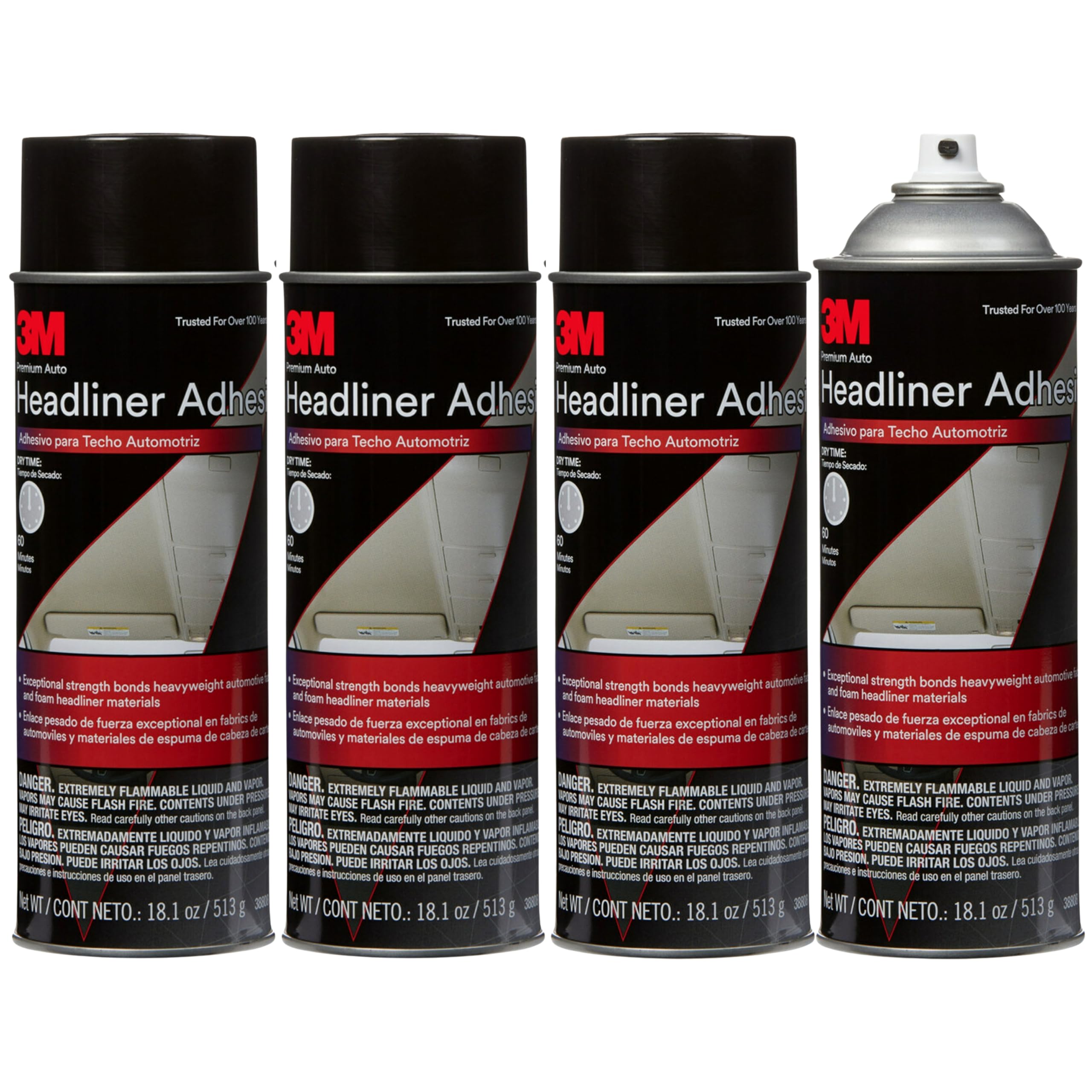
This four-pack delivers 18.1 ounces per can of a synthetic rubber and resin formulation engineered specifically for high-heat automotive interiors. The adjustable nozzle produces a fine, even mist that prevents oversaturation — critical when bonding headliner fabric to the fiberglass or foam backing where excess moisture causes delamination.
Each can provides enough coverage for a full sedan headliner, and the clear finish leaves no yellowing on light-colored fabrics. The heat resistance is the standout here: users report zero sag even in vehicles parked through summer months. The fast tack formula requires you to work quickly, but the bond is immediate and aggressive.
Real-world feedback from Jeep hardtop owners and Volkswagen Beetle convertible installations confirms that this adhesive withstands extreme temperature swings without losing grip. The only caveat is that beginners should practice on scrap material first — the grab is so strong that misaligned fabric cannot be repositioned once pressed.
Why it’s great
- Four cans cover large headliner projects without running out mid-job
- Heat-resistant formulation prevents sagging in extreme cabin temperatures
- Non-staining clear finish preserves original fabric appearance
Good to know
- Fast tack leaves almost zero room for repositioning after contact
- Solvent fumes require strong ventilation during application
2. 3M Super Trim Adhesive 08090

Designed for positioning applications on impervious metal surfaces, the 3M Super Trim Adhesive delivers a light, foamy consistency that dries to a low-profile clear line — it won’t soak through thin fabrics the way thicker contact cements do. The fan nozzle provides a controlled spray pattern that minimizes overspray on door panel inserts.
With a full cure time of just 15 minutes, this is one of the fastest-setting options in the premium tier. Users report excellent results reattaching fabric to car door panels and Mercedes hood liners. The bond is strong enough to hold trim pieces in place without clamping, though the formula is explicitly recommended for lightweight trim rather than heavy headliners.
The industrial-grade formulation means you must work in a ventilated area — the fumes are potent. But for upholstery repairs where a thin, non-dimpling bond line matters, this adhesive is a top-tier choice. Some users note that on large vertical surfaces, the lighter formula can struggle if the material is heavy, so reserve this for trim and smaller panels.
Why it’s great
- Extremely fast 15-minute cure for quick project turnaround
- Foamy formula prevents soak-through on thin fabrics
- Precise fan nozzle reduces overspray on door panels
Good to know
- Not recommended for heavy headliner fabric or thick foam
- Strong fumes require a respirator and open workspace
3. DAP Weldwood Landau Top & Trim Contact Adhesive
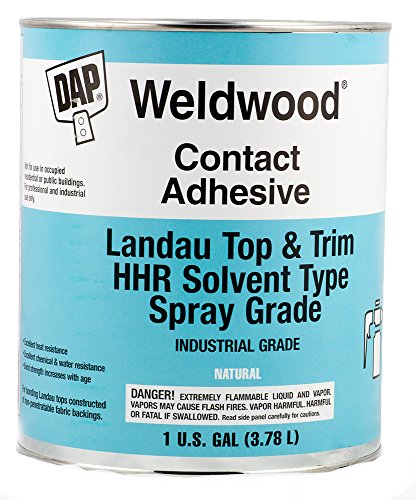
DAP Weldwood is the gold standard for vinyl-to-metal and vinyl-to-fabric bonding in automotive upholstery. This solvent-based contact cement is formulated to handle the extreme heat that builds up under a dark landau top or on a sun-baked dashboard. The gallon-sized can is designed to be used with a siphon-feed spray gun at around 45 psi for professional coverage.
The 24-hour full cure time is longer than aerosol options, but the resulting bond is permanently flexible and water-resistant — essential for convertible tops and exterior trim pieces. Users who apply it to both contact surfaces and let it flash off before pressing report a bond that holds through rain and road vibration without peeling.
This is not a consumer-level product; the solvent fumes are extremely strong and the material is highly flammable. A respirator and ventilated workspace are mandatory. The packaging also drew criticism from some buyers who received unlabeled repackaged containers, so verify the seal upon arrival.
Why it’s great
- Superior bond strength on vinyl and exterior trim materials
- Water-resistant formulation withstands rain and humidity
- Heat-resistant formula holds up in direct sun exposure
Good to know
- Requires a spray gun or brush — not a simple aerosol application
- 24-hour cure time requires patience and planning
- Very strong solvent fumes demand heavy ventilation
4. Camie 313 Fast Tack Upholstery Adhesive
Camie 313 uses a web spray pattern that lays down a clear, lace-like adhesive film with low soak-in — ideal for thin foam and fabric where you do not want stiffness. The instant tack means it grabs immediately, which makes it excellent for foam-to-foam bonding where two soft surfaces need to marry without shifting.
Made in the USA, this 12-ounce can bonds foam, fabric, wood, particle board, cardboard, metal, and fiberglass. Users consistently praise its performance on seat heater pad installation under upholstery and on re-gluing foam mattress sections. The bond develops strength as it cures over two hours, but the initial grab is strong enough to hold panels in place immediately.
The spray tip can occasionally glitch mid-can, and overspray is significant enough that a drop cloth is recommended. Some users found that the bond, while strong, is not as aggressive on vinyl as dedicated contact cements — this is best saved for fabric and foam projects.
Why it’s great
- Web spray pattern prevents adhesive soak-through on thin materials
- Instant tack bonds foam-to-foam without sliding
- Versatile across foam, wood, metal, and fabric surfaces
Good to know
- Significant overspray requires masking surrounding surfaces
- Nozzle reliability varies between individual cans
5. Polymat 777 Spray Glue Fast Tack Adhesive

The Polymat 777 is a 12-ounce aerosol that punches above its price tier with foam-tearing strength and a soft, non-dimpling glue line. The lace spray pattern keeps soak-in low, which matters when bonding felt carpet or flexible urethane foam to wood or metal speaker enclosures.
It holds up to 120°F, making it viable for interior panels that are not in direct sun exposure. Users have used it successfully on pool table felt, pickup cap liners, and car headliners. The clear formula dries transparent and does not stiffen fabrics, preserving the original hand feel of the material.
The main drawback is the spray nozzle — multiple users report the button detaching or the stream weakening after the first use. The adhesion itself is excellent for carpet and foam, but it is explicitly not recommended for embossing vinyl, where the bond is too weak to hold fine detail.
Why it’s great
- Foam-tearing strength provides a durable permanent bond
- Non-dimpling glue line keeps upholstery smooth
- Temperature resistance up to 120°F suits interior applications
Good to know
- Spray nozzle reliability is inconsistent across cans
- Not suitable for vinyl embossing or vinyl-to-vinyl bonding
6. Gorilla Heavy Duty Spray Adhesive 2-Pack
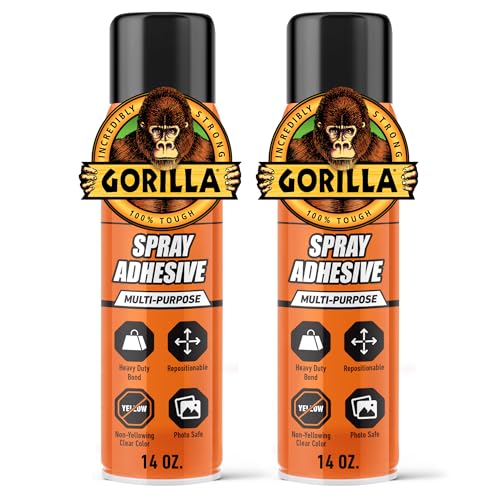
The Gorilla Heavy Duty Spray Adhesive is a versatile multi-surface formula that offers a 10-minute repositionable window before forming a permanent bond — a forgiving feature that benefits beginners. The wide pad nozzle delivers a fine mist that covers large areas evenly, and the clear, non-yellowing finish is photo-safe for projects that include printed fabric.
It bonds paper, cardboard, foam, fabric, wood, metal, leather, glass, and some plastics, making it a general-purpose option for upholstery repairs that also involve crafts or home decor. Users have used it to boost adherence of peel-and-stick flooring and to hold non-faced insulation in place, demonstrating its grab strength.
That said, this is not a dedicated high-heat automotive adhesive. Several users noted that the initial hold on heavy upholstery fabric was weak and required reapplication. It works best for light-duty interior fabric repairs and DIY projects, but it is not recommended for headliners or vinyl trim that will see extreme cabin temperatures.
Why it’s great
- 10-minute repositioning window allows alignment adjustments
- Non-yellowing clear finish preserves fabric color
- Bonds a wide range of materials from foam to leather
Good to know
- Not formulated for high-heat automotive interior conditions
- Reapplication may be needed for heavy or thick fabrics
7. Polymat 777 Upholstery Adhesive
This variant of the Polymat 777 is essentially the same 12-ounce aerosol formulation as the first entry, offering high-strength bonding for flexible urethane and latex foams. The fast tack creates an immediate grab that works well for carpeting speaker boxes or re-gluing foam mattress sections.
Users have specifically used this to repair tears on foam rubber joints and to reglue liners in pickup caps. The bond is durable enough for vertical panels and the soft glue line prevents dimpling on visible fabric surfaces. It also contains no CFCs or chlorinated solvents, making it a slightly more environmentally conscious choice among solvent-based adhesives.
The same nozzle concerns carry over from the other Polymat can — the spray button can detach after the first use. The adhesion is also less effective on vinyl compared to foam and fabric. This is a solid budget option for simple upholstery repairs where foam-to-fabric bonding is the primary need.
Why it’s great
- Fast tack provides immediate hold without clamping
- Environmentally friendly formulation with no CFCs
- Excellent for foam-to-fabric and foam-to-wood bonding
Good to know
- Nozzle reliability issues after initial use
- Not recommended for vinyl or leather upholstery projects
FAQ
Can I use a general-purpose spray adhesive for a car headliner?
How long should I wait before pressing fabric onto adhesive?
What is the best adhesive for vinyl upholstery repairs?
Why does my spray adhesive nozzle clog after the first use?
Is it safe to use automotive upholstery adhesive indoors?
Final Thoughts: The Verdict
For most users, the best automotive upholstery adhesive winner is the 3M Headliner & Fabric Adhesive 4-Pack because it combines professional-grade heat resistance, a non-staining clear finish, and enough volume to complete a full headliner without running short. If you are working exclusively with vinyl or landau tops, grab the DAP Weldwood Landau & Trim Contact Adhesive. And for a budget-friendly repair on foam and carpet, nothing beats the value of the Polymat 777 Spray Glue.