
Truck drivers live in the well of their boots — climbing in and out of the cab, walking across loading docks, and stomping on pedals for hours on end. The difference between a great driving boot and a bad one is the difference between finishing a shift feeling fresh and dragging your feet out of the cab. Blood flow, arch support, and slip resistance aren’t buzzwords; they’re the difference between a productive week and a painful one.
I’m Min — the co-founder and writer behind Gadgets Feed. I’ve spent countless hours analyzing the materials, outsole compounds, and insole technologies that separate a boot that survives a 12-hour shift from one that ends up in the trash after ninety days. This guide focuses on what actually matters when your feet are pinned to pedals and pavement.
After digging through hundreds of verified reviews and spec sheets, I’ve assembled the only list of the best boots for truck drivers that prioritizes pedal feel, arch fatigue, and long-haul durability over marketing hype.
How To Choose The Best Boots For Truck Drivers
Sorting through work boots when your primary work station is a driver’s seat requires a different set of priorities than a construction site. The three factors below are the ones that actually matter when your day involves more throttle than ladder climbing.
Outsole and Pedal Feel
A thick, aggressive tread designed for mud and gravel is a liability behind the wheel. You need a sole that gives you a clear, consistent feel of the pedals without catching on the floor mat. Wedge soles and low-profile slip-resistant outsoles are the gold standard here. Look for boots with a flat or very low heel — anything over an inch can make heel-toe pedal transitions clumsy and unsafe.
Arch Support and Footbed Quality
Truck drivers experience sustained pressure on the balls of their feet and arches because of the constant micro-adjustments on the pedals. A boot with a flat, low-density insole will collapse within weeks, leading to plantar fasciitis and knee pain. The best bets are boots that come with a substantial, supportive footbed — or are easy to replace with aftermarket orthotics without changing the fit of the boot.
Durability of the Upper and Stitching
Getting in and out of a truck cab multiple times a day puts high stress on the flex points of the boot, especially where the upper meets the tongue and the ankle crease. Full-grain leather and reinforced stitching at these stress points are non-negotiable for boots intended to last a year or more. Cheaper split-grain or synthetic uppers will crack and separate at the flex points in a matter of months.
Quick Comparison
On smaller screens, swipe sideways to see the full table.
| Model | Category | Best For | Key Spec | Amazon |
|---|---|---|---|---|
| Danner Bull Run | Premium Work Boot | All-day comfort & pedal feel | 1.9 lbs per boot, wedge sole | Amazon |
| Rockrooster Bakken | Mid-Range Chelsea | Easy on/off and durability | 4 lbs, steel toe, chelsea style | Amazon |
| Justin Conductor | Mid-Range Pull-On | Western feel with lower heel | 4.21 lbs, 8″ height, Double Comfort insole | Amazon |
| Ariat Rigtek | Premium Composite Toe | Metal-free safety & waterproofing | 3.1 lbs, composite toe, waterproof | Amazon |
| Timberland PRO Gravel Pit | Premium Heavy-Duty | Maximum protection and insulation | 4.2 lbs, steel toe, insulated | Amazon |
| Wolverine Durashock | Mid-Range Wellington | Traditional style and long life | 2 lbs, pulling-style, high durability | Amazon |
| Georgia Boot Logger | Premium Insulated | Cold-weather driving | 5.13 lbs, 8″ height, GORE-TEX | Amazon |
| Danner Vicious | Premium Composite Toe | Lightweight protection and waterproofing | 1.8 lbs, composite toe, GORE-TEX | Amazon |
| Dr. Scholl’s Charge | Budget-Friendly | Lightweight and slip resistance | 1 lb, soft toe, slip-resistant | Amazon |
In‑Depth Reviews
1. Danner 8” Bull Run Work Boots

The Danner Bull Run is the benchmark for a driving boot because of its wedge sole. That flat, non-heeled outsole gives you a connected feel to the pedals that a lugged logger sole simply cannot match. At just 1.9 pounds per boot, these are remarkably light for a full-grain leather work boot, meaning less fatigue when lifting your foot from gas to brake all shift long.
The 8.5-inch shaft provides excellent ankle support without restricting movement in the cab. The 3-density cushion footbed is genuinely supportive out of the box — many drivers report no need for an aftermarket insole for the first year of wear. The leather is high-quality, and the lack of insulation makes them a three-season boot for most climates, though they pair well with heavy wool socks in winter.
The trade-off is that the soft leather and wedge sole aren’t built for heavy abuse on gravel or sharp debris. This is a boot optimized for smooth surfaces and long periods of standing or driving, not for tromping through a muddy construction site. The lack of waterproofing means you’ll want a waterproofing treatment if you drive in wet conditions regularly.
Why it’s great
- Wedge sole provides excellent pedal feel and grip on flat surfaces
- Extremely lightweight at 1.9 lbs per boot
- Comfortable out of the box with minimal break-in
Good to know
- Not waterproof without aftermarket treatment
- Soft leather may not withstand heavy abuse
- No insulation for cold weather
2. ROCKROOSTER Bakken Chelsea Boots
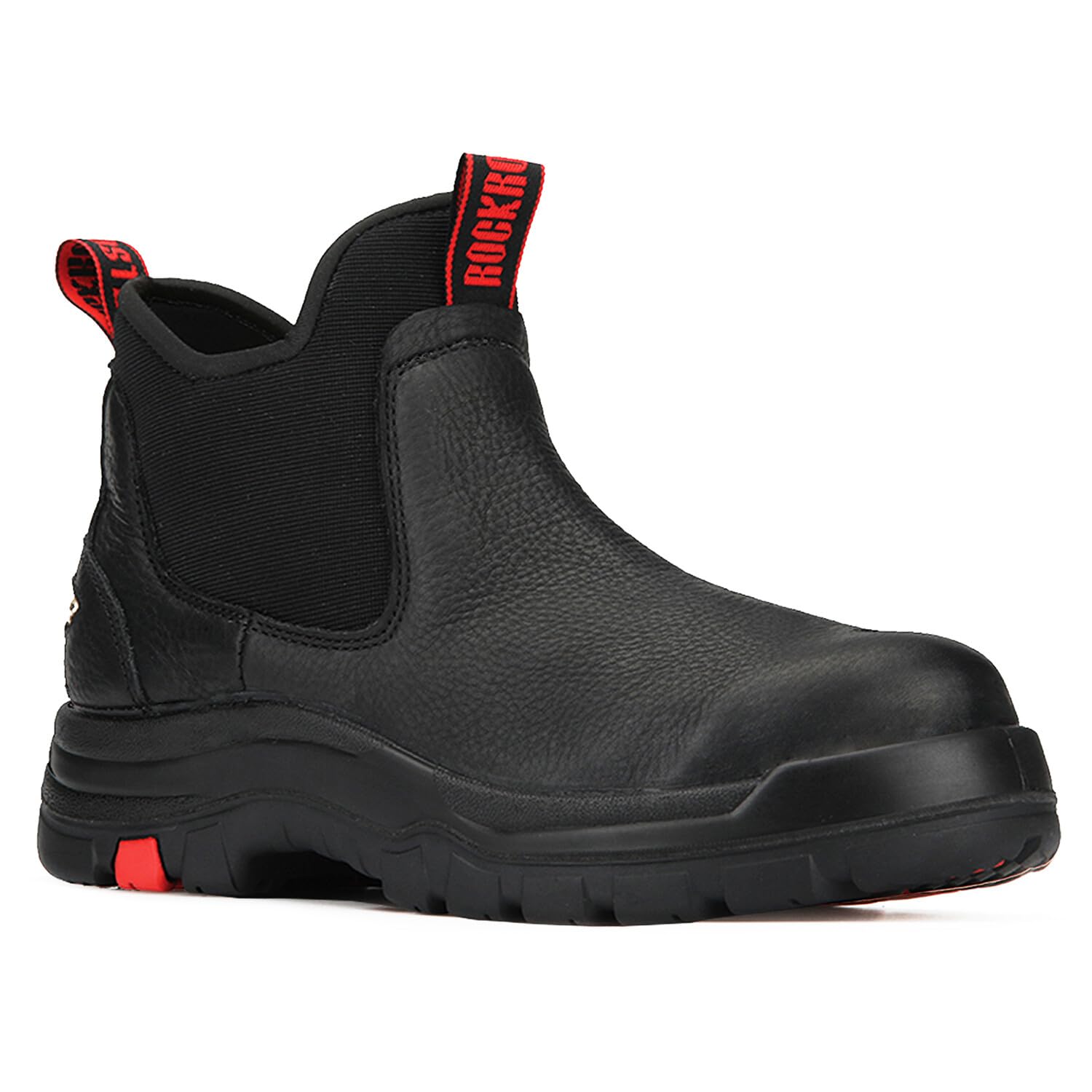
The Rockrooster Bakken Chelsea boots solve one of the biggest annoyances for truck drivers: lacing up every time you hop out for a delivery. The slip-on Chelsea design with elastic panels means you’re in and out in seconds. Despite the higher weight of 4 pounds, the boot is well-balanced and the steel toe adds a layer of safety without feeling like a boat anchor.
The outsole is thick and aggressively treaded, which is a double-edged sword. On one hand, it provides excellent grip on wet concrete and gravel lots. On the other, the higher profile can interfere slightly with pedal feel compared to a wedge sole. The leather is thick and took significant abuse in reviews covering mud, fuel, and chemical exposure, with many users surpassing a year of daily wear before failure.
The most common issue is that the inner lining is not breathable, leading to sweaty feet in warmer climates. The memory foam in the heel also tends to compress over a few months. However, the boot runs slightly large, giving you room to add a high-quality aftermarket insole without making the fit too tight.
Why it’s great
- Slip-on Chelsea style is incredibly convenient for cab entry/exit
- Thick leather withstands heavy abuse and chemicals
- Runs large, allowing for custom insoles
Good to know
- Non-breathable lining leads to sweaty feet
- Heel memory foam compresses relatively quickly
- Higher outsole profile reduces pedal feel slightly
3. Justin Conductor 8″ Work Boot
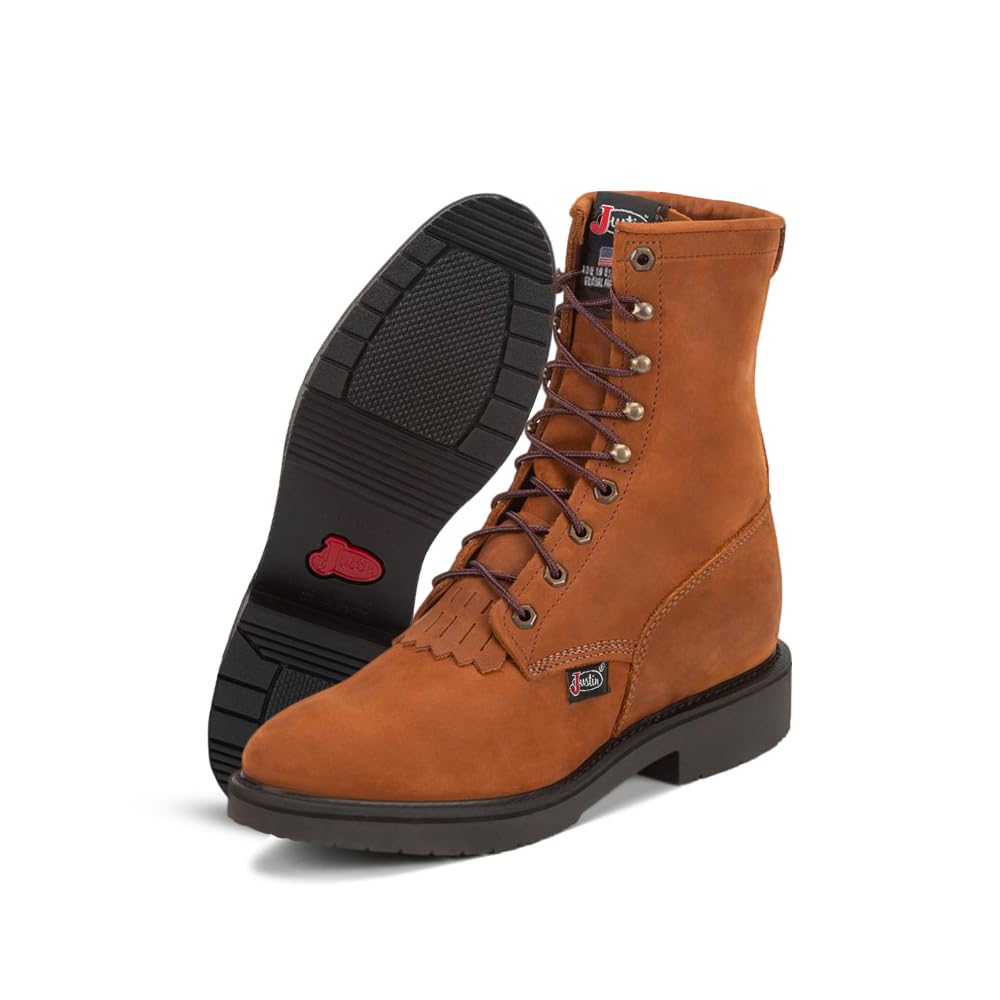
The Justin Conductor is a pull-on western-style boot that breaks the mold by having a lower, more practical heel than traditional cowboy boots. This makes heel-toe pedal transitions far safer and more comfortable than a typical roper or logger heel. The Double Comfort insole system is genuinely supportive, and many reviewers report it reduces foot and back aches over 10-hour shifts.
Built from durable leather and made in the USA, these boots have a reputation for lasting years, not months. One reviewer reported 8 years of retail work from a single pair. The 8-inch shaft provides good ankle support without being restrictive. The slip-resistant sole works well on smooth surfaces, but the leather sole construction can be slippery on wet metal or icy loading docks.
The fit runs narrow for some, and the “Aged Bark” color can be significantly lighter than the product photos show. The boot is also not waterproof, requiring mink oil treatment for wet conditions. The lack of a steel or composite toe means no impact protection, so these are best for drivers who don’t need safety-toe compliance.
Why it’s great
- Lower western heel is excellent for pedal control
- Double Comfort insole provides long-lasting arch support
- Proven durability of 8+ years in some cases
Good to know
- Not waterproof without treatment
- Color may vary significantly from images
- No safety toe protection
4. ARIAT Rigtek Wide Square Toe Work Boot
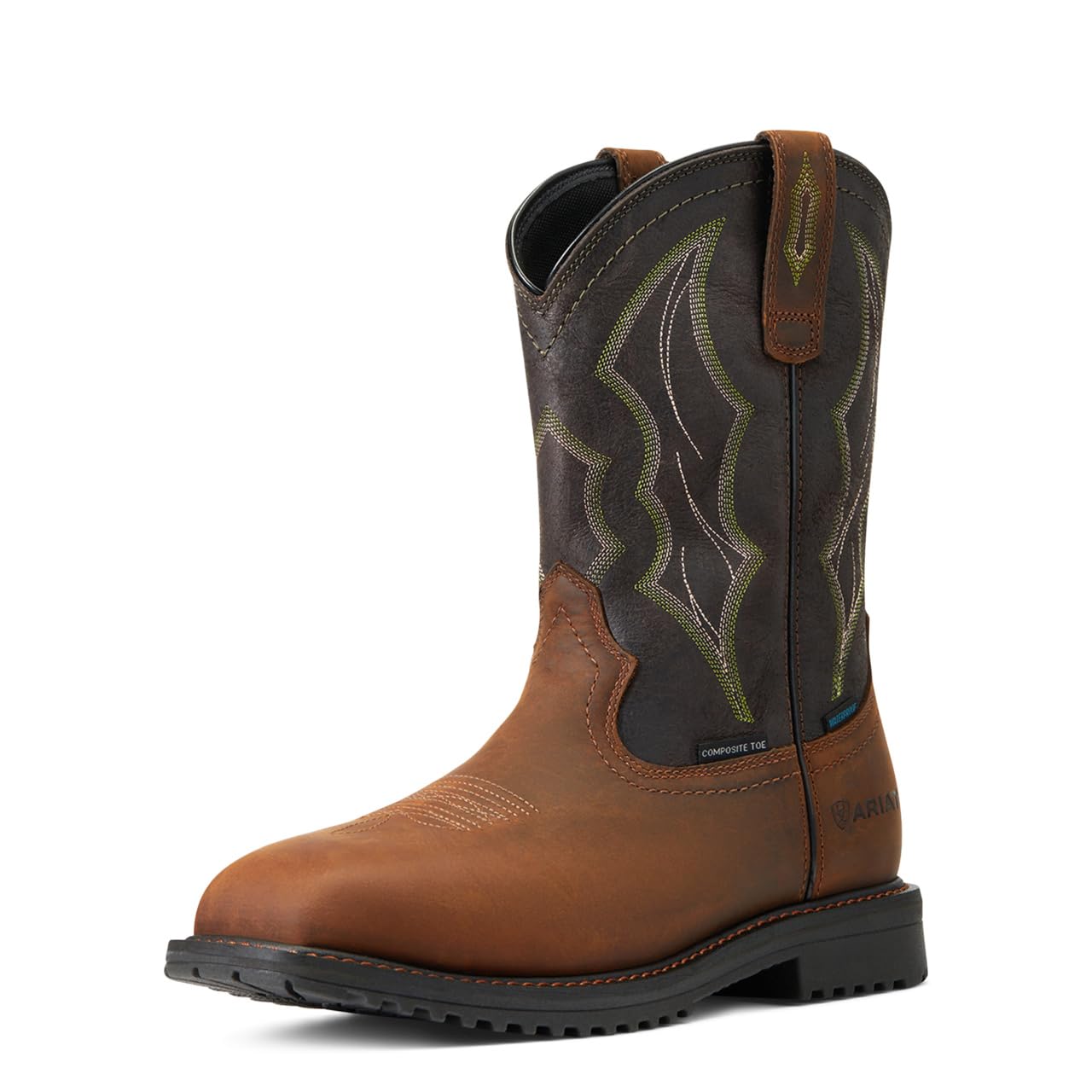
The Ariat Rigtek is a composite toe boot that prioritizes comfort and weight reduction without sacrificing protection. At 3.1 pounds, it’s significantly lighter than steel-toe alternatives. This matters on a long haul where every ounce of weight your foot has to move between pedals adds up. The wide square toe also gives your toes room to spread naturally, which is a huge plus for circulation during 12-hour shifts.
Waterproofing is reliable for puddles and rain, but the boot is not designed for submersion. The slip-resistant sole performs well on wet pavement and smooth surfaces, making it a solid choice for loading dock and warehouse work. The arch support is also notably good for a composite-toe boot, with many drivers not needing a replacement insole.
The main complaint is a persistent squeak that develops in one boot over time, which can be annoying in a quiet cab. The leather can also crack if not regularly cleaned and oiled. The boot requires a break-in period of a few days, and sizing half a size down is common to get a snug heel fit.
Why it’s great
- Composite toe is light and doesn’t conduct cold
- Excellent arch support for long hours on pedals
- Wide square toe allows natural toe splay
Good to know
- Prone to developing a loud squeak over time
- Leather requires regular maintenance to prevent cracking
- Needs a short break-in period
5. Timberland PRO Gravel Pit Steel Toe Boot

The Timberland PRO Gravel Pit is a heavy-duty boot designed for the driver who also has to step into a construction site or works in a rugged yard environment. The steel toe is substantial, and the boot includes puncture-resistant soles and electrical hazard protection. At 4.2 pounds, it’s a heavy boot, but the cushioning is excellent, and the wide widths (up to 11 3E) accommodate larger feet without pinching.
The 10-inch shaft provides substantial ankle and calf coverage, which is great for protection but can be restrictive in a tight cab. The block heel is moderate, but the boot is not ideal for drivers who spend most of their time behind the wheel due to the weight and stiffness. The insulation is a plus for winter driving, as it keeps feet warm without needing bulky socks.
Despite the name, the boot is not fully waterproof — it’s water-resistant at best. The metatarsal guard is tight initially but loosens with wear. Some users report the boot feels “massive” and can be clumsy on the pedals. This boot is best for the driver who needs maximum protection and is willing to sacrifice some driving-specific comfort for it.
Why it’s great
- Maximum protection with steel toe, puncture resistance, and EH rating
- Excellent cushioning and wide widths available
- Insulated for cold weather driving
Good to know
- Very heavy at 4.2 lbs, fatiguing over long shifts
- Bulky for tight cab spaces
- Not fully waterproof despite the Gravel Pit name
6. Wolverine Durashock Wellington Boot

The Wolverine Durashock is a classic pull-on Wellington boot that has been on the market for years for a reason: it works. The boot is built with a low-profile heel that is much better for driving than a traditional high-heeled Wellington. At just 2 pounds, they feel light on the feet, and the leather is known to last for years with proper care, including mink oil treatment for waterproofing.
The fit runs large, and buyers consistently report needing to order half a size down from their typical sneaker size. This is good news for drivers with wider feet or those who want to wear a thicker sock. The boot is known for being comfortable immediately, with no real break-in period. The slip-resistant sole holds up well on concrete and smooth surfaces.
The boot lacks a safety toe, so it’s not for jobs requiring steel or composite protection. The D width can be tight on the top of the right foot for some, but a quick freezer stretch with a bag of water solves the issue. Some users wish for more arch support, but the simple design makes it easy to add a third-party insole.
Why it’s great
- Lightweight and comfortable with no break-in
- Low heel is good for pedal control
- Proven long-term durability with mink oil care
Good to know
- No safety toe protection
- Runs large, requires sizing down
- Arch support is minimal for some foot types
7. Georgia Boot Low Heel Logger GORE-TEX
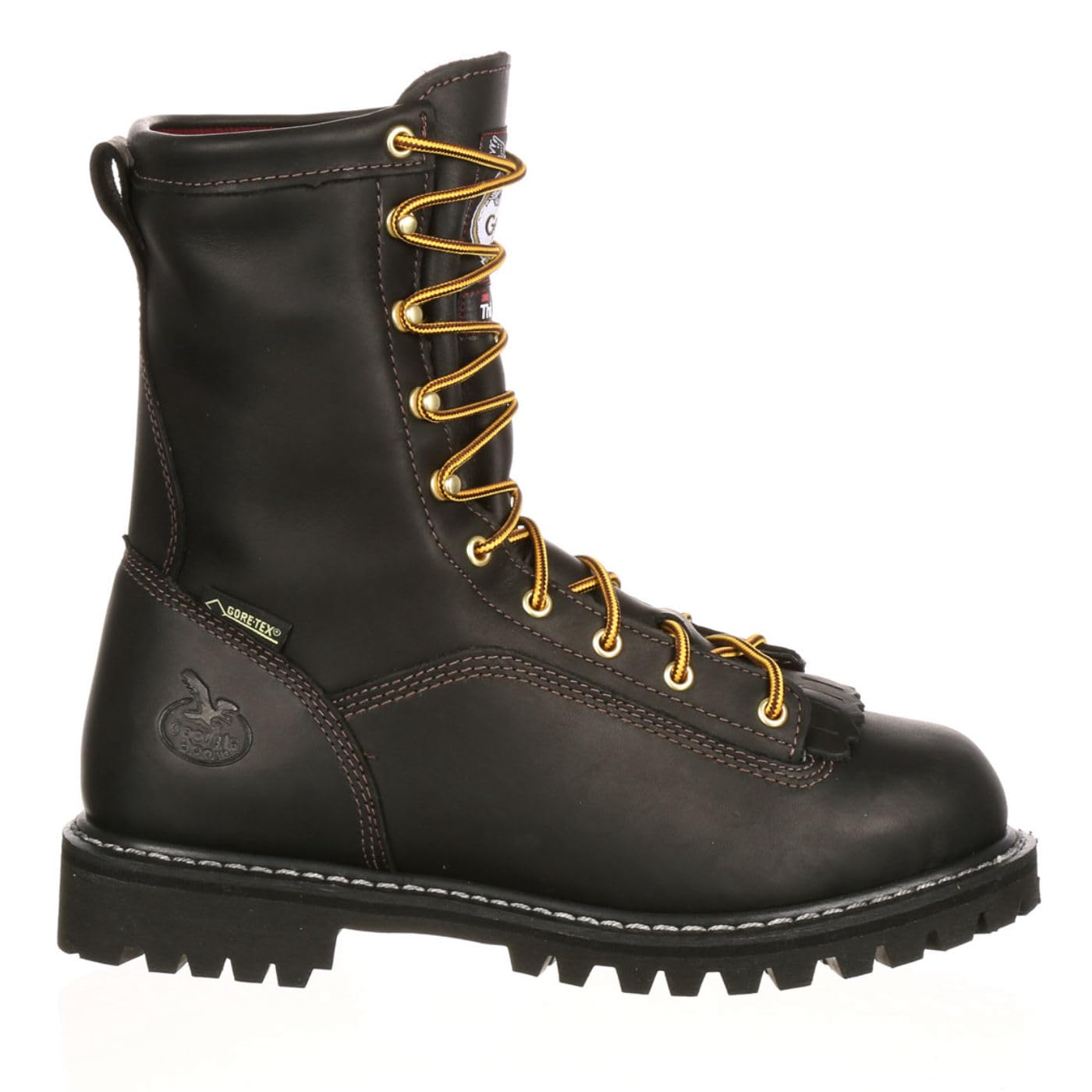
The Georgia Boot Low Heel Logger is a serious boot for severe conditions. The GORE-TEX lining provides reliable waterproofing, and the insulation keeps feet warm in freezing temperatures. The “low heel” designation is key — while it’s still a logger-style boot with a heel, it’s lower than the traditional logger profile, making it more manageable for driving than a typical 2-inch logger heel.
The boot is heavy at 5.13 pounds, and that’s the biggest trade-off. The stiff ankle leather requires a significant break-in period of several weeks. Once broken in, the boot conforms to the foot well and provides excellent stability. The rubber sole is rugged and long-wearing, showing minimal wear even after months of use on asphalt and concrete.
The boot runs slightly roomy, which is good for thick winter socks. The primary drawback for drivers is the weight and the stiff ankle, which can make clutch work and pedal transitions a chore. The waterproofing is genuine and long-lasting, making this the best choice for drivers in northern climates who deal with slush, snow, and ice.
Why it’s great
- GORE-TEX lining provides genuine, long-lasting waterproofing
- Insulated for cold weather driving
- Rugged sole lasts for years on hard surfaces
Good to know
- Heavy at 5.13 lbs, fatiguing over long shifts
- Very stiff ankle, long break-in period
- Logger heel is still less ideal for pedals than a wedge sole
8. Danner Vicious 8” Waterproof Work Boot

The Danner Vicious is a near-perfect balance of lightweight construction and waterproof protection. At only 1.8 pounds, it challenges the Bull Run for the lightest boot on this list while adding GORE-TEX waterproofing and a composite toe. This boot feels more like a sturdy hiking boot than a work boot, which translates directly to comfort for the driver who needs safety-toe compliance without the weight penalty.
The Speed Lace system is excellent for getting the boot tight quickly. The heeled outsole provides good traction on uneven ground, but the heel is moderate enough that pedal feel is still present. The composite toe is non-metallic, meaning it won’t conduct cold or trigger metal detectors. The boot is also durable enough to survive 5 years of construction use, according to one long-term review, with the Vibram sole holding up well.
The major trade-off is that the GORE-TEX membrane failed for some users after about 4.5 years of heavy use. The comfort is also not top-tier for all-day standing compared to the Bull Run, and the boot is not insulated, so it’s best for mild to moderate climates. The price has also increased significantly in recent years.
Why it’s great
- Extremely lightweight at 1.8 lbs for a waterproof composite toe boot
- GORE-TEX lining provides long-term waterproofing
- Composite toe is non-metallic and cold-weather friendly
Good to know
- GORE-TEX membrane may fail after several years
- Not as comfortable for all-day standing as the Bull Run
- No insulation for winter use
9. Dr. Scholl’s Charge Slip Resistant Boot
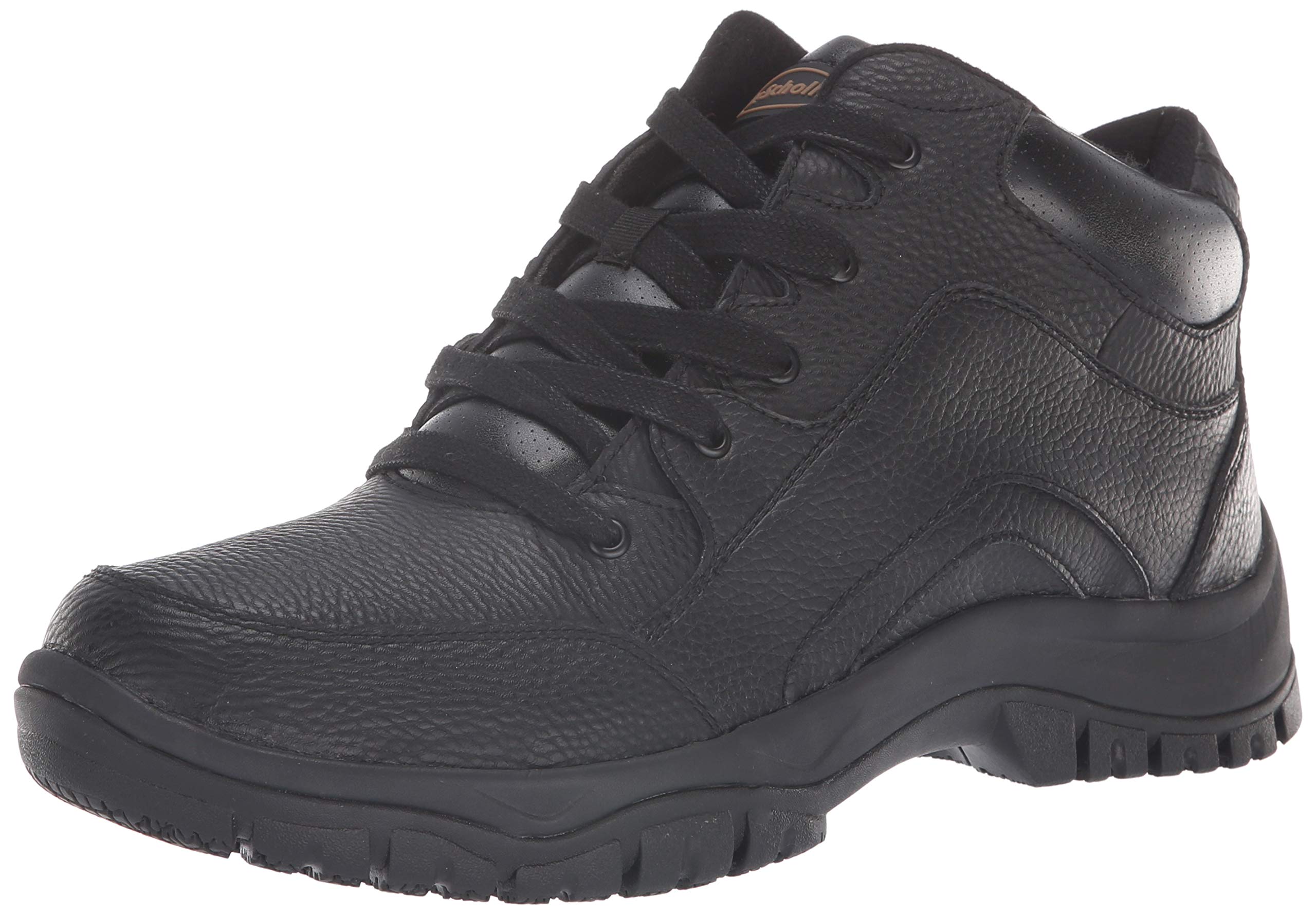
The Dr. Scholl’s Charge is the entry-level option that prioritizes immediate comfort and weight over long-term durability. At just 1 pound, these feel more like a sneaker than a boot, which is a huge selling point for drivers who want zero foot fatigue. The slip-resistant outsole is genuinely effective, and the boot is comfortable for 12-hour shifts on your feet, as verified by many healthcare workers and Chefs who spend all day standing.
The insole is the weak point — it flattens after about a month of heavy use, and boot failure (stitching coming undone, peeling upper) happens around 2 to 8 months depending on use. However, at their price point, many drivers treat them as a consumable item. Replacing the insole immediately with a high-quality orthotic dramatically extends the usefulness of the boot.
The boot has no safety toe and no waterproofing. It is best for the van or box-truck driver who operates in a dry, clean environment and prioritizes weight reduction above all else. It’s also a great backup boot to keep in the cab for quick deliveries. Just don’t expect them to last a full year of rough use.
Why it’s great
- Ultra-lightweight at 1 lb, feels like a sneaker
- Comfortable out of the box for long shifts
- Effective slip-resistant sole
Good to know
- Insole flattens quickly, needs immediate replacement
- Poor long-term durability, may fail after 2-8 months
- No safety toe or waterproofing
FAQ
Are steel toe boots safe for driving a truck?
What is the difference between slip-resistant and oil-resistant soles?
Final Thoughts: The Verdict
For most users, the best boots for truck drivers winner is the Danner Bull Run because the wedge sole and lightweight construction provide the best pedal feel and all-day comfort for the majority of driving environments. If you want waterproofing and a safety toe, grab the Danner Vicious. And for a budget-friendly option that prioritizes weight reduction above all else, nothing beats the Dr. Scholl’s Charge with a replaced insole.