
A 4 inch foam mattress for camping is the difference between waking up ready to hike and waking up stiff from sleeping on hard, uneven ground. Most campers settle for thin foam pads that bottom out, but this specific thickness creates a genuine barrier between your hips, shoulders, and the cold earth. The real challenge is separating the dense, supportive foam blocks from the soft, sagging slabs that feel great for five minutes but fail by midnight.
I’m Min — the co-founder and writer behind Gadgets Feed. I analyze dozens of foam density specs, R-value claims, and real-world compression tests to find which camping mattresses actually deliver on their thickness promise.
After weeks of comparing foam formulations, support foam vs. memory foam hybrids, and waterproof cover materials, I’ve identified the models that genuinely hold up to the outdoors. Read on for my curated list of the very best 4 inch foam mattress for camping options available right now.
How To Choose The Best 4 Inch Foam Mattress For Camping
Not every 4 inch pad delivers the same sleeping surface. Some combine air and foam for a lightweight, packable design, while others are pure foam slabs that prioritize comfort over portability. Understanding where you sleep and how you get there determines which type fits your camping style.
Foam Type: Memory Foam vs. Support Foam vs. Hybrid
Memory foam conforms to your body and reduces pressure points, making it ideal for side sleepers. Support foam (often labeled 30D density) is firmer and provides a more stable surface for stomach sleepers or heavier individuals. Many premium options layer both — a firm base foam topped with softer memory foam — to balance cushioning and support. Pure foam pads are bulky but require zero setup, while self-inflating hybrids use open-cell foam and air to reduce packed size.
R-Value and Seasonal Insulation
R-value measures the pad’s resistance to ground heat loss. For summer car camping, an R-value of 4 to 6 is sufficient. For winter or shoulder-season camping, look for R-values above 8. Several 4 inch pads in this guide boast an R-value of 9.5, which provides genuine cold-weather insulation. If you plan to camp year-round, prioritize a pad with a high R-value to avoid waking up cold even when the temperature drops below freezing.
Weight, Packed Size, and Setup Effort
Pure foam mattresses are the heaviest and largest to pack — expect 10 to 12 pounds and a rolled cylinder 18 to 20 inches in diameter. These are strictly for car camping, RV bunks, or truck beds. Self-inflating hybrids weigh 5.5 to 7 pounds and pack much smaller, often fitting inside a standard duffel. Consider whether you value quick setup and compact storage over the ready-to-go simplicity of unrolling a pure foam pad.
Quick Comparison
On smaller screens, swipe sideways to see the full table.
| Model | Category | Best For | Key Spec | Amazon |
|---|---|---|---|---|
| AKUDY Self Inflating Sleeping Pad | Self-Inflating Hybrid | Quick Setup Campers | R-Value 9.5, 5.5 lbs | Amazon |
| Hikenture Comfort Plus Pad | Self-Inflating Hybrid | Tall Sleepers | 80×28 inches, 6.5 lbs | Amazon |
| Elegear CumbreX Sleeping Pad | Self-Inflating Hybrid | Electric Pump Convenience | Built-in Pump, 6.6 lbs | Amazon |
| GAIALOOP 30D Support Foam | Pure Foam Roll-Up | Firm Support Fans | 12 lbs, 30D PU Foam | Amazon |
| Foamma Memory Foam Pad | Pure Foam Roll-Up | RV Bunks and Guest Beds | CertiPUR-US, 26×72 inches | Amazon |
| GAIALOOP Memory Foam Mattress | Pure Foam Roll-Up | Side Sleepers on Uneven Ground | 40D Memory + 30D Base | Amazon |
| Jamdok Cot Mattress Topper | Pure Foam Roll-Up | Cot and Guest Bed Comfort | Gel Infused Memory Foam | Amazon |
In‑Depth Reviews
1. AKUDY Self Inflating Sleeping Pad with Electric Pump
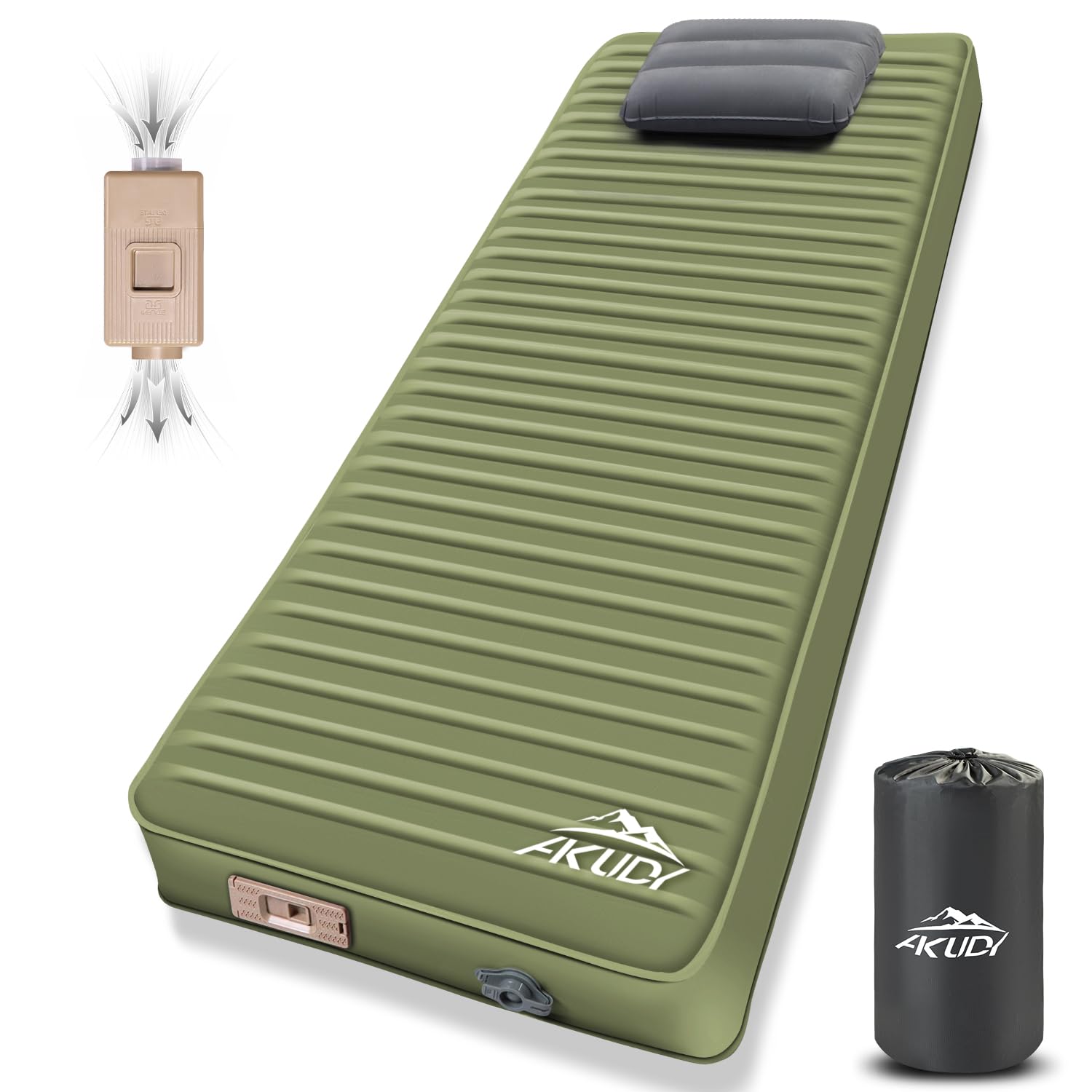
The AKUDY camping pad hits a rare sweet spot: 4 inches of inflated thickness with a 9.5 R-value that insulates effectively from cold ground, all packed into a 5.5-pound package. The built-in electric pump is the standout feature here — one touch inflates the pad in under a minute via a removable USB-C pump that also handles deflation and vacuum storage. That vacuum compression is a game-changer for storage, shrinking the pad into a compact cylinder that fits easily in a car trunk alongside other gear.
The 3D memory foam core inside the air bladder prevents that dreaded “sinking to the ground” feeling. Multiple reviews confirm that side sleepers, who typically struggle with standard air pads, feel supported through the night without pressure points in the hips or shoulders. The included pillow is a simple inflatable unit, but the pad’s primary structure does the heavy lifting. The army yellow color is practical for outdoor visibility, and the 25.6 x 76.77 inch surface area accommodates most sleepers comfortably.
One limitation is the pump’s 20-minute operational limit, though it inflates in less than 60 seconds so battery drain is rarely an issue. The pump is removable, doubling as a standalone blower for other inflatables. A few users note that the pump connection requires a firm push to seal properly. For car campers who want electric-pump convenience without sacrificing warmth, this is the most versatile option at this thickness and R-value tier.
Why it’s great
- Integrated USB-C electric pump inflates and deflates in under 2 minutes
- 9.5 R-value provides genuine four-season insulation from cold ground
- Vacuum-compression storage reduces packed size dramatically
Good to know
- Pump connection can feel loose until fully seated
- Included inflatable pillow is basic and may need replacement
2. Hikenture Comfort Plus Self Inflating Sleeping Pad

At 80 inches long and 28 inches wide, the Hikenture pad is built for taller campers who feel cramped on standard 72-inch pads. The 4-inch thickness comes from a hybrid memory-foam-and-air design that self-inflates through a patented 2-way valve. Let it sit for a few minutes, then add a few puffs with the included pump sack to reach full loft. The foam core inside the air chamber prevents the pad from feeling like a pool toy — you get the support memory foam provides with the packability of an air pad.
The 9.5 R-value is identical to the AKUDY’s, so winter insulation is not a compromise here. The top surface is a soft polyester fabric that remains quiet during sleep — no crinkling when you shift positions. Users over 6 feet 2 inches consistently report that they can stretch out fully without their feet hanging off. The pad rolls up to a manageable size with the included carry bag, and the one-way valve prevents air from sneaking back in during deflation.
Deflation does require some effort, as the open-cell foam holds air longer than pure inflatable pads. Rolling while pressing out the air is the most effective technique. The pump sack is functional but slower than an electric pump if you’re impatient. A small number of units arrived with manufacturing tears, but the customer service response was quick with replacements. For the width and length alone, this is the most accommodating 4 inch pad for larger body types.
Why it’s great
- 80×28 inch surface fits tall and broad sleepers without overhang
- Self-inflating design requires minimal manual pumping
- Soft polyester top is quiet and comfortable against skin
Good to know
- Deflation takes more effort than pure air pads
- Pump sack is effective but slower than electric options
3. Elegear CumbreX Self Inflating Sleeping Pad
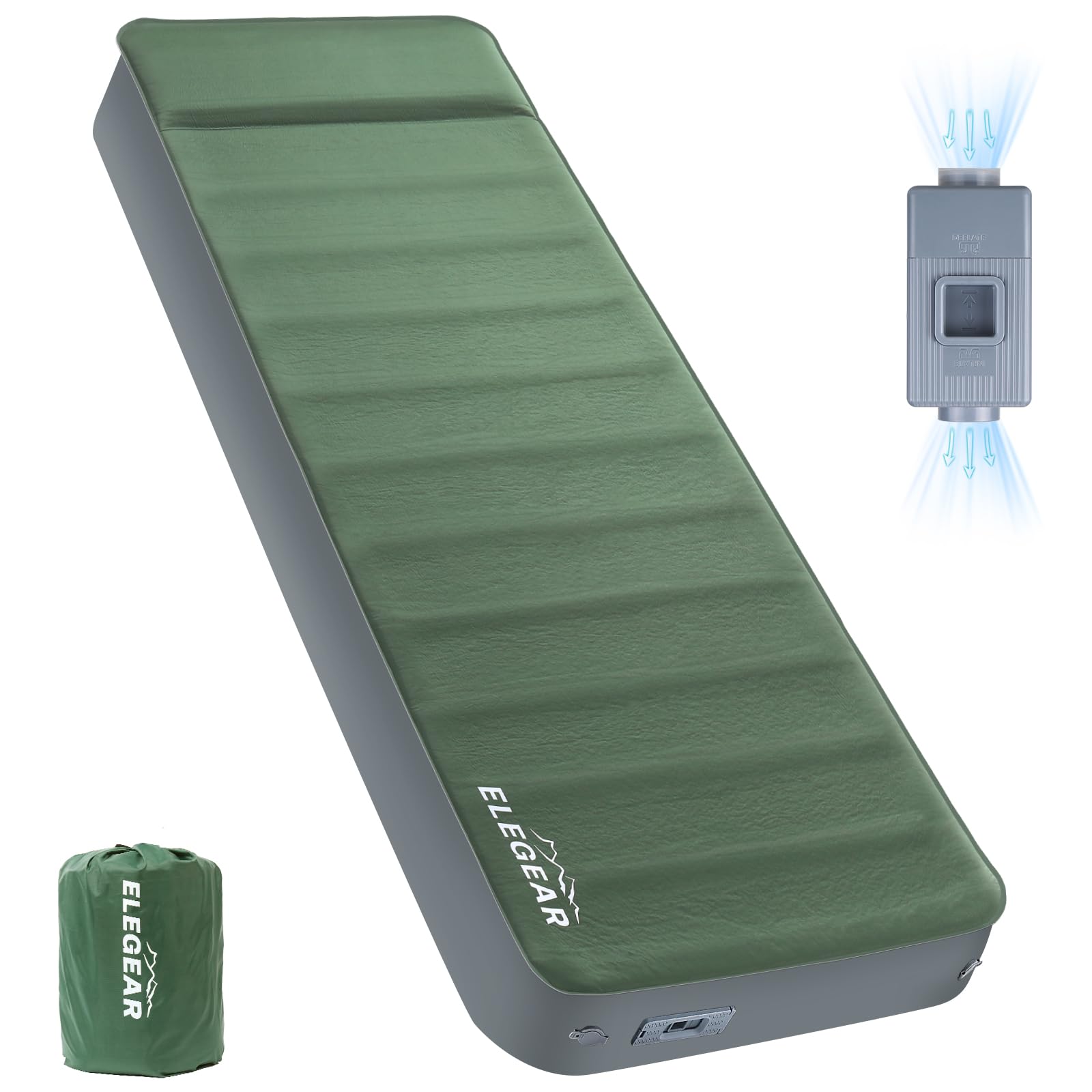
Elegear’s CumbreX pad uses a 26D hollow memory foam structure that is engineered to adapt to your body’s contours while maintaining a stable 4-inch loft. The hollow foam cells allow the pad to compress more efficiently than solid foam, which is why this 79 x 28 inch pad weighs only 6.6 pounds. The built-in electric pump inflates the pad in about a minute and deflates it in two, and the same pump can vacuum-seal the pad for compact storage — similar to the AKUDY’s approach but with a slightly larger surface area.
The 9.5 R-value rating matches the top-tier insulation found on the AKUDY and Hikenture pads, making this a legitimate four-season option. The 50D knitted fabric outer layer with a leak-proof TPU backing adds durability against sharp ground debris. The built-in pillow is integrated into the pad’s structure rather than being a separate item, which keeps it from sliding away during the night. Several side sleepers report that the memory foam cushioning eliminates the “hard spot” sensation that cheaper foam pads produce when you press into them.
The pump’s battery endurance is rated at 20 minutes of total run time, which translates to roughly 6 to 7 full inflation cycles per charge. A handful of users received units that failed to hold air overnight due to valve seal issues, which appears to be a quality-control variance. Ensure the valves are fully closed before inflating. If you get a well-sealed unit, the combination of electric-pump convenience and memory foam comfort makes this a strong contender for car camping trips where setup speed matters most.
Why it’s great
- Hollow 26D memory foam conforms to body shape without compressing flat
- Integrated electric pump handles inflation, deflation, and vacuum storage
- Durable 50D knitted fabric resists punctures from ground debris
Good to know
- Pump battery limited to about 20 minutes total run time
- Some units have valve seal issues causing overnight air loss
4. Foamma Memory Foam Roll-Up Camping Mattress
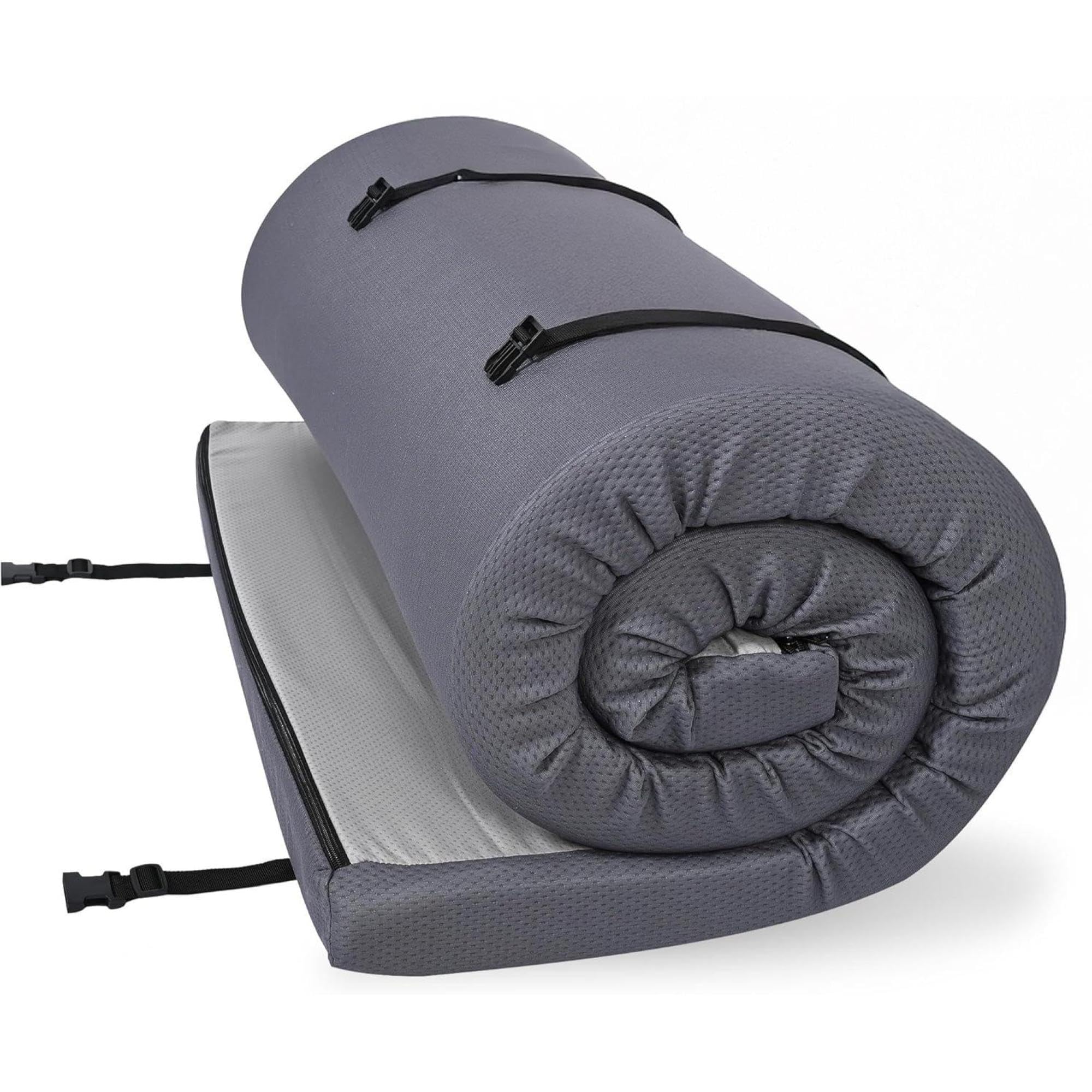
Foamma takes a no-nonsense approach: a solid 4-inch slab of high-density memory foam in a 26 x 72 inch profile that fits standard tent floors and RV bunks. The foam is CertiPUR-US certified, meaning it contains no ozone-depleting substances and low VOC emissions — a genuine consideration if you plan to use the pad inside an enclosed RV or small tent. The zippered cover is removable and machine washable, which keeps the foam core protected from dirt, sweat, and rain without requiring you to clean the entire bulk of the mattress.
Unlike the self-inflating hybrids above, this is a pure foam pad. There is no setup beyond unrolling it and letting it expand for 48 to 72 hours after receiving it compressed in a box. The 4-inch thickness here is consistent memory foam, not an air-and-foam mix, so the comfort profile is more predictable: you sink slightly into the foam but never touch the ground. It works exceptionally well on RV bunk mattresses that are too thin or too firm, and several users replaced their travel trailer’s original mattress with this pad.
The trade-off is bulk. At nearly 11 pounds for the twin size, you are not carrying this anywhere on foot. The included straps help roll the foam tightly, but it takes some effort to squeeze the air out and secure the straps. The 26-inch width is narrower than the 28-inch options from Hikenture and Elegear, so larger sleepers may feel the edges. If your vehicle has the space and you want a plug-and-play mattress that requires zero power or inflation, this Foamma pad delivers reliable, consistent comfort.
Why it’s great
- CertiPUR-US certified memory foam with zero off-gassing concerns
- Removable, machine-washable cover protects foam from moisture and dirt
- No setup required — unroll and it’s ready after expansion period
Good to know
- Heavy and bulky — not practical for backpacking or hiking
- 26-inch width is narrower than some competitors at this price point
5. GAIALOOP 4 Inch 30D Support Foam Camping Mattress
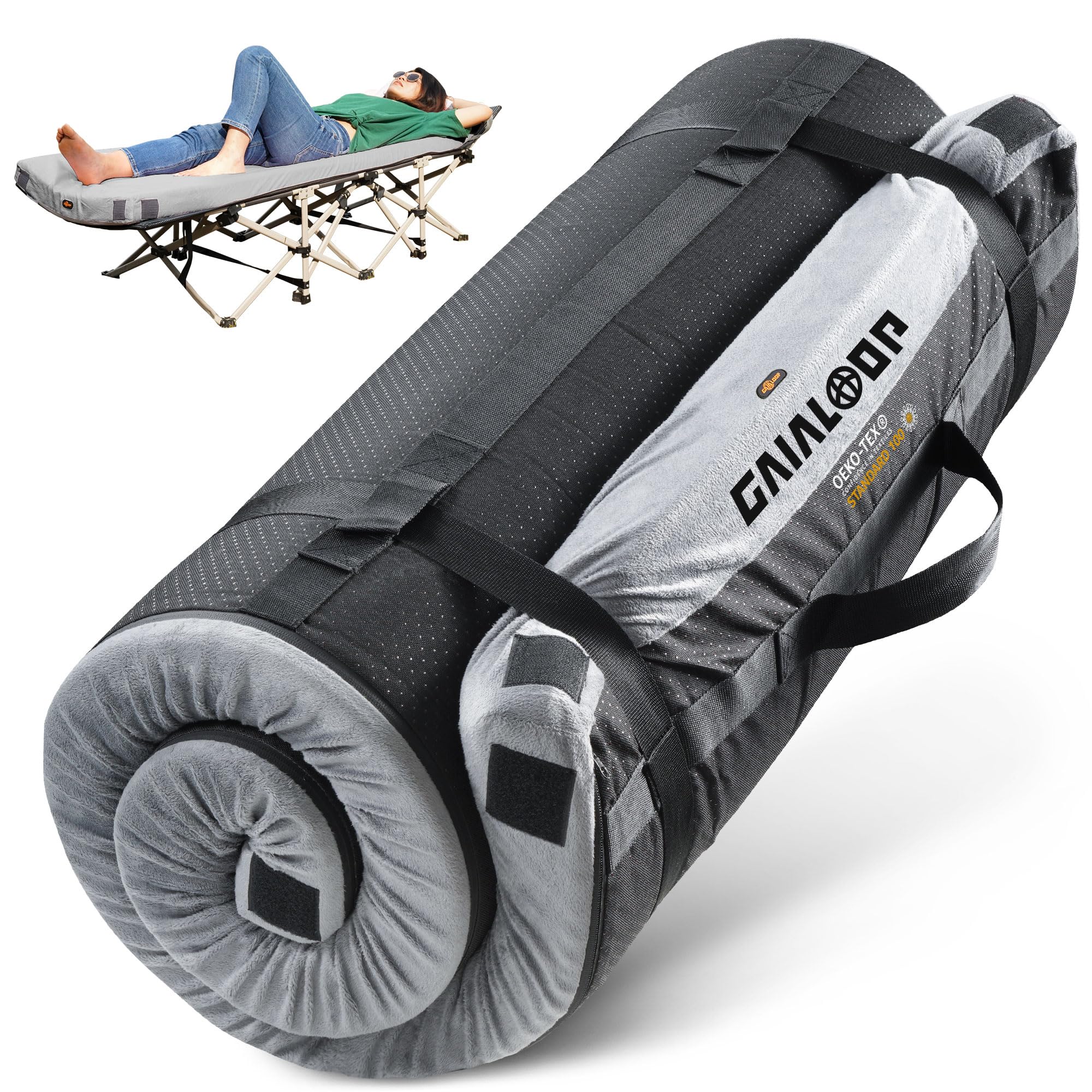
GAIALOOP offers this 30D polyurethane foam pad as a distinct firmer alternative to memory foam. The 30D density means the foam resists compression more aggressively, providing a stable sleeping surface that does not let your body sink in. This is particularly useful when camping on uneven ground, rocks, or tree roots because the firm foam spans across surface irregularities rather than conforming to them. The 4-inch thickness is all support foam — no memory foam topper — so the feel is closer to a firm guest bed mattress than a plush pillow top.
The cover is waterproof on the inner side and removable for washing, which keeps the foam dry even when placed directly on damp ground. The plush fabric outer layer is pleasant to touch and does not feel like a tarp. The included foam pillow is a small bonus, though its comfort level is basic. Users who purchased this specifically for truck bed camping and SUV setups report that the firm feel prevents the motion transfer that softer pads allow, so you do not roll into your partner’s dip during the night.
The single biggest drawback is rolling it back up. At 12 pounds for the cot size, the foam is dense and resists compression. The storage bag is spacious enough, but getting the pad rolled tight enough to fit requires significant upper body strength, and some users report needing two people for the full-size version. Consider this pad if firm support on rough ground is your priority and you have space to store it partially compressed in your vehicle between uses.
Why it’s great
- Firm 30D support foam bridges uneven ground without bottoming out
- Waterproof inner coating on removable cover protects foam from moisture
- Minimal motion transfer — ideal for two-person tent or truck bed setups
Good to know
- Extremely difficult to roll and pack — often requires two people
- Firm feel may be too hard for side sleepers accustomed to memory foam
6. GAIALOOP 4 Inch Memory Foam Camping Mattress (Avocado Green)
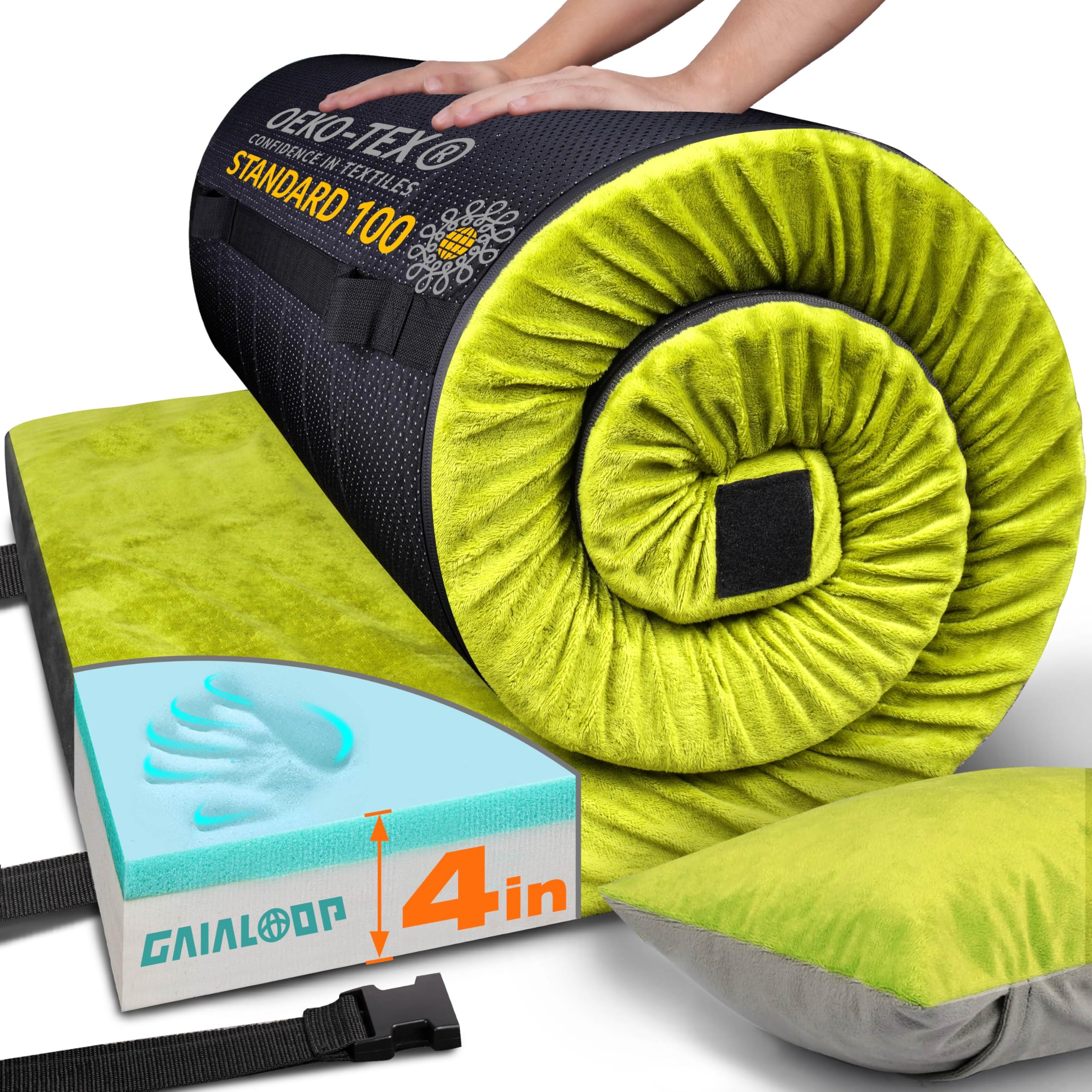
This is the softer, plush counterpart to the 30D GAIALOOP pad reviewed above. The construction layers a 40D memory foam top over a 30D support foam base, creating a 4-inch composite that delivers the best of both worlds: a cushioning layer that conforms to your curves and a firm foundation that prevents your hips or shoulders from punching through to the ground. The OEKO-TEX certification means the foam is free from harmful chemicals — a bonus when sleeping inside a closed tent or RV with limited ventilation.
The avocado green color is distinctive, and the velvet-like plush cover adds a touch of comfort that feels more like a real bed than a camping pad. The cover is removable, waterproof on the inside, and machine washable. The memory foam layer excels at pressure relief for side sleepers, with multiple reviews confirming that even stomach sleepers find the firm base keeps their spine aligned. This pad works equally well as a guest bed on a living room floor between camping trips, making it a dual-purpose purchase for indoor-outdoor use.
The same rolling difficulty present in the 30D version applies here — at 11 pounds, this is not a lightweight option. The straps included with the carrying bag broke for some users after several uses, so handling the foam with care during storage is advisable. Despite the bulk, the 4-inch thickness and dual-foam construction make this the most luxurious foam-only option for car campers who prioritize sleep quality over packability.
Why it’s great
- Layered 40D memory foam on 30D support foam provides plush cushioning with firm support
- OEKO-TEX certified materials ensure safe, non-toxic sleep surface
- Versatile for both camping and indoor guest bed use
Good to know
- Heavy at 11 pounds and struggles to roll tightly
- Storage bag straps prone to snapping after repeated use
7. Jamdok 4-Inch Cot Mattress Topper with Gel Memory Foam

The Jamdok cot mattress topper uses a three-layer construction: a quilted pillow top cover with 1000GSM fiber fill on both sides and a 3-inch gel-infused memory foam core in the middle. The 4-inch total height includes the plush top layers, so the memory foam itself is 3 inches thick. This distinction matters because the overall feel is noticeably softer than the solid 4-inch foam slabs from GAIALOOP and Foamma. Gel infusion helps with temperature regulation, preventing the foam from retaining as much body heat as traditional memory foam.
The cover unzips completely on three sides for easy removal, and it is machine washable — a practical feature for a cot pad that gets exposed to outdoor dust and moisture. At 75 x 38 inches, this is a twin-size pad that fits most camping cots perfectly. The straps for rolling are included, and the pad rolls into a manageable cylinder, though the plush top layer adds some spring-back resistance during compression. Multiple users with chronic back pain reported that this pad provided noticeable relief compared to standard cot mattresses.
The primary consideration is that the 4-inch measurement includes the fiber-filled top layers, so the supporting foam is thinner than advertised if you compare it to solid foam competitors. Some heavier sleepers found the pad too soft, especially those over 200 pounds who pushed through the cushioning layers. The medium-firm claim is optimistic — this is a plush pad. If you sleep on a cot and want a soft, cloud-like surface that still keeps you off the frame bars, this Jamdok topper delivers exceptional value.
Why it’s great
- Quilted pillow top with gel memory foam reduces heat retention
- Full three-side zipper cover is removable and machine washable
- Excellent pressure relief for sensitive hips, shoulders, and lower back
Good to know
- Total 4-inch height includes fiber fill — foam core is only 3 inches
- Too soft for stomach sleepers or users over 200 pounds
FAQ
Can a 4 inch foam mattress for camping prevent me from feeling rocks and roots underneath the tent?
How long does a compressed foam camping mattress take to fully expand after opening the package?
Will a 4 inch foam pad keep me warm in 30°F winter camping conditions?
Is it worth paying more for a self-inflating 4 inch pad versus a pure foam roll-up pad?
Final Thoughts: The Verdict
For most users, the best 4 inch foam mattress for camping is the AKUDY Self Inflating Sleeping Pad because it delivers a rare combination of 4-inch thickness, 9.5 R-value insulation, and a built-in electric pump that makes setup effortless — all at a weight that still fits the car camping sweet spot. If you need extra length for a tall frame, grab the Hikenture Comfort Plus Pad. And for a no-fuss, set-it-and-forget-it foam slab that works equally well in an RV bunk or a guest bedroom, nothing beats the Foamma Memory Foam Pad.