
Picking the wrong one means struggling with shallow trays that leak, cramped quarters that hamper hopping, or flimsy wire that bends after a month. You need a structure that balances floor space, easy sanitation, and material durability so your pet stays healthy and you avoid daily frustration.
I’m Min — the co-founder and writer behind Gadgets Feed. For this guide, I sorted through countless hours of customer breakdowns, assembly complaints, and tray-depth measurements to find the models that actually hold up in real living rooms and backyards.
Whether you need a rolling two-story wooden hutch or a heavy-duty metal fortress, this breakdown of the best cage for a bunny considers interior volume, cleaning access, and long-term build quality so you get the most for your effort.
How To Choose The Best Cage For A Bunny
Picking the right rabbit cage comes down to three non-negotiable factors: floor space, cleaning ease, and material safety. Bunnies need room to stretch, stand on hind legs, and do three full hops in one direction. A shallow plastic pan might look fine on Day 1, but after a week of hay and droppings, you will wish for a deeper tray with leak-proof edges. Wood offers insulation and looks like furniture, but it absorbs urine and can be chewed. Metal is easier to sanitize but needs proper wire spacing—half an inch for babies, 1 inch for adults—to prevent injury. Assembly difficulty also varies wildly, from tool-free snap-together panels to hour-long projects requiring a drill and rubber mallet.
Floor Space & Interior Height
Rabbits are active, curious animals that need a minimum of 4 to 6 times their stretched-body length in floor area. A cage measuring 30 inches by 36 inches is often cited as baseline for a single small breed. Height matters too—your bunny should be able to stand fully upright on its hind legs without touching the roof. Multi-story designs add vertical enrichment, but only if the ramp angle is gentle and the flooring is solid to prevent foot sores. Some models include a hideout or enclosed second level, which helps shy bunnies feel secure.
Tray Depth & Cleaning Mechanism
The single biggest difference between a good cage and a frustrating one is the pull-out tray. Shallow trays under 1.5 inches allow bedding and debris to spill over the edges every time you slide them out. Deeper trays—2 to 3 inches—contain mess and reduce the frequency of full cage scrubs. Removable plastic trays are easier to hose down than fixed wire grates. Look for trays with raised rims and a smooth non-porous surface; textured plastic traps waste and smells. Wooden frames with open bottoms may look cute, but they make daily spot-cleaning harder than a cage with a dedicated pull-out pan.
Material, Wire Gauge & Chew Resistance
Rabbits are natural chewers, so the material you choose directly determines how long the cage lasts. Solid fir wood with a non-toxic waterproof coating is common for indoor hutches, but any exposed edge will eventually be gnawed. Prefer designs where the main structure is coated wire or heavy-gauge metal for the frame, with wood only used for external aesthetics. Wire spacing is critical: anything larger than 1 inch wide allows a bunny’s head or leg to get stuck, while spacing under 0.5 inches may trap droppings and make cleaning harder. Galvanized metal resists rust and odor better than painted wire, which chips over time.
Quick Comparison
On smaller screens, swipe sideways to see the full table.
| Model | Category | Best For | Key Spec | Amazon |
|---|---|---|---|---|
| Critter Nation Double Unit | Metal | Max space & durability | 36 x 24 x 63 in; 0.5″ wire spacing | Amazon |
| GDLF Two Floors 58″ | Wooden | Long floor space for running | 57.7 x 17.8 x 34.6 in; 11 mm gap | Amazon |
| Aivituvin AIR10 | Wooden | Indoor aesthetic with two trays | 40.6 x 26 x 37.6 in; 2 cm gap | Amazon |
| PetsCosset PET32 | Wooden | Outdoor UV-resistance | 40.2 x 23.2 x 36.6 in; 7.11 ft² | Amazon |
| Gowoodhut RAB16 | Wooden | Quick 20-min assembly | 36 x 21 x 21.7 in; 1″ deep tray | Amazon |
| PawHut 35″ Rolling | Wire | Small spaces & portability | 35 x 17.25 x 17 in; bite-proof wire | Amazon |
| Trixie Rabbit Run | Galvanized | Outdoor exercise pen | 56.7 x 45.7 x 22.8 in; 34 cu. ft. | Amazon |
In‑Depth Reviews
1. Critter Nation by MidWest Homes for Pets Double Unit

The Critter Nation Double Unit towers at 63 inches tall with two full levels, giving a bunny roughly 9 square feet of floor space across two 36 x 24-inch pans. The half-inch horizontal wire spacing is safe for kits and adult rabbits alike, and the full-width double doors swing open entirely so you can reach every corner without contorting your arm. The textured ramps with washable covers and two wide resting shelves create a vertical playground that encourages natural climbing behavior.
Assembly is tool-free—panels snap together and casters lock into the stand. The bottom level includes a storage shelf for hay or accessories. Many owners report setting it up solo in under an hour using only a rubber mallet for the final tap. The metal construction resists chewing better than any wood hutch, and the gray hammertone finish hides scratches and holds up to aggressive disinfecting.
The main trade-off is the open-wire floors. Rabbits with delicate feet need solid resting mats or fleece liners on the platforms, especially for long stays. The plastic base pans are not the deepest—about 2 inches—so bedding can escape during heavy digging sessions. Still, for overall space, accessibility, and long-term durability, this is the gold standard for indoor bunny housing.
Why it’s great
- Massive 63-inch height with two living levels
- Full-width double doors for effortless cleaning
- Tool-free snap assembly in under one hour
Good to know
- Open wire floor requires solid mats for foot comfort
- Base pans are relatively shallow for deep bedding
2. GDLF Two Floors 58″ Wooden Indoor Bunny Hutch

At 58 inches long, this GDLF hutch prioritizes horizontal running room over vertical stacking. The single-level split design includes a raised main floor and a lower area accessed by a ramp with anti-slip timber ridges. The spruce wood frame is coated with eco-friendly non-toxic waterproof varnish, so there is no strong chemical smell out of the box. Five doors provide multiple access points, and the top panels open for top-down care.
The removable bottom sliding tray is leak-proof and deep enough to hold a generous layer of pine shavings. Owners report assembly taking 30 to 45 minutes with pre-drilled holes and numbered bags. The six lockable casters—four on the base, two on the legs—make it easy to roll across a room or into sunlight. The 11-millimeter wire gap is tight enough for dwarf rabbits and guinea pigs but allows good airflow.
The wood is softer than premium hardwoods, so a determined chewer may gnaw corners over time. The top latches are minimal—some owners reinforce them with small carabiners. The narrow 18-inch width means it fits in tighter spots like a hallway corner, but a large breed rabbit may find the floor area restrictive lengthwise despite the 58-inch span.
Why it’s great
- Long 58-inch footprint for running and play
- Leak-proof pull-out tray with raised edges
- Six lockable wheels for easy repositioning
Good to know
- Soft spruce wood vulnerable to chewing
- Door latches feel minimal; may need reinforcing
3. Aivituvin Rabbit Hutch Large Wooden Bunny House AIR10

The Aivituvin AIR10 brings furniture-grade aesthetics with its grey-wash finish and two-story layout. A removable wire net sits above the bottom tray to keep bunnies from standing directly in waste. Two deep pull-out trays slide from the front, and the base of each tray is sealed to prevent leaks. The sliding door on the ramp separates the upper and lower levels, letting you restrict access during cleaning.
Assembly takes roughly two hours solo, and the instructions are labeled but require careful attention. The wood is solid fir, and the roof hing opens for overhead access. Four lockable casters make it mobile. Several owners with two small bunnies report the house comfortably accommodates a bonded pair, though one bunny is the sweet spot for truly spacious living. A built-in hay feeder and extra feeding doors add daily convenience.
The wood is untreated fir, which means chewing damage is almost guaranteed over time. Some units arrived with small assembly inconsistencies—missing pre-drilled holes or slightly warped panels. The trays are deep but the textured plastic surface can trap debris during a quick wipe-down. As an indoor-only hutch, it looks sharp but demands regular inspection for chew marks.
Why it’s great
- Furniture-grade grey finish blends with home decor
- Two deep pull-out trays prevent leaks
- Sliding ramp door lets you separate levels
Good to know
- Untreated fir is prone to chewing damage
- Assembly can take two hours and sometimes needs modifications
4. PetsCosset Rabbit Hutch Indoor 40″ L Two-Story PET32

This PetsCosset model stands out for its dual-environment capability—the UV-resistant panels and waterproof asphalt roof make it one of the few wooden hutches suitable for both indoor and outdoor placement. The 40 x 23-inch footprint provides a solid 7.11 square feet of floor area, and the two-story design includes a ramp, hideout, and a built-in hay feeder. Clear acrylic windows on the side panels offer visibility without drafts.
The deeper-than-average plastic tray at the base is leak-proof and slides out from the front. Owners note that the pre-drilled holes and clearly labeled manual take the frustration out of assembly, though a second person helps align the roof. The four lockable metal wheels roll smoothly over concrete patios and indoor flooring. The openable roof gives top-down access for deep cleaning sessions.
Some units arrived missing the wooden prop board that holds the roof open, forcing the owner to prop it manually. The included latch hardware works, but several owners upgraded to stronger locks for security. The fir wood is coated but still susceptible to chewing if the bunny is a persistent gnawer. For the price, you get outdoor weather resistance that few competitors at this tier can match.
Why it’s great
- UV-resistant panels and waterproof roof suit outdoor use
- Deep leak-proof tray with smooth slide mechanism
- Acrylic side windows provide visibility without drafts
Good to know
- Roof prop not always included; may need DIY solution
- Latch quality is basic; upgrading recommended for outdoor
5. Gowoodhut Indoor Rabbit Hutch RAB16
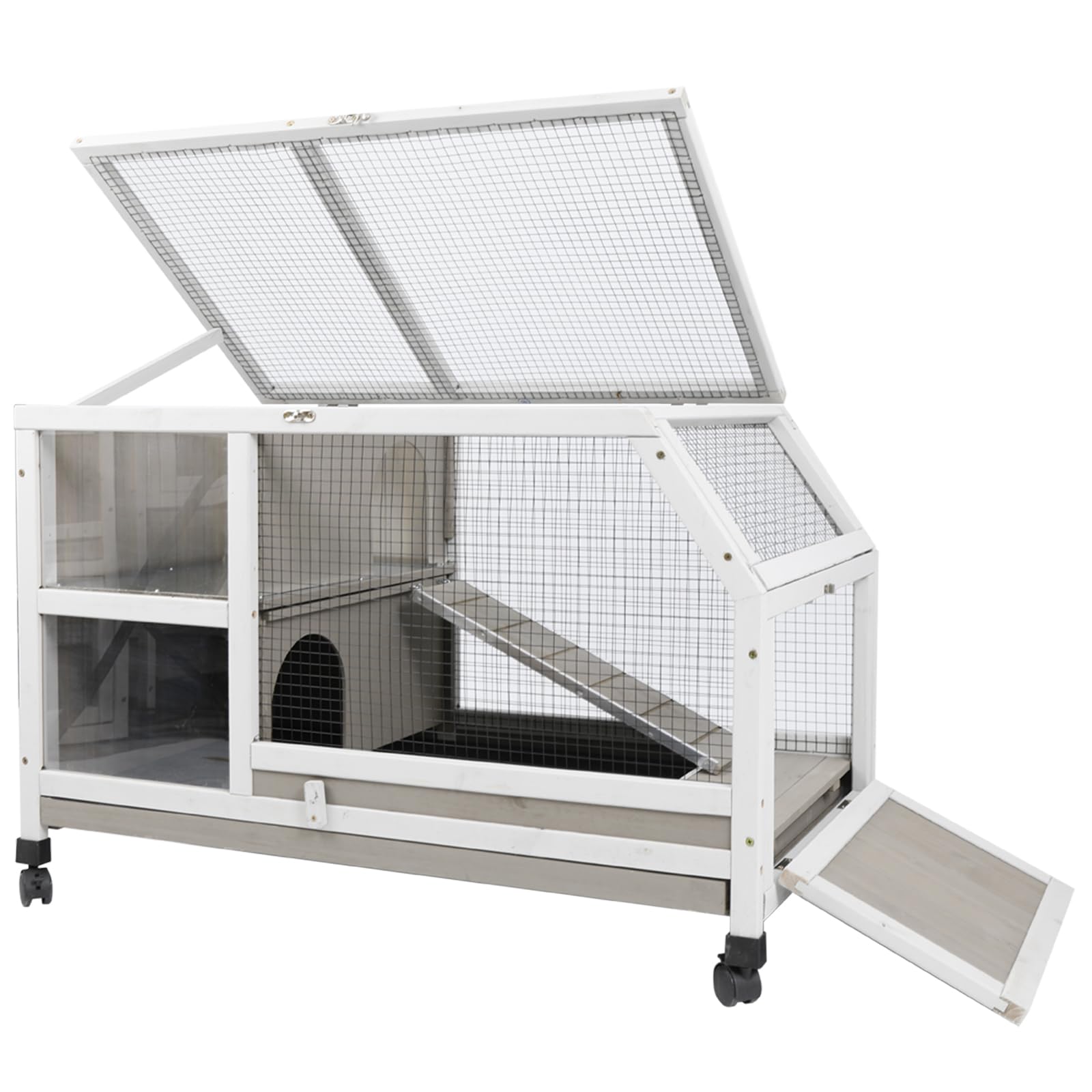
The Gowoodhut RAB16 is designed for speed—the manufacturer claims 20-minute assembly, and most owners confirm it takes under 40 minutes thanks to pre-drilled holes and labeled panels. The two-story design includes a ramp, a lower hideout area, and an upper resting level with a removable aluminum panel that converts the second floor into a solid wooden surface. The included brush kit attaches to the tray for quick sweep-ups.
The plastic pull-out tray is 1 inch deep, which is serviceable but shallower than the deeper trays of the Aivituvin or GDLF models. Lockable casters on all four corners make it easy to roll from room to room. The side door doubles as a ramp with a sturdy metal lock. Owners with free-roam bunnies use this as a home base for litter box and hay, letting the bunny roam during the day and sleep enclosed at night.
Durability complaints center on the soft wood and chicken wire. Some owners reported the mesh breaking after a few months, especially around the plastic coating. The shallow tray spills bedding when pulled out quickly. The 21-inch height is lower than many competitors, so large breed rabbits cannot stand fully upright on the top level. Best for a single dwarf or medium bunny with daily exercise time outside the cage.
Why it’s great
- Fastest assembly—often under 40 minutes solo
- Includes cleaning brush and removable hideout panel
- Lockable wheels and side ramp door for easy entry
Good to know
- Chicken wire mesh may break over time
- Only 21-inch height limits upright movement for large bunnies
6. PawHut 35″ L Small Animal Cage
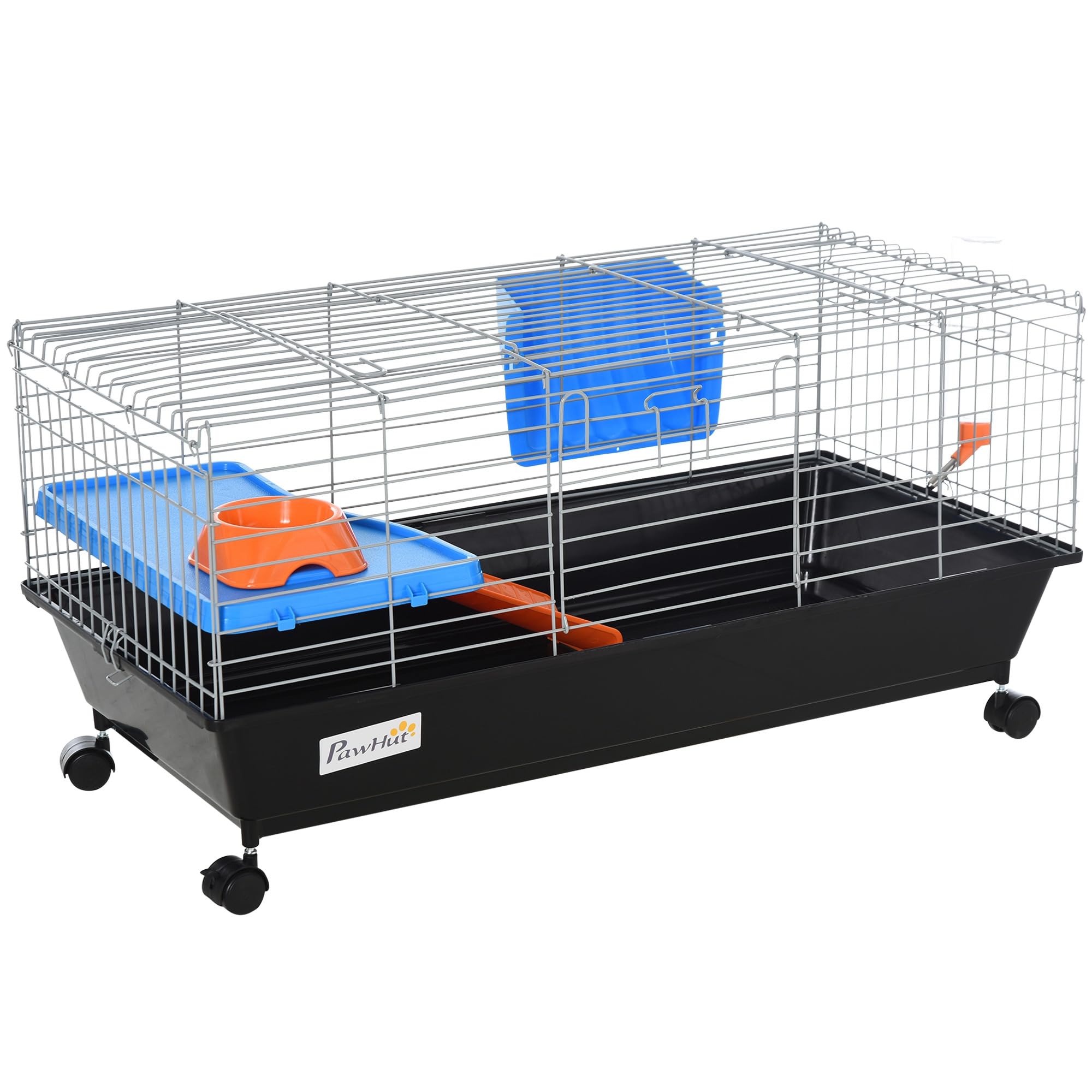
The PawHut 35-inch cage takes a minimalist approach—single level, 17-inch height, and four rolling casters. It includes a full kit of accessories: a hay feeder, water bottle, food dish, platform, and ramp. The bite-proof wire mesh keeps the bunny safe from external pets and prevents bending. The openable top and front door both provide access, and the plastic tray base lifts out for cleaning.
Owners consistently praise the ease of assembly and the convenience of the wheels. At 8.8 pounds, this is one of the lightest cages on the list. The compact footprint (35 x 17 inches) fits on a desktop, counter, or nightstand, making it a strong choice for a dwarf rabbit or guinea pig in a small apartment. The included accessories are functional and match the wire color scheme.
The size is restrictive for any bunny larger than a Netherland Dwarf. The 17-inch height prevents standing on hind legs, and the single level offers no vertical enrichment. The wire spacing is wide enough for a baby bunny to potentially squeeze through, so it works best for older, fully grown small pets. The textured plastic tray is harder to wipe clean than a smooth surface. It works as a temporary cage, a travel carrier, or a hospital pen for recovery.
Why it’s great
- Lightweight 8.8 lbs with four rolling wheels
- Includes food dish, hay feeder, water bottle, and ramp
- Openable top and front door for easy access
Good to know
- Too small for full-time housing of medium or large breeds
- Wire gaps may be too wide for unweaned or tiny kits
7. Trixie Rabbit Cage Outdoor Pen

This Trixie pen is more of an enclosed run than a traditional cage—56.7 inches long, 45.7 inches wide, and 23 inches tall, offering 34 cubic feet of open ground space. The galvanized metal frame is weather-resistant and designed to connect with Trixie small animal hutches for a full habitat system. Four doors—one large front door, two trap doors, and a side door—give multiple ways for your bunny to enter and for you to reach in.
The pen folds out flat for storage and assembles without tools. Many owners use it as a secure outdoor grazing pen during daylight hours, moving it across the lawn to give the rabbit fresh grass. The metal bars are sturdy enough to keep out raccoons and dogs when reinforced with zip ties and chicken wire on the top. The large surface area is ideal for exercise and digging enrichment when paired with a solid bottom or placed over grass.
The pen lacks a solid floor—it sits directly on the ground, which means your bunny can dig out underneath. Owners in fixed outdoor setups recommend placing pavers or a heavy wire mesh base under the frame. The top opening is a wide flap that some bunnies will jump if not secured with additional clips. Assembly instructions are notoriously vague, requiring patience and some creative problem-solving. For a safe outdoor exercise zone, it works brilliantly, but it is not a stand-alone housing solution for unsupervised 24/7 use.
Why it’s great
- Massive 34 cubic feet of open exercise space
- Galvanized metal resists outdoor weather
- Folds flat for transport and storage
Good to know
- No solid floor—rabbits can dig out easily
- Assembly instructions are vague and require patience
FAQ
What is the minimum cage size for one adult rabbit?
Is a wooden hutch better than a metal cage for indoor rabbits?
How often should I clean a bunny cage to prevent odor?
Final Thoughts: The Verdict
For most users, the best cage for a bunny winner is the Critter Nation Double Unit because it combines massive vertical space, tool-free assembly, and full-width doors for easy daily cleaning. If you want long horizontal running space in a wooden frame, grab the GDLF 58-Inch Hutch. And for an outdoor exercise run that gives your bunny fresh grass time, nothing beats the Trixie Outdoor Pen.