
Finding frass—that fine, sawdust-like debris—near a wooden beam or window sill is the first signal that carpenter ants have established a satellite colony inside your home’s structure. Unlike common pavement ants that simply forage for crumbs, carpenter ants excavate galleries in moist or damaged wood, weakening load-bearing elements over time. A surface spray that kills a few scouts does nothing to the queen and her brood deep within the wall void.
I’m Min — the co-founder and writer behind Gadgets Feed. For this guide, I’ve cross-referenced active-ingredient chemistry (abamectin, indoxacarb, cyfluthrin, fipronil), application form factors, and hundreds of verified buyer reports to separate the products that actually eliminate colonies from those that merely provide a temporary body count.
This analysis focuses on treatments designed to reach hidden nests and exploit ant social behavior, delivering a decisive verdict on the best carpenter ant spray for structural defense and colony elimination.
How To Choose The Best Carpenter Ant Spray
Carpenter ants present a unique challenge because the colony typically lives outside in a stump or tree while workers travel up to 300 feet along scent trails into your home for food. A spray that kills only the workers you see will never stop the influx. The right strategy depends on whether you are treating an active satellite nest inside a wall, creating a perimeter barrier, or baiting a distant parent colony.
Match the Form to the Infestation Site
Aerosol sprays with a snorkel tube are excellent for injecting directly into visible galleries and cracks. Foam formulations expand up to 30 times their liquid volume, filling complex tunnel networks that a liquid stream cannot reach. Dust insecticides like 1% cyfluthrin remain dry and active for months in wall voids, making them ideal for long-term preventative blocking. Granules and gel baits rely on the ants carrying the active ingredient back to the colony, which is the only method that kills the queen.
Prioritize Non-Repellent Active Ingredients
Repellent sprays (often pyrethroid-based) scatter foraging ants on contact, but the survivors simply avoid the treated zone and find another entry point. Non-repellent actives—abamectin, indoxacarb, fipronil—are odorless and tasteless to ants. Workers walk through treated bait or dust without alarm and transfer lethal doses to nestmates during trophallaxis. This delayed kill is essential for colony elimination rather than cosmetic knockdown.
Verify Residual Longevity
A product that degrades in sunlight within 48 hours is useless for outdoor perimeter treatment. Look for formulations that advertise 2–4 weeks of residual activity on non-porous surfaces. For indoor wall void applications, a dry dust can remain effective for years if it stays dry, while gel baits may dry out and lose palatability after 2–3 weeks, requiring re-application until foraging stops.
Quick Comparison
On smaller screens, swipe sideways to see the full table.
| Model | Category | Best For | Key Spec | Amazon |
|---|---|---|---|---|
| Advion Ant Gel Bait | Gel Bait | Colony elimination via trophallaxis | 0.05% Indoxacarb — non-repellent gel | Amazon |
| Control Solutions Fuse Foam | Expanding Foam | Filling deep wall voids and tunnel networks | 0.005% Fipronil + 0.02% Imidacloprid foam | Amazon |
| Atticus Tirade 1% Dust | Dust Insecticide | Long-term residual in inaccessible cavities | 1% Cyfluthrin — low-odor, non-staining dust | Amazon |
| BASF Advance Granules | Granular Bait | Outdoor parent colony targeting | 0.011% Abamectin — delayed-action bait | Amazon |
| REVENGE Termite & Carpenter Ant Killer | Aerosol Spray | Immediate contact kill with residual | 15 oz aerosol with snorkel tube | Amazon |
| TERRO Carpenter Ant Aerosol | Aerosol Spray | Precision crack-and-crevice application | 16 oz with 2-way precision nozzle | Amazon |
| Terro T901-2 Granules | Granular Broadcast | Broad outdoor perimeter barrier treatment | 3 lb bags — fast-acting 24-hour kill | Amazon |
In‑Depth Reviews
1. Advion Ant Gel Bait
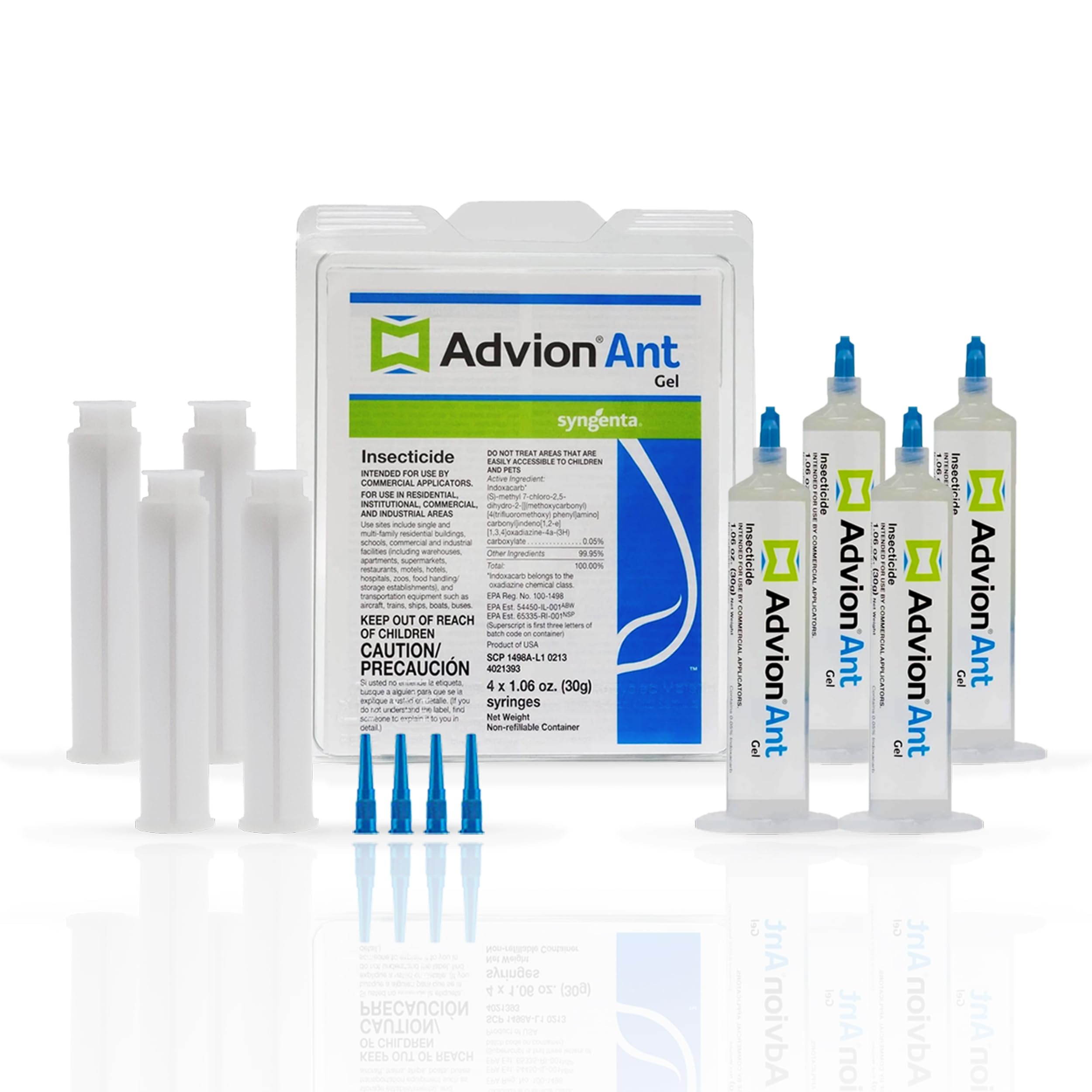
Advion from Syngenta represents the gold standard in ant baiting technology. The active ingredient indoxacarb at 0.05% is a non-repellent oxadiazine that the ants cannot detect, so they feed freely and carry the gel back to the nest. The MetaActive effect ensures that indoxacarb is bioactivated only after ingestion by the target insect, providing exceptional mammalian safety margins when used according to the label.
Professional exterminators consistently rank this formulation above consumer-grade baits like Terro because indoxacarb is significantly more potent per milligram. A single pea-sized dot placed every 8 inches along a trail will attract dozens of workers initially, but the real effect is the secondary kill: ants that feed on the gel return to the colony and share it through trophallaxis, ultimately wiping out the queen and brood within 48 to 72 hours.
The four-syringe kit includes plungers and tips for precise placement into cracks, beneath appliances, and inside wall voids. The gel remains palatable for weeks if kept dry, but avoid applying in direct sunlight or areas that reach above 100°F, as the gel can liquefy and run. For sugar-loving carpenter ant infestations that have resisted aerosol sprays, this is the most reliable colony-killing tool available at retail.
Why it’s great
- Non-repellent formula ensures ants feed without alarm and carry bait to the queen.
- Exceptional potency — a single tube can eliminate a colony that sprays cannot touch.
- Odorless and safe around food preparation areas when placed in bait stations.
Good to know
- Gel can dry out or melt in extreme temperatures, requiring careful placement.
- Best results require re-checking after 5-7 days to see if bait is being consumed.
2. Control Solutions Fuse Foam

When carpenter ants have established galleries deep inside a wall, a liquid spray simply runs down the vertical surface and pools at the bottom. Fuse Foam solves this by expanding roughly 30 times its liquid volume upon contact with air, filling every crevice, knot hole, and tunnel junction within the void. The dual-active combination of 0.005% fipronil and 0.02% imidacloprid provides both a rapid knockdown and a residual kill that persists for weeks.
Users treating carpenter bee tunnels reported that expanded foam pushed adult bees and larvae out of the entrance within 48 hours. The foam’s consistency is critical: use sparingly because it expands aggressively. Over-application can cause foam to seep through gaps in drywall or siding. The canister includes a flexible applicator tube designed for insertion into 3/8-inch drill holes, making it ideal for treating suspected nest sites without opening the wall.
This product is restricted in Alaska, California, Connecticut, and Puerto Rico due to the fipronil content. For homeowners in states where it is available, Fuse Foam is the most effective solution for physically filling the infrastructure that carpenter ants have created, reducing the chance of re-infestation through the same tunnels.
Why it’s great
- Expanding foam fills complex tunnel networks that liquid sprays cannot reach.
- Dual active ingredients provide both contact kill and long residual activity.
- Professional-grade formulation trusted by pest control operators.
Good to know
- Not available for sale in AK, CA, CT, or PR due to fipronil restrictions.
- Over-application can cause expansion damage or unsightly seepage from gaps.
3. Atticus Tirade 1% Cyfluthrin Dust
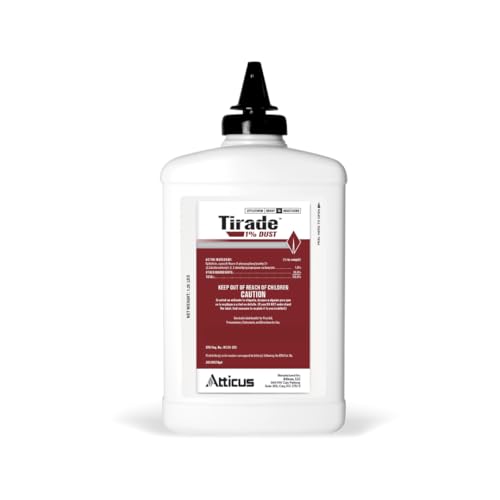
Dust insecticides occupy a unique niche in carpenter ant control because they remain active indefinitely in dry environments. Atticus Tirade uses 1% cyfluthrin, a potent pyrethroid that provides exceptional knockdown on contact plus a residual that can last for months inside wall voids, attics, and crawl spaces. Unlike spray liquids that soak into wood and lose efficacy, the dry dust particles cling to the ant’s exoskeleton and are groomed off by nestmates, creating a secondary transfer effect.
Buyers who had tried sprays and traps without success saw complete elimination of yellow jacket nests inside dead trees and carpenter bee populations within 72 hours. The dust is low-odor and non-staining, so it can be puffed into electrical boxes, behind baseboards, and into soffit vents without visible residue. A hand-held duster (sold separately) is strongly recommended for optimal application, as shaking the bottle produces an uneven cloud that may miss target areas.
One limitation: dust is ineffective if it gets wet. Do not apply in areas exposed to rain or condensation. For dry interior cavities, however, this is the most durable tool available—a single application can provide structural protection through an entire active season.
Why it’s great
- Residual stays active for months in dry wall voids and attics.
- Low-odor and non-staining — safe for use near living spaces.
- Effective against 50+ insect species including carpenter ants, bees, and wasps.
Good to know
- Requires a bellows duster for precise application; shaking the bottle is unreliable.
- Loses efficacy if exposed to moisture or condensation.
4. BASF Advance Carpenter Ant Bait Granules

When carpenter ants are marching from a stump, log pile, or tree base into your home, the most effective intervention is to intercept them at the source. BASF Advance Granules contain 0.011% abamectin, a naturally derived fermentation product that acts as a potent neurotoxin with a delayed onset. Workers pick up the larger grit particles and carry them back to the colony, sharing the lethal dose during feeding before symptoms appear.
Real-world results from homeowners confirm that ants immediately grabbed and carried the granules within an hour of application. Activity at the bait site decreased noticeably within 24 hours, and visible foraging ceased entirely after 3-4 days. The delayed action is the key design feature: if the ants died at the bait location, no transfer to the queen would occur. The granules have a faint fishy odor that attracts dogs, so placement inside bait stations or under decks is recommended to prevent pet interference.
The 8-ounce bottle treats a moderate perimeter around the foundation. For large properties with multiple parent colonies, a more economical bulk option would be preferable. Advance Granules are best used as part of a multi-pronged strategy alongside interior gel baiting to hit the colony from both directions.
Why it’s great
- Delayed-action abamectin ensures bait is shared with the entire colony before symptoms appear.
- Large grit particles are easily carried by carpenter ants back to the nest.
- Effective for treating outdoor parent colonies that aerosol sprays cannot reach.
Good to know
- Fishy odor may attract pets — use bait stations or place granules out of reach.
- May require combination with interior gel bait for severe multi-colony infestations.
5. REVENGE Termite & Carpenter Ant Killer

REVENGE from Bonide delivers immediate gratification for visible infestations. The 15-ounce aerosol with snorkel tube allows you to direct a high-pressure stream deep into a crack, drill hole, or gallery opening. The dual-action formula kills on contact and leaves a residual barrier that continues killing returning ants for 2-4 weeks after application. For homeowners who need to see dead ants immediately to confirm the product is working, this spray delivers that satisfaction.
Buyers report using it on ant mounds outside with visible results within 48 hours — the mound collapsed in on itself. The snorkel tube is the standout feature, enabling treatment of nests inside wall voids and behind siding that would be inaccessible with a standard spray nozzle. Unlike baits that require patience, this is a brute-force option for when you have located a satellite nest and need it neutralized now.
The trade-off is the repellent nature of the pyrethroid active. Ants that survive the initial blast will avoid the treated area, potentially pushing the colony deeper into the structure. This makes REVENGE an excellent spot-treatment tool but a poor stand-alone solution for eliminating a colony. Use it to knock down visible activity, then follow up with a non-repellent bait to finish the job.
Why it’s great
- Snorkel tube delivers insecticide directly into nest galleries and wall voids.
- Instant contact kill with 2-4 weeks of residual protection.
- Effective against carpenter ants, termites, and carpenter bees.
Good to know
- Repellent nature may scatter survivors deeper into the structure.
- Not a colony-elimination solution — best paired with baiting strategy.
6. TERRO Carpenter Ant & Termite Killer Aerosol

TERRO’s offering is built around application versatility. The 2-way precision nozzle lets you toggle between a wide fan spray for perimeter treatments and a narrow stream for injecting into cracks and crevices. With 16 ounces of product, it provides slightly more coverage than the REVENGE option, and the residual control is rated at up to 4 weeks — matching the top claim in this category.
Long-time users of this product noted that an older formulation (since changed) provided instant knockdown with extreme longevity — a single can lasted over a decade. The flexible straw attachment is particularly useful for spraying into weep holes and around pipes entering the home.
The aerosol contains a repellent active, so the same limitation applies: it will kill exposed ants and deter new ones but will not eliminate a hidden colony in the wall. TERRO has a strong brand reputation for consumer bait products, but this spray is best viewed as a first-line defense to suppress activity while a gel or granular bait system targets the nest.
Why it’s great
- 2-way nozzle design accommodates both wide-area spraying and crack injection.
- Up to 4 weeks of residual activity on treated surfaces.
- Works well paired with TERRO liquid baits for comprehensive control.
Good to know
- Formula change reduced longevity compared to older versions.
- Repellent chemistry may not kill the queen or eliminate the colony.
7. Terro T901-2 Ant Killer Plus Granules

Terro T901-2 offers a straightforward broadcast approach for homeowners who need to treat a large lawn area or perimeter quickly. The shaker bag design eliminates the need for a separate spreader — just open the resealable top and shake granules along the foundation line, around flower beds, or directly onto ant mounds. The label claims a fast-acting kill within 24 hours for a broad range of insects including fire ants, fleas, cockroaches, and carpenter ants.
User reports are mixed. Some buyers in Maryland and Delaware saw complete elimination of ants after a single application that lasted the entire season. Others experienced a significant decline in effectiveness from one year to the next, suggesting that the granules may lose potency if the bag is stored improperly or exposed to moisture. The granules must be watered in after application to activate the active ingredient, which then moves into the soil where foraging ants pick it up.
The two-pack provides 6 pounds total, making this the highest-volume product in the lineup for the price. However, the active ingredient is a repellent, so it functions as a barrier treatment rather than a colony-eliminating bait. For homeowners who need to prevent ants from crossing a perimeter line, this is a cost-effective option, but it will not solve an active interior infestation.
Why it’s great
- Convenient shaker bag — no spreader or measuring required.
- 6 pounds total provides extensive coverage for large yards and perimeters.
- Controls multiple insect species beyond just ants.
Good to know
- Repellent barrier — does not eliminate the source colony.
- Effectiveness may vary between batches or after prolonged storage.
FAQ
Why do carpenter ants keep coming back after I spray them?
Can I use carpenter ant spray inside my walls?
What is the difference between carpenter ant bait and spray?
Final Thoughts: The Verdict
For most users, the best carpenter ant spray winner is the Advion Ant Gel Bait because its non-repellent indoxacarb formulation targets the colony’s queen through food-sharing behavior that sprays cannot replicate. If you need to fill complex tunnel networks inside a wall, the Control Solutions Fuse Foam is the most effective expanding foam available. And for long-term residual protection inside dry cavities, nothing beats the Atticus Tirade 1% Cyfluthrin Dust.