
For decades, true 3D depth on a monitor meant bulky shutter glasses, reduced brightness, and a headache within twenty minutes. That era is ending. The latest 3D screen monitors—from glasses-free lightfield displays to high-refresh AR glasses that project a 171-inch spatial screen—are rewriting what’s possible for gaming, CAD work, and movie immersion. Choosing one now means navigating a minefield of competing optical technologies: lenticular lenses, micro-OLED stacks, and spatial computing chips.
I’m Min — the co-founder and writer behind Gadgets Feed. I’ve spent countless hours analyzing the technical specifications, real-world latency benchmarks, and ergonomic trade-offs across the entire 3D monitor space to separate genuine breakthroughs from marketing noise.
After weeks of research, this guide delivers the definitive verdict on the best 3d screen monitor for every type of buyer—from casual streamers to competitive gamers and spatial computing enthusiasts.
How To Choose The Best 3D Screen Monitor
Picking the right 3D monitor is less about screen size and more about how the depth is actually delivered. Your choice ultimately comes down to the display technology and the spatial tracking system.
Display Technology: Glasses-Free, Shutter, or AR?
The biggest fork in the road is whether you need glasses-free 3D (lenticular lens or lightfield) or you are willing to wear a lightweight headset. Glasses-free monitors like the Samsung Odyssey 3D allow depth without wearing anything, but the sweet spot is narrow and resolution can feel lower. AR glasses—like the XREAL One Pro—deliver a massive 171-inch virtual screen with true spatial depth, but require wearing the frames. For maximum immersion with zero compromise on resolution, the micro-OLED panels in the premium AR headsets are currently unmatched.
Spatial Tracking: 3DoF vs 6DoF
Degrees of Freedom (DoF) define how the virtual screen moves with your head. 3DoF tracks rotation (pitch, yaw, roll) — enough to anchor a screen in space while you turn your head. 6DoF adds positional tracking (forward/back, up/down, left/right), allowing you to physically walk around a virtual object. For a 3D screen monitor used for movies or casual gaming, 3DoF is perfectly sufficient. For spatial computing, professional modeling, or any use where you want to lean in and inspect a 3D object, 6DoF is the real deal—but it requires additional cameras and a more powerful processing chip.
Motion-to-Photon Latency and Refresh Rate
In 3D space, every millisecond of lag between your head movement and the screen update is magnified. A motion-to-photon (M2P) latency above 15ms can induce motion sickness. The X1 chip in XREAL’s latest glasses achieves a claimed 3ms M2P at 120Hz, which is an order of magnitude better than generic displays. For glasses-free monitors, a 165Hz or 240Hz panel (like the LG UltraGear or MSI MPG) keeps motion blur minimal, but M2P is less critical because the screen doesn’t move with your head—your position relative to the screen is what creates the 3D effect.
Quick Comparison
On smaller screens, swipe sideways to see the full table.
| Model | Category | Best For | Key Spec | Amazon |
|---|---|---|---|---|
| XREAL One Pro | AR Glasses | Immersive 3D depth & spatial cinema | 57° FOV, 171″ virtual, 3ms M2P | Amazon |
| XREAL 1S | AR Glasses | Native 3DoF & REAL 3D on any device | 52° FOV, 500″ virtual, 120Hz | Amazon |
| VITURE Luma Ultra | AR Glasses | Brightest 6DoF spatial computing | 1500 nits, 152″ virtual, 120Hz | Amazon |
| Samsung Odyssey 3D G90XF | Glasses-Free | Glasses-free 3D gaming & AI conversion | 27″ 4K, 165Hz, 1ms GtG | Amazon |
| VITURE Luma Pro | AR Glasses | Crisp 1200p clarity & built-in myopia dial | 1200p, 152″ virtual, 52° FOV | Amazon |
| MSI MPG 322URX | Desktop OLED | Ultra-smooth 4K 240Hz gaming | 32″ 4K QD-OLED, 240Hz, DP 2.1a | Amazon |
| ASUS ROG Strix XG32UCWG | Desktop OLED | Burn-in protection & dual-mode gaming | 32″ 4K Glossy WOLED, 165/330Hz | Amazon |
| LG UltraGear 32GX850A-B | Desktop OLED | Competitive dual-mode & eye comfort | 32″ 4K Glossy OLED, 165/330Hz | Amazon |
| Samsung Odyssey OLED G9 | Desktop OLED | Immersive ultrawide multitasking | 49″ Dual QHD QD-OLED, 144Hz | Amazon |
| Alienware AW3425DWM | Desktop LED | Budget-friendly ultrawide immersion | 34″ WQHD, 180Hz, 1500R curve | Amazon |
| RayNeo Air 4 Pro | AR Glasses | Best entry-level HDR10 AR cinema | 120Hz, 201″ virtual, 46° FOV | Amazon |
In‑Depth Reviews
1. XREAL One Pro AR Glasses

The XREAL One Pro sets the gold standard for a 3D screen monitor in an AR form factor. Its self-developed X1 chip delivers a staggering 3ms motion-to-photon latency at 120Hz, meaning the virtual 171-inch screen locks to your head movement with virtually zero perceptible lag. The 57° field of view is the widest among current-generation AR glasses, creating a sense of scale that mimics a true home theater without the bulk.
X-Prism optics provide edge-to-edge clarity that previous AR generations lacked. REAL 3D mode instantly converts any 2D content—games, movies, even photos—into spatial depth with a single button press. The dual IPD design (M: 57-66mm, L: 66-75mm) and three-stage adjustable arms ensure a consistent sweet spot across different face shapes. Sound is co-engineered with Bose, delivering a spacious open-ear soundstage that doesn’t isolate you from your environment.
Compatibility is universal: any USB-C device with DP output—iPhone 16/15, Steam Deck, ROG Ally, MacBook, Windows PC—works out of the box. The optional XREAL Eye accessory adds 6DoF tracking and camera capture, though most users will find the native 3DoF anchor mode more than sufficient for daily use. This is the most polished, plug-and-play spatial 3D solution available today.
Why it’s great
- Industry-lowest 3ms M2P latency for nausea-free 3D
- 57° FOV feels like a massive 171-inch screen
- Universal USB-C DP compatibility with no setup
- Bose-tuned audio with spacious, clear soundstage
Good to know
- No built-in myopia adjustment; requires prescription inserts
- 6DoF requires separate XREAL Eye accessory
- Edge blur can appear if IPD adjustment is not dialed in perfectly
2. XREAL 1S AR/XR Glasses
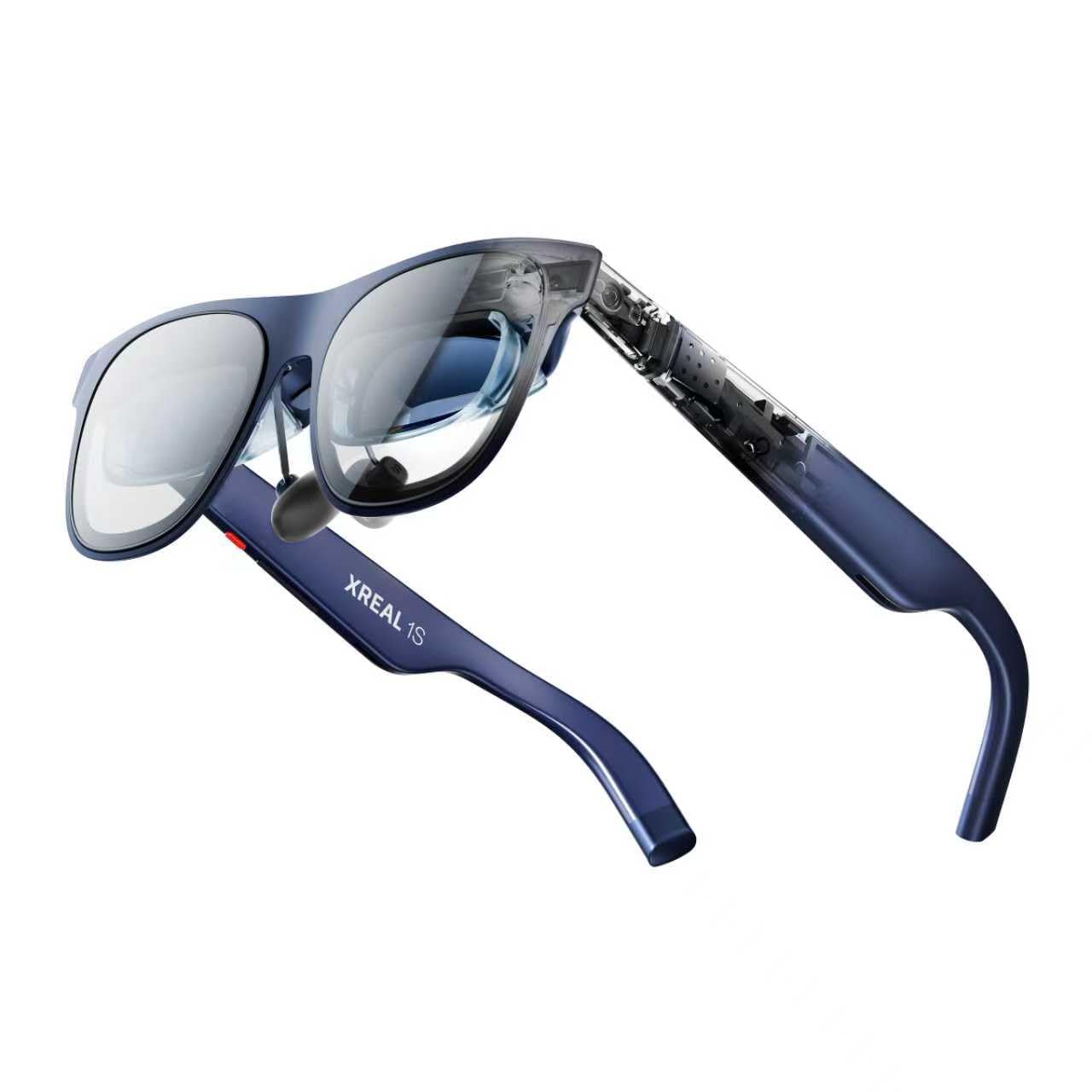
The XREAL 1S brings native 3DoF spatial screen capability directly to the glasses without any external puck or phone app. Powered by the self-developed X1 chip, it projects a virtual screen up to 500 inches with a 52° FOV, supporting a 120Hz refresh rate in 3DoF mode and 90Hz globally. The REAL 3D mode is the world’s first on-glasses spatial depth conversion, instantly transforming any 2D content into true 3D at up to 30fps with 90–100ms latency.
Display clarity is individually color-tuned per unit, and the redesigned optical engine boosts clarity by 9% over previous generations. The XREAL 1S supports multiple viewing modes—0DoF follow, 3DoF anchor, Ultrawide (32:9 or 21:9), and Side-View—making it adaptable for productivity as well as entertainment. Sound by Bose delivers a spacious, balanced soundstage with custom AR-grade drivers and a dedicated acoustic chamber.
Eye comfort is TÜV Rheinland certified for low blue light, flicker-free viewing, and 100% UV protection, with an IPD range of 59.5–70.5mm covering approximately 95% of users. The lightweight design and adjustable nose pads make it comfortable for sessions exceeding two hours. This is the best option for users who want fully native 3DoF without sacrificing resolution or audio quality.
Why it’s great
- Native 3DoF tracking without any external hardware
- 500-inch virtual screen with genuinely useful 52° FOV
- Bose audio tuned for immersive spatial sound
- Multiple viewing modes for productivity and entertainment
Good to know
- REAL 3D mode reduces resolution and operates at 30fps
- Anchor mode can drift slightly over long sessions
- Settings reset on each boot; no profile save feature
3. VITURE Luma Ultra XR Glasses
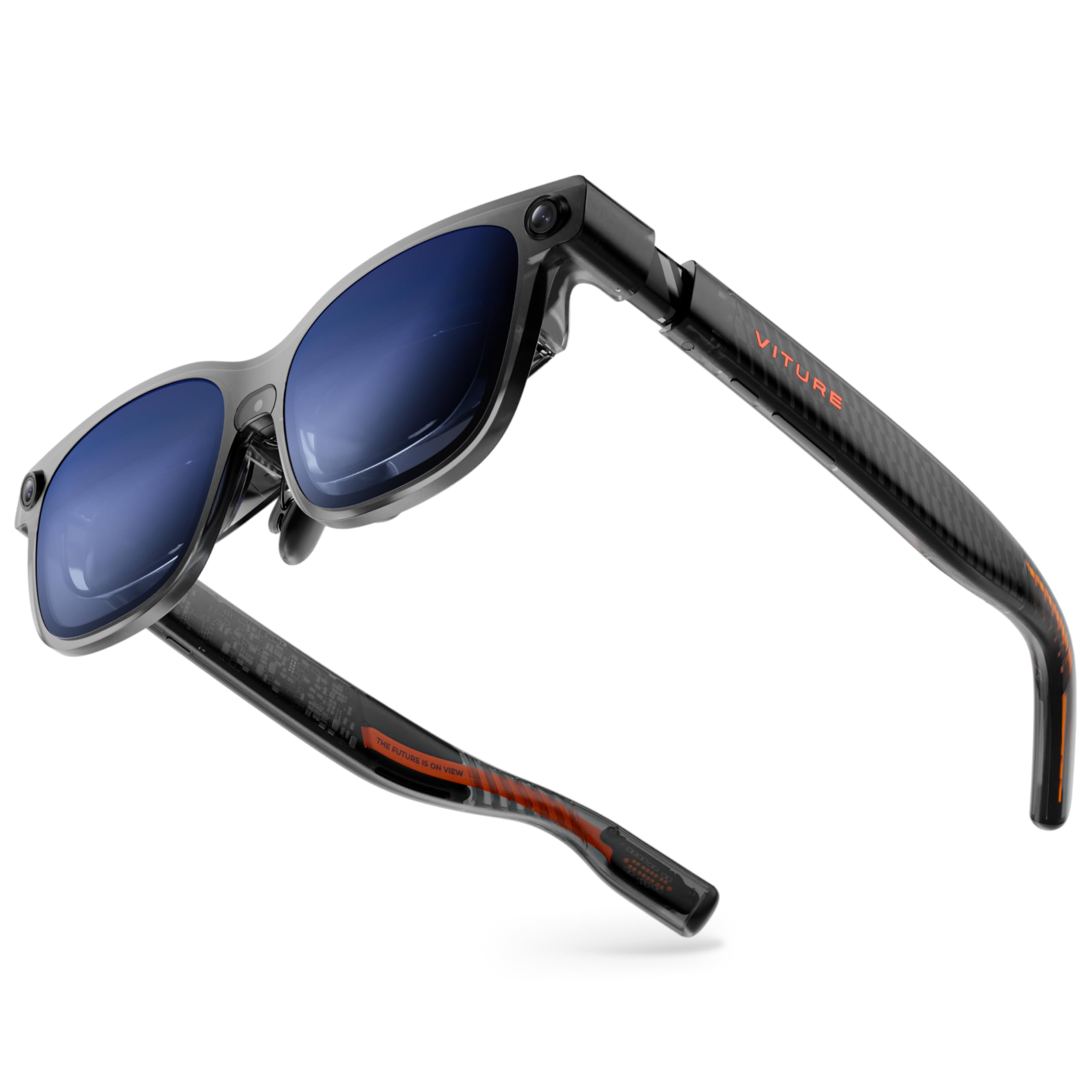
The VITURE Luma Ultra is the brightest AR glasses on the market, pushing 1500 nits peak brightness thanks to next-gen micro-OLED panels that also reduce power consumption by 35%. The 152-inch virtual screen at 1200p resolution feels sharp enough for productivity, with a 52° FOV and Hollywood-grade color accuracy (DeltaE < 2). The triple-camera system—front RGB and dual depth cameras—enables zero-drift 6DoF tracking and hand gesture recognition when paired with the VITURE Pro Neckband accessory.
VITURE’s Immersive 3D feature provides real-time 2D-to-3D conversion for any content, including streaming and gaming. The SpaceWalker software on macOS and Windows supports up to three virtual screens for panoramic multi-tasking, and the built-in myopia adjustment dial (up to -4.0D) means near-sighted users don’t need prescription inserts. The electrochromic film darkens the lenses with one tap for total immersion in bright environments.
The audio is co-engineered with HARMAN, delivering deeper bass and crisper highs compared to the previous generation. The Luma Ultra also features the first programmable RGB lighting on XR glasses, allowing users to sync colors with their gaming setup. This is the most future-proof AR option for users who want 6DoF spatial computing now, though the full functionality requires VITURE’s proprietary ecosystem accessories.
Why it’s great
- 1500 nits brightness—usable even outdoors in sunlight
- 6DoF with zero drift and hand gesture support
- Built-in myopia adjustment up to -4.0D
- RGB lighting for personalized gaming aesthetics
Good to know
- 6DoF and hand gestures require the Pro Neckband accessory ()
- Heavier than other AR glasses at approximately 83g
- 2D-to-3D conversion quality varies depending on source content
4. VITURE Luma Pro XR Glasses
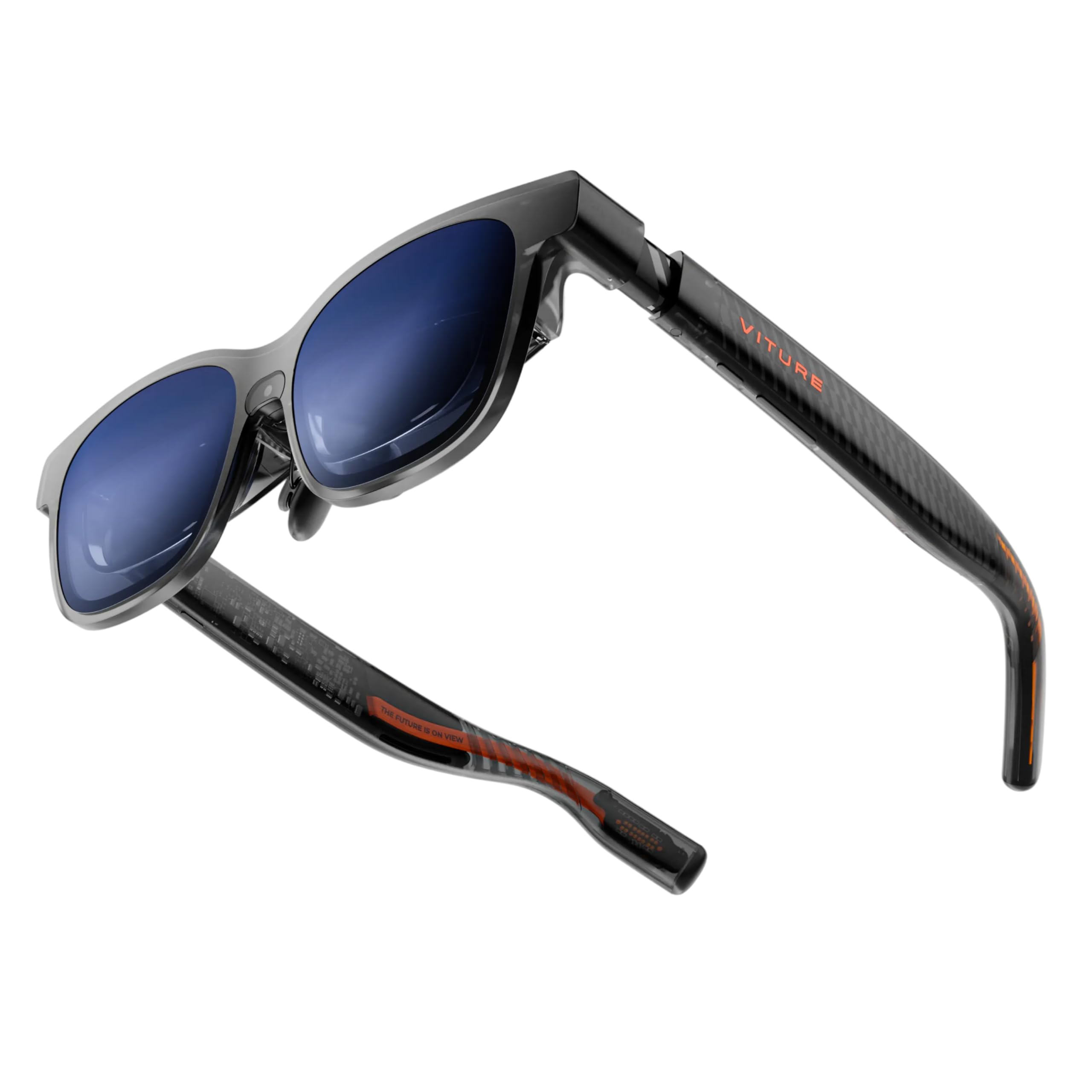
The VITURE Luma Pro delivers 1200p resolution—sharper than the previous VITURE Pro—on a 152-inch virtual screen with a 52° FOV. It features 1000 nits brightness, a silky 120Hz refresh rate, and Hollywood-grade color accuracy with DeltaE < 2. The electrochromic film allows one-tap darkening for immersive viewing, and the built-in myopia adjustment (up to -4.0D) eliminates the need for prescription lens inserts for most users.
The audio system from HARMAN provides a noticeably richer soundstage than earlier VITURE models, with deeper bass and crisper highs. The SpaceWalker app brings multi-screen functionality (up to 3 virtual screens from a Mac or PC) and supports the world’s first real-time 2D-to-3D conversion for streaming and gaming. The Luma Pro comes in two IPD sizes (Regular: 64±6mm, Large: 68±6mm) to accommodate different face shapes.
This is a mid-range option that punches well above its weight class, offering the same 1200p sharpness and HARMAN audio as the premium Luma Ultra but without the 6DoF cameras and hand gesture tracking. For users who want a crisp, bright, and deeply immersive 3D screen without spending for full spatial computing, the Luma Pro is the smart choice.
Why it’s great
- 1200p display is the sharpest in its price bracket
- Built-in myopia adjustment up to -4.0D
- HARMAN audio delivers full, immersive sound
- Real-time 2D-to-3D conversion for any content
Good to know
- No 6DoF tracking (3DoF only via SpaceWalker)
- Can be heavy for some users after extended wear
- Image may cut off at the top depending on face shape
5. LG UltraGear 32GX850A-B
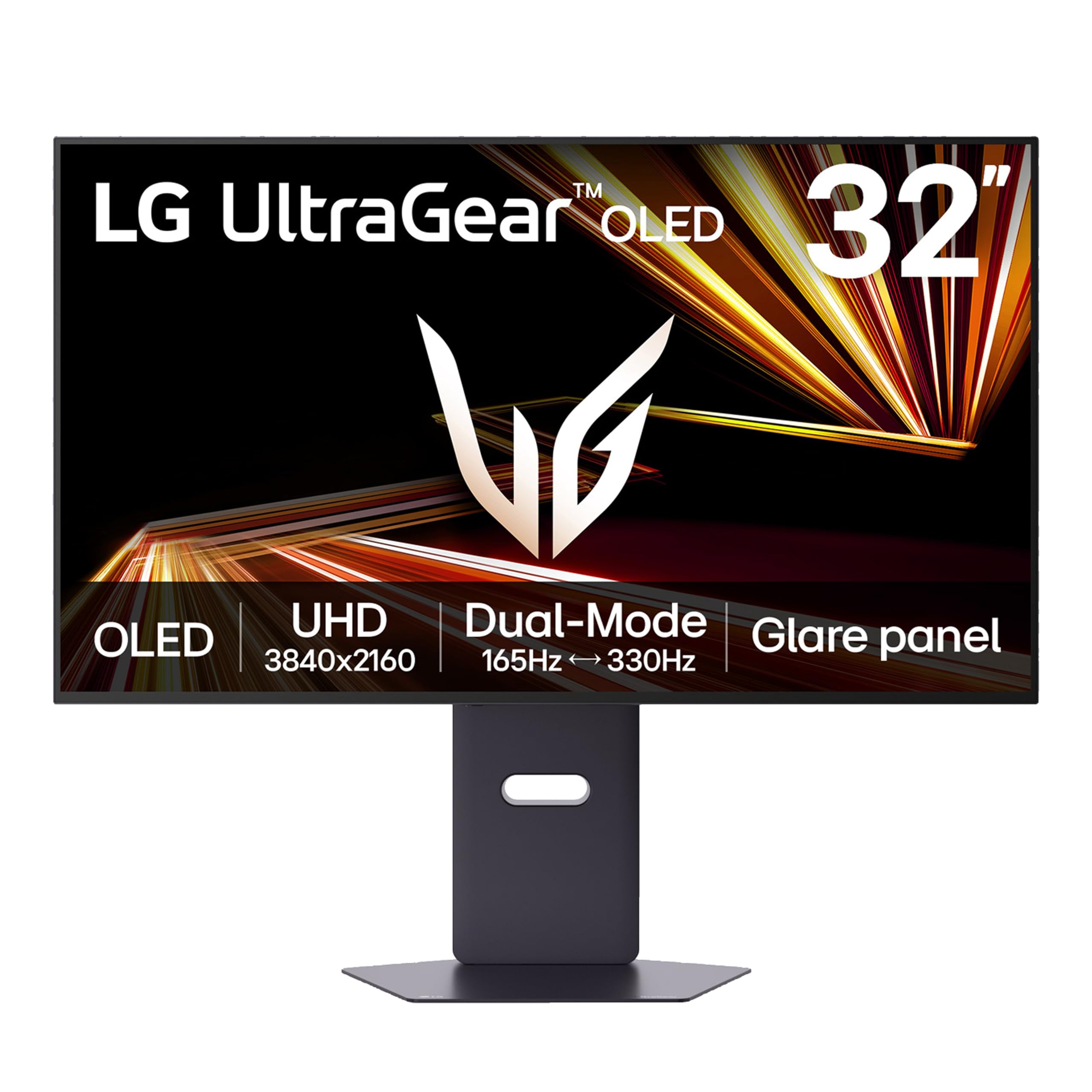
The LG UltraGear 32GX850A-B is a desktop 3D-capable monitor that uses a 32-inch 4K UHD glossy OLED panel with Micro Lens Array+ technology for enhanced brightness (275 nits typical). It features a dual-mode switch: 4K at 165Hz for graphically rich single-player games, or Full HD at 330Hz for competitive FPS and MOBA titles. The 0.03ms GtG response time is virtually instant, eliminating ghosting even in fast-paced 3D scenes.
VESA DisplayHDR True Black 400 certification with a 1.5M:1 contrast ratio delivers perfect blacks and rich shadow detail—critical for seeing enemies hidden in 3D environments. NVIDIA G-SYNC Compatible and AMD FreeSync Premium Pro ensure tear-free gameplay. The glossy OLED coating provides exceptional color pop and clarity, though it is reflective under direct lighting. UL certifications for Anti-Glare, Flicker-Free, and Low Blue Light reduce eye strain during long sessions.
The full ergonomic stand offers height, tilt, swivel, and pivot adjustments. Connectivity includes DisplayPort and dual HDMI 2.1 ports, and the virtually borderless design saves desk space. This is the best desktop option for users who want the raw performance of a high-refresh OLED for 3D gaming without wearing a headset.
Why it’s great
- Dual-mode 4K@165Hz / FHD@330Hz covers all use cases
- Perfect blacks and 1.5M:1 contrast for immersive 3D depth
- 0.03ms GtG response eliminates all motion blur
- Full ergonomic stand with swivel and pivot
Good to know
- Glossy panel reflects light—needs controlled room lighting
- Max brightness (275 nits) is lower than premium QD-OLEDs
- Text clarity can show banding on some units
6. MSI MPG 322URX QD-OLED

The MSI MPG 322URX represents the current pinnacle of PC desktop 3D gaming monitors. Its 32-inch 4K UHD panel uses 3rd Gen QD-OLED technology, achieving a 240Hz refresh rate with a 0.03ms GtG response time. The DisplayPort 2.1a (UHBR20) connection provides up to 80Gbps of bandwidth, enabling native lossless 4K at 240Hz—a first for desktop monitors. This is the ideal display for 3D titles where high pixel density and frame rates matter equally.
QD Premium Color ensures DeltaE ≤ 2, and VESA DisplayHDR True Black 400 certification delivers deep blacks and vibrant highlights. The QD-OLED panel covers 99% DCI-P3 color gamut, providing a level of color richness that WOLED panels cannot match. The 1.5M:1 dynamic contrast ratio ensures that dark 3D environments retain shadow detail without blooming.
MSI includes OLED Care 2.0 to mitigate burn-in risk, plus a 3-year burn-in warranty for peace of mind. The monitor supports G-Sync Compatible adaptive sync, and built-in speakers are decent for casual use. The connectivity suite includes HDMI, DisplayPort 2.1a, and USB ports. This is for the enthusiast gamer who demands the sharpest, fastest, and most color-accurate 3D desktop experience available.
Why it’s great
- Native 4K at 240Hz via DP 2.1a—no DSC needed
- 99% DCI-P3 color gamut for vivid 3D worlds
- Samsung QD-OLED panel with excellent contrast
- 3-year burn-in warranty included
Good to know
- QD-OLED can show purple tint in very bright rooms
- Requires a powerful GPU to drive 4K 240Hz in 3D games
- Cleaning QD-OLED panels requires extra care to avoid scratches
7. ASUS ROG Strix XG32UCWG

The ASUS ROG Strix XG32UCWG features a 32-inch 4K Glossy WOLED panel with ASUS’s exclusive TrueBlack coating, providing a zero-haze surface that makes images look etched into the glass. The dual-mode capability switches between 4K at 165Hz and Full HD at 330Hz, optimized for both story-rich 3D adventures and competitive shooters. The 0.03ms response time ensures that 3D depth cues remain sharp at high motion.
ASUS OLED Care Pro includes a Neo Proximity Sensor that detects when the user has stepped away and automatically switches to a black screen, significantly reducing burn-in risk. The DisplayWidget Center software lets users adjust OLED Care functions and monitor settings with a mouse. VESA DisplayHDR 400 True Black compliance and 99% DCI-P3 gamut with Delta E < 2 color accuracy make this suitable for professional photo and video editing in addition to 3D gaming.
The AI Assistant feature includes Dynamic Crosshair, Dynamic Shadow Boost, and AI Visual functions for improved gameplay. Connectivity includes DisplayPort 1.4 (DSC), HDMI 2.1, and USB-C with 15W Power Delivery. The 3-year warranty includes burn-in coverage. This monitor prioritizes longevity burn-in protection above all else, making it the safest long-term investment in the OLED space.
Why it’s great
- Neo Proximity Sensor significantly reduces burn-in risk
- 3-year warranty with burn-in coverage included
- TrueBlack glossy WOLED delivers art-level image quality
- Dual-mode 165/330Hz covers gaming breadth
Good to know
- DP 1.4 requires DSC for 4K 165Hz
- Glossy panel is delicate and needs careful cleaning
- Colors are not as wide as competitive QD-OLEDs
8. Samsung Odyssey OLED G9 G91SD

The Samsung Odyssey OLED G9 (G91SD) is a 49-inch Dual QHD (5120×1440) curved QD-OLED monitor with a 32:9 aspect ratio. It offers 110 pixels per inch—dense enough for sharp detail across the massive screen—and a 144Hz refresh rate with 0.03ms response time. The QD-OLED panel delivers a wide color spectrum and perfect blacks with 1,000,000:1 contrast ratio, making 3D games feel truly immersive across the expansive field of view.
Features include a Thermal Modulation System that predicts surface temperature and adjusts brightness to manage heat. Logo and Taskbar Detection automatically dims static elements to prevent burn-in, and the Screen Saver dims the display after 10 minutes of inactivity. G-Sync Compatibility and AMD FreeSync Premium Pro provide tear-free synchronization. Picture-in-Picture mode allows multitasking with a sub-screen for chat windows or guides.
The ergonomic stand offers tilt and height adjustment for comfort. Connectivity includes DisplayPort and HDMI, though only one DisplayPort input supports the full 5120×1440 resolution. This is the ultimate ultrawide 3D experience for simulator games and immersive multitasking, though the massive size requires substantial desk space and a powerful GPU.
Why it’s great
- 49-inch 32:9 QD-OLED creates unparalleled spatial immersion
- 1,000,000:1 contrast for true blacks in dark 3D scenes
- Automatic burn-in prevention with logo/taskbar detection
- 3-year warranty included for peace of mind
Good to know
- Only one DisplayPort input reaches full 5120×1440
- Power cable is shorter than average
- Pixel shifting for burn-in prevention can be slightly distracting
9. Alienware AW3425DWM

The Alienware AW3425DWM brings ultrawide 3D immersion to a budget-friendly price. It features a 34-inch WQHD (3440×1440) VA panel with a 1500R curve, 180Hz refresh rate, and 1ms GtG response time. The curved form factor naturally enhances depth perception in 3D games, tricking the eye into perceiving a more immersive screen than a flat panel of equal size. DCI-P3 95% color coverage and VESA DisplayHDR 400 certification ensure solid color and brightness.
AMD FreeSync Premium and VESA AdaptiveSync keep gameplay smooth and tear-free. The hardware-based low blue light solution reduces eye strain without washing out colors—a genuine advantage for long 3D gaming sessions. The stand provides tilt and height adjustment, and the integrated cable management keeps the desk clean. Connectivity includes DisplayPort 1.4 and HDMI 2.1 inputs with included cables.
At this price point, the trade-offs are the VA panel’s lack of OLED-level contrast and black depth, and the 180Hz ceiling is modest compared to premium options. But the 3440×1440 ultrawide format creates a palpable sense of depth in open-world 3D titles. For budget-conscious gamers who want a large, curved, high-refresh 3D screen without breaking the bank, this is the choice.
Why it’s great
- WQHD ultrawide creates excellent depth perception for 3D
- 180Hz and 1ms response keep motion clear
- Hardware low blue light preserves color accuracy
- Includes HDMI and DP 1.4 cables in the box
Good to know
- VA panel cannot match OLED black levels or contrast
- No built-in speakers
- Bloom noticeable around bright objects on dark backgrounds
10. RayNeo Air 4 Pro AR Glasses
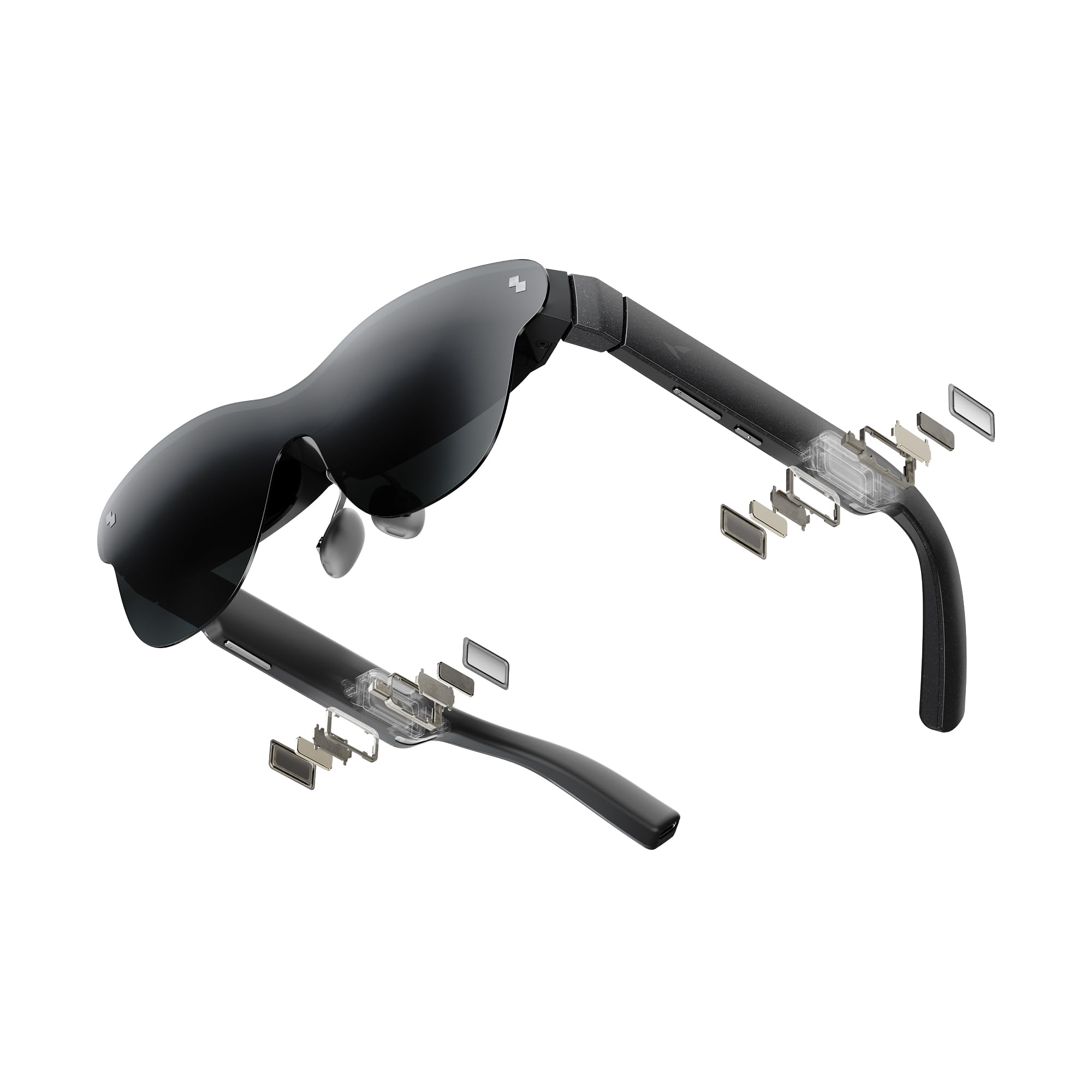
The RayNeo Air 4 Pro is the entry-level champion for 3D screen monitors in AR form. It projects a 201-inch virtual HDR10 display with 10 billion colors and ultra-deep contrast, driven by the Vision 4000 chip co-developed with Pixelworks. The 120Hz refresh rate and AI SDR-to-HDR upscaling ensure smooth, vibrant visuals for movies and gaming. At just 76 grams, these are among the lightest AR glasses available.
Audio is provided by Bang & Olufsen with four precision speakers delivering 360° spatial sound. The open-ear design maintains situational awareness, while optional Sound Tubes (sold separately) can direct sound into the ears for louder immersion. The low blue light and 3840Hz flicker-free display provide TÜV-certified eye comfort for extended sessions. The 9-way fit adjustment with adjustable temples and interchangeable nose pads helps achieve optimal screen alignment.
Universal USB-C compatibility means no WiFi or apps are needed—simply plug into any iPhone 17/16/15 (USB-C), Android phone, MacBook, iPad, Steam Deck, or PlayStation console. The lack of internal battery keeps the frame light. The 46° FOV is smaller than premium AR options, and there is no myopia adjustment, but the combination of HDR10 display quality and Bang & Olufsen audio at this price is unmatched. This is the perfect entry point into spatial 3D viewing.
Why it’s great
- HDR10 display with 10 billion colors at this price is exceptional
- Bang & Olufsen sound is genuinely high quality
- Ultra-light at 76g—comfortable for extended wear
- True plug-and-play with no WiFi or app setup needed
Good to know
- 46° FOV is narrower than XREAL and VITURE options
- No built-in myopia adjustment (needs prescription insert)
- No internal battery—can drain connected device battery faster
11. Samsung Odyssey 3D G90XF

The Samsung Odyssey 3D G90XF is the only glasses-free 3D monitor on this list, using lenticular lens technology to deliver depth without any headset. The 27-inch 4K UHD panel runs at 165Hz with a 1ms response time (GtG). Samsung’s AI analyzes and converts 2D videos into 3D in real time, adding depth to objects. The glasses-free 3D effect works across a range of viewing angles, though the optimal sweet spot is narrower than a standard monitor.
Edge Lighting with RGB LEDs around the bottom of the monitor extends the screen’s colors into the physical space, enhancing immersion. Built-in dual speakers provide directional sound that aligns with 3D video and games. The Odyssey 3D Hub serves as a gateway to supported 3D games and content, though the catalog of native 3D titles remains limited. For optimal 3D performance, Samsung recommends an Intel i7 or AMD Ryzen 7 processor with 32GB DDR5 RAM.
The ergonomic stand offers tilt, height, swivel, and pivot adjustments. G-Sync compatibility and AMD FreeSync Premium ensure smooth gameplay in 2D mode. The 2D image quality is very good for an IPS LCD panel, though it cannot match OLED contrast. The glasses-free 3D effect is genuinely impressive for supported content—3D movies and certain games transform into immersive experiences without any wearable gear. For users who want 3D depth without wearing anything on their face, this is the only real option available.
Why it’s great
- Glasses-free 3D—no headset required
- AI 2D-to-3D conversion works with streaming content
- 4K 165Hz panel with solid 2D image quality
- Edge Lighting provides extra immersion
Good to know
- 3D sweet spot is narrow; head must be centered
- Native 3D game library is small and Samsung Hub may have issues
- IPS LCD panel, not OLED—contrast is 1000:1, not infinite
- Requires powerful PC for smooth 3D experience
FAQ
Why does motion-to-photon latency matter more for AR 3D than for a desktop monitor?
Can I use glasses-free 3D monitors like the Samsung Odyssey 3D for productivity work?
What refresh rate do I need for a good 3D experience on AR glasses?
Is REAL 3D on XREAL glasses the same as the 2D-to-3D conversion on VITURE glasses?
Final Thoughts: The Verdict
For most users, the best 3d screen monitor winner is the XREAL One Pro because it combines the widest 57° FOV, industry-lowest 3ms M2P latency, universal USB-C compatibility, and Bose audio into a single polished package that works out of the box. If you want glasses-free 3D and don’t want to wear anything on your face, grab the Samsung Odyssey 3D G90XF. And for a desktop OLED that delivers the sharpest, fastest 4K 3D gaming experience available, nothing beats the MSI MPG 322URX.