
Plain gray concrete can feel cold and unfinished, but a reactive chemical stain transforms that flat slab into a rich, variegated surface that mimics natural stone or aged terra cotta. Unlike paint that sits on top, acid stain penetrates the porous surface to create a permanent, marbled effect unique to your pour.
I’m Min — the co-founder and writer behind Gadgets Feed. I’ve spent countless hours analyzing concrete and masonry coatings, digging into chemical compositions, coverage rates, and application methods to determine which acid stains deliver consistent reactive color shifts without the unpredictability that frustrates DIYers.
After sifting through hundreds of owner experiences and manufacturer specs, this guide isolates the formulas that actually react predictably with concrete’s free lime to produce the sought-after variegated look. Whether you are refreshing a patio or finishing a basement floor, these are the best acid stain for concrete options available today.
How To Choose The Best Acid Stain For Concrete
Choosing the right acid stain comes down to understanding how reactive chemistry interacts with your specific slab. Unlike acrylic stains or dyes that simply coat the surface, acid stain uses a mild acid to open the concrete pores and metallic salts to create the permanent color change. The substrate’s age, density, and cleanliness directly influence the final marbling effect.
Concrete Age and Porosity
New concrete needs at least 28 days of curing to contain enough free lime for a strong chemical reaction. Older, denser concrete may require a light etch to open the pores so the metallic salts can penetrate. Porous surfaces absorb more stain and produce deeper, richer color, while denser slabs yield lighter, more subtle variegation. Always test on a hidden area before committing to the full application.
Color Profile and UV Stability
Acid stains produce earthy, mineral tones — browns, rusts, tans, terra cottas, and dark greens — because they react with the lime in the concrete. The final color is never uniform; it creates a mottled, translucent appearance that cannot be replicated with paint. For outdoor projects, look for stains labeled UV stable to resist fading under direct sunlight over time.
Packaging, Coverage, and Dilution
Most acid stains come as concentrated liquids or ready-to-use gallons, covering between 100 and 500 square feet per unit depending on the slab’s porosity and the dilution ratio. Water-reducible concentrates let you fine-tune the depth of color by adjusting the stain-to-water ratio. Always buy slightly more than the coverage estimate states, because achieving a consistent variegation often requires two or three coats.
Sealer Compatibility
An acid stain must be sealed to lock in the color and provide stain resistance. Clear acrylic sealers in gloss or matte finishes are the standard choice. Ensure the stain and sealer are compatible — some solvent-based sealers may chemically disturb an uncured stain. Many DIY kits pair the stain with a neutralizer and a sealer for a complete system.
Quick Comparison
On smaller screens, swipe sideways to see the full table.
| Model | Category | Best For | Key Spec | Amazon |
|---|---|---|---|---|
| Active Elements Coffee Bean | Premium Acid Stain | Dark interior/exterior floors | 100–200 sq ft/gal | Amazon |
| EnduraCoat Acid Stain DIY Kit | Premium DIY Kit | Complete floor makeovers | 250 sq ft (1-gal system) | Amazon |
| Active Elements Desert Fire | Premium Acid Stain | Warm outdoor patios | UV Resistant | Amazon |
| Concrete Resurrection Western Saddle | Mid-Range Acid Stain | Rustic brown patios | Semi-Transparent Variegated | Amazon |
| Concrete Resurrection WRC Mocha | Water-Based Concentrate | Low-odor indoor projects | 100–500 sq ft (32 oz) | Amazon |
| Concrete Resurrection 16-Color Sample Pack | Sample Pack | Color testing & concrete art | 64 oz total (16 colors) | Amazon |
| Americrete A-1300 Clear Gloss Sealer | Sealer (Post-Stain) | Protecting stained concrete | 1 Gal, Non-Toxic | Amazon |
In‑Depth Reviews
1. Active Elements Coffee Bean Concrete Acid Stain

This professional-grade acid stain produces a dark brown to black reactive finish that users consistently describe as long-lasting and true to the swatch. The metallic salts chemically bond with the concrete’s free lime, creating a permanent marbled look that does not chip or peel even on high-traffic slabs. One gallon covers 100 to 200 square feet, and the UV-stable formula makes it suitable for both interior basements and exposed outdoor patios.
Customers report that it requires two to three coats to reach full saturation, especially on porous concrete that soaks up liquid quickly. A user who accidentally received pink pre-colored concrete for a retaining wall applied this stain and completely corrected the tone to a rich coffee brown after three coats. Another first-time DIYer noted the stain is forgiving for novices, though buying extra for multiple passes is essential.
The thin, watery consistency allows the stain to penetrate deep into the surface rather than pool on top. Some users expected darker results after one coat, so testing on a sample area before full application is strongly recommended. When sealed with a compatible clear acrylic, the finish holds up well against weather and light foot traffic.
Why it’s great
- UV stable for interior and exterior use
- Deep reactive color that corrects uneven concrete tones
- Professional-grade results with multiple coats
Good to know
- May need 3+ coats to reach darkest shade
- Color can vary by concrete chemistry
2. EnduraCoat Acid Stain DIY Kit

EnduraCoat bundles stain, cleaner/degreaser, neutralizer concentrate, and an acrylic solvent sealer into a single kit designed for DIYers tackling floors up to 250 square feet. The reactive stain produces the same variegated, translucent look as standalone acid stains, but the kit eliminates the guesswork of buying separate prep and sealing products. The sealer dries to a gloss or semi-gloss finish and protects the reactive layer from wear and moisture.
Reviews are split on the sealer’s solids content — some homeowners say three coats still felt thin, while others achieved a durable, easy-to-clean shine after following the curing instructions. Users who prepped the floor properly and applied the neutralizer thoroughly report that the color bonded securely and did not lift during the rinse step. The kit’s color is Black/Walnut, which yields rich brown and charcoal tones depending on the substrate.
Several DIYers used this system to replace old tile or carpet in basements and bathrooms. The chemical reaction creates a unique, job-specific pattern that mimics pricier flooring options like natural slate. A small number of users noted that visible roller marks appeared on the clear coat, so using a high-quality microfiber applicator or sheepskin roller is advised for a seamless finish.
Why it’s great
- All-in-one kit with cleaner, stain, neutralizer, and sealer
- Creates durable variegated finish more forgiving than epoxy
- Phone support available for first-timers
Good to know
- Sealer may need multiple coats for full protection
- Solvent sealer odor requires heavy ventilation
3. Active Elements Desert Fire Concrete Acid Stain

Desert Fire delivers a warm red, brown, and terra cotta reactive finish that brings life to dull patios, walkways, and indoor concrete slabs. The 1-gallon container covers 100 to 200 square feet, and the manufacturer specifically labels it as UV resistant, making it one of the better picks for exterior surfaces that see constant sun. The color develops through the same metallic salt reaction as other acid stains, but the red-iron oxide pigments tilt the final result toward the warmer end of the spectrum.
Multiple first-time users were surprised at how much the stain revived a boring gray slab. One reviewer described the application as straightforward and cleanup as simple. Another noted that while the instructions seem simple in writing, achieving the perfect pattern demands practice — a caution echoed by several owners who ended up applying multiple coats over several days to get the depth they wanted.
The stain penetrates quickly on bare concrete, so overlapping strokes can create darker bands if you do not work in continuous wet passes. Like most acid stains, the final appearance varies based on the slab’s age and lime content. A sample size is available for testing, and given the bold red undertones, a test patch is highly recommended before committing to a full project.
Why it’s great
- UV resistant for sunny exterior applications
- Rich red-terra cotta tone not common in other stains
- Easy to clean up after application
Good to know
- Color may look more orange than expected on some concrete
- Requires steady technique to avoid lap marks
4. Concrete Resurrection Western Saddle Acid Stain

The Western Saddle color from Concrete Resurrection is a classic mid-range brown with yellow and rusty undertones that yield the earthy, southwestern look many homeowners want for patios and walkways. It is a chemical-based acid stain that reacts with the concrete’s free lime to create the signature variegated, semi-transparent finish. A single gallon covers up to 200 square feet, and the product is UV stable for outdoor use.
Users praise the natural color variation and ease of application. One reviewer who had used other stain brands stated this one was the simplest to apply. Another owner applied it to a concrete fountain but warned that the final color skewed more orange than expected — a common issue with metallic salt stains that the manufacturer’s sample size could have prevented.
The consistency is extremely thin and watery, which helps the stain penetrate deeply but also causes it to dry fast. A few users experienced the color washing off partially during the neutralization rinse and had to reapply a third coat. Plan for at least two coats, and consider sealing immediately after neutralization to lock the reactive pigments in place.
Why it’s great
- UV stable for outdoor durability
- Creates authentic variegated rustic look
- Easy to apply for intermediate DIYers
Good to know
- Color can shift to orange on certain slabs
- Multiple coats needed for saturated finish
5. Concrete Resurrection WRC Mocha Water-Reducible Concentrate
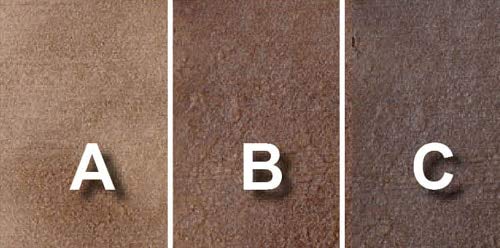
For projects where solvent fumes are a concern — such as an enclosed basement or a garage attached to the living area — this water-reducible concentrate from Concrete Resurrection is a solid option labeled low odor and environmentally friendly. The 32-ounce bottle mixes with water at ratios typically around 1:4 stain to water, covering 100 to 500 square feet depending on the dilution and the slab’s porosity. The base is water, which makes cleanup straightforward and reduces the harsh chemical smell during application.
The semi-transparent Mocha finish produces a medium brown with subtle gray undertones. The concentrate allows you to control the depth of the color by varying the dilution ratio — a feature experienced DIYers appreciate for dialing in the exact shade. One customer restored a 70-year-old concrete and cinderblock wall by mixing Fire Brick concentrate with Dark Slate for a custom brick-like tone, applying two coats, and sealing with an eco-friendly sealer.
That said, the formula is very watery and drips easily, which can be frustrating when working on vertical surfaces. It also dries fast, so you need to work in small sections and have a rag ready to wipe drips immediately. The thin consistency demands multiple coats for a deep, even color, but the low odor makes it worth the extra effort for indoor use.
Why it’s great
- Low odor and water-based, ideal for indoor projects
- Concentrate lets you control color depth with dilution ratio
- Covers up to 500 sq ft depending on mix
Good to know
- Very watery and prone to dripping on vertical surfaces
- Multiple coats required for saturated coverage
6. Concrete Resurrection 16-Color Sample Pack
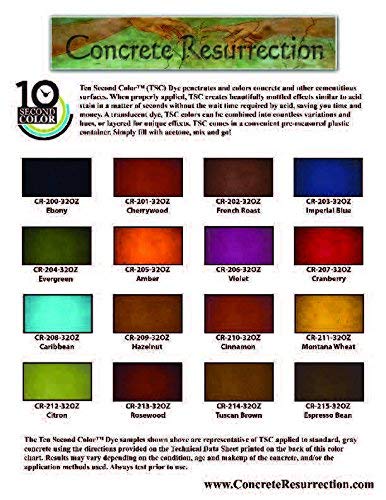
This sample pack is not a traditional acid stain — it is a fast-drying acetone dye concentrate that you mix with acetone before application. It is UV stable for interior and exterior use, but the manufacturer explicitly states it is not for polished concrete. The pack contains 16 individual sample bottles of powdered pigment, each intended to be reconstituted with acetone, yielding a total of 64 ounces of liquid color.
The primary advantage here is variety. Homeowners unsure of which earthy tone will match their space can test every shade — from tans and browns to greens and charcoals — on scrap slabs or hidden corners before purchasing a full gallon. Customers have used the samples to color-match a cracked driveway by mixing pigment into a patching compound and airbrushing the repair for an invisible blend.
Several reviewers warned that the plastic spray bottles shipped with the pigments can dissolve or fail when filled with acetone, so plan to decant the mixture into glass jars or HDPE-compatible containers. The pigment itself is potent, but the process requires you to supply your own acetone, which adds to the overall cost and introduces the handling of a highly flammable solvent.
Why it’s great
- 16 colors let you experiment before buying bulk
- Fast-drying formula works well for accent art and repairs
- UV stable for outdoor concrete features
Good to know
- Acetone not included; must supply separately
- Included spray bottles may dissolve with acetone
7. Americrete A-1300 Clear Glossy Concrete Sealer

No acid stain project is complete without a durable sealer, and Americrete’s A-1300 is a water-based, non-toxic clear gloss sealer engineered to protect stained concrete from water, grease, oil, and UV damage. It is designed for interior and exterior surfaces — driveways, patios, countertops, cinderblocks — and leaves a slight glossy sheen that enhances the marbled depth of the reactive stain beneath.
The manufacturer recommends applying 7 to 8 thin coats for maximum bond strength and durability. Owners who followed that guidance reported impressive protection against salt in winter climates and tracked-in mud. The non-toxic formulation makes it a safe choice for garages where children or pets might walk on the treated surface while the sealer is drying.
Some users found the sealer’s thin consistency surprising and suggested that it covers closer to 200 square feet per gallon rather than the advertised higher number. A few also noted that the warranty only covers material costs unless the applicator has taken Americrete’s training class, so DIYers should consider it more of a bonus than a safety net. Despite these caveats, the A-1300 provides a resilient topcoat that preserves the reactive color for years.
Why it’s great
- Non-toxic, low-odor water-based formula
- Resists yellowing and UV degradation
- Multiple thin coats create a strong bond
Good to know
- Coverage may be less than advertised on porous concrete
- Warranty limited to material-only without training class
FAQ
How long does acid stain need to cure before sealing?
Can I apply acid stain over old concrete that already has paint or sealer?
Why did my acid stain turn out lighter than expected?
How do I fix an uneven acid stain finish?
Final Thoughts: The Verdict
For most users, the best acid stain for concrete winner is the Active Elements Coffee Bean because it delivers a deep, UV-stable reactive color that corrects slab imperfections and holds up to indoor and outdoor conditions. If you want a complete system with neutralizer and sealer, grab the EnduraCoat Acid Stain DIY Kit. And for warm red-toned patios, nothing beats the Active Elements Desert Fire.