
A bandsaw is only as good as the blade wrapped around its wheels. A dull or mismatched blade turns resawing into a fight, produces burn marks on hardwood, and wanders off the layout line no matter how carefully you set the guides. The difference between a frustrating session and a satisfying one comes down to three things: tooth geometry, material grade, and tension compatibility.
I’m Min — the co-founder and writer behind Gadgets Feed. I’ve spent hundreds of hours comparing the tensile strength, tooth-set patterns, and kerf widths of dozens of bandsaw blades to separate the ones that track straight and hold an edge from the ones that throw teeth on the third pass.
This guide breaks down the best options for woodworkers, metal fabricators, and resaw specialists. Whether you need a variable-pitch blade for thin-wall tubing or a low-tension resaw blade for 8-inch hardwood, I’ve done the research to help you find the best bandsaw blades for your specific machine and material.
How To Choose The Best Bandsaw Blades
Picking the right blade starts with knowing your machine’s blade length and your dominant material. A 93-inch blade for a 14-inch bandsaw behaves differently than a 44-7/8-inch blade for a portable band saw. The three most important variables are material grade, tooth pitch, and tooth set pattern — each directly affects cut quality, blade life, and the range of materials you can process.
Match Blade Material to Your Workpiece
Carbon steel blades are affordable and cut wood and plastic well, but they dull quickly on non-ferrous metals and hardwoods with high silica content. Bi-metal blades, which weld high-speed steel teeth to a flexible alloy-steel back, resist heat and abrasion far better — essential for stainless steel, rebar, and thick hardwoods. Silicone steel blades like those from Timber Wolf run at lower tension and stay sharp longer than traditional carbon steel, making them ideal for resaw applications where blade flex and heat buildup are the main enemies.
Tooth Pitch and the Rule of 3–6 Teeth
The most common mistake is choosing a blade with too few teeth for thin material or too many for thick stock. The rule: at least three teeth should contact the workpiece at all times. A 14 TPI blade works well for thin-wall tubing and sheet metal, while a 4 TPI blade excels at resawing thick lumber. Variable-pitch blades (like 8/12 TPI or 10/14 TPI) reduce harmonic vibration and deliver smoother cuts across a range of stock thicknesses.
Width, Thickness, and Tension Limits
Blade width determines the minimum radius you can cut — a 1/8-inch blade can cut tight curves, while a 3/4-inch blade tracks straighter for resawing. Thicker blades (0.035-inch and above) resist deflection under heavy feed pressure but require a saw with enough tensioning capacity. Always verify that your bandsaw can tension the blade gauge you choose; forcing an overly thick blade onto an underpowered saw damages both the blade and the machine.
Quick Comparison
On smaller screens, swipe sideways to see the full table.
| Model | Category | Best For | Key Spec | Amazon |
|---|---|---|---|---|
| Imachinist S9334812 M42 | Bi-Metal | Small metal tubes & solid bars | 93″ x 3/4″ x 0.035″, 8/12 TPI | Amazon |
| Milwaukee 48-39-0631 | Bi-Metal | Portable band saw, stainless steel | 30-9/16″, 12/14 TPI, 3-pack | Amazon |
| POWERTEC 59-1/2″ 3PK | Carbon Steel | Wood & non-ferrous metals | 59.5″, 1/8″ to 3/8″, 3-pack | Amazon |
| Timber Wolf 3423VPC | Silicone Steel | Resawing thick hardwoods | 93.5″ x 3/4″, low tension | Amazon |
| Timber Wolf 1/2″ x 93-1/2″ | Silicone Steel | Thin-kerf resawing | 93.5″ x 1/2″, 4 TPI | Amazon |
| LENOX 8010738PW145 | Bi-Metal | Portable band saw, general metal | 44-7/8″ x 1/2″, 14 TPI, 5-pack | Amazon |
| LENOX 1770089 Classic Tuff Tooth | Bi-Metal | Heavy-duty metal & stainless | 93″ x 3/4″ x 0.035″, 14 TPI | Amazon |
In‑Depth Reviews
1. Timber Wolf Bandsaw Blade 1/2″ X 93-1/2″, 4 Tpi

This Timber Wolf blade uses high-silicon, low-carbide steel that runs under substantially lower tension than conventional carbon steel blades, which means it places less strain on the bandsaw’s bearings and motor while delivering a thin kerf that wastes less material. The 4 TPI configuration is optimized for resawing thick stock — users consistently report cutting 8-inch hard maple into 1/4-inch veneers with zero wander and a surface smooth enough to reduce subsequent sanding time. The blade arrives with detailed tensioning and lubrication instructions that help even novice users dial in their saw’s tracking and drift angle within 30 minutes.
The silicone steel composition runs cooler than high-carbon alternatives, which directly translates to longer edge life during extended resaw sessions. With a 0.025-inch kerf and 0.5-inch width, this blade offers an excellent balance between stability for straight cuts and the ability to handle moderate-radius curves. Multiple users with Delta 14-inch and Ridgid 14-inch bandsaws report that the blade transformed previously frustrating saws into precision resaw tools that track straight through seasoned ash, walnut, and rosewood.
One caveat: this blade is not suitable for metal cutting, as the silicone steel lacks the abrasion resistance needed for ferrous materials. The 4 TPI pitch also means you need at least 1/4-inch thick stock to maintain the three-tooth minimum rule. Users who follow the included tensioning guide see dramatically better results than those who tension by feel alone.
Why it’s great
- Low tension reduces saw stress and extends machine life
- Thin kerf wastes less material and requires less horsepower
- Runs significantly cooler and stays sharp longer than carbon steel blades
Good to know
- Not designed for cutting metal of any kind
- 4 TPI requires thicker stock (minimum 0.75-inch) for proper chip clearance
2. 3423VPC 93.5″ by 3/4″ Timber Wolf Bandsaw Silicone Steel Low Tension Resaw Blade

This wider 3/4-inch variant of the Timber Wolf silicone steel blade uses milled teeth that the manufacturer claims are 50 percent sharper than stamped or crush-ground alternatives. Each tooth undergoes precision induction hardening rather than the flame hardening used on competing blades, producing an edge that is 20 percent harder than standard high-carbon steel while the body remains more ductile for extended flex life. The result is a blade that stays sharp through thick hardwoods like maple, ebony, and rosewood up to 6 inches thick while running cool enough to avoid burning the material.
The low-tension design is the standout feature for resaw work. Users running Delta 14-inch bandsaws report being able to take 8-inch wide walnut boards down to 1/4-inch thick slices with no drift and a finish so smooth it looks like it came off a planer. The blade’s 3/4-inch width provides excellent tracking stability for straight cuts, though it limits the minimum cutting radius to roughly 3 inches — this is a resaw blade first and foremost, not a scroll-cutting blade.
The included tuning guide is unusually thorough, covering blade tension, guide alignment, drift angle adjustment, and tooth lubrication. Users who follow the guide report significantly better performance than those who skip it. The silicone steel construction means you can run the blade at lower tension settings, which reduces wear on the saw’s upper wheel bearings over time.
Why it’s great
- Milled teeth stay sharper significantly longer than stamped blades
- Precision induction hardened edge resists wear on dense hardwoods
- Low tension operation reduces machine strain and heat buildup
Good to know
- 3/4-inch width limits tight-radius curve cutting
- Not suitable for metal cutting applications
3. Lenox 1770089 Classic Tuff Tooth Bimetal 93″ x 3/4″, 14 TPI
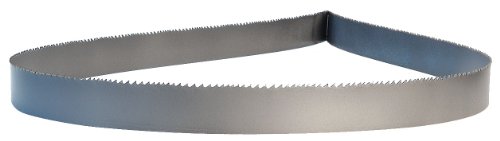
Lenox’s Tuff Tooth design reinforces each tooth to reduce strippage, and the M42 high-speed steel cutting edge provides heat and wear resistance that handles carbon steel, alloy steel, stainless steel, and aluminum. At 93 inches long, 3/4 inch wide, and 0.035 inch thick with a wavy tooth set and positive rake, this blade is engineered for horizontal bandsaws cutting cylindrical solids, rectangular tubes, and structural shapes. The wavy set prevents tooth stripping when cutting thin workpieces that would otherwise grab and snap individual teeth.
Users in manufacturing environments report cutting train track sections and high-carbon knife billets without dulling the edge, with one fabricator noting that after three months of cutting 1/8-inch stainless steel pipe and square tubing the blade still performs like new. The bi-metal construction gives the blade flexibility to absorb shock loads while keeping the tooth hard enough for production cutting. Several users specifically mention that this blade transforms cheap saws into reliable cutting tools once guide rollers are aligned and tension is set correctly.
The 14 TPI pitch makes this blade ideal for stock between 1/16 inch and 1/4 inch thick. Thicker material requires slower feed rates to avoid stripping teeth. One user received a 7-blade multipack instead of a single blade, suggesting occasional packaging variation, but the overwhelming consensus is that this is the most durable blade in its class for metal cutting.
Why it’s great
- Tuff Tooth reinforcement dramatically reduces tooth stripping on thin stock
- M42 edge stays sharp cutting stainless steel and high-carbon materials
- Bi-metal back absorbs shock without breaking under heavy feed
Good to know
- 14 TPI limits effectiveness on stock thicker than 0.5 inch
- Requires proper guide alignment and tension for maximum life
4. Imachinist S9334812 M42 93″ x 3/4″ 8/12 TPI Bi-Metal
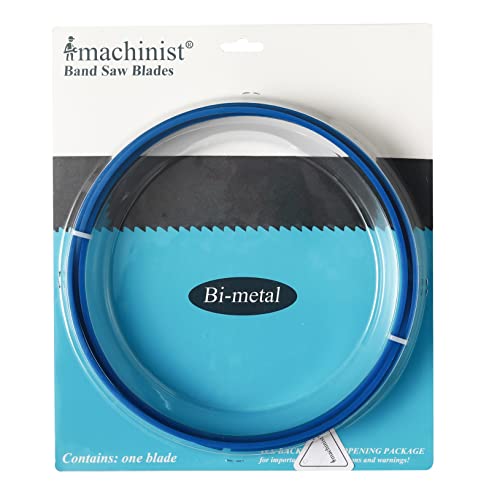
This Imachinist blade delivers genuine M42 bi-metal construction at a price that undercuts most competitors by a noticeable margin, making it a strong option for budget-conscious metalworkers who need a 93-inch blade for soft ferrous materials. The 8/12 variable tooth pitch reduces harmonic vibration during cutting, producing smoother finishes on small-diameter tubes and solid bars. The blade is 0.035 inch thick with a 3/4-inch width, matching the standard sizing for most 14-inch bandsaws that accept 93-inch blades.
Users consistently report long blade life when cutting mild steel, with one customer noting that the original blade still works after cutting many materials and that they ordered two more. The blade ships with a plastic tooth guard that protects both the teeth and the installer’s hands during installation. Pitch variation across the blade body is reported at a remarkably consistent 0.000157 inches, indicating good manufacturing tolerances for a blade at this tier.
A small number of users experienced quality control issues, with one reporting tooth loss on the third cut through mild steel at half speed — likely a heat-treat anomaly. Another noted the weld jog was visible and the blade’s QC didn’t match pricier brands, though the seller replaced it free of charge. The 8/12 TPI range is optimized for stock between 1/8 inch and 3/8 inch thick; thicker material will require slower feed rates.
Why it’s great
- Genuine M42 bi-metal construction at a budget-friendly price point
- Variable 8/12 TPI reduces vibration and harmonics during cuts
- Includes plastic tooth guard for safe handling and installation
Good to know
- Occasional QC issues with weld quality and heat treatment consistency
- Not recommended for hardened or abrasive alloy steels
5. LENOX Tools Portable Band Saw Blades 44-7/8″ x 1/2″, 14 TPI, 5-Pack

This LENOX 5-pack is purpose-built for portable band saws, measuring 44-7/8 inches long by 1/2 inch wide with a 0.020-inch thickness and 14 TPI. The bi-metal construction combines high-speed steel teeth with a flexible back, and the Tuff Tooth design reinforces the tooth geometry to prevent breakage when cutting conduit, rebar, and structural steel. The shatter-resistant properties mean the blade flexes rather than snaps when encountering binding or inconsistent feed pressure — a critical safety feature for portable saw work.
Users report excellent results cutting EMT conduit, unistrut, pressure-treated lumber, and rebar, with multiple reviews noting that the blades cut “like a hot knife through butter” and last noticeably longer than stock blades that come with portable band saws. The 5-pack provides good value for tradespeople who go through blades regularly, reducing the frequency of restocking. The 14 TPI pitch is well-suited for thin-wall metal stock up to 1/4 inch thick, and the wavy tooth set helps prevent grabbing on thin workpieces.
The 0.020-inch thickness is notably thinner than stationary saw blades, which helps reduce drag on portable saw motors but means the blade is more susceptible to deflection under heavy side loads. Cutting thick solid stock will require slower feed rates to maintain a straight line. Some users noted that the blades are not as aggressive as coarser-pitch alternatives for thick wood, but for metal cutting in the field, this is precisely the right balance.
Why it’s great
- Tuff Tooth reinforcement prevents breakage on conduit and rebar
- 5-pack offers strong value for high-volume cutting work
- Shatter-resistant bi-metal construction improves safety on job sites
Good to know
- 0.020-inch thickness deflects more easily than thicker blades on solid stock
- 14 TPI requires slower feed on material over 0.5 inch thick
6. Milwaukee 48-39-0631 30-9/16″ 12/14 TPI Compact Extreme Thick Metal Band Saw Blade 3 Pack

Milwaukee’s Compact Extreme blade is engineered specifically for the compact band saw form factor, with an optimized tooth design that delivers three times the life in stainless steel and other extreme metals compared to standard blades. The 12/14 TPI variable pitch accommodates thin metal stock while maintaining aggressive cutting action. The tooth geometry is designed to cut 2 times faster in thin metals while using 25 percent less battery power per cut — a meaningful efficiency gain for cordless saw users who need maximum runtime on the job.
Users upgrading from stock blades on Ridgid and Milwaukee brushless band saws report dramatic improvements, with one noting that the stock blade broke teeth quickly while the Milwaukee replacement cut through conduit and unistrut with minimal effort. The 3-pack format provides a sensible inventory for professional electricians and plumbers who cut EMT, rebar, and threaded rod daily. The blades are noticeably sharper out of the package than generic alternatives, and the consistent kerf width suggests tight manufacturing tolerances.
The 30-9/16-inch length is specific to compact band saws and will not fit full-size portable band saws or stationary machines. The 0.020-inch blade thickness is typical for this class, meaning the blade cuts efficiently but requires careful feed control to avoid twisting on thicker material. A few users mentioned needing to return the set because the size didn’t match their saw, so double-check your saw’s blade length before ordering.
Why it’s great
- 3X longer life in stainless steel compared to standard compact blades
- Optimized tooth design increases cut speed by 2X on thin metals
- Reduces battery consumption by 25 percent per cut for cordless saws
Good to know
- Fits only compact band saws with 30-9/16-inch blade length
- Thinner blade profile requires controlled feed on thicker stock
7. POWERTEC 59-1/2 Inch Bandsaw Blades Assortment 3PK

This POWERTEC 3-pack includes three different blade widths — 1/8-inch by 14 TPI, 3/8-inch by 6 TPI, and 1/4-inch by 6 TPI — giving owners of 9-inch bandsaws a starter set that covers scroll cutting, general woodworking, and resawing in one purchase. The blades are made from premium carbon steel with heat-resistant welds and an optimized geometric tooth arrangement that produces smooth cuts at high speeds. The variety lets users experiment with different tooth profiles without buying individual blades at higher per-unit cost.
The 1/8-inch blade is ideal for tight-radius scroll work in thin stock, the 3/8-inch blade covers general ripping and crosscuts in soft and hard woods, and the 1/4-inch blade offers a balance for thicker lumber and non-ferrous metals like aluminum. Users report that the blades cut cleanly, track straight, and run without vibration when paired with the correct tension. The set is compatible with Sears Craftsman, B&D, Ryobi, Delta, and Skil 9-inch band saws that accept 59.5-inch blades.
One significant compatibility issue: the 0.38-inch thickness specification means these blades may be too thick for some saws like the Skil BW9501 or WEN 3959, which require thinner-gauge blades to tension properly. Users of those saws reported being unable to achieve proper tension without risking damage to the saw. Confirm your saw’s maximum blade gauge before purchasing. The carbon steel construction also means these blades will dull faster on hardwoods with high silica content or on any ferrous metals.
Why it’s great
- Three different blade widths cover scroll, general, and resaw tasks
- Heat-resistant weld maintains integrity under continuous use
- Compatible with most 9-inch band saws using 59.5-inch blades
Good to know
- Blade gauge may be too thick for Skil BW9501 and WEN 3959 saws
- Carbon steel dulls faster than bi-metal on hardwoods and metals
FAQ
What TPI should I choose for resawing hardwoods?
Can I use a wood-cutting bandsaw blade on metal?
Why does my bandsaw blade keep wandering off the cut line?
How do I measure the correct blade length for my bandsaw?
What is the difference between raker set and wavy set bandsaw blades?
Final Thoughts: The Verdict
For most users, the best bandsaw blades for resawing hardwoods is the Timber Wolf 1/2-inch 4 TPI because its low-tension silicone steel design produces drift-free cuts through dense lumber while reducing strain on the saw’s bearings. If you need a blade for heavy-duty metal cutting on a stationary horizontal bandsaw, the Lenox 1770089 Classic Tuff Tooth delivers the M42 edge durability and shatter resistance needed for stainless steel and hard alloys. For portable band saw users cutting conduit, rebar, and structural steel on job sites, the LENOX 5-pack provides the best blend of shatter resistance, edge life, and value per blade.