
There is no feeling quite like watching your carefully placed beach shelter cartwheel across the sand because a gust caught it just wrong. The problem isn’t the wind itself — it’s that most beach tents treat air resistance as an afterthought, using flimsy fiberglass poles and undersized sand pockets that can’t handle a typical seaside breeze. A tent designed from the ground up for wind resistance uses thickened aluminum poles, multiple sandbag anchor points, and aerodynamic shaping to stay planted when the breeze picks up.
I’m Min — the co-founder and writer behind Gadgets Feed. I’ve analyzed the engineering, pole thickness, anchor systems, and fabric tension of dozens of beach shelters to separate the ones that hold from the ones that fold.
After comparing sandbag counts, pole materials, floor area, and real-world wind reports across seven models, this guide cuts through the marketing to help you pick the right beach tent for wind that won’t leave you chasing it down the shoreline.
How To Choose The Best Beach Tent For Wind
Wind resistance on the beach comes down to three core elements: what the frame is made of, how the tent connects to the sand, and how air flows through or around the shelter. Understanding these factors will help you avoid a tent that becomes a liability the moment the afternoon breeze kicks up.
Pole Material: Aluminum vs Fiberglass
Aluminum poles are the single biggest predictor of wind stability. Fiberglass poles flex significantly under load and can snap in sustained gusts. Look for models with thickened aluminum poles — at least 1.4 mm wall thickness — which resist bending and hold their shape when the tent is under tension from sandbags and wind.
Anchor System: Sandbags, Stakes, and Augers
A tent with four small sand pockets will always lose to a tent with eight large sandbags filled and buried on a windy day. Sandbag count matters because each bag distributes the tent’s footprint wider across the sand, creating more resistance to lift. For sandy beaches, standard ground stakes are nearly useless — sand doesn’t hold them. Some premium options use screw-in augers that grab deeper into the sand.
Ventilation and Aerodynamics
Solid-walled tents act like sails. The best wind-resistant designs incorporate open mesh panels, roof vents, or an open-sided canopy structure that allows wind to pass through rather than pushing against a flat surface. This reduces the pressure differential that causes tents to lift or flip.
Quick Comparison
On smaller screens, swipe sideways to see the full table.
| Model | Category | Best For | Key Spec | Amazon |
|---|---|---|---|---|
| Rhino Valley 10×10 | Canopy | Best Overall Wind Resistance | 4 thickened aluminum poles + 8 sandbags | Amazon |
| Rengue 10×10 | Canopy | Most Sandbag Anchors | 8 large sandbags + 8 guylines | Amazon |
| Jihfmo 8×8 Cabana | Cabana | Premium Build & Cooling | 300D polyester + alloy steel frame | Amazon |
| Solbello Shade | Umbrella | Best for Solo / Couple Use | Screw auger + 4.52 lbs weight | Amazon |
| Rhino Valley 10×13 | Canopy | Largest Shade Area | 130 sq ft + 8 sandbags | Amazon |
| Rhino Valley 8×8 Cabana | Cabana | Fastest Pop-Up Setup | 1.4mm metal poles + integrated cup holder | Amazon |
| Old Bahama Bay Pop Up | Pop-Up | Budget-Friendly Pick | Fiberglass frame + 4 sandbags | Amazon |
In‑Depth Reviews
1. Rhino Valley Beach Tent (10×10 FT)

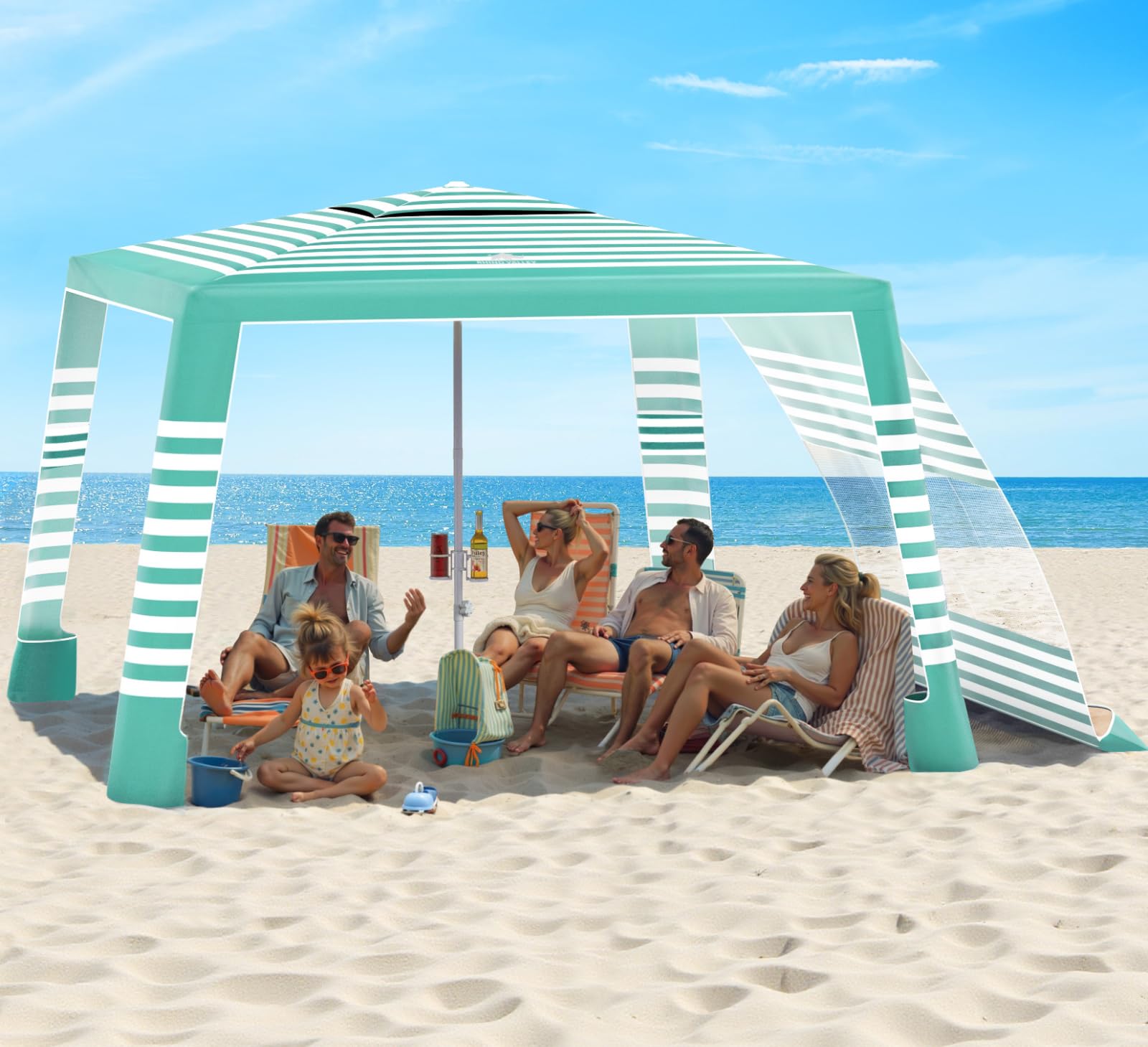
The Rhino Valley 10×10 strikes the hardest balance between wind resistance, ease of setup, and price in this entire category. Its four thickened aluminum poles resist bending in a way fiberglass simply cannot, while the eight sandbags — filled with sand using the included scoop — create a wide anchor footprint that keeps the canopy planted even when the breeze picks up to 15 knots. The Lycra fabric stretches slightly under tension, which reduces flapping noise and prevents tearing at stress points.
Setup takes about five minutes with two people, and the 100-square-foot floor area comfortably covers a family of four with chairs, a cooler, and towels. The 6.5-foot peak height means most adults can stand inside without crouching, though a six-foot-tall person will touch the center fabric. The included four windproof ropes provide additional anchoring points for particularly gusty conditions.
Customer reviews consistently praise its stability in strong winds, with multiple users reporting it held firm while nearby tents collapsed or blew away. The main trade-off is that the aluminum poles and sandbag system make it slightly heavier than pure pop-up tents, though the included carrying bag keeps transport manageable.
Why it’s great
- Thickened aluminum poles resist bending in high winds
- Eight sandbags create exceptional anchor stability
- Lycra fabric stretches to reduce flapping and tearing
Good to know
- Peak height is slightly lower than advertised for tall adults
- Plastic sand scoops may crack with heavy use
2. Rengue Beach Tent (10×10 FT)
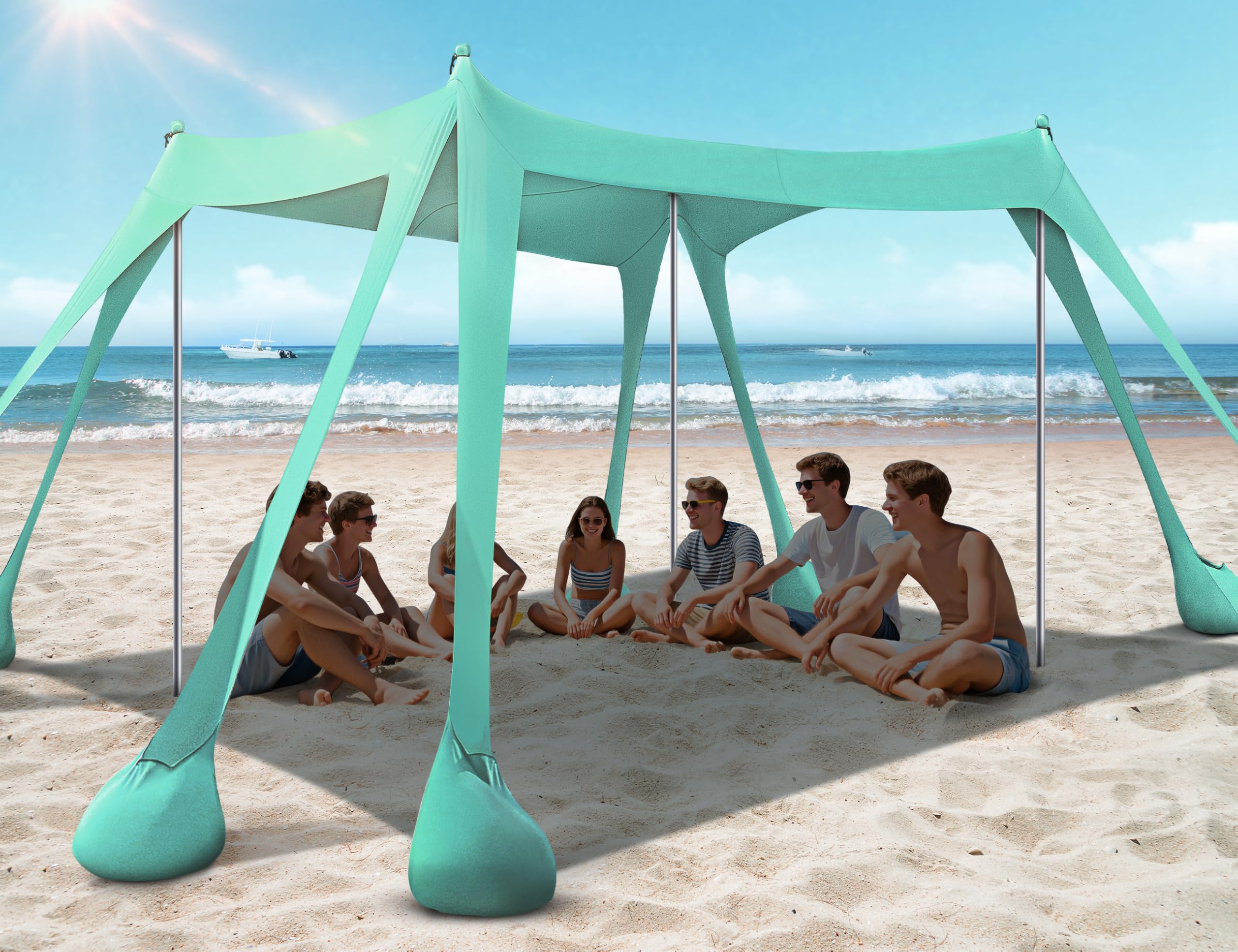
The Rengue 10×10 is the anchor king of this roundup, featuring eight large sandbags and eight guylines — double the tie-down points of most competing canopies. This overbuilt anchor system, combined with four thickened aluminum poles, makes it the most secure option for beaches where sustained winds are the norm rather than the exception. The Lycra fabric construction mirrors the Rhino Valley design but adds extra ground stakes for use on grass or packed sand.
Setup is straightforward but slightly more involved than a pure pop-up due to the number of sandbags that need filling and burying. The 100-square-foot canopy comfortably fits up to eight people, and the vibrant mint green color helps you spot your spot from a distance. The canopy can also be configured as a lean-to by using only two support poles, which is useful for blocking afternoon sun from a specific angle.
Real-world feedback from users on Florida beaches confirms it handles 10 to 15 knot winds without issue, provided the sandbags are fully filled and buried deep. The fabric stretches slightly in wind rather than resisting rigidly, which prevents the poles from taking the full force of gusts. The main downside is that rain can drip through the center seam in heavy downpours.
Why it’s great
- Eight guylines provide industry-leading wind anchoring
- Thickened aluminum poles resist bending under load
- Lycra fabric stretches to disperse wind force
Good to know
- Setup takes longer due to eight sandbags
- Center seam may drip water in heavy rain
3. Jihfmo 8×8 Large Beach Cabana Tent
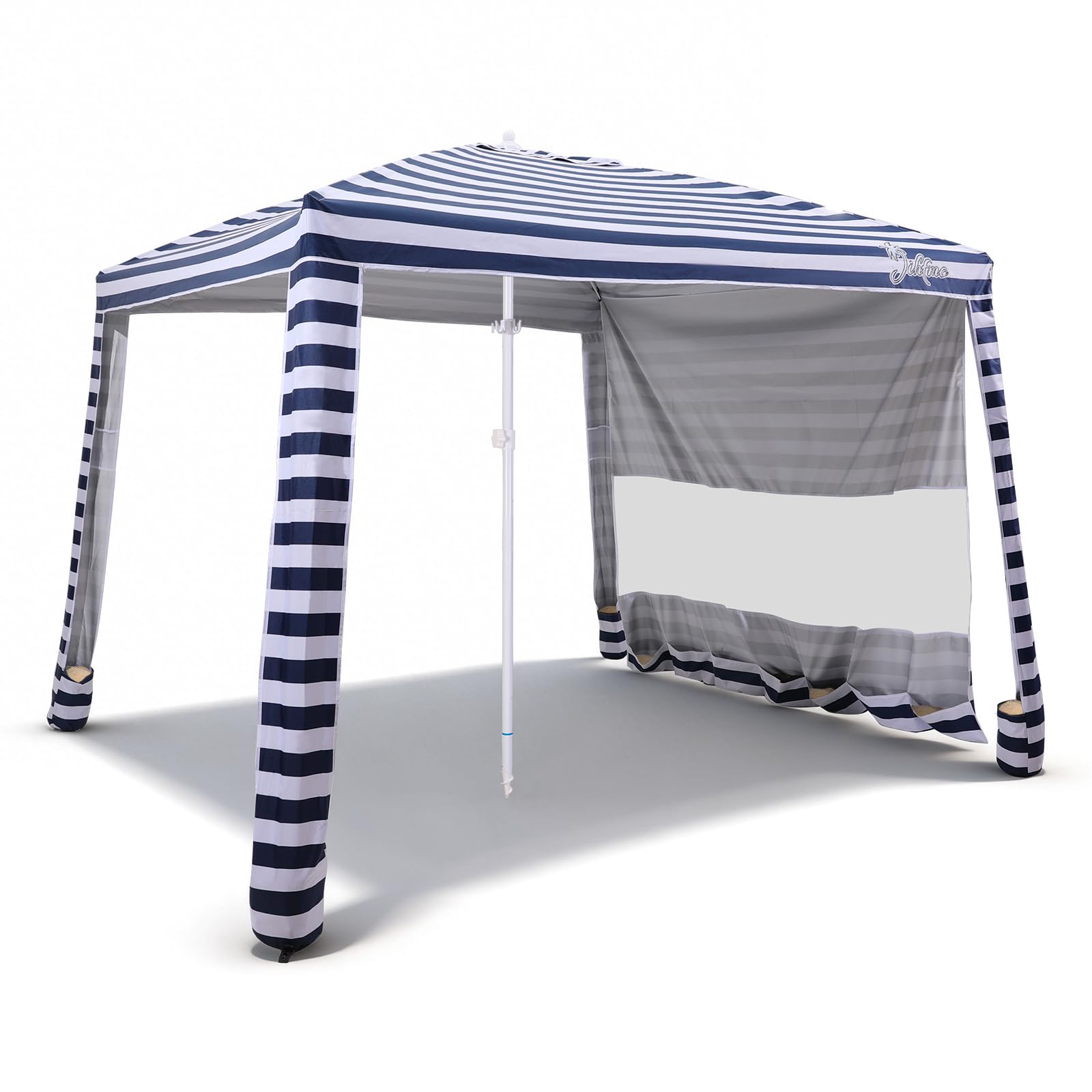
The Jihfmo cabana distinguishes itself through material quality and thermal performance. Its 300D polyester fabric with silver glue coating is noticeably thicker and more UV-reflective than the 210D fabric common on budget tents, actively reducing interior temperatures by up to 10 degrees Fahrenheit. The alloy steel frame provides stiffness that aluminum alone doesn’t match, though the trade-off is slightly higher weight.
The 64-square-foot footprint is smaller than the 10×10 canopies, but the sidewalls and included mesh panel create a more enclosed, private space that blocks wind from multiple directions. The integrated sand pockets and included durable sand shovel (metal, not plastic) make anchoring faster and more reliable. Setup takes under three minutes solo, and the three-section pole design collapses to a length that fits in compact car trunks.
Users consistently report it holds steady in beach winds where lighter tents fail, though one review noted a pole failure in extreme gusts. The blue-and-white stripe design adds a resort aesthetic that stands out on crowded beaches. The stitched setup guide inside the carry bag is a thoughtful touch that eliminates the need to keep track of paper instructions.
Why it’s great
- 300D silver-coated fabric reflects heat and UV effectively
- Alloy steel frame provides maximum rigidity
- Includes metal sand shovel for durable anchoring
Good to know
- Smaller footprint than 10×10 canopy alternatives
- Support rods can bend in extreme gust conditions
4. Solbello Shade Wind-Driven Beach Umbrella
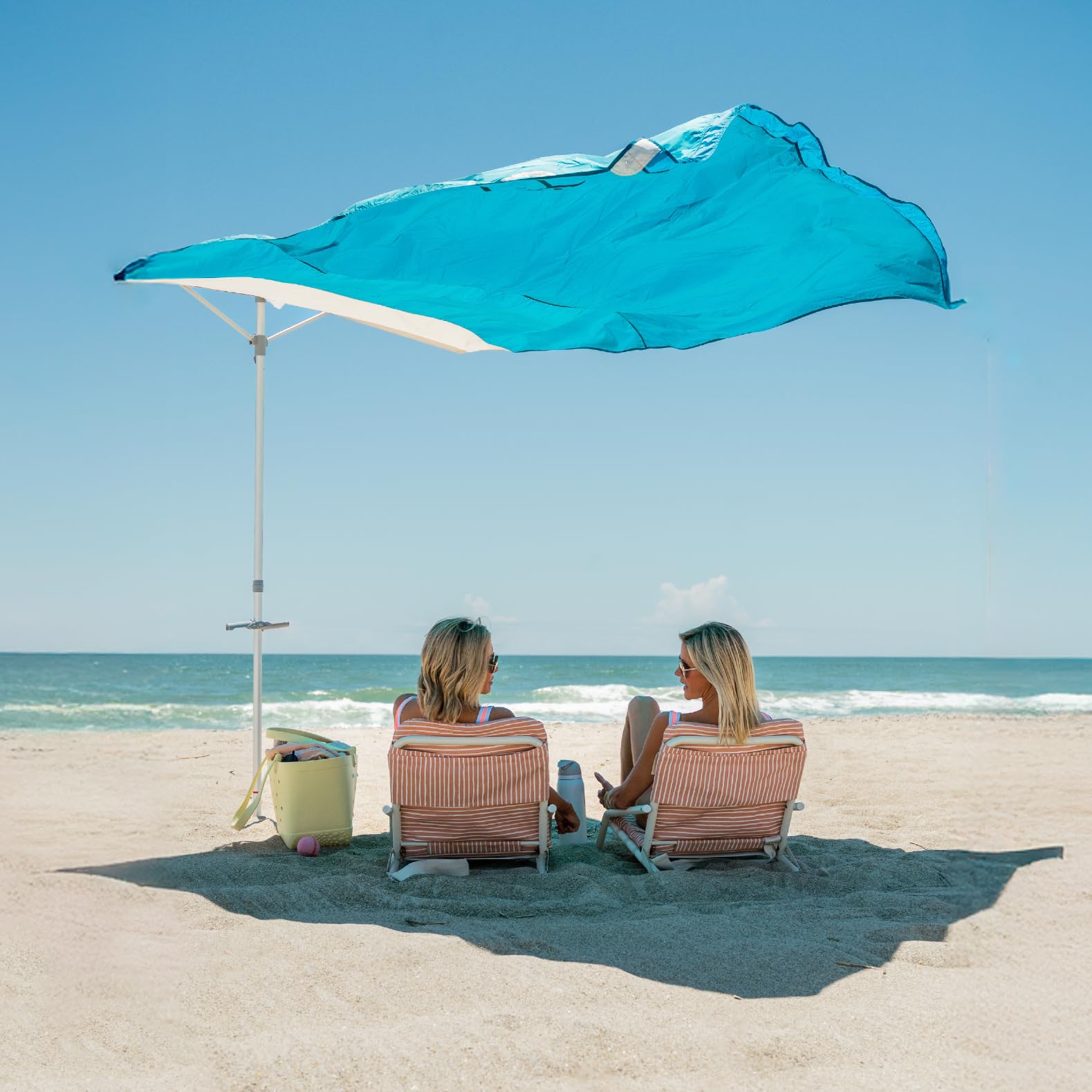
The Solbello Shade takes a completely different approach to wind resistance. Instead of a tent with sandbags, it uses a screw-in auger that drills deep into the sand, creating an anchor that won’t pull out even in 25 mph gusts. The canopy swivels with the wind direction, so it never presents a flat surface to gusts — the same principle that allows wind turbines to self-align. At just 4.52 pounds, it’s dramatically lighter than any tent in this comparison.
Setup takes about two minutes: twist the auger into the sand past the red indicator line, attach the canopy top, and adjust the angle. The canopy provides UPF 50+ shade for two people, making it ideal for couples or solo beachgoers who don’t need a full tent. Users report it surviving storms that toppled traditional umbrellas, though heavy gusts may require using the front stake holes to prevent rotation.
The main compromises are shade coverage and privacy. It covers less area than any tent here, and there are no sidewalls for wind blocking or changing. The plastic knob on the adjustment mechanism has been reported as a failure point by some users, who replaced it with a cotter pin for improved durability.
Why it’s great
- Screw auger anchor provides unmatched sand grip
- Self-swiveling canopy prevents wind from catching
- Weighs just 4.52 lbs for easy carrying
Good to know
- Shade area only suits 1-2 people
- Plastic adjustment knob may need reinforcement
5. Rhino Valley Beach Tent (10×13 FT)
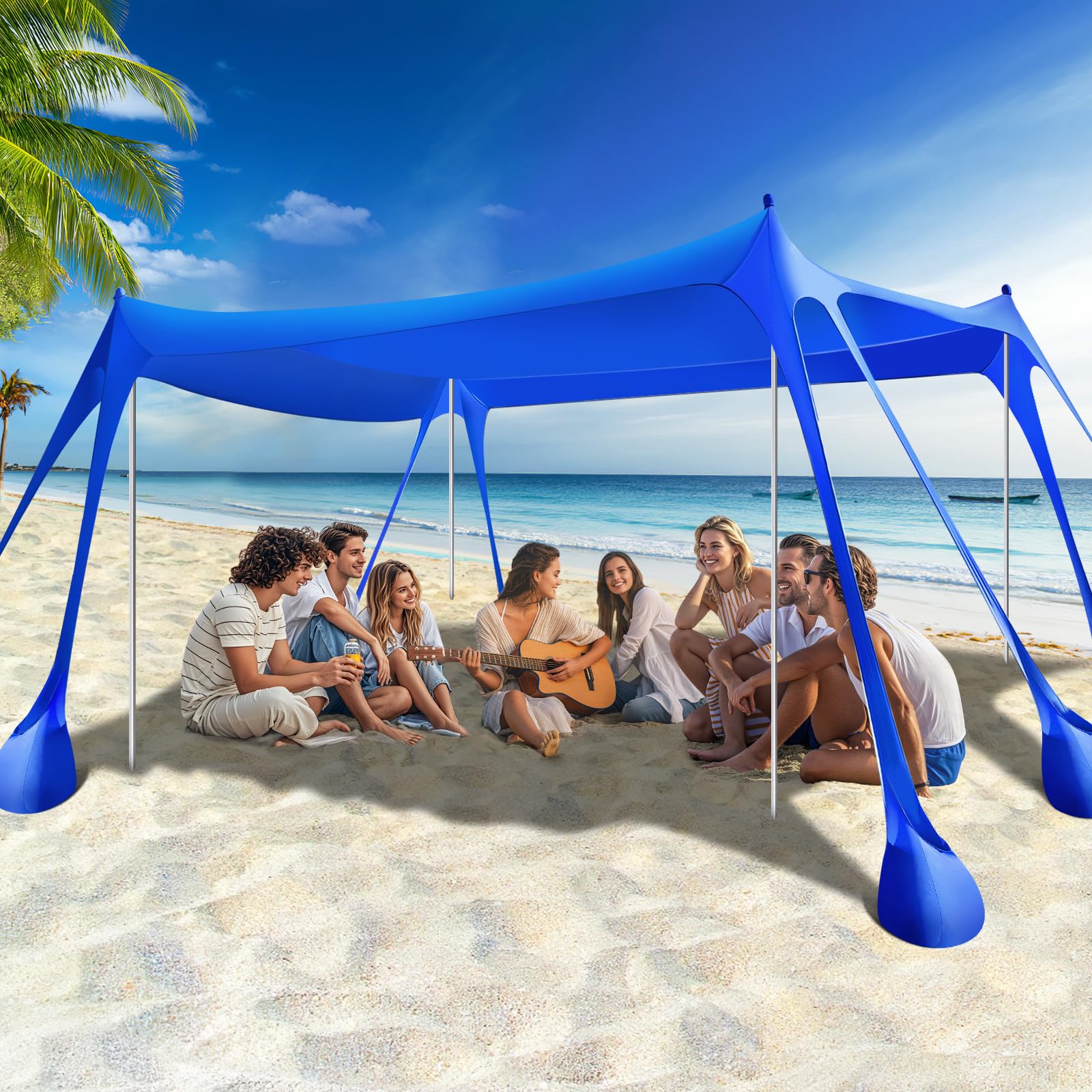
The 10×13 version of the Rhino Valley canopy delivers 130 square feet of shade coverage — enough for a full family gathering with multiple chairs, a cooler, and play space for kids. It shares the same wind-fighting DNA as the 10×10 version: four thickened aluminum poles, eight sandbags, four windproof ropes, and Lycra fabric that stretches under tension. The larger surface area naturally catches more wind, so proper sandbag burial is even more critical here.
Setup mirrors the 10×10 model, taking about five to ten minutes with two people. The peak height of 6.5 feet allows most adults to stand comfortably, though again, taller individuals will find the center fabric brushing their head. The included sand shovel is the same thin plastic design, which is functional but not built for heavy seasonal use. The indigo color is distinctive and doesn’t fade quickly in salt and sun exposure.
Customer feedback mirrors the smaller version — strong wind stability when anchored properly, with users consistently noting it holds up while nearby tents collapse. The trade-off for the extra space is a larger packed size and slightly more weight, though the carry bag is well-designed for transport. This is the best choice for large families who need maximum covered area without sacrificing wind performance.
Why it’s great
- Massive 130 sq ft covers large groups
- Aluminum poles and 8 sandbags provide strong wind stability
- Lycra fabric resists tearing under wind load
Good to know
- Larger surface area catches more wind if not anchored well
- Plastic sand scoops are the weak point in the kit
6. Rhino Valley Beach Cabana (8×8 FT)
The Rhino Valley 8×8 Cabana shifts from the canopy design to a pop-up cabana with a one-push mechanism that deploys the main structure in seconds. The metal poles are thickened to 1.4mm, which is 40% thicker than the 1.0mm fiberglass poles found on most pop-up beach tents — a meaningful difference for wind resistance. The 64-square-foot footprint is smaller than the canopies but includes a removable sidewall with mesh ventilation that promotes cross-breezes while blocking gusting wind.
The integrated roof vents are designed to reduce the pressure differential that causes tents to lift in gusts. Four built-in sandbags and two types of ground stakes complete the anchor system. A clever addition is the foldable dual-slot cup holder built into the center pole, which keeps drinks sand-free and within reach. The height is adjustable from 6.56 to 8 feet, making it the most versatile option for taller users.
User feedback is mixed on wind performance. Some report it holds well when properly staked, while others say the canopy catches wind easily and nearly blew over in moderate breezes. The construction quality is solid for its tier, but the center pole design has been criticized for being difficult to keep straight in gusts. It’s best suited for light to moderate wind conditions rather than exposed, consistently windy beaches.
Why it’s great
- One-push pop-up deploys in seconds
- Adjustable height up to 8 feet for tall users
- Roof vents reduce lift in gusty conditions
Good to know
- Center pole struggles to stay straight in stronger winds
- Material feels thinner than premium cabana alternatives
7. Old Bahama Bay Pop Up Beach Tent

The Old Bahama Bay Pop Up is the entry-level option that prioritizes immediate setup and low weight over heavy-duty wind resistance. Its fiberglass frame and pop-up mechanism allow deployment in seconds without any assembly, making it the best choice for solo parents or anyone who wants shade without a construction project. The 4-person capacity is realistic for two adults with gear, and the front extension adds extra floor space for activities.
Wind stability is adequate for light breezes but falls short of the aluminum-pole canopies in this comparison. The included sandbags and stakes provide basic anchoring, but reviewers consistently note that additional weights or stakes are needed on windy days. The 360-degree ventilation with three large mesh windows means wind passes through rather than pushing against solid walls, which helps somewhat with stability.
At its price point, this tent delivers excellent value for calm-weather beach trips, parks, and lakeside use. It folds down to a compact size that fits easily in a trunk or backpack. Users praise its lightweight design and how easy it is to manage alone, but anyone shopping specifically for wind resistance should budget for one of the aluminum-pole options higher in this list.
Why it’s great
- Pop-up design deploys in seconds with zero assembly
- Very lightweight and compact for easy carrying
- Three mesh windows provide excellent ventilation
Good to know
- Fiberglass frame flexes more than aluminum in wind
- Included sandbags may need supplementation on windy days
FAQ
Can I use a beach tent with fiberglass poles in windy conditions?
How do I properly anchor a beach tent in sand for wind resistance?
Should I choose a pop-up tent or a canopy for wind?
How much shade area do I need for a family of four?
Final Thoughts: The Verdict
For most users, the beach tent for wind winner is the Rhino Valley 10×10 because it combines four thickened aluminum poles with eight sandbags at a price that beats its peers. If you want maximum anchor points and the most overbuilt system, grab the Rengue 10×10 with eight guylines. And for solo or couple use where weight and setup speed matter most, nothing beats the Solbello Shade and its screw auger anchor.