
Freezing a fast-break layup or a last-second three-pointer demands a camera that can lock focus in a split-second and shoot clean frames as players move through harsh indoor gym lighting. The difference between a keeper and a blurry mess often comes down to autofocus tracking speed, burst rate, and how well the sensor handles mixed artificial light.
I’m Min — the co-founder and writer behind Gadgets Feed. I’ve spent hundreds of hours analyzing autofocus systems, continuous shooting speeds, and lens compatibility specifically to find which models give you the sharpest action frames from the sideline.
Every recommendation in this guide is built around real-world gym conditions, not spec sheets alone, so you can confidently choose the right camera for basketball games that won’t let you down when the game is on the line.
How To Choose The Best Camera For Basketball Games
Basketball is one of the most demanding indoor sports to shoot because of the combination of fast lateral movement, unpredictable height changes, and often poor gym lighting. Knowing which specs actually matter on the court helps you avoid wasting money on features that look good on paper but fail in real game conditions.
Autofocus Tracking & Burst Rate
The best camera for basketball games must have a phase-detection autofocus system with real-time subject tracking. Look for cameras that offer at least 8 frames per second (fps) continuous shooting. Higher burst rates (10-12 fps) dramatically improve your odds of catching the exact moment a player releases the ball or grabs a rebound. For gym use, the AF system needs to track a player running toward you without losing lock.
Low-Light Sensor Performance
Most high school and college gyms have mixed lighting — part fluorescent, part tungsten, often dim. A larger sensor (APS-C or full-frame) with good high-ISO performance lets you keep a fast enough shutter speed (1/500th or higher) to freeze motion without introducing excessive noise. Cameras that handle ISO 3200-6400 well are ideal for indoor basketball.
Lens Reach and Aperture
You generally want a lens that reaches at least 135mm (full-frame equivalent) to get close-up action from the sideline or baseline. A wider aperture (f/2.8 or f/4) helps let in more light, which directly improves shutter speed and autofocus accuracy indoors. Interchangeable lens cameras give you the flexibility to swap to a telephoto zoom for game day.
Quick Comparison
On smaller screens, swipe sideways to see the full table.
| Model | Category | Best For | Key Spec | Amazon |
|---|---|---|---|---|
| Canon EOS R6 Mark II | Mirrorless | Action freeze & low-light | 40 fps electronic shutter | Amazon |
| Sony a7 III | Mirrorless | Full-frame value | 693 phase-detection AF points | Amazon |
| Nikon Z50 II (Two-Lens Kit) | Mirrorless | Versatile zoom range | 231 AF points, 11 fps burst | Amazon |
| Sony Alpha a6100 (Two-Lens Kit) | Mirrorless | Budget-friendly reach | 0.02 sec AF, 11 fps burst | Amazon |
| FUJIFILM X-T30 III | Mirrorless | Compact with fast AF | 425 phase-detection AF points | Amazon |
| Nikon D7500 | DSLR | Reliable workhorse DSLR | 51-point AF, 8 fps burst | Amazon |
| Panasonic LUMIX G85 | Mirrorless | Stabilized 4K video | 5-axis IBIS + OIS lens | Amazon |
| XbotGo Falcon | Sport Camera | Auto-tracking for solo shooting | AI dual-lens 4K auto track | Amazon |
| Insta360 X5 | Action Camera | Reframe action later | 8K 360° video, FlowState | Amazon |
| Canon EOS Rebel T7 Bundle | DSLR | Entry-level starting point | 3 fps continuous shooting | Amazon |
| DJI Osmo Pocket 3 Creator Combo | Gimbal Camera | Pocket-sized 4K video | 3-axis gimbal, ActiveTrack 6.0 | Amazon |
In‑Depth Reviews
1. Canon EOS R6 Mark II (Body Only)

The Canon EOS R6 Mark II delivers the single most compelling autofocus and burst-rate package for capturing basketball. With an electronic shutter capable of up to 40 fps and a mechanical shutter at 12 fps, it can freeze a player mid-dunk or catch the instant a ball leaves a shooter’s fingertips. The Dual Pixel CMOS AF II system detects heads, faces, and eyes, even tracking the left or right eye, which is critical when a point guard drives through traffic.
Its 24.2-megapixel full-frame sensor performs superbly at high ISO levels, keeping noise low and detail sharp even in dimly lit high school gyms. The 8-stop in-body image stabilization helps keep tight shots steady when you’re shooting handheld from the baseline. The vari-angle touchscreen lets you frame low-angle shots near the court without lying on the floor.
Being body-only means you will need to budget for an RF lens — pairing it with something like the RF 70-200mm f/2.8 or an adapted EF 70-200mm f/2.8 gives you the reach and aperture that truly unlock its potential for indoor sports. The 5 GHz Wi-Fi and Bluetooth 5 make transferring selects to your phone fast between quarters.
Why it’s great
- 40 fps electronic burst with zero blackout
- Exceptional subject tracking for faces and eyes
- Clean high-ISO files up to 6400 for indoor gyms
- Dual card slots for backup during tournament shoots
Good to know
- Body-only — requires a separate RF telephoto lens
- No built-in flash (rarely needed for sports)
- Buffer may slow after extended 40 fps bursts
2. Sony a7 III (with 28-70mm Lens)

The Sony a7 III remains one of the most capable full-frame cameras for indoor sports at its price point. Its 24.2-megapixel back-illuminated Exmor R sensor offers 15 stops of dynamic range and exceptional low-light performance, producing usable images at ISO 6400 that still hold detail in the shadows under bleacher lighting. The 693 phase-detection AF points cover 93% of the image area, making it easy to keep a fast-moving player sharp across the frame.
At 10 fps with continuous AF/AE tracking, you won’t miss the rhythm of a fast break. The included 28-70mm f/3.5-5.6 kit lens is useful for sideline shooting at closer range, but you will want a longer telephoto zoom (like the FE 70-200mm f/4 or f/2.8) to get tight action from the baseline. The a7 III’s battery life is outstanding, lasting through an entire tournament day on a single charge.
Its menu system is deeper than some competitors, but once you set up the custom buttons for AF tracking mode and burst shooting, the camera becomes very fast to operate during a game. The silent electronic shutter option is useful when you need to shoot without distracting players at the free-throw line.
Why it’s great
- Full-frame sensor with class-leading high-ISO performance
- 693-point hybrid AF nails moving subjects
- Over 700 shots per charge — perfect for all-day events
- Silent shutter mode for unobtrusive shooting
Good to know
- Kit lens lacks reach for tight action shots
- Menu layout can be slow to navigate during a game
- 10 fps burst is lower than newer mirrorless models
3. Nikon Z50 II (with Two-Lens Kit)

The Nikon Z50 II is a lightweight APS-C mirrorless camera that ships with two lenses — the Z DX 16-50mm f/3.5-6.3 VR and the Z DX 50-250mm f/4.5-6.3 VR — giving you a full-frame equivalent reach of about 375mm at the long end. That 250mm zoom is enough to fill the frame with a player at the three-point line when you are positioned baseline-side. The 231-point hybrid autofocus system detects people, dogs, cats, birds, and vehicles, and it tracks faces reliably during a fast break.
The 20.9-megapixel DX sensor performs well at moderately high ISOs, though you will want to keep it under ISO 3200 to avoid heavy noise. The 11 fps burst rate with continuous AF is adequate for catching peak action in a jump shot or a chase-down block. The 31 built-in Picture Control presets let you dial in a look that cuts through dull gym lighting — the Vivid and Portrait presets work well for basketball.
It includes a built-in flash, which is unusual in its class, but for basketball you will likely keep it off to avoid harsh shadows. The SnapBridge app makes transferring a few key images to your phone between quarters trivial. The camera is weather-sealed, giving you peace of mind if you shoot outdoor tournaments.
Why it’s great
- Includes 50-250mm lens for solid sideline reach
- Lightweight enough to hold steady for a full game
- Built-in flash and weather sealing
- Easy color presets for quick social media share
Good to know
- APS-C sensor struggles above ISO 3200
- Kit lens variable aperture limits low-light performance
- No in-body stabilization (relies on lens VR)
4. Sony Alpha a6100 (with 16-50mm + 55-210mm)

The Sony a6100 brings Sony’s lightning-fast 0.02-second autofocus and Real-time Eye Tracking to an entry-level body, making it a surprisingly capable basketball camera for the cost. The 24.2-megapixel APS-C Exmor sensor with front-end LSI delivers clean files up to ISO 3200, and the 425 phase-detection AF points cover the frame densely enough to track players cutting to the basket. The two-lens kit includes the 16-50mm f/3.5-5.6 OSS II and the 55-210mm f/4.5-6.3 OSS, giving you an equivalent reach of about 315mm at the long end.
The 180-degree tiltable touchscreen makes it easy to shoot from low angles — useful for baseline layup sequences. At 11 fps with AF/AE tracking, the a6100 can capture a rapid dribble drive sequence. The 4K movie mode with full pixel readout oversamples the image, producing high-quality video if you need to record game footage for analysis.
The a6100 is compact, which helps if you need to move quickly between courts. The main trade-off is the lack of in-body stabilization, so you will need to keep shutter speeds above 1/500th to avoid motion blur, especially at the telephoto end. The menu system is Sony’s older generation, so take time to customize the Fn button for AF area and drive mode.
Why it’s great
- Real-time Eye AF tracks players reliably
- 55-210mm lens provides useful telephoto reach
- Compact and lightweight for traveling between courts
- 4K video with no pixel binning
Good to know
- No in-body stabilization — relies on lens OSS
- Small buffer capacity for extended burst shooting
- Older menu interface takes time to learn
5. FUJIFILM X-T30 III (with XC13-33mm Lens)
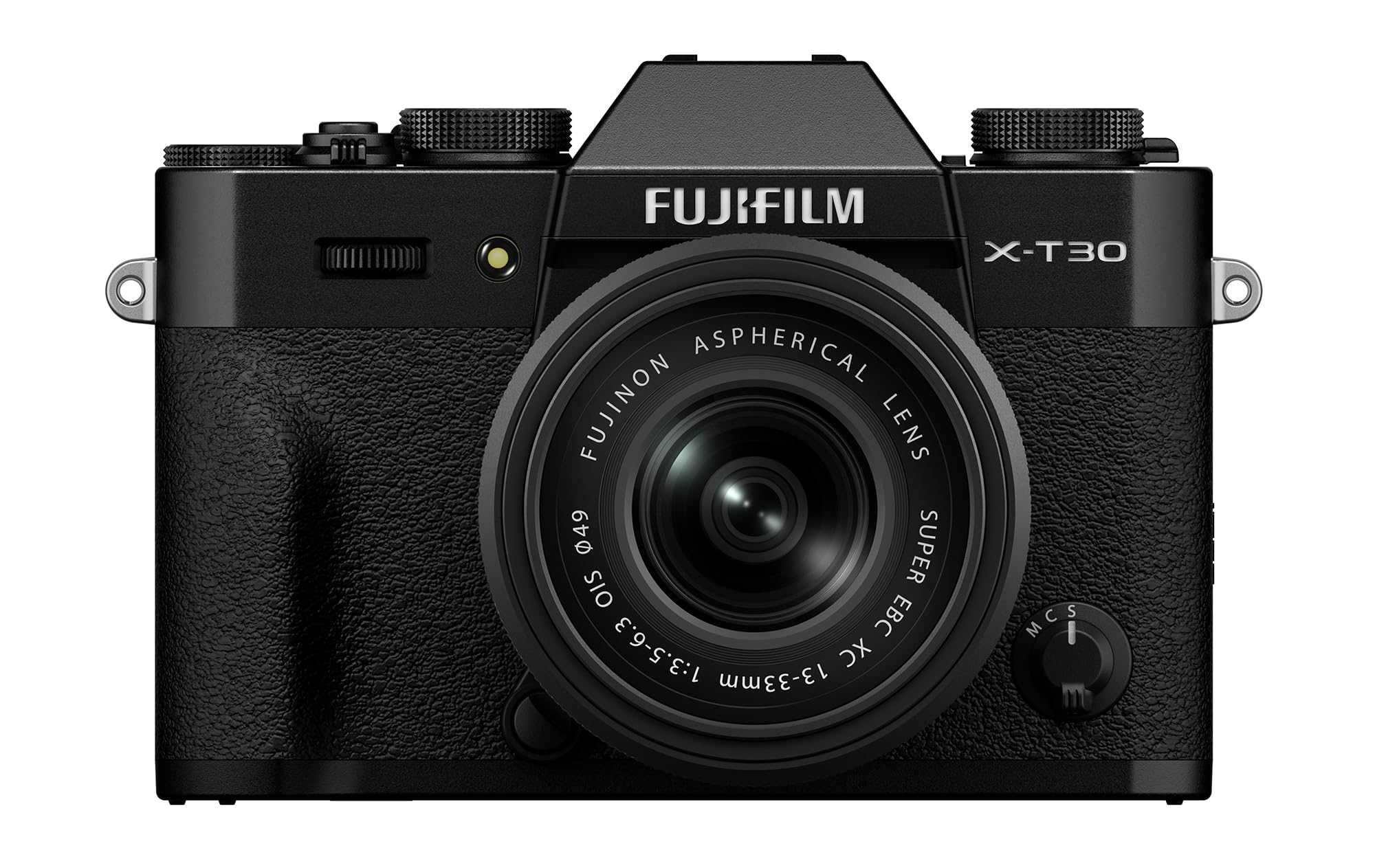
The FUJIFILM X-T30 III offers a compact body with AI-powered subject detection autofocus that works well for tracking players moving across the key. Its 425 phase-detection AF points snap onto subjects fast, and the Real-time AF tracking can follow a player through a pick-and-roll. The 26-megapixel X-Trans CMOS 4 sensor (APS-C) handles ISO 3200 well, and Fujifilm’s Film Simulations — especially the Astia and Provia presets — give images a pleasing warmth that cuts through the cold fluorescent light of most gyms.
The included XC13-33mm f/3.5-6.3 OIS lens is a versatile wide-to-short-tele option, but its equivalent reach of roughly 50mm (full-frame) at the long end is not nearly enough for baseline or sideline basketball. You will need to invest in the FUJINON XF 55-200mm f/3.5-4.8 or the XF 70-300mm f/4-5.6 to get the reach required for tight court action. The body has no in-body stabilization, so lens OIS or a monopod becomes important for telephoto shots.
The X-T30 III is one of the most portable options here, making it easy to bring to away games. The lack of a full mechanical burst cap and a relatively small buffer mean it is better suited to shooting in shorter bursts — great for a few decisive moments per quarter rather than holding the shutter down for entire possessions.
Why it’s great
- AI subject detection tracks players and faces
- Compact body is easy to carry all day
- Film Simulations deliver great color out of camera
- Excellent build quality and tactile dials
Good to know
- Kit lens is too short for basketball — buy a telephoto
- No in-body stabilization
- Burst buffer fills quickly at high frame rates
6. Nikon D7500 (with AF-S DX 18-140mm Lens)

The Nikon D7500 is a proven DSLR that borrows autofocus and metering technology from Nikon’s flagship D500. Its 51-point AF system with 15 cross-type sensors and group-area AF is particularly good at tracking a player weaving through defenders. At 8 fps continuous shooting, it keeps up with most of the action, and the large optical viewfinder gives you a clear, lag-free view of the court — a real advantage when you need to anticipate a fast break.
The 20.9-megapixel APS-C sensor delivers excellent image quality up to ISO 6400, and the 18-140mm f/3.5-5.6 VR lens (27-210mm equivalent) provides enough reach to frame action from the sideline or baseline. The 3.2-inch tilting touchscreen LCD makes it easy to shoot from low angles, and the battery life is exceptional, easily lasting through an entire tournament day.
Being a DSLR, the D7500 is larger and heavier than mirrorless alternatives, which can be fatiguing during long games. The optical viewfinder also means what you see is not exactly what the sensor captures in terms of exposure — you need to rely on the meter. But for sheer reliability, fast phase-detection AF through the viewfinder, and excellent glass compatibility with F-mount lenses, this is a strong choice for anyone who prefers a traditional shooting experience.
Why it’s great
- 51-point AF with 15 cross-type sensors tracks well
- 8 fps burst with deep buffer for extended shooting
- Excellent battery life for all-day tournaments
- Large, bright optical viewfinder with no lag
Good to know
- Heavier and bulkier than mirrorless alternatives
- Optical viewfinder doesn’t show exposure preview
- Only one UHS-I SD card slot
- No 4K 60fps video
7. Panasonic LUMIX G85 (with 12-60mm Lens)

The Panasonic LUMIX G85 is a Micro Four Thirds mirrorless camera that excels at video recording for basketball games, thanks to its 5-axis in-body image stabilization (IBIS) that works in both photo and video modes. The IBIS is effective enough to produce smooth handheld footage from the sideline, even when you zoom in on the action. The 16-megapixel sensor (no low-pass filter) captures good detail, and the kit includes the 12-60mm f/3.5-5.6 Power O.I.S. lens (24-120mm equivalent), which covers wide team shots to mid-range isolation.
It records 4K QFHD video at 30fps, and the 4K Photo mode lets you pull 8-megapixel stills from video at 30 fps — a useful feature if you want to capture a dunk sequence and select the exact frame later. The DFD autofocus is contrast-based but performs well in good light; in dimmer gyms, it can hunt. The tilting touchscreen helps you monitor framing when shooting from a tripod.
The G85’s main limitation is its smaller Micro Four Thirds sensor, which struggles more than APS-C or full-frame cameras in very low light. Noise becomes noticeable above ISO 3200. For bright gyms or games with good overhead lighting, the G85 is a very capable and compact hybrid shooter that offers incredible stabilization value for its tier.
Why it’s great
- 5-axis IBIS provides rock-steady handheld video
- 4K Photo mode lets you grab 8MP frames from video
- Compact and lightweight body is easy to handle
- Weather-sealed magnesium alloy build
Good to know
- Small MFT sensor limits high-ISO performance
- Contrast-based AF hunts in dim light
- No headphone jack for video monitoring
- Kit lens reach (120mm equiv.) is shorter than ideal
8. XbotGo Falcon All-in-One AI Camera
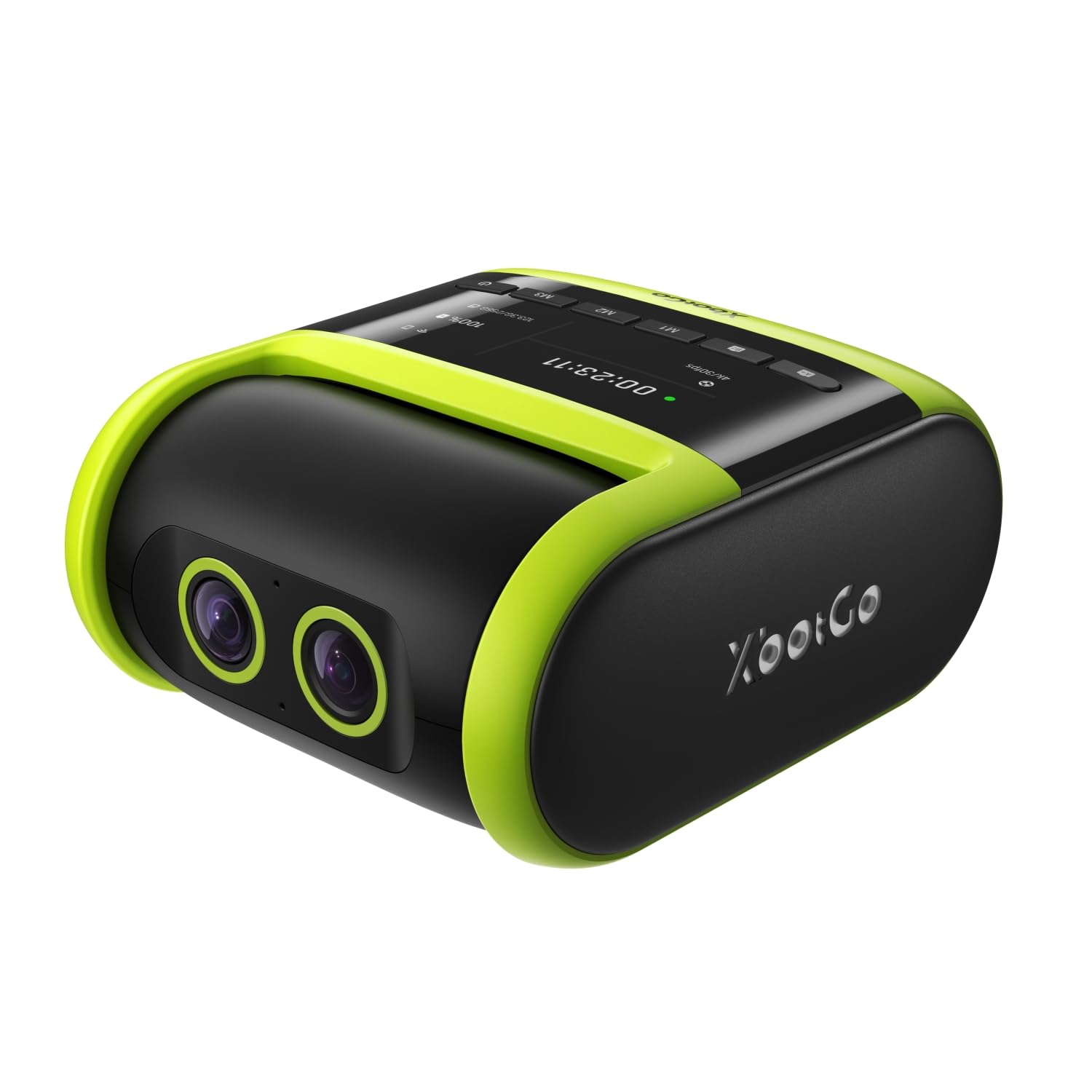
The XbotGo Falcon is designed specifically for team sports like basketball, with an AI-powered auto-tracking system that uses a dual-lens setup — one 4K recording lens and one AI-assisted tracking lens — to follow the ball and players across the court. The 6 TOPS AI processor and 8-core CPU handle the tracking calculations in real time, and the camera pans and tilts smoothly on a built-in gimbal to keep the action centered. This is a game-changer for parents or coaches who want to record games without having to physically follow the action.
It records in 4K and supports live streaming via the built-in Wi-Fi, so you can broadcast the game to friends and family. No subscription is required for the tracking features. The camera has a 1.6x digital zoom and a standard 1/4-inch screw mount, so you can mount it on a sturdy tripod. The IPX5 water resistance means it can handle the occasional outdoor game or light rain.
Battery life is claimed to last a full game, but for extended tournaments, the USB-C port allows continuous external power. The main caveat is that the digital zoom is not optical — you are cropping into the 4K frame, so digital zoom at 1.6x will degrade image quality compared to a dedicated telephoto lens. The tracking can occasionally lag during very fast transitions, but typically self-corrects quickly.
Why it’s great
- AI auto-tracking frees you to just watch the game
- 4K video with no subscription fees
- Live streaming built-in for remote family
- IPX5 weather resistant for outdoor courts
Good to know
- Digital zoom reduces 4K quality when zoomed in
- Tracking can lag slightly during fast transitions
- Requires a tall, sturdy tripod (not included)
- Battery not removable — needs USB-C power for long events
9. Insta360 X5

The Insta360 X5 is a different approach to basketball footage: it records 360° video in 8K resolution using dual 1/1.28-inch sensors, which means you can place the camera at center court and later reframe the footage to follow any player or any direction. This is extremely useful for coaching analysis, as you can watch the entire court develop from every angle. The FlowState stabilization and 360° Horizon Lock keep the horizon level even if the camera is bumped during setup.
The triple AI chip design improves low-light performance compared to earlier models, which is crucial for indoor gyms. The Invisible Selfie Stick effect creates a third-person view, and the new Wind Guard on the 4-mic array improves audio clarity for sideline commentary. It is waterproof to 49ft without a case, so an outdoor game in rain is not an issue. The battery lasts up to 208 minutes and charges to 80% in 20 minutes.
The trade-off is that 360° video requires post-production reframing — you cannot just share the raw 360° file and expect viewers to see the action. The app makes this relatively easy with AI editing tools, but it adds an extra step. The X5 is also not a traditional camera; you are shooting everything and choosing the angle later, which is a workflow adjustment for anyone used to framing shots in real time.
Why it’s great
- Reframe any angle after the game — never miss a play
- Excellent stabilization without a gimbal
- Waterproof to 49ft for outdoor tournament versatility
- Fast charging (80% in 20 minutes)
Good to know
- Requires app-based reframing — not a traditional camera
- 8K resolution splits across 360° — individual subject detail lower than dedicated telephoto
- MicroSD card not included
- Battery drain is noticeable during continuous recording
10. Canon EOS Rebel T7 Bundle
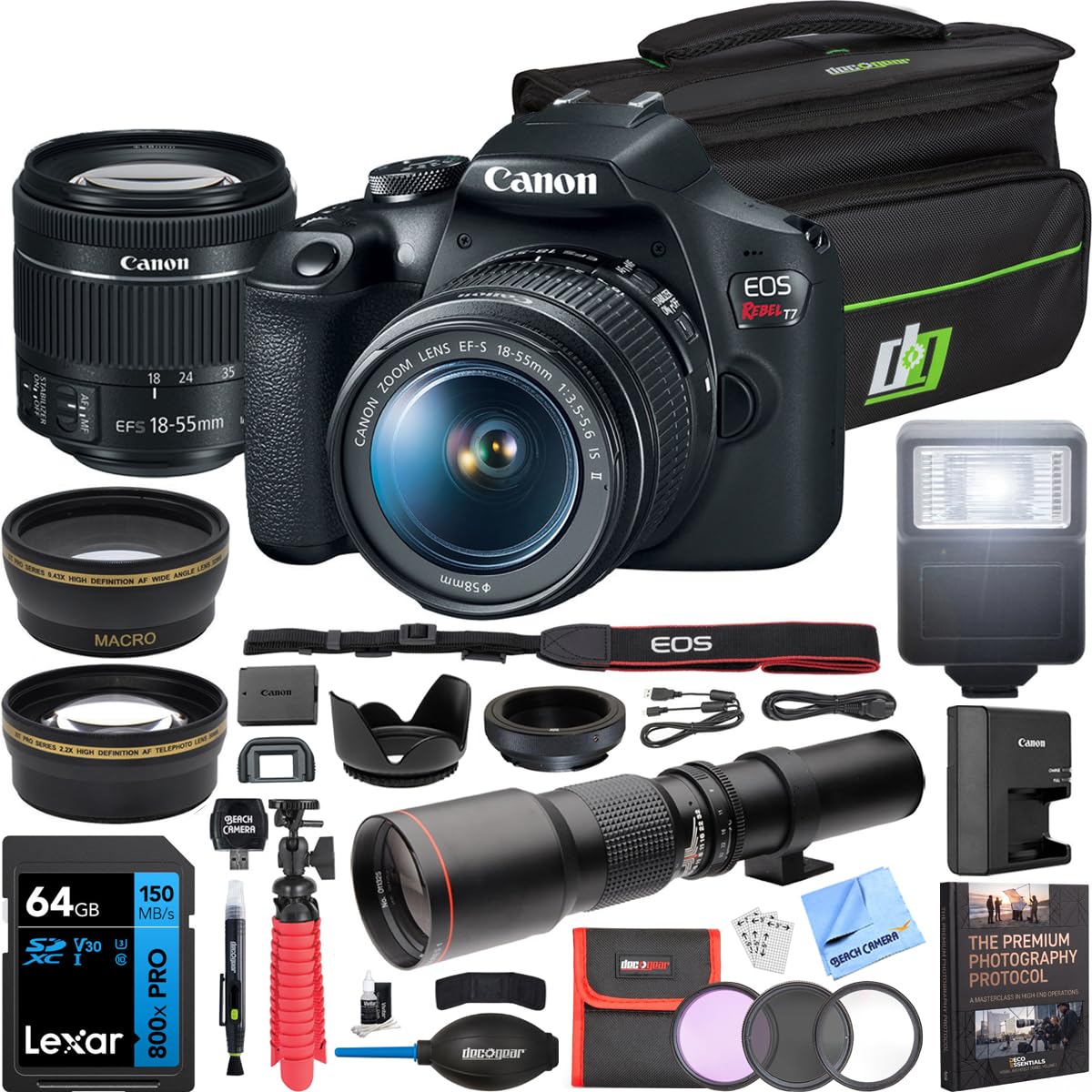
The Canon EOS Rebel T7 is an entry-level DSLR that, while affordable, is severely limited for basketball due to its 3 fps continuous shooting speed. At 3 frames per second, you will almost certainly miss the exact moment a player releases a shot or catches a pass in traffic. The 9-point autofocus system also lacks the modern tracking algorithms needed to keep a moving player sharp as they cut toward the basket.
The 24.1-megapixel APS-C sensor is capable of decent image quality when the action is paused, but the ISO ceiling of 6400 (expandable to 12800) introduces noticeable noise in dim gyms. The kit 18-55mm f/3.5-5.6 lens (29-88mm equivalent) is far too short for sideline work — the bundled 500mm preset telephoto lens seems impressive but is essentially a manual-focus optic with very slow aperture, making it nearly unusable for indoor action. The add-on accessories (bag, flash, tripod) add some value for beginners, but the core camera spec is simply not designed for fast indoor sports.
The Rebel T7 works as a general starter camera for family events or still photography, but if basketball is your primary subject, you will quickly outgrow its capabilities. For a similar budget, the XbotGo Falcon or the Sony a6100 two-lens kit offer much more practical performance for game-day shooting.
Why it’s great
- Very affordable entry point into interchangeable lens cameras
- 24.1MP sensor produces good quality for static shots
- Bundle includes many accessories for beginners
- Simple interface and easy learning curve
Good to know
- 3 fps burst rate is too slow for basketball action
- 9-point AF cannot track moving players reliably
- Kit lens reach (88mm equiv.) is far too short
- Bundle telephoto lens is manual-focus and slow
11. DJI Osmo Pocket 3 Creator Combo
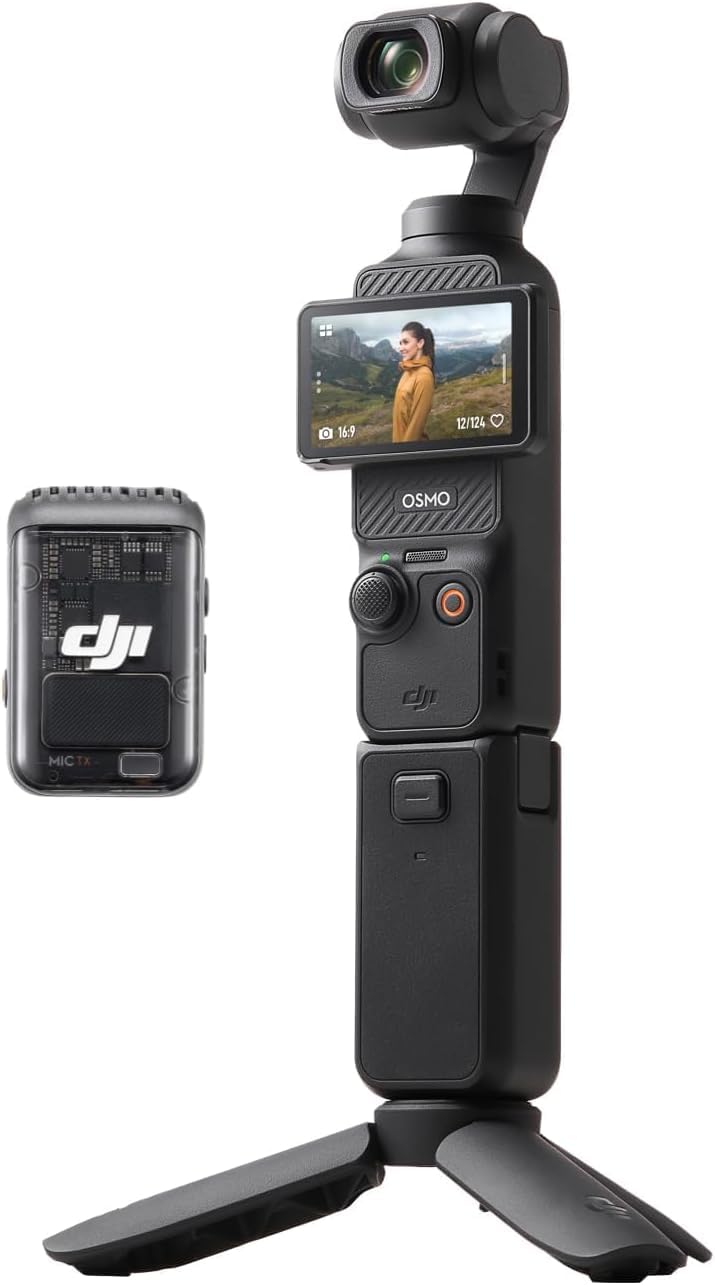
The DJI Osmo Pocket 3 is an ultra-compact gimbal camera that fits in a jacket pocket, yet delivers surprisingly good 4K video thanks to its 1-inch CMOS sensor and 3-axis mechanical stabilization. For basketball, this camera is best suited for capturing short sideline clips, warm-up sequences, or fan perspective shots — the ActiveTrack 6.0 can lock onto a player and keep them centered as they move around the court. The 2-inch rotating touchscreen makes framing easy, and the flip between horizontal and vertical is seamless for social media content.
The Creator Combo includes the DJI Mic 2 transmitter, which improves audio capture significantly if you are recording interviews with coaches or players between games. The battery handle extends run time, and the mini tripod helps set it up on the bench for a static wide shot of the court. The 4K/120fps recording capability means you can slow down a dunk or a pass for replay analysis.
The main limitation is that the Osmo Pocket 3 has no optical zoom — you are limited to a 20mm equivalent f/2.0 fixed lens. This means you cannot zoom in to follow a player at the far end of the court; you are stuck with a wide-angle view. The 2x digital zoom crops into the 4K signal, which reduces quality. For close-up action, you need to be physically near the court. It is a great supporting camera for B-roll and court ambiance, but not a primary tool for capturing tight game action.
Why it’s great
- Incredibly portable — fits in a pocket
- 3-axis gimbal delivers butter-smooth video
- ActiveTrack 6.0 tracks moving subjects reliably
- Creator Combo includes wireless mic and tripod
Good to know
- Fixed wide-angle lens — no optical zoom
- Digital zoom degrades image quality
- Not ideal for capturing tight game action from the bleachers
- Gimbal mechanism is delicate — needs careful handling
FAQ
What is the best shutter speed for basketball photography?
Do I need a full-frame sensor for indoor basketball?
What lens should I use for basketball from the baseline?
Final Thoughts: The Verdict
For most users, the camera for basketball games winner is the Canon EOS R6 Mark II because its combination of 40 fps burst, Dual Pixel CMOS AF II tracking, and excellent high-ISO performance gives you the highest probability of capturing decisive game moments in any gym. If you want a full-frame setup with better value, grab the Sony a7 III. And for a fully automatic, hands-off recording solution, nothing beats the XbotGo Falcon for parents and coaches who want to focus on the game, not the camera.