
Mounting your action camera to a helmet, handlebar, or chest rig captures incredible footage, but fumbling for the tiny start/stop button on the camera itself defeats the purpose. You need a reliable trigger that lets you focus on the ride, the dive, or the climb, not the device strapped to your gear.
I’m Min — the co-founder and writer behind Gadgets Feed. I’ve spent countless hours analyzing the wireless protocols, battery chemistries, and mounting hardware of dozens of action camera remotes to separate the reliable triggers from the frustrating duds.
After cross-referencing Bluetooth range claims, waterproofing specs, and multi-camera sync capabilities across six different models, this guide identifies the best action camera remote control for every shooting scenario from track days to surf sessions.
How To Choose The Best Action Camera Remote Control
Not all action camera remotes are created equal. A cheap remote with a flaky Bluetooth connection will leave you missing key moments, while a premium unit with GPS and multi-camera sync might be overkill if you only shoot with one body. Here are the critical factors to weigh.
Bluetooth Version and Connection Reliability
The wireless protocol determines how quickly your remote wakes the camera and how stable the connection remains in signal-dense environments like a ski resort or a busy motorcycle parking lot. Bluetooth 5.0 or 5.1 offers significantly better range and interference rejection than older 4.0 or 4.2 chips. Pay close attention to user reports about re-pairing frequency — a remote that drops connection mid-run is worse than no remote at all.
Waterproofing vs. Water Resistance
A silicone plug over the USB port is not the same as an IP68 rating. Remotes that rely solely on a rubber flap can corrode internally after repeated exposure to saltwater or pressure washing. For kayaking, surfing, or riding in heavy rain, prioritize a remote with a sealed, gasketed enclosure and a confirmed depth rating — not just a marketing phrase like “waterproof build.”
Battery Endurance and Charging Speed
Action camera remotes range from 5 hours of continuous use to a claimed 96 hours. The difference often comes down to whether the remote has a power-saving sleep mode and how aggressive the auto-shutdown timer is. A remote that dies halfway through a day of shooting is a failure. Also check recharge time; a model that takes 30 minutes to charge is far more convenient than one that needs three hours.
Mounting Versatility and Button Layout
The best remote is the one that stays where you put it. Look for a design with side through-holes that allow both horizontal and vertical strap threading, enabling wrist wear, handlebar mounting, or attachment to a selfie stick. Button count matters too — a dedicated start/stop button is ideal, while a multi-function button that requires mode cycling can cause you to accidentally switch modes instead of recording.
Quick Comparison
On smaller screens, swipe sideways to see the full table.
| Model | Category | Best For | Key Spec | Amazon |
|---|---|---|---|---|
| TELESIN T13 | Premium | Multi-camera DJI setups | 1.4″ HD screen, 60m range | Amazon |
| Insta360 GPS Action Remote | Premium | GPS data & Insta360 ecosystem | GPS/GLONASS, Bluetooth 5.0 | Amazon |
| Suptig Waterproof WiFi Remote | Mid-Range | GoPro sync & LCD status | WiFi, 5h battery, LCD screen | Amazon |
| Ruichipower Bluetooth Remote | Mid-Range | Universal Insta360 & GoPro | 96h battery, 50m range | Amazon |
| Naivvy Bluetooth Remote | Mid-Range | Budget-friendly dual-strap kit | Bluetooth 5.1, 96h battery | Amazon |
| YDW Bluetooth Remote | Budget-Friendly | DJI Osmo-specific control | Waterproof, 50m range | Amazon |
In‑Depth Reviews
1. TELESIN T13 Bluetooth Waterproof Remote
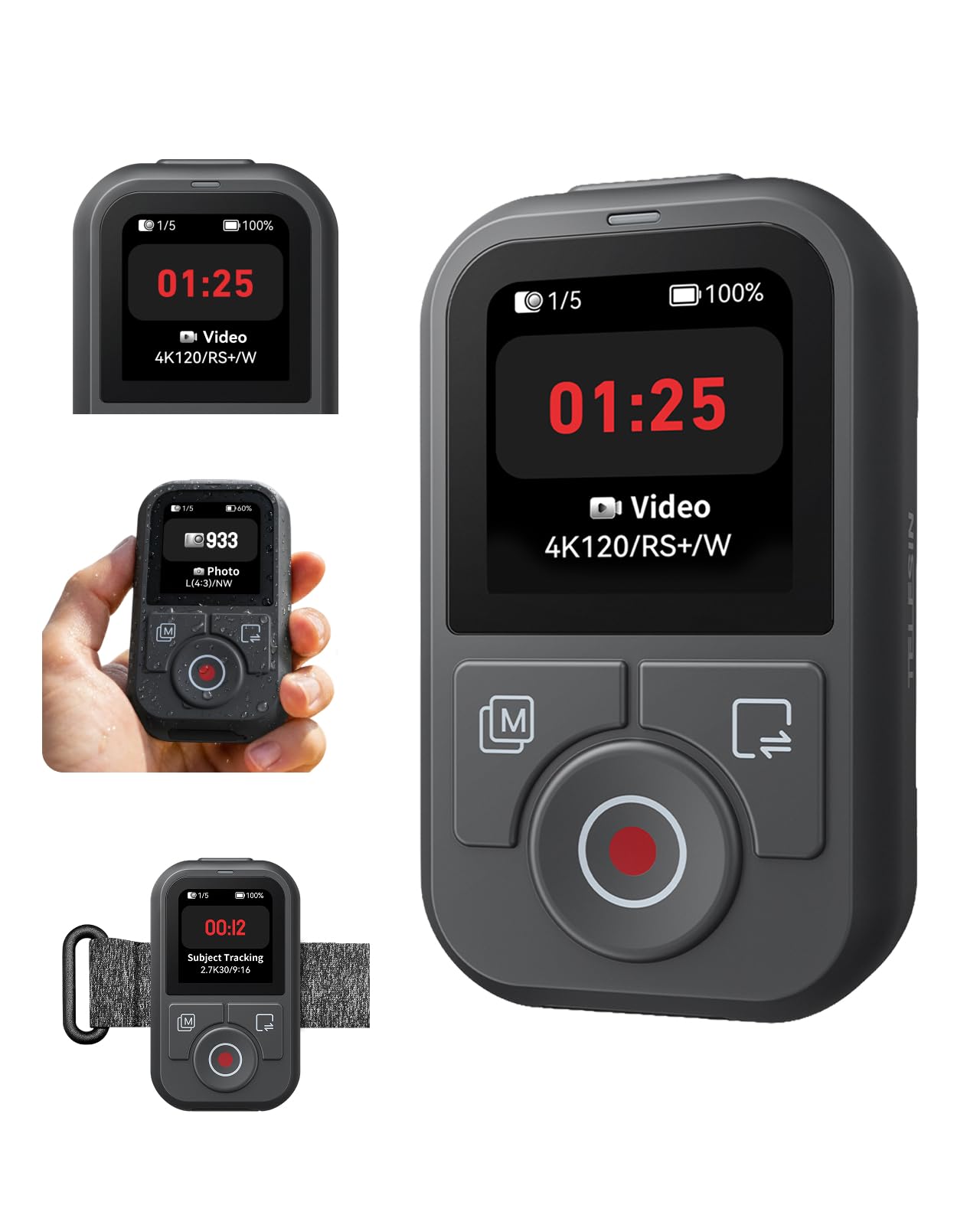
The TELESIN T13 stands apart from every other remote in this roundup because of its built-in 1.4-inch HD color screen. While most remotes rely on tiny indicator LEDs, this display shows your current shooting mode, recording status, and battery level in real time — eliminating guesswork when the camera is mounted somewhere you can’t see it. It supports up to four DJI Osmo Action cameras simultaneously, making it a legitimate multi-cam tool for creators running synchronized rigs.
Under the hood, the T13 uses Bluetooth with a rated range of 60 meters, which outpaces the 50-meter standard found on most competitors. The waterproof design with a silicone USB plug is rated for wet conditions, and the 8-hour battery life comfortably covers a full day of adventure shooting. One-click wake and instant capture mean you never have to wait for the remote to re-establish a connection before pressing record.
The adjustable wrist strap is functional, though some users have found the velcro band too rigid for comfortable all-day wear and have improvised lanyard solutions. Pairing multiple cameras requires a specific sequence, and a full reset may be necessary if you hit the four-camera limit and need to reconfigure. But for serious DJI shooters needing multi-camera start/stop sync, the T13 delivers capabilities no other third-party remote in this price tier offers.
Why it’s great
- Full-color HD screen shows mode, recording status, and battery at a glance
- Supports simultaneous control of up to 4 DJI cameras for seamless multi-cam recording
- Longer 60-meter Bluetooth range and 8-hour battery endurance
Good to know
- Wrist strap design is awkward for some; a lanyard works better
- Pairing multiple cameras can be finicky and may require a factory reset
2. Insta360 GPS Action Remote

The Insta360 GPS Action Remote is the only model in this comparison that integrates GPS, GLONASS, Galileo, and BeiDou satellite data into your video workflow. Beyond simply starting and stopping recording, this remote embeds real-time speed, altitude, and route information directly into your Insta360 footage, enabling automatic data overlays during editing without any post-hoc sync effort. It pairs exclusively with the Insta360 ecosystem — including the X3, X4, ONE RS, and GO 3 — making it a mandatory accessory for anyone serious about motovlogging or geospatial content.
The remote uses Bluetooth 5.0 for reliable connection, supports remote camera wake even when the device is powered off, and is waterproof to 5 meters. The build quality is notably sturdier than third-party alternatives, with a dense, rubberized body that feels confidence-inspiring in wet or gloved hands. The single-button layout is intentionally minimalist — press to record, press again to stop — which reduces the risk of accidental mode switching during dynamic activities.
At roughly double the price of generic Bluetooth remotes, the GPS feature is the primary value proposition. If you never use telemetry overlays, you are paying a significant premium for functionality you won’t use. The auto-shutdown timer is aggressive — the remote times out and disconnects faster than most users prefer — and the battery life, while adequate, does not match the 96-hour claims of cheaper alternatives. The waterproofing has also drawn scrutiny; the rubber USB cover has been reported to leak, causing corrosion on the charging port.
Why it’s great
- Embedded GPS/GLONASS/BeiDou chips overlay real-time speed, altitude, and route data on video
- Remote wake function starts the camera even from a powered-off state
- Rugged, rubberized build with 5-meter waterproof depth rating
Good to know
- Only works within the Insta360 camera ecosystem
- Aggressive auto-shutdown timer; battery does not last a full day of heavy use
- USB cover has been reported to leak, risking port corrosion
3. Suptig Waterproof Wireless Remote Control

The Suptig remote takes a different approach from the Bluetooth competition by using WiFi to connect to GoPro cameras. This enables a unique advantage: it can display camera status on its built-in LCD screen, including single shot, burst, continuous shooting, and time-lapse modes, synced directly from the camera. For GoPro Hero 5 through Hero 8 Black users, this provides a level of on-remote feedback that Bluetooth-only remotes cannot match. It also supports controlling up to 50 cameras simultaneously, which is overkill for most users but powerful for multi-camera production.
The trade-off with WiFi is battery life and connection reliability. Connection reliability is inconsistent; some users report stable performance within 10 feet while others experience frequent dropouts and the need to re-pair before each use.
Physical build quality is solid, with a waterproof design rated to 2 meters and an included kit that features a wrist strap, lanyard, key ring, and microfiber pouch. The 4-button layout includes dedicated mode, shutter, and power controls. However, the Suptig is not compatible with GoPro Hero 9 or newer models, severely limiting its relevance for current-generation GoPro owners. For those still shooting on Hero 5-8, it is a capable and screen-equipped option, but its future-proofing is zero.
Why it’s great
- LCD screen displays camera mode and status synced directly from the GoPro
- Waterproof to 2 meters with a comprehensive mounting accessory kit
- Can theoretically control up to 50 cameras simultaneously
Good to know
- Only works with GoPro Hero 5 through Hero 8 Black — not compatible with newer models
- WiFi connection drains GoPro battery significantly faster than Bluetooth
- Connection stability is inconsistent; some units require frequent re-pairing
4. Ruichipower Bluetooth Remote Control

The Ruichipower remote targets two overlapping pain points: battery anxiety and compatibility. It claims 96 hours of continuous operation from a single charge, which is roughly 19 times the endurance of the Suptig WiFi remote. For multi-day expeditions where access to USB charging is unreliable, this endurance advantage is decisive. The remote pairs with both Insta360 cameras — including the full X-series, Ace Pro line, ONE RS, and GO 3S — and GoPro Hero 8 through 13, along with Android and iOS phones, making it one of the most broadly compatible remotes in the lineup.
Five physical buttons provide dedicated controls for power, mode, shutter, and settings, reducing the likelihood of accidental mode-switching. The mounting system uses 4-side base through-holes that allow both horizontal and vertical strap threading, enabling attachment to handlebars, selfie sticks, neck mounts, backpack clips, and steering wheels. The remote is advertised as waterproof with a silicone USB plug, suitable for rain and surf conditions.
Initial Bluetooth pairing can be fussy, with some users reporting the need for multiple power button presses or a factory reset of the camera to establish a connection. One reviewer specifically reported that it does not connect to the Insta360 Ace Pro 2 on the latest firmware, which is a significant compatibility gap if you own that specific camera. When it does connect, however, the remote stays linked throughout the day without dropouts, and the light-touch start/stop action is a genuine improvement over the stiff, sporadic button on some Insta360 models.
Why it’s great
- Class-leading 96-hour battery life eliminates recharging during multi-day trips
- Broad compatibility across Insta360, GoPro Hero 8-13, and smartphone cameras
- 5-button layout with flexible 4-side strap mounting for handlebars, poles, and wrists
Good to know
- Pairing can be fussy; some users need multiple attempts or a camera reset
- Reportedly incompatible with Insta360 Ace Pro 2 on current firmware
- Waterproofing relies on a silicone plug rather than a fully sealed gasket
5. Naivvy Bluetooth Remote Control
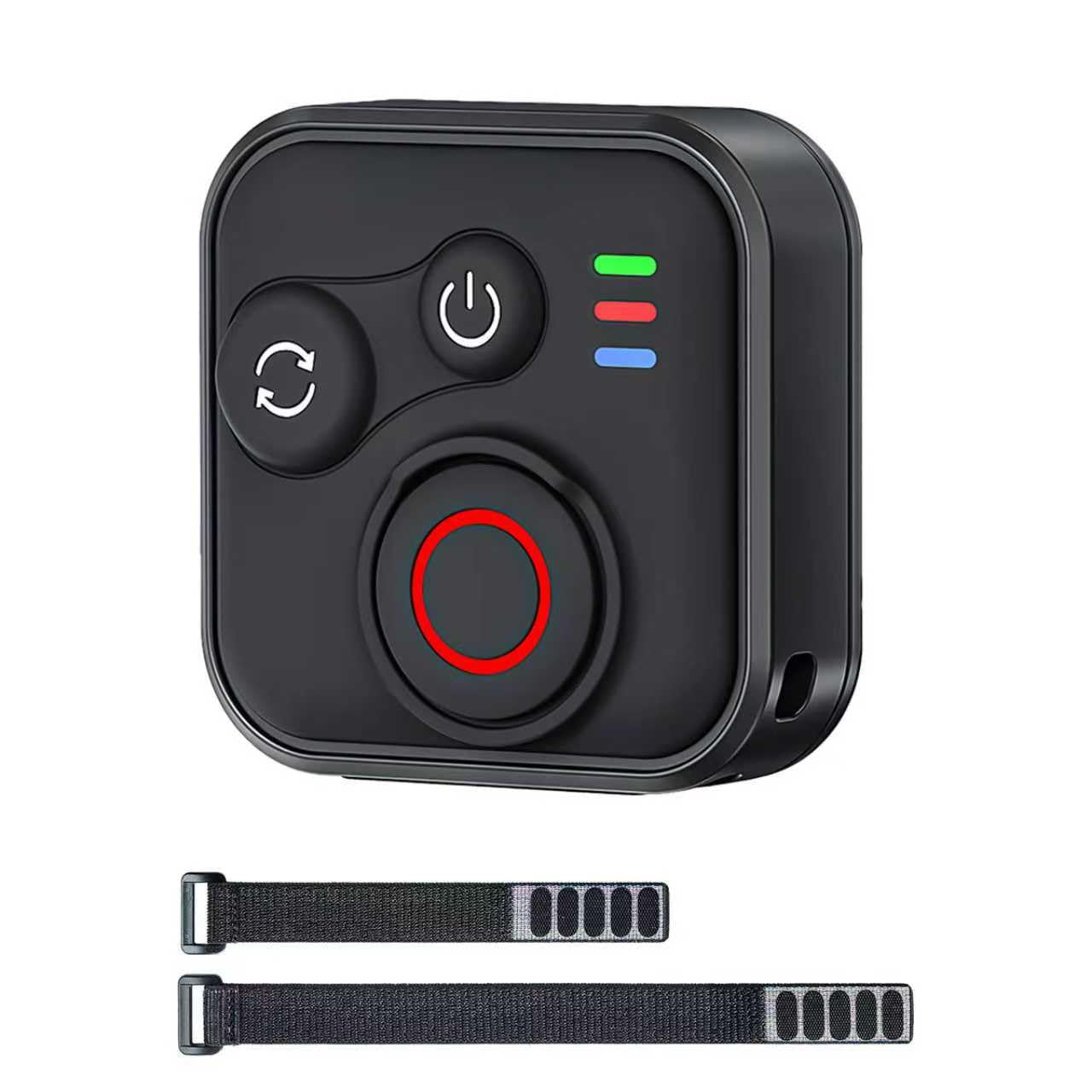
The Naivvy remote matches the Ruichipower on battery stamina with a stated 96-hour runtime, but it uses the newer Bluetooth 5.1 chipset for improved signal stability in noisy environments. It claims a reliable minimum range of 20 meters even in areas with signal interference, with a maximum of 50 meters in open conditions. This is one of the few budget-tier remotes that explicitly addresses interference-reduced range, a realistic concession for users filming in crowded areas like bike parks or ski resorts.
The two-strap system includes an extended wrist strap designed for most wrist sizes and a separate mounting strap for bicycle handlebars, selfie sticks, neck mounts, steering wheels, and backpack clips. The three-button layout is simpler than the five-button Ruichipower, with dedicated power and shutter controls plus a mode button. The waterproof build uses the same silicone plug approach common on entry-level remotes, making it rain-safe but not ideal for prolonged submersion.
Connectivity consistency is the Naivvy’s weak point. While it pairs with GoPro Hero 8-13, Insta360 X-series, and the Ace and ONE R/RS lineups, some users report that it takes its time establishing a connection and has a tendency to disconnect during use. One reviewer noted Bluetooth interference with their motorcycle’s stereo system when the remote was active. For the price, the balance of features is strong, but if your shoot requires absolute connection reliability, the TELESIN T13 or the Insta360 GPS remote are safer bets.
Why it’s great
- Bluetooth 5.1 chip offers better interference handling than earlier versions
- Extended wrist strap fits comfortably over gloves and bulky gear
- 96-hour battery life matches the best in this roundup
Good to know
- Connection can be slow to establish and prone to disconnecting mid-session
- May cause Bluetooth interference with vehicle stereo systems when active
- Three-button layout lacks dedicated settings control
6. YDW Bluetooth Remote Control
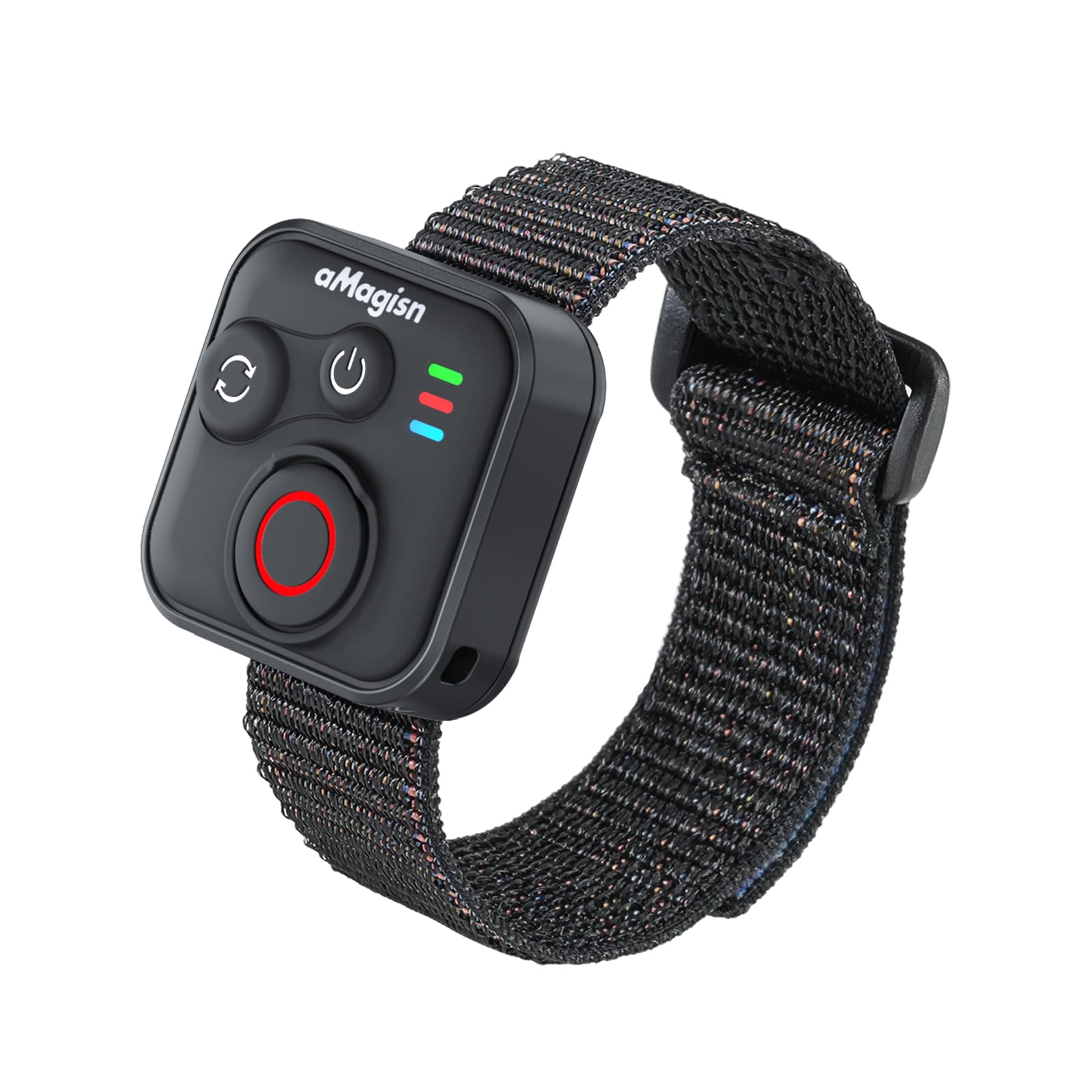
The YDW remote is purpose-built for the DJI ecosystem, specifically compatible with the DJI Osmo Action 6, Osmo Action 5 Pro, Action 4, and DJI Osmo 360. This focused compatibility means instant pairing with no multi-camera negotiation — it simply works with DJI action cameras out of the box. Multiple users have reported that the YDW outperforms DJI’s own remote in responsiveness, with no missed button presses or delayed trigger responses, at a significantly lower entry point.
The mounting kit includes two straps: a short wrist strap for close-range sports and a longer strap for bicycle, motorcycle, or backpack attachment. The 50-meter Bluetooth range is standard for this class, but the real-world reliability is exceptional — track day users report that the remote mounts near the dashboard of a race car and triggers the rear-mounted Osmo reliably without any reach or helmet removal. The waterproof design with a silicone USB plug handles rain and surf conditions, though it is not rated for deep submersion.
Battery life is not explicitly specified beyond “ultra-long,” which is less helpful than the 96-hour claims from competitors. The buttons are simple and responsive, with LED indicators for power, connection, and recording status. The primary limitation is the lack of multi-camera sync — this remote controls one camera at a time, so creators running a two-camera DJI rig will need two remotes or a different solution like the TELESIN T13.
Why it’s great
- Plug-and-play pairing with DJI Osmo Action 4/5 Pro/6 and Osmo 360
- Reliable, low-latency button response — often better than the native DJI remote
- Compact design with two strap options for wrist and handlebar mounting
Good to know
- Controls only one camera at a time; no multi-camera sync support
- Battery capacity and runtime are not clearly specified by the manufacturer
- Waterproofing is limited to rain and splashes, not full submersion
FAQ
Can one remote control multiple action cameras at the same time?
Why does my Bluetooth remote keep disconnecting from my camera?
Is WiFi or Bluetooth better for an action camera remote?
Final Thoughts: The Verdict
For most users, the best action camera remote control winner is the TELESIN T13 because its 1.4-inch HD screen, 60-meter range, and four-camera sync capability set a new standard for third-party DJI remotes. If you need GPS telemetry overlays for motovlogging or geospatial content, grab the Insta360 GPS Action Remote. And for multi-day expeditions where battery endurance is the top priority, nothing beats the Ruichipower Bluetooth Remote with its 96-hour runtime.