
Neck and shoulder pain often starts not with a bad mattress or poor office chair, but with the bag you carry every single day. A poorly designed backpack or sling forces your shoulders to round forward and your neck to crane, turning a simple commute into a source of chronic tension. The right bag reverses this by engineering the load transfer to follow your body’s natural biomechanics rather than fight them.
I’m Min — the co-founder and writer behind Gadgets Feed. I spent countless hours analyzing ergonomic load-distribution systems, crossbody weight-balance designs, and ventilation frames to find the bags that actively protect your neck and shoulders rather than just carrying stuff.
Make no mistake — choosing from the right bags for neck and shoulder pain is more than a comfort upgrade; it’s a daily intervention against the postural damage your commute and daily carry can cause.
How To Choose The Best Bags For Neck And Shoulder Pain
The market is flooded with bags claiming ergonomic comfort, but only a few genuinely reduce strain on your cervical spine and trapezius muscles. The key is to look beyond the marketing and focus on engineering that shifts weight from your shoulders to your stronger core.
Suspension System & Load Transfer
The most critical feature is how the bag transfers weight to your body. Look for a frame or contoured back panel that channels the load downward toward your hips rather than letting it pull straight back on your shoulders. Backpacks with a sternum strap and hip belt dramatically reduce the moment arm of the load against your neck.
Crossbody Balance vs. Backpack Symmetry
Crossbody slings distribute weight across your entire torso, keeping your spine aligned if packed correctly. Backpacks offer symmetrical loading but need proper compression straps to prevent the load from shifting and causing one shoulder to compensate. The best choice depends on your daily weight—under six pounds, a sling can work; above that, a backpack is safer.
Ventilation and Frame Contact
A bag that sits flush against your back traps heat and forces you to carry the load closer to your body, which can pull your shoulders forward. A ventilated spacer or mesh back panel creates an air gap, reducing sweat and allowing the bag to sit in a more supportive position without promoting a slouched posture.
Quick Comparison
On smaller screens, swipe sideways to see the full table.
| Model | Category | Best For | Key Spec | Amazon |
|---|---|---|---|---|
| Osprey Axis Laptop Backpack | Laptop Backpack | Commuter & College | AirScape backpanel with ventilation | Amazon |
| The North Face Vault Everyday Laptop Backpack | Laptop Backpack | Everyday Ergonomic Support | ACA-endorsed FlexVent suspension | Amazon |
| AmeriBag 19″ Microfiber Healthy Back Bag | Crossbody Sling | Travel & Daily Organizer | Anti-pickpocket design, 19″x11″x7″ | Amazon |
| AmeriBag 17″ Nylon Ergonomic Crossbody Sling | Crossbody Sling | Lightweight Everyday Carry | Multiple wearing positions | Amazon |
| Osprey Daylite Shoulder Sling Bag | Sling Bag | Grab-and-Go Minimalist | Breathable ambidextrous strap | Amazon |
| VentaPak Lightweight Ventilation Backpack Spacer | Backpack Accessory | Adding Ventilation to Any Bag | Reinforced aluminum frame | Amazon |
| High Sierra Loop-Backpack | Daypack Backpack | Budget-Friendly Daily Carry | Suspension system for load dampening | Amazon |
In‑Depth Reviews
1. Osprey Axis Laptop Backpack

The Osprey Axis is the reference standard for a neck-and-shoulder-friendly commuter pack. Its AirScape backpanel uses a tensioned mesh that keeps the pack weight close to your center of gravity while allowing airflow across your lumbar region — preventing the hunching that triggers trapezius tightness.
Internally, the 26-liter capacity is organized with a padded laptop sleeve for most 16-inch devices, a fleece-lined pocket for sunglasses, and a well-structured front organizer. The external compression straps cinch the load tight against the frame, eliminating sway that can torque your shoulders during a brisk walk or bike ride.
Reviewers consistently praise the balanced strap geometry and lightweight feel — the whole pack weighs only 1.64 pounds — which reduces the baseline strain even when empty. The lack of a sternum buckle is a minor oversight, but the strap shape stays put on most torsos.
Why it’s great
- AirScape ventilated backpanel reduces sweat and improves load stability
- Fleece-lined pocket and 3-compartment design keep gear from shifting
- Ultra-lightweight at 1.64 lb, minimizing base strain
Good to know
- Missing a sternum strap for securing the load on active movement
- Compression straps not designed for cross-buckle carry
2. The North Face Vault Everyday Laptop Backpack

The North Face Vault holds the distinction of being endorsed by the American Chiropractic Association, and that credential is backed by real engineering. The FlexVent suspension system uses a flexible yoke with injection-molded shoulder straps that curve away from the neck, reducing pressure on the cervical spine.
The back panel features a padded mesh section paired with a breathable lumbar panel. This design allows the lower back to bear a portion of the 27-liter load, shifting the center of gravity downward. The sternum strap further locks the pack in place, preventing the shoulder straps from sliding outward, which can cause neck strain.
Real-world users note the bag feels “weightless” even when fully loaded with a laptop, binders, and a water bottle. The water-repellent finish and self-standing structure add convenience, but the real value is the zero-compromise posture support that prevents your shoulders from rounding forward.
Why it’s great
- ACA-endorsed FlexVent suspension reduces cervical spine strain
- Breathable lumbar panel distributes weight to the lower back
- Sternum strap locks shoulder straps in an optimal position
Good to know
- Padded laptop sleeve fits up to a 15-inch device, not larger
- Main compartment can feel tight when packed with heavy winter layers
3. AmeriBag 19″ Microfiber Healthy Back Bag
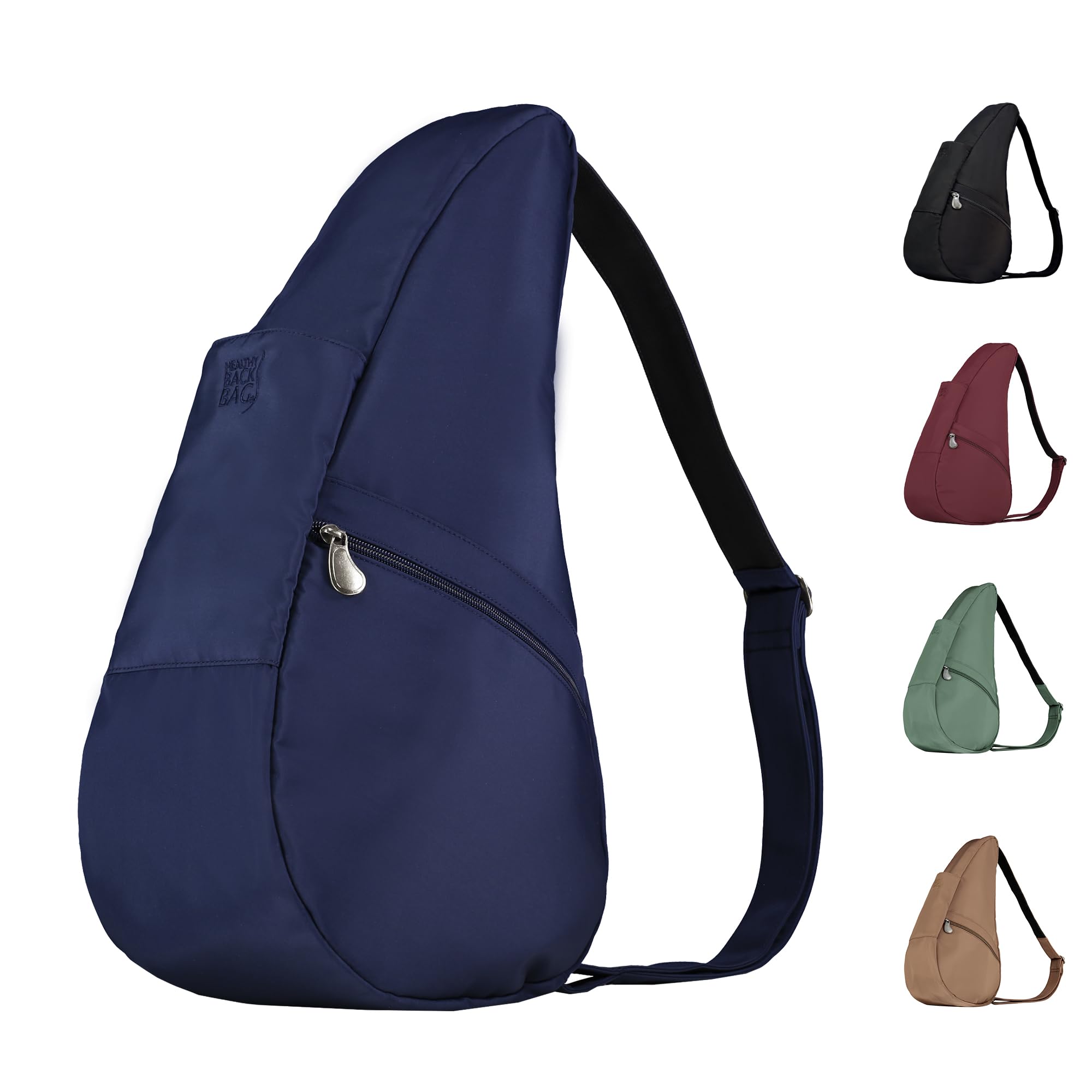
The AmeriBag Healthy Back Bag is a pioneer in the ergonomic crossbody category, and the 19-inch microfiber version refines the formula. Its asymmetrical shape is designed to sit across the small of your back, distributing weight evenly across your torso rather than pulling on one shoulder or the neck.
The quality of organization is exceptional — 7 inside pockets, a padded zippered e-reader slot, outside water bottle holder, and a key clip. The magnetic closure on the main compartment is a welcome upgrade over velcro, eliminating the abrasive noise that can aggravate tension headaches. The water and stain-resistant microfiber means you can take this bag through airport security and rainy commutes without worry.
Long-term users report owning these bags for a decade or more, citing the machine-washable fabric and durable zippers. The only notable trade-off is that the neoprene shoulder strap can slide on some materials, requiring occasional readjustment to keep the bag from shifting off-center.
Why it’s great
- Asymmetrical design balances weight across the entire torso
- 11 robust pockets keep small items from creating uneven load
- Microfiber exterior resists stains and is machine washable
Good to know
- Neoprene strap can slide off the shoulder on smooth fabrics
- Side phone pocket may not fit larger modern smartphones easily
4. AmeriBag 17″ Nylon Ergonomic Crossbody Sling
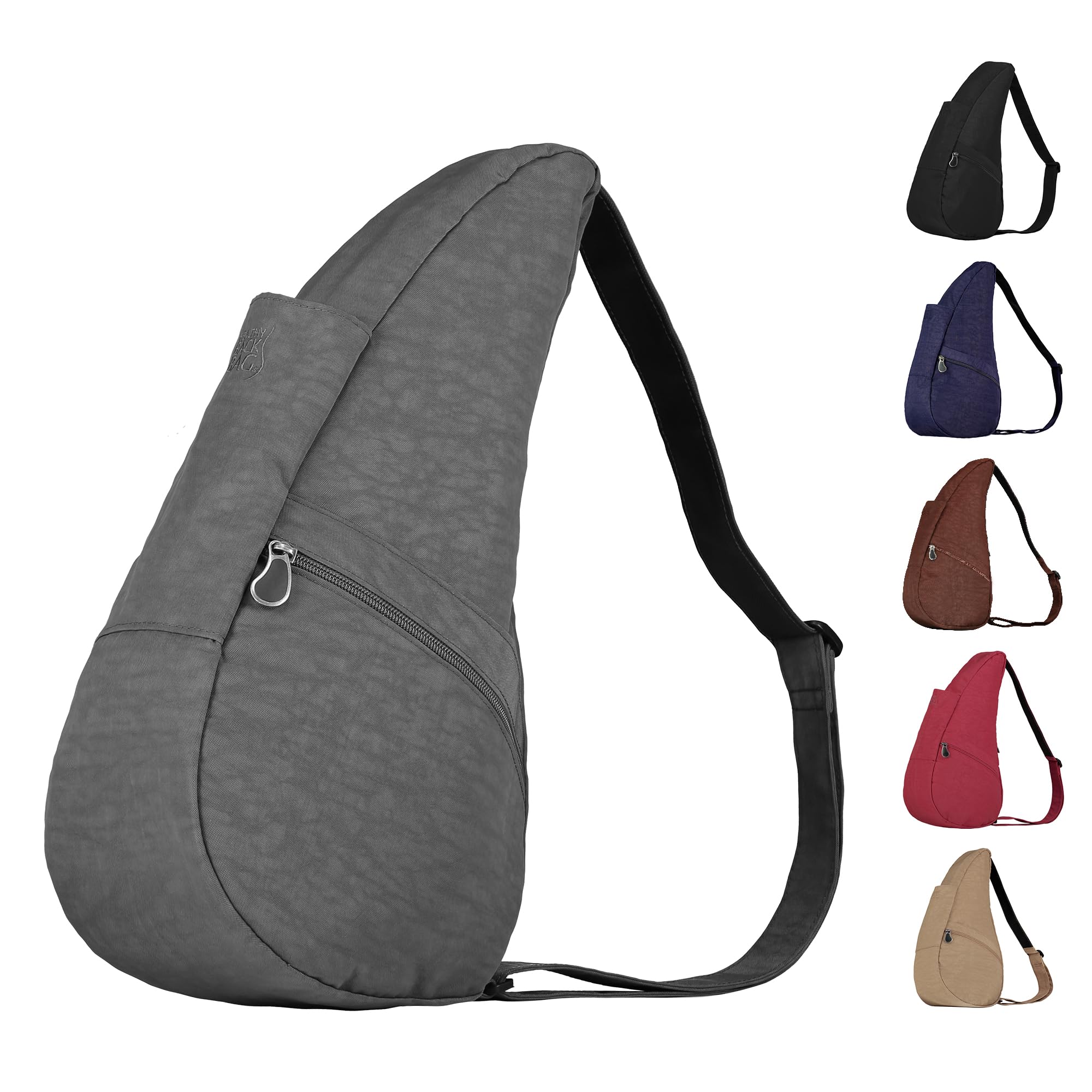
For those who prefer a smaller footprint without sacrificing ergonomics, the 17-inch AmeriBag Nylon Sling offers the same crossbody weight distribution in a lighter, more compact package. The adjustable strap allows multiple wearing positions — crossbody, shoulder, or around the waist — giving you control over how the load interacts with your neck and shoulders.
The fabric is a durable bright nylon that stays easy to clean and resists wear. Inside, you get a zippered separator for a small tablet or documents, multiple open and zippered pockets, and magnetic snaps that eliminate velcro snags. The outside spine pocket conveniently holds a small water bottle or umbrella without bulging.
Users switching from traditional purses report immediate relief from shoulder pain, as the crossbody design prevents the bag from digging into the trapezius muscle on one side. The trade-off is that the 6-inch depth limits how much you can carry, making it a better fit for minimalist daily essentials rather than heavy loads.
Why it’s great
- Crossbody strap with multiple wearing positions reduces uneven strain
- Lightweight at 12.8 oz, ideal for minimal daily carry
- Magnetic closures are quiet and durable, no snagging
Good to know
- Smaller capacity may not fit a full water bottle and sweater together
- Nylon fabric can feel stiff before breaking in
5. Osprey Daylite Shoulder Sling Bag

The Osprey Daylite Sling is not a full backpack, but for sub-six-pound loads, it offers exceptional freedom of movement compared to a traditional pack. Its single, ambidextrous strap is padded and breathable, distributing weight diagonally across your torso rather than pinching a single shoulder point.
The main compartment holds a 1-liter water bottle, a Kindle, and a light jacket, with a front pocket that includes a mesh organizer and key clip. The tamper-resistant zippers are Osprey’s signature, and the entire bag packs flat when empty, making it a great secondary bag for travel days when you want to leave your heavy pack at the hotel.
The critical limitation is weight capacity — loading this bag with dense items like a tablet and full water bottle will shift the center of gravity and potentially strain your carrying shoulder. As a grab-and-go minimalist bag, it excels; as a heavy-duty bag, it falls short. Users confirm the build quality and comfort are top-tier for its class.
Why it’s great
- Breathable, ambidextrous strap balances weight across the torso
- Ultra-lightweight and packs flat for travel
- Smooth, durable zippers with a tamper-resistant design
Good to know
- No hydration bladder hook for hiking use
- Limited capacity unsuitable for laptops or heavy loads
6. VentaPak Lightweight Ventilation Backpack Spacer
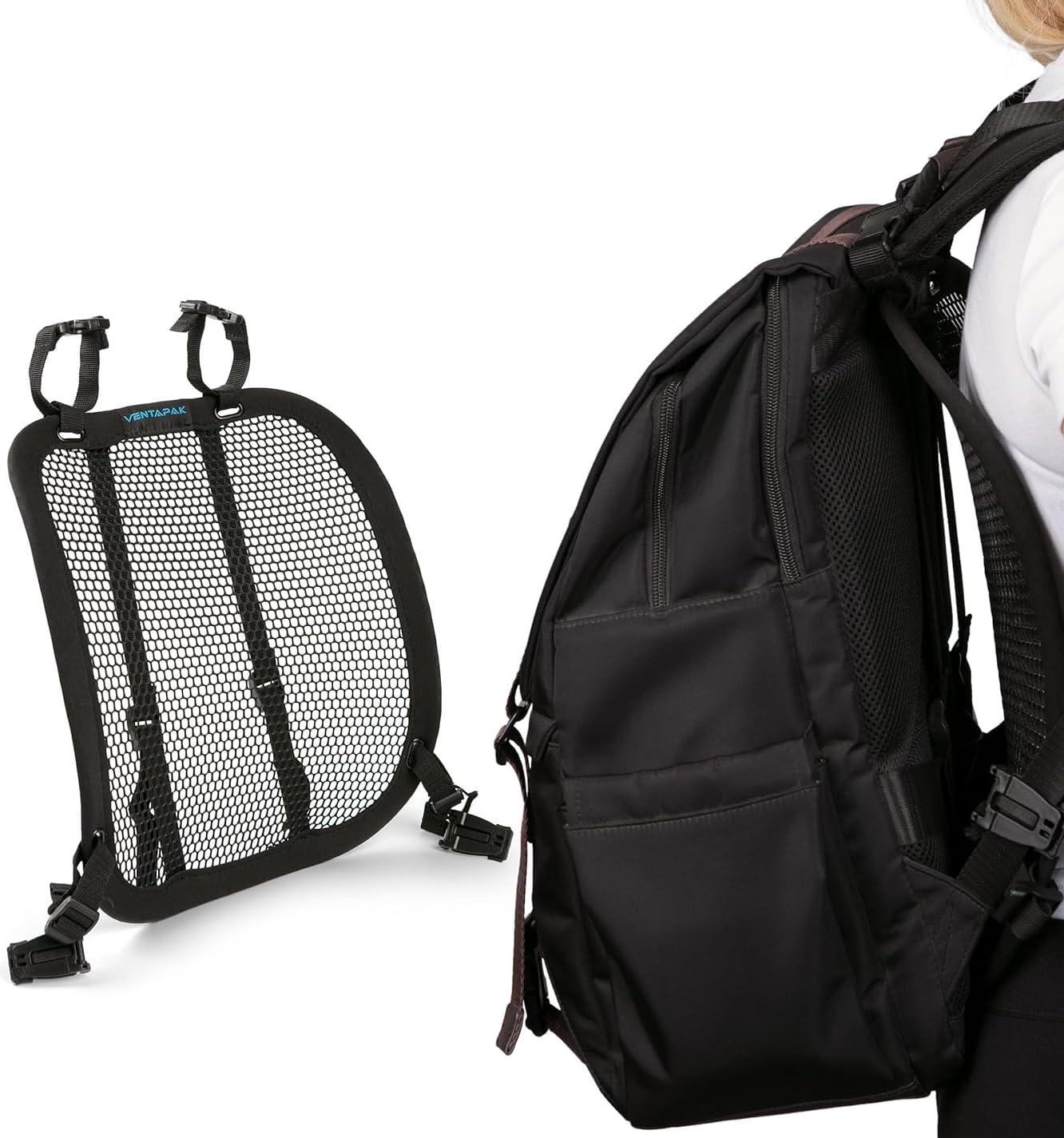
The VentaPak is not a bag itself — it is a spacer frame that attaches to any existing backpack to create an air gap between the pack and your back. This does more than prevent sweat: it changes the load dynamics by shifting the weight from pressing straight down into a more horizontal, ergonomic position that engages your core rather than your shoulders.
The frame uses a reinforced aluminum structure with a mesh surface that compresses slightly under load. This suspension effect dampens the shock of the weight transferring onto your spine. The two-year warranty speaks to the build quality, and the two sizes (Small for torsos under 5’6″, Standard for above) ensure a proper fit.
Reviews from hot-weather cyclists and hikers are emphatic about the ventilation benefits, but the critical neck-and-shoulder insight is that the frame prevents the bag from collapsing your shoulders forward. The trade-off is that wider-bodied users may find the standard size too narrow, as the hard frame can dig into the sides of the back.
Why it’s great
- Shifts weight distribution from vertical to horizontal, reducing shoulder strain
- Two-year warranty on reinforced aluminum construction
- Two torso-specific sizes ensure proper fit for different heights
Good to know
- Narrow frame can dig into the sides on wider-body users
- Setup may require initial adjustment to secure to the backpack
7. High Sierra Loop-Backpack
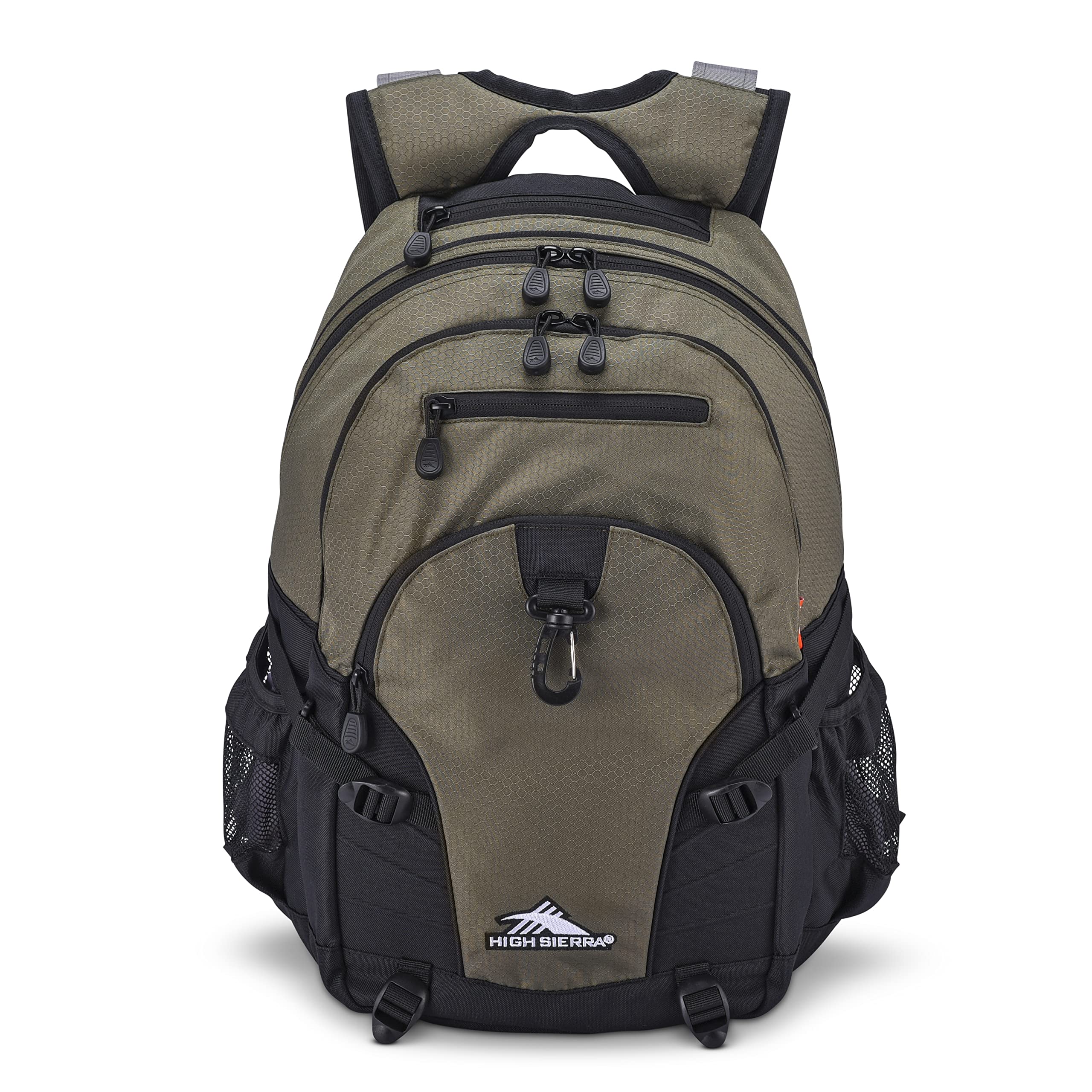
For tight budgets, the High Sierra Loop-Backpack delivers a genuine suspension system designed to dampen the shock of weight transfer while carrying heavy loads. This is not just marketing — the frame actually reduces the percussive impact on your shoulders when you walk, which is a common aggravator of neck and trapezius tension.
The 600-denier polyester shell is water-resistant and durable, with compression straps that cinch down the load. Inside, you get a padded tablet sleeve and two accessory pockets that keep the weight from shifting. The shoulder straps are padded, though they lack the contoured curvature of the premium Osprey or North Face designs.
The real-world experience from users is mixed: positive for durability and value, but the bag is slightly small for some users who wish for an extra inch of depth. The suspension system works best when carrying less than 15 pounds; beyond that, the lack of a sternum strap becomes noticeable. For light school or work loads, it is a capable neck-and-shoulder-friendly option.
Why it’s great
- Suspension system dampens weight transfer shock on shoulders
- Water-resistant polyester build for rainy commutes
- Compression straps stabilize the load and prevent sway
Good to know
- No sternum strap to secure the shoulder straps in place
- Tablet sleeve lacks thick padding for laptop protection
FAQ
Can a crossbody bag really reduce neck pain compared to a backpack?
Does a ventilated back panel help with posture or just sweat?
How do I know if a bag’s shoulder straps are too wide for my frame?
Final Thoughts: The Verdict
For most users, the bags for neck and shoulder pain winner is the The North Face Vault Everyday Laptop Backpack because its ACA-endorsed FlexVent suspension actively protects cervical alignment while carrying daily loads. If you want a lighter, crossbody alternative that balances weight across your torso, grab the AmeriBag 19″ Microfiber Healthy Back Bag. And for the traveler who wants to keep their beloved backpack and fix the ergonomics, nothing beats the VentaPak Lightweight Ventilation Backpack Spacer.