
Choosing your first hardtail mountain bike is a battle of priorities—you want something that can handle rocky climbs and root-strewn descents without forcing you to choose between a decent drivetrain and a frame that won’t crack after a season of abuse. The reality is that under a certain price ceiling, brands cut corners on suspension forks, gear shifters, and frame materials, which means the difference between a bike that inspires confidence and one that leaves you stranded on the trail comes down to a few critical specifications.
I’m Min — the co-founder and writer behind Gadgets Feed. After spending countless hours poring over frame geometries, suspension travel figures, groupset hierarchies, brake types, and hundreds of verified customer experiences, I’ve separated the affordable hardtails that deliver legitimate off-road capability from those that are merely bike-shaped objects.
The key is knowing exactly where to compromise and where to hold the line. I put together this guide to the affordable hardtail mountain bikes that offer the best combination of ride quality, durability, and component value for real trail riding.
How To Choose The Best Affordable Hardtail Mountain Bike
Finding a hardtail that handles single-track without breaking the bank means learning to read the spec sheet with a critical eye. The frame, fork, drivetrain, and brakes—these four elements determine 90% of your riding experience. Here’s what to look for at each price tier.
Frame Material: Aluminum vs. Carbon Steel vs. Carbon Fiber
Aluminum frames dominate the affordable hardtail category because they weigh less than steel, resist corrosion, and offer a snappier, more responsive ride feel. Carbon steel frames (used on some budget-friendly fat tire models) are heavier but absorb trail vibration naturally and can be repaired more easily. Carbon fiber appears in premium models like the SAVADECK Titan 612, slashing weight to around 26 lbs while adding a compliant ride quality, but the price jump is significant. Stick with 6061 aluminum for the best strength-to-weight ratio in the entry-level to mid-range zone.
Suspension Fork: Travel, Stanchion Diameter, and Lockout
A cheap fork that binds under braking or lacks rebound damping ruins the ride. Look for at least 80mm of travel for cross-country trails and 100mm for more aggressive terrain. Stanchion diameter matters—30mm or 32mm stanchions are stiffer and track better than 28mm units. A hydraulic lockout (or even a preload adjuster) lets you climb without bobbing. Forks on models like the Tommaso Gran Sasso and Eastern Alpaka offer noticeably better damping than the basic coil forks found on the lowest-tier bikes.
Drivetrain and Brakes: Speeds Aren’t Everything
A 21-speed drivetrain with a Shimano Tourney rear derailleur shifts adequately for casual riding, but a 9-speed or 12-speed setup with a Shimano Altus, Deore, or comparable groupset shifts more precisely under load and lasts longer. Hydraulic disc brakes provide superior modulation and require less hand strength than mechanical discs, especially on long descents. Mechanical discs are acceptable at entry-level prices but expect to adjust them more frequently. Models like the Eastern Alpaka and SAVADECK Titan 612 equip real hydraulic brakes out of the box.
Quick Comparison
On smaller screens, swipe sideways to see the full table.
| Model | Category | Best For | Key Spec | Amazon |
|---|---|---|---|---|
| SAVADECK Titan 612 | Premium | Trail performance & weight savings | Carbon frame, 12-speed, hydraulic disc | Amazon |
| Eastern Bikes Alpaka | Premium | Lightweight hardtail with true hydraulics | 9-speed, 130mm fork, hydro brakes | Amazon |
| Schwinn Traxion | Mid-Range | Full suspension on a budget | 24-speed, aluminum frame, dual suspension | Amazon |
| Tommaso Gran Sasso 29er | Mid-Range | Aggressive hardtail for larger riders | 24-speed, hydraulic disc, aluminum frame | Amazon |
| Mongoose Dolomite | Premium Fat | Snow, sand, and rough terrain | 7-speed, 4-inch fat tires, steel frame | Amazon |
| Mongoose Argus Trail | Mid-Range Fat | Entry-level fat tire adventures | 7-speed, 4-inch tires, mechanical disc | Amazon |
| Huffy Mountain Bike | Entry | Casual trail and pavement riding | 21-speed, aluminum frame, alloy rims | Amazon |
| Schwinn High Timber | Entry | Lightweight 29er for paved and dirt | 21-speed, aluminum frame, disc brakes | Amazon |
| Gravity FSX 1.0 | Entry Full | Budget full-suspension experience | 24-speed, dual suspension, disc brakes | Amazon |
| Gravity FSX 27.5 LTD | Entry Full | Low-cost dual suspension | 21-speed, aluminum frame, lockout fork | Amazon |
| Outroad Fat Tire | Entry Fat | Stability and comfort on loose terrain | 21-speed, 4-inch tires, high-carbon steel | Amazon |
In‑Depth Reviews
1. SAVADECK Titan 612 Carbon Fiber Soft Tail Mountain Bike
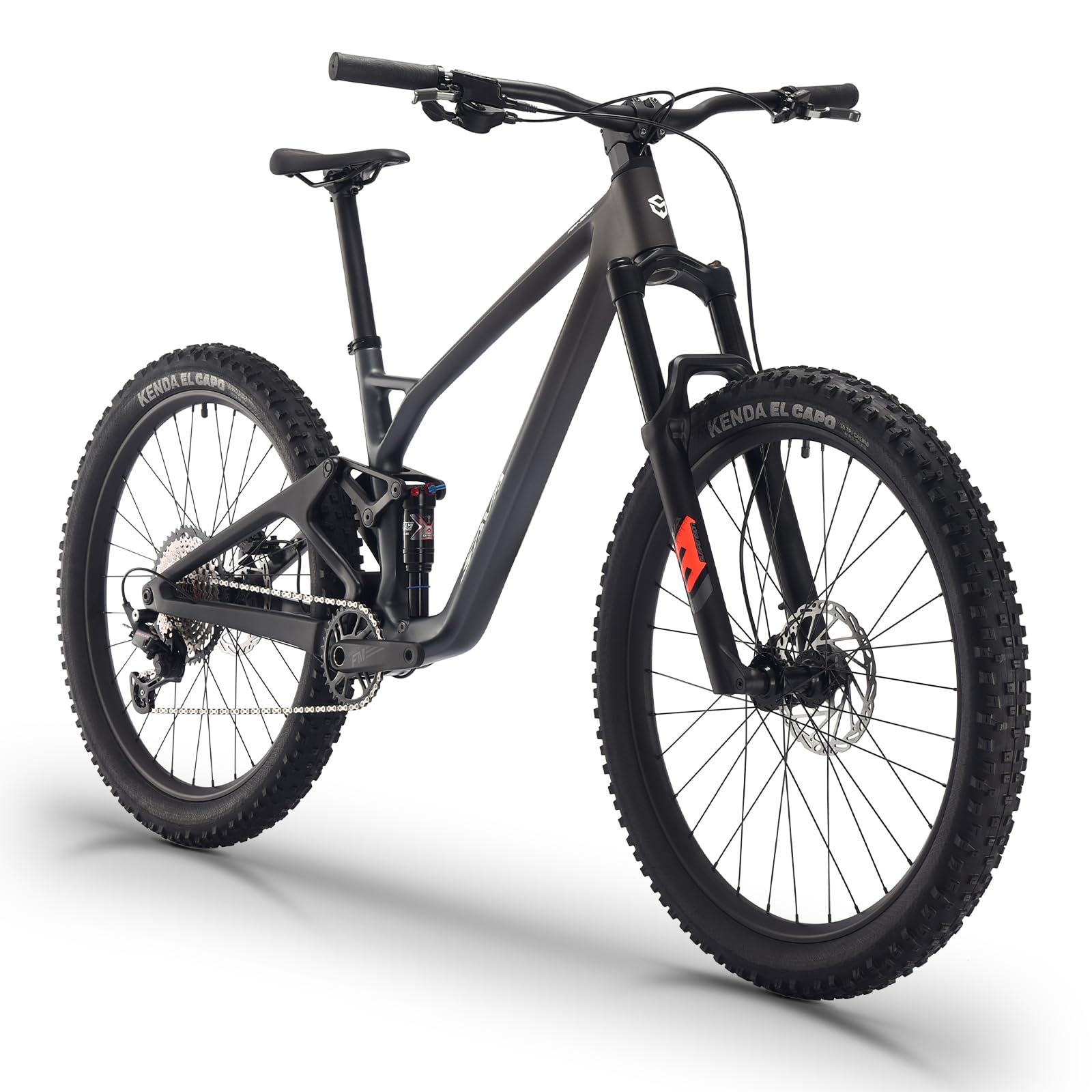
The SAVADECK Titan 612 defies the affordable hardtail stereotype by wrapping a genuine carbon fiber frame around a Shimano Deore M6100 12-speed groupset. The carbon layup sheds significant weight compared to aluminum, bringing the bike to around 26 pounds, which makes climbing feel effortless and accelerating out of corners snappy. The dual-link suspension system with DNM air shock includes a three-stage hydraulic lockout, letting you firm up the rear end for pavement climbs and open it up for rocky descents without stopping to fiddle with tools.
Four-piston hydraulic disc brakes from Zoom deliver the kind of controlled stopping power you normally see on bikes costing twice as much. The 2.4-inch Continental tires with multidirectional tread grooves bite into loose gravel and wet roots with confidence, and the frame clears up to 2.6-inch rubber for riders who want even more float. Internal cable routing keeps the lines clean and out of the mud, and the thru-axle design ensures the wheels stay aligned during hard cornering. The assembly process is straightforward for anyone comfortable with basic bike tools, and the included toolkit covers the essentials.
Some users reported that the sizing runs large—riders under 5’4” may find even the 15-inch frame too tall, so measure your inseam carefully before ordering. The stock saddle is adequate but not plush for all-day epics, and the paint finish, while attractive, can chip if you lay the bike down on rocky terrain. Overall, this is the premium choice for riders who want real trail performance without the boutique price tag.
Why it’s great
- Full carbon frame saves over 5 lbs vs. aluminum alternatives
- 12-speed Shimano Deore M6100 shifts precisely under load
- Four-piston hydraulic brakes offer exceptional modulation
Good to know
- Sizing runs large; shorter riders should measure carefully
- Stock saddle is firm for long days on the trail
2. Eastern Bikes Alpaka 29″ Lightweight MTB

The Eastern Alpaka is the hardtail that punches far above its price point by equipping a 6061 aluminum frame with an actual hydraulic disc brake setup and a 130mm travel suspension fork. Most bikes in this zone make do with mechanical discs that require constant cable adjustment, but the Alpaka’s Zoom hydraulic system delivers consistent lever feel and stopping power on long descents. The 9-speed drivetrain is a welcome departure from the 21-speed or 24-speed nightmares that force you to shift through overlapping ratios—here you get a clean, wide gear range with crisp indexing.
The hydroformed aluminum frame keeps weight impressively low, and the 29-inch wheels roll over obstacles with the momentum you want from a modern cross-country or trail hardtail. Sealed bearing hubs front and rear reduce maintenance and improve rolling efficiency, while the lock-on grips and Eastern-branded stem and bars feel premium in the hand. Assembly is straightforward, though the generic instructions can be confusing; watching a basic bike assembly video on YouTube will save you time. Riders report that the bike handles 20+ mile daily rides without derailleur or crankset issues.
A small but vocal minority experienced cranks loosening irreparably after a few rides, and the rear Zoom brake has been known to fail if the fluid system is damaged during shipping. The 44mm head tube does accept a tapered fork upgrade, so there’s a path to future-proofing the bike. If you want a lightweight hardtail with real hydraulic brakes at a mid-range price, the Alpaka is the sharpest choice.
Why it’s great
- True hydraulic disc brakes, not mechanical
- 130mm fork with sealed bearing hubs
- Hydroformed 6061 frame is notably light
Good to know
- Assembly instructions are generic and unhelpful
- Some units experienced crank or brake issues
3. Schwinn Traxion Mountain Bike

The Schwinn Traxion offers full suspension at a price point where almost every other brand sells only hardtails. The 18-inch aluminum frame pairs with a high-performance suspension fork and a rear shock to absorb chunky roots and small drops without bucking you off line. The 24-speed Shimano drivetrain with trigger shifters provides a broad enough range to tackle steep fire road climbs and still have top-end speed for flowy descents. Mechanical disc brakes front and rear stop consistently in dry conditions, though they require occasional barrel adjuster tweaks as the pads wear.
The 29-inch wheels with 2.25-inch wide knobby tires offer decent traction on loose-over-hardpack surfaces, and the double-wall alloy rims add strength without excessive weight. The Traxion’s geometry is more relaxed than a pure cross-country race bike, which translates to stable handling at moderate speeds on green and blue trails. Assembly is required and the bike arrives about 80% complete; the main tasks are installing the front wheel, handlebars, saddle, and pedals, plus tuning the derailleurs and brake calipers.
Some riders found the suspension fork’s damping to be basic, with a tendency to bob during seated climbing if the preload isn’t set correctly. The stock saddle is firm and the grips are thin, both easy swaps. The rear shock’s rebound is not adjustable, which limits tuning for heavier riders. Overall, the Traxion is a genuine full-suspension bike for riders on a strict budget who want to experience rear travel without jumping to the premium tier.
Why it’s great
- Full front and rear suspension at a budget-friendly price
- 24-speed Shimano drivetrain with trigger shifters
- Double-wall alloy rims add durability
Good to know
- Fork damping is basic; prone to bob while climbing
- Rear rebound is non-adjustable
4. Tommaso Gran Sasso 29er Hardtail

The Tommaso Gran Sasso 29er is built for riders who need a robust hardtail that can support up to 280–300 pounds without flexing or cracking. The rigid, lightweight aluminum frame geometry is slightly longer in the top tube, giving larger riders a stable platform on descents and reducing the feeling of being cramped in the cockpit. The 24-speed drivetrain provides a low enough gear for steep, loose climbs while still offering respectable top-end speed on fire roads. The hydraulic disc brakes are the standout feature at this price—they offer one-finger modulation and consistent stopping power even on extended descents.
The fork delivers 100mm of travel with decent small-bump sensitivity for a budget coil unit, and the quick-release wheels make trailside tube swaps painless. Assembly takes about 30 minutes with basic hex keys and a grease gun (included). Riders report that the bike shifts and brakes well out of the box, which is rare in this segment. The frame also accepts a tapered fork upgrade, so there is room to grow into a higher-end suspension later.
Several owners noted that the stock rear derailleur is the weak link—upgrading to a Shimano Deore or similar improves shifting crispness dramatically. The saddle is hard and may cause discomfort on rides longer than 45 minutes; budget for a replacement. The tires are adequate for packed trails but lack aggressive side knobs for loose cornering. The Tommaso comes with a lifetime warranty on the frame, which adds confidence for big riders who put serious miles on their equipment.
Why it’s great
- Supports riders up to 300 pounds without flex
- Hydraulic disc brakes provide one-finger stopping
- Lifetime frame warranty adds peace of mind
Good to know
- Stock rear derailleur is the weak link; plan to upgrade
- Hard saddle and minimal tire side knobs
5. Mongoose Dolomite Fat Tire Mountain Bike

The Mongoose Dolomite is a cult classic in the affordable fat tire world, and for good reason. Its all-steel frame and 4-inch-wide knobby tires roll over sand, snow, gravel, and potholed pavement with an almost tank-like confidence. The 1×7 drivetrain keeps things simple—no front derailleur to adjust—and the twist-grip shifter is intuitive for casual riders. Mechanical disc brakes front and rear provide adequate stopping power for the bike’s weight, which clocks in at around 38 pounds, and the alloy rims help shave some heft compared to steel alternatives.
Assembly is manageable with basic tools (the bike arrives 80% complete), and the steel frame soaks up vibration better than aluminum on rough roads. Riders report that the bike easily supports 250+ pounds and handles daily exercise rides without drivetrain failures. The fat tires allow you to run lower pressures (around 10–15 PSI) for a plush ride on loose surfaces, which is a unique advantage that no standard hardtail can match.
The stock saddle is notoriously painful—most owners replace it within the first week with a Cloud 9 or similar wide cruiser seat. The twist-grip shifter has a tendency to slip out of adjustment over time, and the pedals are basic plastic units that spin on their axles. The Dolomite is also heavy, so if you need to lift it onto a rack or carry it up stairs, consider the extra mass. For riders who want a bombproof, go-anywhere fat bike that can double as a winter commuter, the Dolomite is a proven workhorse.
Why it’s great
- 4-inch fat tires float over snow, sand, and gravel
- Simple 1×7 drivetrain reduces maintenance
- Steel frame absorbs vibration for comfort
Good to know
- Saddle is painful; budget an immediate replacement
- Heavy at ~38 pounds, not ideal for lifting
6. Mongoose Argus Trail Fat Tire Mountain Bike

The Mongoose Argus Trail is the entry point for riders curious about fat bikes but not ready to invest in a premium model. It features a durable steel hardtail frame, a rigid fork (no suspension), and 4-inch knobby tires that provide massive traction on loose terrain. The 7-speed Shimano twist-shift drivetrain is straightforward enough for beginners, while the mechanical disc brakes offer reliable stopping power in wet and dry conditions. The 26-inch wheels keep the bike nimble and maneuverable on tight trails.
Assembly is straightforward, and the bike ships mostly pre-assembled with the front wheel, handlebars, and seat requiring attachment. The rigid fork keeps the price low and the ride simple—there’s no suspension to maintain or leak—but it does mean you feel every root and rock on the trail. The drilled aluminum rims help reduce rotating mass, and the 4-inch tires can be run at low pressures to compensate for the lack of suspension compliance.
The biggest limitation is the shallow tread depth on the stock tires, which reduces grip in deep snow or loose sand. Several riders noted the tires caused multiple falls on packed snow due to insufficient side bite. The seat is also universally disliked for its lack of padding. On pavement and packed gravel, the Argus rolls smoothly and feels solid. It’s a great entry-level fat bike for riders on a tight budget, but plan to upgrade the tires and saddle if you intend to ride in challenging conditions.
Why it’s great
- 4-inch tires provide excellent flotation on loose surfaces
- Simple 7-speed drivetrain is beginner-friendly
- Rigid fork eliminates suspension maintenance
Good to know
- Stock tires have shallow tread, poor snow grip
- No suspension means a rough ride on rocky trails
7. Huffy Mountain Bike 26/27.5-Inch

Huffy’s hardtail mountain bike is a classic entry-level option that prioritizes affordability and a lightweight aluminum frame over trail-specific components. The 21-speed Shimano drivetrain shifts smoothly on pavement and gentle dirt paths, and the front suspension fork adds a basic level of comfort for cracked asphalt and fire road chatter. The alloy linear pull brakes are simple to adjust and stop adequately at moderate speeds, but they lack the stopping power of disc brakes on steep, wet descents.
The 26-inch or 27.5-inch knobby tires grip well on hardpack and gravel, and the padded ATB saddle is more comfortable than most in this tier for riders staying under 10 miles. The slight-rise handlebar promotes an upright riding position that minimizes back and shoulder strain, making this a solid choice for casual neighborhood cruises or short bike path excursions. Assembly is manageable for a novice with a Phillips screwdriver and Allen wrenches, though the included instructions can be sparse.
Several owners reported the brakes needing immediate pad alignment and the derailleur requiring extensive tuning out of the box. The front tire on some units did not seat properly, causing repeated inner tube failures. Huffy’s customer service does respond to these issues, but the inconsistency is frustrating. This bike is best suited for paved paths and very light gravel use, not aggressive single-track. For riders who want a dedicated trail machine, the extra investment in a model with disc brakes is worth every penny.
Why it’s great
- Lightweight aluminum frame is easy to pedal on pavement
- Upright riding position reduces strain on back and shoulders
- Padded saddle is comfortable for short rides
Good to know
- Linear pull brakes lack stopping power on descents
- Frequent quality control issues with tires and derailleur
8. Schwinn High Timber Mountain Bike

The Schwinn High Timber is a straightforward, lightweight hardtail that uses an 18-inch aluminum frame to keep the overall weight down, making it a great option for riders who need to carry the bike up stairs or onto a bus. The 29-inch wheels roll over obstacles with ease, and the 21-speed twist-shift drivetrain is simple to operate for new riders. Mechanical disc brakes offer better modulation and wet-weather performance than the rim brakes found on even cheaper models.
The front suspension fork absorbs moderate bumps, though its travel is limited and it lacks any damping adjustment. The quick-release seat post is convenient for adjusting saddle height on the fly, and the alloy single-wall rims are decent for the price point. Assembly takes under an hour, and most riders report that the bike shifts and brakes well out of the box with minimal tuning. The aluminum frame resists rust, so it can handle occasional rain rides without disintegrating.
Safety issues emerged in a small number of reviews where the front wheel detached during riding due to improper quick-release installation or a faulty skewer. One rider suffered serious injury from this failure, so triple-check that the quick-release is fully closed and tensioned before every ride. The fork’s bushing slop and stiff travel are also common complaints, indicating this is not a bike for hardcore trail riding. For paved paths, gravel roads, and mellow dirt trails, the High Timber is a capable and lightweight companion.
Why it’s great
- Aluminum frame is light and corrosion-resistant
- 29-inch wheels roll efficiently over obstacles
- Mechanical disc brakes outperform rim brakes in wet conditions
Good to know
- Front wheel detachment risk if quick-release is not secured
- Fork has poor damping and excessive slop
9. Gravity FSX 1.0 Dual Full Suspension Mountain Bike

The Gravity FSX 1.0 is one of the few bikes that offers a full dual suspension system—front and rear adjustable shocks—at a price where most competitors sell only hardtails. The aluminum frame keeps the weight manageable at around 16 kg, and the 24-speed drivetrain provides a wide gear range suitable for both climbing and cruising. The mechanical disc brakes are responsive once properly aligned, and the double-wall rims handle moderate abuse without bending.
The front suspension fork is adjustable and offers decent small-bump compliance, while the rear shock is slow to rebound but adequate for gentle trail use and small drops. Assembly is manageable for those with basic mechanical skills, but the included instructions are essentially useless; expect to spend time tuning the derailleurs and centering the disc brake calipers. A spare derailleur hanger is included in the box, which is a thoughtful touch for beginners who might bend the original during a fall.
The stock saddle is universally described as hard and uncomfortable—budget for a replacement immediately. The tires offer only moderate traction and wear quickly on pavement. The bike is about 10–15 pounds heavier than a comparable hardtail due to the dual suspension hardware, which can be felt on long climbs. Overall, the FSX 1.0 is a legitimate full-suspension experience for riders who want rear travel on a shoestring budget, but it requires patience during setup and some component upgrades to reach its potential.
Why it’s great
- Full dual suspension at a budget-friendly price point
- Adjustable front and rear suspension for basic tuning
- Spare derailleur hanger included for beginners
Good to know
- Saddle is hard; plan an immediate replacement
- Heavier than hardtail equivalents by 10–15 lbs
10. Gravity FSX 27.5 LTD Dual Suspension Mountain Bike

The Gravity FSX 27.5 LTD brings dual suspension to the 27.5-inch wheel format, which offers a more playful and maneuverable feel than 29-inch bikes. The aluminum frame is paired with a lockout fork, allowing you to firm up the front end for paved climbs and open it up for descending. The adjustable rear suspension adds compliance, and the 21-speed drivetrain with trigger shifters is a noticeable step up in shifting precision compared to twist-grip systems.
The 27.5-inch wheels accelerate faster than 29ers and make the bike feel more agile on tight, twisty trails. Assembly is straightforward, and the bike is well-packaged with no missing parts. Many riders report that the ride quality exceeds expectations for the price, with the suspension soaking up bumps that would rattle a hardtail rider’s teeth. The mechanical disc brakes provide adequate stopping power once the calipers are centered.
Pedal quality is the most consistent complaint—the stock pedals are cheaply constructed, and several units arrived with damaged threads that made installation impossible. The handlebar bolt on one bike snapped within a month, raising concerns about the overall fastener quality. These are fixable issues (replace pedals with basic alloy platforms, replace bolts with stainless steel), but they require additional spending. For riders willing to address these weak points, the FSX 27.5 LTD is a capable and affordable introduction to full suspension riding.
Why it’s great
- Dual suspension on 27.5-inch wheels for agile handling
- Adjustable rear shock and lockout fork for versatility
- Aluminum frame keeps weight manageable
Good to know
- Stock pedals are cheap and often have damaged threads
- Handlebar bolts may be low-grade steel; consider replacing
11. Outroad Mountain Bike Fat Tire 26-Inch

The Outroad fat tire mountain bike is designed for riders who prioritize stability and comfort over weight and speed. The high-carbon steel frame is built to resist deformation, and the 4-inch wide tires provide an exceptionally stable platform on loose gravel, packed snow, and bumpy urban roads. The 21-speed drivetrain offers enough gear range for moderate hills, and the double disc brakes (mechanical) provide reliable stopping power in dry conditions.
The front suspension fork uses a thickened outer wall for shock absorption, and the 4-inch tires can be run at pressures as low as 10–15 PSI to further cushion the ride. Several riders with back problems reported that the wide tires and compliant steel frame significantly reduced pain compared to riding standard bikes. Assembly is straightforward with the included tools and a provided installation video, taking most people between 20 and 40 minutes.
The stabilizing bar that runs from the seat area to the handlebars makes mounting and dismounting awkward for some riders, especially those with limited mobility. The seat itself is prone to loosening and dropping to its lowest position during rides—replacing the seat post binder or adding a shim solves this. The tires are wear-resistant, but the bike is heavy (well over 40 pounds), making it unsuitable for lifting onto car racks or carrying up stairs. For riders who want a cushioned, go-anywhere bike for flat terrain and casual trails, the Outroad delivers impressive value.
Why it’s great
- 4-inch fat tires provide a plush, cushioned ride
- Steel frame is durable and absorbs trail vibration
- Easy assembly with included video guide
Good to know
- Stabilizing bar makes mounting and dismounting difficult
- Seat post slips easily; may require replacement binder
FAQ
How much should I spend on a hardtail mountain bike for real trail riding?
What is the difference between mechanical disc brakes and hydraulic disc brakes on a mountain bike?
Should I buy a hardtail or a full-suspension mountain bike on a budget?
Final Thoughts: The Verdict
For most users, the affordable hardtail mountain bikes winner is the SAVADECK Titan 612 because its carbon fiber frame, 12-speed Deore drivetrain, and four-piston hydraulic brakes deliver trail performance that rivals bikes costing significantly more. If you want a lightweight hardtail with true hydraulic brakes at a mid-range price, grab the Eastern Bikes Alpaka. And for fat tire adventures on sand, snow, and gravel, nothing beats the proven durability of the Mongoose Dolomite.