
Pouring your own aluminum ingots from scrap cans or reclaimed material is deeply satisfying until a stuck pour ruins a batch and your mold. The difference between a frustrating session and a perfectly stacked pile of bars comes down to the thermal properties and release characteristics of the mold material itself, whether you are working with graphite for its self-lubricating surface or cast iron for its heat retention between consecutive pours.
I’m Min — the co-founder and writer behind Gadgets Feed. My research into this category focuses on comparing thermal conductivity ratings, ash content percentages in graphite molds versus porosity levels in metal molds, and how cavity geometry directly affects the ease of demolding across various hobbyist and professional casting setups.
This guide evaluates seven distinct options, from compact graphite blocks to multi-cavity iron frames, so you can confidently select the best fit for your workshop. Here is my analysis of the best aluminum casting molds available right now.
How To Choose The Best Aluminum Casting Molds
The mold you choose determines the finish, purity, and repeatability of every bar you pour. Prioritizing the wrong material or a cavity size that does not match your furnace output will slow down your entire workflow. Focus on three factors to make the right call.
Material: Graphite vs Cast Iron vs Aluminum
High-density fine-grained graphite with an ash content below 0.1% delivers a self-lubricating surface that releases aluminum without any coating or soot. Graphite also offers excellent thermal conductivity, reducing the time your metal spends molten in the cavity. Cast iron retains heat between pours better than aluminum, which helps when you are running a high-volume session and want consistent fill without preheating every cycle. Avoid standard aluminum molds if your melt temperature exceeds 1200°F, because the mold itself can soften or warp.
Cavity Capacity and Ingot Weight
Decide how much metal you want to process per pour cycle. A single 5 kg cavity is efficient for bulk recycling but produces ingots that may be too heavy for remelting in a small crucible. Multi-cavity molds that produce 1/2 lb or 1 lb ingots are easier to stack and handle, and they give you more control when alloying small batches later. Molds that produce 1 kg bars hit the sweet spot for most hobbyist shops.
Release Mechanism and Mold Preparation
Graphite molds rely on their natural self-lubricating properties, so you rarely need a release agent. Cast iron molds require preheating and sometimes a thin soot coating to prevent aluminum from bonding to the surface. Check whether the mold design includes draft angles — sides tapered at roughly 30 degrees — because that geometry mechanically eases the ingot out as the metal contracts during cooling.
Quick Comparison
On smaller screens, swipe sideways to see the full table.
| Model | Category | Best For | Key Spec | Amazon |
|---|---|---|---|---|
| MMasters 5kg Premium Graphite Mold | Premium | Bulk users needing large ingots | 5 kg capacity / 1800°C tolerance | Amazon |
| SIMOND STORE Cast Iron Flask Mold | Premium | Sand casting and jewelry making | Cast iron frame / 4 locating pins | Amazon |
| Lyman Lead Ingot Mould | Premium | High-volume lead and aluminum ingots | 4 cavity / 30° draft angle | Amazon |
| Nelyrho 4-Piece Graphite Molds | Mid-Range | Multi-bar pours with graphite convenience | 99.9% graphite / 4 molds per set | Amazon |
| RCBS Ingot Mould | Mid-Range | Standard 1-lb aluminum ingots | Iron construction / 4 cavities | Amazon |
| MMasters 1kg 2-Piece Graphite Mold | Budget | Entry-level non-ferrous casting | 0.1% ash / 1800°C tolerance | Amazon |
| Lee Precision Ingot Mold | Budget | Small batch lead and aluminum | Aluminum body / 4 cavities | Amazon |
In‑Depth Reviews
1. MMasters 5kg Premium Graphite Ingot Mold
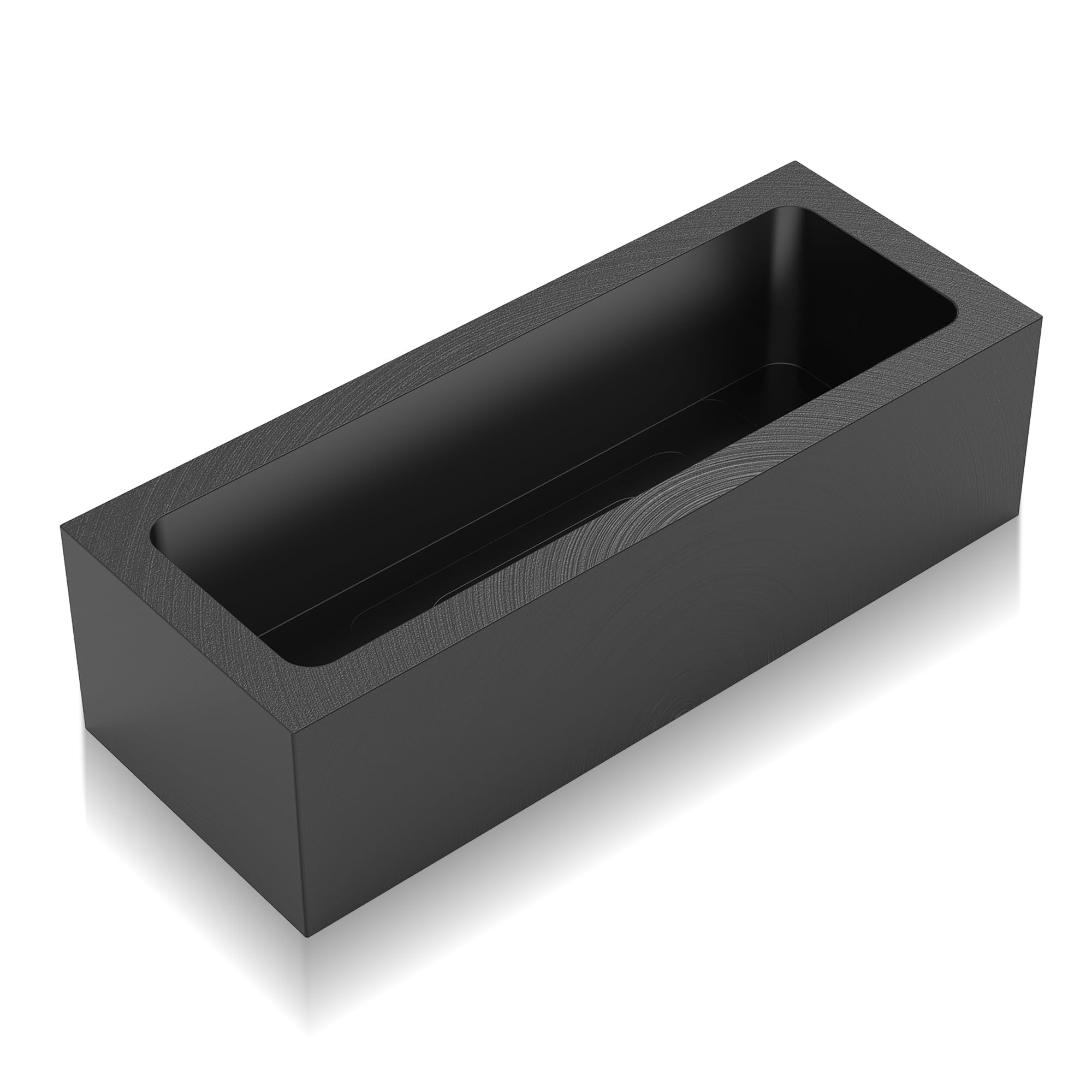
This single-cavity graphite block from Molten Masters is built for users who process large volumes of scrap aluminum in one go. The inner cavity measures 6.3 by 1.97 by 1.57 inches, holding roughly 5 kg of gold or about 2.65 kg of silver, and its volume of 10.82 fl oz easily accommodates a full crucible pour for a single dense aluminum ingot.
The graphite composition delivers an ash content below 0.1%, which keeps your aluminum clean and free from contamination during the melt. Thermal conductivity is high enough that the mold reaches operating temperature quickly, and the natural self-lubrication means you can tap the mold upside down to release the ingot without any residue sticking to the walls.
The unit is backed by a two-year manufacturer warranty, which is notably longer than most graphite molds in this category. This is a premium-tier choice for anyone who wants to consolidate many pounds of scrap into uniform, large-format bars with minimal preparation steps.
Why it’s great
- Large 5 kg cavity reduces per-pour cycles for bulk recycling
- Sub-0.1% ash content preserves metal purity
- Two-year warranty exceeds typical graphite mold coverage
Good to know
- Single cavity means only one ingot per pour
- Outer dimensions of 7.87 x 3.35 x 2.76 inches require adequate furnace clearance
2. SIMOND STORE Cast Iron Flask Mold and Aluminum Ring Making Mold

This set shifts the focus from simple ingot pouring to sand casting, where you press a pattern into bonded sand and pour molten aluminum into the resulting cavity. The cast iron flask measures 4.35 by 3 by 2 inches and weighs 2.79 kilograms, providing the thermal mass needed to keep the sand at a stable temperature while the aluminum flows and solidifies.
Four locating pins on the flask halves ensure the cope and drag align precisely every time, eliminating shifted mold lines that ruin fine detail on cast rings, coins, or small decorative parts. The included aluminum ring mold allows you to produce consistent jewelry blanks directly from the cast, saving an extra machining step.
This kit works with Petrobond and Delft Clay, so you can use whatever casting sand you already stock. It is a premium option aimed at casters who want more than just bars — it unlocks the ability to duplicate complex shapes reliably in a home workshop.
Why it’s great
- Four locating pins deliver repeatable alignment for detailed castings
- Cast iron construction holds temperature steady through multiple pours
- Includes an aluminum ring mold for direct jewelry production
Good to know
- Heavier at 2.79 kg compared to graphite molds
- Requires compatible sand like Petrobond or Delft Clay
3. Lyman Lead Ingot Mould
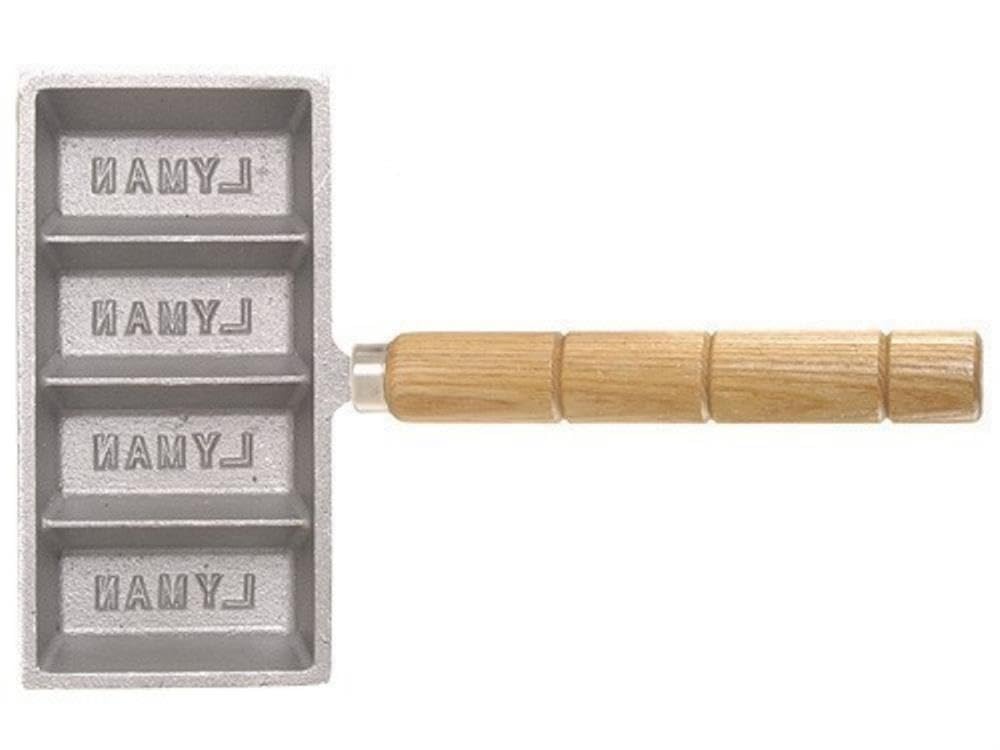
Lyman’s aluminum ingot mould holds four separate cavities, each tapered with a 30-degree draft angle that mechanically pushes the ingot out as the metal contracts during cooling. The round-cornered cavity shape produces bars that stack neatly without rocking, a detail that matters when you are storing dozens of ingots after a long casting session.
The aluminum body is lighter than cast iron at roughly 1 pound, making it easier to handle and flip during demolding. Users report that preheating the mold to around 700°F produces the best surface finish on aluminum ingots, while the aluminum itself stays structurally safe as long as your melt temperature does not exceed 1200°F.
This mould includes a wooden handle that provides a secure grip, though heavy users note that the handle may eventually char after hundreds of cycles. It hits the sweet spot between the budget-oriented Lee Precision mold and higher-cost iron options, offering a clean finish and reliable release at a premium price point.
Why it’s great
- 30-degree draft angle ensures easy ejection without sticking
- Four cavities produce four ingots per pour for higher throughput
- Compact and lightweight at roughly 1 pound
Good to know
- Wooden handle may char over extended use
- Aluminum mold requires preheating for best surface finish
4. Nelyrho 4 Pieces 1kg Graphite Ingot Molds

Nelyrho bundles four identical 1 kg graphite ingot molds in one package, giving you four simultaneous pour stations without waiting for a single mold to cool. Each mold has external dimensions of 4.01 by 2.01 by 1.01 inches, and the graphite purity is rated at 99.9%, which is higher than many single-mold offerings at comparable price points.
The high-density fine-grained structure provides the same self-lubricating release as premium graphite molds, and the thermal conductivity is sufficient to draw heat away from the aluminum rapidly, reducing the risk of porosity in the finished bar. This set is especially useful for casters who produce ingots to sell on secondary markets, because the 1 kg size is a standard denomination that bidders recognize and trust.
Each mold uses the same cavity geometry, so every ingot from the set is dimensionally identical. The main trade-off is that graphite is more brittle than cast iron, so dropping a mold onto a concrete floor can cause cracking, but careful handling keeps these molds running for many cycles.
Why it’s great
- Four molds in one set dramatically increase pour throughput
- 99.9% graphite purity keeps aluminum free from contamination
- 1 kg cavity size matches standard market denominations for resale
Good to know
- Graphite is brittle and can crack if dropped on hard surfaces
- Molds require a flat, stable surface to prevent rocking during pour
5. RCBS Ingot Mould

RCBS brings a cast iron ingot mould designed to produce four 1-pound ingots per pour. The iron body retains heat between consecutive fills much better than aluminum or graphite, so you do not need to wait for the mold to climb back up to temperature between cycles — this is a real advantage during a long afternoon of processing scrap lead or aluminum.
One detail that separates this mold from cheaper alternatives is the smooth interior surface finish, which reduces the need for aggressive sooting or heavy release agents. Users report that filling each cavity to within 1/8 inch of the top consistently yields ingots close to 1 pound, making weight estimation predictable for alloying calculations.
The lack of a handle is the main ergonomic concession — you need gloves and a firm two-hand grip on the mold body to pour and flip. Still, the RCBS mould is a durable mid-range option made in the USA that holds up to years of regular use without warping.
Why it’s great
- Cast iron retains heat between pours for consistent fill quality
- Smooth cavity surface reduces need for release agents
- Predictable 1-pound ingot weight per cavity
Good to know
- No handle included — requires gloves and good grip
- Not suitable for zinc casting as metal can bond to the iron
6. MMasters 1kg 2-Piece Premium Graphite Ingot Mold
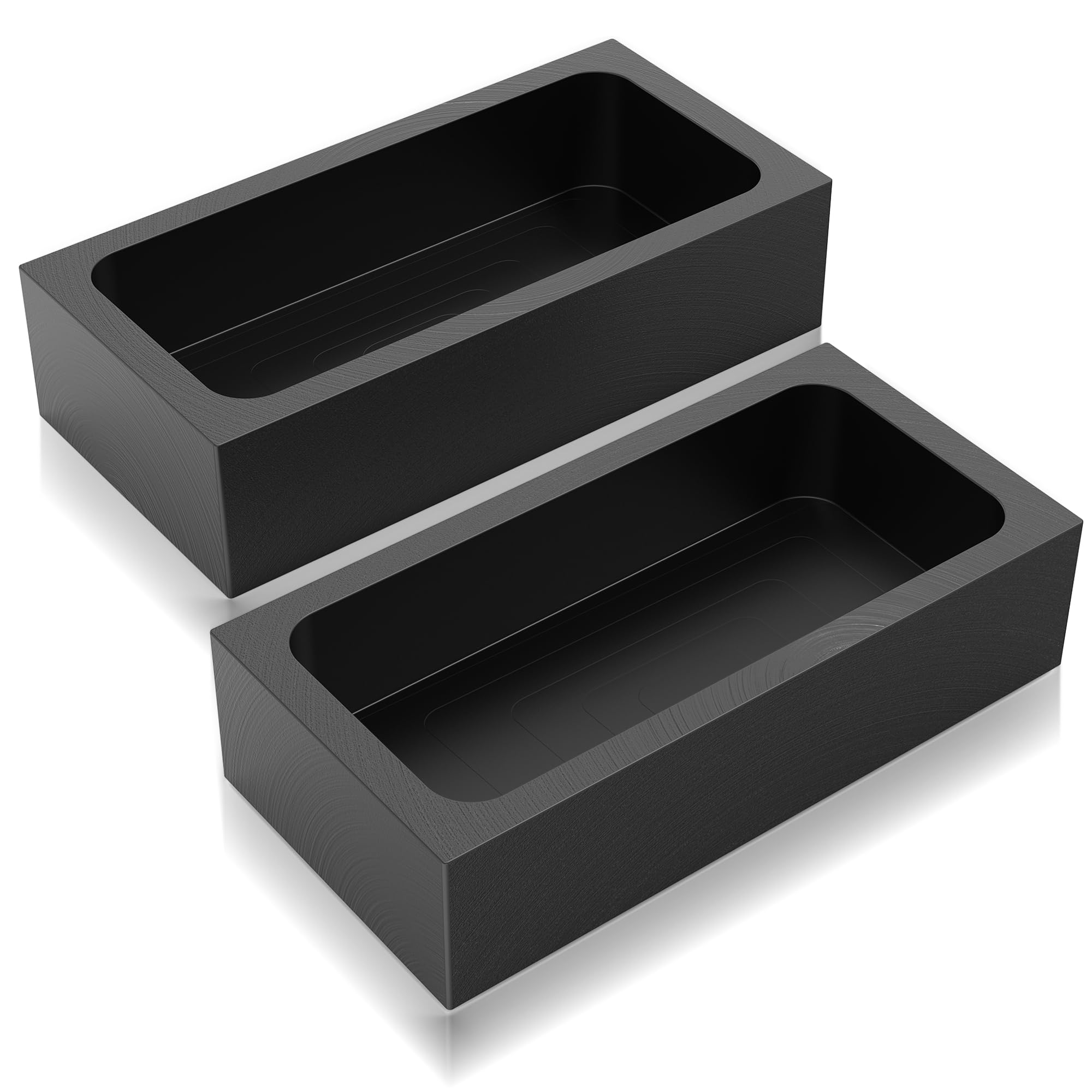
This budget-entry set from Molten Masters gives you two identical 1 kg graphite molds at a price point that undercuts most single-unit graphite options. Each mold has an outer dimension of 4 by 1.97 by 0.98 inches with an inner cavity that holds up to 1 kg of gold or 530 g of silver, and the same geometry works perfectly for aluminum at roughly one-third the weight.
The graphite composition is rated at less than 0.1% ash, which aligns with the purity standard required for jewelry-grade reclaim. Thermal conductivity remains high enough to reduce your melt-to-solid cycle time, and the self-lubricating surface means you can demold without any spray or coating. Two molds allow you to pour back-to-back while the first bar cools.
A one-year manufacturer warranty backs the set, which is reasonable given the entry-level cost. If you are new to casting and want to test the graphite workflow without a large investment, this two-pack provides a low-risk starting point that still delivers clean ingots.
Why it’s great
- Two molds included at an entry-level cost point
- Sub-0.1% ash content preserves metal purity
- Self-lubricating release eliminates need for mold prep
Good to know
- Graphite is prone to cracking if subjected to thermal shock
- Inner cavity is smaller than some 1 kg molds — verify dimensions
7. Lee Precision Ingot Mold
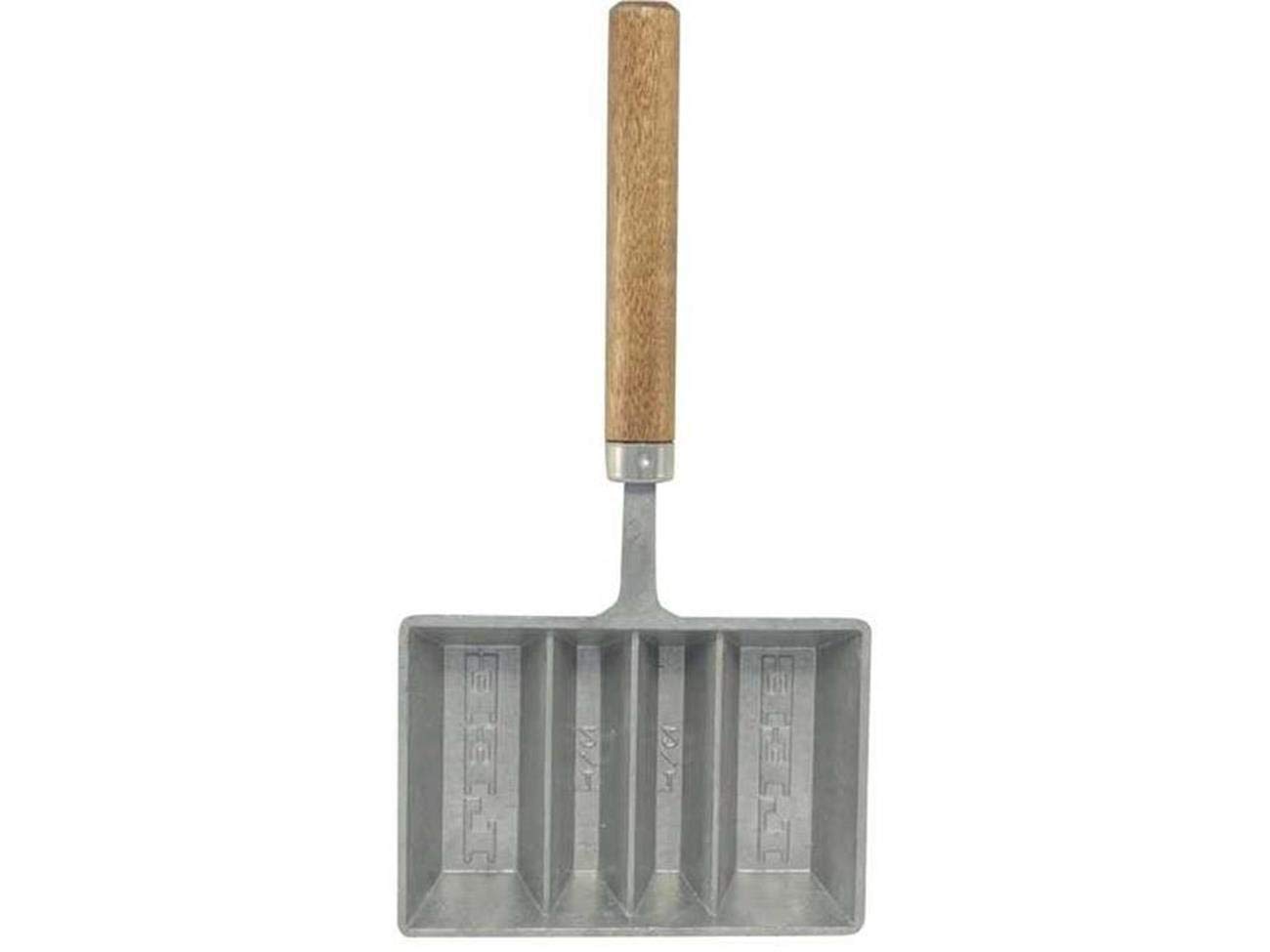
Lee Precision’s ingot mold is an American-made aluminum block with four cavities that produce two 1/2-pound and two 1-pound ingots per pour. The mixed cavity sizing is a deliberate design choice — smaller ingots are easier to add to a small crucible for alloying, while the larger ones work well for bulk storage.
The aluminum body keeps the overall weight down to 6.4 ounces, which makes handling and flipping the mold significantly easier than cast iron alternatives. Users report that sooting the interior cavities before the first use helps the release, and once the mold is up to temperature, it cycles quickly for small-batch work.
This is the most budget-oriented option on the list, and it is optimized for lead casting primarily, but it handles aluminum pours at the correct temperature. Keep in mind that pure aluminum melts around 1220°F, which is very close to the softening point of this aluminum mold, so careful temperature management is required to avoid warping the cavities over time.
Why it’s great
- Produces both 1/2 lb and 1 lb ingots in a single pour
- Lightweight at 6.4 ounces for easy manipulation
- American-made at a budget-friendly price
Good to know
- Aluminum mold can warp if melt temperature exceeds 1200°F
- Requires initial sooting for reliable release
FAQ
Can I use a graphite mold for aluminum if it was designed for gold or silver?
Why does my aluminum ingot stick to a cast iron mold?
How many cycles does a graphite ingot mold typically last?
Final Thoughts: The Verdict
For most users, the best aluminum casting molds winner is the MMasters 5kg Premium Graphite Ingot Mold because its large single cavity and sub-0.1% ash content deliver clean, oversized ingots with minimal prep. If you want a multi-cavity setup for higher throughput and dimensional consistency, grab the Nelyrho 4-Piece 1kg Graphite Mold Set. And for sand casting complex shapes beyond simple ingots, nothing beats the SIMOND STORE Cast Iron Flask Mold.