
A creaking, slipping, or overly heavy seatpost sabotages every pedal stroke. Riders chasing a lighter build or smoother road feel quickly realize that swapping the stock post for a carbon model cuts grams and adds vibration damping where it counts. But the market is cluttered with posts that look alike yet vary wildly in clamp design, setback options, and actual weight.
I’m Min — the co-founder and writer behind Gadgets Feed. I’ve spent countless hours cross-referencing weight claims, clamp compatibility, and real-world rider feedback to isolate the posts that deliver on their promises without introducing new headaches. This guide compresses all that research into actionable picks for every riding style and budget.
After analyzing dozens of models across alloy and carbon construction, I’ve ranked the top performers to help you find the best carbon seatpost for your bike build and your ride goals.
How To Choose The Best Carbon Seatpost
Selecting the right carbon seatpost involves more than just picking a lightweight option. You need to match the diameter, setback, clamp style, and intended riding discipline to your frame and saddle. A mismatch in any of these areas can lead to discomfort, poor power transfer, or a slipped saddle mid-ride.
Diameter and Frame Compatibility
Measure your frame’s seat tube inner diameter with a caliper — 27.2mm is the most common standard, but many road and mountain frames use 30.9mm or 31.6mm. A post that’s even 0.2mm too large won’t insert, and one that’s undersized requires a shim that adds weight and potential creak points.
Setback vs. Zero Offset
Setback (offset) moves the saddle clamp rearward relative to the post centerline. A zero-offset post places the saddle directly above the tube, ideal for aggressive aero positions. A 20mm or 30mm setback creates a more relaxed, stable feel by moving your center of gravity rearward — critical for endurance riding and touring bikes.
Clamp Design and Micro-Adjustment
Dual-bolt clamps offer independent control of saddle tilt and fore-aft position, making them the standard for precision fit. Single-bolt designs are lighter but often limited in micro-adjustment range. Some premium clamps integrate a cradle that captures the saddle rails without requiring disassembly, simplifying setup changes.
Quick Comparison
On smaller screens, swipe sideways to see the full table.
| Model | Category | Best For | Key Spec | Amazon |
|---|---|---|---|---|
| Race Face Next | Premium Carbon | Trail & Enduro | 250g total weight | Amazon |
| FSA SL-K Carbon SB0 | Premium Carbon | Race & Lightweight Builds | 207g actual weight | Amazon |
| Thomson Elite Aluminum | Premium Alloy | Durability & Weight Savings | 284g actual weight | Amazon |
| Zipp Service Course B2 20mm Setback | Mid-Range Alloy | Road & Endurance | 11.04 oz / 313g | Amazon |
| Velo Orange Grand Cru MKII 30.2mm Setback | Mid-Range Alloy | Touring & Commuting | 301g weight | Amazon |
| Zipp Service Course 0mm Offset | Mid-Range Alloy | Road Racing | 0.5 lb / 227g | Amazon |
| RaceFace Chester | Entry-Level Alloy | Budget Builds & Kids Bikes | 0.28 kg / 280g | Amazon |
In‑Depth Reviews
1. Race Face Next Seatpost

The Race Face Next combines a full carbon shaft with the brand’s exclusive Hunter head design, delivering a claimed weight of just 250 grams. The thumbscrew tightening system lets you dial in saddle angle by hand, which is a genuine convenience when making quick trail-side adjustments. Angled clamp bolts improve tool access, so you aren’t fighting geometry to tighten the saddle.
A rubber grommet seals the junction between post and seat tube, preventing water ingress — a small detail that extends component life. The two-bolt design allows saddle installation without fully disassembling the head, reducing the chance of losing small hardware on the trail. Rider reviews consistently praise its solid construction and reliability across multiple builds.
While the 27.2mm diameter and 400mm length suit many modern mountain bikes, check your frame’s insertion limit before buying. The carbon finish is minimal and understated, but the performance — especially the damping over rough terrain — justifies the premium positioning.
Why it’s great
- Full carbon construction drops weight to 250g without sacrificing stiffness.
- Thumbscrew system enables tool-free angle adjustment.
Good to know
- Available only in 27.2mm diameter, limiting frame compatibility.
- Premium price reflects the carbon layup and hardware quality.
2. Full Speed Ahead FSA SL-K Carbon SB0
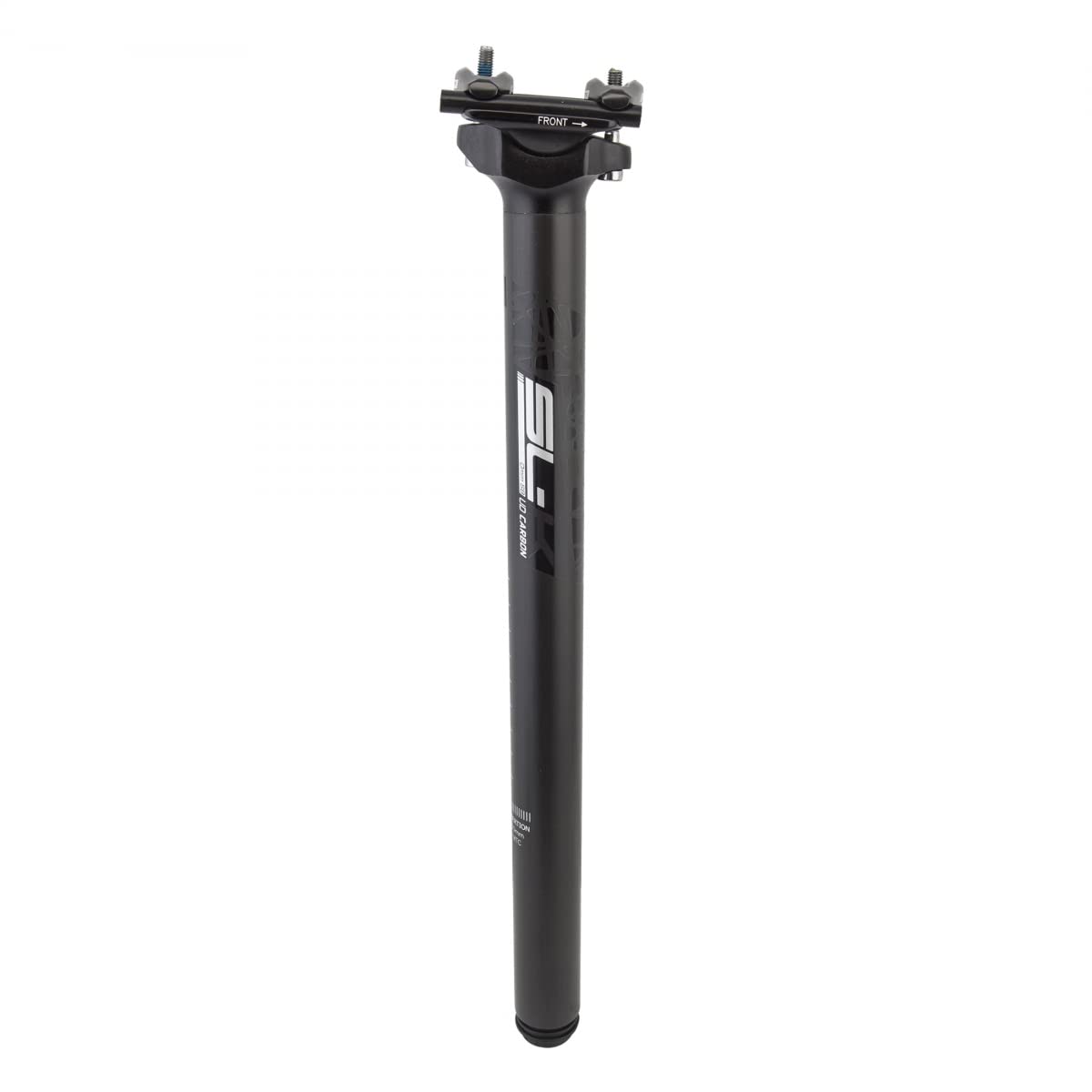
The FSA SL-K Carbon SB0 is built around a full UD carbon shaft bonded to a 6061 alloy top clamp, balancing weight savings with clamp durability. Actual weight comes in around 207 grams — notably lighter than the advertised 222g — making it one of the lightest posts in this lineup. The Minimal Top Clamp head uses two bolts that keep mass low while still allowing micro-adjustments to saddle tilt.
A removable plastic Di2 battery adapter is integrated into the design, a thoughtful inclusion for electronic shifting setups that need internal battery storage. The post ships with a packet of carbon assembly compound to prevent slippage, which is essential for carbon-on-carbon interfaces. The 3K weave accents add visual texture without the garish look of some full-graphic posts.
Saddle clamp adjustment is straightforward, and rider reports confirm no slippage after proper installation with paste. The zero-offset (SB0) design suits aggressive road racing positions where the saddle needs to sit directly above the post centerline. For endurance riders needing a setback, FSA offers SB20 versions with a 20mm offset.
Why it’s great
- Actual weight of 207g rivals much more expensive carbon posts.
- Di2 battery holder integration simplifies internal routing.
Good to know
- Only available with zero offset, limiting fit options.
- Carbon paste is required to prevent post-to-clamp movement.
3. Thomson Elite Aluminum Seatpost

Thomson’s Elite is forged from AL-7050 aluminum, a material choice that prioritizes strength and fatigue resistance over the absolute lowest weight. At 284g actual, it’s heavier than carbon alternatives, but the trade-off is a post that simply never creaks, slips, or bends. The zero-offset design and 410mm length option make it ideal for riders with long seat tubes who need maximum insertion depth.
The two-bolt clamp uses stainless steel hardware and grips saddle rails with enough force that slippage is eliminated even under heavy riders. Many users pair it with dropper post replacements on hardtail mountain bikes because of its uncompromising reliability. Reviews highlight that the post solved creaking issues that plagued their previous alloy and carbon posts.
The finish is a utilitarian bead blast black that looks at home on everything from vintage steel frames to modern carbon race bikes. Thomson does not publish a weight weenie spec, but they do offer a lifetime warranty that backs the structural integrity. If your priority is clamping force and long-term durability over gram shaving, this is the post to beat.
Why it’s great
- Virtually indestructible 7050 alloy construction with zero reported failures.
- Longer 400mm and 410mm options suit frames with deep insertion requirements.
Good to know
- 284g actual weight is significantly heavier than carbon competitors.
- Zero setback limits fit adjustment for riders needing rearward saddle offset.
4. Zipp Service Course B2 Seatpost 20mm Setback

The Zipp Service Course B2 uses the same AL-7050 aluminum as the brand’s higher-tier posts but adds a 20mm setback for riders who need a more rearward saddle position. The low-profile dual-bolt micro-adjust cradle provides independent control over tilt and fore-aft travel, making it easier to dial in fit without multiple rounds of loosening and retightening. The bead blast black finish resists corrosion and integrates cleanly with most builds.
At 11.04 ounces (approximately 313g), it’s heavier than both the Thomson Elite and the race-oriented Zipp zero-offset post. However, the extra meat adds stiffness and eliminates any flex under hard sprinting. Riders transitioning from older steel posts appreciate the precise clamp action that holds the saddle securely even on rough road surfaces.
One reviewer noted that the setback design avoids the aesthetically bent look of some competitors while still providing adequate rearward positioning. The single-piece 3D forged body and stainless steel hardware ensure long corrosion resistance for year-round riders. For road cyclists who need a setback without stepping up to boutique carbon pricing, this is a strong mid-range pick.
Why it’s great
- 20mm setback optimizes saddle position for endurance geometry.
- Dual-bolt cradle offers independent tilt and fore-aft micro-adjustment.
Good to know
- 313g weight is noticeable compared to carbon posts.
- Front adjustment screw is slightly harder to access on the setback model.
5. Velo Orange Grand Cru Long Setback Seatpost MKII

The Velo Orange Grand Cru MKII is designed specifically around leather saddles and short-rail designs that need extra rearward positioning. Its 30.2mm setback is the most generous in this roundup, effectively moving the rider’s center of gravity back for improved stability on touring and commuter builds. Internal ovalization of the aluminum shaft keeps weight at a respectable 301g while maintaining strength.
The two-bolt adjustment system operates from the bottom of the clamp, allowing fore-aft and tilt adjustments without loosening the saddle clamp bolts entirely. However, the design does link offset and seat angle — changing one can affect the other, requiring a bit of iterative tuning to get perfect. Riders who need precise independent adjustment may find this method less intuitive than dual-bolt cradles.
Wide rail clamps allow the saddle to sit near the middle of its rails even with the substantial setback, preventing the common problem of running out of adjustment range. After 200 miles of use, one reviewer reported zero movement, confirming that the clamp holds securely once dialed. For cyclists with chronic back pain aggravated by too-forward saddle position, this post is a targeted solution.
Why it’s great
- 33.2mm max offset fixes fit issues that standard 20mm setback posts can’t correct.
- Wide rail clamps maximize saddle position range.
Good to know
- Offset and tilt adjustment are linked, not independent.
- More mass than shorter-travel posts at 301g.
6. Zipp Service Course Seatpost 0mm Offset

Zipp’s Service Course post in the zero-offset configuration is a lightweight alloy option aimed at road racers and aero-position riders. At just 0.5 pounds (approximately 227g), it blends near-carbon-level weight with the reliability of a forged AL-7050 shaft. The low-profile dual-bolt micro-adjust clamp allows precise saddle tilt adjustments that stay secure even under hard efforts.
The bead blast black finish provides excellent corrosion resistance for riders who train in wet conditions. Stainless steel hardware ensures that the bolts won’t corrode or gall over time. The 350mm length and 27.2mm diameter cover most road frames, and the zero offset places the saddle directly above the post for maximum aerodynamic efficiency.
Some early units arrived with small chips on the clamp, likely from handling or returns, but the damage was purely cosmetic and fixable with touch-up paint. Riders switching from other posts consistently note that this clamp is easier to adjust tilt and stays more secure than competitor designs. For a sub- post that weighs under 230g, the value proposition is clear.
Why it’s great
- 227g weight rivals many carbon posts at a fraction of the price.
- Two-bolt micro-adjust clamp is intuitive to dial in precise tilt.
Good to know
- Zero offset limits fit for riders who need a setback.
- Cosmetic imperfections reported on some shipping units.
7. RaceFace Chester Seatpost
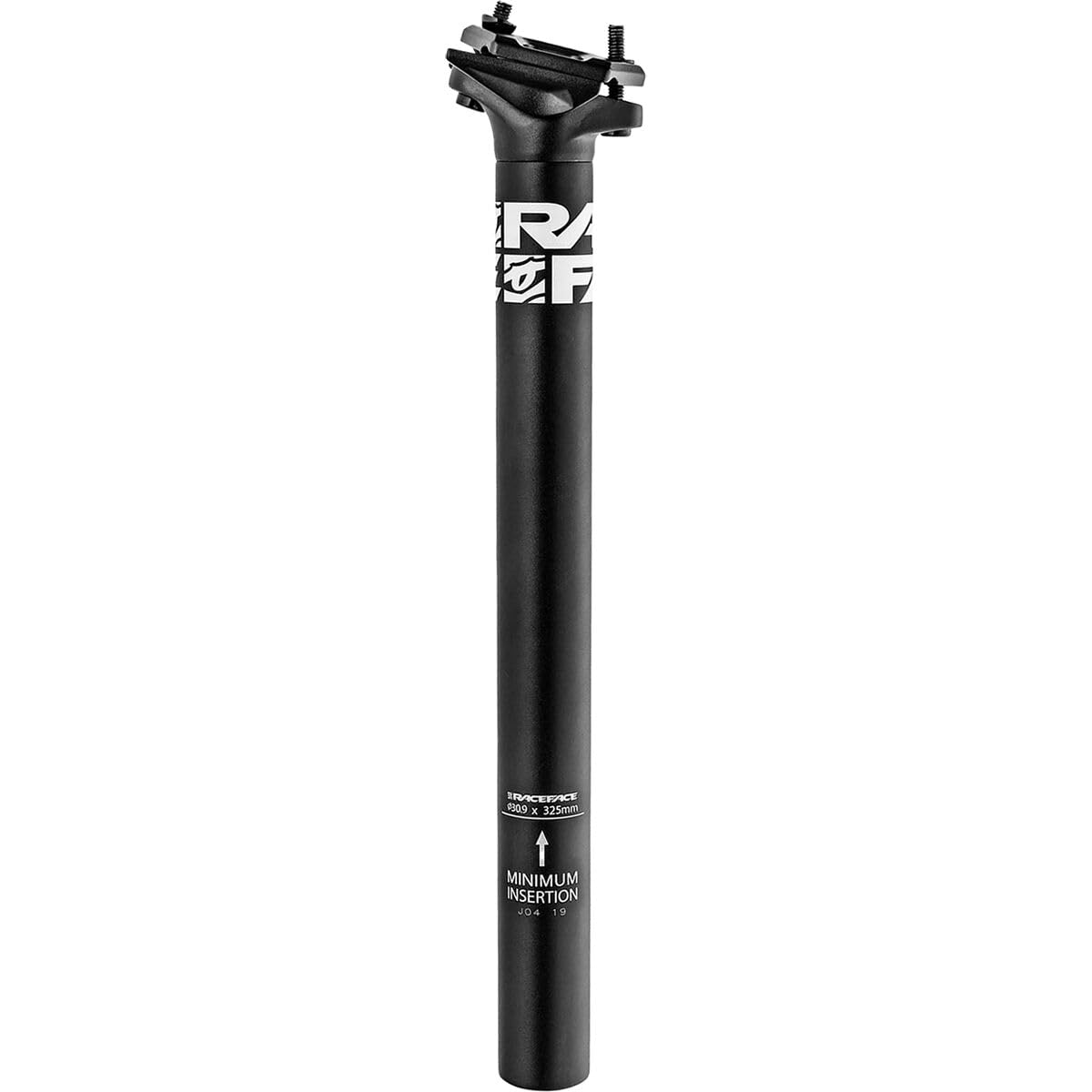
The RaceFace Chester is a no-nonsense, entry-level seatpost drawn from 6061 alloy with a shot-peened surface for improved impact resistance and fatigue life. At just 280 grams for the 27.2mm x 325mm version, it’s competitive in weight with many mid-range alloy posts. The dual-bolt multi-adjust head simplifies saddle angle setup and holds securely once tightened.
Riders have used this post successfully on kids’ bikes to extend the lifespan of frames with short seat tubes, as well as on cargo bikes and city commuters. The slightly shorter length (325mm) is something to watch — it may not provide enough insertion depth for frames with long seat tubes. However, for frames that accommodate it, the Chester offers reliable clamping at a very accessible cost.
Customer reviews consistently note that the design makes angle adjustments easier than single-bolt designs they’ve used in the past. The aesthetic is clean and straightforward, with a black finish that blends into any build. If you need a functional, durable post without any carbon or fancy hardware, the Chester delivers measurable value without compromise on the clamping mechanism.
Why it’s great
- Shot-peened 6061 alloy construction provides excellent fatigue resistance.
- Dual-bolt clamp enables easy, precise saddle angle adjustments.
Good to know
- 325mm length may be too short for frames with deep seat tube insertion requirements.
- Heavier than carbon alternatives at 280g.
FAQ
Does a carbon seatpost really reduce road vibration?
How do I prevent a carbon seatpost from slipping?
Can I use a 27.2mm seatpost in a 31.6mm frame?
Final Thoughts: The Verdict
For most riders seeking a carbon seatpost, the Race Face Next strikes the best balance of weight savings, vibration damping, and secure clamping at a justifiable price. If you’re shaving every gram for a race build, the FSA SL-K Carbon SB0 delivers true ultralight performance. And for riders who prioritize bombproof reliability over carbon weight, the Thomson Elite remains the gold standard for alloy posts that simply never quit.