
Capturing a winning moment—the blur of a runner crossing the plate, the hang time of a jump shot—demands gear that reacts faster than the play itself. The challenge is finding a camera that delivers crisp, stop-motion clarity without forcing you to sell a kidney, especially when your primary subjects are moving at full tilt under inconsistent stadium or field lighting.
I’m Min — the co-founder and writer behind Gadgets Feed. I’ve spent countless hours dissecting the autofocus algorithms, burst rates, and sensor performance of budget-friendly camera bodies to separate the true sports-ready performers from the marketing fluff.
After deep analysis, this guide distills years of market research into the definitive list of the best budget sports photography camera options that balance speed, reach, and image quality for the price-conscious action shooter.
How To Choose The Best Budget Sports Photography Camera
Buying a camera for sports on a budget means you must prioritize performance metrics that directly impact your ability to freeze a fast player. The wrong focus on a trendy spec can mean missing the decisive moment entirely.
Autofocus Tracking and Speed
The single most critical feature for sports is the autofocus system’s ability to lock onto and follow a moving subject across the frame. Look for phase-detection AF points that cover a wide area of the sensor, ideally with subject tracking modes for humans and animals. A system that constantly hunts will cause you to miss the peak action.
Continuous Shooting (FPS) and Buffer Depth
A high burst rate (frames per second or fps) is essential for capturing a sequence of motion, but it’s useless if the camera’s buffer fills up after one second. The buffer depth dictates how many raw or JPEG shots the camera can fire before it slows down. For budget bodies, 6-10 fps is a sweet spot, but the buffer should hold at least 15-20 raw frames to cover a full sprint.
Lens Ecosystem and Telephoto Reach
Your camera body is only half the equation. For sideline or bleacher shooting, you need a lens that brings the subject close. Consider the available native-mount telephoto zooms (e.g., 70-200mm, 55-210mm, or a superzoom bridge camera). A body with a broad, affordable lens ecosystem, like Canon RF-S or Sony E-mount, offers long-term value.
Quick Comparison
On smaller screens, swipe sideways to see the full table.
| Model | Category | Best For | Key Spec | Amazon |
|---|---|---|---|---|
| Sony ZV-E10 | Mirrorless | Fast Hybrid AF & 4K Oversampled | 11fps / 425 phase-detect AF points | Amazon |
| Panasonic G85 | Mirrorless | Stabilized Telephoto Shooting | 9fps / Dual IS 5-Axis IBIS | Amazon |
| Canon EOS R50 | Mirrorless | Subject Detection & 15fps Burst | 15fps / Dual Pixel CMOS AF II (651 pts) | Amazon |
| Sony ZV-1F | Compact | Ultra-Wide for Close-Court Action | 24fps / 20mm ultra-wide f/2.0 lens | Amazon |
| Nikon Z 30 | Mirrorless | Unlimited 4K for Long Events | 11fps / Eye-tracking AF for people/pets | Amazon |
| Canon EOS R100 | Mirrorless | Entry-Level DSLR-Like Control | 6.5fps / 143-zone Dual Pixel CMOS AF | Amazon |
| Panasonic G100 | Mirrorless | Lightweight Tracking for Sidelined Video | 10fps / Advanced audio & subject tracking | Amazon |
| Xtra Muse | Camcorder/Gimbal | Ultra-Stable Gimbal 4K/120fps | 4K/120fps / In-body 3-Axis Gimbal | Amazon |
| GoPro HERO13 Black | Action Cam | Ultra-Wide POV & 13x Slow Motion | 5.3K60 / HyperSmooth 6.0 & Burst Slo-Mo | Amazon |
| DJI Osmo Action 5 Pro | Action Cam | Low-Light Sports & 360° Horizon Stability | 4K/120fps / 1/1.3″ sensor & 13.5-stop DR | Amazon |
| Minolta MN40Z | Bridge | Maximum Optical Reach on a Shoestring | 30fps / 40X optical zoom (24mm-960mm) | Amazon |
In‑Depth Reviews
1. Sony Alpha ZV-E10
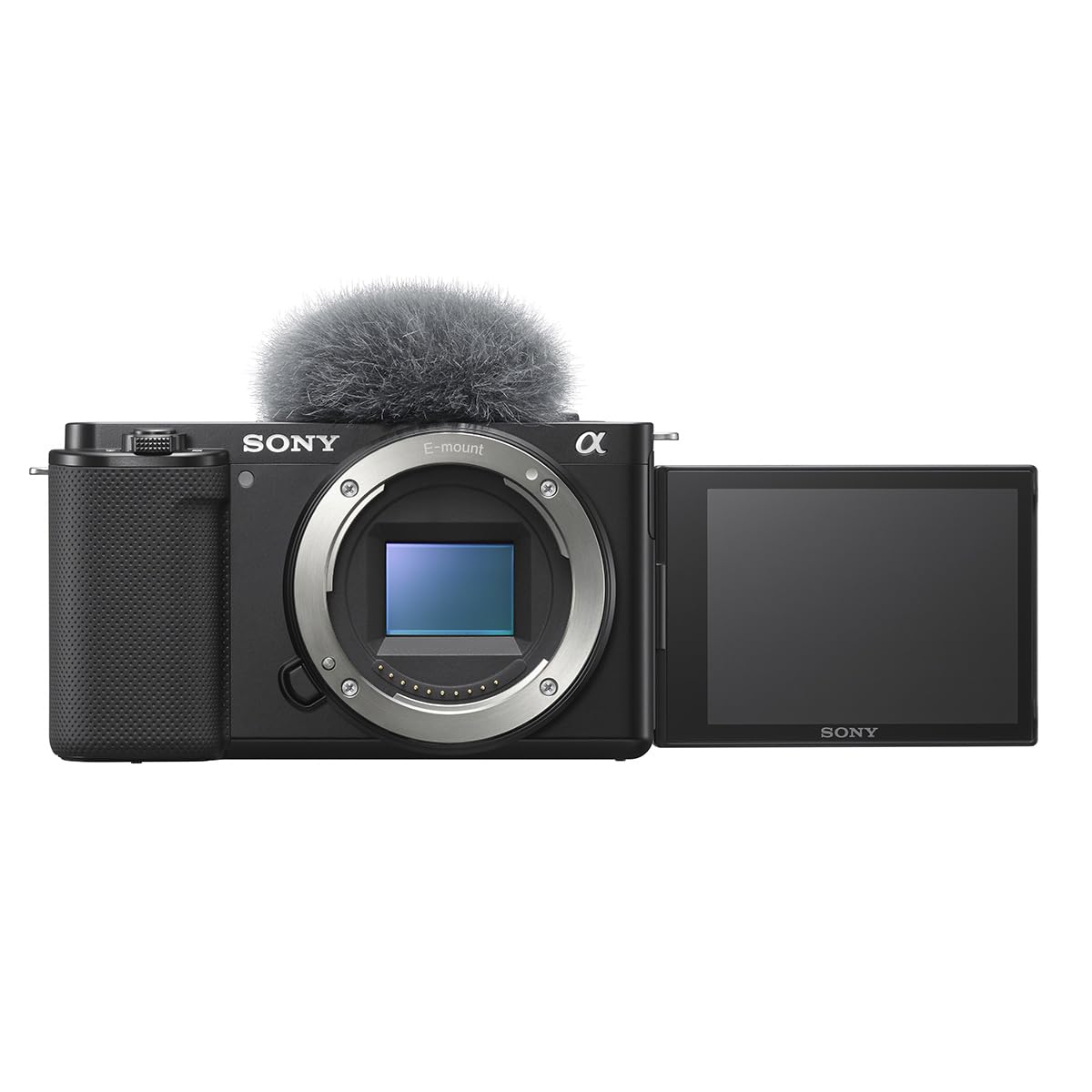
The Sony ZV-E10 packs a large APS-C sensor and a 4K readout oversampled from 6K, giving you sharp, detailed frames even when you crop in after the play. Its 425 phase-detection autofocus points cover a wide area, locking onto players with reliable Eye-AF tracking that is crucial for sideline shooting.
At 11 frames per second with a mechanical shutter, it captures a solid sequence of motion. The Product Showcase mode is a gimmick, but the Background Defocus button lets you quickly soften a messy background when isolating a single athlete. Its compact body means you can carry a 70-350mm telephoto without breaking your back.
The biggest downside is the lack of in-body image stabilization for handheld video. For stills, the fast AF and crisp image output make it a flexible workhorse that handles running track, soccer, or even indoor basketball in a pinch when paired with fast glass.
Why it’s great
- Oversampled 4K with sharp detail for cropping
- 425-point phase-detect AF with reliable Eye-AF
Good to know
- No in-body image stabilization
- Limited buffer depth for raw bursts
2. Panasonic LUMIX G85

The Panasonic G85 is a classic in the budget action-shooter community because of its class-leading 5-axis in-body image stabilization. When you mount a 100-300mm telephoto lens for far-field action, the IBIS helps you keep the viewfinder steady and produces cleaner handheld shots at slow shutter speeds.
It shoots 4K video and has a burst rate of 9fps with continuous autofocus. The lack of a low-pass filter on the 16MP sensor gives sharpness that punches above its pixel count. The splash-proof and dust-proof magnesium alloy body handles the sidelines of a rainy soccer match without complaint.
The contrast-detect autofocus can struggle in low-light indoor gyms compared to phase-detect rivals. However, the Dual IS 2 system makes it one of the most forgiving cameras for shaky hands when tracking moves on the court.
Why it’s great
- Excellent 5-axis stabilization for telephoto shots
- Weather-sealed body for outdoor sports
Good to know
- Contrast AF hunts in low light
- Battery life is average for longer events
3. Canon EOS R50

The Canon EOS R50 brings a blistering 15fps burst rate to the budget market, making it the best option for capturing rapid sequences like a basketball drive or a goalie’s dive. The Dual Pixel CMOS AF II system with 651 autofocus points provides dense coverage across the frame, keeping athletes sharp even if they move erratically.
The 24.2MP APS-C sensor offers excellent resolution for cropping tight shots. The vari-angle touchscreen is handy for low-angle sideline photography, and the vertical movie mode is a nice bonus for social media clips. The kit 18-45mm lens is good for walking around, but you’ll need an RF-S 55-210mm for real field reach.
The larger raw files can fill the buffer faster during electronic shutter bursts. The lens selection for the Canon RF-S mount is still growing, limiting your budget telephoto choices compared to Sony’s E-mount. For pure speed, this camera is hard to beat at the price.
Why it’s great
- 15fps burst with reliable subject detection
- 651 AF points covering the entire sensor
Good to know
- Buffer fills quickly with high-res raw files
- RF-S telephoto lens ecosystem is still limited
4. Sony ZV-1F

The Sony ZV-1F is a pocket-sized powerhouse for capturing courtside action where you are physically close to the players. The ultra-wide 20mm f/2.0 lens is ideal for getting the entire basketball court or boxing ring in frame. The Eye-AF and autofocus tracking are inherited from Sony’s larger Alpha line, so faces stay sharp.
The 1-inch sensor produces clean images up to ISO 3200, which is acceptable for well-lit gyms. The 24fps burst rate in still mode can capture a flurry of movements. The directional 3-capsule microphone is a bonus if you also plan to record game commentary or sideline audio.
The fixed wide-angle lens kills any reach beyond arm’s length, and there is no optical zoom at all. It is a situational tool for close interactions or action near the goal, not for tracking a runner in a 100m dash from the bleachers.
Why it’s great
- Ultra-wide 20mm f/2 lens for tight spaces
- Sony’s excellent Eye-AF for subject tracking
Good to know
- Permanent wide lens with zero telephoto reach
- No headphone jack for audio monitoring
5. Nikon Z 30

The Nikon Z 30 is designed for vloggers but its real strength for sports is the ability to record 4K 30p video indefinitely without overheating. This makes it a fantastic tool for filming an entire match or practice session from a tripod. The eye-tracking autofocus for people and pets is responsive and works during video.
With a 20.9MP DX sensor, stills are sharp, and the 11fps burst is competitive for the budget tier. The compact build means you can slide it into a small bag alongside a telephoto zoom for a lightweight setup. The red REC light is simple, but the flip-out screen makes it easy to frame high-angle shots.
The lack of an electronic viewfinder is a major drawback for bright outdoor sun where the LCD washes out, making it hard to track a fast-moving player. It relies on a steady USB power supply for all-day recording, but the battery life is solid for a few hours.
Why it’s great
- Unlimited 4K recording for full-game capture
- Excellent eye-tracking AF for video
Good to know
- No viewfinder makes outdoor shooting difficult
- Not ideal for fast action stills due to buffer
6. Canon EOS R100

The Canon EOS R100 is the lightest entry point into the Canon R mirrorless system, offering a 24.1MP sensor and Dual Pixel CMOS AF with 143 zones. For a beginner photographer shooting their kid’s T-ball game, the 6.5fps burst is enough to capture key moments without overwhelming the learning curve. The DIGIC 8 processor keeps the camera snappy in auto modes.
The kit lens (18-45mm) limits you to very close action; you’ll need an RF telephoto to get any real distance shots. The human and animal detect AF works well in good light, though the 143 AF points are a lower density than the R50. The overall image quality is superb for the price, with vibrant colors straight out of camera.
4K video is limited to 24fps, which can look choppy for fast motion. The burst buffer is shallow, so long sequences will stutter quickly. It is best as a learning tool for parents or new photographers rather than a pro-grade sports machine.
Why it’s great
- Excellent 24MP image quality for its price
- Dual Pixel AF with eye/face detection
Good to know
- Shallow buffer for rapid continuous shooting
- 4K limited to 24fps for video capture
7. Panasonic LUMIX G100

The Lumix G100 may be targeted at vloggers, but its 4K photo mode and 10fps burst make it a viable option for recording sports practice or highlight packages. The 20MP Micro Four Thirds sensor benefits from the massive lens selection available for the MFT mount, including budget telephoto lenses that are small and light.
The standout feature is the advanced 360-degree audio tracking, which is useful if you are filming a practice drill and need clear sound from the player you are tracking. The iA mode makes it very forgiving for beginners. The 5-axis hybrid OIS helps steady handheld shots.
The contrast-detect autofocus is not as snappy as phase-detect for unpredictable fast movement. Also, the 4K video recording time is limited, which restricts its use for full-game capture.
Why it’s great
- Advanced audio tracking for player sound capture
- Compact MFT body with huge lens ecosystem
Good to know
- 4K video recording time is limited
- Contrast AF can hunt with fast subjects
8. Xtra Muse

The Xtra Muse packs a 1-inch CMOS sensor and a 3-axis gimbal directly into the body, offering silky-smooth 4K/120fps footage without extra accessories. This is a unique tool for capturing slow-motion game highlights or following a player during a drill with zero shake.
The gimbal stabilization makes it superior for walking sideline shots and tracking a subject running toward you. The face and object tracking keeps the focus locked on the athlete. The built-in handle with a 1/4-inch thread lets you mount it on a monopod for stable overhead shots.
The battery lasts just over two hours with the gimbal running, so you may need a power bank for a long game. It is not suitable for extreme telephoto shots since the lens is built-in with limited optical zoom. The software menu can be confusing for beginners.
Why it’s great
- Built-in 3-axis gimbal for unparalleled handheld stability
- 4K/120fps high frame rate for slow-motion action
Good to know
- Battery life around 2 hours with gimbal active
- Limited optical zoom; no telephoto capability
9. GoPro HERO13 Black

The GoPro HERO13 Black is the ultimate choice for capturing POV video of action sports or close-quarters training footage. Its 5.3K60 video resolution allows you to crop into the frame for reframing, while the Burst Slo-Mo mode can slow action down to 13x normal speed, revealing unseen details in a swing or a pivot.
The HyperSmooth 6.0 stabilization keeps the footage rock steady even when the camera is mounted on a helmet or chest strap. The HB-series lens compatibility lets you swap to a macro or ultra-wide for specific effects. The waterproof rating down to 33ft means rain or poolside water sports are not off-limits.
For traditional sports photography (stills), the 27MP photo resolution is decent but the small sensor cannot compete with a micro four thirds or APS-C camera for background blur and high ISO performance. It excels in video, not stills.
Why it’s great
- 5.3K video for reframing and cropping
- 13x Burst Slo-Mo for analyzing technique
Good to know
- Small sensor limits still image quality in low light
- Not suitable for telephoto field photography
10. DJI Osmo Action 5 Pro

The DJI Osmo Action 5 Pro raises the bar for action cameras with a larger 1/1.3-inch sensor offering 13.5 stops of dynamic range, making it far better in low-light conditions than typical action cameras. This means clearer footage during evening games or indoor arena events.
It records 4K/120fps for slow-motion and features HorizonSteady stabilization that keeps the horizon level even through 360-degree spins. The 40MP still photo resolution is surprisingly high for an action cam, and the dual OLED touchscreens make framing and playback easy. The 47GB internal storage is a bonus for quick shooting.
Like the GoPro, it lacks any optical zoom, limiting its use as a traditional sports camera. The battery lasts up to 4 hours, which is excellent for action cameras. The small sensor will still struggle with motion blur in very dark conditions compared to a larger sensor camera.
Why it’s great
- Large 1/1.3-inch sensor for superior low-light video
- 360° HorizonSteady leveling for any angle
Good to know
- No optical zoom for distant subjects
- Small sensor still limits ultra-low light stills
11. Minolta MN40Z

The Minolta MN40Z is a bridge camera that delivers a 40x optical zoom lens, offering an incredible reach from wide to telephoto without changing lenses. For a budget shopper who needs to capture action on a football field from the stands, this zoom range is the most affordable way to get close to the play.
It captures 20MP stills and 1080p FHD video. The continuous shooting speed of 30fps is high on paper, but the camera’s buffer and slow autofocus mean it is more suited for predictable motion like a batter swinging at a pitch rather than erratic movement. The Wi-Fi sharing is a nice bonus for quick social media uploads.
The autofocus is slow and can freeze when zooming, leading to missed bursts. The image quality in low-light gyms is poor due to the small sensor. It is a functional tool for well-lit daytime sports where the key requirement is reach rather than speed or high ISO performance.
Why it’s great
- 40x optical zoom reaches far-field action
- Uses affordable AA batteries
Good to know
- Autofocus is slow and can freeze during sequences
- Poor low-light performance in indoor sports
FAQ
Can a bridge camera like the Minolta MN40Z capture fast sports action?
How many frames per second (fps) do I need for youth sports?
Is in-body image stabilization (IBIS) essential for sports photography?
Final Thoughts: The Verdict
For most users, the best budget sports photography camera winner is the Sony Alpha ZV-E10 because it balances a large APS-C sensor, 11fps burst, and reliable phase-detect Eye-AF within a compact body. If you want maximum reach for field sports, grab the Minolta MN40Z. And for gimbal-stabilized slow-motion video without extra gear, nothing beats the Xtra Muse.