
Tree work demands boots that grip wet bark, shield your feet from a falling saw chain, and keep you stable on a narrow branch twenty feet up. The wrong sole flexes when it should bite, the wrong toe lets a log crush your phalanges, and the wrong leather soaks through before lunch. You need a logger or climbing-specific boot built for the unique hazards of arboriculture — spike-friendly shanks, chain-saw-resistant materials, and outsoles that refuse to skate on damp wood.
I’m Min — the co-founder and writer behind Gadgets Feed. I’ve spent hundreds of hours dissecting technical specs and real-world reviews of work boots to find the models that actually hold up to the daily abuse of climbing, cutting, and rigging in the field.
This guide breaks down the top contenders across every budget tier, from budget-friendly entry-level options to premium handmade loggers, to help you pick the right boots for arborists that balance protection, comfort, and durability.
How To Choose The Best Boots For Arborists
Not every rugged boot is safe for tree work. Arborists face a unique set of demands — spike-compatible heels, chain-saw protection, and outsoles that grip wet, mossy bark. Here are the three most critical factors to weigh before you buy.
Safety Certifications: Steel Toe vs. Composite Toe vs. Soft Toe
A falling branch or a kicking saw chain will crush an unprotected foot instantly. Steel toes meet ASTM F2413 impact standards and are the most common choice for ground work and climbing, but they conduct cold and can be heavier. Composite toes are lighter and non-conductive, ideal for electrical hazard environments. Soft toe loggers offer no impact protection — skip those for any job involving heavy timber or chainsaws.
Outsole Design: The Logger Heel and Bark Grip
A flat heel has no place in a tree. The classic logger heel — a sharp, raised 90-degree angle — locks into climbing spikes and prevents your foot from sliding off a limb. The tread pattern matters equally: deep, widely spaced lugs clear mud and bite into wet wood, while shallow treads glaze over bark and leave you slipping. Look for Vibram or custom rubber compounds formulated for oil and slip resistance.
Waterproofing and Durability Materials
Wet feet inside a boot for eight hours cause blisters, trench foot, and accelerated leather degradation. Full-grain or top-grain leather with a Gore-Tex or proprietary waterproof membrane keeps moisture out while allowing sweat vapor to escape. For arb work, a thick leather upper also offers limited abrasion resistance against rope and brush. Avoid split-grain or corrected-grain leather — they dry out faster and crack under constant exposure to sap, mud, and water.
Quick Comparison
On smaller screens, swipe sideways to see the full table.
| Model | Category | Best For | Key Spec | Amazon |
|---|---|---|---|---|
| EVO 2 Climbing Boots | Premium Climbing | Dedicated tree climbing | Water resistant, climbing-specific last | Amazon |
| Chippewa 8″ Lace-To-Toe Logger | Premium Logger | Mixed ground & climbing | Steel toe, waterproof, lace-to-toe | Amazon |
| Danner Vicious 4.5″ | Premium All-Around | Long shifts on varied terrain | Gore-Tex lining, full-grain leather | Amazon |
| Ariat Groundbreaker Steel Toe | Mid-Range All-Around | Everyday work & light climbing | Steel toe, wide square toe, ATS Max support | Amazon |
| Ariat Cascade 8″ | Mid-Range Logger | Climbing comfort & style | 8″ height, logger heel, waterproof | Amazon |
| Carolina 8″ Steel Toe Logger | Mid-Range Logger | Budget-conscious logging | Steel toe, welt construction, EH rated | Amazon |
| Georgia Boot Logger | Entry-Level Logger | Heavy ground work | Goodyear welt, slip-resistant sole | Amazon |
| Viking Class 2 Chainsaw Boots | Safety Specialist | Maximum cut protection | Class 2 chainsaw resistant, steel toe | Amazon |
| Irish Setter Mesabi | Entry-Level Logger | All-day comfort on a budget | 8″ height, waterproof, soft toe | Amazon |
In‑Depth Reviews
1. EVO 2 Climbing Boots for Arborists
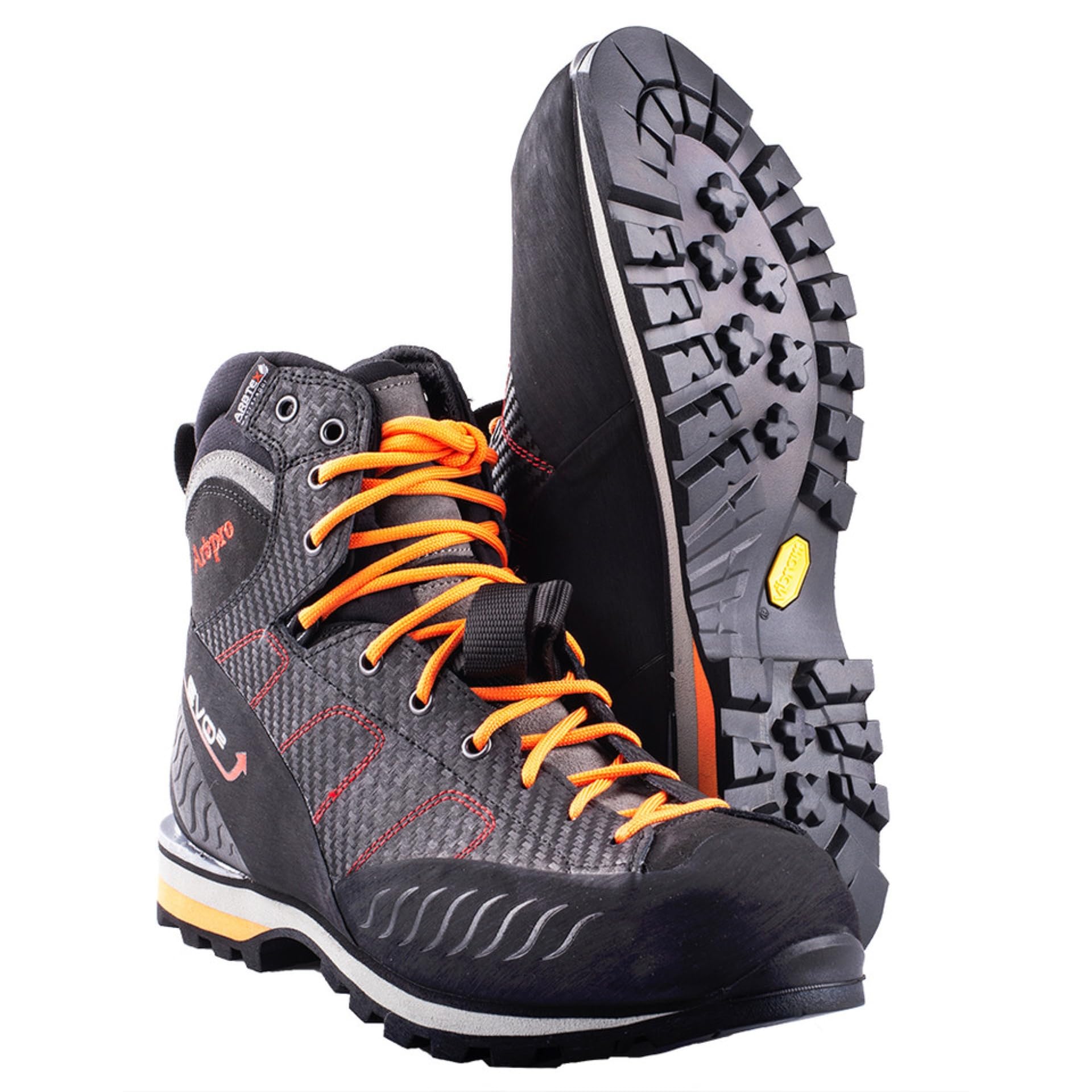
The EVO 2 is built from the ground up for tree climbing, not adapted from a logging boot. Its last is narrower through the heel to lock into spikes and wider at the toe box for balance on limbs. The sole compound is formulated to grip wet bark — a surface that sends standard logger boots sliding.
Long-time users report replacing pairs yearly under heavy professional use, and cobblers can resole them to extend the life. The water-resistant upper handles morning dew and light rain, though it is not fully waterproof for standing in water all day. At roughly 3.5 pounds per boot, the weight is noticeable but expected for a climbing boot with protective structure.
Arborists who climb daily praise the comfort — many say their feet no longer ache at the end of a shift. The boot runs slightly small, so sizing up a half size is common advice from experienced buyers. For dedicated climbers, this is the most category-specific option on the market.
Why it’s great
- Purpose-built climbing geometry locks into spikes
- Bark-gripping sole outperforms standard logger treads
- Resolable construction extends service life
Good to know
- Runs small — order up a half size
- Water resistant, not fully waterproof
- Premium price point limits budget appeal
2. Chippewa Men’s 8″ Lace-To-Toe Waterproof Steel Toe Insulator Logger
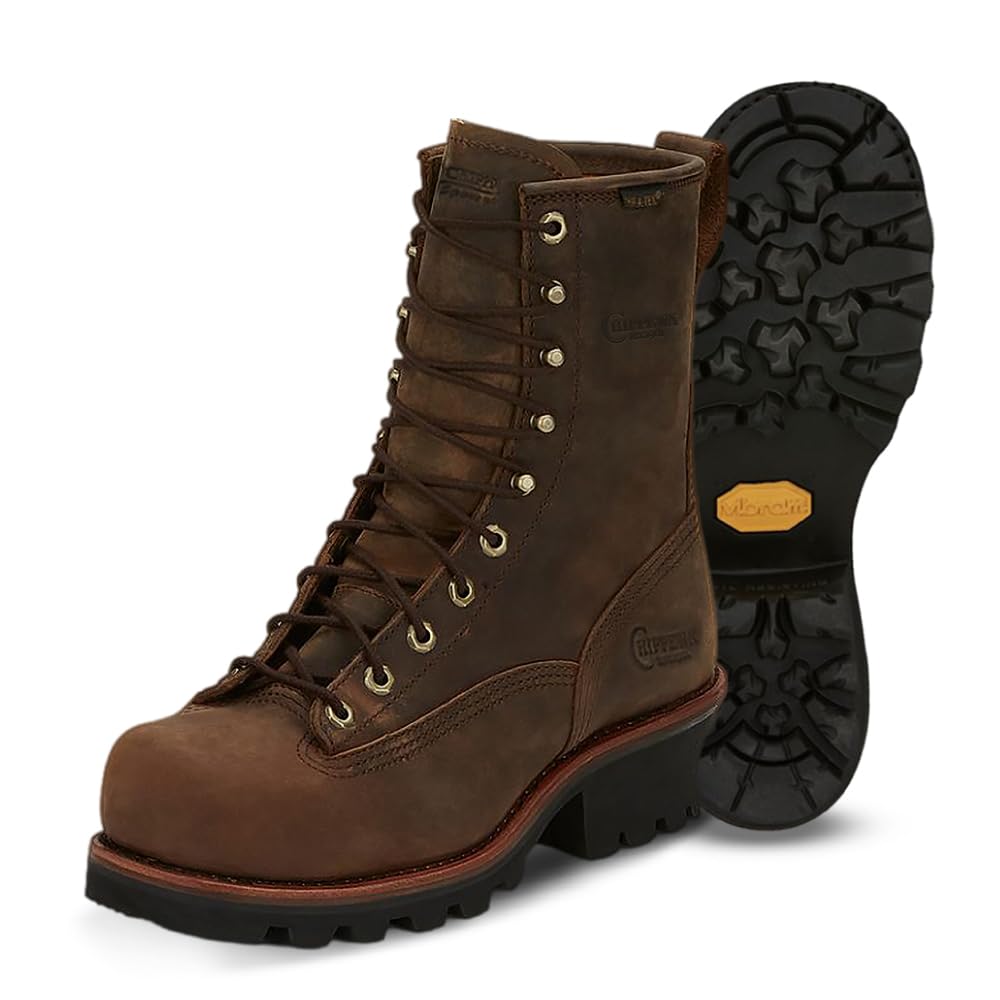
The Chippewa 73101 is a classic American logger built with a lace-to-toe system that lets you dial in the fit from the toes to the ankle — critical when wearing climbing spikes that need a secure heel pocket. The steel toe meets ASTM safety standards, and the 8-inch height provides substantial ankle support for uneven terrain.
Owners consistently report decades of satisfaction, with many buying multiple pairs over their careers. The full-grain leather, when oiled annually, resists cracking from sap and moisture. The sole is designed for rough terrain but wears faster on concrete — a common trade-off for deep-lug logger boots.
The boot runs true to size for most, though the wider toe box accommodates those with broader feet who find Red Wings too narrow. Some long-term users have moved to higher-end PNW boots but admit the Chippewas still hold up years later. At roughly 2.7 pounds, they are lighter than many steel-toe loggers in this class.
Why it’s great
- Lace-to-toe provides customizable fit for spikes
- Steel toe meets impact safety standards
- Full-grain leather lasts years with proper care
Good to know
- Sole wears faster on hard surfaces
- Bulky profile may feel heavy for nimble climbing
- Premium pricing above mid-range options
3. Danner Vicious 4.5″ Waterproof Work Boots

The Danner Vicious is a 4.5-inch boot that trades the classic logger height for a lower profile better suited to ground work and chainsaw operation where ankle mobility matters. The Gore-Tex membrane keeps feet bone-dry even during half-submerged stream crossings, and reviews confirm the waterproofing holds after months of heavy use.
At 1.8 pounds per boot, it is remarkably light for a steel-toe-capable work boot — a real advantage during long shifts on concrete, asphalt, and gravel. The full-grain leather upper resists abrasion, and the speed-lace system allows quick on-and-off. A user who wore them for 10+ hour days reported zero foot fatigue after four months of constant use.
For arborists working mixed terrain — truck, ground, light climbing — this boot excels as an all-day companion. The wide-size option runs slightly small initially but stretches after a few weeks. After 1.5 years of daily abuse, one reviewer noted the tread was still intact with no delamination, just minor cosmetic scuffs.
Why it’s great
- Lightweight at 1.8 lbs reduces fatigue
- Gore-Tex lining provides reliable waterproofing
- Exceptional long-term durability reported
Good to know
- 4.5″ height offers less ankle wrap than 8″ loggers
- Wide sizes run small initially
- Not ideal for dedicated climbing due to lower cut
4. Ariat Men’s Groundbreaker Wide Square Toe Steel Toe Work Boot
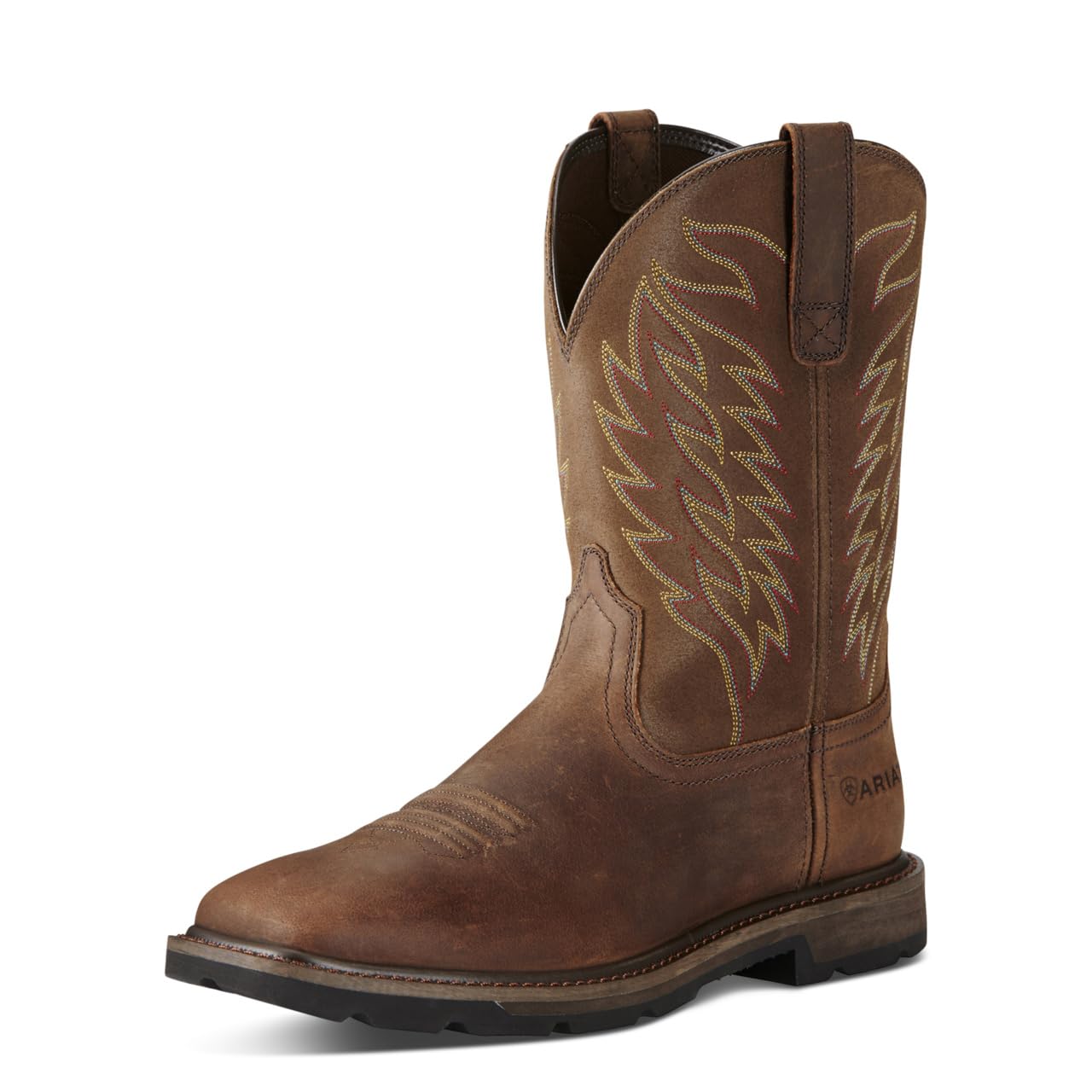
The Ariat Groundbreaker proves that you do not need to spend premium money for genuine steel-toe protection and all-day comfort. The ATS Max technology provides a stable platform and torsional support that reduces foot fatigue on long ground shifts. The wide square toe gives your toes room to splay — a huge plus for anyone who finds standard steel toes cramped.
The Goodyear welt construction means these can be resoled, extending the boot’s life well beyond the mid-range price point. The leather is oiled and full-grain, holding up to mud, sap, and water reasonably well. At 1.9 pounds, they are lighter than most steel-toe competitors, making them easy to wear for 10-hour days without feeling like you are dragging anchors.
One buyer reported walking out of the box and into a 9-hour shift with zero break-in pain — unusual for steel-toe boots. A few users noted a slightly loose heel fit, but this was resolved with thicker socks or an insole. For arborists who spend more time on the ground than in the tree, this is a smart, comfortable choice.
Why it’s great
- Out-of-box comfort with no break-in
- ATS Max support reduces foot fatigue
- Goodyear welt allows resoling
Good to know
- Loose heel fit for some foot shapes
- Wide square toe may feel bulky for climbing
- Not waterproof — water resistant only
5. Ariat Men’s Cascade 8″ Work Boot

The Ariat Cascade is an 8-inch logger that balances the classic woodsman look with modern comfort tech. The logger heel locks into climbing spikes reliably, and the waterproof membrane keeps feet dry through wet grass, morning dew, and light rain. Many users report wearing them as dress boots after work — a testament to the clean aesthetic.
The outsole provides solid traction on dry bark and loose soil, though like most logger boots, it can be slippery on wet, smooth bark if the lugs are shallow. The 8-inch shaft gives solid ankle support for uneven terrain, and the full-grain leather resists punctures from thorns and brush. Multiple repeat buyers cite the Cascade as the best pair they have owned.
One minor complaint from a buyer was a scuff on the toe upon arrival — a packaging issue rather than a design flaw. The boot fits true to size for most, with good arch support that is appreciated by those who work for utility companies and climb poles regularly. It is a strong mid-range option for arborists who want a classic logger profile without paying premium prices.
Why it’s great
- Classic logger heel locks into climbing spikes
- Waterproof membrane keeps feet dry
- Good arch support for long shifts
Good to know
- Slippery on wet bark — shallow lugs
- Some quality control scuffs reported
- Break-in period may be needed for some
6. Carolina 8″ Steel Toe Logger Boots

The Carolina CA9821 is a steel-toe logger built with welt construction and an electrical hazard rating — a must for arborists working near power lines. The 8-inch shaft provides reliable ankle support, and the memory foam insole adds a layer of comfort that is rare in budget-tier loggers. The deep-lug outsole sheds mud well on loose terrain.
Many buyers report excellent durability for the price, with some using them daily for months without structural failure. The full-grain leather upper resists abrasion from brush and rope. However, one user reported that the boot looked worn after only one month — suggesting quality control may vary between production batches.
The boot runs true to size for most, and the steel toe meets ASTM standards for impact and compression. The memory foam is appreciated by those who stand all day on concrete or gravel. For arborists on a tight budget who need EH-rated steel-toe protection, the Carolina offers legitimate safety features at an entry-level price.
Why it’s great
- Electrical hazard rated for line work safety
- Memory foam insole adds comfort
- Welt construction for potential resoling
Good to know
- Mixed quality control reports
- Heavy boot — noticeable weight after long shifts
- Not fully waterproof
7. Georgia Boot Men’s Logger Work Boots
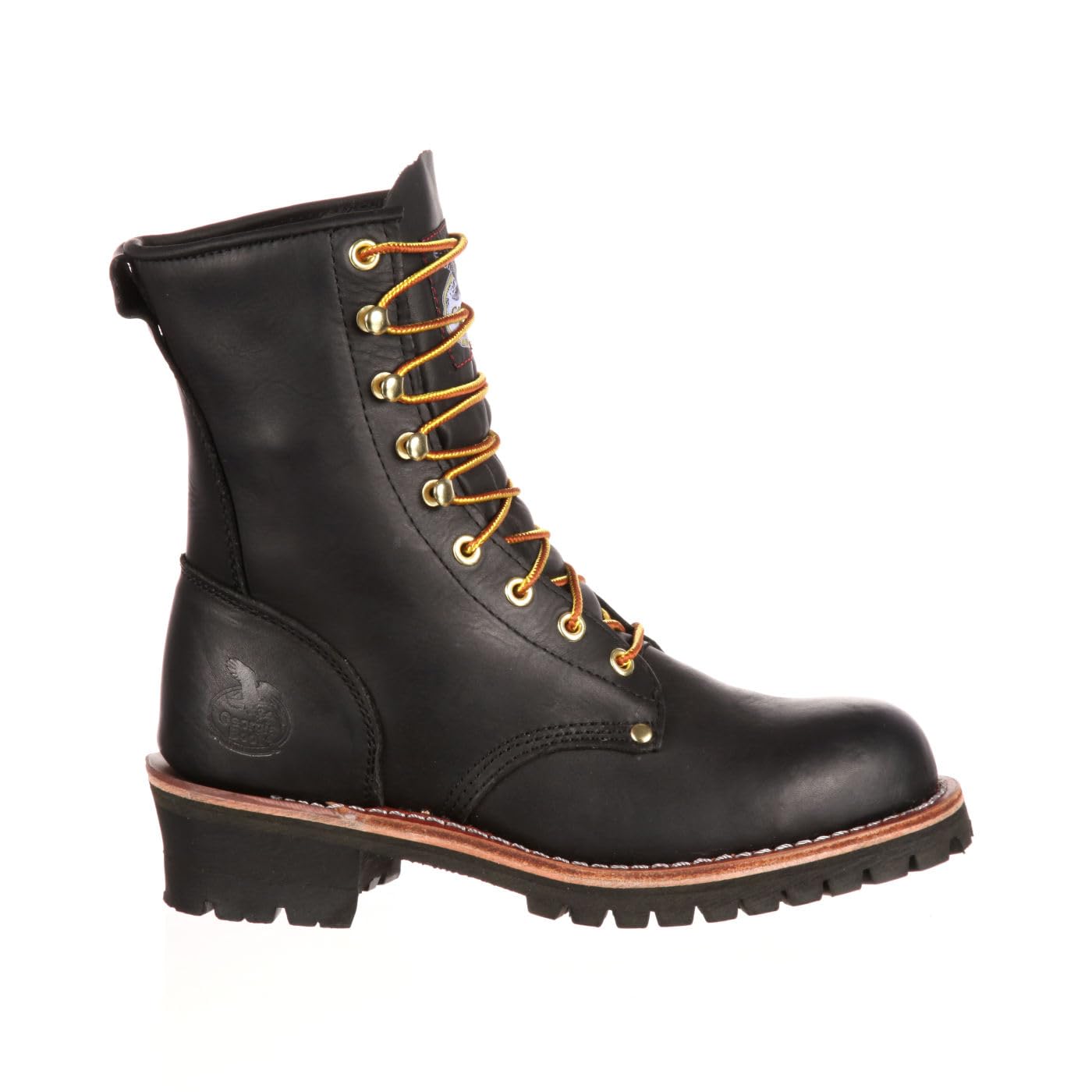
The Georgia Boot G8120 is a no-frills logger that focuses on raw durability. The Goodyear welt construction means you can resole them when the tread wears out, a feature usually reserved for boots twice the price. The leather is thick and oiled, holding up against diesel, hydraulic fluid, and common job-site chemicals without degrading.
One forester reported that dust leaked through the rivet holes within three weeks, but that was solved with a coating of Obenauf’s leather sealant — a common modification for budget boots. The sole offers decent traction on dry ground and bark but becomes notably slippery on wet bark, so caution is needed when climbing after rain. The ankle support is solid, and the break-in period is short relative to other loggers.
Users who beat their boots daily report the uppers lasting almost a year under heavy abuse. The screw-on heel construction has shown resistance to separation, and the overall build quality is surprisingly high for the price point. For arborists who destroy boots quickly and need something affordable that does not sacrifice structural integrity, the Georgia Boot is a legitimate contender.
Why it’s great
- Goodyear welt allows resoling
- Thick leather resists chemicals and abrasion
- Short break-in period
Good to know
- Slippery on wet bark — poor wet traction
- Dust may leak through rivets until sealed
- Eyelets can be rough on laces
8. Viking Class 2 Ultra Flexible Chainsaw Boots
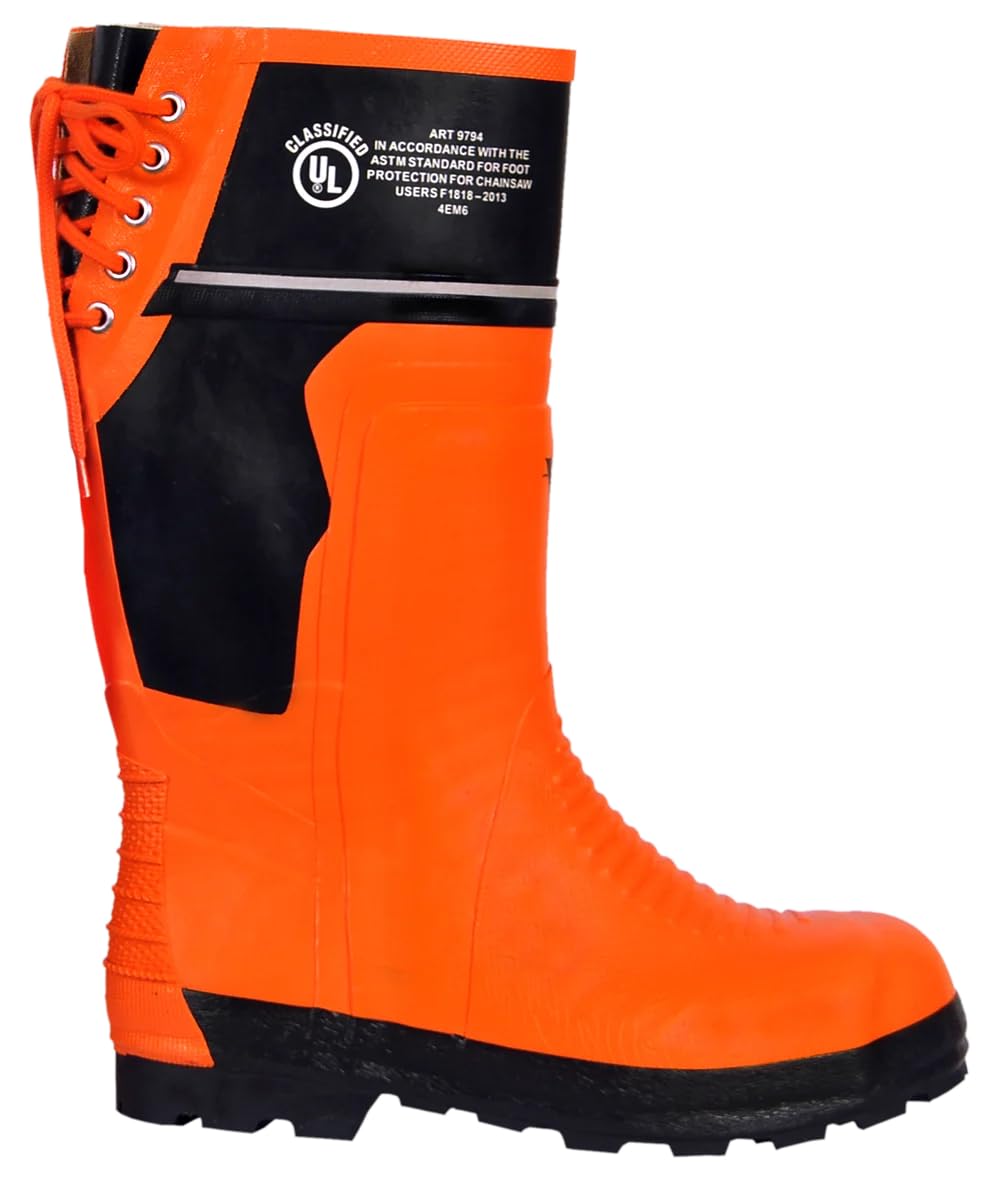
The Viking VW64 is one of the few boots on this list with an actual Class 2 chainsaw cut-resistance rating — meaning it can stop a saw chain running at full speed. This is the single most important safety feature for an arborist who runs a chainsaw all day. The steel toe adds impact protection, and the bright color makes the wearer visible in dense brush.
The boot runs roughly one full size large, so sizing down is standard practice. Even with that adjustment, the toe box is roomy — good for those with wide feet. The calf is relatively small, so pants can be tucked in easily without bulk. The rubber outsole has excellent lug tread that sheds mud and provides good traction on loose ground.
The weight is the main trade-off: at over 3 pounds per boot, they are heavy. Some users report the steel toe rubbing against the top of their toes during descents, which thicker socks mitigate. The waterproofing holds well, and the protection is described as “worth the weight” by arborists who have tested the cut resistance in real-world scenarios. These are purpose-built safety boots, not all-day comfort boots.
Why it’s great
- Class 2 chainsaw cut-resistance rating
- Steel toe meets impact safety standards
- High-visibility color for brush safety
Good to know
- Runs one full size large
- Heavy — over 3 lbs per boot
- May cause toe rubbing on descents
9. Irish Setter Mesabi 8″ Waterproof Soft Toe Logger Boot

The Irish Setter Mesabi is the most affordable 8-inch logger on this list, but it does not cut corners on the fundamentals of a good work boot. The heel features a sturdy logger profile that resists rolling — critical for anyone with weak ankles who works on uneven terrain. The waterproof membrane keeps feet dry through puddles and wet grass.
This is a soft-toe boot, meaning it offers no impact protection from falling objects or saw kickback. It is best suited for arborists who do light ground work, brush clearing, or town-based tree care where heavy timber is not a daily hazard. The leather runs thin and requires regular conditioning to prevent drying and cracking, especially if exposed to sap and mud daily.
One buyer working in the woods 12-hour days reported them comfortable and easy to break in, with excellent arch support out of the box. The two lace holders at the top make them easy to pull on and off. For the price, the Mesabi delivers surprising comfort and decent waterproofing — just understand its limitations: no steel toe means no real protection from chainsaw impacts or heavy logs.
Why it’s great
- Excellent arch support and out-of-box comfort
- Sturdy heel resists rolling on uneven ground
- Waterproof membrane keeps feet dry
Good to know
- Soft toe offers no impact protection
- Thin leather requires frequent conditioning
- Not suitable for heavy timber work
FAQ
Can I use ordinary work boots for tree climbing?
How often should I replace my climbing boots?
Do I need waterproof boots for tree work?
Final Thoughts: The Verdict
For most arborists, the boots for arborists winner is the EVO 2 Climbing Boots because the climbing-specific last and bark-gripping sole are purpose-built for tree work, not adapted from a logging boot. If you need the absolute best chainsaw protection, grab the Viking Class 2 Chainsaw Boots. And for the best all-around value that works on the ground and in the tree, nothing beats the Ariat Groundbreaker Steel Toe.