
Finding a potting soil that feeds your plants without feeding your credit card debt is the real gardening challenge. Cheap soil often lacks drainage, compacts into a brick, or carries fungus gnats that invade your home. The best bag balances a light, airy structure with consistent moisture retention and a pH level that matches what you’re growing—whether that’s picky African violets, heavy-feeding tomatoes, or drought-tolerant succulents.
I’m Min — the co-founder and writer behind Gadgets Feed. I spent hours cross-referencing ingredient lists, pH ranges, and real-world customer feedback to find the affordable potting soil mixes that genuinely perform for the price.
If you want soil that drains properly, feeds your plants for weeks, and won’t introduce pests into your home, this guide breaks down exactly which bag to grab based on what you’re growing.
How To Choose The Best Affordable Potting Soil
Not all bags are created equal. A cheap price tag often hides poor drainage, an unbalanced pH, or a lack of nutrients. Here’s what to check before you buy.
Match the pH to Your Plant Type
Most houseplants prefer a slightly acidic pH between 5.5 and 6.5. Acid-loving plants like blueberries and azaleas need a lower pH around 4.5–5.5. A generic all-purpose mix can stunt or even kill these plants. Always check whether the soil is pH-controlled for your specific plant category.
Look for the Big Three Ingredients
A quality potting soil contains peat moss (moisture retention), perlite (aeration), and either vermiculite or composted bark (drainage and nutrients). If the bag is mostly dense topsoil or sand, it will compact and suffocate roots. The best budget-friendly mixes clearly list all three components.
Check the Bag Volume vs. Number of Pots
An 8-quart bag typically fills one 10-inch pot or two 8-inch pots. A 20-quart bag covers about two to three 12-inch pots or an entire window box. Buying a larger bag at a slightly higher unit price often saves money in the long run, but only if the soil stays dry and sealable after opening.
Quick Comparison
On smaller screens, swipe sideways to see the full table.
| Model | Category | Best For | Key Spec | Amazon |
|---|---|---|---|---|
| Miracle-Gro Cactus, Palm & Citrus | Specialty | Succulents & cacti | Fast-draining formula | Amazon |
| Coast of Maine Tomato & Vegetable | Organic | Heavy-feeding edibles | 20 quarts, OMRI listed | Amazon |
| Midwest Hearth Premium Potting Mix | All-Purpose | General houseplants & seeds | Peat, perlite, vermiculite | Amazon |
| Coast of Maine Acid-Loving Mix | Specialty Organic | Blueberries, azaleas, ferns | Low pH, 20 quarts | Amazon |
| Midwest Hearth African Violet Mix | Specialty | African violets | pH controlled, 4 quarts | Amazon |
| Soil Sunrise Peace Lily Mix | Specialty Organic | Peace lilies | 8 quarts, organic | Amazon |
| Black Gold All Organic Potting Soil | Organic | Fungus gnat prevention | 8 qt, 2-pack | Amazon |
In‑Depth Reviews
1. Coast of Maine Organic & Natural Planting Soil for Vegetables & Tomatoes

Coast of Maine delivers 20 quarts of premium organic compost that includes composted manure and sphagnum peat moss, providing a rich nutrient base that heavy feeders like tomatoes and peppers crave. The mix balances moisture retention and drainage exceptionally well, avoiding the dense, waterlogged texture that plagues many budget-tier soils.
It is OMRI listed, meaning you can use it confidently in an organic vegetable garden without synthetic chemicals. The lightweight texture crumbles easily in your hands, making it ideal for starting seeds indoors or topping off raised beds. Some users report the presence of cedar aroma, which acts as a natural insect deterrent but is not overpowering.
One caveat: a few reviews mention fungus gnats hatching from the bag, which is common with organic compost that has not been heat-sterilized. Baking the soil in the oven for 30 minutes at 180°F before use eliminates that risk entirely. For the volume and ingredient quality at this price point, it is the best value proposition for edible gardeners on a budget.
Why it’s great
- Large 20-quart bag covers multiple containers
- Rich organic compost feeds plants for weeks
- Lightweight, well-aerated texture
Good to know
- May contain fungus gnat eggs without sterilization
- Best for vegetables, less ideal for indoor houseplants
2. Miracle-Gro Cactus, Palm and Citrus Potting Mix, 3-Pack

This three-pack of 8-quart bags from Miracle-Gro is a no-brainer for anyone who keeps succulents, cacti, or citrus trees. The fast-draining formula prevents root rot, the single biggest killer of these plants in standard potting soil. It also includes Miracle-Gro plant food, meaning you do not need to add fertilizer for the first few weeks.
Each bag fills roughly two 8-inch containers, so the bundle gives you six pots worth of specialized soil at a price that undercuts most single-bag specialty mixes. The texture is noticeably grittier than standard potting soil, with sand and perlite particles that create air pockets for roots. Many users mix it half-and-half with regular potting soil for a custom blend.
If you grow only succulents, this is the most cost-efficient way to stock up. The brand reputation is strong, and the formulation is consistent from batch to batch. Just keep it sealed in a dry place after opening, as the sand-heavy mix can clump if exposed to humidity.
Why it’s great
- Three bags provide excellent value for multi-plant households
- Fast-draining formula prevents root rot in succulents
- Includes plant food for early growth
Good to know
- Not suitable for moisture-loving houseplants like ferns
- Can clump if stored in damp conditions
3. Midwest Hearth Premium Potting Soil Mix (8 Dry Quarts)

Midwest Hearth uses the same professional-grade formulation favored by commercial growers, combining sphagnum peat moss, perlite, and vermiculite in precise ratios. The result is a soil that holds moisture without becoming soggy, provides excellent aeration for root systems, and resists compaction even after repeated watering cycles.
The 8-quart bag size is ideal for small to medium indoor projects, from starting petunia seeds to repotting a jade plant that has outgrown its container. Users consistently praise its light, fluffy texture that makes root penetration easy. The resealable bag keeps the remaining mix fresh, which is a small but meaningful design detail.
At a premium price per quart compared to bulk options, this mix is best when you need quality over quantity. If you are repotting a single valuable houseplant or starting a tray of seeds, the consistent performance and lack of weed seeds or pests justify the cost.
Why it’s great
- Professional-grade three-part blend
- Light, fluffy texture resists compaction
- No weeds or bugs reported by most users
Good to know
- Smaller bag size per dollar than bulk options
- Not blended for specialty pH plants
4. Coast of Maine Organic & Natural Planting Soil for Acid Loving Plants (20 Qt)

If blueberries, strawberries, azaleas, or ferns are your priority, this acid-loving mix from Coast of Maine is the correct choice. It uses a low-pH blend of peat moss, compost, and aged bark that naturally lowers soil pH to the 4.5–5.5 range these plants require. Standard potting soil would cause chlorosis and stunted growth in these species.
The 20-quart bag is perfectly sized for planters of blueberries or a small berry patch. Users report visibly greener leaves and faster fruit production after switching to this mix. The organic formula means no synthetic fertilizers are added, so you can supplement with your own acid-specific feed if needed.
It is also OMRI listed, making it a viable option for certified organic growing. The only downside is that if you use it for a non-acid-loving plant, the low pH could cause issues, so label your containers clearly. This is a precision tool, not a general-purpose soil.
Why it’s great
- Specially formulated low pH for acid-loving plants
- Large bag size for multiple berry planters
- OMRI certified organic
Good to know
- Not suitable for general houseplants
- Heavier texture than all-purpose mixes
5. Black Gold 1302040 8-Quart All Organic Potting Soil 2 Pack

Black Gold stands out in the organic potting soil category because of its reputation for being free of fungus gnats. Many users who have sworn off organic soil after battling infestations return to Black Gold for its consistent gnat-free performance. The organic ingredients are blended to provide slow-release nutrition without the microbial activity that attracts gnats.
The two-pack of 8-quart bags provides enough soil to repot four to six medium houseplants, making it a solid choice for apartment dwellers with moderate collections. The texture is rich and moist out of the bag, with good water retention that keeps plants hydrated between waterings without becoming waterlogged.
While the price per quart is higher than bulk alternatives, the peace of mind from avoiding a gnat infestation is worth it for many indoor gardeners. Mixing it with regular potting soil extends its reach without significantly diluting its benefits.
Why it’s great
- Rare consistent gnat-free performance in organic soil
- Rich, moist texture out of the bag
- Great for reviving tired or compacted soil
Good to know
- Higher cost per quart than non-organic alternatives
- Small bag size per unit in the two-pack
6. Midwest Hearth African Violet Natural Potting Soil Mix (4 Dry Quarts)

African violets are notoriously picky about soil pH and drainage, and this mix from Midwest Hearth addresses both requirements precisely. The pH-controlled blend of peat moss, perlite, and vermiculite mirrors professional grower formulations, creating a soft, light medium that violet roots love. Many users report that their violets began blooming again within weeks of repotting.
The 4-quart bag is modest but sufficient for repotting several standard-sized African violets. If you maintain a large collection, you may need multiple bags, but for the casual enthusiast it is exactly the right amount. The resealable bag is a helpful touch for storing leftover mix.
Some reviewers note that the price per quart is higher than generic all-purpose soil, but that misses the point—this is a specialized formulation. Using a general soil for African violets almost always leads to root rot or nutrient deficiencies. Paying a bit more for the correct pH and texture saves the cost of replacing dead plants.
Why it’s great
- pH balanced specifically for African violets
- Light, soft texture promotes root growth
- Professional grower formulation
Good to know
- Small bag size; needs multiple for large collections
- Higher cost per quart than all-purpose mixes
7. Soil Sunrise Peace Lily Potting Soil Mix (8 Quarts)
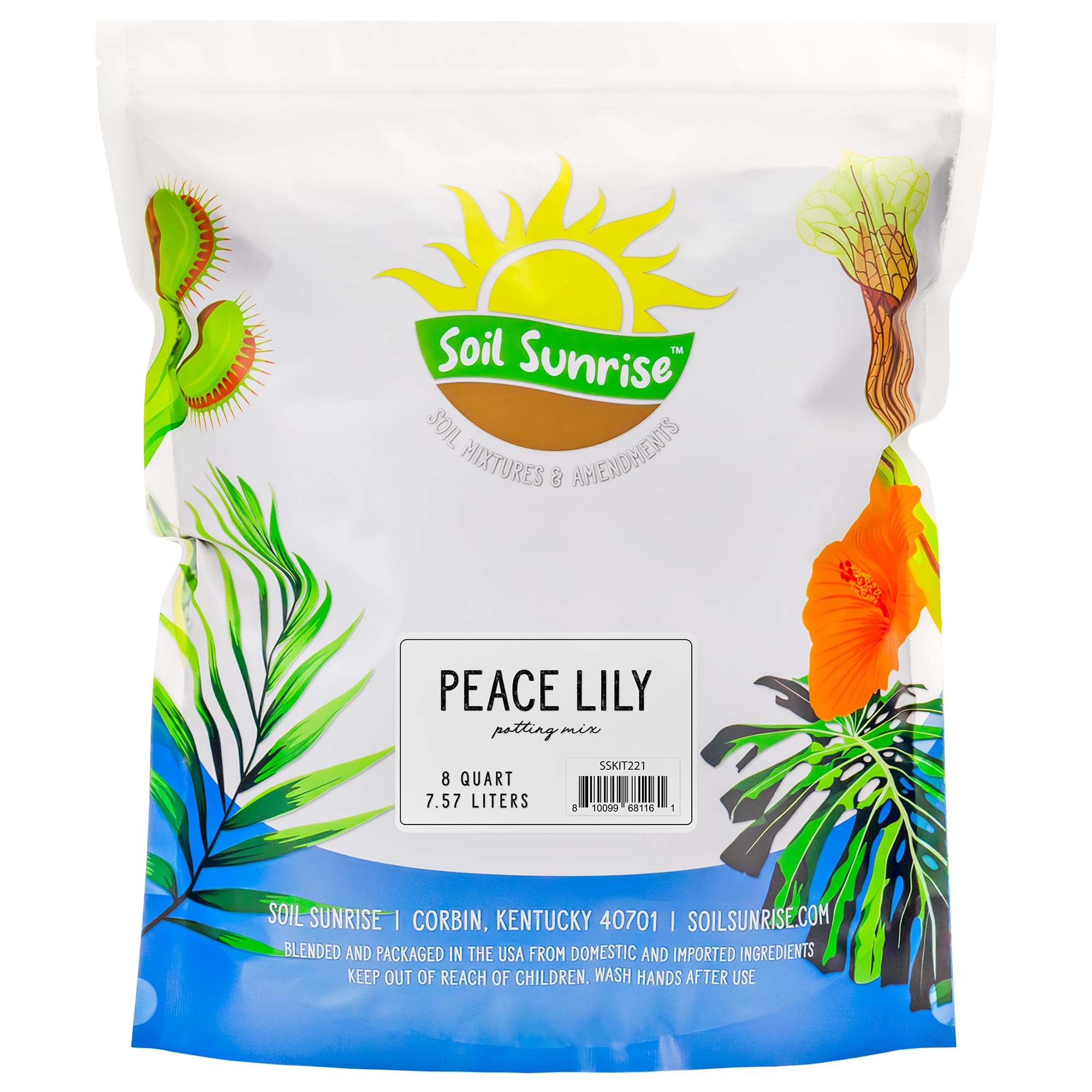
Soil Sunrise formulated this mix specifically for peace lilies, combining pine bark, peat moss, perlite, sand, and lime to achieve a moisture-retentive yet well-draining texture. Peace lilies are drama queens when it comes to water—they wilt dramatically when parched but rot quickly in soggy soil. This blend walks that tightrope effectively.
The 8-quart bag is appropriate for repotting one or two medium peace lilies. Users have revived dying peace lilies with this soil, noting new sprouts and greener leaves within weeks. The organic ingredients provide slow-release nutrition without chemical fertilizers that could burn sensitive roots.
The price per quart is on the higher end compared to general potting soil, but for a dedicated peace lily owner who has struggled with wilting or yellowing leaves, this targeted blend eliminates variables. If you only have one peace lily and want to guarantee its health, this is the safest bet.
Why it’s great
- Formulated specifically for peace lily needs
- Moisture-retentive without waterlogging
- Organic ingredients feed gently
Good to know
- Expensive for the bag size compared to all-purpose soil
- Not suitable for other plant types
FAQ
Can I use the same potting soil for all my houseplants?
Why does my potting soil have white mold on top?
How do I prevent fungus gnats in potting soil?
Final Thoughts: The Verdict
For most users, the affordable potting soil winner is the Coast of Maine Organic & Natural Planting Soil for Vegetables & Tomatoes because it packs 20 quarts of nutrient-rich organic compost at a price that beats almost every competitor on a per-quart basis. If you want a specialized fast-draining formula for succulents, grab the Miracle-Gro Cactus, Palm and Citrus 3-Pack. And for an indoor houseplant collection where avoiding fungus gnats is a priority, nothing beats the Black Gold All Organic Potting Soil 2 Pack.