
A hearing aid is only as good as the battery that powers it. A dead battery mid-conversation or a pack that fizzles out days early doesn’t just interrupt your day — it erodes the confidence that comes with clear hearing. The tiny zinc-air cells inside your device are engineered to deliver a precise 1.45-volt discharge curve, and picking the wrong one can mean swapping tabs twice as often as you should.
I’m Min — the co-founder and writer behind Gadgets Feed. I’ve spent dozens of hours analyzing capacity ratings, shelf-life claims, and real-world user feedback across every major hearing aid battery size to separate the cells that hold their voltage from the ones that don’t.
This guide breaks down the critical specs — from tab design and storage stability to discharge consistency — so you can confidently choose the right batteries for hearing aids and get dependable power that matches your listening habits.
How To Choose The Best Batteries For Hearing Aids
Hearing aid batteries are standardized by size, but performance differs sharply between brands and production batches. The three factors that separate a great battery from a mediocre one are voltage stability under load, shelf-life integrity, and packaging access. If the voltage dips before the cell is empty, you’ll hear distortion. If the seal fails during storage, you’ll get dead-on-arrival cells. And if the packaging is impossible to open, none of the specs matter.
Size and Color Code
Every hearing aid battery follows a universal color system: Yellow for Size 10, Brown for Size 312, Orange for Size 13, and Blue for Size 675. The size dictates the milliamp-hour capacity, with 675 offering the most runtime and 10 the least. Always match the battery size to your device’s compartment — forcing a wrong size can damage the contacts or cause intermittent power loss.
Voltage Discharge Profile
Zinc-air chemistry delivers a relatively flat 1.45-volt curve for most of the battery’s life, then drops rapidly at the end. Premium cells hold that plateau longer under the continuous current draw of digital noise processing and Bluetooth streaming. A battery that drops voltage early will cause the hearing aid to power down even though chemical energy remains in the cell.
Shelf Life and Tab Seal Integrity
Zinc-air batteries activate when oxygen enters the cell through the tab’s removal. A high-quality seal prevents premature activation in storage. Look for batteries with a 3- to 4-year shelf life from manufacture date. Store unused packs in a cool, dry place — heat accelerates self-discharge and can reduce usable runtime by 20% or more.
Quick Comparison
On smaller screens, swipe sideways to see the full table.
| Model | Category | Best For | Key Spec | Amazon |
|---|---|---|---|---|
| Power One Size 13 (120-pack) | Premium Bulk | Longest runtime & bulk buying | Patented cathode technology for steady 1.45V under load | Amazon |
| Rayovac Size 13 (56-pack) | Premium Mid | Long tabs & leak resistance | Certified child-resistant packaging with extended grab tabs | Amazon |
| Duracell Size 675 (12-pack) | Premium | Arthritis-friendly EasyTab | Extra-long tab with Arthritis Foundation Ease of Use certification | Amazon |
| Duracell Size 10 (32-pack) | Premium Small | Easy-open packaging for size 10 | User-friendly blister pack, not circular plastic shell | Amazon |
| Kirkland Signature Size 13 (48-pack) | Mid-range | Value with steady discharge | Precision housing for controlled oxygen intake & flat voltage profile | Amazon |
| Energizer Size 13 (12-pack) | Mid-range | Extended wireless streaming runtime | Up to 8 hours more wireless streaming vs leading competitor | Amazon |
| Amazon Basics Size 312 (60-pack) | Budget-Friendly | Best per-cell value in size 312 | 4-year shelf life with zinc-air technology in child-safe packaging | Amazon |
In‑Depth Reviews
1. Power One Size 13 Hearing Aid Batteries (120-pack)
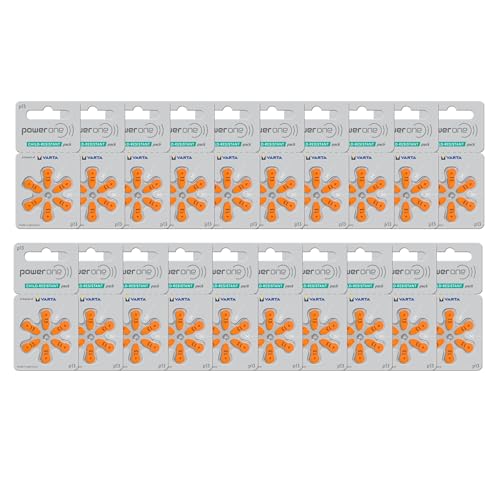
Power One’s 120-pack of Size 13 batteries delivers the highest cell count in this comparison while maintaining a patented cathode technology that keeps voltage steady at 1.45V under the current draw of digital hearing aids. Users consistently report 7 to 10 days of runtime per cell in moderate-use scenarios, outlasting generic alternatives by a noticeable margin.
The stainless steel housing provides corrosion resistance and structural stability, preventing the swelling or leakage that can foul a hearing aid’s battery compartment. Each cell is individually tested for electrical and mechanical characteristics before packaging, which explains the remarkably low rate of dead-on-arrival units reported in feedback.
The bulk packaging reduces the per-cell cost substantially compared to 12-count retail packs, making this the most economical option for heavy users. Minor complaints center on the child-resistant cardboard-and-foil packaging, which does require scissors — but the overall runtime reliability makes the extra opening effort worthwhile.
Why it’s great
- 120-cell bulk pack delivers the lowest per-cell cost in this list
- Patented cathode technology maintains steady voltage for clear audio throughout battery life
- Stainless steel housing resists corrosion and prevents compartment damage
Good to know
- Child-resistant packaging requires scissors to open
- Bulk quantity may be excessive for light users
2. Rayovac Size 13 Hearing Aid Batteries (56-pack)

Rayovac’s 56-pack of Size 13 cells combines a strong draw from the Duracell manufacturing parentage with a budget-friendly price point. The batteries feature longer orange tabs that are easier to grip and peel, a critical design detail for users with arthritis or reduced manual dexterity.
The leak-resistant construction prevents the alkaline corrosion that can damage a hearing aid’s contact plates, and the cells hold a 4-year shelf life when stored properly. User feedback consistently notes that Rayovac cells deliver 6 to 8 days of runtime in standard behind-the-ear hearing aids, competitive with premium offerings at a lower per-cell cost.
The packaging is certified child-resistant under CPSC 16 CFR PART 1700.20 standards, which means the plastic blister requires significant force or cutting to open — a common trade-off across the category. Despite the packaging challenge, the batteries themselves draw no complaints about swelling, leakage, or early voltage drop.
Why it’s great
- Longer orange tabs make removal and insertion easier for users with limited dexterity
- Leak-proof design protects hearing aid compartments from corrosion damage
- 56-pack provides a good balance between bulk buying and manageable storage
Good to know
- Child-resistant blister pack is difficult to open without a cutting tool
- Some users report receiving older stock with shorter remaining shelf life
3. Duracell Hearing Aid Batteries Blue Size 675 (12-pack)

Duracell’s Size 675 batteries are the highest-capacity zinc-air cells in the standard color system, and this 12-pack comes with a critical accessibility advantage: an extra-long tab that earned the Arthritis Foundation’s Ease of Use certification. Users with arthritic hands or low vision find the extended tab significantly easier to align and place into the battery door.
The Size 675 blue cells are the largest hearing aid batteries by physical dimension and capacity, typically used in behind-the-ear (BTE) models and powerful devices that require more current. Duracell’s manufacturing tolerances keep the 1.45V discharge curve consistent, and the cells are reported to last 10 to 14 days in typical BTE use.
The 12-count pack is a smaller quantity than the bulk options, but the per-cell price remains competitive with smaller packs from other brands. The packaging uses a child-resistant blister design that is easier to open than some competitors — the tab protrudes from the card, allowing a simple tear rather than requiring surgical scissors.
Why it’s great
- Arthritis Foundation certification means the long tab is genuinely easier to handle
- Size 675 provides the highest capacity for power-hungry BTE hearing aids
- Easier blister opening compared to many child-resistant designs
Good to know
- 12-pack is a small quantity for heavy users who prefer bulk buying
- Size 675 only fits BTE devices — not compatible with smaller or ITC models
4. Duracell Size 10 Mercury Free Zinc Air Hearing Aid Battery (32-pack)

Duracell’s 32-pack of Size 10 yellow cells is notable for its user-friendly packaging design — a blister card rather than the difficult circular plastic clamshell found on many competitor packs. Users with visual or mobility challenges consistently rate this package as one of the easiest to open in the hearing aid battery space.
Size 10 batteries are the smallest standard option, used primarily in in-the-ear (ITE) and completely-in-canal (CIC) hearing aids where space is at a premium. The capacity is lower than larger sizes, typically delivering 3 to 5 days of runtime depending on streaming and processing demands, but the 32-cell count provides a month or more of supply.
Duracell’s zinc-air formulation uses a mercury-free chemistry that is safe for household disposal where regulations permit. A small subset of users report dead cells on arrival, which is a known risk with zinc-air batteries that may have been stored warm or had the seal compromised during shipping — but the majority of feedback praises the combination of reliable performance and easy access.
Why it’s great
- Blister packaging is far easier to open than circular clamshell alternatives
- Mercury-free chemistry simplifies disposal where local rules allow
- 32-cell count offers a good supply for size-10 users without excessive bulk storage
Good to know
- Size 10 is the smallest capacity — runtime averages only 3-5 days per cell
- Occasional dead-on-arrival cells reported, likely from warm storage conditions during shipping
5. Kirkland Signature Premium Quality Hearing Aid Batteries Size 13 (48-pack)

Kirkland Signature’s 48-pack of Size 13 orange batteries uses a precision housing design that controls oxygen intake — the defining variable in zinc-air battery activation. This engineering approach stabilizes power delivery during high-drain activities like Bluetooth audio streaming or digital noise filtering, preventing the early distortion that cheaper cells produce under load.
The batteries maintain a flat 1.45V discharge curve throughout their active life, which eliminates the audible volume drop or intermittent cutouts that signal a cell nearing its end. Users report that Kirkland cells last comparably to premium national brands at a lower per-cell price point, making this a strong value proposition for size-13 users.
Packaging feedback is mixed — some users praise the easier-opening design that doesn’t require scissors, while others find the child-resistant tab system frustrating. The 48-count quantity is well-suited for moderate users, providing roughly a two-month supply for a pair of hearing aids worn 14 hours per day.
Why it’s great
- Precision housing stabilizes oxygen intake for consistent voltage during streaming
- Flat 1.45V discharge profile prevents audio distortion before battery depletion
- Competitive per-cell price vs. major brand alternatives at similar runtime
Good to know
- Child-resistant packaging design varies by batch — some iterations are significantly harder to open
- Only available in Size 13; no option for other standard sizes in this line
6. Energizer Hearing Aid Batteries Size 13 (12-pack)
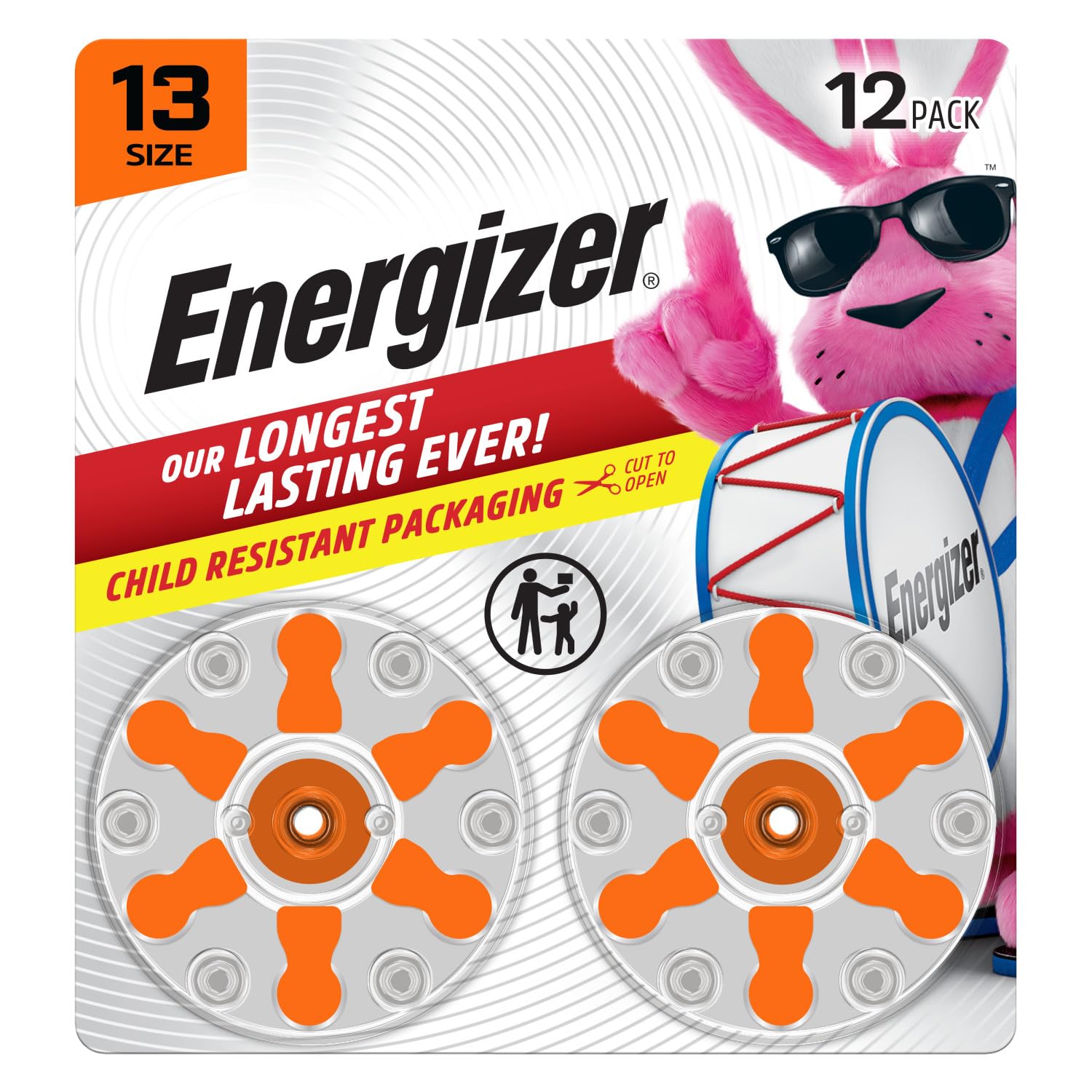
Energizer specifically markets this Size 13 12-pack for users who rely on wireless audio streaming from their hearing aids. The engineering targets the higher current draw of Bluetooth streaming, claiming up to 8 hours more streaming time compared to the leading competitor in ANSI/IEC testing.
The orange tab is longer than standard, providing better leverage for removing the tab cleanly without tearing — a common frustration when the tab splits and leaves residue on the battery surface. The cells are mercury-free and hold power for up to 4 years in storage when kept in cool, dry conditions.
The 12-count packaging is modest, and the child-resistant blister is certified under CPSC standards. Some users report receiving damaged packaging from shipping, and a small percentage of cells arrive dead, which may be related to seal integrity during transport. The per-cell cost is higher than bulk alternatives, but the streaming-oriented performance justifies the premium for heavy Bluetooth users.
Why it’s great
- Engineered for extended runtime during Bluetooth audio streaming
- Long orange tabs tear cleanly without leaving residue on the battery surface
- 4-year shelf life provides good storage longevity when kept cool
Good to know
- 12-pack is a small quantity — frequent buyers need to reorder often
- Shipping damage and dead-on-arrival reports appear more frequently than with some competitors
7. Amazon Basics 60-Pack Hearing Aid Batteries Size 312

Amazon Basics offers a 60-pack of Size 312 brown tab batteries at the lowest per-cell cost in this comparison. The zinc-air chemistry delivers the standard 1.45V output, and users report 6 to 10 days of runtime per cell — competitive with major-brand alternatives at a fraction of the unit cost.
The 4-year shelf life means these batteries can be purchased in bulk and stored without worrying about premature expiration, which is essential when buying a 60-count pack. The mercury-free composition allows for standard household disposal in most jurisdictions, reducing environmental guilt associated with battery waste.
The primary drawback is the child-resistant packaging, which users consistently describe as extremely difficult to open — even with surgical scissors. The blister card requires cutting along specific lines that are not always visible, and the batteries themselves are small and can scatter if the package opens suddenly. This is a genuine accessibility issue for elderly users or those with hand weakness.
Why it’s great
- 60-count pack provides the lowest per-cell cost for size-312 users
- Competitive runtime — often matching or exceeding drugstore brands at lower cost
- 4-year shelf life supports bulk purchasing without storage anxiety
Good to know
- Child-resistant packaging is notoriously difficult to open, even with sharp scissors
- Batteries can scatter on opening — work over a towel to catch them
FAQ
How long should I wait after removing the tab before inserting the battery?
Why do my hearing aid batteries die earlier than expected in humid weather?
Can I use different battery sizes from the one recommended by my hearing aid manufacturer?
How can I dispose of used hearing aid batteries properly?
Why do some hearing aid batteries report “dead on arrival” even from reputable brands?
Final Thoughts: The Verdict
For most users, the right batteries for hearing aids balance runtime reliability, ease of use, and reasonable per-cell cost — and the Power One Size 13 120-pack wins on all three fronts with its patented cathode stability and bulk value. If you prioritize easy handling and your hearing aid uses size 675, the Duracell Size 675 12-pack with its Arthritis Foundation-certified long tab makes daily swaps significantly less frustrating. And for size 312 users on a tight budget, the Amazon Basics 60-pack delivers competitive runtime at the lowest per-cell price — just be prepared for some wrestling with the packaging.